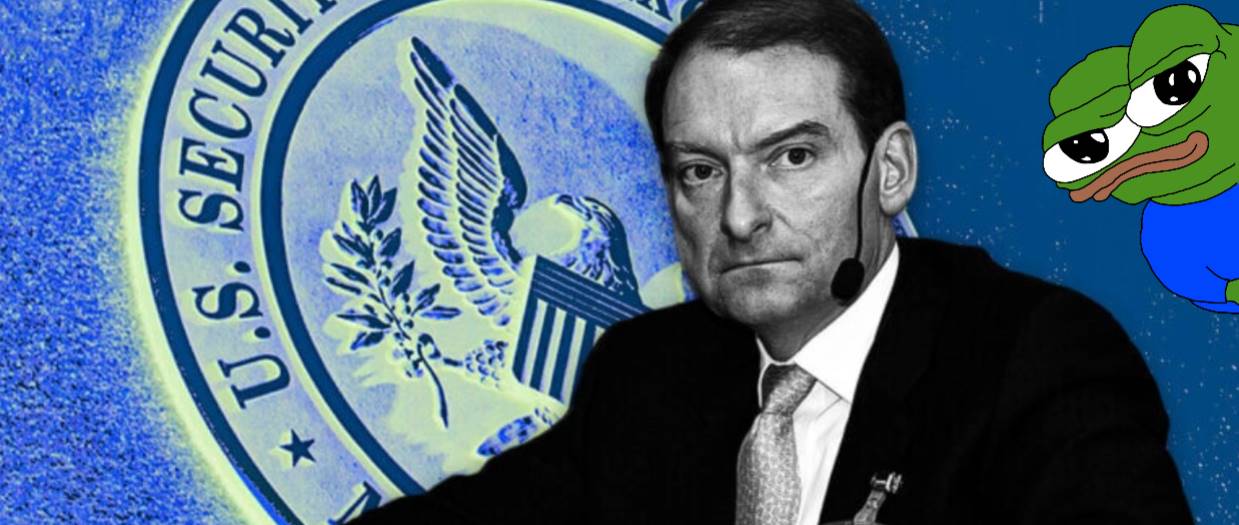
From Law PhD to Crypto Holder: Meet Paul Atkins, the New Chair of the SEC
TechFlow Selected TechFlow Selected
From Law PhD to Crypto Holder: Meet Paul Atkins, the New Chair of the SEC
This new chair's first move could determine the next decade for cryptocurrency in the United States and beyond.
 Navigating Web3 tides with focused insights
Written by: TechFlow
Trump's extreme tariff policies have triggered a global market storm, with prices of cryptocurrencies like Bitcoin searching for direction amid severe volatility.
Amid immense uncertainty, a clear piece of good news appears to be emerging.
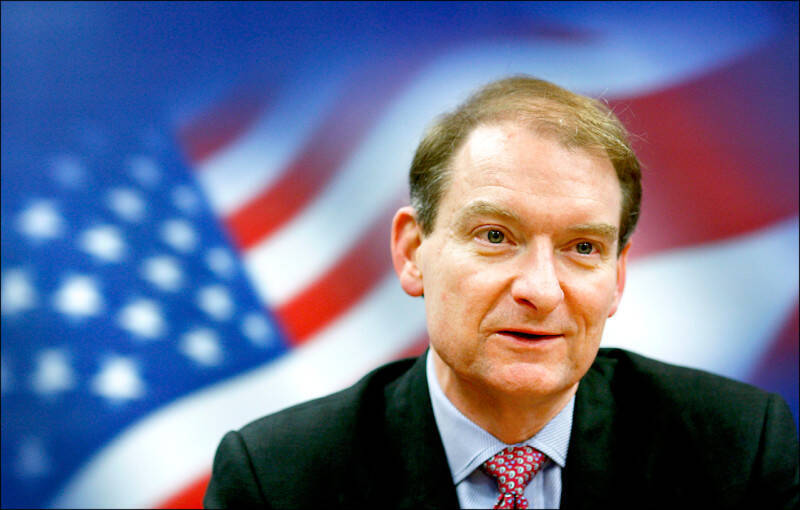
On April 9, the U.S. Senate confirmed Paul Atkins as the new Chair of the Securities and Exchange Commission (SEC) by a vote of 52 to 44.
Atkins, known as a regulator supportive of innovation and free markets, is seen by the crypto community as a potential turning point in the SEC’s stance toward digital assets.
He has clearly stated that establishing a clear regulatory framework for digital assets will be his top priority—a sharp contrast to the aggressive enforcement approach of former Chair Gary Gensler.
Crypto markets are often described by regulators as the "Wild West," with frequent tensions between regulators and the industry.
Yet now, Atkins’ arrival may renew hopes for a more cooperative and friendly regulatory environment.
At this moment where turmoil and opportunity intersect, the next moves in Atkins’ strategy are being closely watched.
This new chairman, who began his career as a Wall Street lawyer, previously served as an SEC commissioner, and now specializes in digital assets—can he deliver the long-awaited clarity?
The answer may lie within his life story.

A Small-Town Youth, A Doctor of Law
Like most people, this new chairman started out as a studious youth from a small town.
Paul Atkins' story begins in a small city in the southeastern United States. Born in Lillington, North Carolina, he spent his childhood and adolescence in Tampa, Florida—a sunny city that laid a solid foundation for his life.
In 1980, Atkins earned a Bachelor of Arts degree from Wofford College, graduating with honors as a member of the Phi Beta Kappa Society, and joined the Kappa Alpha Order fraternity, demonstrating dual strengths in academics and social engagement.
Three years later, he received his Juris Doctor from Vanderbilt Law School, where he served as a senior writing editor for the Vanderbilt Law Review.
This student-era experience may have marked the beginning of his legal and regulatory thinking, cultivating a keen attention to legal details and rigorous analytical skills.
Some describe him as "quiet yet decisive." This trait stems partly from the humility of small-town upbringing, combined with a mindset focused on uncovering the logic behind rules—it forms one of the most distinctive contours of his character.
From the small city of Tampa, Atkins carried the down-to-earth nature of a Southern youth along with the boldness of a dream-chaser, completing his transformation from student to professional.
From Lawyer to Regulator
Paul Atkins' professional journey began on the legal stage of New York.
After graduating from law school in 1983, he joined Davis Polk & Wardwell, a top-tier law firm renowned for corporate transactions.
Based at its New York headquarters, he specialized in securities and financial law, later spending two-and-a-half years at the Paris office, where he obtained qualification as a French legal advisor (conseil juridique) in 1988.
This international experience exposed him to the complexities of cross-border financial regulation, providing valuable insight for his future role at the SEC.
In the 1990s, he returned to the U.S., helping financial services firms comply with SEC regulations and participating in the aftermath of the Bennett Funding Group case—a $1 billion Ponzi scheme that highlighted his crisis management capabilities.
Public records indicate that through stabilizing finances and operations and rebuilding and expanding the business, he increased stock value for remaining investors by nearly 2,000%.
On July 9, 2002, Atkins reached a career milestone when President George W. Bush appointed him as an SEC commissioner, serving until August 1, 2008.
Earlier in his career, he had served as chief of staff and advisor to SEC Chairs Richard C. Breeden and Arthur Levitt.
He became known for advocating free-market principles and reducing regulatory burdens. In a 2007 speech, he explicitly stated: "The SEC must not drive investors out of the market with burdensome regulation."
After leaving the SEC in 2008, Atkins founded Patomak Global Partners, a financial services consulting firm based in Washington, D.C., and New York, specializing in regulatory compliance and corporate governance advice.
During this time, he frequently served as an independent compliance consultant in enforcement settlements involving agencies such as the Department of Justice, SEC, and CFTC. From 2012 to 2015, he served as an independent director and non-executive board chair at BATS Global Markets, an electronic securities trading platform later acquired by the Chicago Board Options Exchange (CBOE).
His personal life also stabilized during this period; he raised three sons with his wife, Sarah Humphreys Atkins. Sarah is a major Republican donor, having contributed over $9.9 million in political donations (Paul S. Atkins - Wikipedia).
From lawyer to SEC commissioner, then to a leading figure in regulatory consulting, Atkins’ professional path reflects a deep understanding of financial regulation—laying a solid foundation for his return as SEC Chair in 2025.
Appreciated by Trump, Also a Crypto Holder
Paul Atkins’ extensive background in financial regulation extended into the digital frontier with the rise of cryptocurrency.
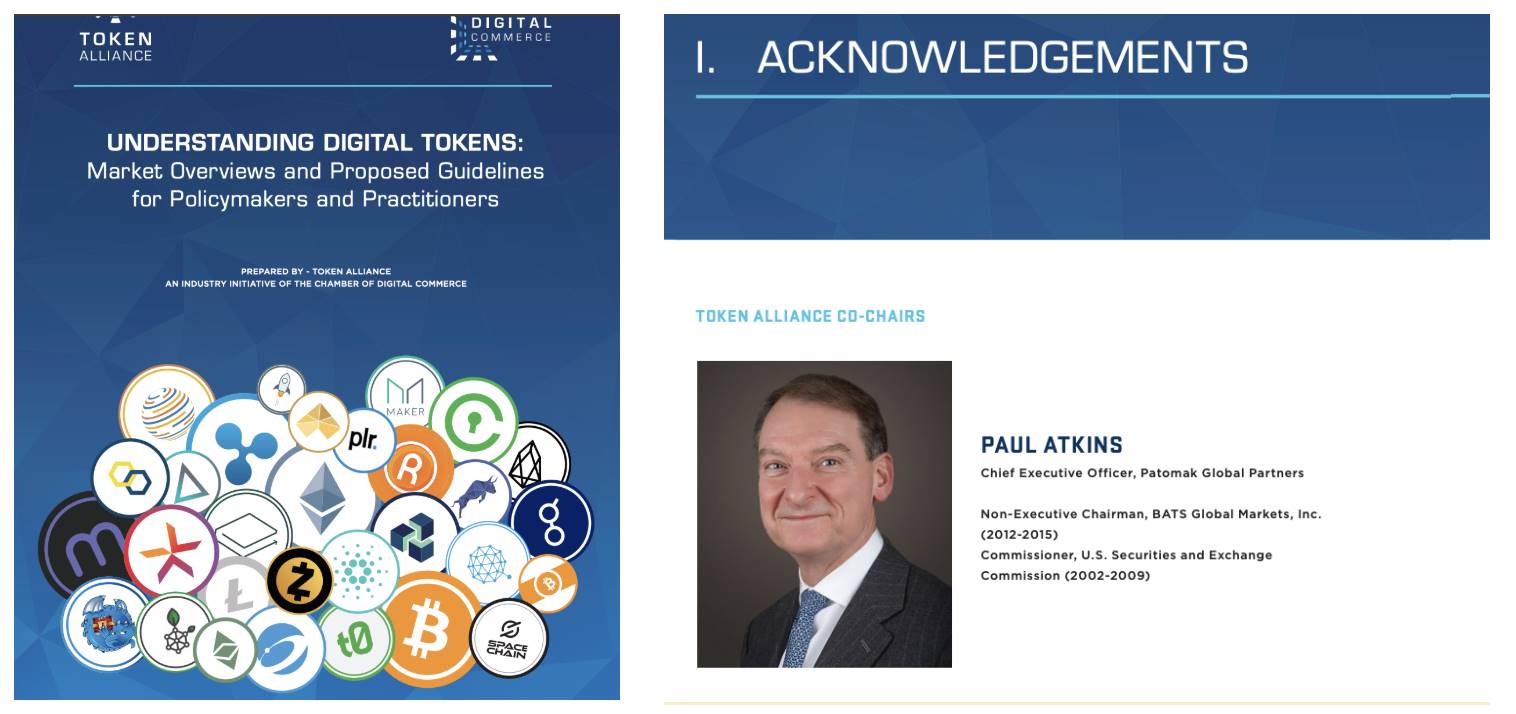
Since 2017, he has served as co-chair of the Digital Chamber’s Token Alliance, working alongside former CFTC Chair James Newsome to lead this industry initiative.
Token Alliance aims to establish best practices for the issuance and trading of digital assets. One key output was the publication of "Understanding Digital Tokens: A Market Overview and Guide for Policymakers and Practitioners," which provides legal overviews of digital tokens across five countries and analyzes trends in token economics, aiming to promote responsible governance and reduce fraud.
His personal investments further underscore his support for digital assets.
On March 25, 2025, Fortune magazine revealed that Atkins holds up to $6 million in crypto-related assets, including stakes or other investments in Anchorage, a crypto custody firm, and Securitize, a tokenization company—though he does not hold Bitcoin.
These investments demonstrate his confidence in the crypto ecosystem but have also sparked controversy. On March 26, 2025, Senator Elizabeth Warren questioned potential conflicts of interest.
Atkins responded that these holdings reflect his belief in the technology’s potential rather than speculative intent—doesn’t that sound just like how your pro-crypto friend would defend their position?
In terms of regulatory philosophy, Atkins has also sought to chart a clear path forward for the crypto industry.
For years, he has consistently advocated for clearer crypto regulation to avoid stifling innovation or imposing unnecessary oversight. He has also criticized the Dodd-Frank Act, enacted after the 2008 financial crisis to regulate large U.S. banks.
Last December, President-elect Trump posted on Truth Social stating that Atkins is a "recognized leader in common-sense regulation" who "understands that digital assets and other innovations are essential to making America greater than ever before."

Iron Fist vs. Inclusivity: Two Contrasting SEC Chairmen
Looking back at the historical record, Paul Atkins and Gary Gensler represent two sharply different approaches to regulating cryptocurrency at the SEC.
Gensler was nominated by President Joe Biden and took office as SEC Chair on April 17, 2021. He famously labeled the crypto market a "Wild West," emphasizing strict regulation to protect investors from fraud and market manipulation.
Under his leadership, the SEC approved the first Bitcoin futures ETF on October 15, 2021, but remained cautious about spot Bitcoin ETFs. It also launched enforcement actions against multiple crypto firms—for example, filing lawsuits against Genesis and Gemini in January 2023 for unregistered securities offerings. This hardline approach created significant pressure within the industry.
In contrast, Paul Atkins was nominated by Trump and confirmed by the Senate on April 9, 2025, by a vote of 52–44, bringing a more inclusive regulatory vision.
In a February 2023 podcast, he stated: "If the SEC were more inclusive and dealt directly with these [crypto] companies, I think it would be better for things to happen in the U.S. rather than overseas."
This stance continues the free-market orientation he demonstrated during his tenure as an SEC commissioner (2002–2008). His work with Token Alliance and $6 million in crypto-related investments further suggest a deeper willingness to understand and support industry development.
Their regulatory philosophies stand in stark contrast.
Gensler focuses on investor protection, tends to classify most tokens as securities, and prioritizes enforcement. Atkins advocates for clear rules, emphasizes collaboration with the industry, and may push for more nuanced asset classification.
Gensler’s tough posture bred industry frustration—Coinbase publicly criticized his "regulatory ambiguity." In contrast, Atkins’ appointment has been welcomed; CoinDesk called it "a victory for the crypto industry."
From iron fist to inclusivity, this shift signals a major turning point in the SEC’s regulatory direction.
Once again, the new SEC chair has made it clear that creating a comprehensive digital asset regulatory framework is his top priority. Drawing on his experience with Token Alliance and investments in companies like Anchorage and Securitize, he may seek to clarify which crypto assets qualify as securities, streamline registration processes for issuers, and create a more favorable environment for crypto financial products.
Optimistically, this framework could end years of regulatory uncertainty—perhaps even paving the way for approval of spot Bitcoin ETFs.
However, given Trump’s unpredictable style and perception of treating the crypto industry as a political tool, it remains uncertain how much positive impact the SEC chair can actually achieve.
Regardless of the outcome, his regulatory blueprint will become a focal point for the entire crypto industry. The first steps taken by this new chairman may well determine the next decade of cryptocurrency in the United States—and globally.
Join TechFlow official community to stay tuned
Telegram:https://t.me/TechFlowDaily
X (Twitter):https://x.com/TechFlowPost
X (Twitter) EN:https://x.com/BlockFlow_News
 深潮TechFlow