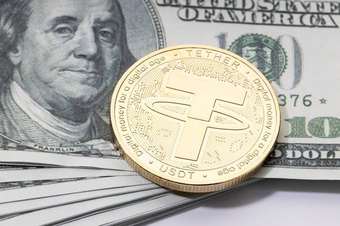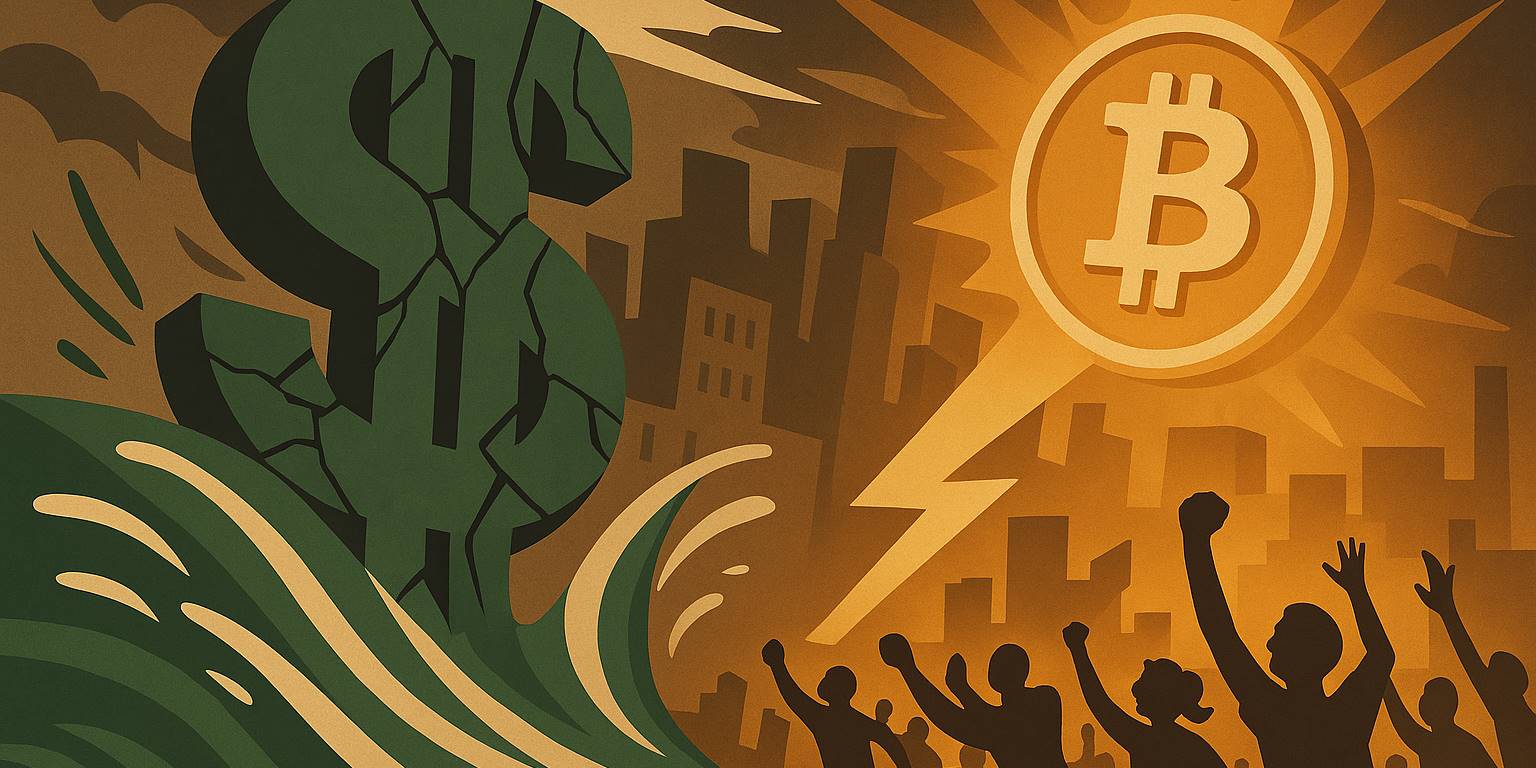
Tariffs are the sword, currency is the shield: an opportunity for "dismantling dollar hegemony" and the rise of stablecoins
TechFlow Selected TechFlow Selected
Tariffs are the sword, currency is the shield: an opportunity for "dismantling dollar hegemony" and the rise of stablecoins
This is a war without smoke, but alarms are already sounding in everyone's wallet.
 Navigating Web3 tides with focused insights
Author: Daii
Last week, U.S. President Trump unleashed a tariff storm, instantly plunging the global economy into severe turmoil. U.S. stocks plummeted, wiping out $5 trillion in market value within two days, and Bitcoin was not spared either. But did you know? The real destructive power of this tariff war lies hidden in something we're all familiar with—yet often overlook: money.
The reason America dares to wield its tariff hammer so aggressively isn't just due to trade deficits; the deeper foundation is dollar hegemony. The U.S. dollar controls not only global trade but has also become a covert economic weapon. Whoever controls the dollar, controls the lifeline of the world's economy.
Even more alarming is that this war will spread from goods to currency—a global race toward competitive currency devaluation has already begun.
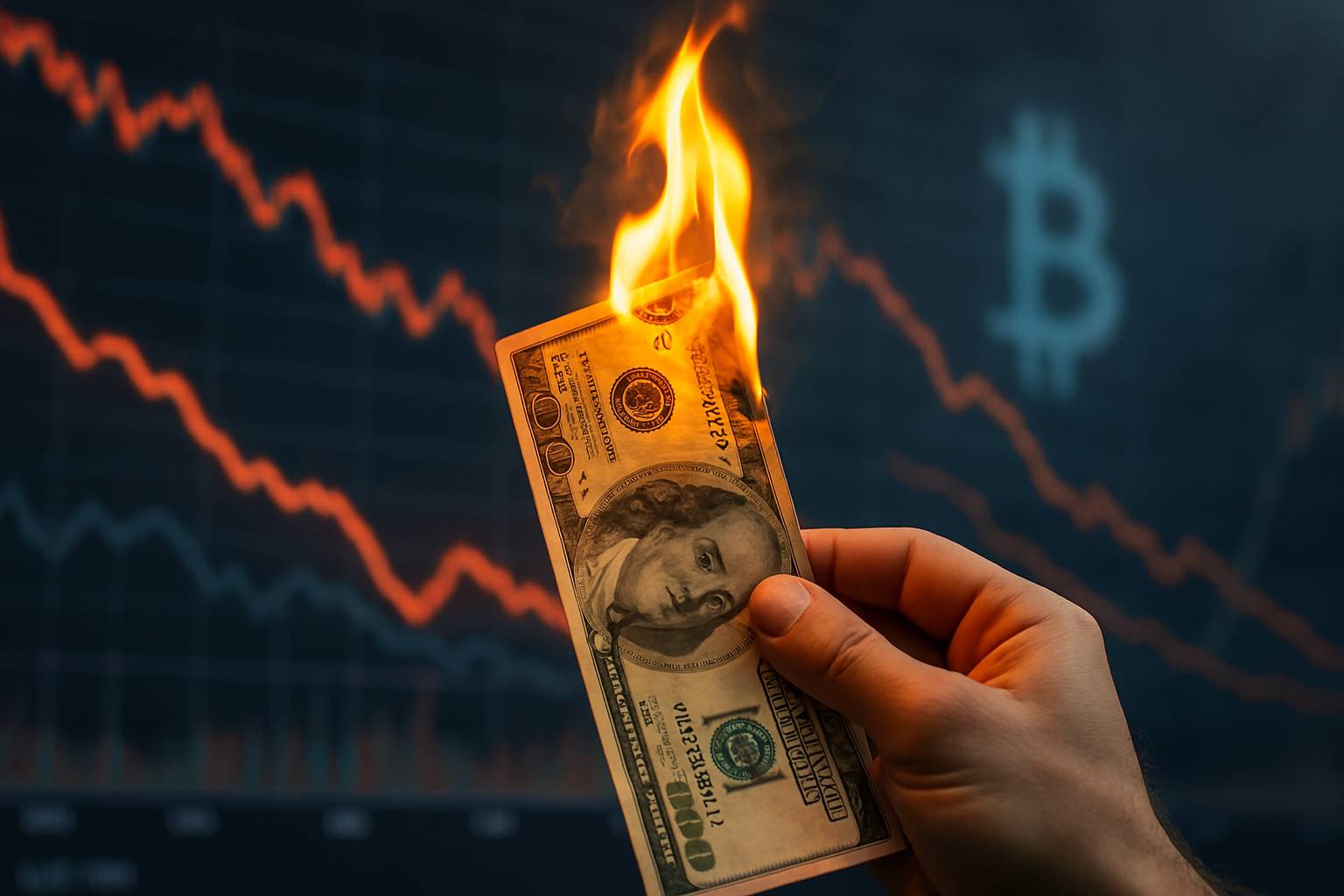
So how should ordinary people respond to such a silent war? Let’s peel back the layers of truth behind this conflict and see who ultimately emerges victorious. No suspense—here’s the answer upfront:
Contrary to many expectations, the ultimate winner may not be any nation, but decentralized stablecoins.
First, let’s examine how different countries have responded to U.S. tariff hikes.
1. The Hardliners and the Moderates
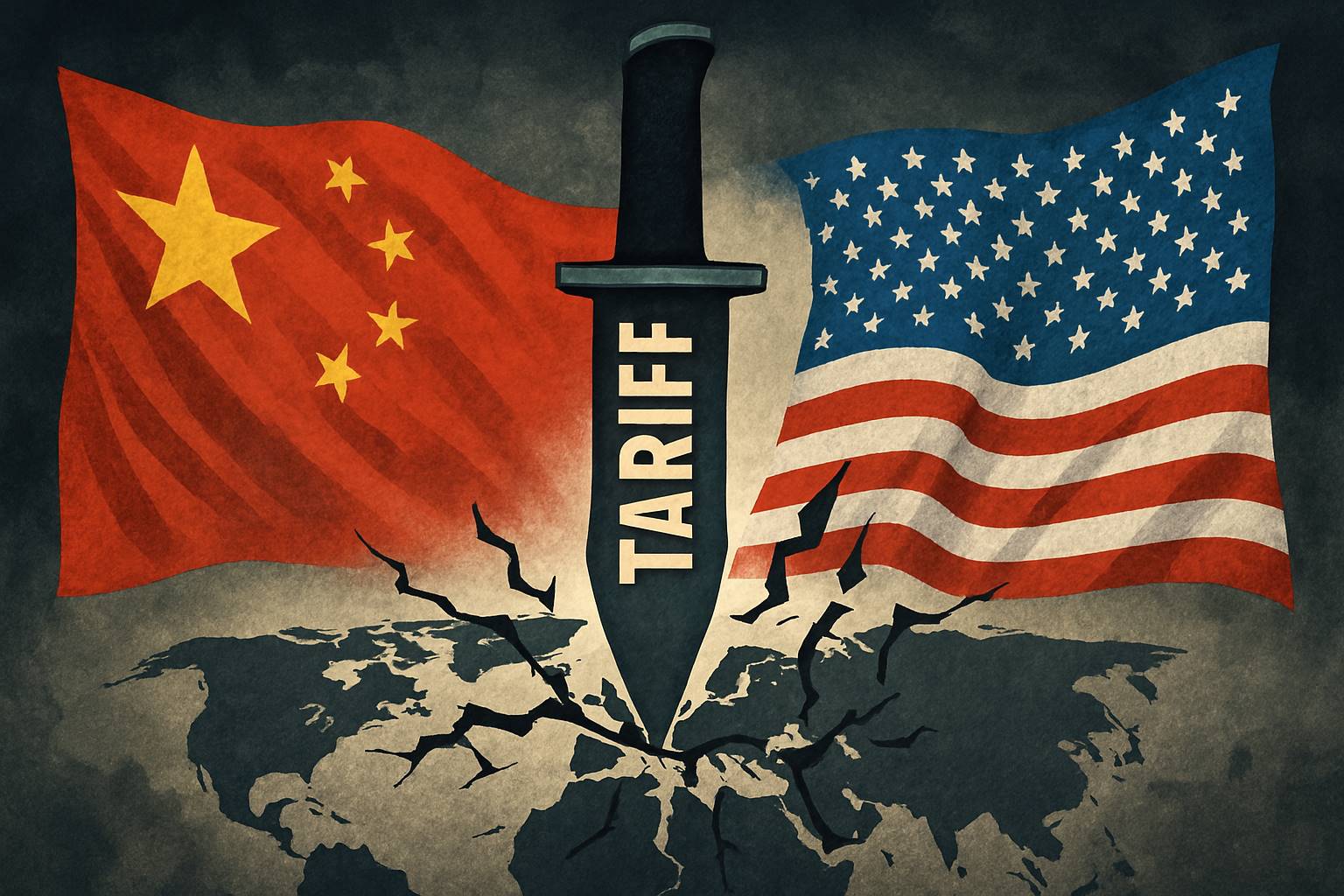
In response to U.S. President Trump’s April 2, 2025 announcement of an additional 34% tariff on Chinese goods, China swiftly retaliated with strong measures.
On April 4, China’s Tariff Commission announced it would impose an additional 34% tariff on all U.S.-origin imports starting April 10, based on existing rates. Additionally, China implemented export controls on critical resources like medium- and heavy-rare earths, and filed a complaint at the World Trade Organization (WTO), accusing the U.S. of violating international trade rules. These actions demonstrate China’s firm stance in defending its interests amid trade disputes.
Subsequently, the U.S. declared it would impose an additional 50% tariff if China refused to withdraw its retaliatory 34% tariffs. A true clash of titans, neither side backing down.
In contrast to China’s hardline approach, Vietnam chose a moderate path.
As one of the hardest-hit nations, facing up to 46% tariffs from the U.S., Vietnam quickly moved to resolve the dispute through diplomacy. General Secretary To Lam held phone talks with President Trump, expressing willingness to reduce Vietnam’s tariffs on U.S. goods to zero in exchange for relief from high U.S. tariffs.
Vietnam also requested a 45-day delay in the implementation of U.S. tariffs to allow time for negotiations. Deputy Prime Minister Hu Duc Pho was dispatched to the United States to seek a diplomatic resolution.
Prime Minister Pham Minh Chinh emphasized during an emergency cabinet meeting that despite challenges, Vietnam remains committed to achieving GDP growth of 8% or higher. He noted that this crisis presents an opportunity to restructure the economy for faster, sustainable development, expand markets, and optimize supply chains.
Other countries’ responses:
-
European Union: European Commission President Ursula von der Leyen stated the EU is willing to negotiate mutual zero tariffs on industrial goods, while warning it would take countermeasures if talks fail.
-
Japan: Trade Minister Yoji Muto expressed regret over the U.S. decision and said Japan would consider appropriate responses.
-
Australia: Prime Minister Anthony Albanese criticized the U.S. tariffs as "baseless," but said Australia would not impose retaliatory tariffs.
Currently, apart from China’s strong reaction, other nations have taken relatively moderate positions. In stark contrast to China, Vietnam’s Prime Minister framed the challenge as an opportunity for economic restructuring—a transformation of pressure into momentum, worth careful reflection.
It’s not that Vietnam lacks courage; rather, the consequences of a full-blown tariff war are simply too heavy for it to bear. If such a war erupts, it would hurt not only the U.S. and China, but Vietnam’s moderation is born out of necessity.
2. Tariff War: Two Knives Slicing the Global Economy
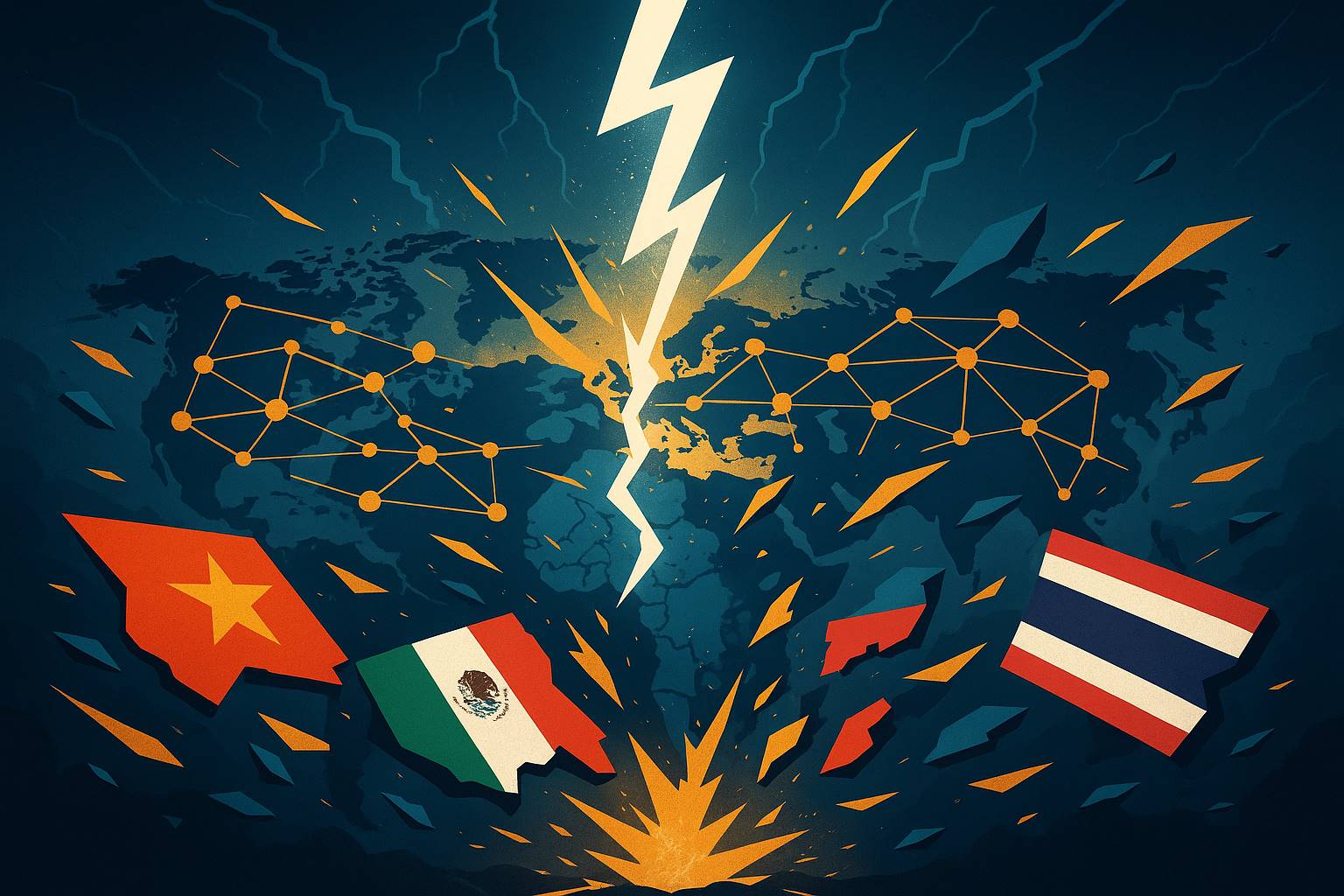
A tariff war, once ignited, acts like two sharp knives slicing through the very fabric of the global economy, mercilessly tearing apart its intricate networks.
2.1 Knife One: The Pain of Supply Chain Restructuring
The most direct and visible effect of the U.S. wielding its tariff stick is the massive disruption to global supply chains. High tariffs act as artificial trade barriers, instantly increasing the cost of imported goods. This not only raises expenses for American consumers but also puts immense export pressure on Chinese manufacturers reliant on the U.S. market.
To avoid steep tariffs, global supply chains will be forced into another large-scale restructuring. Data from the past three years (2022–2024) served as a preview:
Rise of Southeast Asia: As shown in World Bank reports, ASEAN has emerged as one of the biggest beneficiaries of supply chain shifts.
In 2024, foreign direct investment (FDI) in manufacturing across ASEAN surged nearly 30% compared to 2020. This is no coincidence. Electronics, textiles, and light industry are accelerating their shift to countries like Vietnam and Thailand. For example, South Korea’s Samsung Electronics closed its last smartphone factory in China and ramped up investments in Vietnam and India. Japan’s Uniqlo began increasing production in Southeast Asia to reduce reliance on a single market. These corporate migrations directly boosted local employment and economic growth.
Vietnam and Mexico “Ascend”: Thanks to geographic proximity and relatively low labor costs, Vietnam and Mexico have gradually become key alternative manufacturing hubs for U.S. firms outside China. Vietnam’s exports to the U.S. have steadily risen over the past three years, particularly in textiles, footwear, and electronic components. Mexico benefits from geographical closeness and the legacy of NAFTA (replaced by USMCA in 2020), attracting significant investment in auto parts and appliances.
Now, with President Trump announcing a 10% tariff on all imports and over 50% extra tariffs on Chinese goods, the previously seemingly “win-win” supply chain relocation faces renewed shocks—like tectonic plates shaken again after an earthquake, creating fresh uncertainty.
For companies that have already shifted some capacity to Vietnam or Mexico, the new tariffs are a major blow. Even if they avoid the 50%+ China-specific tariffs, the blanket 10% import tariff still increases operating costs and erodes price competitiveness.
Worse, if these factories still rely on Chinese-sourced components and raw materials, those intermediate goods face soaring costs due to the 50%+ tariffs on China, potentially causing overall production costs to rise rather than fall.
This new tariff shock will further accelerate the fragmentation and regionalization of global supply chains. Companies may increasingly favor building production facilities closer to end markets or diversify across multiple countries to reduce dependence on any single region. This trend could make global trade more complex, lower supply chain efficiency, and raise management costs.
In short, the new tariff policy is a sharper knife—it intensifies existing supply chain pain and inflicts broader, deeper impacts across the global economy. Nations and businesses adapting to the new order must now face yet another round of upheaval.
2.2 Knife Two: The Threat of “Stagflation Trap”
As renowned investor Ray Dalio warns, tariffs are like injecting a dose of “stagflation” poison into the global economy. Exporting nations face deflationary pressures from falling demand, while importing nations suffer inflation from rising prices. This coexistence of stagnation and inflation—the dreaded “stagflation trap”—is what economists fear most.

Let’s look at actual data from the U.S. and major exporting nations:
U.S. Inflation Rising: Since the escalation of U.S. tariff policies at the end of 2024, the U.S. Consumer Price Index (CPI) has clearly continued to climb. According to the U.S. Bureau of Labor Statistics, by February 2025, CPI had increased 0.684% cumulatively since the end of 2024. Goods heavily affected by tariffs—such as electronics, clothing, and furniture—saw even steeper price hikes. This directly raised living costs for Americans and reduced real purchasing power. The U.S. annualized inflation rate stands around 2.8%–3.0%, well above the 2% target.
The Chill for Exporters: For export-driven economies like China, South Korea, and Germany, U.S. tariff hikes were a heavy blow. Short-term, demand from the U.S. shrank sharply, orders dropped, and production slowed. To clear excess inventory, some firms were forced to cut prices, leading to shrinking profits or even losses. This dampens investment and could trigger layoffs, worsening unemployment risks. According to Economist Intelligence Unit analysis, China’s GDP growth in 2025–2027 could decline by 0.6%–2.5%, depending on tariff intensity.
The danger of domestic stagflation is that traditional monetary policy struggles to address both stagnation and inflation simultaneously. Loose policy to boost growth risks fueling inflation, while tight policy to curb inflation may worsen economic contraction. Governments face tough policy dilemmas.
Critically, this tariff-induced “stagflation” isn’t confined nationally—it’s global. Importers face inflation; exporters face stagnation. Solving this global stagflation is far more complex than managing a domestic version.
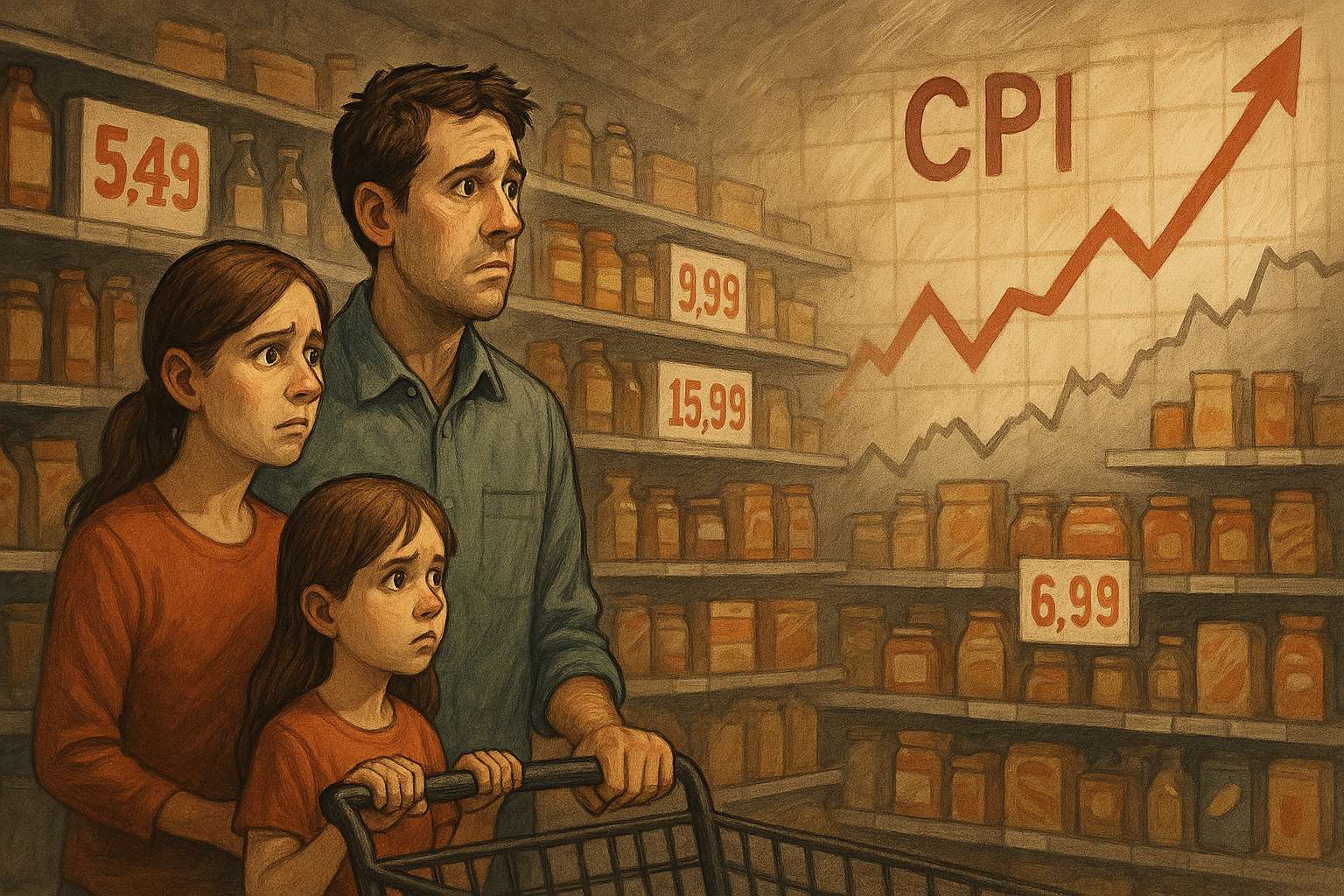
For importers like the U.S., the main challenge is rising prices. Traditional tools involve raising interest rates to fight inflation. But with economic growth already slowing due to tariffs and supply disruptions, rate hikes could further suppress activity, possibly triggering recession.
For exporters like China, the core issue is weak demand slowing growth. Stimulus usually involves cutting rates or expanding credit. But under global trade tensions, such moves risk capital flight and currency depreciation, potentially escalating friction with the U.S.
Thus, this global stagflation traps every country in conflicting policy needs. Unilateral actions by either side struggle to find balance, making coordinated global solutions nearly impossible.
This is why economists like Ray Dalio are deeply concerned—it signals a prolonged era of low growth and high inflation ahead for the global economy.
2.3 Summary
In summary, this tariff war acts like two invisible blades silently severing the nerves of the global economy.
The first blade—supply chain restructuring—forces global firms to pay huge costs adjusting production, reduces efficiency, and ultimately passes higher prices to consumers.
The second blade—the threat of stagflation—leaves governments trapped between fighting inflation and avoiding deeper slowdowns, rendering traditional monetary tools ineffective.
Facing broken supply chains and stagflation risks, some nations may turn to their only shield—currency. A beggar-thy-neighbor race of currency devaluations may already be beginning.
3. Currency Shield: Poisonous Medicine That Quenches Thirst
In the fog of history, the economic time machine repeats the same stories. Humanity keeps learning from history—yet keeps ignoring it. Currency wars, though sounding technical and complex, have repeatedly played out throughout economic history.
Today, this “currency shield” is being used again by nations, seemingly offering temporary relief—but history tells us it’s truly poisonous medicine that quenches thirst at a deadly cost.
3.1 Currency Devaluation During the Great Depression
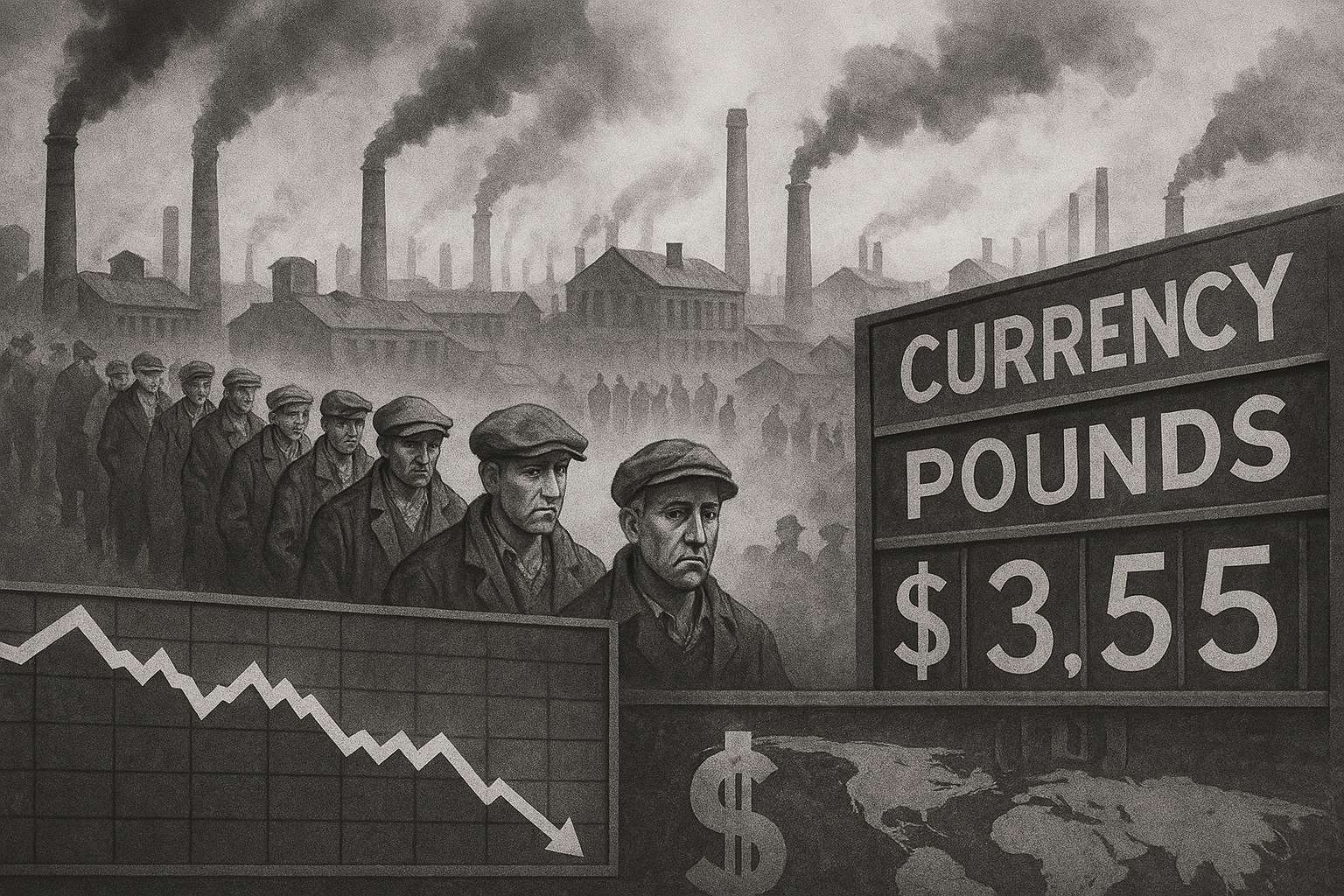
During the 1930s Great Depression, economies worldwide sank into stagnation and deflation. To stimulate exports and revive their economies, nations raced to devalue their currencies. In 1931, Britain abandoned the gold standard first, allowing the pound to float freely. The pound depreciated about 30% against the dollar, briefly boosting British export competitiveness and temporarily lifting exports.
This triggered a global storm. France, Germany, and Italy followed suit, using devaluation as a recovery tool. Competitive devaluations sparked a chain reaction, with countries erecting high tariff walls to protect domestic markets. But reality was harsh—the volume of global trade plummeted. According to IMF data, global trade fell over 60% between 1929 and 1933, deepening the depression and sending unemployment soaring—U.S. joblessness exceeded 25%.
3.2 Currency Devaluation in the Asian Financial Crisis
If the lessons of the Great Depression seem distant, recall the 1997 Asian Financial Crisis. After rapid growth, many Asian economies had accumulated massive foreign debt, with hot money inflows inflating asset prices. When foreign investors fled, Thai baht, Indonesian rupiah, and Malaysian ringgit collapsed.
Thailand first abandoned its dollar peg in July 1997, and the baht plunged over 50% in weeks. Others quickly followed to maintain export competitiveness, but this triggered even fiercer capital flight. South Korea exhausted its foreign reserves within months and was forced to request a $58 billion emergency loan from the IMF.
Devalued currencies brought brief export gains but caused severe inflation and recession. Indonesia suffered massive social unrest, forcing President Suharto to resign. At its peak, Indonesia’s inflation exceeded 70%, unemployment spiked, and society descended into chaos.
History echoes: currency devaluation, though seemingly simple, hides unpredictable and enormous risks. Once nations compete to devalue, export advantages prove fleeting, while global financial markets plunge into turmoil, dragging economies into long-term decline and imbalance.
Yet the short-term appeal of currency devaluation will lure more nations into irreversible disaster.
3.3 Currency Devaluation: A Desperate Lifeline
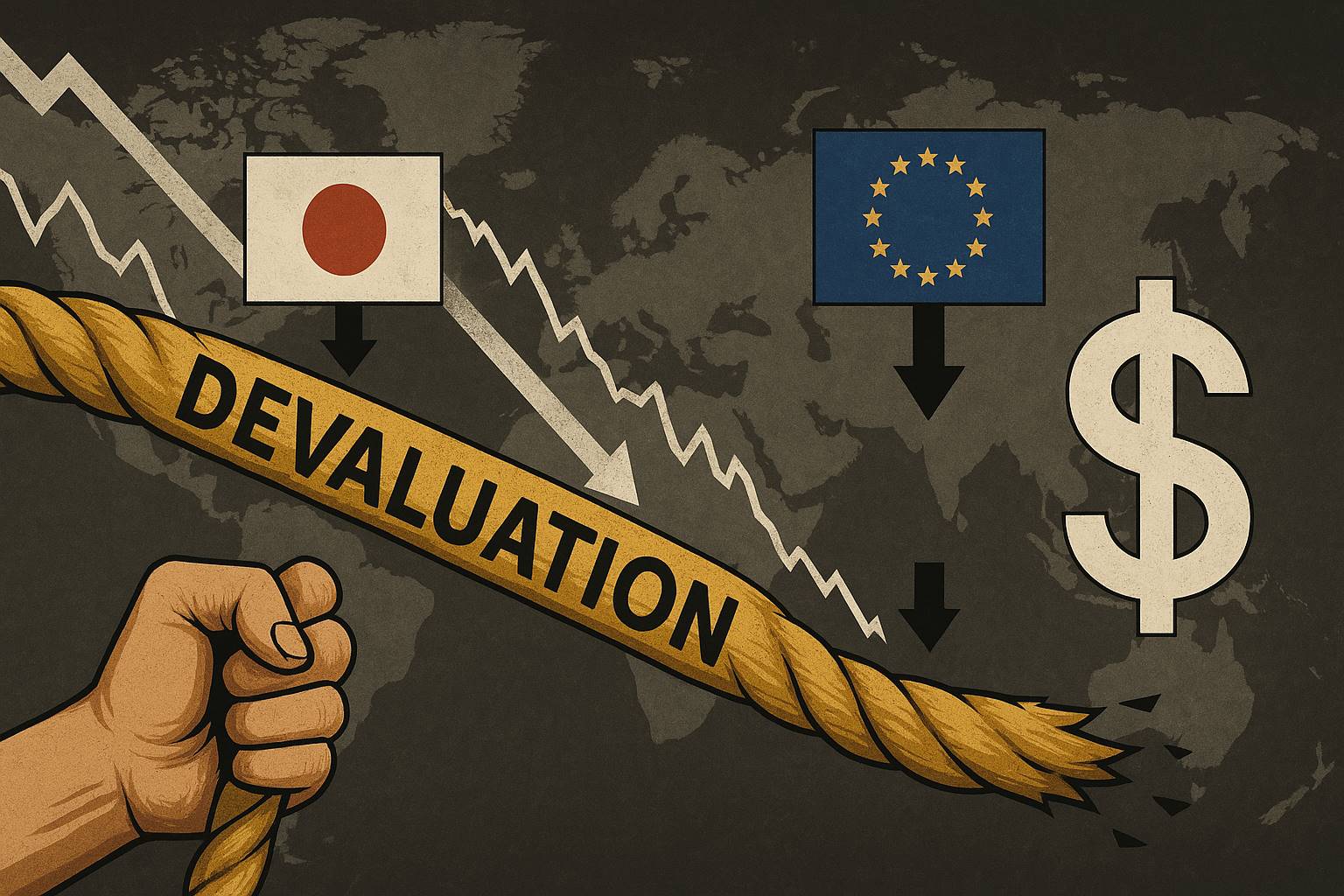
In today’s tariff war, nations are again pushed to the brink of competitive devaluation. Facing collapsing exports and looming job losses, devaluing currency appears as a desperate “lifeline” to policymakers. But history clearly shows: this lifeline isn’t salvation—it’s a catalyst for deeper crisis.
Recent data shows that after the April 2025 tariff changes, the RMB quickly fell from 7.05 to 7.20 per USD, hitting a two-year low; the Vietnamese dong depreciated over 6% against the dollar; the Korean won, New Taiwan dollar, Malaysian ringgit, and even the euro adopted looser monetary policies. The logic is simple and brutal: a weaker domestic currency makes exports cheaper abroad, providing temporary export relief.
But beneath this short-term boom lurk massive risks. Persistent devaluation shrinks the real value of domestic assets. Foreign investors, seeking safety, flee en masse. Take Turkey in 2024: the lira lost over 40% in a year, triggering mass capital flight, rapidly draining reserves, and sending inflation above 85%. Living costs soared, and the economy teetered on collapse.
More worrying, when devaluation becomes a universal defensive tactic, global capital markets enter panic mode, with funds flooding into dollar assets. Then the U.S. itself falls into a “dollar trap”—a surging dollar crushes domestic manufacturing, global liquidity dries up, and a lose-lose outcome becomes inevitable.
In fact, for any country other than the U.S., demanding reciprocal tariffs would be reasonable if they no longer wanted leadership. But the U.S. is different—because of dollar hegemony, the so-called trade deficit isn’t as unfair as claimed. Or rather, the trade deficit is only part of the story.
4. Trade Deficits Under Dollar Hegemony
To understand dollar hegemony, we must go back to post-WWII. The Bretton Woods system tied the dollar to gold, making it the world’s primary reserve and settlement currency. But in 1971, Nixon ended the dollar-gold link, dismantling the system.
So how did the dollar retain dominance after the gold standard collapsed?
4.1 Formation of Dollar Hegemony
A key factor was the establishment of the “petrodollar” system. In the 1970s, the U.S. reached a landmark deal with Saudi Arabia: Saudi Arabia agreed to price oil exports exclusively in dollars, and in return, the U.S. promised military protection. Since oil powers the global economy, this ensured most oil trades required dollars.
Imagine every nation needing oil to run its economy. The only way to buy oil is with dollars. It’s like a giant marketplace where only one type of ticket—dollars—is accepted. To get tickets, countries must export goods and services to the U.S. or hold dollar-denominated assets.
Beyond petrodollars, the dollar’s role as the top global reserve currency cemented its dominance. Central banks need foreign reserves to manage balance of payments, intervene in FX markets, and store national wealth. Given the size, depth, and relative stability of U.S. markets, the dollar became the natural choice.
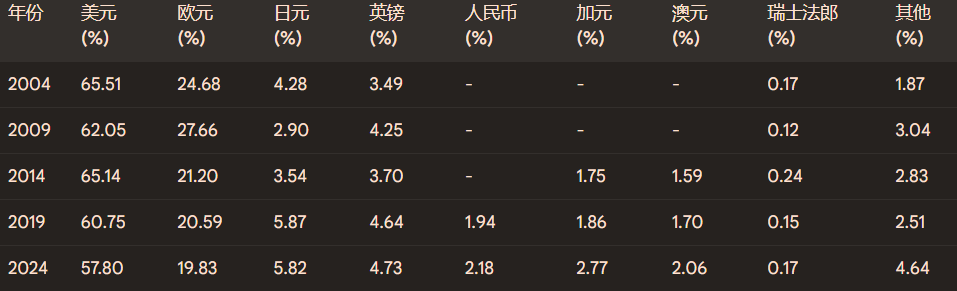
According to IMF data, as of end-2024, the dollar accounted for about 57.8% of global foreign reserves—far exceeding the euro, yen, and pound (see chart). Over half the world’s reserves are held in dollars. For a deeper dive into how dollar hegemony formed, see *Escaping the “Inflation Trap,” Returning to “Time-Based Value”*—it covers not just the dollar but the entire history of fiat currencies.
4.2 Privileges of Dollar Hegemony: Low-Cost Financing and Seigniorage
Dollar dominance grants the U.S. privileges unmatched by others—chiefly low-cost financing and seigniorage.
Low-Cost Financing: Massive global demand for dollar assets (like U.S. Treasuries) allows the U.S. to borrow at relatively low interest rates. It’s like a top-rated company getting cheap bank loans. Other nations with trade deficits face currency depreciation and rising borrowing costs. But the U.S., thanks to dollar hegemony, avoids much of this pressure.
For instance, despite soaring U.S. government debt, global investors keep buying Treasuries, keeping borrowing costs low. If other countries carried such debt, their bond yields would likely skyrocket.
Seigniorage: This refers to the profit from issuing currency minus its production cost. Because the dollar is the dominant reserve currency, many nations must hold dollars. This lets the U.S. effectively acquire wealth for free—other countries must export goods and services to obtain dollars.
Think of it as a global banker printing money to buy goods worldwide. While not literally that simple, dollar dominance does grant the U.S. significant seigniorage benefits.
4.3 Trade Deficit Is Only Part of the Truth
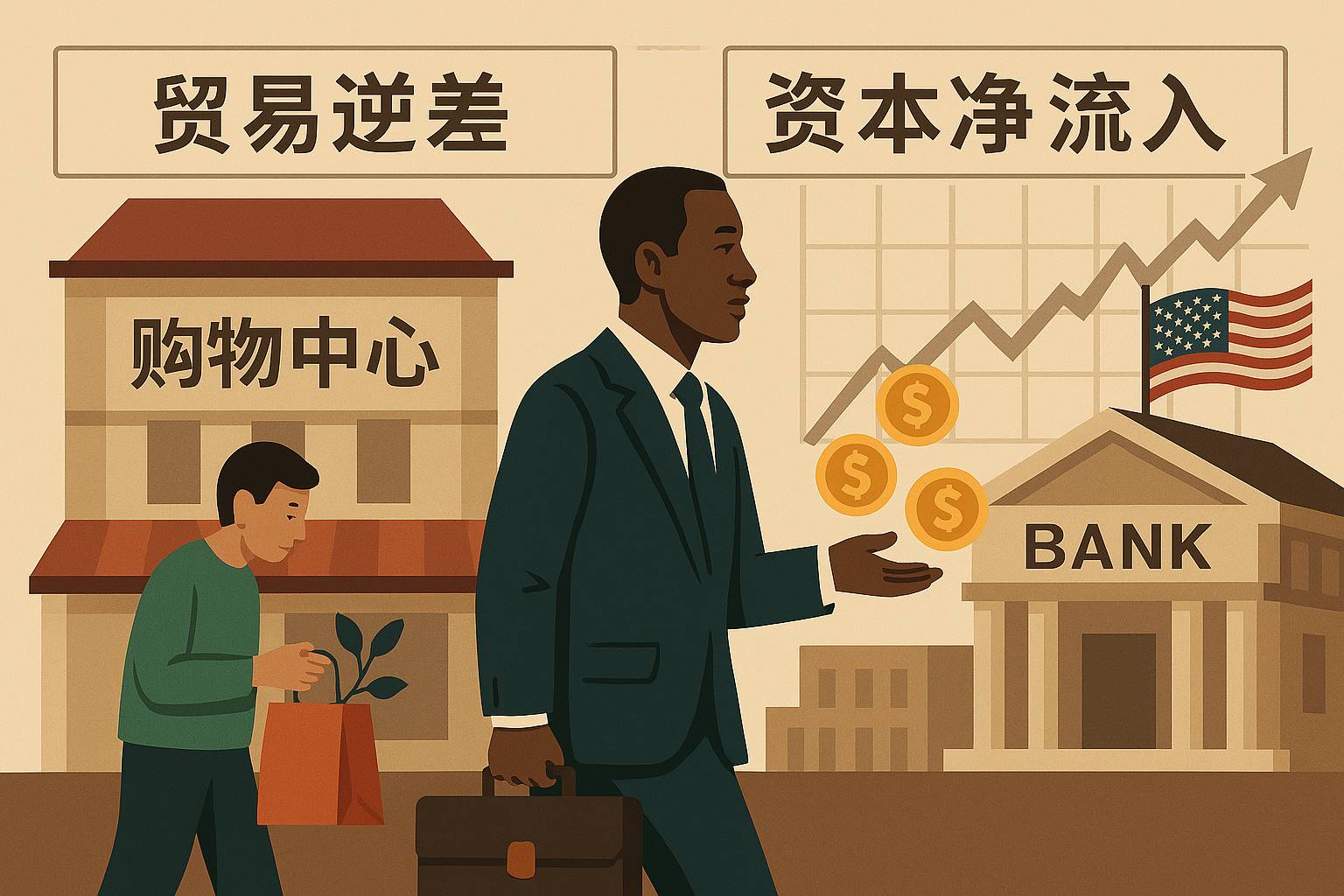
When discussing trade deficits, we often focus only on goods and services. But international trade also includes capital flows. Under dollar hegemony, U.S. trade deficits are often offset by large net capital inflows.
When the U.S. buys goods from abroad, dollars flow overseas. But those countries often reinvest those dollars back into U.S. financial markets—buying Treasuries, stocks, real estate. This capital inflow partially offsets the trade deficit.
Think of it as customers (foreign nations) shopping at a U.S. mall (the U.S. economy), then depositing their earnings back into the mall’s own bank (the U.S. financial system).
Data from the U.S. Department of Commerce shows the U.S. has long run trade deficits, yet consistently records financial account surpluses—meaning more capital flows in than out. This helps explain why the U.S. can sustain trade deficits without triggering economic collapse.
4.4 Triffin Dilemma: The Internal Contradiction of Dollar Hegemony
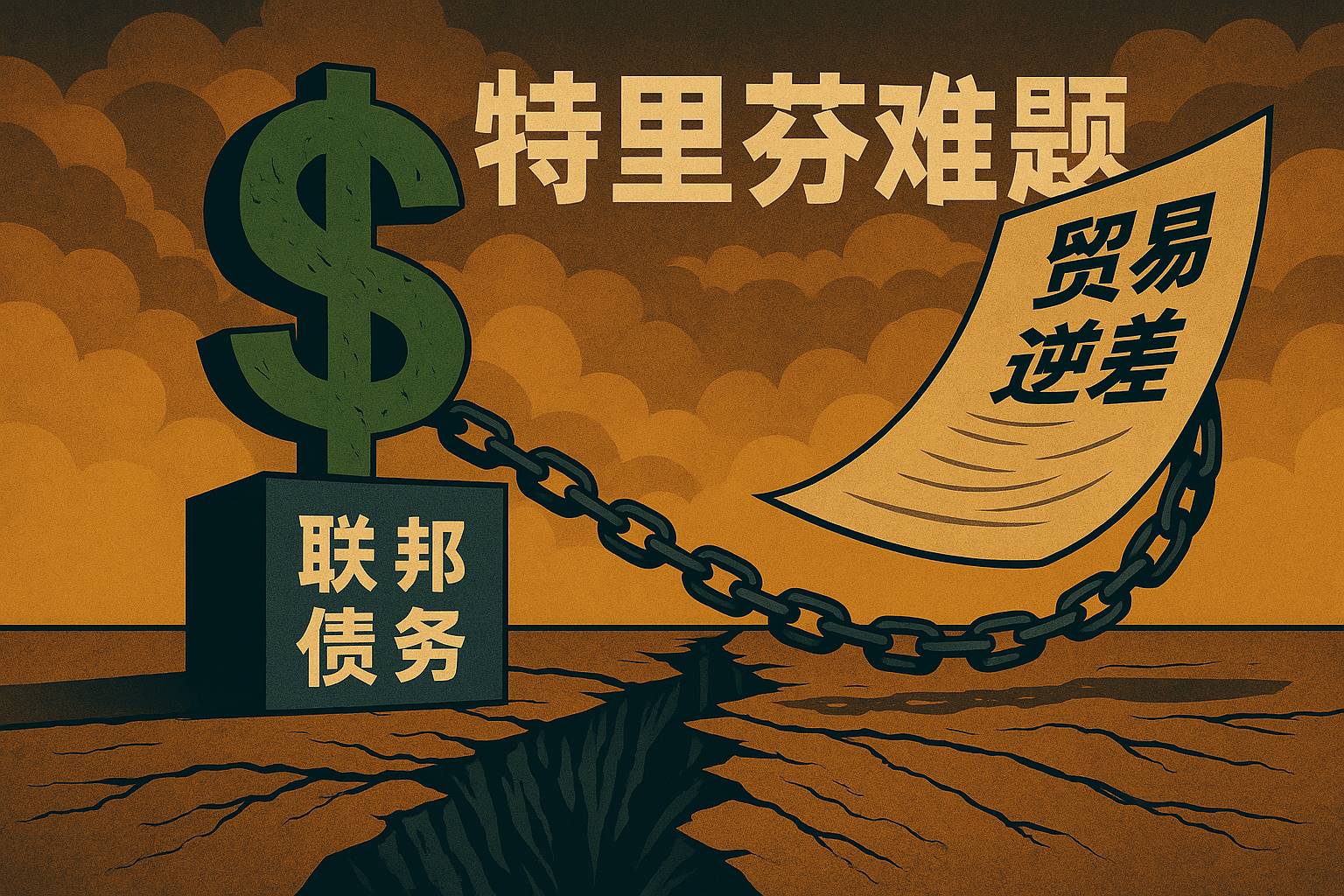
The dollar’s status as global reserve currency contains a famous economic paradox—the Triffin Dilemma, named after economist Robert Triffin in the 1960s.
Triffin argued that to meet growing global demand for dollars, the U.S. must continuously export dollars—requiring persistent trade deficits. Only through deficits can dollars circulate globally as reserves and transaction media.
Yet continuous deficits lead to mounting U.S. debt, undermining dollar credibility. If confidence wanes, nations may shift to other reserve currencies, threatening dollar supremacy.
Thus arises a dilemma: to maintain global liquidity, the U.S. must run trade deficits; but long-term deficits threaten dollar stability.
In short: being the leader isn’t easy.
4.5 Summary: Trade Deficits Under Dollar Hegemony
In sum, under dollar hegemony, U.S. trade deficits are unique. They’re not merely imbalances in goods and services but deeply tied to the dollar’s global reserve and settlement role. Dollar dominance grants the U.S. economic “privileges,” but also creates internal contradictions and latent risks.
Returning to the current tariff war: President Trump claims tariffs will reduce U.S. trade deficits and protect jobs and industries. But from the lens of dollar hegemony, U.S. intentions may be more complex.
Some analysts argue the real goal isn’t just reducing deficits, but maintaining U.S. leadership in global economics and technology. By pressuring specific countries and sectors, the U.S. may aim to force concessions on trade rules, intellectual property, and tech transfer.
Moreover, tariffs serve as geopolitical tools to reshape economic and political relations. Simply put, due to dollar hegemony, tariffs have been “weaponized.”
For the world, ending dollar hegemony is the fundamental solution to neutralizing U.S. tariff weaponization.
5. The Achilles’ Heel of Dollar Hegemony
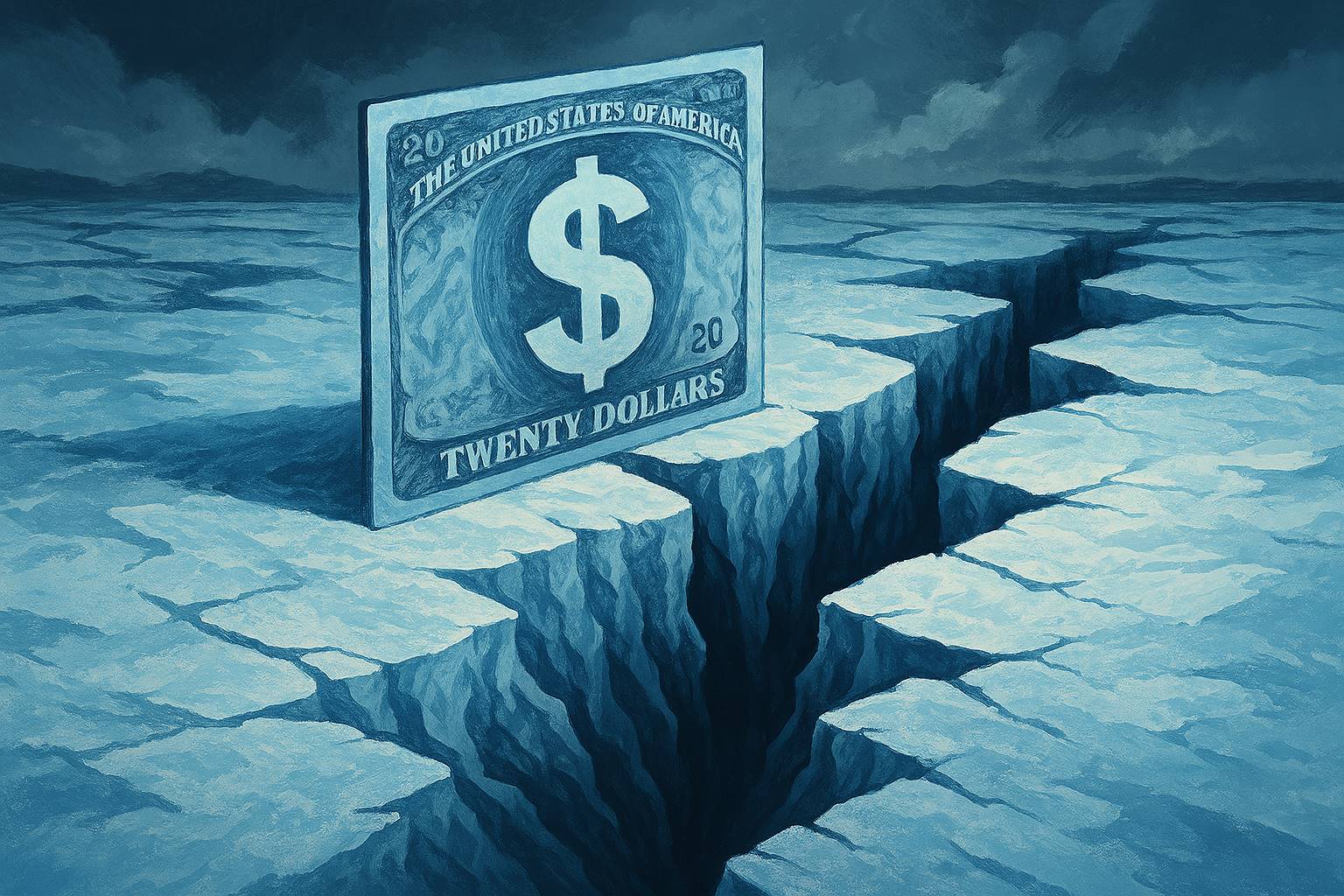
Dollar hegemony is like the Greek hero Achilles—seemingly invincible, yet hiding a fatal weakness. Behind its strength lie multiple economic and political vulnerabilities. If pierced by market forces or political change, the U.S. and global economy face unprecedented turmoil.
5.1 Unsustainability of Excessive Debt
To grasp the problem, consider the numbers: as of March 2025, U.S. federal debt exceeds $36.56 trillion—over 124% of GDP. This means annual U.S. debt exceeds total annual economic output.
Strangely, this massive debt hasn’t driven up financing costs. For decades, the dollar’s global status kept borrowing rates low. U.S. Treasury yields stayed low—for example, the 10-year yield averaged around 2% from 2020–2024, while high-debt nations like Brazil saw yields exceed 10%.
But this combination of huge debt and cheap borrowing is an unsustainable miracle. Once global investors lose confidence in U.S. repayment ability, borrowing costs surge, and dollar credibility faces a severe test.
The 2008 subprime crisis was the first serious challenge to dollar hegemony. Though the Fed rescued the situation with massive quantitative easing (QE), it planted seeds of deeper debt and inflation risks.
Since 2020, the U.S. government and Fed have conducted over $4.5 trillion in QE. Such staggering “money-printing” operations have again placed dollar credibility on the edge.
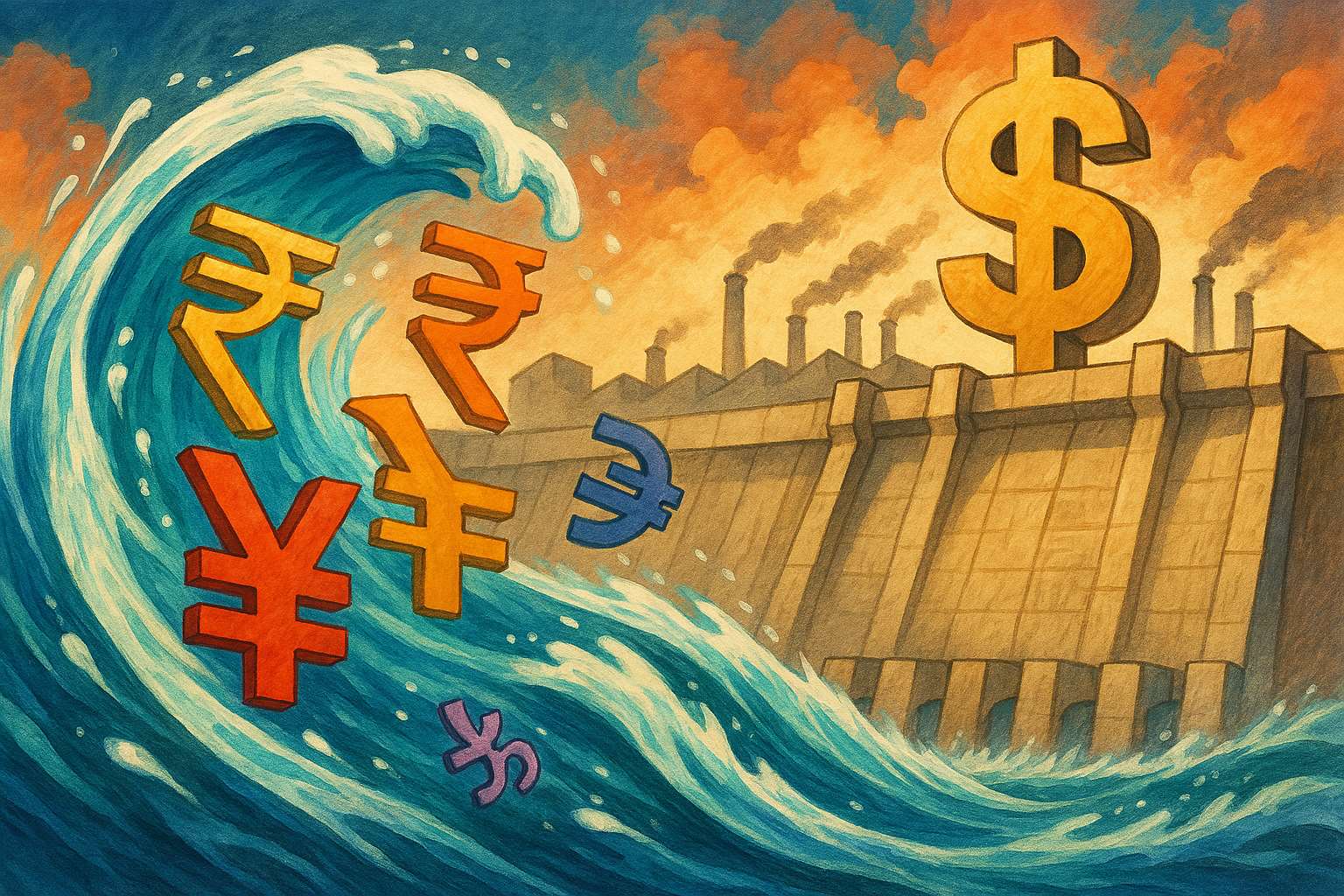
5.2 Global Backlash Against the Dollar System
Long-term U.S. use of the dollar system for sanctions and trade restrictions has bred global resentment. Data shows that between 2010 and 2024, the U.S. Treasury imposed over 20,000 financial sanctions and asset freezes via the dollar clearing system.
A recent example: during the 2022 Russia-Ukraine war, the U.S. imposed unprecedented financial sanctions—freezing ~$300 billion of Russian reserves and banning Russian banks from SWIFT.
Faced with dollar “financial hegemony,” more nations are actively seeking alternatives to bypass the dollar system. The BRICS nations (Brazil, Russia, India, China, South Africa) accelerated non-dollar trade settlements since 2023. In 2024 alone, non-dollar settlements in China-Russia trade exceeded 70%; India and UAE signed a 2023 agreement to settle bilateral trade in rupees; Brazil and Argentina advanced local-currency trading to reduce dollar reliance.
Further, at the August 2024 BRICS summit, leaders formally proposed a “BRICS common currency”—still exploratory, but clearly signaling accelerating de-dollarization.

5.3 Challenge From Decentralized Money
If de-dollarization efforts by nations remain preliminary, the rapid rise of digital currencies opens a whole new battlefield.
Cryptocurrencies like Bitcoin, with their decentralized and state-resistant nature, are drawing growing attention from investors, firms, and even governments. According to a 2024 Cambridge University report, over 300 million people globally have owned or used crypto.
Bitcoin hasn’t yet challenged the dollar’s reserve status, but offers a new model for wealth storage and cross-border payments. El Salvador became the first country to adopt Bitcoin as legal tender in 2021, followed by the Central African Republic in 2022. Though small, these moves send a clear signal: monetary sovereignty need not depend on the dollar system.
5.4 Possible Paths to the End of Dollar Hegemony
History shows no currency hegemony lasts forever. Spanish silver, Dutch guilder, and British pound once dominated, then faded. The dollar, though strong, will inevitably face cyclical challenges.
Experts identify three possible paths to its end:
First, accelerating global multipolarity. As U.S. economic influence declines and global重心 shifts to emerging markets in East/South Asia and the Middle East, more nations promote non-dollar settlement systems. Demand for the dollar as reserve currency fades, diluting its hegemony.
Second, a collapse in U.S. debt credibility. If markets seriously doubt U.S. solvency, borrowing costs spike, triggering a sovereign debt crisis. Global capital dumps dollar assets, causing a sudden loss of confidence and systemic collapse.
Third, widespread adoption of digital currencies, making global trade less dependent on dollar clearing. Once tools like digital yuan or decentralized cryptos become mainstream payment methods, global reliance on the dollar drops sharply. The dollar loses its role as a “financial weapon,” and its hegemony ends automatically.
But decentralized stablecoins—especially those unbacked by dollar assets—will emerge as strong contenders to replace the dollar.
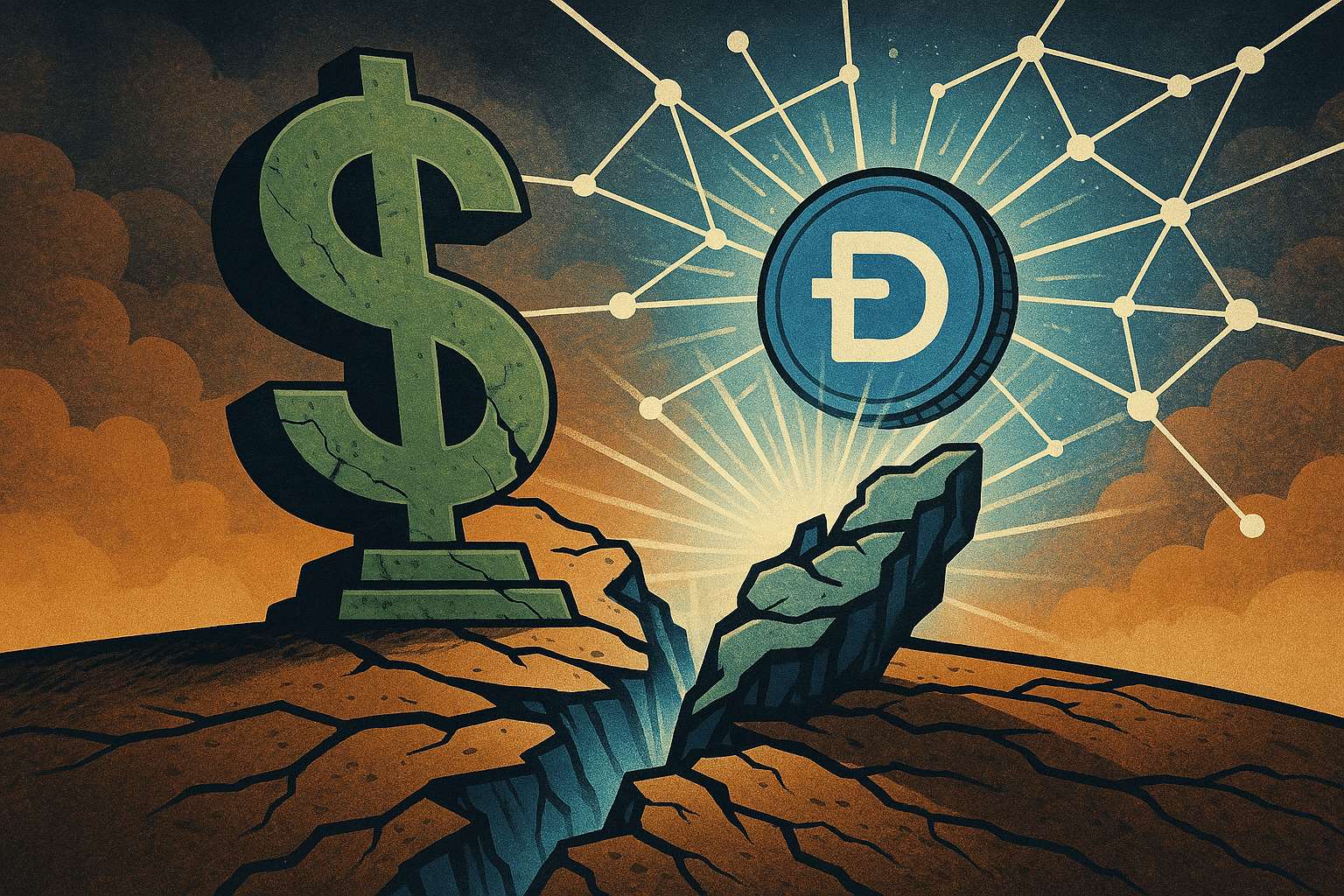
6. Decentralized Stablecoins Ending Dollar Hegemony
Over the past decade, the rise of crypto has revealed possibilities beyond traditional money. Within this trend, stablecoins—with their stable value, seamless cross-border payments, and decentralized potential—have become key forces reshaping the monetary landscape. But not all stablecoins qualify as viable successors to end dollar hegemony.
6.1 Classification and Mechanisms of Stablecoins
To understand them, we categorize stablecoins into three types:
Type 1: Fiat-Collateralized Stablecoins
These are backed 1:1 by traditional fiat currencies like USD or EUR. Notable examples include USDT (Tether) and USDC (USD Coin). As of April 9, 2025, USDT’s market cap reached $140 billion, USDC $60 billion—together dominating over 85% of the stablecoin market (see chart).
Their main advantage is simplicity and low perceived risk—as long as issuers fully back tokens with equivalent fiat reserves, price stability is maintained. But this also means their reliability hinges entirely on centralized entities (e.g., Tether, Circle), which are vulnerable to political, legal, and regulatory control.
Type 2: Crypto-Collateralized Stablecoins
Backed by other crypto assets (like ETH, BTC), these use over-collateralization to maintain price stability. Key examples include DAI (MakerDAO) and LUSD (Liquity)—decentralized stablecoins.
In August 2024, MakerDAO underwent a major rebranding, renaming itself Sky and changing DAI to USDS. For clarity, we’ll continue using the original names.
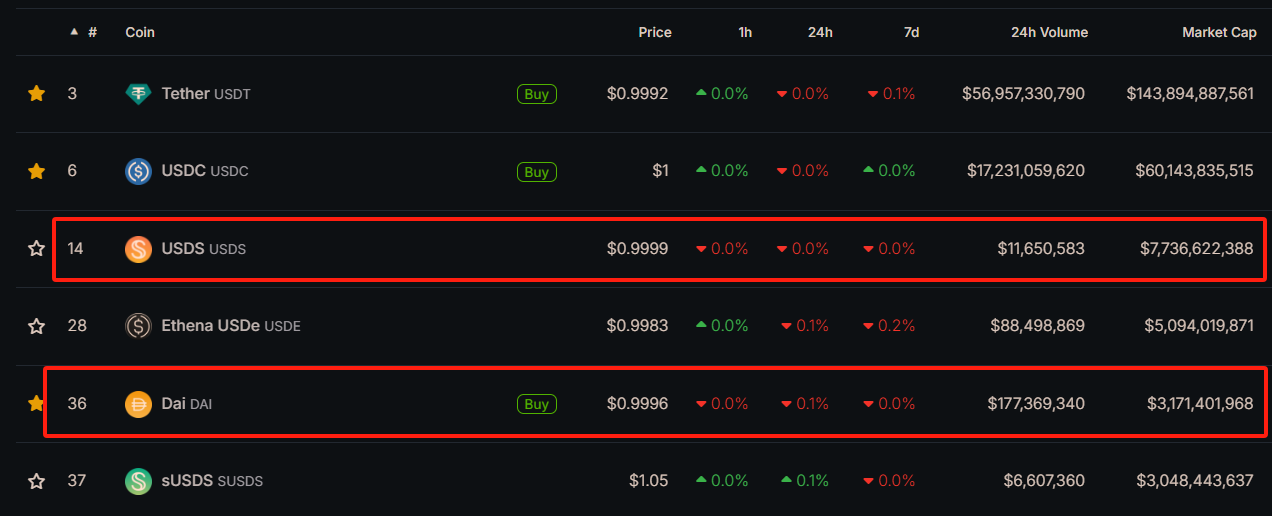
As of end-March 2025, DAI + USDS surpassed $10.8 billion in market cap, leading the crypto-collateralized segment (see chart). These stablecoins are far more decentralized than fiat-backed ones, as collateral consists of decentralized assets and issuance is automated via smart contracts, theoretically eliminating manipulation.
Type 3: Algorithmic Stablecoins (Uncollateralized)
Pioneered by Basis and later TerraUSD (UST), these lack direct asset backing and instead use algorithms to adjust supply and peg value to fiat (usually USD). The 2022 UST collapse caused massive market turmoil, leading many to declare algorithmic stablecoins dead. However, newer models like Frax and Reflexer are slowly rebuilding trust.
Still, lacking real asset backing, their long-term stability remains unproven.
6.2 Why USDT and USDC Can’t End Dollar Hegemony
Back to the central question: why can’t dollar-backed stablecoins like USDT and USDC replace the dollar as the new hegemonic currency?
The core reason: their value remains tightly anchored to dollar assets, which are ultimately controlled by the U.S. government and regulators.
Consider real-world cases:
During the 2022 Russia-Ukraine war, the U.S. imposed historic financial sanctions, freezing over $300 billion of Russian reserves—including dollar-backed instruments. The U.S. Treasury then explicitly warned all U.S.-regulated stablecoin issuers to freeze accounts linked to Russian entities.
Circle (USDC issuer) promptly complied, freezing millions of dollars in USDC. This demonstrated clearly: USDC and similar dollar-backed stablecoins are essentially blockchain versions of the dollar—unchanged in essence. Their assets remain under the powerful jurisdiction of U.S. regulators.
Now consider USDT. Between 2021 and 2024, Tether froze dozens of addresses totaling hundreds of millions of dollars at the request of the U.S. DOJ and NY Attorney General. Despite Tether claiming registration in the British Virgin Islands and independence from U.S. law, under pressure from the global dollar network, it still had to comply.
Critically, this power mirrors the SWIFT system. The U.S. can command any dollar-backed stablecoin issuer to freeze accounts and cut off funds. Thus, dollar-collateralized stablecoins cannot escape direct U.S. control—and therefore cannot truly replace the dollar’s global financial dominance.

6.3 The True Successor: Decentralized Stablecoins Unlinked From Dollar Assets
The stablecoin capable of breaking this deadlock must be fully decoupled from dollar assets—uncensorable and thoroughly decentralized.
What features would such a stablecoin have? Starting with MakerDAO’s DAI, the ideal future model might include:
Diversified, Decentralized Collateral: No longer relying on USD or dollar assets, but instead using decentralized assets like BTC, ETH, or tokenized gold and non-dollar commodities.
Fully Decentralized Governance: Minting, collateralization, and liquidation managed entirely by smart contracts, immune to unilateral control by any central authority or state.
No Single Point of Regulatory Failure: Collateral distributed globally across nodes, making it impossible for any government or institution to freeze or seize—thus fully escaping U.S. financial hegemony.
Once a stablecoin’s collateral is fully de-dollarized, the U.S. is effectively ejected from the center of this monetary game, losing its seigniorage income entirely.
Seigniorage is the extra gain the U.S. enjoys by issuing dollars that the world willingly holds—e.g., the U.S. saves hundreds of billions annually in interest costs thanks to global reserve status (estimated savings on Treasury interest exceeded $250 billion in 2023 alone).
But when stablecoins shift entirely to BTC, ETH, or gold, nations and institutions no longer need to hold dollar assets as collateral. The U.S. loses the right to print near-zero-cost “paper” to exchange for real global goods.
From that moment, the U.S. Treasury can no longer easily finance itself at low cost by issuing bonds backed by the dollar’s global status. This new stablecoin paradigm cuts off the invisible channel through which the U.S. has long harvested global wealth via seigniorage and cheap financing.
6.4 Summary: Decentralized Stablecoins Are the Key to Ending Fiat Hegemony
Once such decentralized stablecoins achieve broad adoption, they will fundamentally reshape finance:
Nations can trade without relying on dollar-clearing systems like SWIFT, escaping threats of sanctions and freezes.
Global capital flows become far freer and safer—no longer subject to arbitrary blocking or weaponization in geopolitical conflicts.
Funding costs drop significantly, eliminating the invisible “seigniorage tax” and “dollar tax” paid under dollar dominance.
As blockchain and decentralized governance mature, the global economy may gradually break free from dollar hegemony, entering a truly open and free financial era.
Decentralized, de-dollarized stablecoins could become a new world currency—one that doesn’t create a new hegemony.
Conclusion
The dollar era may end—not because America weakens, but because the world no longer wants to entrust its fate to a piece of paper that can instantly become a weapon.
History reminds us: behind money are never just cold numbers, but human trust and freedom. As the dollar repeatedly uses its dominance to drag the global economy into division and stagflation, a new financial order quietly rises.
The emergence of decentralized stablecoins signifies not just innovation in financial tools, but an awakening of humanity’s spirit of monetary freedom. Truly secure wealth isn’t protected by power, but built on technology and consensus. The future global economy belongs to decentralized currencies that no authority can freeze or censor.
When stablecoins no longer depend on dollar assets, dollar hegemony will fade. We stand at a historical turning point—not just witnessing the outcome of a tariff war, but the dawn of the end of monetary hegemony.
So what should stablecoins rely on instead of the dollar? Bitcoin—the native cryptocurrency. And now, the answer to the initial question for ordinary people becomes clear. Simply put: start dollar-cost averaging (DCA) into Bitcoin now, after setting aside living expenses. For more details, see *Bitcoin: The Ultimate Risk-Hedging Strategy for Long-Term Thinkers?*.
Perhaps years from now, looking back, people will marvel:
The dawn of monetary freedom quietly began in this silent war.
It may not have been loud, but it will profoundly change the world.
Join TechFlow official community to stay tuned
Telegram:https://t.me/TechFlowDaily
X (Twitter):https://x.com/TechFlowPost
X (Twitter) EN:https://x.com/BlockFlow_News
 @yzdxs8