








Tariff threats persist—will cryptocurrencies pay the price for trade wars?
TechFlow Selected TechFlow Selected
Tariff threats persist—will cryptocurrencies pay the price for trade wars?
Do not go gentle into that good night. We can only wait for dawn to arrive.
 Navigating Web3 tides with focused insights
By Bright, Foresight News
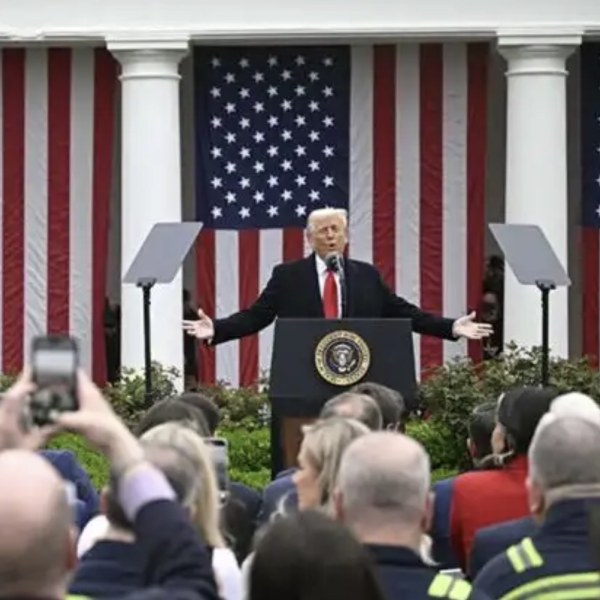
On the evening of April 8, White House officials announced that the additional 104% tariffs on China took effect at noon Eastern Time and would be formally imposed starting April 9. Immediately afterward, financial markets—which had been recovering—plunged sharply across the board, with the Nasdaq Index swinging as much as 8%.
Markets in Ruins, Players Disillusioned
By the morning of April 9, crypto markets grew increasingly panicked and dropped further. Bitcoin fell from $78,500 to $74,627, while Ethereum slid from $1,533 to $1,385.38, breaching its "Black Monday" low. SOL held relatively better, dipping to a low of $101.26 with a 5.63% decline. Total cryptocurrency market capitalization dropped over 4%, falling to $2.42 trillion. Bitcoin’s dominance rose to 62.48%, and the Altcoin Season Index declined to 16.
In terms of liquidations, according to CoinGlass, more than 134,500 positions were liquidated in the past 24 hours, totaling $390 million in liquidation volume, including $296 million in longs. The largest single liquidation occurred on Binance, valued at $3.171 million.
Meanwhile, global financial markets performed bleakly under the shadow of escalating tariffs. Nvidia, which was up over 8% earlier in the session, closed down over 1%. Tesla, previously up over 7%, ended nearly 5% lower. Peabody Energy surged over 20% after hours. Two-year U.S. Treasury yields plunged nearly 20 basis points intraday. The Bloomberg Commodity Index tumbled, with WTI crude oil prices breaking below $60 again. Crude oil recorded its fourth consecutive day of declines, hitting four-year lows and briefly dropping over 4%. Spot gold turned negative after a failed rebound; silver futures rose over 3% intraday before reversing to losses; copper briefly flipped from over 4% gains to more than 2% down.
In such dire market conditions, even major players are suffering.
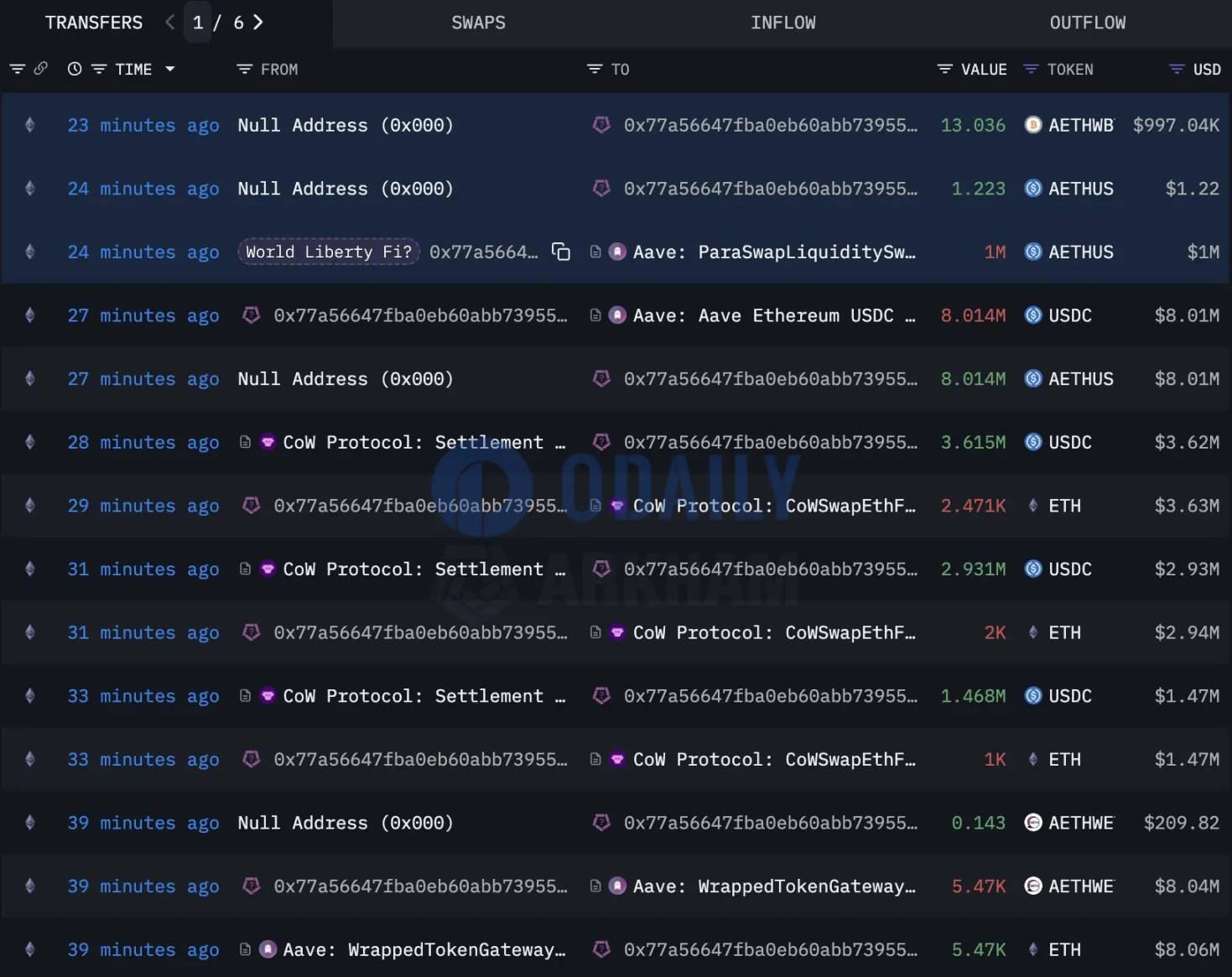
According to Lookonchain, a wallet likely linked to World Liberty (@worldlibertyfi) sold 5,471 ETH at an average price of $1,465 about half an hour ago. In fact, this address previously spent approximately $210 million acquiring 67,498 ETH at an average cost of $3,259, resulting in an unrealized loss of around $125 million.
Ryuta Otsuka, strategist at Toyo Securities, said, “The entire market could face selling pressure regardless of sector, especially as long-term investors begin to retreat.” Crypto sentiment has deteriorated accordingly. A whale who accumulated 254,900 ETH during the Ethereum ICO period has recently transferred large amounts to exchanges and already sold approximately 230,000 ETH—90.2% of their holdings.
Additionally, Strategy disclosed in an 8-K filing submitted to the SEC on April 7 its standard risk factors, indicating that if Bitcoin prices continue to fall, Strategy might have to break Michael Saylor’s pledge of “never selling Bitcoin.” Since Trump’s election victory, Strategy has purchased 275,965 BTC at an average price of $93,229, currently sitting on an unrealized loss of $4.6 billion.
Tariff Shadows and Rate Cut Signals
The imposition of an additional 104% tariff on China shows that Trump’s tariff hammer shows no sign of stopping. Earlier, Bill Ackman, billionaire founder of Pershing Square, warned global leaders: “Don’t wait for war to start negotiations—call the president now.” However, when Vietnam attempted to appease the Trump administration by offering zero tariffs on U.S. goods, Trump’s advisors dismissed the gesture. Prior to April 9, markets speculated that the Trump administration would use the window before tariff implementation to negotiate trade deals. But repeated statements from the White House forced investors to confront the reality of what could become an economic crisis worse than the 1929 Great Depression, triggering a wave of risk-off selling. The S&P 500 has erased nearly $6 trillion in value, recording the worst four-day drop in history.
U.S. Treasury Secretary Scott Bessen emphasized that tariffs are essentially “maximizing leverage” in negotiations rather than permanent economic barriers. Yet while markets can tolerate uncertainty, they cannot withstand policy speculation backed by raw power.
Despite Trump repeatedly pressuring the Federal Reserve to cut rates—even claiming that “artificial market selloffs favor rate cuts”—the Fed, led by Powell, has remained firm on its timeline. Markets once looked to the Fed as a savior. This time, however, capital is clearly unwilling to finance political gambles.
Deep Transformation and Renewed Hope
Ray Dalio, founder of Bridgewater Associates, recently stated that markets are overly focused on the surface-level tariff issue while missing deeper systemic transformations. Dalio believes we are witnessing the simultaneous restructuring of five major forces: the collapse of monetary and economic order; the disintegration of domestic political order in the United States; the reorganization of international geopolitical order; the destructive impact of natural disasters; and the profound influence of technological change.
Historically, when monetary, political, and geopolitical orders collapse, dramatic upheavals often follow—such as depressions, civil wars, and world wars—eventually giving rise to new systems.
Matt Hougan, Chief Investment Officer at Bitwise, remains optimistic that Bitcoin will serve as a core asset in the emerging new order, predicting it could still reach $200,000 by year-end. He noted that in the short term, a weaker dollar benefits Bitcoin. Over the past five years, Bitcoin’s correlation with the U.S. Dollar Index has ranged between -0.4 and -0.8: when the dollar falls, Bitcoin rises—and this trend is likely to persist.
In the long run, the outlook is even more positive. Global macro instability creates space for new reserve assets to emerge. It makes sense: governments and corporations adopted the dollar in international trade because of its stability. When that stability is questioned, institutions must seek alternatives.
In such circumstances, the case for Bitcoin becomes clear: amid geopolitical tensions and turmoil in the global monetary system, where else can investors turn for a scarce, global, digital store of value that is independent of any government or entity? As the world shifts from a single-reserve currency (the dollar) toward a more fragmented reserve system, Bitcoin will become the most sought-after hard currency. Ultimately, chaos will give way to progress.
Join TechFlow official community to stay tuned
Telegram:https://t.me/TechFlowDaily
X (Twitter):https://x.com/TechFlowPost
X (Twitter) EN:https://x.com/BlockFlow_News
 Foresight News






