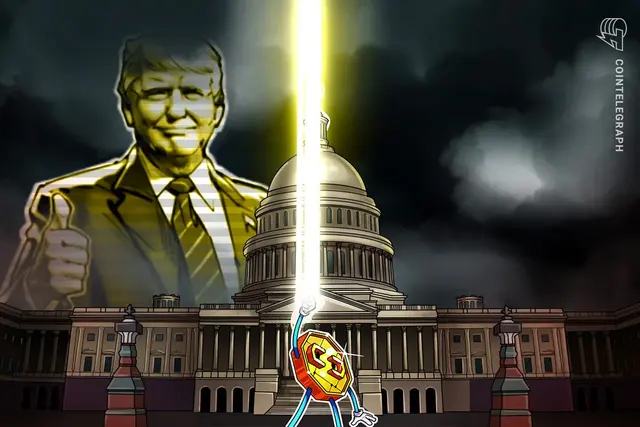
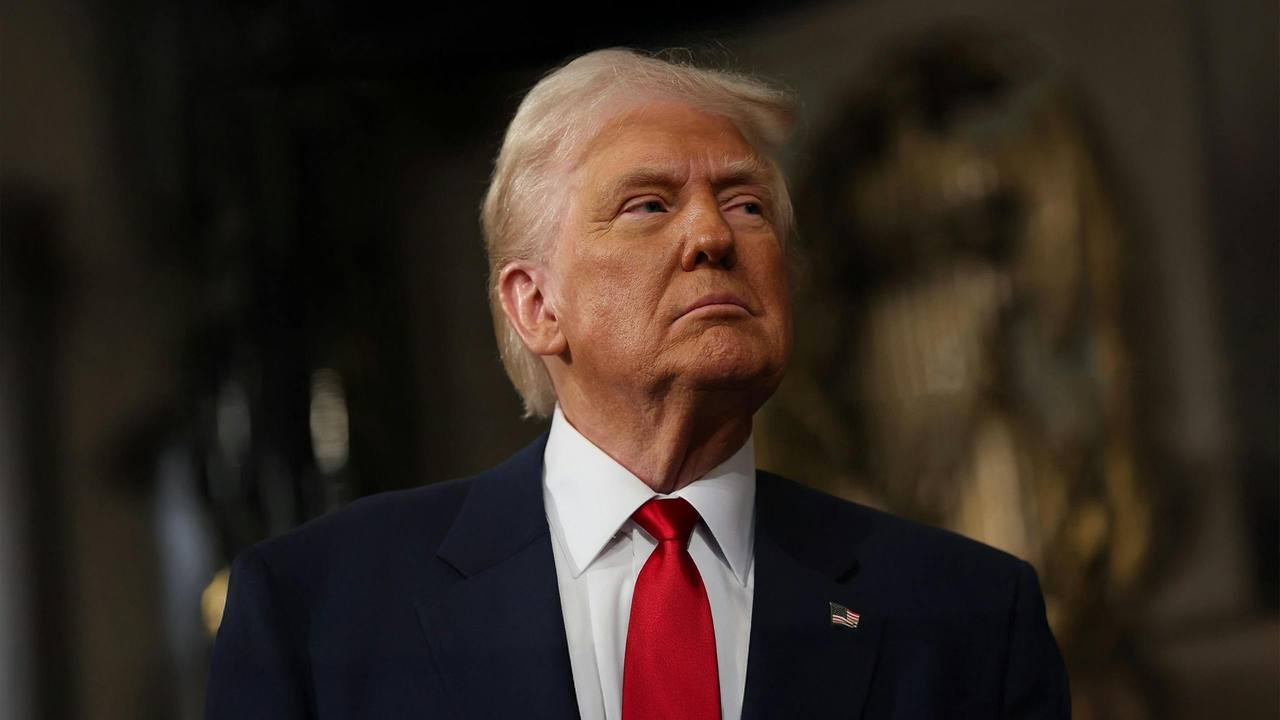
Long-term national policy or negotiation tactic? How to understand Trump's "crazy tariffs"?
TechFlow Selected TechFlow Selected
Long-term national policy or negotiation tactic? How to understand Trump's "crazy tariffs"?
As the creator of "uncertainty," Trump likewise does not want to face "uncertainty" himself before next year's midterm elections.
 Navigating Web3 tides with focused insights
Author: Alex Xu, Mint Ventures
On April 2 at 4:00 PM Eastern Time (after U.S. stock markets closed), Trump unveiled his "reciprocal tariffs" plan.
He calculated the new "reciprocal" tariff rate by taking each major trading partner’s physical goods trade surplus with the U.S. from last year, dividing it by their total merchandise exports, and then halving that figure.
Does this logic make sense? It doesn't matter.
All he needs is a pretext to start a fight.
Following this announcement, global markets—including crypto assets—plunged into chaos.
The current market confusion around Trump’s tariff plan centers on one key question: Are these increased tariffs a long-term national policy of the Trump administration, or merely a negotiation tactic aimed at extracting concessions from trade partners and large corporations?
If it's the former, then as many suggest, this could fundamentally reshape global trade dynamics, signaling America’s shift toward isolationism—an outcome clearly detrimental to the global economy in the long run.
But if it's the latter, then perhaps April 2 marked the peak of fear in this trade war cycle. From here onward, as multilateral negotiations progress, consensus between the U.S. and its bilateral or multilateral counterparts may gradually emerge, calming market panic and allowing asset prices to return to fair value levels.
Although during his campaign and early presidency Trump frequently framed tariffs as a core policy—claiming they would force manufacturing reshoring and fulfill political promises to Rust Belt and working-class voters—with unwavering conviction,
I still believe tariffs are primarily a bargaining chip for him. His ultimate goal in these negotiations is to secure enough political achievements, possibly including:
• More overseas orders: Other countries purchasing more American goods (grains, energy, weapons, commercial aircraft)
• More domestic jobs: Major companies investing in factories within the U.S. (e.g., TSMC)
• Strategic containment of rivals: Forcing fence-sitting nations to align with the U.S. to further isolate China (Vietnam and South Korea have already announced high tariffs on Chinese steel exports)
Additionally, the asset sell-off and recession fears triggered by tariff disruptions have placed immense pressure on Powell, whom Trump cannot directly control. Unable to use executive power to force the Fed to cut rates, Trump may instead rely on a faltering economy and collapsing stock market to push monetary easing.
Therefore, as long as he and his team can withstand the current pressure, once these seemingly irrational tariff demands begin yielding tangible results through negotiations, public perception of him will gradually improve.
These achievements will translate into greater political influence, justify further consolidation of power, and help Republicans gain advantage in next year’s midterm elections.
But is there a chance Trump genuinely views tariffs as a long-term national strategy—believing they can force manufacturing reshoring, reverse the hollowing-out of American industry, and create more jobs?
The problem is neither time nor space allows for such a long game. With midterm elections looming next year, prolonged high tariffs leading to economic recession, stock market crashes, and asset inflation would almost certainly cost Republicans their narrow majority in the House (possibly even the Senate), turning Trump into a “lame-duck president” over his final two years, unable to pass any meaningful legislation.
There simply isn’t enough time or political room to implement such a long-term policy. If the stock market and crypto markets collapse next year, he won’t just fail at executing long-term policies—he won’t even survive short-term.
So this scenario remains unlikely.
In fact, less than a week after announcing reciprocal tariffs, as talks with multiple countries have begun and concrete negotiation outcomes emerge, the Trump team has already started softening its rhetoric on tariffs.
For example, today Kevin Hassett, Director of the National Economic Council, stated: “Over 50 countries have now reached out to the White House to begin trade negotiations. President Trump is not trying to destroy markets by destroying the U.S. market.”
Shortly afterward, trade advisor Peter Navarro said Trump seeks to reduce both tariff and non-tariff barriers. This individual is one of the main proponents of Trump’s tariff policies and recently fiercely criticized Musk’s free-trade stance.
Could unexpected developments still occur during this process?
Possibly.
For instance, negotiations with America’s most significant trade partners—especially the EU and China—could stall. Both have either already implemented retaliatory measures or threatened retaliation should talks fail (by April 13). On the day the "reciprocal tariffs" were announced, Treasury Secretary Bessent warned: “Don’t retaliate, or the U.S. will escalate.”
This situation could lead to deadlock, or even short-term escalation (mutual increases in tariffs). However, given that most other countries are actively engaging in talks with the U.S., the overall situation is unlikely to deteriorate significantly beyond current levels.
After all, Trump’s core objective remains securing more “achievements” before next year’s midterms—not letting soaring inflation and a crashing stock market derail the second half of his term.
Thus, it benefits Trump more to act “crazy” early and move quickly into negotiations.
As a creator of “uncertainty,” Trump himself does not want to face uncertainty heading into next year’s midterm elections.
Join TechFlow official community to stay tuned
Telegram:https://t.me/TechFlowDaily
X (Twitter):https://x.com/TechFlowPost
X (Twitter) EN:https://x.com/BlockFlow_News
 Mint Ventures