Airdrop Sparks Discussion, Mainnet Countdown: What's Special About Nillion, the Blind Computation Network That Secured $50 Million in Funding?
TechFlow Selected TechFlow Selected
Airdrop Sparks Discussion, Mainnet Countdown: What's Special About Nillion, the Blind Computation Network That Secured $50 Million in Funding?
Explore Nillion by delving into its operational mechanics and strong ecosystem performance, shedding light on the project's future prospects and the potential of the blind computing sector.
 Navigating Web3 tides with focused insights
Written by: TechFlow
On March 20, 2025, decentralized blind computing network Nillion unveiled its $NIL tokenomics model, signaling that the Token Generation Event (TGE) and mainnet launch are entering the final countdown.
The first quarter of 2025 has seen no shortage of high-profile TGE projects, yet Nillion’s launch has still sparked significant discussion within the community.
On one hand, with former Uber founding engineer Conrad Whelan entering Web3, Nillion stands out as a star project at the intersection of privacy, data, and AI: in December 2022, it raised $20 million in a seed round at an $180 million valuation, led by Distributed Global; in October 2024, Nillion secured another $25 million in funding led by Hack VC, bringing its total funding to over $50 million.
On the other hand, prior to its TGE, Nillion faced backlash over leaked airdrop details and early supporters being excluded from rewards. In response to the controversy, Nillion swiftly implemented a series of corrective measures—including a detailed community clarification article by CMO Charlie Rogers and the rapid rollout of a new airdrop lookup tool—demonstrating strong crisis management capabilities and a firm commitment to ensuring rewards go to genuine long-term supporters, ultimately turning sentiment around and earning widespread praise.
Privacy is a fundamental human right.
In Web2, whether it's incessant spam calls, messages, or emails, or personal information, facial recognition data, and shopping records being openly sold in Telegram bots or groups, privacy breaches have clearly reached a critical point.
It is precisely for this reason that the Web3 privacy sector—aiming to resolve these issues through decentralization—has remained a focal point of attention.
As a decentralized "blind computing" network, what makes Nillion unique?
With the upcoming TGE and official mainnet launch, will Nillion enter a new phase of development and lead innovation in the privacy space?
This article dives into Nillion, exploring its operational mechanics and strong ecosystem performance to assess the future prospects of the project and the broader blind computing sector.
Image source: Twitter @nillionnetwork
Transparent Rules, Confident Community: Nillion Airdrop to Launch Alongside TGE on March 24
In the crypto world, the success of an airdrop carries significant weight for any project—it’s often a “do or die” moment:
If airdrop criteria are unclear and Sybil attacks rampant, the ecosystem descends into chaos, leaving the project under immense public scrutiny;
If airdrop rules are transparent and rewards fairly distributed based on actual contributions, it not only unites a strong community but also lays a solid foundation for the long-term sustainability and circulation of the project’s economic system.
Image source: Nillion website
Unfortunately, Nillion’s airdrop rollout hit a snag early on: on March 8, a leaked version of the Nillion airdrop plan spread widely across the community. Worse, many early supporters discovered they were absent from the list, sparking frustration.
As negative sentiment began to grow, Nillion quickly recognized the issue and took immediate action:
CMO Charlie Rogers published a comprehensive article clarifying the airdrop rules, addressing key concerns such as eligibility, contribution metrics, and Sybil resistance, effectively alleviating community uncertainty.
Meanwhile, Nillion rapidly launched an updated version of its Airdrop Allocation Checker, allowing users to connect their wallets and view personalized results—including badges and airdrop tiers. Eligible participants receive a custom digital card:
-
GOLD tier: 1,000 – 3,000 tokens
-
DIAMOND tier: 3,000+ tokens
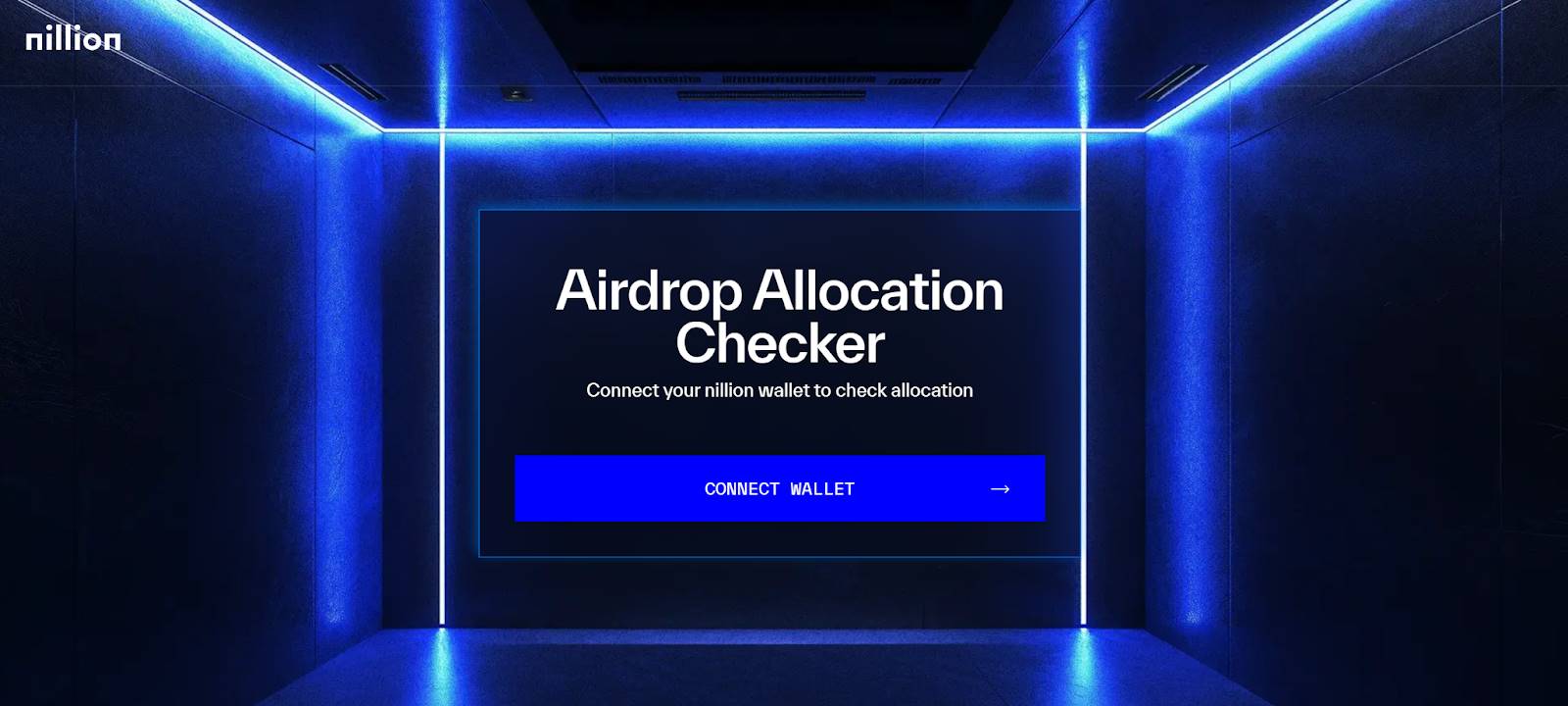
Image source: Nillion Airdrop Allocation Checker
Additionally, Nillion eliminated the originally planned 90-day pre-staking lock-up period, unlocking all pre-staking rewards on day one—a clear signal of its commitment to rewarding the community.
Nillion’s decisive and effective handling of the situation not only demonstrated thorough preparation for the airdrop but also conveyed deep respect for ecosystem contributors through the clear and transparent rules outlined in CMO Charlie Rogers’ post.
Specifically, Nillion’s airdrop targets three core groups, encompassing both technical and non-technical contributors:
For each group, Nillion has published detailed criteria aimed at accurately identifying long-term participants and genuine contributors, ensuring rewards flow to those who create positive value for the project.
-
Community Contribution
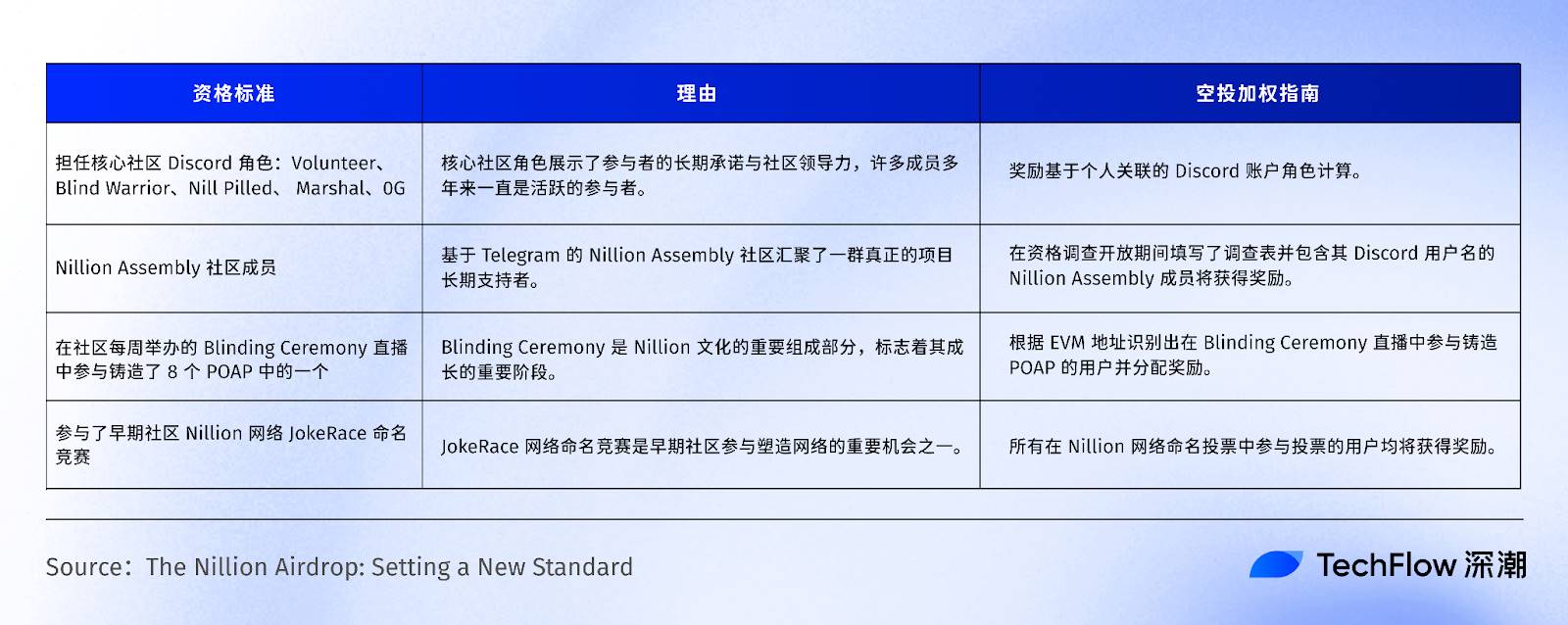
Image source: Translation from Nillion CMO’s article “The Nillion Airdrop: Setting a New Standard”
-
Developer & Open Source Contributions
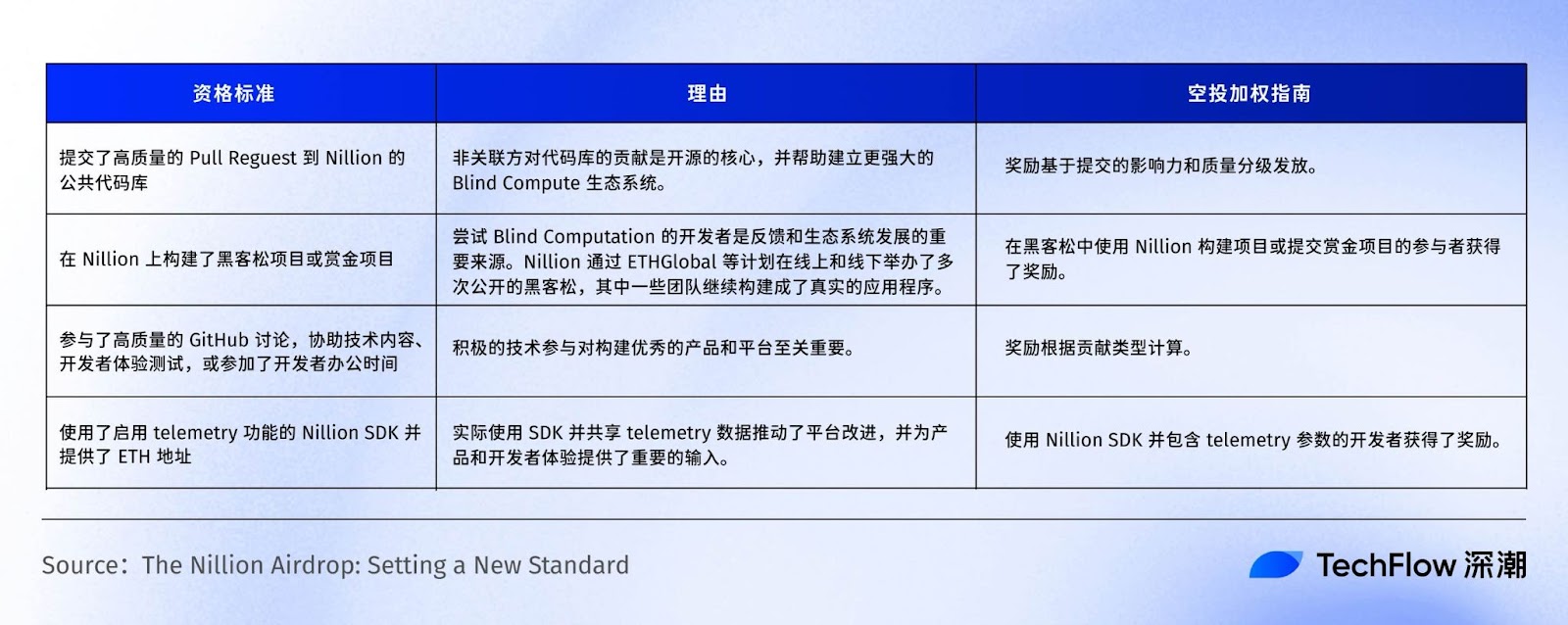
Image source: Translation from Nillion CMO’s article “The Nillion Airdrop: Setting a New Standard”
-
Validator Program Participation
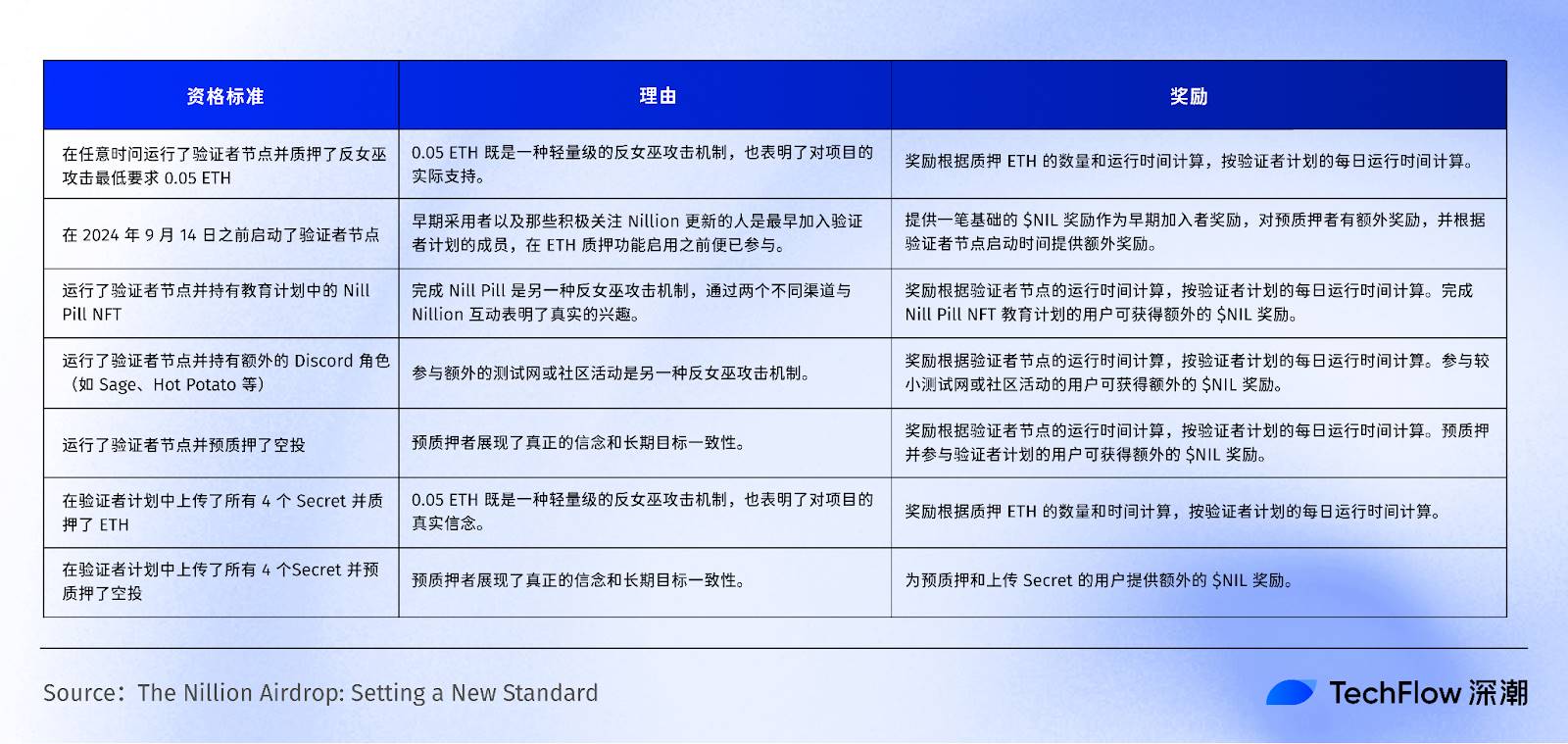
Image source: Translation from Nillion CMO’s article “The Nillion Airdrop: Setting a New Standard”
In today’s environment where airdrops have become industrialized and Sybil attacks increasingly common, Nillion has introduced strict standards to resist one-click node services that simplify mining, filtering out pure "farmers." Based on current disclosures, two types of participants will be excluded from the airdrop:
-
Low-engagement Secret submitters: Submitted only 4 Secrets; did not stake any ETH; holds no Discord roles (including reward roles); does not own a Nill Pill NFT.
-
Low-engagement late validators: Joined the validator program after September 14, 2024; did not stake any ETH; holds no Discord roles (including reward roles); does not own a Nill Pill NFT.
While some professional farmers on social media have criticized this as overly exclusionary—even arguing that one-click services represent a form of participation—the majority have praised Nillion’s approach: clear standards, transparency, and a focus on long-term value. Nillion is setting a new benchmark for how crypto communities operate.
Nillion has now revealed the $NIL tokenomics: as the native utility token of the ecosystem, $NIL will be used to pay for computation and storage, incentivize validators, and in the future, serve as a key governance mechanism.
The total supply of $NIL is 1 billion tokens, with an initial circulating supply of 19.52% (approximately 195.15 million). The distribution breakdown is as follows:
-
Ecosystem & R&D: 29%
-
Community: 20%
-
Protocol Development: 10%
-
Early Supporters: 21%
-
Core Contributors: 20%
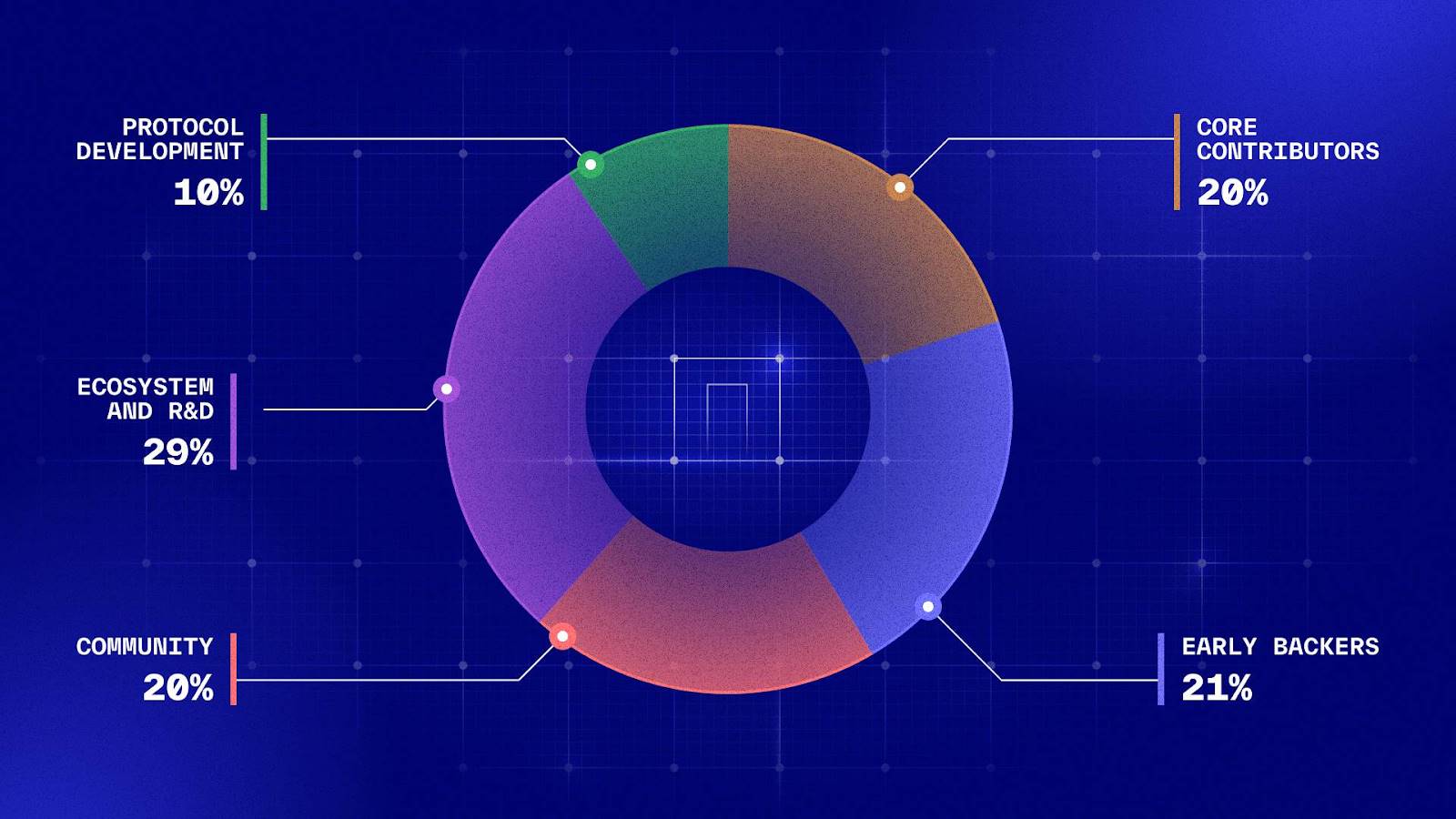
Image source: Twitter @nillionnetwork
The $NIL token launch will coincide with the Nillion mainnet genesis, Blind Module Alpha mainnet, and community airdrop on March 24. At launch, unlocked $NIL tokens will be distributed via airdrops and community sale participants.
Certainly, such open and transparent airdrop rules have drawn even more attention to Nillion, the rising star in the privacy sector, prompting deeper curiosity:
What exactly is Nillion’s decentralized blind computing network? How does it differ from other privacy solutions?
Focusing on High-Value Data, Building a Super Privacy Tool: Inside Nillion’s Blind Computing Network
Briefly put, Nillion’s mission is this: enabling high-value data to be stored, transmitted, and processed while fully encrypted.
This statement can be broken down into two parts:
First: High-Value Data.
Nillion focuses on highly sensitive, valuable private data—information critical to individuals or organizations, such as personal medical or genetic data. Leaks of such data can have severe consequences. These require stronger security safeguards, and once “data is usable but unseen,” they unlock powerful new applications and help build a fairer data economy.
Second: Storage, transmission, and processing under full encryption.
Many privacy solutions aim to achieve end-to-end encrypted data handling. Popular blockchain privacy technologies include zero-knowledge proofs (ZK), multi-party computation (MPC), fully homomorphic encryption (FHE), and trusted execution environments (TEE).
Nillion aims to build a blind computing network where users trust no single party. Nodes collaborate to compute data without ever seeing the plaintext—remaining blind to both inputs and outputs.
So, what is “blind computing”?
It’s a broad concept—an umbrella term for techniques that perform computation without exposing input data. It represents the convergence of multiple cryptographic and secure computing technologies.
There’s a famous Chinese reform-era slogan: "It doesn't matter if a cat is black or white, as long as it catches mice."
Nillion’s philosophy aligns closely with this idea:
Different privacy computing methods each have strengths and ideal use cases, but also limitations—MPC often struggles with communication overhead, FHE with computational cost, and TEE with trust assumptions. Single approaches often face trade-offs between efficiency, security, and scalability, making them unsuitable for diverse real-world privacy needs.
Hence, Nillion aims to build a flexible, efficient development environment that aggregates all privacy technologies. For varying requirements across use cases, developers don’t need to understand the underlying privacy tech—Nillion’s compiler automatically selects the optimal combination, enabling easy development of privacy-preserving applications.
Within this “blind computing network,” Nillion adopts a parallel dual-layer architecture: Petnet and NilChain.
NilChain acts as the network’s “orchestration center” and “incentive engine.”
Built on Cosmos SDK, NilChain manages nodes, schedules tasks, coordinates across clusters, and handles payments and settlements. It supports IBC (Inter-Blockchain Communication) for interoperability with other chains. For example, NilChain tracks node staking and reputation, assigns computing tasks to appropriate Petnet clusters, and manages user payments and node rewards.
Petnet, meanwhile, handles data storage and computation, composed of a distributed network of nodes.
As the orchestration layer, Petnet relies on two key components:
-
Compiler: Simplifies privacy tech usage through layered abstractions
-
Compute Network: Executes secure computations and manages encrypted data
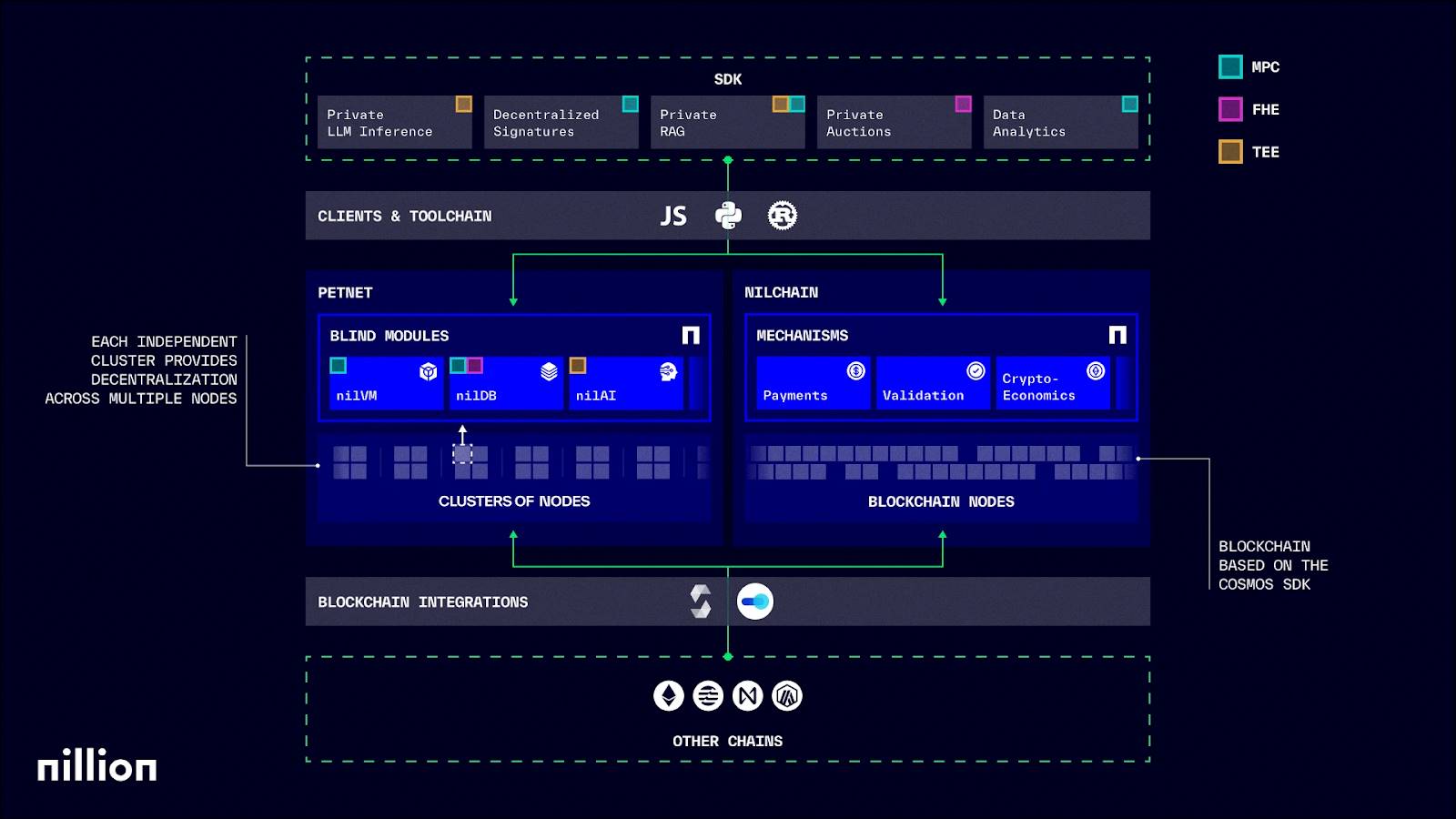
Image source: Nillion Docs
Petnet integrates various privacy technologies—including ZK, MPC, FHE, and TEE—each running within independent Blind Modules as core functional units. Additionally, Nillion provides practical tools to further lower barriers and improve developer experience.
MPC Protocol Curl, based on Linear Secret Sharing Schemes (LSSS), excels at efficiently handling complex operations, making it ideal for real-world problems like advancing privacy-preserving AI agents.
Privacy Tech Suite nilAI includes modules like AIVM, nada-AI, and nilTEE, specifically designed to support privacy-focused AI development.
Virtual Machine nilVM allows developers to compile programs using the Nada compiler and run them on the Nillion Network. Nada is Nillion’s Python-based open-source domain-specific language (DSL), supported by the Nillion SDK—which includes components like nada-AI, nada-numpy, and nada-test—to drastically reduce the barrier to building privacy applications.
Encrypted Distributed NoSQL Database nilDB is purpose-built for private data storage and computation. It distributes encrypted data as Secret shares across multiple nodes, eliminating reliance on central authorities. Data owners can authorize others to run SQL-like queries, computations, and privacy-preserving aggregations on stored data.
When facing complex privacy computing demands, Petnet organizes nodes into clusters tailored to specific tasks. Each cluster functions as an independent blind computing unit, enabling cross-node sharded data processing.
Through data sharding, information is split into fragments distributed across different nodes—no single node accesses the full dataset. Combined with MPC and other privacy techniques, multiple nodes can jointly compute without revealing private data, reducing inter-node communication and significantly improving security, performance, efficiency, and scalability.
Equipped with powerful privacy tools, Nillion’s ecosystem already achieved early scale during testnet. Its technology feasibility has been validated through deep collaborations with numerous projects. With the March 2025 airdrop and mainnet launch, the next phase of Nillion’s ecosystem growth is now a major point of interest.
Mainnet Countdown: Previewing Nillion’s Rich Ecosystem Across Privacy Use Cases
As one of the most anticipated projects at the intersection of privacy, data, and AI, Nillion spent over eight months in testnet laying a solid foundation for its mainnet debut:
It conducted 200+ investor calls, completed two successful testnet iterations, hosted 50+ social media podcasts, published tens of thousands of tweets, and connected with over 300 developers and 178 apps—fostering a developer-friendly environment and strengthening ties with the ecosystem and community.
In its earlier validator program—critical for ensuring data integrity, network security, and mainnet readiness, which concluded on December 11, 2024—over 500,000 validators participated, collectively processing approximately 195 million secrets and securing about 1,050 GB of data.
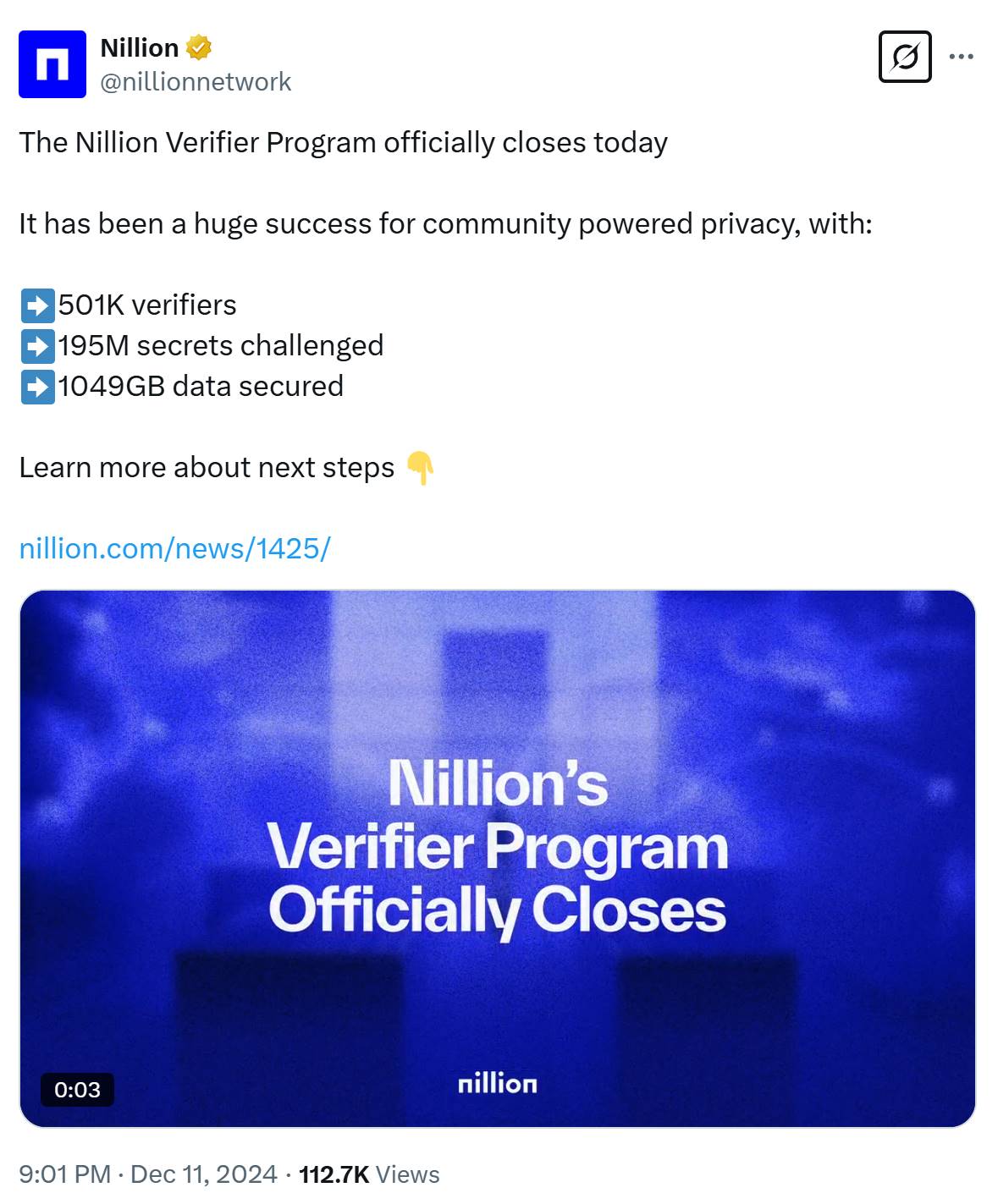
Image source: Twitter @nillionnetwork
From Nillion’s published ecosystem map, we see a growing and diverse ecosystem. Nillion has partnered with over 50 projects including Aptos, Near, Arbitrum, Mantle, Virtuals, and Fractal, spanning DeFi, AI, DeSci, public blockchains, and DAOs.
With AI booming across both Web2 and Web3, Nillion’s blind computing vision is naturally aligned with AI’s evolution:
Data is the fuel for AI. By protecting user data, enabling secure data sharing, optimizing model training, upholding ethical responsibilities, and driving technological innovation, Nillion’s blind computing network offers comprehensive support for sustainable AI development.
Currently, AI is a major pillar within Nillion’s ecosystem, with over a dozen AI projects already enhancing privacy through integration.
Virtuals Protocol, the largest multimodal AI agent framework today, partnered with Nillion in June 2024. By leveraging Nillion’s secure computing infrastructure, it enables private AI model training and inference—protecting user data during interactions and ensuring sensitive conversations and data remain confidential.
Other AI projects in Nillion’s ecosystem include Ritual, a decentralized open AI infrastructure network, and Crush AI, an AI agent protocol.
Nillion focuses on high-value data such as financial and personal medical records—opening opportunities in DeFi and DeSci.
In DeFi, Nillion’s robust privacy features not only protect user data and assets but also play vital roles in identity compliance, financial innovation, and personalized services. Kayra is a prime example.
Kayra, a decentralized dark pool exchange, leverages order book-based Multi-Party Computation (MPC) to offer private trading experiences. Currently operating on Aleo, Ethereum Sepolia, and Nillion testnet, it aims to provide users with secure, confidential trading environments.
In DeSci (Decentralized Science), healthcare stands out as one of the most promising application areas.
Traditional medical research faces a key challenge: researchers need access to large, diverse datasets to analyze health conditions, yet most people hesitate to share their health data due to privacy concerns. This limits sample sizes and slows down progress.
Nillion’s privacy computing solution offers an innovative fix: its technology allows researchers to analyze health data without exposing personal information, resolving the trust barrier in data sharing.
This capability has already attracted several healthcare projects:
Space of Mind is an affordable peer-support platform for individuals experiencing PTSD symptoms. Through Nillion, it ensures patient data is handled privately and securely, preventing misuse.
Monadic DNA focuses on securing personal genomic data, empowering users to own and manage their genetic information and avoid risks associated with traditional data storage. Using Nillion’s blind computing, users can upload raw DNA files, generate a DNA passport securely, and ensure their data remains private.
AgeRate is an online platform helping users live healthier, longer lives. Users send in a small blood sample and receive a health score and personalized recommendations. Through its partnership with Nillion, AgeRate ensures user privacy while giving individuals greater insight into their health.
Beyond these, Nillion’s ecosystem extends into consumer-facing applications like social platforms and DAOs:
Aloha, an AI-powered dating app, helps users authentically present themselves and efficiently find compatible matches. By integrating Nillion’s blind computing, Aloha secures user data and minimizes breach risks.
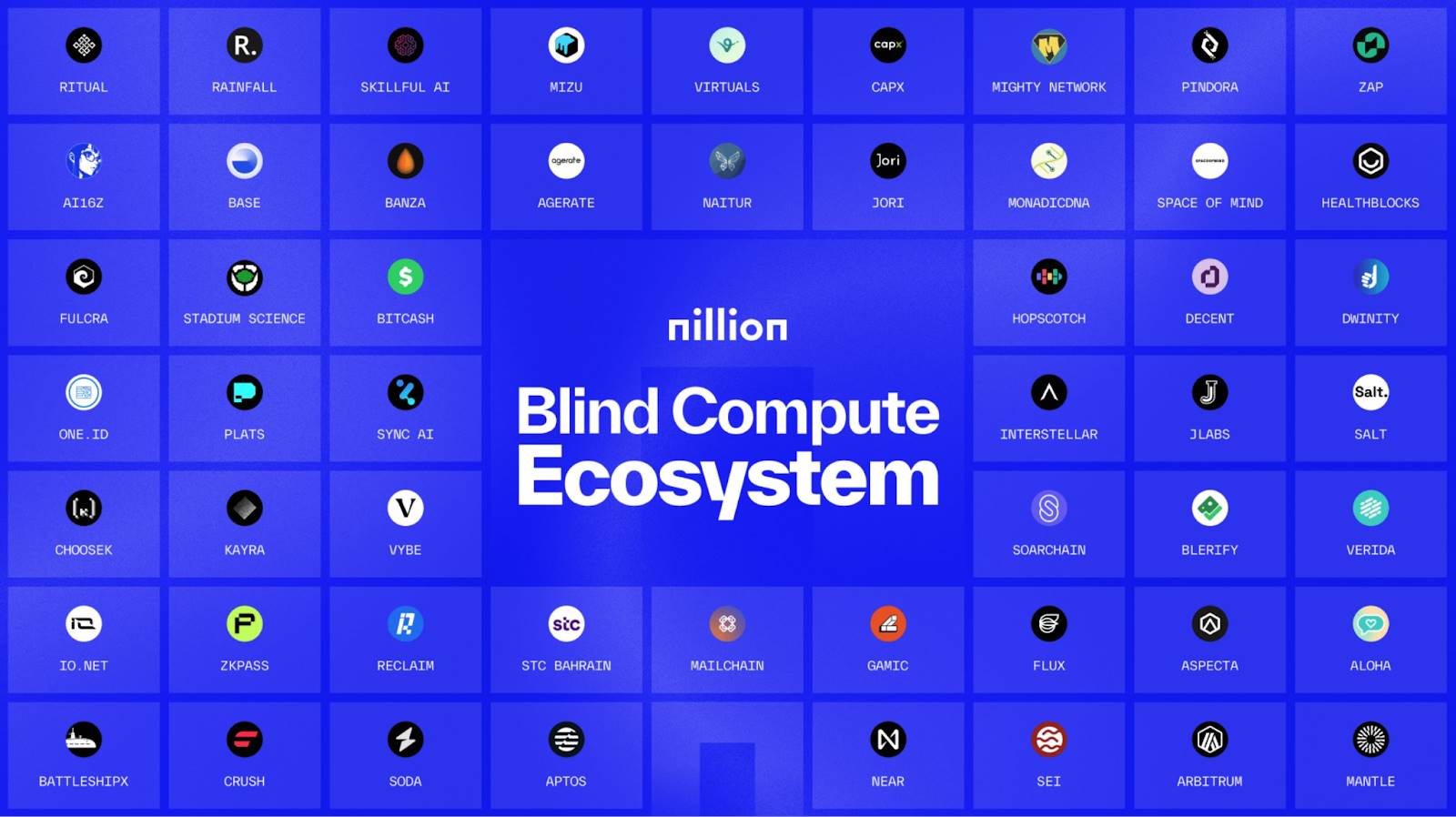
Image source: Twitter @nillionnetwork
This diversity reflects not only the widespread demand for privacy across niche sectors but also strong validation of Nillion’s privacy solutions—and promises rich exploration experiences for users from day one of mainnet.
With Nillion’s mainnet officially launching in March 2025, ecosystem partnerships will accelerate further, delivering innovative, privacy-first experiences to more users.
Conclusion
With the mainnet launch and TGE imminent, more of Nillion’s roadmap is set to materialize.
According to its official roadmap, Phase 1 focuses on launching the mainnet and optimizing blind computing modules, aiming to roll out a universal computing layer to support broader use cases.
In Phase 2, Nillion will prioritize launching the validator program to enhance network security and reliability, increase decentralization, and actively pursue integrations with other blockchains and ecosystems.
Phase 3 centers on audits and certification mechanisms to strengthen network credibility and transparency. Finally, in Phase 4, Nillion will focus on ecosystem expansion—enabling permissionless network growth, supporting more users and applications, launching ecosystem exploration initiatives, and accelerating the deployment of innovative use cases.
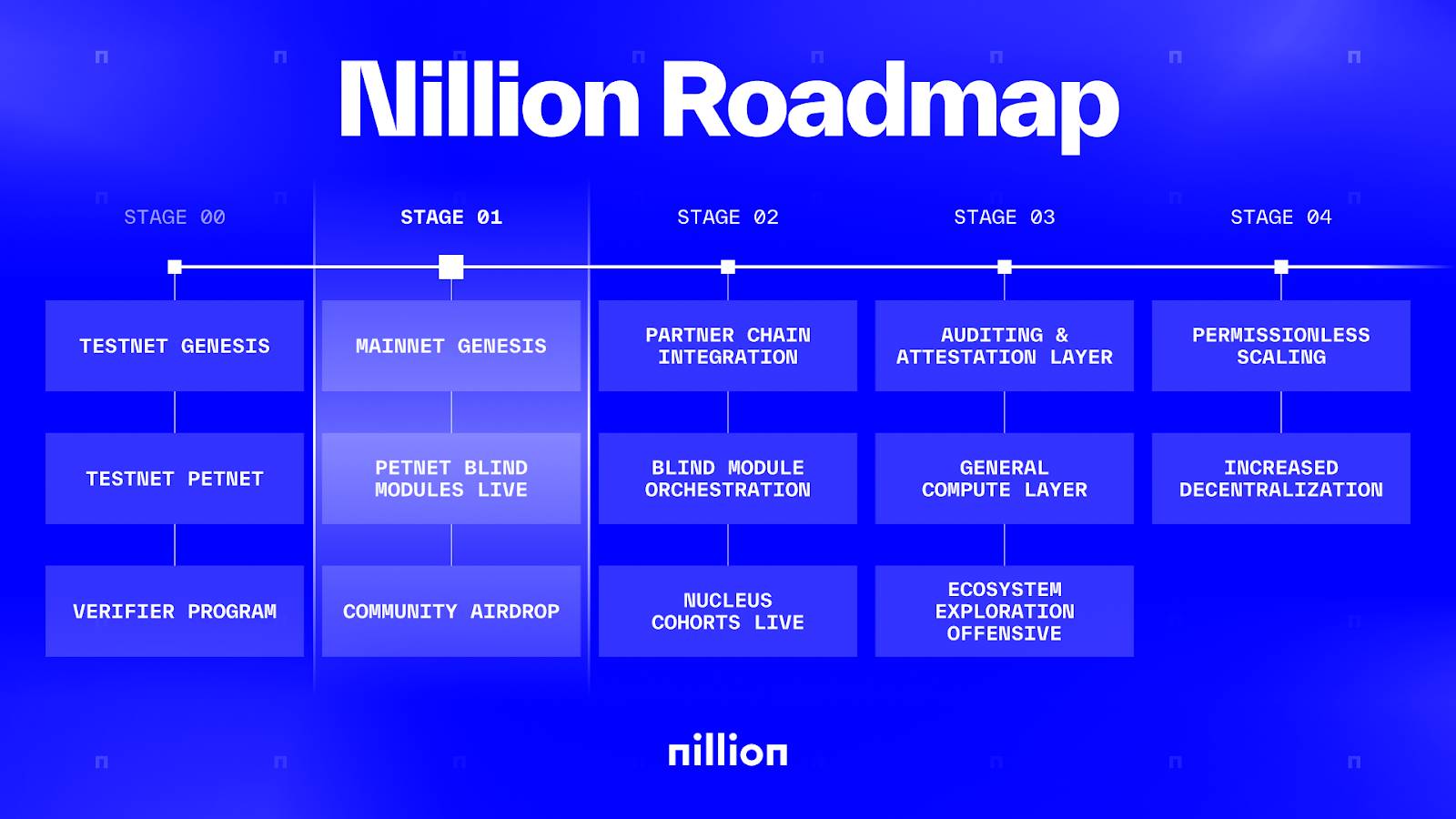
Image source: Twitter @nillionnetwork
As a privacy project founded by a top-tier tech executive and backed by leading VCs, Nillion’s track record reveals forward-thinking in product design, ecosystem growth, and community building.
By enabling end-to-end encrypted storage, transmission, and processing of high-value data, Nillion aims to build next-generation privacy infrastructure, driving safe, efficient, and rapid development across AI, DeFi, DeSci, and beyond.
Its handling of the airdrop controversy—along with CMO Charlie Rogers’ detailed public explanation—has further strengthened community confidence in the project’s long-term health.
In an era where privacy and data value are paramount, projects like Nillion will be pivotal in driving Web3’s prosperity. As Nillion enters a new stage of ecosystem development with its mainnet launch, we look forward to it becoming a transformative force in accelerating the arrival of the privacy era within the Web3 revolution.
Join TechFlow official community to stay tuned
Telegram:https://t.me/TechFlowDaily
X (Twitter):https://x.com/TechFlowPost
X (Twitter) EN:https://x.com/BlockFlow_News
 深潮TechFlow