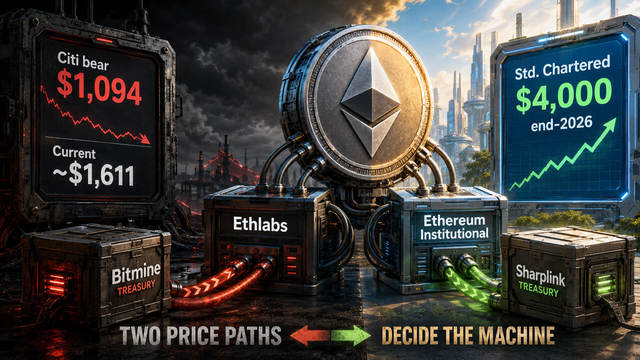
Ethereum, don't let the newcomers down
TechFlow Selected TechFlow Selected
Ethereum, don't let the newcomers down
Whales are rushing to exit, while newcomers are still shouting at the door, "ETH to the moon."
 Navigating Web3 tides with focused insights
Author: Fairy, ChainCatcher
With each bull and bear cycle, a new wave of curious newcomers arrives. To them, Ethereum often serves as a key gateway into the world of crypto—advanced in technology, mature in ecosystem, and firmly established in the industry.
But is reality truly that rosy?
On one side are these newcomers' trust in Ethereum; on the other, the market's cold indifference. After speaking with several university students majoring in blockchain, we discovered a potential disconnect between their expectations and the current state of ETH.
Are these hopeful beginners destined to become future builders—or merely temporary visitors eventually eliminated by the market?
Ethereum Through Fresh Eyes: Trust, Technology, and Perception
Tusi
A first-year blockchain major, complete beginner, has not yet engaged in any cryptocurrency or contract trading.
Tusi hasn't entered the market yet, believing his knowledge base is insufficient for investment. However, when discussing Ethereum, he expresses a natural sense of trust, viewing it as a top-tier project and relatively authoritative.
When asked whether he would consider buying ETH in the future, he said he might—because compared to other cryptocurrencies, ETH appears to carry lower risk.
Lucien
A fourth-year student in blockchain engineering, primarily focused on smart contract development and technical aspects, with limited market awareness. ETH accounts for 20% of his spot crypto portfolio. Overall, he remains optimistic about Ethereum.
From Lucien’s perspective, Ethereum’s technology continues to evolve, driving broader industry progress. For example, recent upgrades have significantly reduced gas fees on-chain, lowering user interaction costs. Additionally, improvements from the Cancun upgrade are more developer-friendly—for instance, the new opcodes introduced in EIP-1153 have become a crucial component of Uniswap V4.
Still, he notes that Ethereum’s framework is already relatively mature, with current improvements mostly incremental optimizations, meaning its growth rate is inherently limited.
Vernon
Graduated in blockchain engineering nearly a year ago, currently focusing on meme coins and contract trading, preferring short-term strategies.
Among all crypto assets, ETH is the only large-cap coin Vernon invests in, mainly for wealth management and risk diversification. He chose ETH because at the time of purchase, its price had dropped significantly and had not yet broken its all-time high, suggesting room for upside.
Regarding ETH’s underwhelming performance this cycle, he expressed understanding and shared Lucien’s view—Ethereum’s challenge lies in constrained innovation. Today, large-scale reforms are difficult, and innovation has become cautious and fragmented.
Despite differing perspectives, all three newcomers hold favorable views toward Ethereum and recognize its value. In other words, Ethereum still enjoys strong "general appeal" among rookies—an approachable "elder brother" in the crypto world. Yet while ideals may be lofty, reality might fall short. The current state of Ethereum may not be as bright as these newcomers perceive.
Ethereum in Reality: How Long Can Faith Last?
Declining New Demand for ETH
Crypto KOL Murphy recently highlighted investor trends based on ETH data: investors who bought at higher prices continue accumulating, but new demand for ETH is weakening. After ETH dropped below $2,000, there was almost no significant new buying pressure.
Recent Cost Basis Distribution (CBD) data for ETH reveals two main holder groups:
-
High-price accumulators ($3,200–$3,500): These investors held through ETH’s drop to $1,900 and kept adding positions, showing strong conviction and holding intent.
-
Mid-price sellers ($2,600–$2,800): This group began selling off after ETH fell below $2,300, with only a portion of their holdings remaining.
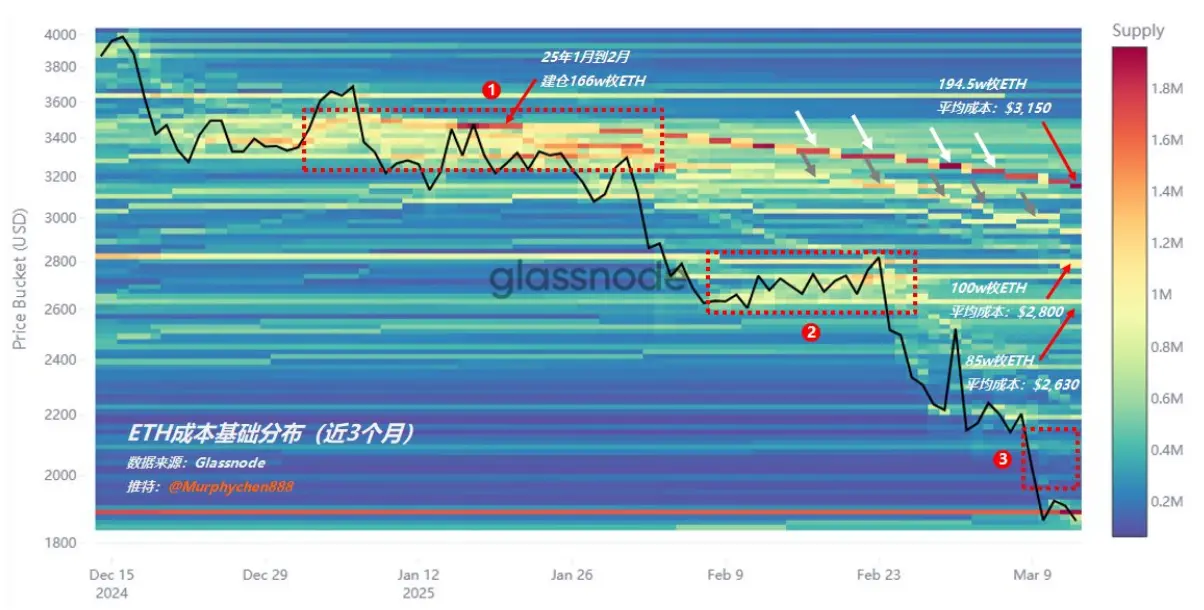
ETH CBD Data Over the Past 3 Months
The Controversy Around ETH’s “Failed Deflation”
Hu Yilin, a Ph.D. from Peking University, argued that ETH’s so-called "deflation" is essentially a failed design. Under PoS, even if the total ETH supply decreases, it doesn’t equate to fair or healthy development.
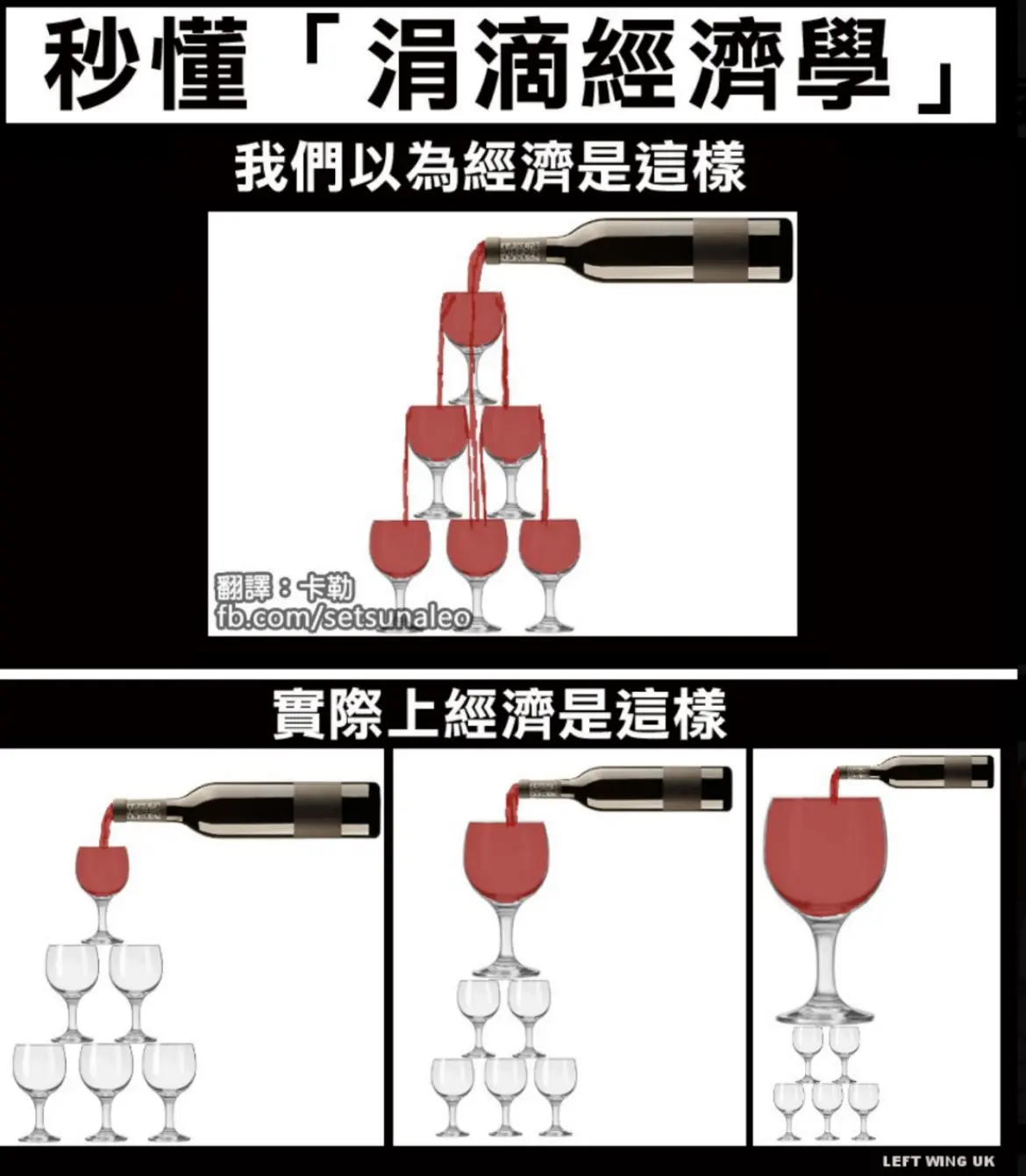
He pointed out structural inequality in Ethereum’s economic model—stakers are always on the inflationary side, while frequent traders bear the cost of deflation. The wealthy, early adopters, and established players remain safely in profit zones. The more active the network, the more gas fees are burned, increasing deflation—and benefiting them further. Meanwhile, newcomers, retail users, and low-level traders face heavier gas fee burdens with increased activity, effectively being squeezed harder by the deflation mechanism.
Hu delivered a sharp conclusion: Under the ETH system, the rich not only risklessly outpace inflation but also earn interest. Even under deflation, the faucet above their heads isn’t closed—it’s flowing stronger than ever.
Whales Keep Exiting
According to on-chain analyst Ali, whale addresses sold nearly 130,000 ETH over the past week.
-
March 13: Whale ..eCa41 liquidated 6,401 ETH purchased in December 2023, incurring a loss of $1.974 million.
-
March 14: An ETH whale deposited 16,467 ETH to HTX after holding for 25 years, potentially realizing a profit of $13.1 million.
-
March 17: A wallet dormant for three years sold all 67 ETH (worth $1.92 million), earning only $126,000 in profit.
-
......
Don’t Let Faith Turn Into a Death Race
All men hustle and bustle for profit.
Ethereum’s brand, technology, and ecosystem, built over years, have fostered trust among newcomers, encouraging them to root, learn, experiment, and explore here.
But the market shows no mercy...
Ethereum, don’t let them ultimately learn just one lesson—“run fast.”
Join TechFlow official community to stay tuned
Telegram:https://t.me/TechFlowDaily
X (Twitter):https://x.com/TechFlowPost
X (Twitter) EN:https://x.com/BlockFlow_News
 ChainCatcher 链捕手