Understanding Mint Blockchain: How to Drive a New Transformation in the NFT Ecosystem After TGE?
TechFlow Selected TechFlow Selected
Understanding Mint Blockchain: How to Drive a New Transformation in the NFT Ecosystem After TGE?
As a core member of the Optimism Superchain, Mint Blockchain is driving standardization and enhanced liquidity for NFT assets, aiming to build a world-leading NFT Layer2 solution.
 Navigating Web3 tides with focused insights
Author: Zen, PANews
On March 7, Mint Blockchain announced the official completion of the token generation event (TGE) for its native token $MINT, which simultaneously launched on major exchanges including Gate.io, Bitget, MEXC, BingX, and BitMart. As a core member of the Optimism Superchain, Mint Blockchain is advancing the standardization and liquidity of NFT assets, aiming to build a world-leading NFT Layer2 solution.
A Layer2 Network Dedicated to NFTs
As an effective method for proving asset ownership, NFTs have been widely adopted across numerous fields after years of exploration—ranging from gaming and art to AI agents, AIGC, intellectual property, ticketing, membership systems, reputation systems, digital identity, social interactions, and brand marketing. However, challenges such as low standardization of NFT assets, insufficient liquidity, and chaotic data copyright management continue to hinder the further development of this emerging technology. To address these issues, leading NFT data service providers NFTScan Labs and the MintCore development team have introduced Mint Blockchain—a decentralized network focused specifically on the NFT domain—designed to resolve these pain points and offer developers a more secure, stable, and efficient environment.
Mint Blockchain is an Ethereum Layer2 network built on the OP Stack, initially developed in October 2022 and launched on mainnet in May 2024. Its data availability (DA) layer relies on the Ethereum mainnet, leveraging Ethereum’s consensus mechanism to ensure security. Fully EVM-compatible, it allows Ethereum developers to seamlessly extend their projects onto Mint Blockchain. As a Layer2 scaling solution, Mint Blockchain significantly reduces gas fees and enhances the scalability of the Ethereum ecosystem. Additionally, as a core member of the Optimism Superchain, Mint Blockchain is also a strategic partner of the Optimism Foundation in the Asia-Pacific region, jointly promoting the development and branding of Superchain in Asian markets.
Beyond deep collaboration with the Optimism Foundation, Mint Blockchain has received strong support from renowned industry institutions in terms of funding and project resources. In May last year, Mint Blockchain announced the successful completion of a $5 million seed round led by Jsquare, SNZ, Antalpha Ventures, Mask Network, BlockAI Ventures, Predator Capital, Whitelist Ventures, and PANONY Group. The funds will be used for global brand building and NFT infrastructure development.
Five Core Modules Serving the Full Lifecycle of NFT Assets
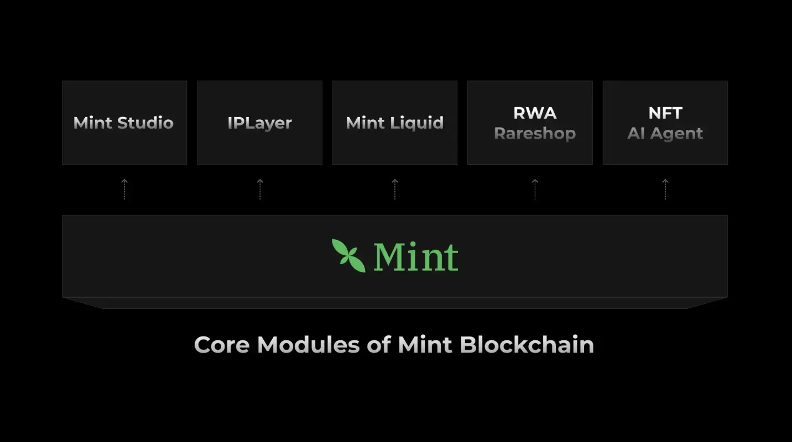
Positioned as a decentralized network dedicated exclusively to NFT assets, Mint Blockchain aims to serve every stage of the NFT lifecycle—from issuance and trading settlement to on-chain data indexing. To achieve this, the team is actively developing a comprehensive suite of open-source infrastructure comprising five core modules: NIPs Platform, Mint Studio, IP Layer, Mint Liquid, and NFT-AI Agent:
Mint Studio: An NFT creation tool designed for creators and developers, supporting cross-chain minting of text, images, audio, and video into NFTs across networks such as Mint Blockchain, Berachain, Base, Optimism, and BNBChain.
IP Layer: Provides IP monetization services for NFTs across over 20 blockchains, including Ethereum, Mint Blockchain, Solana, Berachain, Base, Optimism, and BNBChain. It enables users to register and price their NFT assets on-chain to generate royalty income.
Mint Liquid: A multi-chain liquidity solution supporting both NFT and token trading, built using protocols like Superchain, ERC7683, Uniswap, and Across Protocol. It supports cross-chain liquidity aggregation and asset interoperability.
RWA-Rareshop: The world’s first consumer-facing RWA NFT marketplace, utilizing the ERC7765 asset protocol standard to provide encrypted payments, privacy protection, pre-sales, gifting, and physical delivery—offering comprehensive Web3 solutions for global brands.
NFT-AI Agent: Integrated with NFTScan, Mint Studio, IP Layer, and Mint Liquid, it offers NFT image recognition, on-chain NFT data retrieval, Token/NFT trading execution, and NFT market trend analysis.
With these capabilities, Web3 projects can issue Genesis NFTs, NFT POAPs, SBTs, and NFT PASSes; Web2 brands can launch NFT IPs, NFT tickets, digital identities, and RWA NFTs. Furthermore, Mint Blockchain provides Web3 teams with community cold-start strategies, offers traditional enterprises one-stop NFT solutions, and delivers end-to-end NFT issuance services for influential individuals.
Mint Blockchain's vision is to make NFTs the most unrestricted value carriers in the crypto world—connecting global users with AI Agents so that every individual (both humans and AI Agents) can freely own NFT assets. To realize this vision, Mint Blockchain introduces incentive mechanisms at the economic model level to encourage innovation in NFT asset protocols and consumer applications, with special rewards for innovative protocol developers. Currently planned incentives include:
Earn NFTs: Encourage creators to generate new NFT assets within the Mint ecosystem;
Mint Ecosystem Fund: Invest in and support native applications and development teams within the Mint ecosystem;
ETH Gas Rewards: Reward outstanding protocol standards and applications through ETH gas incentives;
RetroPGF Mechanism: Provide long-term retroactive rewards for contributors to the Mint ecosystem's infrastructure.
The First SuperchainERC20 Standard Token with Innovative Staking and Restaking Mechanisms
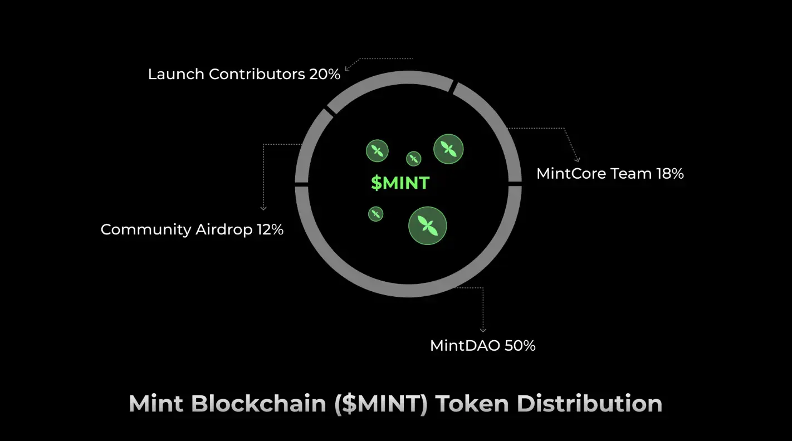
On March 7, Mint Blockchain officially conducted the TGE of its native token $MINT, listing it on Gate.io. As the first utility token on the Superchain, $MINT uses the SuperchainERC20 token standard and features Optimism interoperability. According to its tokenomics, the total supply of $MINT is one billion tokens, with 82% allocated to community builders, early supporters, and ecosystem developers: 50% to MintDAO, 20% to launch contributors, and 12% for community airdrops. The remaining 18% is reserved for the MintCore team.
Within the Mint Blockchain ecosystem, $MINT serves as the coordinating asset for all value flows. Its primary utilities lie in governance, ecosystem incentives, usage, staking, and asset pricing. Specifically, $MINT incentivizes developers to build and grow the ecosystem, with holders enjoying voting rights and participation in network governance. As the native cryptocurrency of Mint Blockchain, $MINT is the official medium of exchange on the network and the designated staking asset for validators. Additionally, $MINT can be used for asset valuation and transaction pricing during the issuance of real-world assets (RWA), NFTs, tokens, memes, and other digital assets on the Mint Blockchain network.
Following the TGE of $MINT, Mint Blockchain will implement a decentralized distribution of sequencing rewards via a $MINT Staking & Restaking mechanism, becoming the first Layer2 network to decentralize the allocation of network revenue. Users will be able to participate in $MINT staking through MintPool, a decentralized staking protocol on Mint Blockchain, with future support for staking ETH and NFT assets. Participants in $MINT staking and restaking will receive dual-tiered rewards:
First Tier: An annual interest rate of 15% in $MINT as staking rewards.
Second Tier: 50% of the net ETH earnings from Mint Blockchain’s sequencer revenue as restaking rewards.
This Staking & Restaking mechanism is expected to significantly improve capital efficiency for the $MINT token, enhance network security, stabilize the ecosystem economy, and enable decentralized distribution of sequencer revenue. It also empowers the community to gain long-term benefits from the growth of Mint Blockchain, strengthen internal consensus, and promote active participation in ecosystem development.
MintDAO Drives Community and Ecosystem Growth, Launching Original Brand IP “Minty NFT”
MintDAO is the decentralized autonomous organization (DAO) governing the Mint Blockchain ecosystem. As mentioned above, it manages 50% of the total $MINT supply—500 million tokens—via a multi-signature wallet. Additionally, a portion of the ETH earnings generated by the Mint Blockchain network sequencer, along with investment returns from the Mint Ecosystem Fund, will be directed into the MintDAO treasury.
As the ecosystem evolves, MintDAO’s multi-sig control will gradually be decentralized and transferred to key organizations and builders within the Mint ecosystem, enabling truly decentralized governance of ecosystem development.
In terms of the economic system, MintDAO is responsible for providing initial liquidity for $MINT, offering staking rewards, driving brand promotion and community expansion. Through initiatives like MintHub, MintDAO fosters community engagement, promotes Mint Blockchain globally, increases brand visibility, and accelerates NFT market adoption. For ecosystem development, MintDAO directly oversees the Mint Ecosystem Fund, investing in innovative products and protocols within the ecosystem and organizing both online and offline developer events.
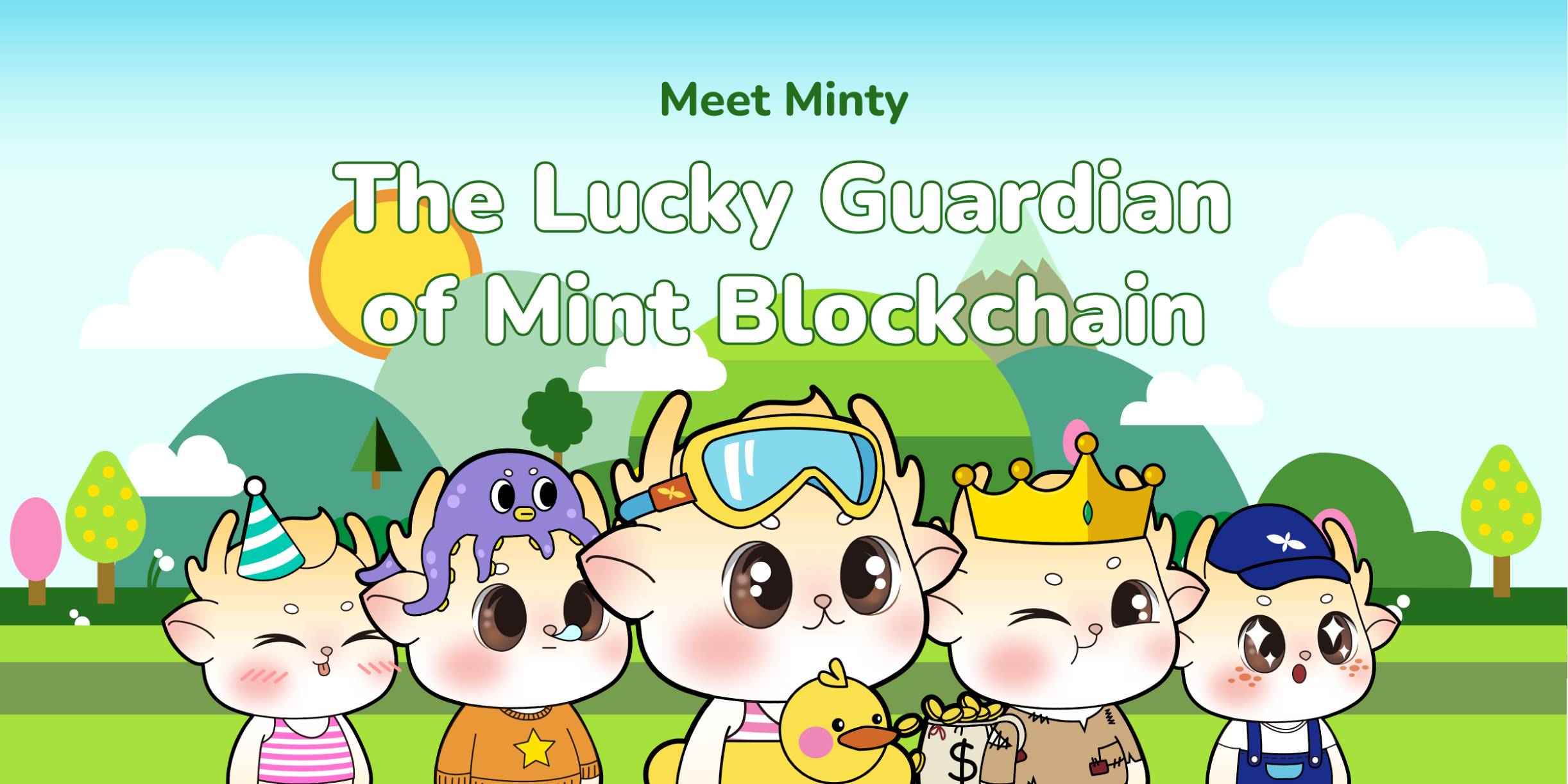
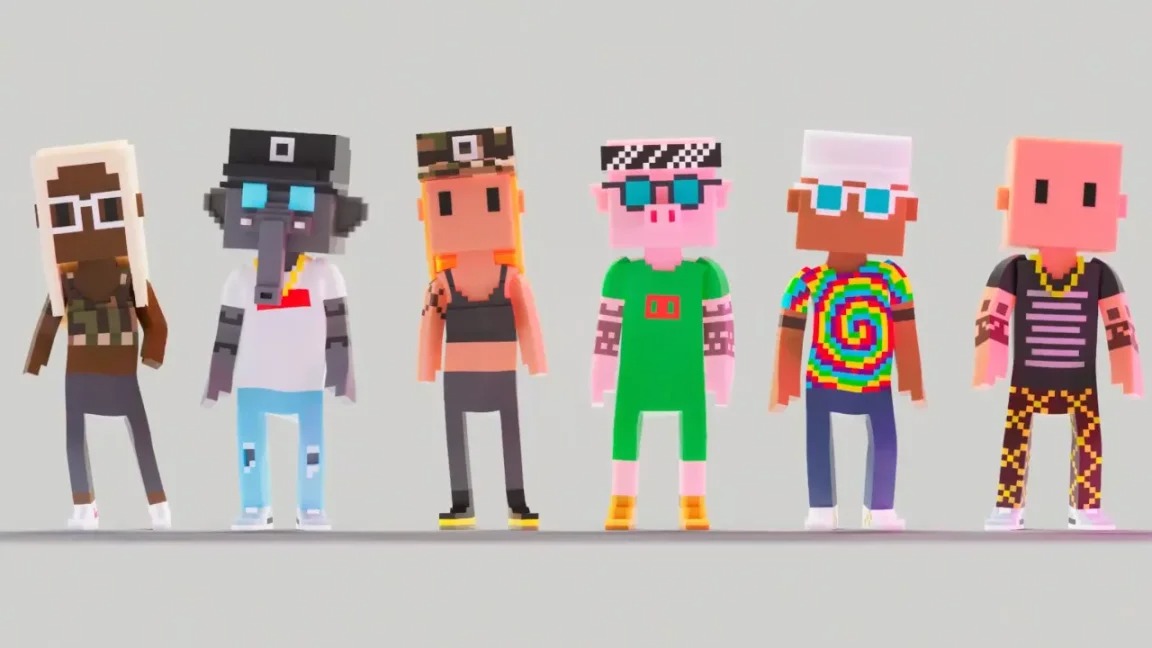
Leveraging its inherent strength in NFT community culture, Mint Blockchain is currently conducting community-driven operations around its original brand IP, the "Minty NFT Collection," distributing it to valuable community members, NFT industry KOLs, and professionals. Additionally, during Singapore's Token2049 event this September, Mint Blockchain will host offline community activities for Minty IP, distributing the first batch of physical merchandise. In the future, the community plans extensive multi-brand collaborations, launching co-branded products and events, gradually moving toward commercial operations, and establishing the Minty NFT Collection as a blue-chip NFT asset.
In summary, with the official launch of $MINT, Mint Blockchain is accelerating the construction of decentralized infrastructure for NFT assets and driving innovation in NFT asset protocols and consumer applications. Through technological innovation, ecosystem incentives, and community building, Mint Blockchain aims to position NFTs as the most unrestricted value carriers in the crypto world, connecting global users with AI Agents.
Looking ahead, Mint Blockchain will continue expanding use cases and deepening the integration of NFT technology with the real world, bringing greater innovation and opportunities to the global NFT ecosystem.
Join TechFlow official community to stay tuned
Telegram:https://t.me/TechFlowDaily
X (Twitter):https://x.com/TechFlowPost
X (Twitter) EN:https://x.com/BlockFlow_News
 PANews