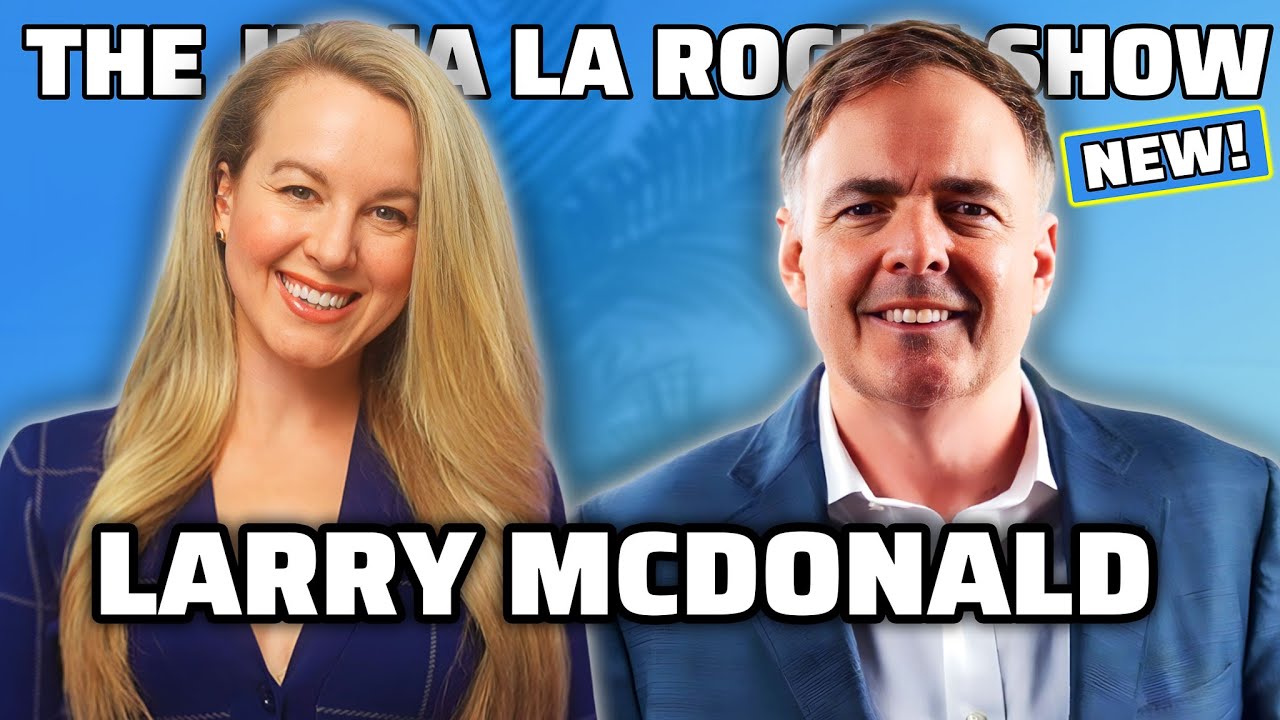
Former Lehman Brothers trader: Trump needs an economic recession to fix the economy
TechFlow Selected TechFlow Selected
Former Lehman Brothers trader: Trump needs an economic recession to fix the economy
The Trump administration is currently implementing "financial repression," keeping interest rates below the inflation rate.
 Navigating Web3 tides with focused insights
Compilation: Xu Chao, Wall Street Insights
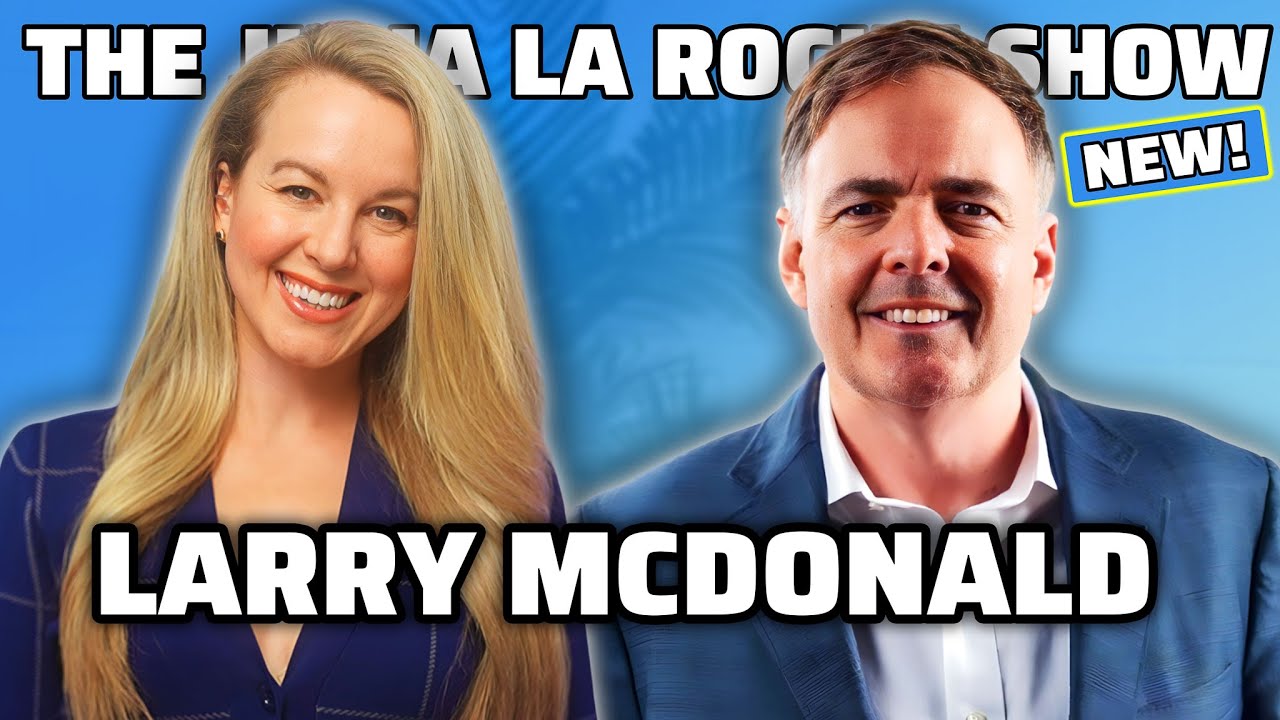
According to Larry McDonald, founder of Bear Traps Report and former Lehman Brothers trader, the Trump administration is deliberately triggering an economic recession to address America's $36 trillion debt burden.
In an interview released on March 3, McDonald stated that if interest rates remain at current levels, U.S. debt servicing costs next year will reach between $1.2 trillion and $1.3 trillion—far exceeding defense spending. Therefore, Trump needs to lower interest rates; reducing them by just 1 percentage point could save nearly $400 billion in interest payments next year.
"No inflation cycle with inflation above 6% has ever ended without unemployment reaching 5%, 6%, or even 8%," McDonald said. "The government cannot suppress inflation through massive fiscal spending—the Trump team understands this. They need to induce a recession so they can reduce interest rates and extend debt maturities."
McDonald warned that the U.S. is now entering a period where interest rates will stay high even during a recession—a classic stagflation environment reminiscent of 1968–1981, when markets were largely flat. In such times, commodities, hard assets, and companies with underground resources are what protect against inflation.
Key Highlights from the Interview:
The top 10% of American consumers currently account for 60% of consumption, as lower-income groups have been severely squeezed.
Because the top 10% drive most consumption, it’s nearly impossible to bring down inflation and interest rates without first lowering asset prices. The Trump team is effectively trying to push rates higher to depress asset valuations.
If current interest rates persist, U.S. debt interest payments next year could hit $1.2–1.3 trillion—more than defense spending.
The Trump administration urgently needs to cut interest rates—so urgently that they’re almost panicking. A 1-percentage-point rate reduction would save nearly $400 billion in annual interest expenses.
The Treasury hasn’t yet started extending debt maturities (i.e., shifting short-term bonds into 10- or 20-year bonds) because they want to lower rates first. They need a 100-basis-point drop in yields before refinancing long-term debt, which would save about $400 billion in interest.
No inflation cycle with inflation over 6% has ever ended without unemployment rising to 5%, 6%, or even 8%. You can't fight inflation with large-scale fiscal stimulus—the Trump team knows this. A recession is necessary to reduce rates and extend debt duration.
After Trump’s election, bond markets priced in strong growth expectations, leading to a steep yield curve. Now, markets are adjusting to recession risks—shifting rapidly from a steep to a sharply flattened yield curve.
When Bill Ackman says U.S. GDP growth may be only 1%, it signals he is shorting the market—he is essentially betting on a recession.
U.S. stock markets are flashing recession signals too: over the past 3–4 weeks, consumer staples stocks (recession-resistant) have significantly outperformed discretionary consumer goods stocks.
Copper is currently experiencing “capitulation” selling. Copper typically plunges during economic slowdowns. But today, supply constraints are severe, while demand from data centers and post-war reconstruction could create a major supply-demand gap. Investing in copper equities may now offer excellent value.
Reconstruction after the Russia-Ukraine war, along with global supply chain reconfiguration, will fuel inflation. Thus, the U.S. is entering a period where interest rates will remain high even amid a recession—a textbook stagflation era similar to 1968–1981, when markets were flat but commodities, hard assets, and resource-rich companies protected investors.
The real reason behind U.S. economic strength and American exceptionalism lies in its 7% fiscal deficit spending rate, compared to just 3% among other developed nations.
In recent weeks, Musk and Trump have signaled plans to cut $1 trillion in spending. To avoid triggering a deep recession, they aim to phase these cuts over 5 to 10 years.
Unfortunately, with fiscal spending at such elevated levels, Musk’s rapid reversal risks creating a vicious cyclical downturn that could be highly damaging to markets.
From a portfolio perspective, referencing the high-rate, high-inflation era of 1968–1981, the traditional 60/40 stock-bond allocation no longer works. Investors need much higher exposure to commodities.
The Trump administration is now implementing “financial repression”—pushing interest rates below inflation. It will pressure allies to buy more Treasuries at lower rates. It will also instruct bank regulators to force U.S. banks to purchase more Treasury bonds.
This is the only way out of the $36–37 trillion debt trap—short of default. There is no alternative.
Full Interview Transcript
Host: Larry McDonald, founder of The Bear Traps Report, author of your latest book How to Listen to the Voice of the Market: Volatility Reshapes Risk and Investment Opportunities in the Economy. Of course, you're also an old friend of our show—it’s been far too long since we last spoke.
We haven’t had you back since your book launch last year. But wow, Larry, now feels like exactly the right time. Great to see you.
Given everything happening in the economy and markets right now, I can’t think of a better guest. So great to have you here—this is fantastic.
Larry McDonald:
Thanks for having me. This has truly been an incredible year. Some of the ideas from my book—persistent high inflation, the shift toward value investing and hard assets—are now materializing. For example, gold has outperformed the Nasdaq. It’s gratifying to see these views validated.
Host: Yes, perfect timing. As I said, there’s no one better to have on right now. Since we haven’t had you in a while, and our audience has grown, some viewers might be hearing you for the first time. I’m excited for them to get to know you.
But let’s step back and look at the big picture. Where do we stand now? Maybe start with your overall framework. Take your time setting the stage, Larry, then we’ll dive into the topics emerging from it.
Larry McDonald:
Sure. In my book How to Listen to the Voice of the Market, I discuss how the fiscal and monetary response to Lehman Brothers (about $4 trillion), followed by responses to the pandemic, the 2023 regional banking crisis, and the election, led to massive spending. During the election cycle, huge fiscal injections occurred, including a $1.9 trillion stimulus last year.
Then, in Q1 this year, the outgoing Biden administration spent another $800 billion—an unfunded deficit expenditure.
Add it all up: roughly $1.9 trillion in deficit spending over the past five quarters, plus another $800 billion. They did this to avoid a severe recession during an election year.
But this created sustained inflationary pressures, which are now showing their ugly side. Now, Trump is forced to resort to what we call “financial repression” to try to tame inflation. We can explore that further.
In the end, the wealthy are doing fine—rising interest rates mean they earn more on savings. Here’s the key point this week: the top 10% of consumers now account for 60% of consumption, because the bottom 0% have been crushed.
You can see evidence across many companies. The rich are thriving—they earn 300 basis points more in money market funds, their asset prices have surged, and their wealth has ballooned.
But Greenspan talked about the “wealth effect” in the 1990s.
That’s why we must discuss the “wealth effect” this week. Because what’s actually happening is, with the top 10% driving 60% of consumption, it’s nearly impossible to reduce inflation and interest rates without first crashing asset prices. So I believe the Trump team is ultimately trying to raise rates—to crush asset prices.
Host: Okay. That sets a powerful framework. I didn’t realize—hadn’t even considered—that the top 10% are responsible for 60% of consumption.
Wow, that shows how distorted the economy really is. When you talk about who benefits from policy versus who doesn’t, it reveals that beneath surface-level claims of economic health, the reality may not be so rosy.
Larry McDonald:
Exactly. Look at companies catering to the bottom 60% of consumers, like Dollar General—almost all are struggling. Meanwhile, luxury-facing businesses are thriving—just look at airlines.
Airlines have been highly profitable this past year. Any company serving premium clients, like American Express cardholders, is doing very well. Right now, on the debt front, if interest rates hold, debt servicing costs next year will reach $1.2–1.3 trillion—way above defense spending.
So they need to cut rates—urgently, even frantically. And if they manage to lower rates by 1%, they’d save nearly $400 billion in interest next year.
Larry McDonald:
Last year, Janet Yellen, as Treasury Secretary during an election year, didn’t want bond market volatility. So she issued two standard deviations more short-term debt than usual. Short-term bonds don’t fluctuate much in price.
Imagine you and I needed to borrow $5 trillion. If we issue $5 trillion in short-term debt, prices barely move—because it matures within a year. But if we issue $5 trillion in long-term bonds, prices swing wildly based on interest rate changes. That brings us back to rates.
The Trump administration and his close allies criticized Yellen during the recession for issuing so much short-term debt. Over the past few years, Treasury issuance was two standard deviations above normal.
Now we have a massive amount of short-term debt—something emerging markets do. That’s why they’ve been criticizing Yellen.
But here’s the thing: so far, they haven’t started extending debt maturities—converting short-term bills into 10- or 20-year bonds. Why? Because they want to lower rates first.
They want lower rates. That’s why they’re using tariffs to pressure markets. Every time the market rallies, Trump intervenes.
It’s as if he’s signaling he has more tools—and harsher measures—up his sleeve. That’s what’s happening. They need to cut rates by 100 basis points so they can refinance long-term debt and save about $400 billion in interest.
Host: That’s fascinating. Let’s talk about tariffs as a tool to achieve this. I’d love to hear more—yes, let’s start with tariffs as a means to lower interest rates.
Larry McDonald:
Tariffs do carry inflationary effects, but in the short term, they cause sharp economic contraction due to uncertainty.
And it’s not just tariffs. Increased ICE enforcement actions are unsettling the labor market. Imagine you run a business relying on immigrant labor, and suddenly ICE ramps up raids.
These enforcement actions displace workers and remove labor from the economy—which is inflationary, but also contractionary, because firms can’t operate efficiently. On the tariff side, imposing duties on other countries slows growth, because CFOs can’t make decisions.
With tariff uncertainty, no CFO can plan. So they begin cutting staff and hiring. That’s why initial jobless claims rose another 20,000 this week—one of the largest increases in years.
Host: Do you think we’re on a path toward a negative growth surprise? Are we heading into a recession? What else should we know about your economic outlook?
Larry McDonald:
Yes. If they succeed in slowing growth, remember: Stan Druckenmiller, one of my favorite investors, believes no inflation cycle above 6% ends without unemployment hitting 5%, 6%, or even 8%.
You can’t suppress inflation with massive fiscal spending—you just can’t. That’s what the Biden team tried. It only hurts ordinary people, as low-income consumers are crushed by inflation.
The Trump team knows this. They need a recession to lower rates and extend debt maturities.
It would also level the playing field—lower inflation helps the bottom 60% of consumers. So they want to reduce inflation. That’s their goal.
They’re essentially engineering a slow walk into recession. That’s why markets feel so strange this week—everyone is digesting this shift.
Host: You’re right—markets do feel weird. What message is the market sending? I mean, you could even include Bitcoin’s sharp drop. What is the market trying to tell us?
Larry McDonald:
Think about the past four years. Markets swung three different ways. One month ago, Bank of America’s survey showed less than 3% probability of a hard landing. In 2022, it was nearly 40%; early 2023, it dropped below 5%, around 4%–5%.
So we’re talking about investor perception of hard landing risk in Bank of America’s survey. Over the past few years, this number has bounced like a tennis ball. What happened three or four weeks ago? A market-friendly presidential candidate won, so expectations for growth and earnings soared.
The market priced in massive growth expectations—the yield curve steepened. Look at the spread between 2-year and 10-year Treasuries: after Trump’s win, the curve became very steep, signaling high-growth expectations.
But behind the scenes, the Trump team knows the bond market has structural problems.
We must extend debt maturities, and inequality is extreme—high inflation is crushing the bottom 60%. Now, markets are digesting a shift—from high growth expectations and a steep yield curve to a sharply flattening curve.
In silver and rate futures markets, recession risk is already priced in. We’re moving from expectations of 5%–6% GDP growth to potential contraction.
Bill Ackman said last week—on Friday—he went from expecting 4%–5% GDP growth to just 1%. He’s CIO of Pershing Square Capital Management, a famous fund manager, one of the most respected investors ever. I admire Bill Ackman—he’s a friend, and he’s done great on this show.
But when Bill Ackman speaks like this, it signals he sees trouble ahead. As one of the greatest investors of the past 30 years, this means he’s shorting the market—he’s betting on a recession.
Host: Yes. Steve Cohen doesn’t speak publicly often. If he joined us, I’d say so—but he rarely does. Yet he’s one of the greatest traders ever. Okay, you mentioned the yield curve—can you explain what’s happening? How does the yield curve signal recession? Is this another warning sign?
Larry McDonald:
Yes. We have a model—we track market sentiment, and another model measuring the rate of change in the yield curve and oil prices. We also watch transportation stocks.
Over the past three to four weeks, whenever transport stocks underperform sharply, and consumer staples (recession-resistant) outperform non-essentials, and bond markets are volatile with a flattening yield curve, and oil prices fall—if all four happen simultaneously, our model detects a strong signal.
The last time we saw this was February 2020. We discussed it in the book—markets have a keen nose.
In late February 2020, stocks were still rising, but transport stocks plunged, and bonds of economically sensitive companies crashed.
Oil prices fell, while consumer staples—companies like Procter & Gamble, cosmetics, alcohol, essentials—outperformed dramatically. The S&P Consumer Staples Select Sector Index (XLP) beat the S&P Consumer Discretionary Index (XLY).
When all four factors move rapidly in the same direction, it tells us where the market is headed. The market speaks daily. These signals strongly suggest rising recession risk.
Host: Okay. You mentioned “capitulation.” I’d love to hear more. Are we setting up for more capitulation? Are we seeing signs already?
Larry McDonald:
Are we setting up for more? Well, in some areas, serious capitulation has already occurred—like copper stocks collapsing.
Here’s an interesting trade idea. Copper has been suppressed because of cognitive dissonance—holding two conflicting beliefs. The market behaves like a person: over the past 40 years, every economic slowdown caused copper to crash—like during Lehman’s collapse.
Investors watching now have lived through that—investing in copper during slowdowns has been painful.
But this time is different—for two reasons. First, new global copper mine output over the past decade may be down 70% versus previous decades. Fewer mines are coming online—so we face severe supply constraints due to chronic underinvestment.
But that’s only part of it. Consider Ukraine’s reconstruction—search ChatGPT for how much infrastructure and buildings need rebuilding. Then add Los Angeles, Gaza, etc.
You’ll find massive reconstruction projects over the next five years, requiring vast amounts of copper and other metals. Then consider the MAG Seven tech giants—Microsoft, Apple, Google, Amazon, Nvidia, Meta, Tesla—ramping up data center spending in an arms race.
They’re all competing to outspend each other. Microsoft plans $80 billion this year, up from $40 billion last year. Zuckerberg at Meta is flexing muscle—$55 billion planned.
Add it up: their combined spending could reach $2 trillion in coming years. What commodity is central to data centers? Copper. Everyone is going all-in on AI—so you should invest in copper stocks.
Copper equities—Teck Resources, Freeport-McMoRan, COPX ETF—have dropped 30%–40%. You’re in a powerful position: decades of underinvestment have constrained supply.
Compare capital expenditures in copper, oil, and gas from 2010–2014 to today—we’re underinvested by $2–3 trillion. All capex flows to AI now. Parts of the U.S. grid are 50 years old, others 30. We’re applying massive tech investment onto a decaying grid.
The grid is crumbling—needs a $2 trillion rebuild involving copper, aluminum, hard assets. That’s the investment theme for the next 5–10 years.
Host: So these hard assets are what you favor now. A theme in your book. From our conversation, it seems Western capital allocation is deeply misaligned—perhaps, as you say, the world has changed. Many viewers may not know this concept, but it’s like a financial “Fourth Turning.” Can you elaborate?
Larry McDonald:
Yes. We shifted 100,000 of America’s 5 million manufacturing jobs overseas. We raised global living standards, but devastated America’s Rust Belt. Now, fathers return home to kids, having once earned $150k, now working at restaurants for $30k–$50k.
Through inflation and offshoring, we made life harder for the working class.
The world is now more multipolar. For 20 years, the U.S. dominated with little war. Now we have two wars ongoing—disrupting supply chains. Wars are massively inflationary. I discussed this with Neil Ferguson, David Tepper, David Einhorn.
They all told me wars will keep inflation high for years—due to reconstruction, like rebuilding Ukraine’s infrastructure. Inflation will stay elevated.
Politically neglecting the Rust Belt, we now need to restore those jobs and bring them home. We’re reshoring semiconductor jobs. Supply chain reconfiguration itself causes inflation.
We’re entering a period where interest rates stay high even during recession—a classic stagflation era like 1968–1981, when markets were flat. But commodities, hard assets, and companies with underground resources protect against inflation.
Look at discounted cash flow (DCF) models. In a stable disinflationary, low-inflation environment, software and growth tech stocks thrive. 2010–2020 was a textbook deflationary era—not just deflation, but certainty of deflation.
Since 2020, we face higher inflation expectations and greater certainty of inflation.
In DCF models, inflation drives rates. With high rates and inflation, global portfolio managers want stocks like BHP, Rio Tinto, gold, assets.
They want companies holding oil, copper, resources. In the multipolar, high-inflation world of 1968–1981, these stocks outperformed. The 2010–2020 portfolio model is shifting.
Host: Okay. Sounds like inflation may persist—stagflation is toughest for all asset classes. But if recession looms, you recommend hard assets. Anything else?
Larry McDonald:
Yes. Phase one: we have inflation and inequality. They need to reduce inflation.
To reduce inflation, they must engineer a slowdown—using tariffs, immigration enforcement, etc.
They want to spread the pain wisely. We’re close to Washington insiders. When you talk to those close to Trump or Yellen, they want pain—but away from the middle class.
They need pain to kill inflation. But inflation is like a problem hidden under the rug—it won’t vanish easily. So even in a slowdown, inflation persists—like 1968–1981, when stagflation emerged.
Look at value vs. growth stocks. Over the past three weeks, value has crushed growth. Gold miners outperformed the Nasdaq. Compare Enbridge to Microsoft: last year, Enbridge beat Microsoft by 40%—unprecedented since the 1980s.
Enbridge beat Microsoft by 38%—something not seen since the '80s. We’re returning to an era needing completely different portfolio construction.
Host: Okay. By the way, maybe this suggests short-term pain is needed to solve long-term challenges.
Larry McDonald:
Exactly. That’s what Musk and Trump are trying to do. Think about what they said this week.
It sounds crazy—I’m not sure they even believe it themselves. But they’re telling us clearly: they’ll cut $1 trillion in spending. We now spend $7 trillion annually—Musk says we’ll cut to $6 trillion.
You can’t do that in one year. Our fiscal deficit is about 7% of GDP, while developed peers average 3%.
American exceptionalism has become: “We can spend at 7% deficit while others spend at 3%.” That’s why the U.S. economy feels strong.
But cutting $7 trillion to $6 trillion in one year would trigger a devastating recession. So they plan to phase it over 5–10 years. Unfortunately, when spending is this high, reversing it quickly creates a vicious cycle—very dangerous for markets.
Host: Yes, you mentioned we need a new portfolio structure. Can you remind everyone what that looks like? It’s no longer 60/40. What’s your ideal allocation?
Larry McDonald:
Maybe 40% stocks, 40% bonds, 20% commodities—or 35%/35% with higher commodity weight. We have models with elevated commodity exposure. Remember: from 1968–1981, during high-rate, high-inflation, multipolar world with Vietnam War, industrial, oil, gas, and materials stocks made up 49% of the S&P 500.
In recent years, that dropped to 12%. We don’t expect 49%, but industrial stocks have outperformed Nasdaq over the past 3–4 years—and accelerating.
So focus on Industrial ETFs, energy ETFs (XLE), materials ETFs (XLB).
Oil & gas, materials, industrials—now ~12% of S&P 500—while all capital flowed into tech. If this shifts, their share could rise from 12% to 14% in five years, eventually nearing 25%–30%. That’s the new portfolio structure.
Host: Yes, sorry to interrupt. I always love having you. It’s been too long, and as I said, perfect timing this week. I know viewers will enjoy this weekend special. Before we wrap up—
A few things. Everyone, go buy Larry’s book. I saw you touring on social media. If you haven’t read How to Listen to the Voice of the Market, please do.
I listened to the audiobook—it’s fantastic, especially the conversations you captured. Please promote the book. Tell us more about The Bear Traps Report. I know you’ve built a great community. Share final thoughts—what do you want viewers to reflect on? Over to you.
Larry McDonald:
Thank you so much. You know, I’m proud I started in retail finance. We wrote a book on Lehman Brothers that hit the New York Times bestseller list, now translated into 12 languages.
I realized book tours earn about 10x more than writing books—the publishers profit hugely. But the best part is meeting people. Over the past decade, we’ve visited London six times, Toronto, Vancouver six times, Boston, New York, Miami.
We just returned from Geneva. We created a Bloomberg chat group—gathering insights from brilliant investors at hedge funds, mutual funds, pension funds. We collect information to give investors a window into market dialogue.
We track what billionaires, professionals, and industry leaders are discussing weekly. Each week, we host Bloomberg chats with top institutional investors and summarize them in The Bear Traps Report. This isn’t some newsletter written by someone sitting by Lake Michigan.
This is intelligence gathered from the world’s best investors. We aim to democratize information and share it with small investors. Finally, I just came from a Whales and Position event—great group, fascinating people.
Saul Tannenbaum, Post, Chim, Bionico were there. Excellent strategists spoke, along with renowned fund managers. It was a mix of strategists and fundamental analysts—each spoke 40 minutes. I gathered insights from that conference and our various idea dinners worldwide—Miami, New York. We talk to investors to understand their true market views.
Early on, say September–October, we knew the Treasury was meeting hedge funds. Back then, it was unclear. Now it’s obvious: they’re pursuing “financial repression.”
They want to manipulate rates below inflation—by negotiating with trade partners like Canada, Mexico, but especially Japan and Germany: “Buy more Treasuries at lower rates if you want to be our ally.” They’ll also instruct bank regulators to force U.S. banks to buy more Treasuries.
This is “financial repression”—pushing rates below inflation. It’s the only way out of the $36–37 trillion debt trap—other than default (what we call sovereign default). We’ve discussed many such stories, but this traces back to...
Host: Back to biblical times... or via “financial repression,” gradually pushing rates below inflation over time, solving it through inflation. I believe this is the Treasury’s agenda under Trump, and I think the Fed agrees. Wow.
Host: Thank you so much. Honestly, in this half-hour, I’ve learned so much from you—I know viewers feel the same.
Host: You’re always welcome on our channel. We’re honored to host you—Larry McDonald, founder of The Bear Traps Report, author of multiple books including How to Listen to the Voice of the Market and A Colossal Failure of Common Sense: The Inside Story of the Collapse of Lehman Brothers—a New York Times bestseller that taught me so much about you. Larry, thank you for your time. Always a pleasure. Deeply grateful. Have a wonderful weekend. See you next time. Take care.
Larry McDonald:
Wishing you a great weekend too.
Join TechFlow official community to stay tuned
Telegram:https://t.me/TechFlowDaily
X (Twitter):https://x.com/TechFlowPost
X (Twitter) EN:https://x.com/BlockFlow_News