The first generation of AI natives is emerging on Xiaohongshu
TechFlow Selected TechFlow Selected
The first generation of AI natives is emerging on Xiaohongshu
A ten-year-old child mastering AI.
 Navigating Web3 tides with focused insights
Author: Dalao Gou,Dr. X
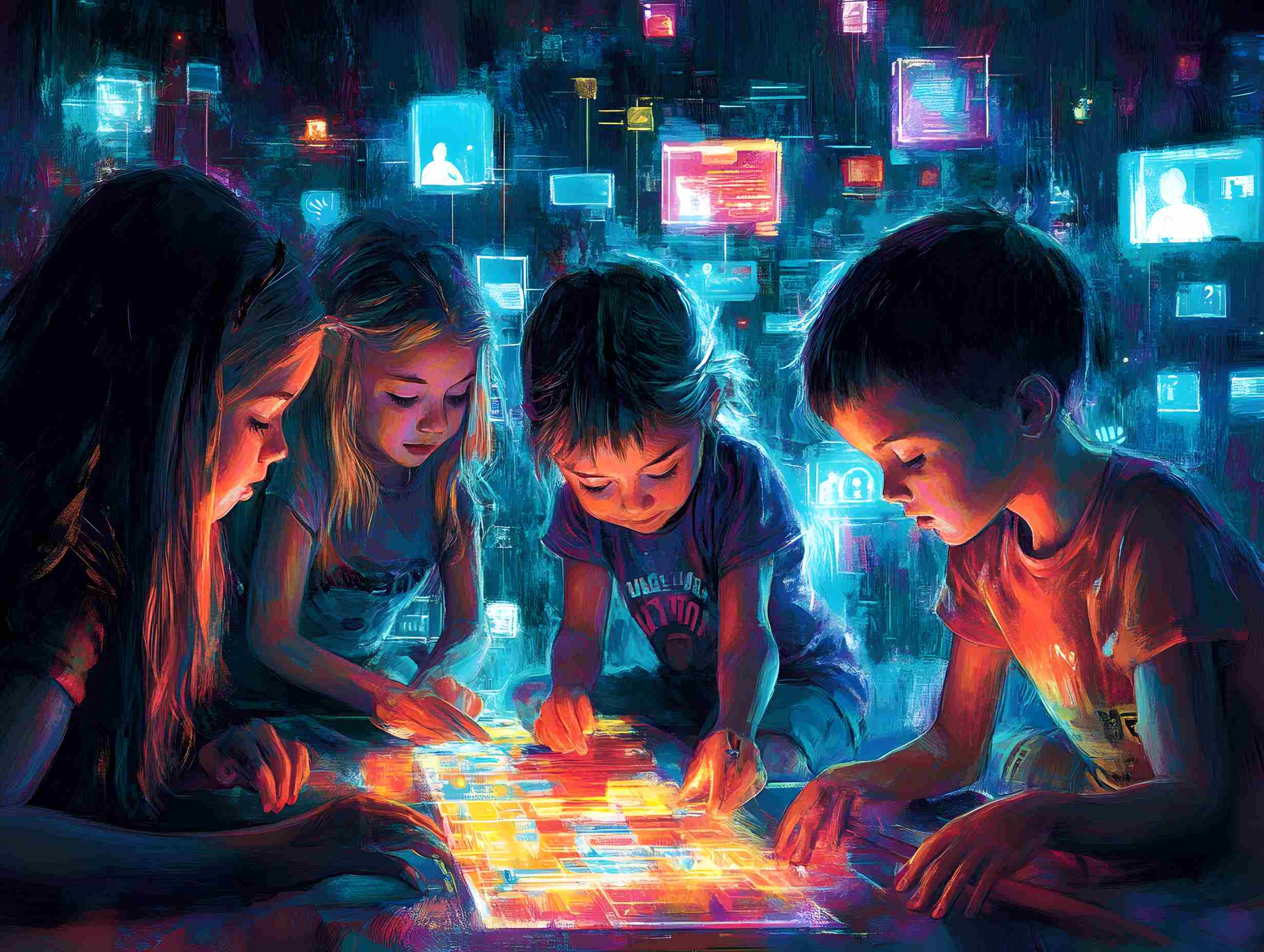
Image source: Generated by Wujie AI
Deepseek emerged out of nowhere, sparking a half-month-long wave of discussion: from dominating global app stores to various AI course sales, using Deepseek for fortune-telling, elderly people writing poetry with AI, and making AI mimic Lu Xun’s sharp commentary...
All this made me chuckle—nothing surprising at all.
Until I saw a post on Xiaohongshu—I was stunned:
A user posted a video tutorial on improving programming efficiency using AI-assisted coding.
This requires an AI programming tool called Cursor. After entering instructions, it instantly generates a C++ Snake game.
Skilled in programming and proficient with AI… You’d assume this must be a tech blogger working in software development, right?
Wrong! This “instructor,” @Yang the Student Who Loves Programming, is only around 10 years old—a primary school student. Moreover, visiting his Xiaohongshu profile reveals he teaches others how to use AI to improve vocabulary memorization, recommends algorithm books he's read, and even announces plans to participate in American programming competitions—the Informatics Olympiad.

Yang the Student Who Loves Programming – Xiaohongshu Profile
When I first came across this note, I was genuinely shocked. How did I end up seeing such technical, geeky content on Xiaohongshu? Isn’t Xiaohongshu supposed to be that lifestyle community focused on food, travel, and leisure?
The more I scrolled, the more I realized that children mastering AI wasn't an isolated case. On Xiaohongshu, I actually found a group of kids sharing AI-related content—most around ten years old—who can skillfully use AI and clearly explain technical terms even adults struggle with.
At this very moment, a new future divide has already formed.
Because these kids mastering AI—aren’t they exactly the so-called AI natives?!

Movie: *Artificial Intelligence* (2001)
AI Natives and the Future Divide
Why does the emergence of AI natives mark a turning point for the future?
Raising this question isn't about sensationalism. In fact, several years ago, forward-thinking circles in Silicon Valley were already discussing the concept of "AI natives" (AI Native generation / Gen AI). Take a look at these article titles—don’t they sound almost sci-fi? As if a new world is about to arrive?
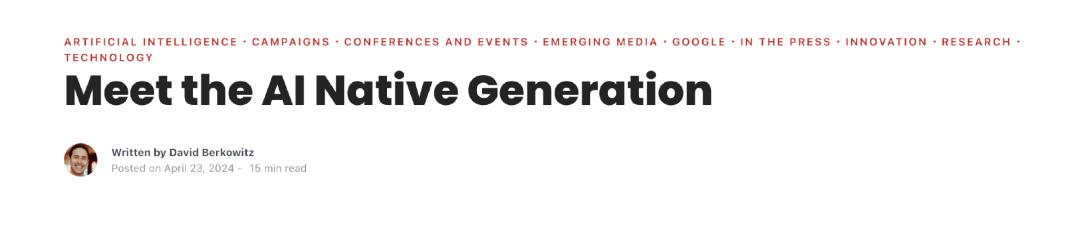
Understanding AI Natives
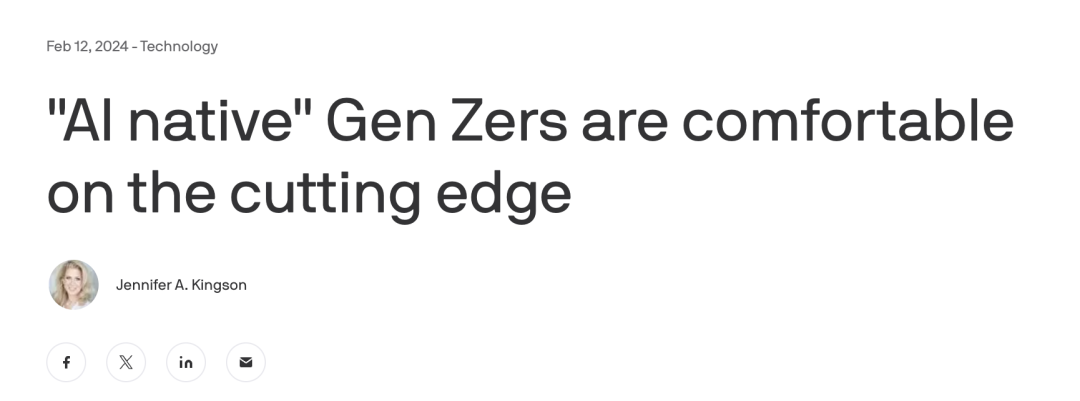
"AI Natives": Z Generation Embraces the Frontier
An article summarizing the traits of AI natives offers an interesting perspective titled *2025 Marks the Beginning of Generation Beta, the AI-Native Kids*, outlining three key characteristics:
1. They were born after 2010.
2. They’ve been exposed to AI since childhood, intuitively knowing how to use and understand it.
3. AI is simply part of their daily lives.
Please pay close attention to the emphasis on birth year. Historically speaking, every technological revolution creates a watershed moment, sharply dividing generations. These two groups inevitably develop vastly different ways of thinking and cognition.
The most recent example of such generational divergence is one we've personally experienced but rarely deeply examined—the rise of the "internet natives."
In the 1990s, the internet was a completely novel concept for the general public. Some traditional experts heavily doubted and dismissed it upon its emergence, failing to foresee its future and claiming the internet had no real commercial value beyond chatting and distributing adult content.
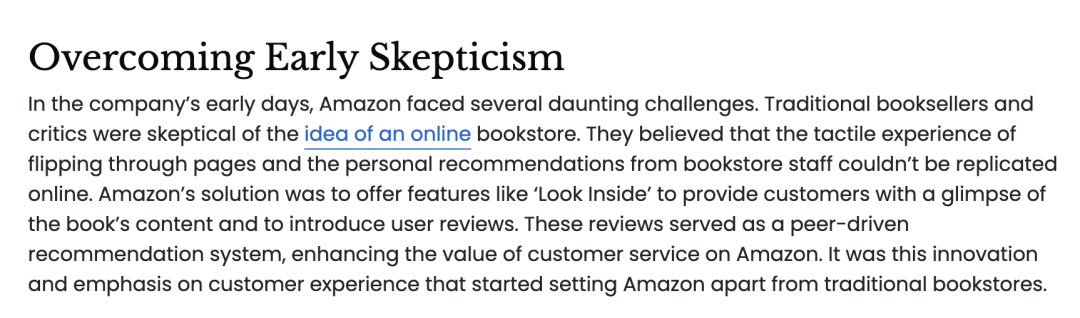
One online bookstore faced intense skepticism during its early days, criticized for reasons like “you can’t see or touch books sold online” and “online shops lack human staff service.” This doubted bookstore later became Amazon, generating over $380 billion in revenue.
Most people back then couldn’t imagine that within a few years, all elementary and middle school students would fluently use QQ, teenagers with no literary background would create web novels, and online gaming youth would elevate a 30-year-old man named Chen Tianqiao to become China’s richest person.
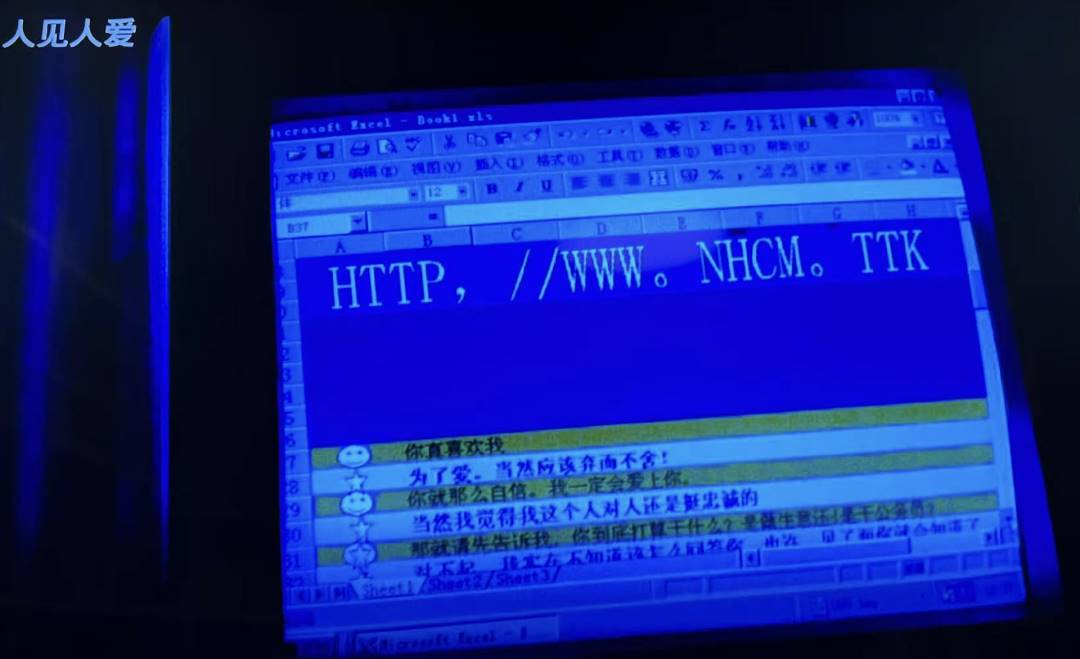
Early interactions among internet natives—still in their infancy, nobody imagined this kind of chat would lead to QQ or spawn an internet giant.
Remember when we had a class called "Microcomputer Class"? Elementary schoolers solemnly wore shoe covers, lined up to enter computer labs, sat upright, and followed teachers’ instructions to learn powering on/off computers, drawing in DOS systems, editing Word documents... Why wear shoe covers? Because computers were high-tech equipment requiring careful dust protection!
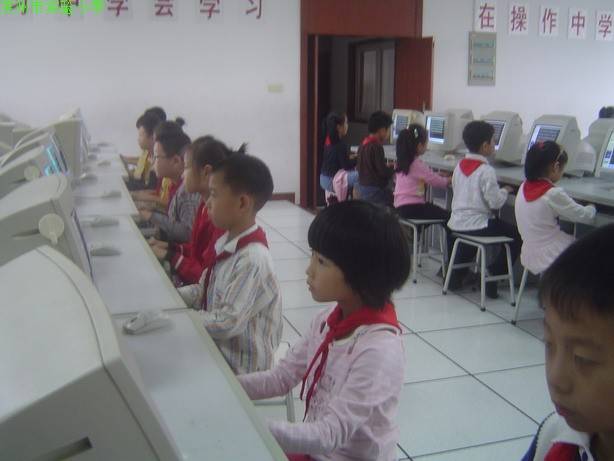
This is what ineffective learning looks like—an outdated performance created by people out of sync with the times.
Meanwhile, another group of young people—the so-called internet natives—naturally treated the internet as part of life. They instinctively loved *The Matrix*, quickly mastered instant messaging apps, intuitively understood online game social structures and trading systems, downloaded BT torrents...
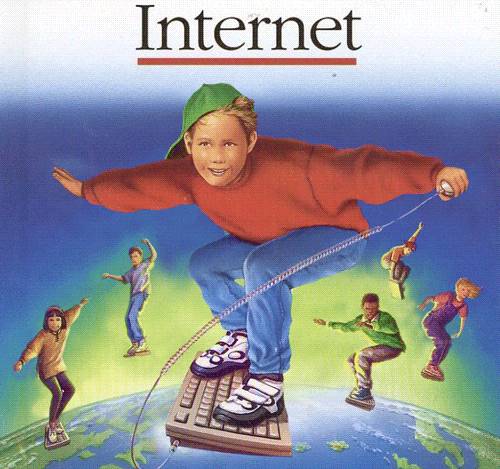
Over time, the gap between the two generations widened. The pre-internet generation carried too much baggage, making consistently incorrect judgments and struggling to grasp the significance of "internet natives" for the future.
They could never have imagined that一群 seemingly mischievous, code-tinkering, inexperienced, unknown youngsters actually held tools connecting them to the future. The best among them would inevitably leverage "technological levers" to build future companies worth tens or hundreds of billions of dollars, shaping the course of tomorrow.
A classic example is Zuckerberg, who started programming in high school and later created Facebook, becoming a billionaire in his twenties.

Facebook is a product only a true internet-native generation could understand (*The Social Network* still)
Another iconic case is Snapchat, whose initial idea stemmed from a "disappearing messages" concept among several young people in a Stanford dorm. Its journey from zero to rapid rise carries strong echoes of internet-native "garage entrepreneurship."

Today, internet natives are nothing new.
But the rapid rise of AI forces us to revisit that early period of internet emergence.
Undeniably, the future is shifting from "internet natives" to "AI natives." And these "masters of the future" will be even more powerful, with greater potential.
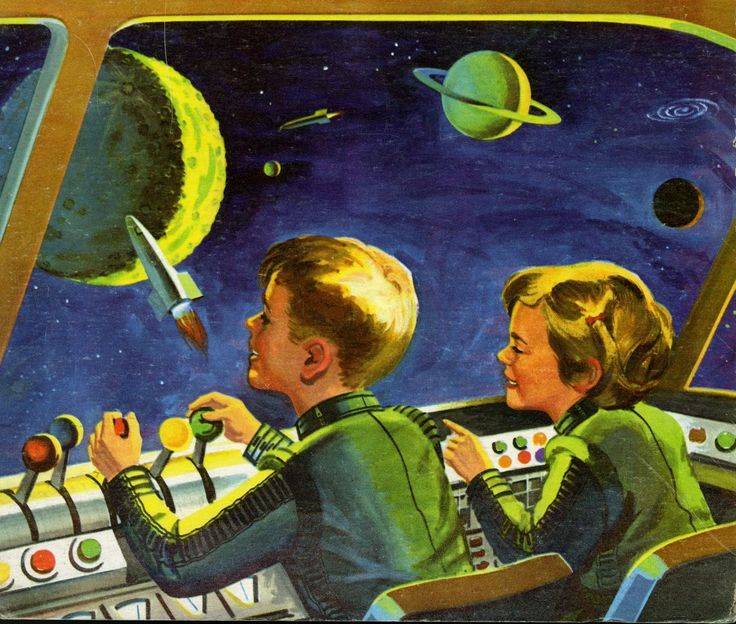
Thus, Silicon Valley visionary, investment guru, and cryptocurrency patriarch Balaji boldly predicted something along these lines:
Internet native Zuckerberg became a billionaire in his twenties,
the AI generation might produce billionaires in their teens.
His point is that children who grew up with AI from birth—their ways of thinking, working, and interacting with society—are fundamentally different from ours, practically another species.

Silicon Valley thinker: Balaji, author of *The Balaji Forecast*, which analyzes how technology will shape our future
Here’s a somewhat imperfect prediction: While we memorized *Memorial of Prefect Zhuge Liang Before Departing to War* and played *Romance of the Three Kingdoms* on NES, "AI natives" might be using AI to construct models simulating Three Kingdoms strategic conflicts; while we dreaded boring extracurricular classes, "AI natives" might already be creating games, music, short films using familiar technologies...
I wonder what you feel hearing this? For me, I’m extremely excited.
Ten-Year-Olds Mastering AI
What excites me is that the future isn’t entirely invisible "fog of war"—it’s actually hidden within today’s details.
Although "internet natives" are still growing, the communities they gather in deserve close attention, because they contain glimpses into the future.
Based on my observations, in English-speaking spaces, "AI natives" are highly concentrated in one community—Reddit. Domestically, the emerging hotspot is—Xiaohongshu.
The veteran community Reddit covers anime, conspiracy theories, pop culture, entertainment gossip, cryptocurrency—every imaginable topic, with users spanning wide age ranges
Currently on Reddit, AI natives are mostly active in tech-focused subreddits like technology, learnmachinelearning, ArtificialIntelligence. Discussions haven’t gone mainstream yet—purely a geek paradise.
What are they busy with? Much of it probably looks like alien language to many adults.
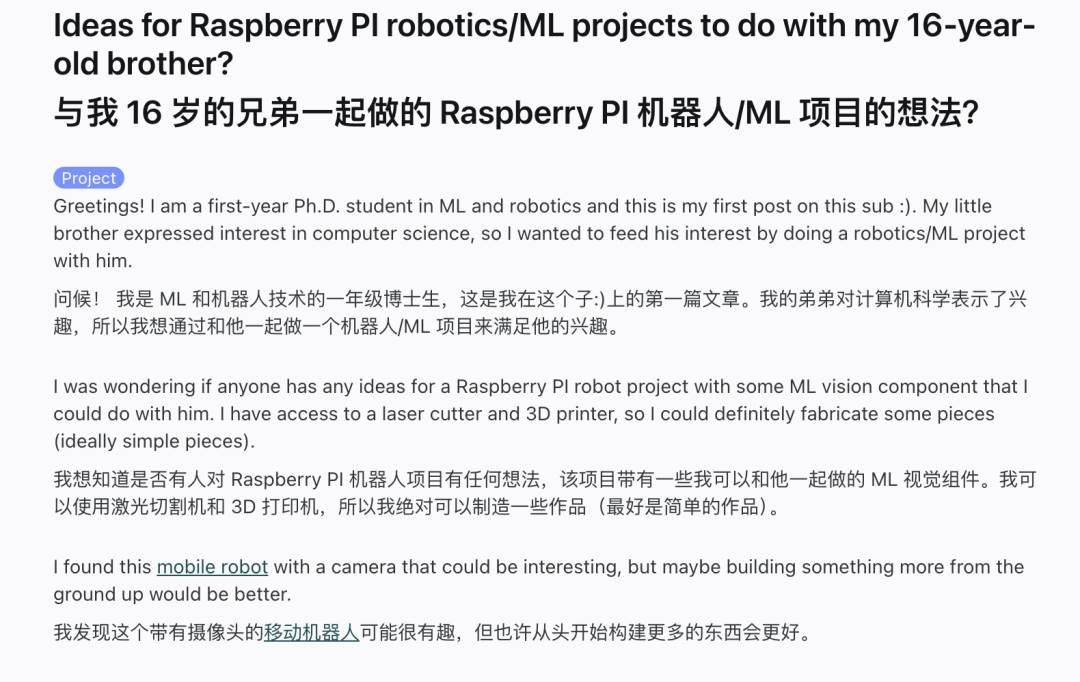
For instance, a PhD student is starting a venture with his 16-year-old brother, aiming to build a robot with machine learning vision components using Raspberry Pi microcomputers, now seeking co-founders.
A 14-year-old is attempting to build a stock predictor using AI machine learning within a week, targeting over 40% accuracy.
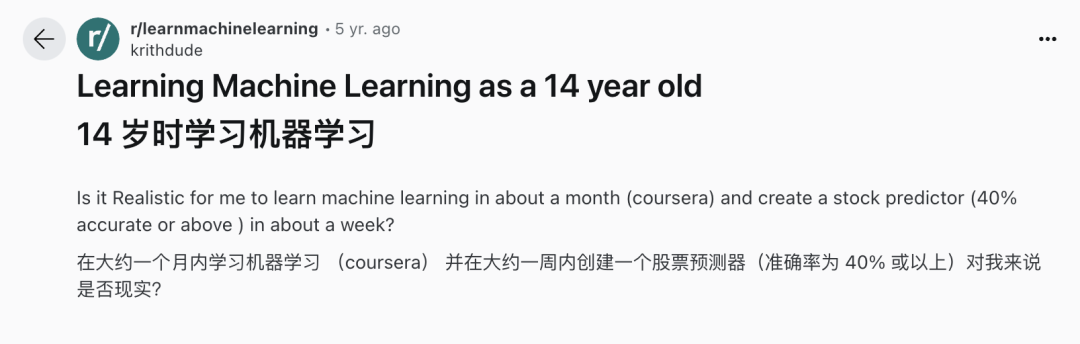
You can faintly smell the money
Domestically, "AI natives" on Xiaohongshu share more practical, everyday-life-oriented content, with vibrant discussion culture.
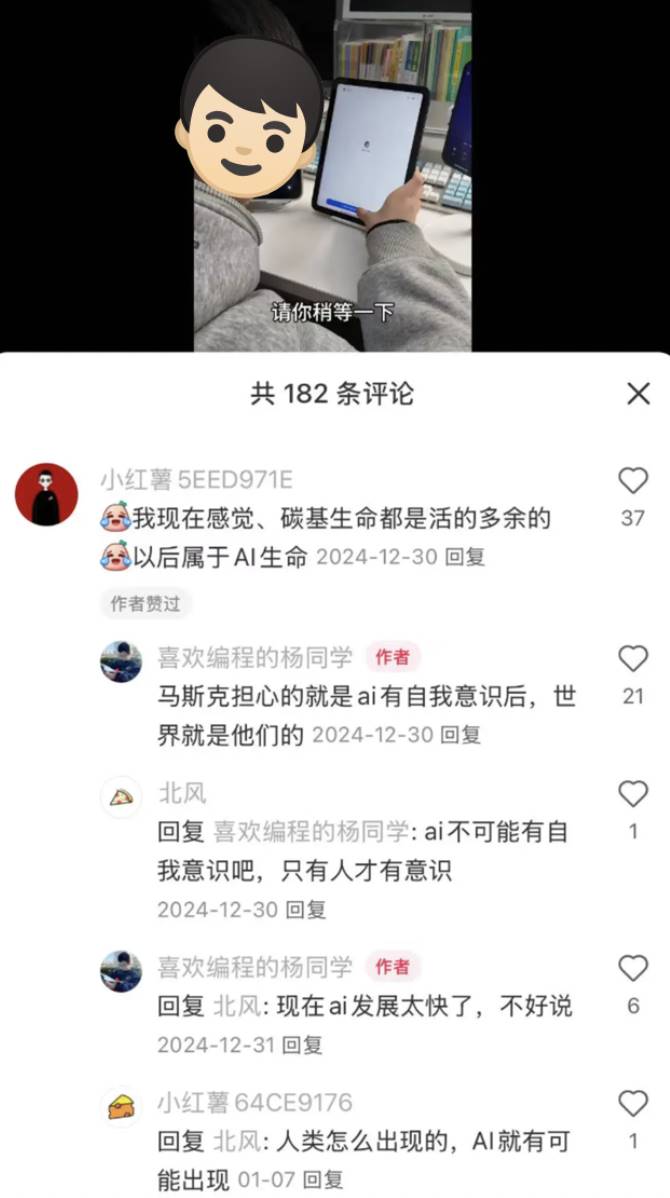
Beneath notes shared by Xiaohongshu AI natives, discussions frequently emerge. For example, under a note where a primary schooler debates with AI whether "we still need to learn programming given AI," users discuss whether AI could develop self-awareness
These "AI natives'" understanding and application of AI exhibit an unusually "mature" quality incongruent with their age (though perhaps not surprising).
For example, this child can analyze OpenAI Sora’s strengths and weaknesses, pointing out physical inaccuracies in AI-generated images, and even host video mini-lectures sharing insights.

Xiaohongshu ID: Tracy Who Loves Tinkering
This primary schooler teaches how to customize a personal AI language teacher using Crispe, casually using terms like "prompt framework format" and "human-AI collaboration framework."
Such professional knowledge leaves even adults utterly confused.
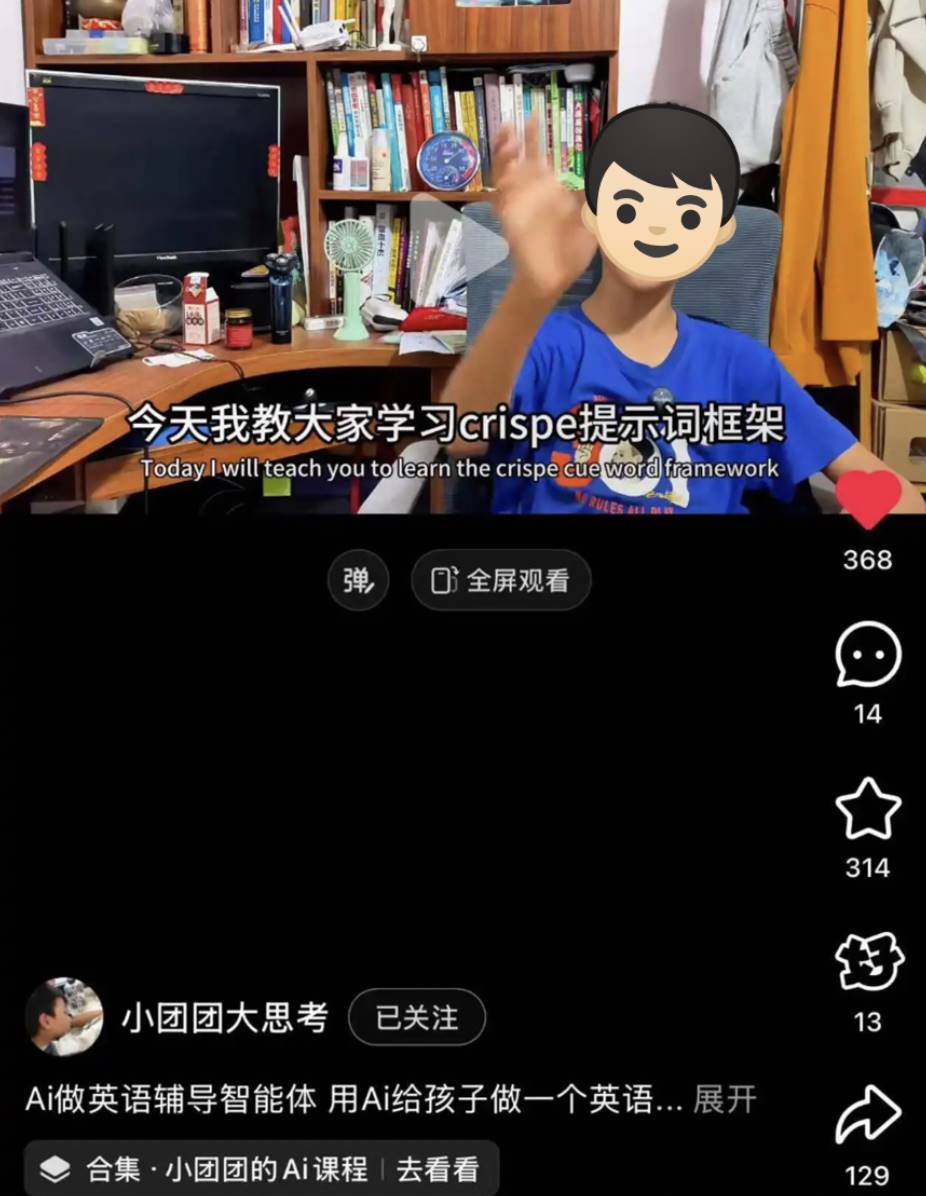
Xiaohongshu ID: Xiaotuantuan's Big Thoughts
This primary schooler demonstrates how to use Deepseek + NaturalReader for homework, even teaching how to use AI tools to conveniently listen to English podcasts.
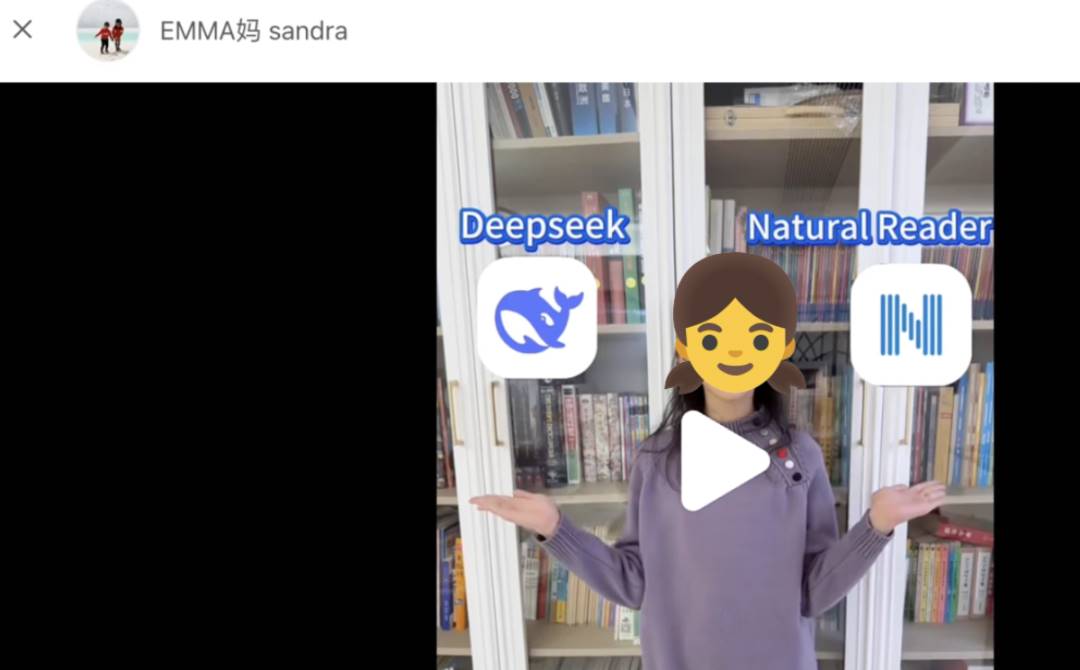
Xiaohongshu ID: EMMA’s Mom Sandra
Similar examples abound on Xiaohongshu—you can explore them yourself if interested.
These discussions and shares may still be underground currents—mere sparks for now.
But judging by the development pace of the previous era—the "internet natives"—I strongly suspect it won’t be long before "AI natives" erupt collectively, producing historically significant figures and groundbreaking projects that shake everyone’s perceptions.
The top players defining the future, the "Zuckerbergs" of the AI era, may soon appear.
The Undercurrents of the Future Have Already Appeared
So perhaps in the near future, Xiaohongshu will feature posts like: "Me, 14 years old, built an AI game project, raising 10 million yuan, recruiting fellow young teammates!"
If such scenarios truly emerge, I won’t be surprised. AI natives are already surfacing on today’s Xiaohongshu. Visionary, daring "future rebels" might very soon appear on Xiaohongshu.

Someone might ask: Shouldn’t "AI natives" emerge in more specialized technical communities? How come they’re appearing on Xiaohongshu?
This likely relates to community diversity. Similar to Reddit, as a UGC platform, Xiaohongshu hosts an extremely broad user base. Its independent individuals are inherently authentic and diverse. Content produced here long transcends lifestyle topics, covering everything from cutting-edge tech to daily life, stock trading to UFOs, indie games to niche music.
Just as ecosystems cannot consist of only single species, only biodiversity sustains fundamental vitality. Similarly, the prosperity of UGC communities relies on collisions between diverse thoughts, feelings, and experiences.
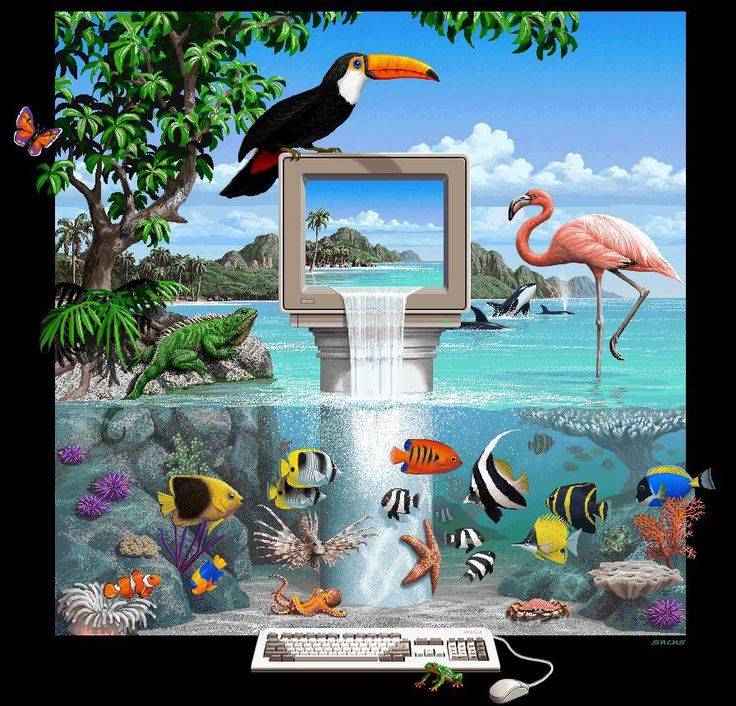
From foreigners flooding comment sections to compare notes, to hardcore AI applications diversifying on Xiaohongshu, it's clear that no matter your nationality, how niche your hobby, how obscure your technology, or how esoteric your knowledge, this highly inclusive community allows everything to take root, grow, and even inspire new creations.
Both internet natives and AI natives share a distinct trait: they harbor no fear toward the internet or AI, embracing them immediately.
On Xiaohongshu, I’ve seen concrete manifestations: groups of children discussing AI content as casually as sharing burgers, games, or clothes. For AI natives, AI is simply part of life. Not a singular narrative framework, nor dominated by a small elite holding discourse power.
Don’t dismiss all this as mere intellectual fantasy or futuristic speculation. After all, many major projects initiated by "internet natives" initially stemmed from small daily observations and life-related ideas, appearing utterly unremarkable at first.
Our future may very well be born from the everyday sharing of AI natives.
Join TechFlow official community to stay tuned
Telegram:https://t.me/TechFlowDaily
X (Twitter):https://x.com/TechFlowPost
X (Twitter) EN:https://x.com/BlockFlow_News