








President who helped "harvest" hundreds of millions of dollars suddenly turns into a naive innocent?
TechFlow Selected TechFlow Selected
President who helped "harvest" hundreds of millions of dollars suddenly turns into a naive innocent?
Deleting posts to distance himself yet reposting purchase tutorials—how long can Argentina's president continue his blame-shifting drama?
 Navigating Web3 tides with focused insights
By: Alex Liu, Foresight News
Event Summary
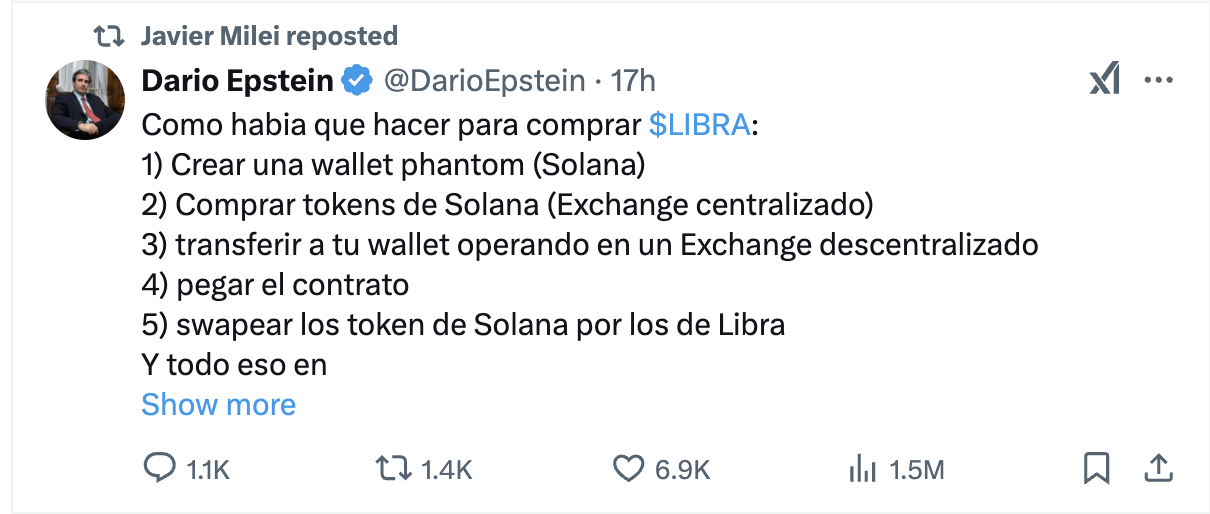
On the evening of February 17, 2025, Argentine President Javier Milei retweeted a tutorial on purchasing the LIBRA token on X, causing its price to surge from $0.35 to $0.77 within minutes before rapidly falling back to $0.44, resulting in over 50% volatility in 24 hours. This move once again shocked the market — just three days earlier, Milei had sparked controversy by promoting the LIBRA token and then deleting his post, leading to a 90% crash while claiming he "did not understand the project details."
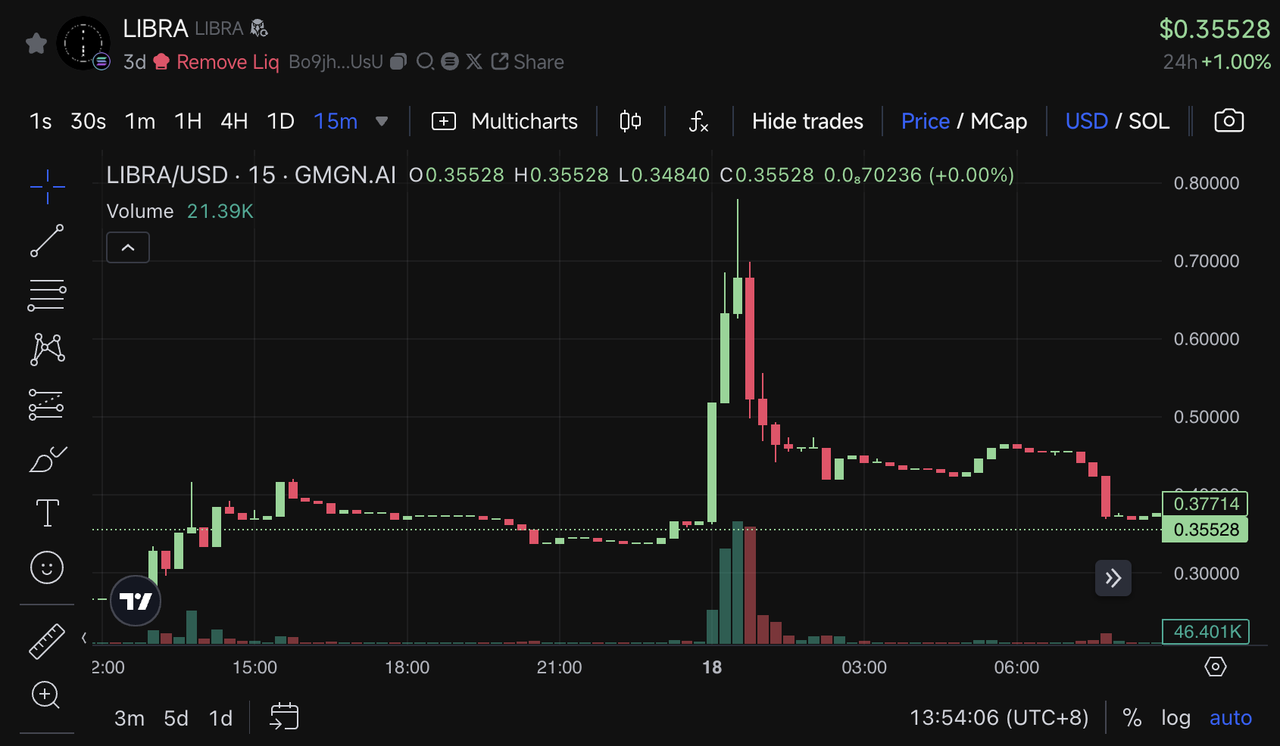
Market Data: GMGN
The farce that began on February 15 continued to escalate: Milei initially announced LIBRA with great fanfare, claiming it would "promote Argentina's economic growth," sending the token's price soaring and its market cap briefly exceeding $4.5 billion. However, within four hours, LIBRA plunged 85%, wiping out over $4 billion in market value and inflicting heavy losses on investors. On-chain data revealed that wallets linked to the project team had accumulated funds prior to the tweet and cashed out $107 million, with insider traders profiting over $20 million.
Latest Developments
President's Flip-Flopping Turns Market into a Puppet
Milei’s pattern of deleting and then retweeting has turned LIBRA into a manipulation tool. After deleting his initial post on February 15, he claimed he was merely “sharing information” and not involved in the project. But his retweet on the night of the 17th reignited market speculation, raising suspicions that he was manipulating sentiment to help the team dump their holdings. Under public pressure, Milei stated in a televised interview on the 17th: "Most of the losers were Chinese and American investors; Argentinians were hardly affected... I made no mistake, I just need to be more careful in selecting projects."
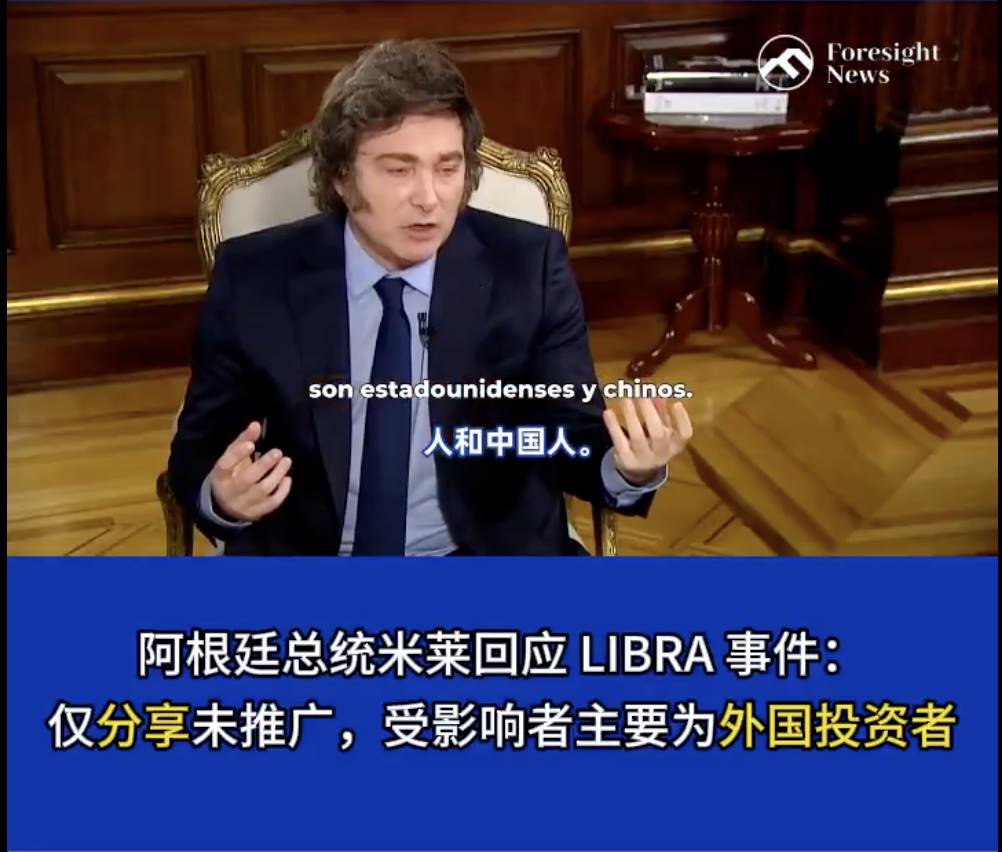
"I didn't promote it, I just shared it." Argentine President Javier Milei repeatedly emphasized this statement during a television interview on February 17, attempting to distance himself from the scandal of LIBRA’s 95% collapse. "I acted in good faith and got slapped in return." Milei portrayed himself as having been “slapped” on camera, yet refused to admit fault, transforming himself into an innocent victim.
Legal Battle Escalates: From Argentina to the United States
On February 17, Argentina's opposition party Civic Coalition (ARI) formally submitted an impeachment motion to Congress, accusing Milei of "abusing power by endorsing a private project" and demanding an investigation into whether he received benefits from KIP Protocol. On the same day, an Argentine law firm filed criminal charges with the U.S. Department of Justice (DOJ) and the FBI, alleging that the LIBRA team was involved in cross-border securities fraud and calling for an investigation into Milei’s role.
The U.S. crypto community also pushed back: former Solayer team members publicly stated they lost over $2 million due to LIBRA and threatened "hacker actions" against KIP Protocol members; other investors are preparing a class-action lawsuit, accusing the project team of using the president’s influence to "pump and dump."
Political Credibility Collapses: Odds of Resignation Surge
As the scandal deepened, the trading volume of the "Milei resigns in 2025" betting contract on the Polymarket prediction platform exceeded $20,000, with the probability of his resignation rising from 5% before the incident to 20%.
Opposition lawmaker Leandro Santoro bluntly stated: "This scandal has turned Argentina’s international image into a laughingstock."
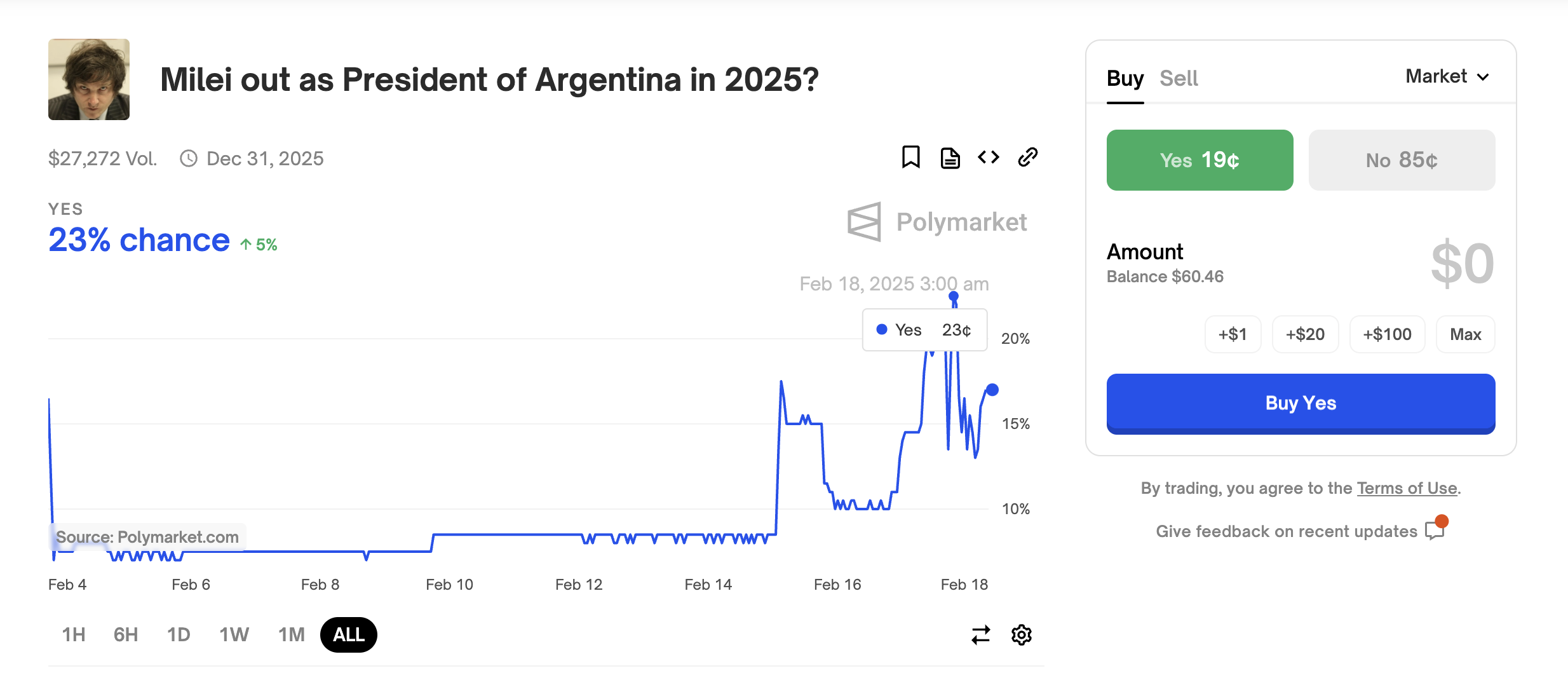
If the Polymarket prediction comes true, Milei could become the first head of state to fall due to a failed crypto project.
What Lies Ahead
Legally, the U.S. SEC may step in to investigate insider trading; if evidence shows Milei was aware, extradition clauses could be triggered. Politically, Argentina’s Congress will debate the impeachment motion on February 20, and Milei will be required to submit a full report on the LIBRA incident to parliament.
Milei’s presidential approval rating remains at 47%, supported by easing inflation, but his erratic behavior is increasing public skepticism. Whether his presidency will survive and whether he can walk away unscathed from this crypto controversy remains to be seen.
Conclusion
From "libertarian reform pioneer" to "crypto scam suspect," Milei’s 48-hour spectacle has exposed the absurd nature of meme coin markets. As on-chain data reveals: in a greed-driven crypto world, even a presidential account can become a harvesting tool. And Milei’s defense — "I did this because I am a hardcore technological optimist" — may become the weakest justification when politicians get entangled in financial bubbles.
"The likelihood of Argentinians participating was very small," Milei insists. But when national credibility becomes a gambling chip, who will ultimately pay the price for so-called "decentralization"? The answer may lie hidden in the next collapsing K-line.
Join TechFlow official community to stay tuned
Telegram:https://t.me/TechFlowDaily
X (Twitter):https://x.com/TechFlowPost
X (Twitter) EN:https://x.com/BlockFlow_News
 Foresight News









