Lessons from the performance of crypto assets beyond Bitcoin in previous bull markets
TechFlow Selected TechFlow Selected
Lessons from the performance of crypto assets beyond Bitcoin in previous bull markets
How to Survive in a Bull Market "Trap"?
 Navigating Web3 tides with focused insights
Author: BowTied Bull
Translation: Baihua Blockchain
As we enter 2025, it's customary at the turn of the year to reflect on the past and look ahead to the future.
Looking back at the history of the crypto industry, we can observe an interesting phenomenon: every four years there is a "shitcoin season," during which everything in the space seems to go up. You might hear that even your alcoholic uncle made a fortune by buying some animal meme coin—possibly while drunk—and executed the trade in that very state.
By 2025, the real altseason hasn't fully arrived yet. While no one can predict how wild this upcoming cycle will be, I want to remind everyone that altcoin rallies typically escalate rapidly and can end just as suddenly. Once the crash comes, losses may not merely be -99.99%—they could mean total collapse.
Until then, however, everyone is immersed in waves of prosperity and entertainment. So, let’s take a moment to review previous altseasons—how they unfolded, and whether we can draw any valuable lessons from them?
2012–2013 Altseason: Early Enthusiasts, Peak Market Cap Reaches $15 Billion
We know that blindly following trends is likely to reappear in today’s market. This exact scenario played out before—in 2013—with fascinating results.
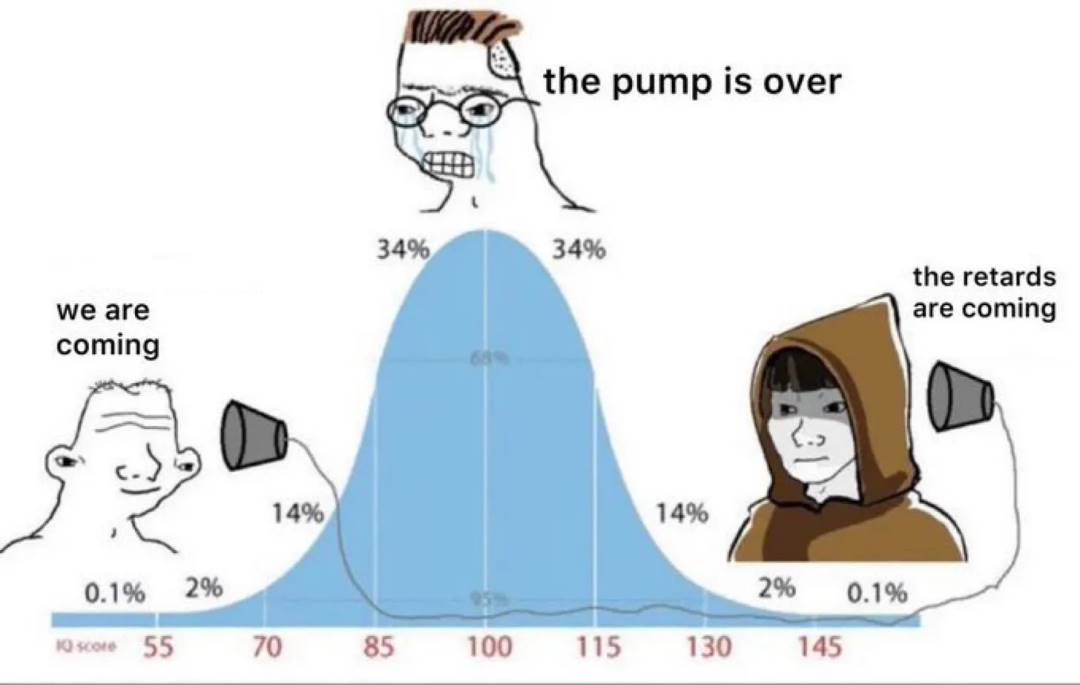
During the 2013 altseason, Bitcoin was still in its early stages, with a total market cap around $1 billion and whale transactions averaging about $100,000. At the time, Mt. Gox was still operational, and investors were often people who frequented events like Magic: The Gathering trading card games (which also provides context for the eventual Mt. Gox incident).
Back then, ideas emerged about improving Bitcoin transaction speed—specifically, reducing block times—which was seen as a groundbreaking innovation.
Litecoin: Still active today, Litecoin (proposed by Charlie Lee) aimed to reduce block time from Bitcoin’s 10 minutes down to 2.5 minutes.
LTC rose from roughly $0.10 to $48—a gain of approximately 47,900%. It surged again in 2017, after which Charlie Lee sold all his holdings, stating “Bitcoin is fine without me.” (Everyone knows what it means when a founder sells 100% of their stake.)
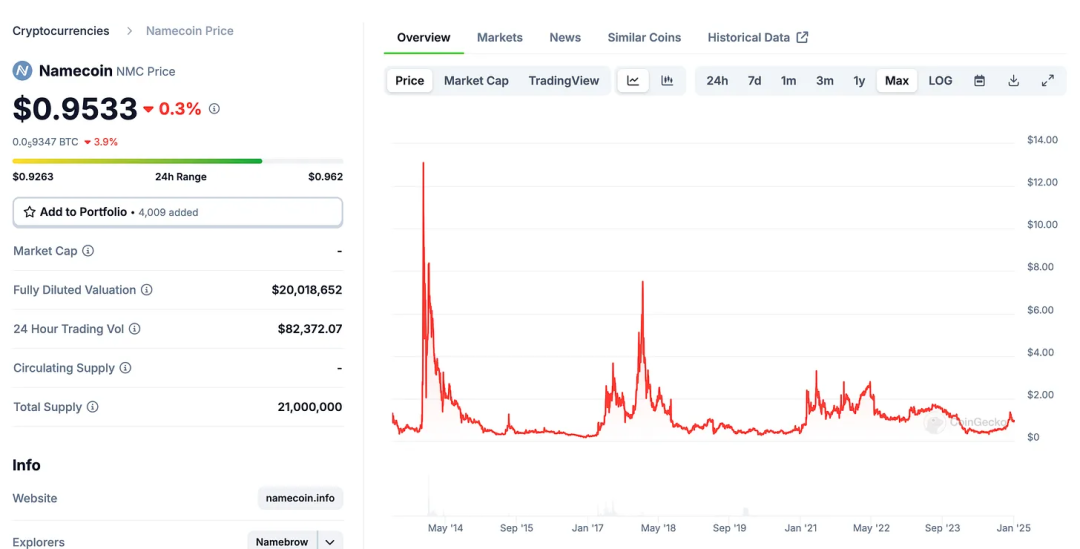
Namecoin: A Bitcoin fork designed to create decentralized domain names (a concept similar to ENS using ".eth" extensions). Its price once spiked to about $13 before quickly crashing. From low to high, it gained roughly 30x. In fact, Namecoin still exists today, currently trading near $1.
Peercoin (PPC): One of the earliest Proof-of-Stake tokens (the same mechanism now used to secure ETH), experiencing two major rallies—one in 2013 and another in 2017 during the ETH ICO boom. It once reached ~$7, representing a 60–70x increase. Naturally, it never achieved mainstream adoption and eventually fell to $0.42. (Though a fair takeaway today is that aside from outright Ponzi schemes like Bitconnect or LUNA, few assets truly go to zero anymore.)
The Hype: Bitcoin ultimately hit $1,200, lifting all cryptocurrencies along with growing public interest. Any project posted on BitcoinTalk could surge purely on speculation. The closest modern equivalent might be a memecoin promoted by—or named after—a celebrity.
Mt. Gox Collapse: When Mt. Gox collapsed, the party ended. A major hack triggered a sharp decline in Bitcoin’s price—down roughly 85–90% depending on how you define the bottom—while most altcoins dropped over 99%.
2017 Altseason: ICO Mania and Ethereum's Rise, Peak Market Cap Hits $800 Billion
During the subsequent bear market, several pivotal developments occurred. Ethereum emerged as a smart contract platform, aiming to enable programmable money. This was genuine innovation—allowing not just token transfers but also the creation of smart contracts, fundamentally changing the game.
Like many things in crypto, Ethereum came with familiar risks. Its DAO (Decentralized Autonomous Organization) was hacked, losing over $100 million, leading to a blockchain split into ETH and ETC. Some still argue the fork was a mistake, but we won’t dive into that debate here—just noting it as historical context.
By around 2016, people realized new tokens could be issued on Ethereum, giving rise to Initial Coin Offerings (ICOs). In an ICO, projects directly sold tokens to investors. By 2017, ICO mania exploded, bringing countless scams flooding into the space.
Ethereum (ETH): Since issuing tokens required ETH, demand drove its price from ~$8 to $1,400 by January 2018—an almost unimaginable return at the time. Today, ETH trades around $3,650.
Ripple (XRP): Still viewed as the "banker’s coin," the narrative was that Ripple would overnight replace SWIFT as the de facto financial standard. Despite being centralized (though most didn’t mind), it attracted millions. XRP surged from ~$0.01 to $3.80, currently trading at $2.41.
Oddly, XRP’s investor base remains largely retail. During the latest rally, we saw similar patterns—XRP dominating TikTok discussions, sparking speculative questions like, “What if it reaches Bitcoin’s market cap?” Talk of a “$4 trillion valuation” seemed surreal.
Litecoin (LTC): As mentioned earlier, LTC surged again, briefly hitting $360. Even after Charlie Lee sold all his coins, it rallied to $384 in 2021!
EOS: Raised $4 billion via ICO, branded itself the “Ethereum killer,” and peaked at $22—but has never reclaimed that high.
NEO: Another self-proclaimed “Ethereum killer,” dubbed “China’s Ethereum.” NEO jumped from $0.20 to $200—a 1,000x return.
Bitcoin Cash (BCH): Roger Ver, a well-known figure in the Bitcoin community, supported larger blocks and championed Bitcoin Cash. At block 478,559 in August 2017, holders received 1 BCH per 1 BTC held. Backed by Ver, BCH soared to ~$3,800 but gradually faded from prominence.
Other Ethereum Killers: Numerous tokens were marketed as “Ethereum killers” (e.g., ADA, Tron). Simply having a whitepaper seemed enough to drive 10x or 100x gains. Others like Filecoin and Tezos launched during this period.
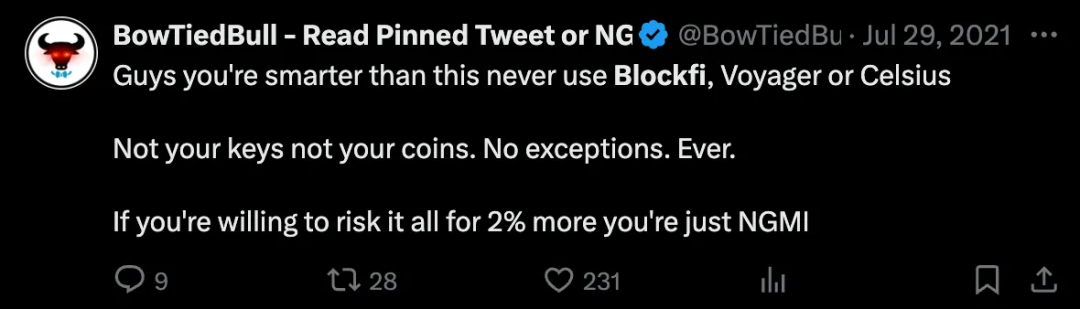
Yield Scams: If you think BlockFi, LUNA, Celsius, and Voyager were the first yield scams, think again! The first large-scale yield Ponzi scheme was Bitconnect, which cost many millions.

Regulatory Crackdown: Much like in 2021, regulatory intervention and the bursting of Ponzi schemes crushed the market. The SEC began targeting projects like EOS. The market corrected sharply—down ~85%—and by March 2020, Bitcoin had fallen to around $3,500.
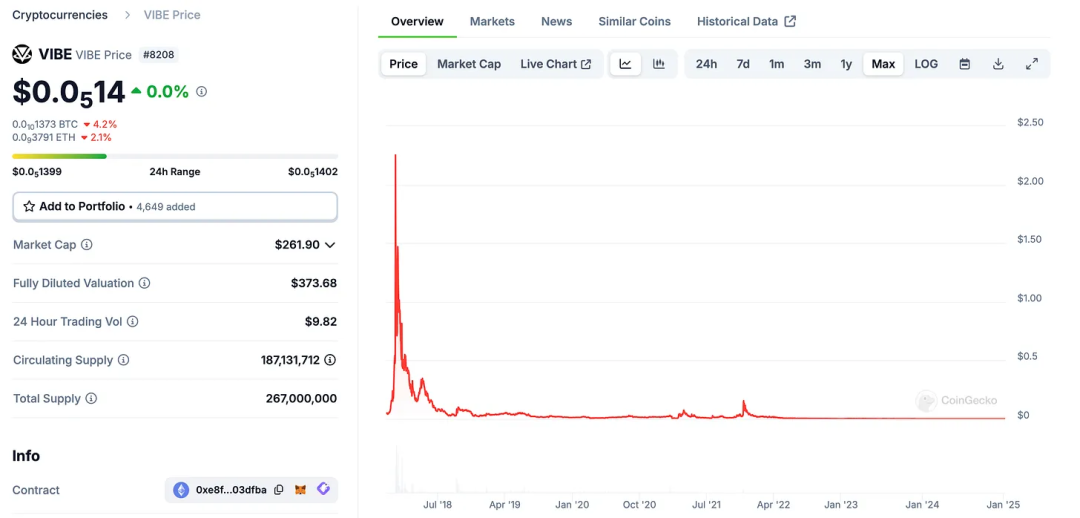
Most tokens during that era were pure scams, so the altcoin market saw near-total wipeouts—close to -99.999999%. Back then, seeing your token advertised during the Super Bowl could instantly multiply its price fivefold. VIBE is a classic example.
VIBE surged from $0.04 to over $2, only to see its total market cap collapse to just $262.
2021 Altseason: DeFi, NFTs, and Memecoins, Peak Market Cap Hits $3 Trillion
In 2021, due to widely known circumstances, people stayed home working, staring at screens with nothing better to do. The U.S. government printed $10 trillion—just federal spending alone.
DeFi protocols fueled liquidity mining, NFTs brought JPEGs into the mainstream (selling for millions), and memecoins reached absurd valuations. Bitcoin broke $69,000, ETH hit $4,800, and total crypto market cap surpassed $3 trillion in November 2021.
Dogecoin: Started as a joke, but Elon Musk’s interest sent prices parabolic, making it a hot topic on Reddit. Now practically Elon’s official memecoin, symbolizing government efficiency departments. Price rose from ~$0.005 to $0.74—an increase of about 15,000%.
Solana: Marketed as the next “Ethereum killer,” gaining attention for fast speeds and low fees—largely promoted by SBF (now imprisoned). Price surged from $1 to ~$260—a 26,000% gain.
Shiba Inu: A Dogecoin-inspired memecoin that created numerous millionaires. From near-zero market cap, it gained up to 500,000%.
DeFi Tokens: AAVE, UNI, SUSHI, YFI, and others gained between 10x and 50x. Total Value Locked (TVL) in DeFi surpassed tens of billions. Today, many DeFi protocols have higher TVL than they did back then!
NFTs:
CryptoPunks: Sold for millions; the cheapest Punk now costs over 100 ETH.
Bored Ape Yacht Club (BAYC): Became a cultural phenomenon, with floor prices reaching astonishing levels.
Airdrop Mania: Longtime users could earn $40,000 in airdrops just by holding a $100 .eth domain. You could cross a bridge (perform certain actions) and earn 2% daily or weekly returns. Projects like BAYC airdropped entire high-value NFT collections, totaling billions in distributed value.
Even crazier… nearly every token was rising. Tokens like SAFEMOON gained popularity through figures like Dave Portnoy. Celebrities such as Snoop Dogg and Paris Hilton endorsed various projects. Tom Brady and Stephen Curry promoted crypto exchanges. Even the now-defunct FTX paid for naming rights to the Miami Heat arena.
Ponzi Schemes: Massive Ponzi schemes proliferated. While some blamed us for being involved, we weren’t. Fortunately, many avoided significant losses. Entrusting your assets to others was—and remains—a poor decision.
Death Spiral: As liquidity dried up (incentives funding these projects disappeared), the aforementioned Ponzi schemes collapsed. Then FTX imploded due to customer fund theft, followed by renewed SEC enforcement. Widespread fraud and rug pulls led the crypto ecosystem into a strict regulatory phase.
Key Lessons
1) Take Profits Timely: Markets move fast, and greed creeps in easily. If you catch yourself thinking, “I wish I’d bought twice as much of X,” it’s probably time to sell half and lock in gains. Whether you cash out into Bitcoin, Ethereum, or stablecoins doesn’t matter—the key is to avoid greed.
2) Hype Cycles Repeat: Each altseason has a narrative: Bitcoin forks, ICOs, DeFi, NFTs, or memecoins. Once you identify a theme, stick with it—knowledge built in one area tends to vanish quickly once the cycle ends. Instead of jumping around, focus deeply in one domain and reap long-term rewards.
3) Risk Management Is Crucial: Returns can be huge, but everyone’s situation differs. You’re not me, and I’m not my neighbor. Set a personal plan and stick to it—don’t let someone with $100K saying “$10M isn’t enough to retire” shift your goals.
4) Survivors Thrive: Altcoins come and go, but Bitcoin and Ethereum dominate every cycle. If a project has lasted this long, its risk of going to zero is relatively low. If Solana finds real use cases beyond Pump.fun by 2025, it might reach similar resilience.
Have we learned from Ponzi schemes? Not really. Judging from current behavior, people still don’t grasp the principle of “Not Your Keys, Not Your Coins.” You can buy crypto stocks or leveraged crypto products through brokers, but understand: holding those shares or crypto ETFs does not mean you own actual cryptocurrency. You’ll never truly know how these firms or projects manage your invested assets.
During bull markets, we’re often criticized for not chasing the latest memecoin hype. While speculation may seem exciting now, careful observation shows that those sticking to their strategies and staying calm are quietly accumulating wealth.
In contrast, speculators chasing “10x returns” may grab short-term attention, but their capital size and strategy pale compared to anonymous whales who consistently invest month after month. These big players usually have stronger financial foundations and clearer long-term plans. Ultimately, market performance and data will reveal which approach leads to real success.
Wishing everyone good luck in 2025.
Join TechFlow official community to stay tuned
Telegram:https://t.me/TechFlowDaily
X (Twitter):https://x.com/TechFlowPost
X (Twitter) EN:https://x.com/BlockFlow_News
 @BowTiedBull