From Genesis Block to Breaking $100,000: The Evolution of the Bitcoin Network and Its Economic Foundations
TechFlow Selected TechFlow Selected
From Genesis Block to Breaking $100,000: The Evolution of the Bitcoin Network and Its Economic Foundations
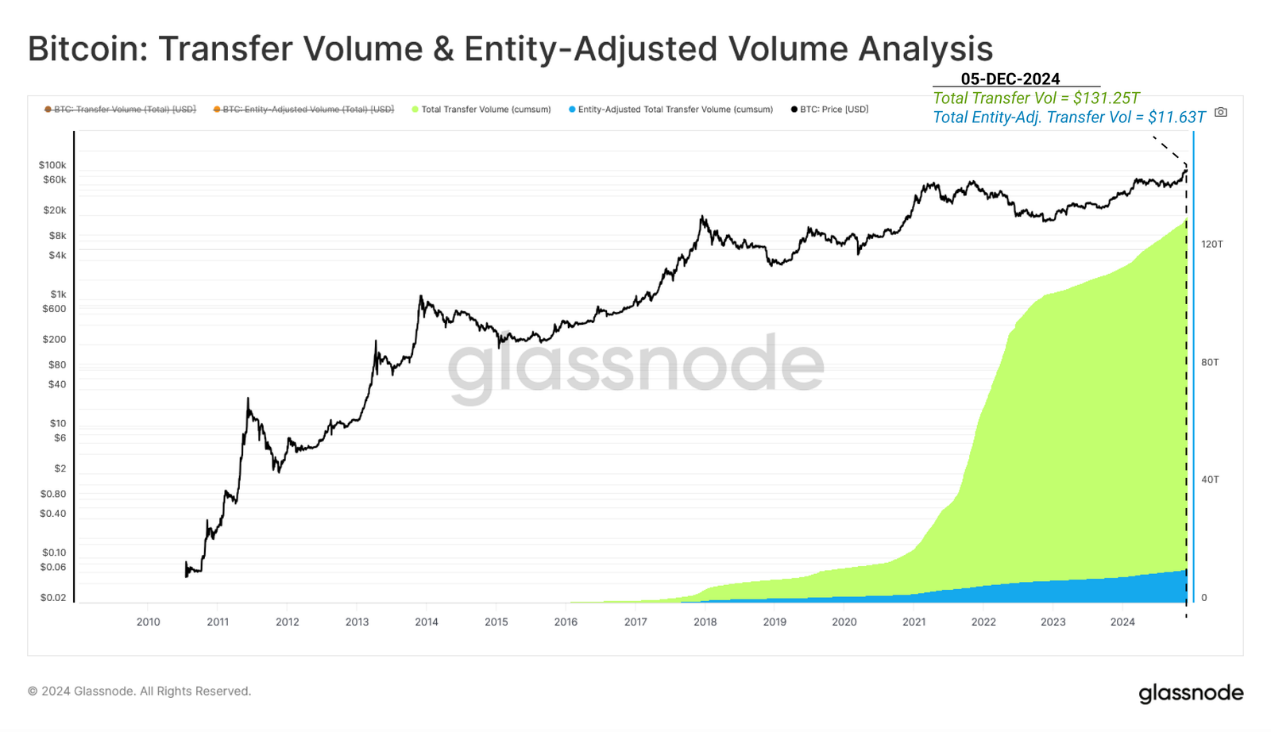
The Bitcoin network has processed a total of 1.12 billion transactions, settled $131.25 trillion in transfer volume, and miners have cumulatively earned $71.49 billion.
 Navigating Web3 tides with focused insights
Author: CryptoVizArt, UkuriaOC, Glassnode
Translation: Felix, PANews
Key Points:
-
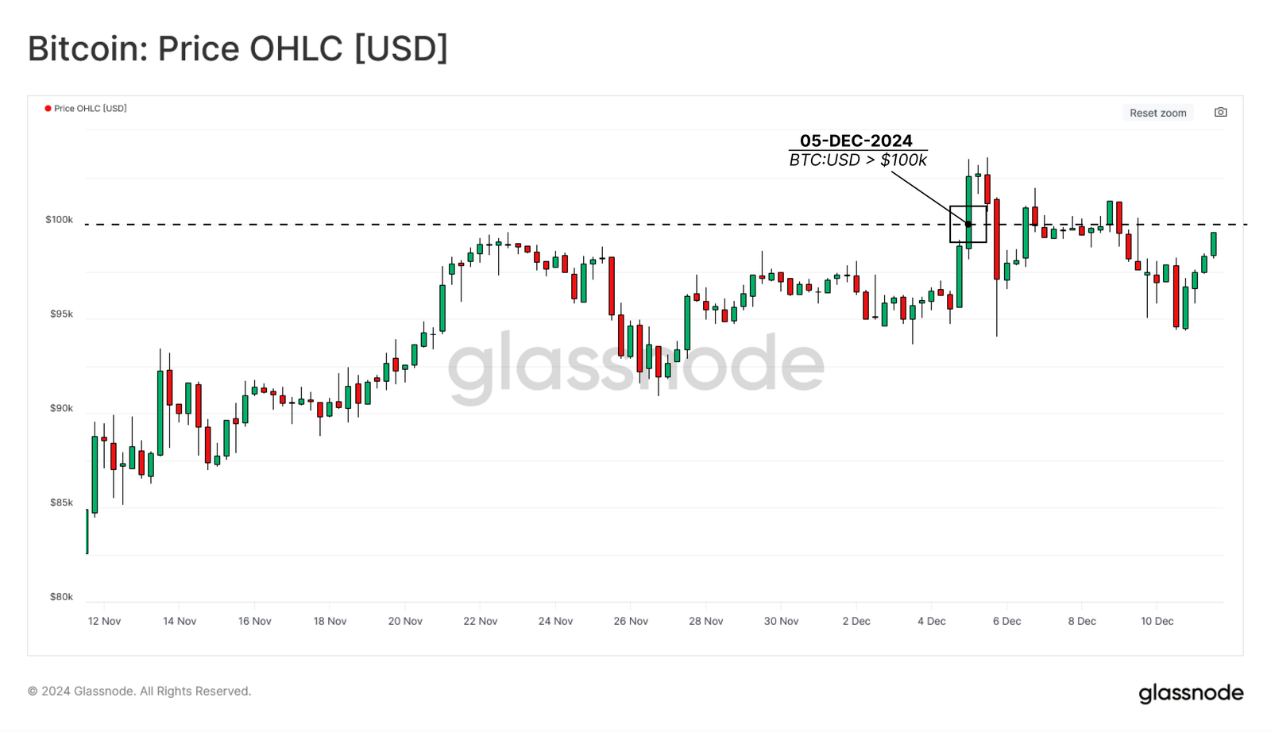
After 5,256 trading days, Bitcoin surpassed $100,000 for the first time on December 5, briefly exceeding a $2 trillion market capitalization.
-
Miners have cumulatively earned $71.49 billion, reflecting Bitcoin's network security and economic incentives.
-
The Bitcoin network has processed 1.12 billion transactions and settled $131.25 trillion in transfer volume, with entity-adjusted data offering clearer insights into real economic activity.
-
Holding distribution across different groups shows Bitcoin ownership is widespread, spanning retail and institutional-scale holders.
This article explores the evolution of the Bitcoin network and its economic foundations, reviewing Bitcoin’s journey from the genesis block to surpassing the $100,000 mark.
Market Expansion
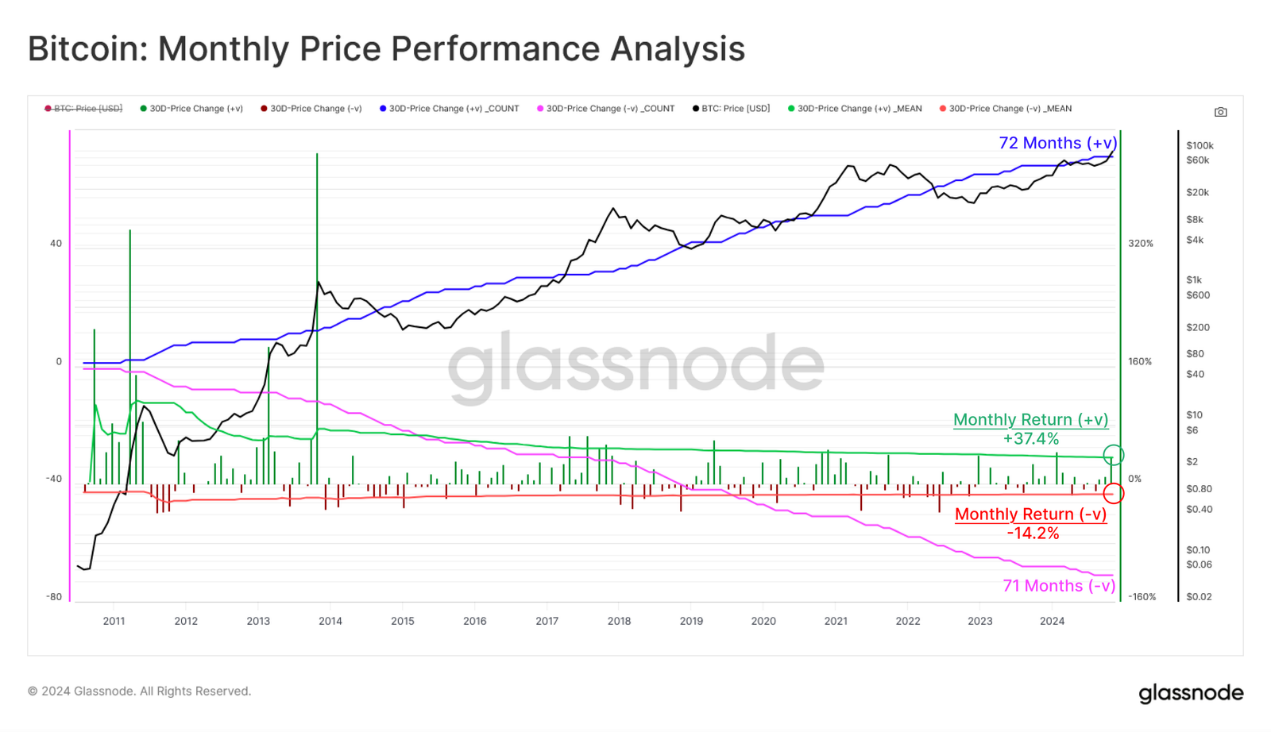
Bitcoin’s price has been active for 5,256 days, rising from fractions of a cent to $100,000. This journey includes 72 positive monthly candles (including December 2024), averaging a 37.4% gain, and 71 negative monthly candles, averaging a -14.2% decline.
This reflects a remarkable balance between bull and bear markets, with a positive skew during the most significant price appreciation periods.
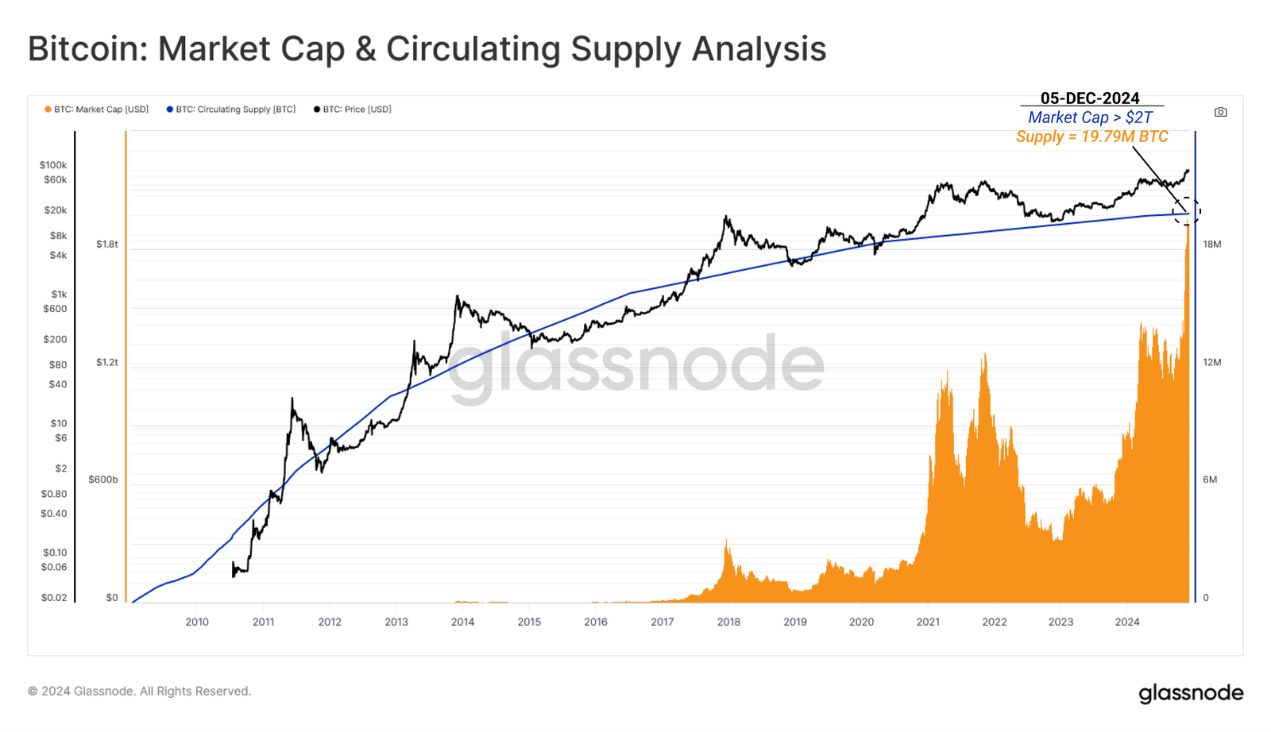
As of December 5, a total of 19,791,952 BTC have been mined, representing 94.2% of the 21 million cap. Bitcoin’s market capitalization also briefly surpassed $2 trillion, overtaking silver’s market value (approximately $1.84 trillion).
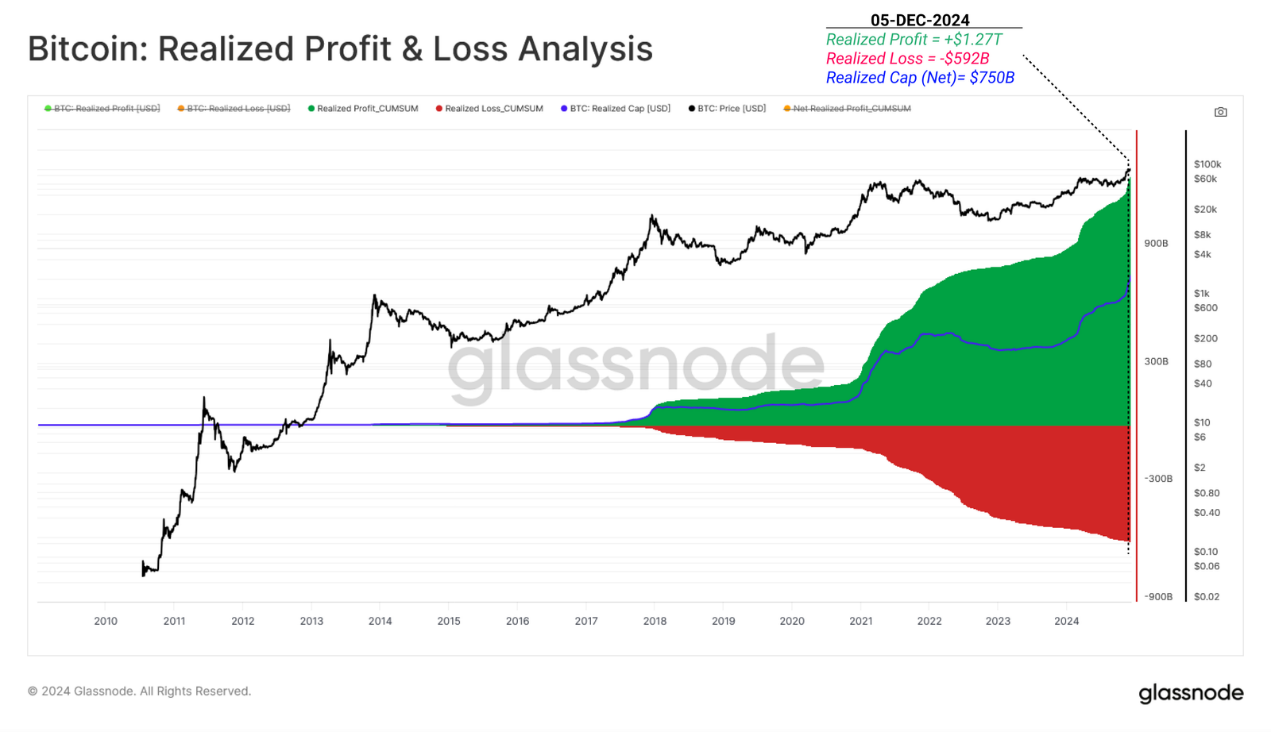
During this market expansion phase, investors realized $1.27 trillion in profits and $592 billion in on-chain losses (based on differences between buy and sell prices). This led to a net capital inflow (realized market value) of $750 billion, highlighting the immense value that has flowed into the Bitcoin network over its lifecycle.
Supply Distribution
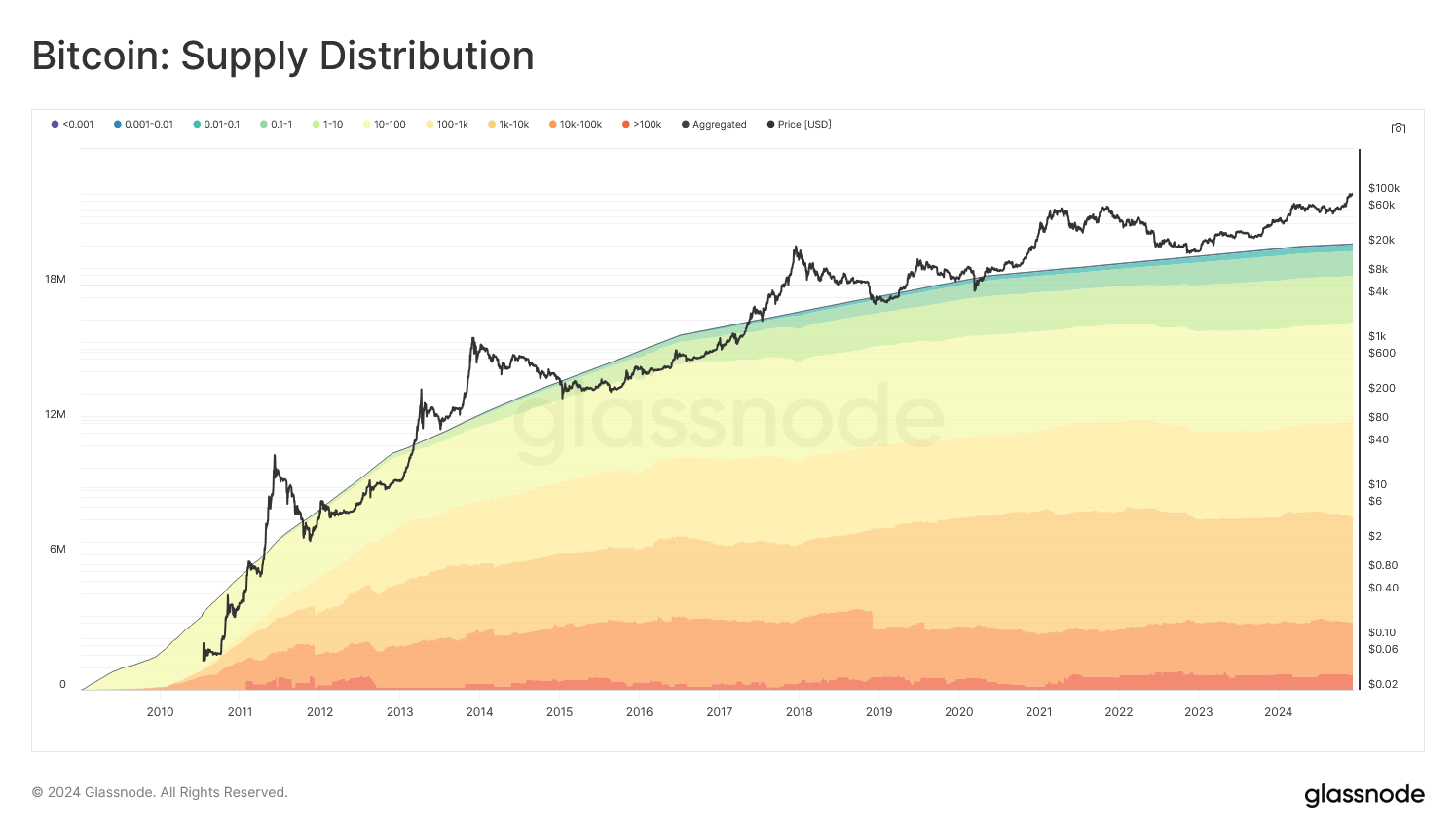
Among the mined bitcoins, the distribution across wallet sizes is as follows:
-
<0.001 BTC: 5,491 BTC (0.027%)
-
0.001–0.01 BTC: 42,683 BTC (0.216%)
-
0.01–0.1 BTC: 271,641 BTC (1.373%)
-
0.1–1 BTC: 1,077,839 BTC (5.446%)
-
1–10 BTC: 2,093,845 BTC (10.581%)
-
10–100 BTC: 4,306,780 BTC (21.761%)
-
100–1,000 BTC: 4,342,868 BTC (21.935%)
-
1,000–10,000 BTC: 4,693,216 BTC (23.716%)
-
10,000–100,000 BTC: 2,309,654 BTC (11.671%)
-
>100,000 BTC: 647,934 BTC (3.274%)
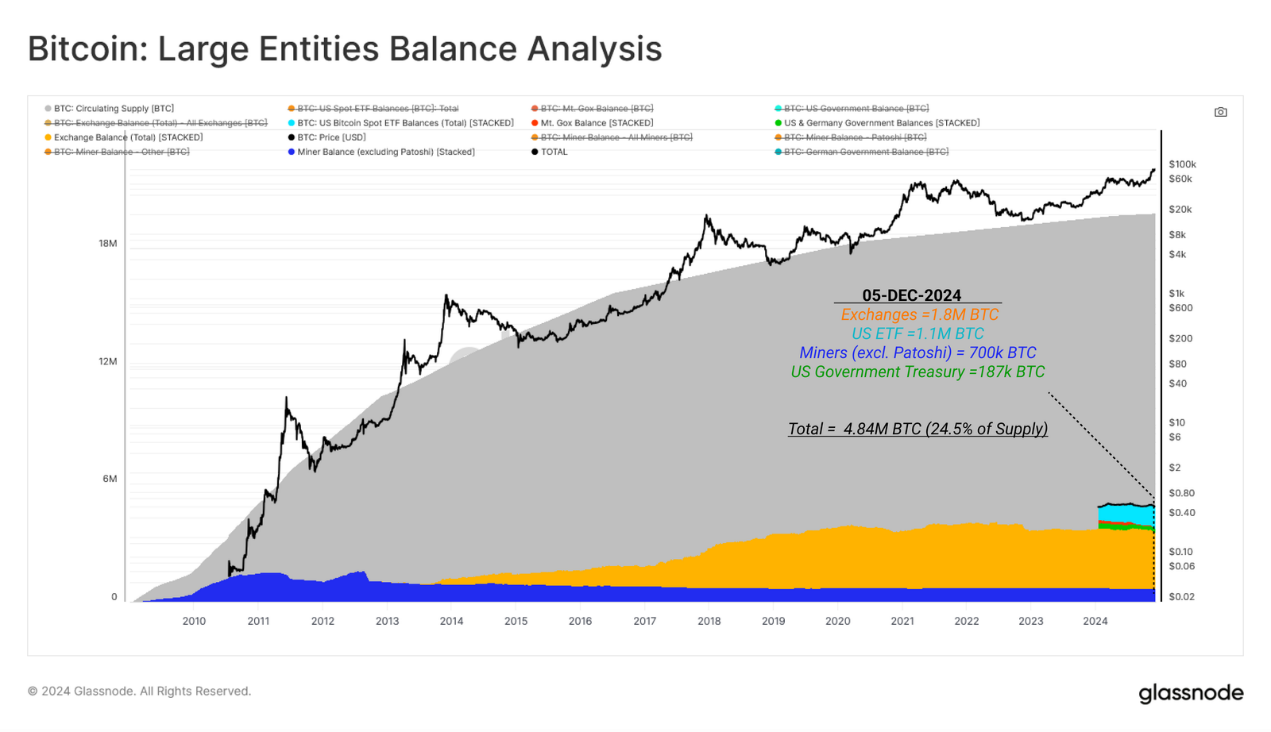
Notably, most whale wallets (holding 1,000+ BTC) are associated with exchanges, ETFs, and large institutions such as MicroStrategy. Each of these major entities represents collective ownership by thousands to millions of customers and shareholders.
Significant holdings include 1.8 million BTC held by exchanges (9.1% of supply) and 1.1 million BTC managed by U.S. ETFs (5.6% of supply). Additionally, miners (excluding Patoshi) have retained 700,000 BTC (3.5% of supply), while the U.S. government holds 187,000 BTC (0.9% of supply), illustrating Bitcoin’s broad distribution across entities and highlighting the increasing institutionalization and centralization of Bitcoin custody. (Note: Early independent mining generated large amounts of Bitcoin; the community believes this miner was Satoshi Nakamoto, and refers to this mining pattern as Patoshi.)
Network Evolution
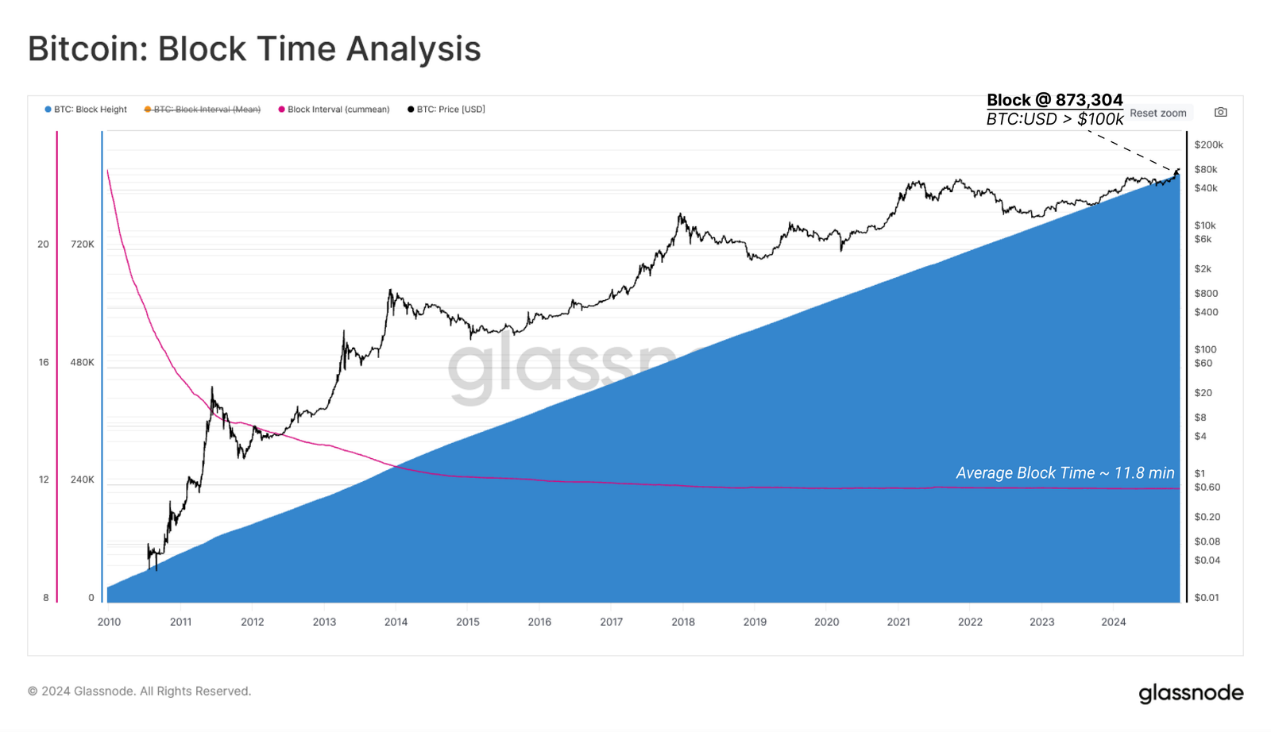
Since the genesis block, a total of 873,304 blocks have been mined, with an average block time of 11.8 minutes. While the current average block interval is approximately 9.6 minutes due to increased hash rate, early years saw slower progress because Satoshi overestimated the performance of laptop CPUs relative to the initial difficulty setting.
Over the same period, network difficulty has surged dramatically. With growing security and computational power behind Bitcoin, after 418 difficulty adjustments (excluding unadjusted periods), the network difficulty has risen to 446,331,432,498,125,300,000,000.
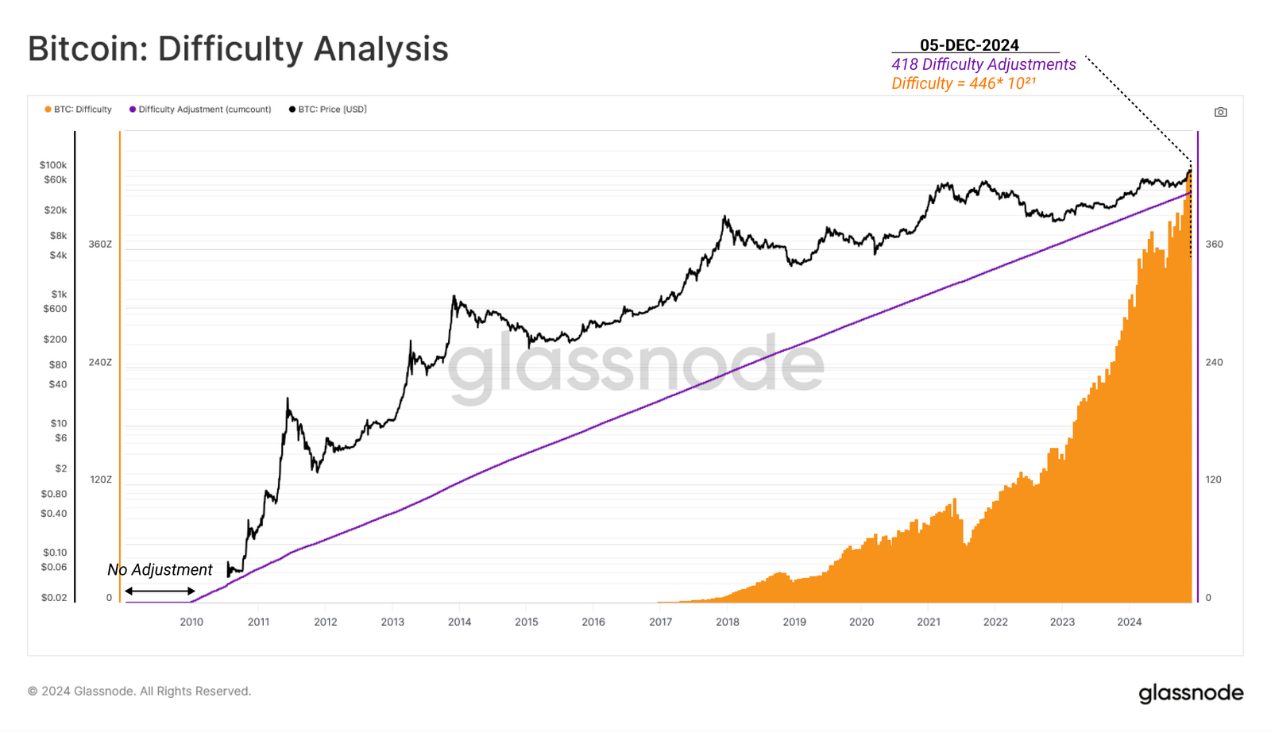
Bitcoin’s Proof-of-Work (PoW) consensus adjusts difficulty to target a new block approximately every 10 minutes, regardless of network hash rate fluctuations. Difficulty is dynamically adjusted every 2,016 blocks (about two weeks) to align with the 600-second target block time.
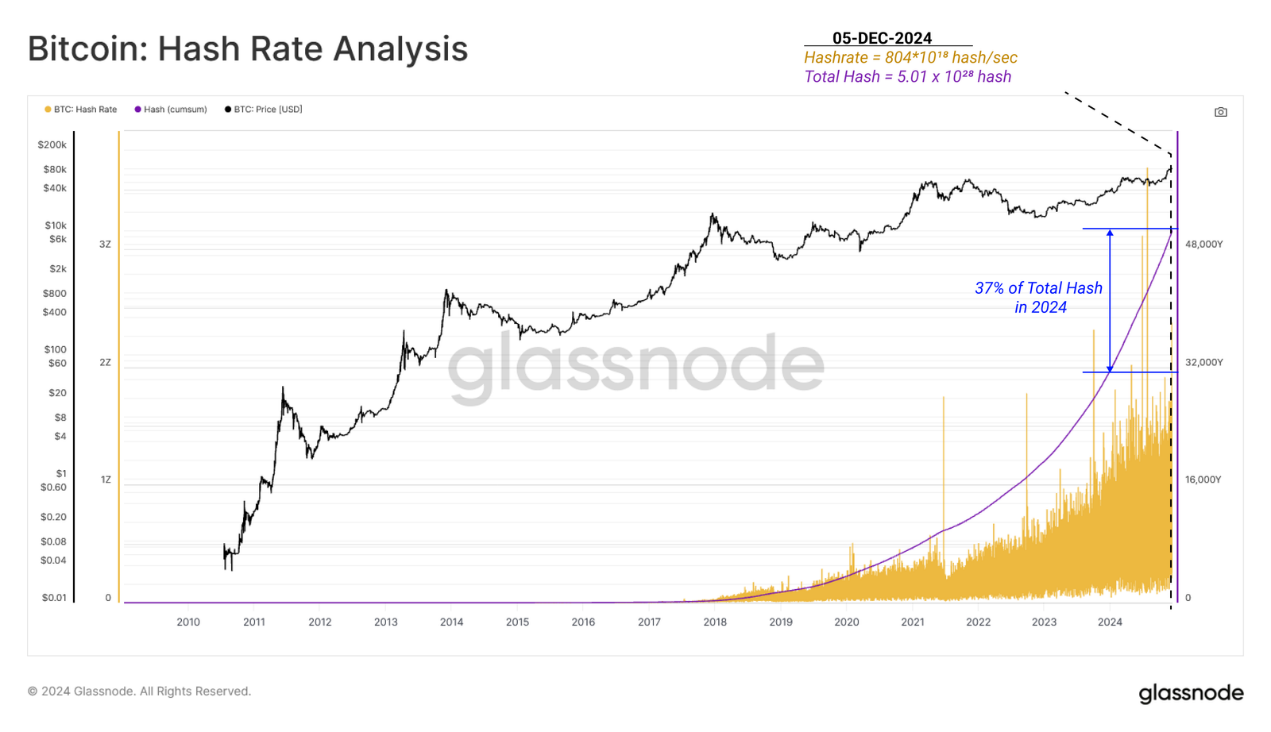
When Bitcoin reached $100,000, the network hash rate surged from 128,185 hashes per second to 804,407,834,059,443,100,000 hashes per second. To date, miners have cumulatively computed approximately 5.01 x 10^28 hashes. Notably, 37% of all hashes computed occurred in 2024 alone.
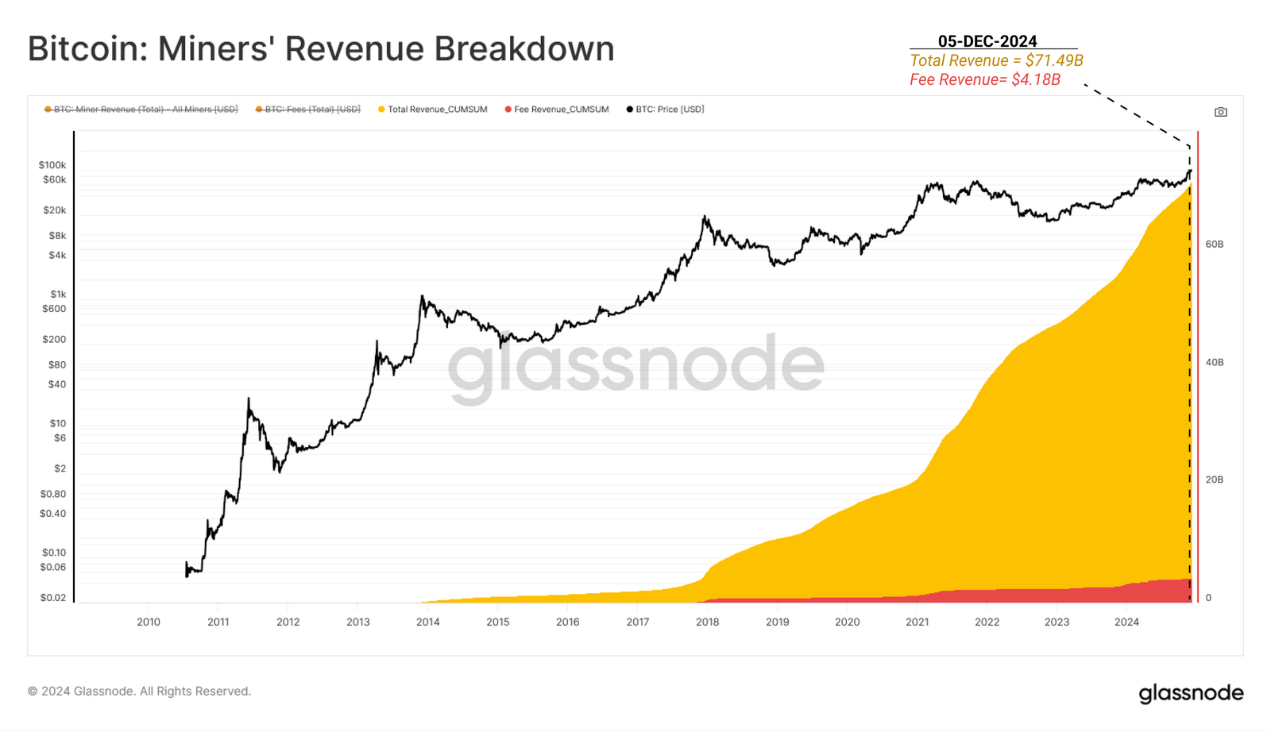
As of December 5, miners have cumulatively earned $71.49 billion, based on the block reward value on the day each block was mined. This income includes $67.31 billion in block subsidies from newly minted coins and $4.18 billion in transaction fees paid by users. This represents just 3.57% of Bitcoin’s peak $2 trillion market valuation, reflecting an extraordinary return on investment for security spending.
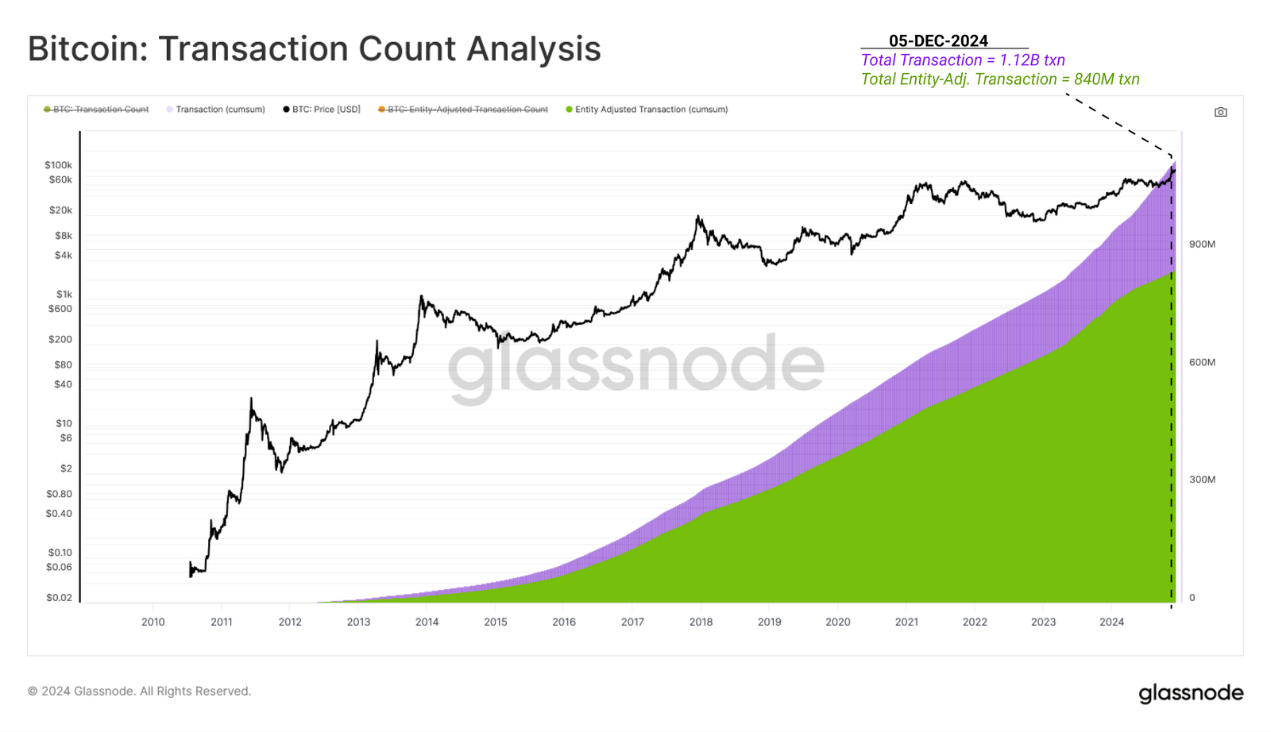
Bitcoin’s transaction volume has also seen remarkable growth. To date, the Bitcoin network has successfully processed 1.12 billion transactions (unfiltered). After filtering out internal transfers, the number of actual economic transactions stands at 840 million.
In terms of dollar value at confirmation, the Bitcoin network has cumulatively processed $131.25 trillion in transaction volume. After adjustment, the filtered transfer volume is $11.63 trillion, representing only 8.86% of the total.
This underscores that most transactions are economically motivated. However, the vast majority of on-chain transaction volume may be linked to large exchanges and custodial wallets managing funds.
Conclusion
Bitcoin reaching $100,000 is not just a price milestone but a testament to its extraordinary journey from a niche internet experiment to a critical global financial infrastructure. Since the genesis block, the Bitcoin network has advanced rapidly, achieving a $2 trillion market cap—surpassing silver—and settling $131 trillion in transaction volume through 1.12 billion transactions.
The network has cumulatively paid miners $71.49 billion—just over 3% of its market valuation—to secure itself, demonstrating an exceptional return on invested costs. With hash rate near all-time highs and a highly distributed holder base, Bitcoin is playing an increasingly vital role on the world stage.
Join TechFlow official community to stay tuned
Telegram:https://t.me/TechFlowDaily
X (Twitter):https://x.com/TechFlowPost
X (Twitter) EN:https://x.com/BlockFlow_News
 @glassnode