








Half-Day to $50M Market Cap: Is the $ARC Team Really Tech-Driven? | Recent Rapid Review
TechFlow Selected TechFlow Selected
Half-Day to $50M Market Cap: Is the $ARC Team Really Tech-Driven? | Recent Rapid Review
In the early stages of emerging narratives, those making money aren't necessarily truly good or useful teams.
 Navigating Web3 tides with focused insights
Author: TechFlow
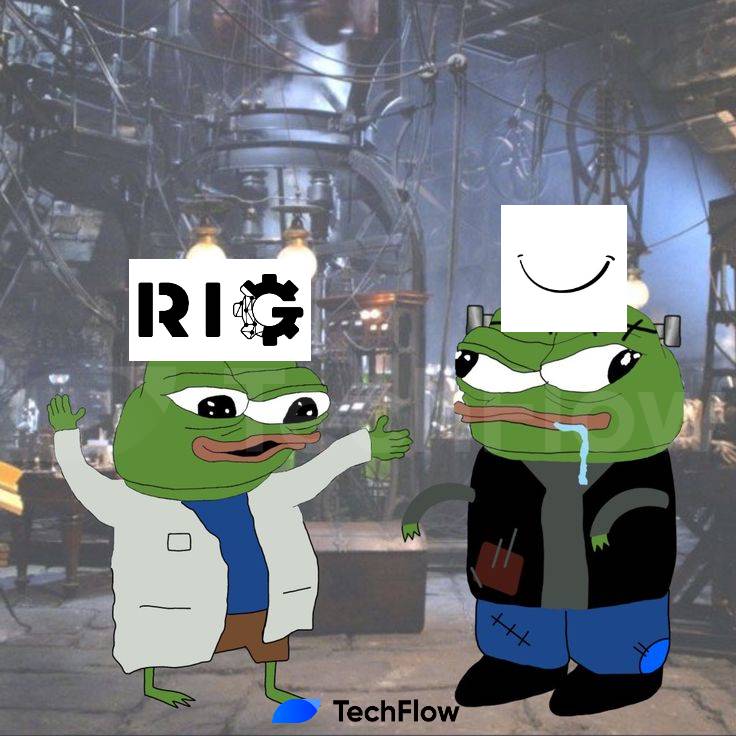
With the (temporary) end of violent deleveraging, altcoins are beginning to rebound. Looking around, the first to recover are once again Solana's AI Memes—not just major exchange-listed tokens like $GOAT and $ACT, but also those AI Memes with significant on-chain trading volume, which have surged so strongly they’re nearly impossible to contain.
Interestingly, December 11 marks exactly two months since the launch of $GOAT—the same period during which the market began seriously engaging with AI Memes and going wild for them. After two months of rapid learning and consolidation, the market’s focus on AI Memes has gradually evolved from "fun" to "utility." Today, $ai16z, previously criticized, broke through an $800 million market cap, successfully flipping both $GOAT and $ACT. Clearly, underlying infrastructure concepts in the AI sector have captured part of the attention previously reserved for AI Agents.
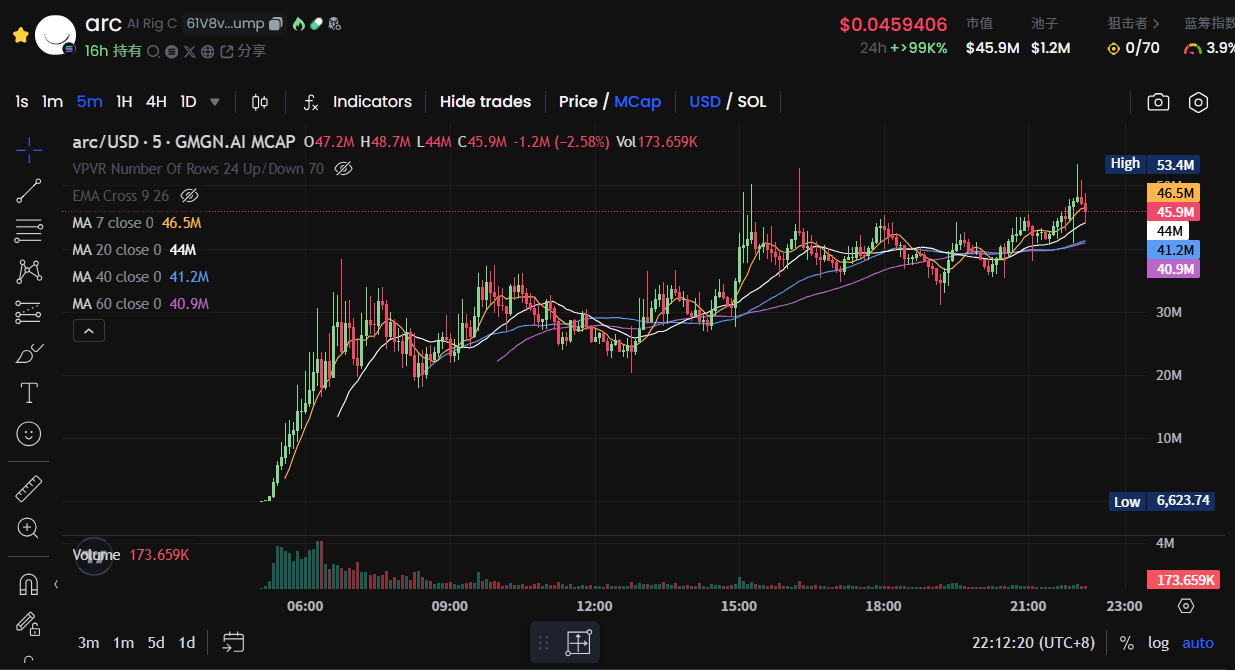
Turning back to the market, as overall sentiment on Solana improves, "quick-flip" projects—both in quality and quantity—are noticeably getting better. In the early hours of the 11th, a Solana-based token named $arc reached a $20 million market cap within six hours of launch, peaking at nearly $50 million by the time of writing.
Upon investigating $arc’s background, we found strong ties between its team and the developers behind an AI development framework called "rig"—making it a genuinely hardcore play on AI infrastructure. This overnight success may perfectly align with the market’s shifting perception of AI concept tokens.
Note: Meme token prices are highly volatile and carry significant risk. Investors should fully assess risks and participate cautiously. This article merely shares information based on current market trends. The author and platform make no guarantees regarding the completeness or accuracy of the content and provide no investment advice.
So Is It Actually the Rig Dev Team Behind This?
arc’s official manifesto is strikingly direct: "we build rig, rig builds us," clearly establishing a direct link between the project and the rig framework. Additionally, two articles—one on the website and one via the official Twitter account—briefly explain the project’s significance: "We are undergoing a transformation about 'meaning'."
The team believes that LLMs (large language models) resemble a vast ocean of meaning, where all possible concepts coexist and interact. This characteristic increasingly mirrors how humans understand the world—just as our brains naturally process context and meaning when interpreting memes or cultural references.
Based on this understanding, the arc team continues developing the rig framework—a Rust-based AI development toolkit. This isn’t merely another Rust-written agent framework; rather, it aims to help developers navigate this “ocean of meaning.” Their goal isn't to replace human creativity with AI, but to enhance our ability to detect patterns and form connections—to help people better understand and leverage AI’s way of processing meaning. This represents a fundamental shift in software development paradigms, moving from purely logical construction toward meaning processing—a revolution the team calls “a transformation about ‘meaning.’”
In short, the team’s elaborate essays boil down to: You love speculating on AI? Great—we're now doing something big in AI development.
And then, right at the end of these long-winded posts, they casually drop the freshly minted $arc token contract.
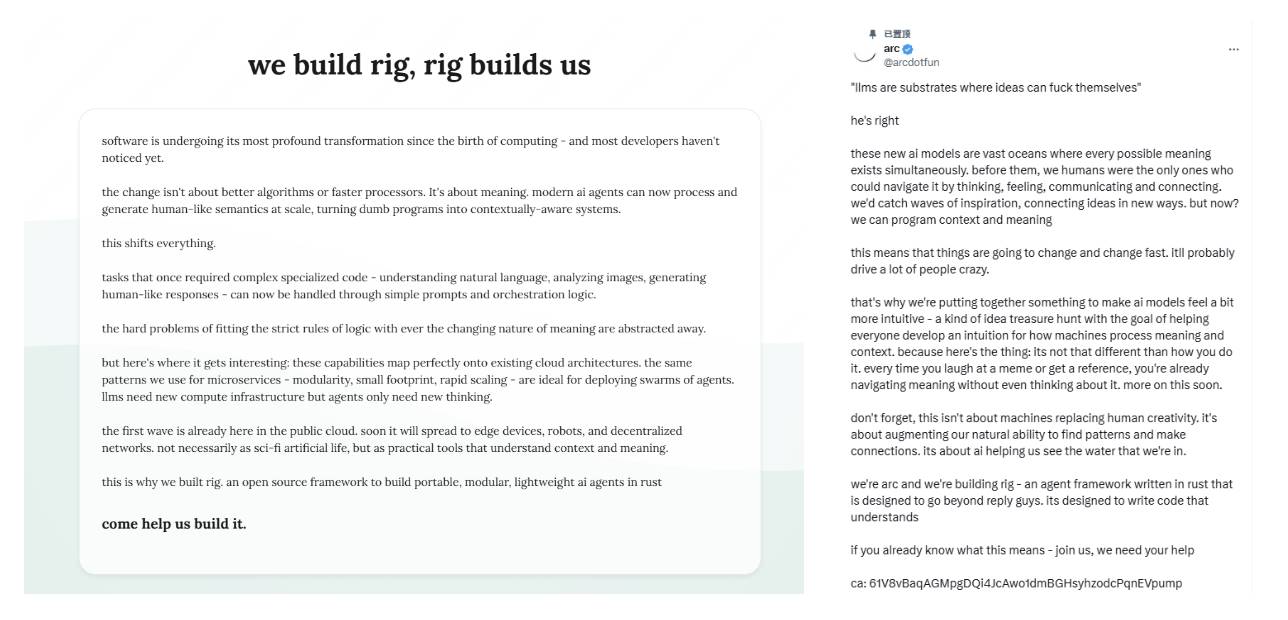
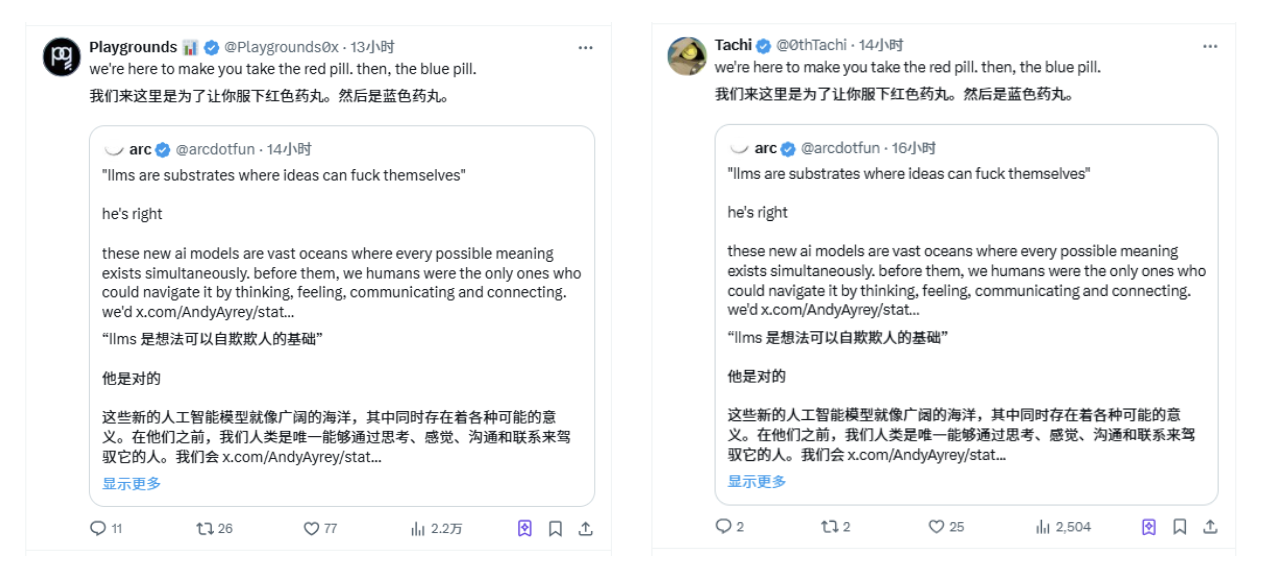
However, given the rampant scams surrounding AI concepts today, the arc team’s claims alone wouldn’t be enough to trigger such intense market FOMO. What truly drove excitement was that @Playgrounds0x, the creator of the rig framework, and co-founder @0thTachi, enthusiastically retweeted the official announcement, effectively claiming ownership of the project. They even threw in a Matrix-style red pill/blue pill reference, hinting that the project will bring transformative change.
What Exactly Is the Rig Framework?
As mentioned earlier, rig (Rust Inference Gateway) is an AI development framework written in Rust. Let’s dive into a brief introduction:
Many may have heard of Rust—the programming language used to write Solana smart contracts. As a result, many top-tier Solana developers and engineers working on AI in Rust are likely already familiar with rig.
In simple terms, rig acts like a "smart concierge," making it easier for developers to build and manage AI applications. If you think of an AI model (like GPT-4) as a powerful engine, then rig serves as the transmission and drivetrain that keeps it running smoothly and efficiently.
In the current landscape of AI frameworks, LangChain—based on Python—has long dominated. But as application scales grow, LangChain’s performance begins to show limitations, leaving developers stuck with an awkward choice:
-
Use simpler, but performance-limited Python frameworks
-
Or deal directly with complex low-level APIs
Thanks to Rust’s superior execution efficiency and security, rig offers developers a better alternative.
To use a construction analogy for AI development:
-
Traditional Python frameworks (like LangChain) are like wooden houses: quick to assemble, but limited in load-bearing capacity
-
Rig, by contrast, is like a reinforced concrete skyscraper: higher initial effort, but capable of supporting far more complex structures
With this relatively solid narrative foundation, $arc’s rapid climb to a $50M valuation starts to feel somewhat "legitimate."
Summary
The wave of AI Agents has brought massive wealth creation and greater practical visions for AI + Crypto, but also attracted malicious actors and serial scammers. In the early stages of emerging narratives, not every profitable team is necessarily good or useful. However, as sector concepts and market understanding mature, more genuinely capable teams—like the creators of Rig—are starting to issue their own tokens, signaling the arrival of more "mainstream players."
To put it in context, following successful precedents like ai16z and Virtuals in ecosystem development, the newly emerged rig framework may soon see large-scale adoption, opening up new practical possibilities for the intersection of AI and crypto. The barrier to entry for AI-related projects will only continue to rise.
Join TechFlow official community to stay tuned
Telegram:https://t.me/TechFlowDaily
X (Twitter):https://x.com/TechFlowPost
X (Twitter) EN:https://x.com/BlockFlow_News
 深潮TechFlow


