








Perspective 2024: Annual Review of the Ethereum Ecosystem
TechFlow Selected TechFlow Selected
Perspective 2024: Annual Review of the Ethereum Ecosystem
At Devcon SEA, Ethereum Foundation researcher Josh Stark took us through a retrospective of this year's Ethereum ecosystem.
 Navigating Web3 tides with focused insights
Author: Josh Stark, Ethereum Foundation
Translation: Pzai, Foresight News
What happened with Ethereum in 2024?
We can break it down into three themes:
-
Applications: The ecosystem of products and services built on Ethereum.
-
Infrastructure: The technology that makes it all possible.
-
Community: You, me, and everyone who uses or contributes to Ethereum.
Applications
Ethereum is changing the world because it solves real problems for people. Developers around the globe are using Ethereum to build things users actually want. But Ethereum isn’t just about one thing—it’s a platform serving a wide range of use cases. One such use case is stablecoins. Stablecoins grant everyone the freedom to transact: sending money home to family or saving for the future. I believe they’re still undervalued—stablecoins fundamentally elevate human freedom worldwide.
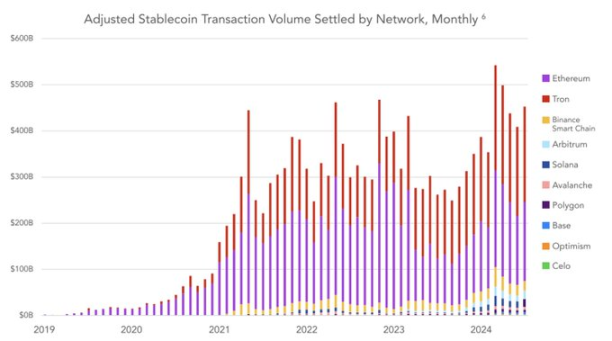
Stablecoins exist across many chains, but the Ethereum ecosystem plays a unique role as the primary settlement layer for most existing stablecoins. The volume of stablecoins within the Ethereum ecosystem now rivals major payment processing networks like Mastercard and Visa.
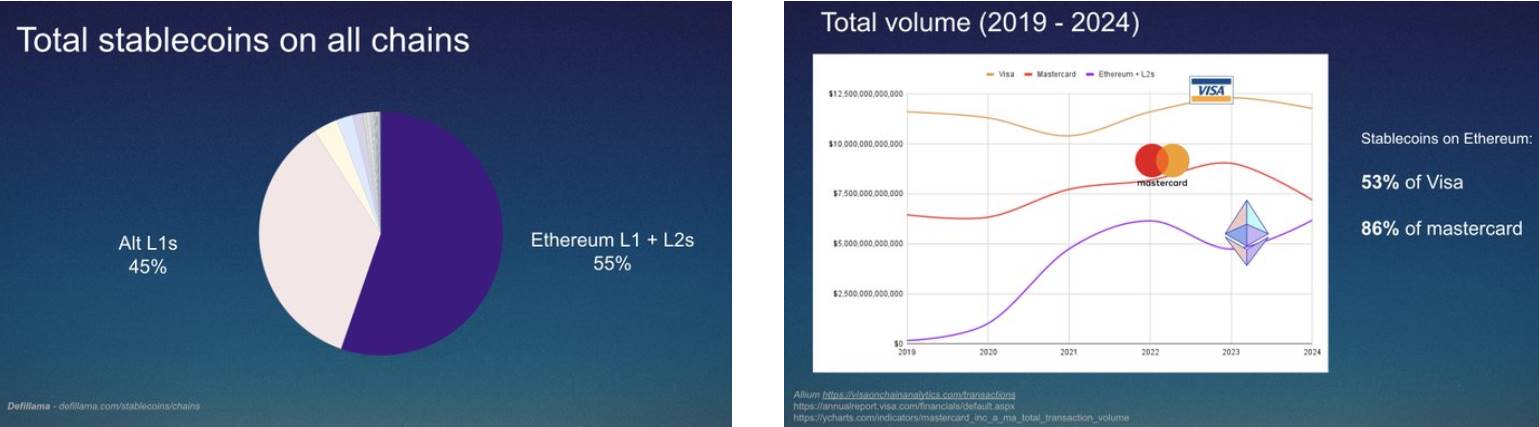
Behind these statistics lie countless stories and practical applications. For example, Bitso uses Ethereum-based stablecoins to offer faster, cheaper remittances across Latin America; Pintu leverages stablecoins to provide better savings products for users in Indonesia.
Ethereum is also the birthplace of DeFi. These applications leverage Ethereum's unique properties to create financial products that cannot be censored or shut down, giving people greater control over their funds. DeFi was invented on Ethereum, and the Ethereum ecosystem remains its home. Today, around 60% of the value in DeFi applications is held on Ethereum or Ethereum L2s.
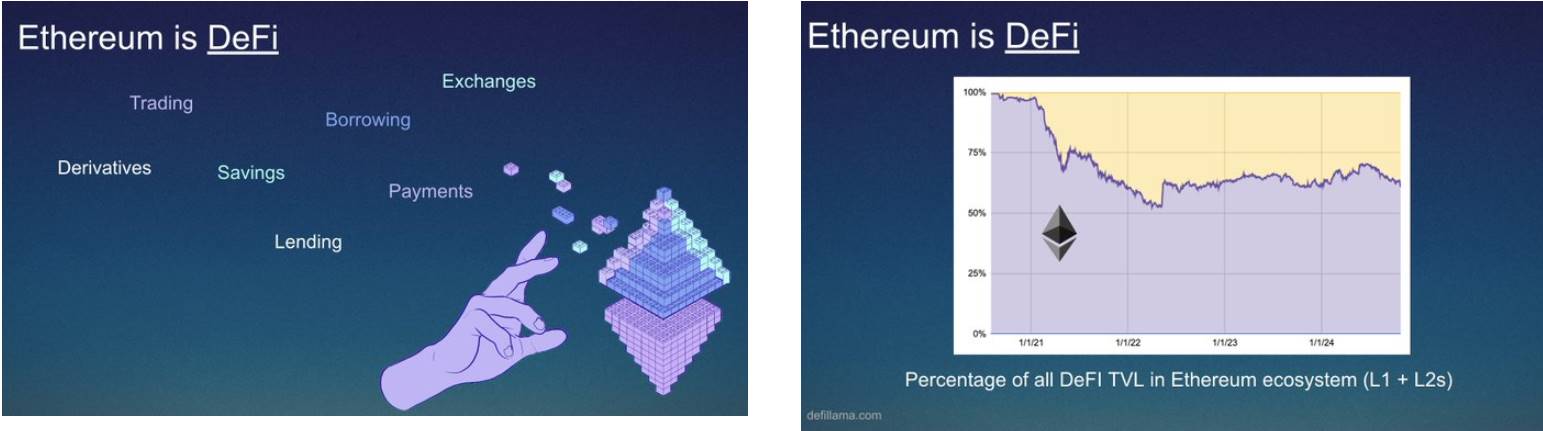
Behind these large numbers are tangible benefits for ordinary people around the world. In Mexico, EthicHub uses DeFi to connect small business owners—like coffee producers—with lenders who provide the capital needed to grow their businesses.
There’s so much more happening in DeFi on Ethereum than I could possibly cover here. A huge thank you to all the teams, companies, DAOs, and independent developers building this ecosystem. Stablecoins and DeFi were Ethereum’s first two use cases, and they continue to mature, grow, and scale. But Ethereum is also the blockchain ecosystem where new things emerge.
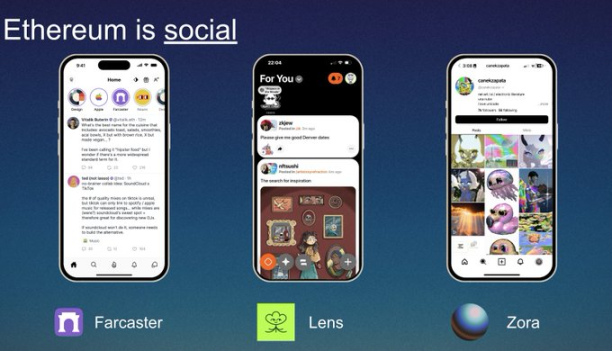
New social networks like Farcaster, Lens, and Zora use Ethereum to give users control over their identities and even share in platform growth. New games leveraging Ethereum technology offer novel experiences—for example, EVE Frontier, a new MMO where the game world’s physical rules are implemented via smart contracts, allowing players to build autonomous systems atop them.
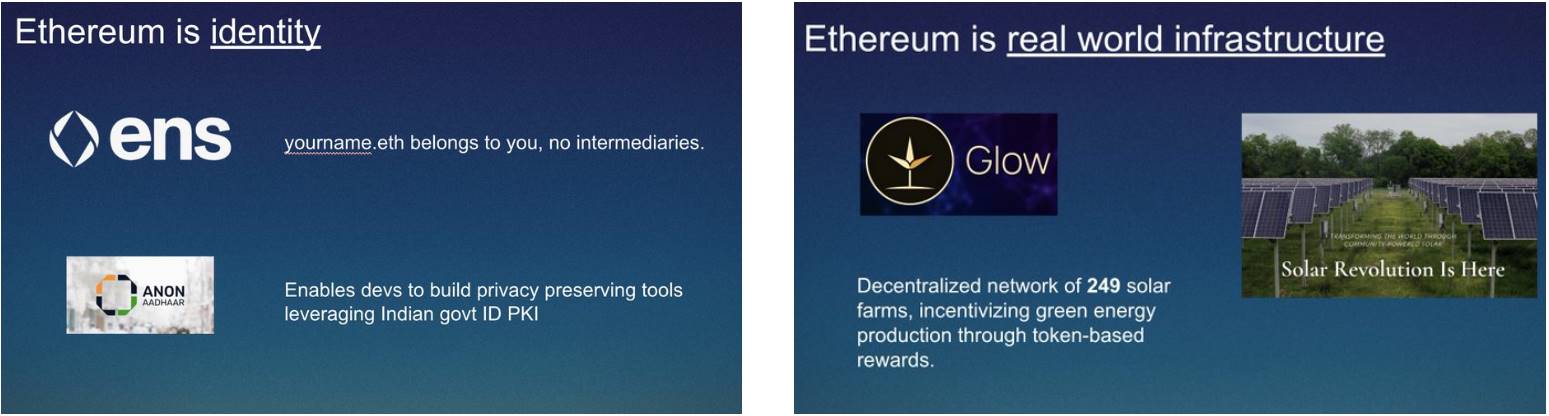
Decentralized identity systems like ENS and AnonAadhaar provide options unavailable through centralized or traditional ID systems. Real-world infrastructure projects, such as Glow, use the Ethereum ecosystem to incentivize hundreds of solar power plants.
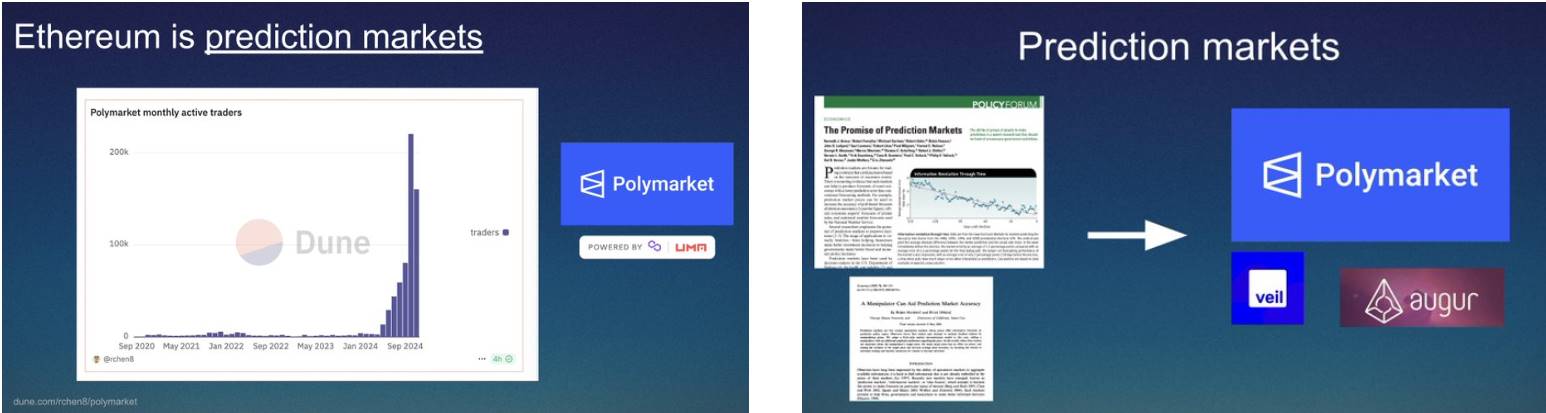
Prediction markets have seen breakthrough success, with platforms like Polymarket and the Polygon team demonstrating the potential of open, on-chain systems. I’m particularly excited that Polygon PoS will soon complete its transition to Ethereum validation. One thing I love about the Ethereum ecosystem is that Ethereum is where ideas go to production. Prediction markets were an academic concept formalized and debated for decades. It was on Ethereum that early experiments led to moments of breakthrough success.
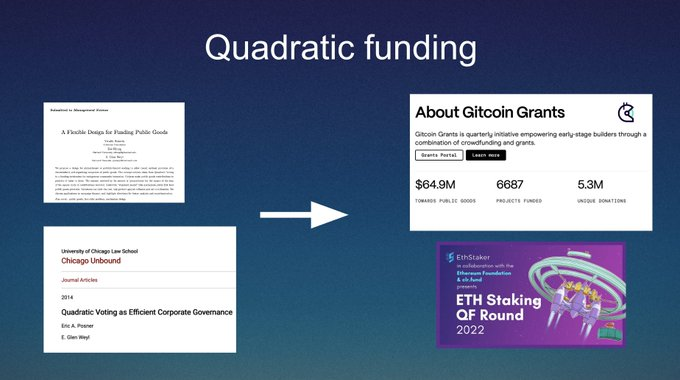
Quadratic funding is another idea long formalized in academic literature. Then, multiple teams within the Ethereum ecosystem adopted these concepts and built products serving users worldwide today.
Ethereum is a developer’s platform. By 2024, Ethereum has become the premier platform for developers in the crypto ecosystem. This is even clearer when you look at data showing which chain ecosystems project founders are currently building on—or interested in building on:
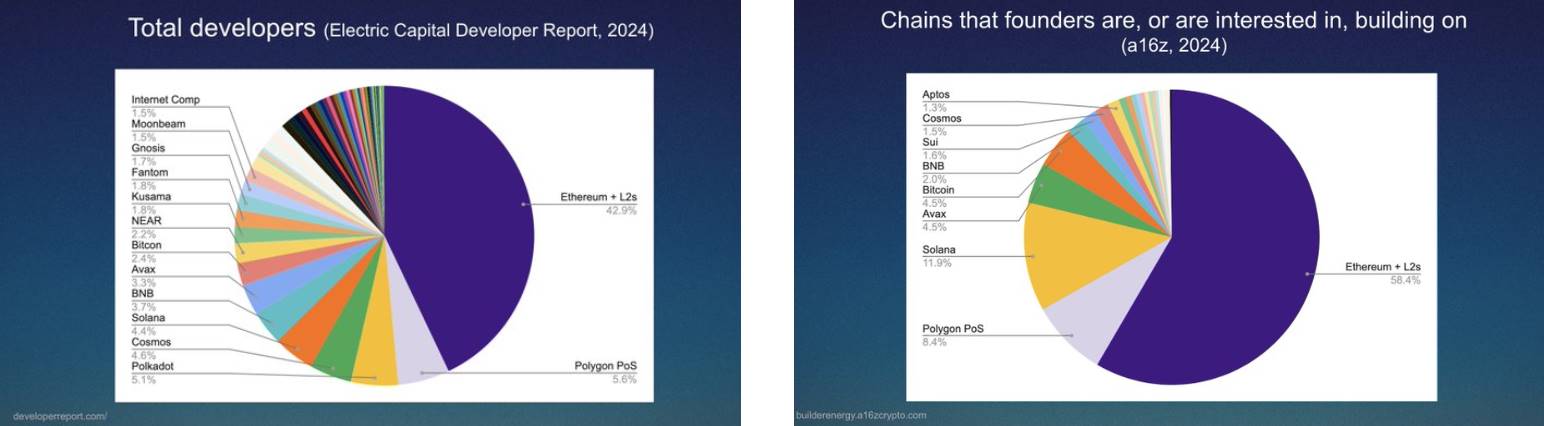
A key reason for this is Ethereum’s extremely deep and comprehensive ecosystem of developer tools, built and maintained to support everything developers need to launch, deliver, and scale secure applications to millions of users globally.
When we take a broad look at Ethereum’s application layer, what do we see? Ethereum hosts the oldest, most mature use cases: money, stablecoins, DeFi. Ethereum is also where new things are born—and it has the best developer ecosystem. Looking across our ecosystem and seeing confidence and excitement in every use case domain, I can confidently say Ethereum’s goal is continued growth across every dimension.
Infrastructure
Behind every application lies the technological layer—including Ethereum’s L1 and L2 networks. Over the past few years, the Ethereum ecosystem has made massive investments in improving this infrastructure. Ethereum is the only blockchain with enough real demand to push it to its limits, requiring genuine scalability without compromise—a difficult but necessary journey.
Much of this investment relates to L2s or rollups. I won’t dive deep here, but I’d like to offer a simple mental model anyone can understand. The idea behind L2s is straightforward: the core is Ethereum L1—the native smart contract platform and the most secure blockchain in the world. But the “surface area” available to developers and users on L1 is limited, meaning it can be relatively expensive. The outer layer consists of Ethereum L2s—networks built “on top” of L1 that expand its surface area. L2s provide more usable space, lowering costs for developers and users, while remaining highly secure due to their specific connections to Ethereum.
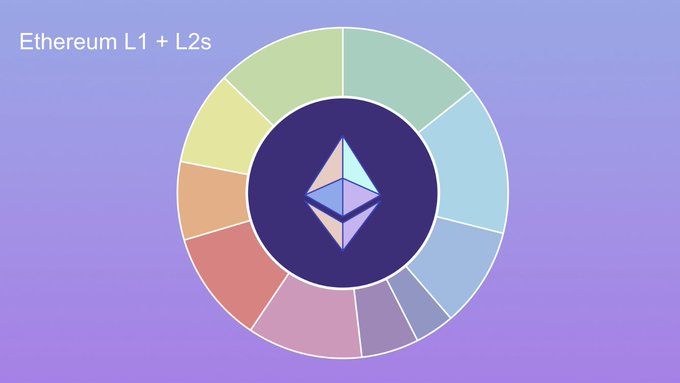
Now, we must not become complacent—there’s still significant work to complete the ecosystem’s L2 roadmap. But currently, we have strong evidence this strategy is working.
The first piece of evidence: people are using them! Real TPS on Ethereum L2s has exploded this year, as has TVL within L2s. Meanwhile, fees remain low following key network upgrades earlier this year (EIP-4844). On Ethereum L2s, you can send $1, $100, or even $1 million to anyone on Earth for less than one cent.
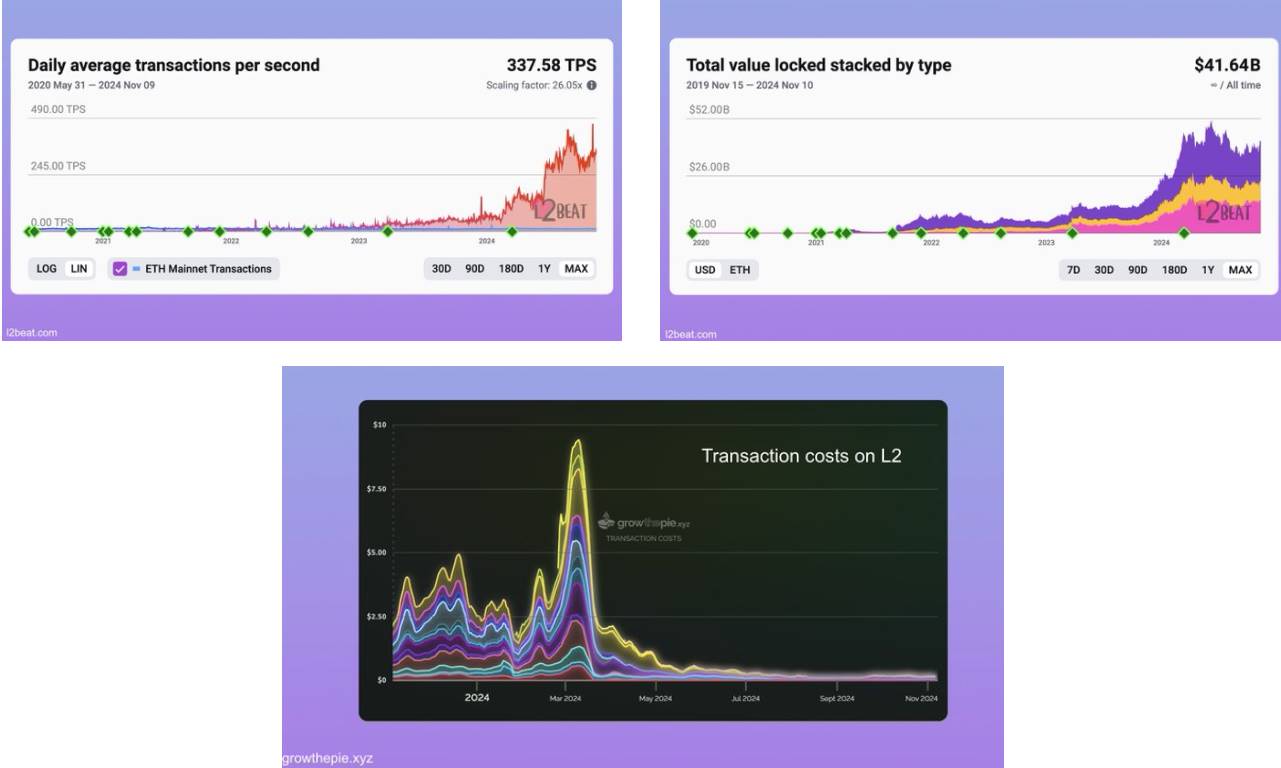
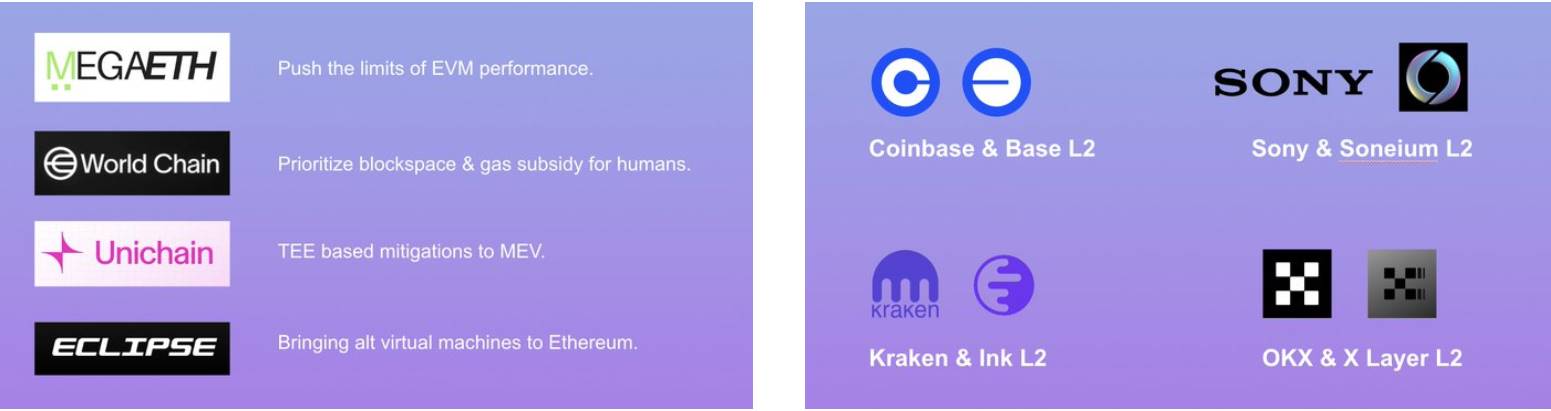
The second piece of evidence: developers are beginning to leverage the fact that different L2s can be customized for different purposes. This means Ethereum can absorb innovations from any other ecosystem and provide tailored environments for various use cases. The third piece of evidence: institutions and enterprises are launching L2s and bringing their communities into the Ethereum ecosystem. Ethereum is helping centralized organizations become more decentralized, bringing millions onto the chain.
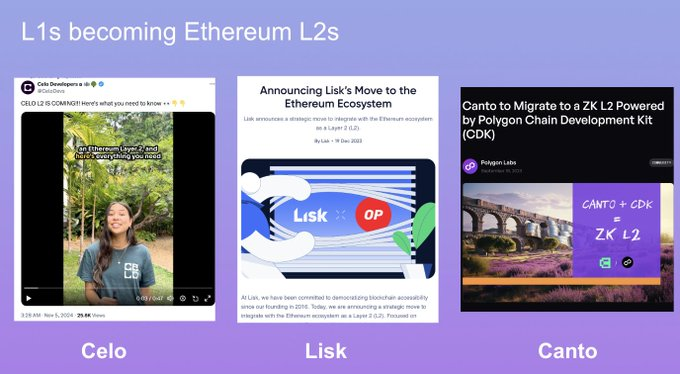
Finally, over the past few years, we’ve even seen some former L1s decide to transition into L2s within the Ethereum ecosystem, leveraging Ethereum’s security and community advantages. We’re thrilled to have you here—welcome to the infinite garden!
But as I said, we’re not done yet. We have two major tasks ahead: removing the training wheels (achieving finality) and building interoperability.
Currently, most L2s are not yet in their “final form”—they stand to benefit from increased security and decentralization. In fact, the image I showed earlier looks more like this:
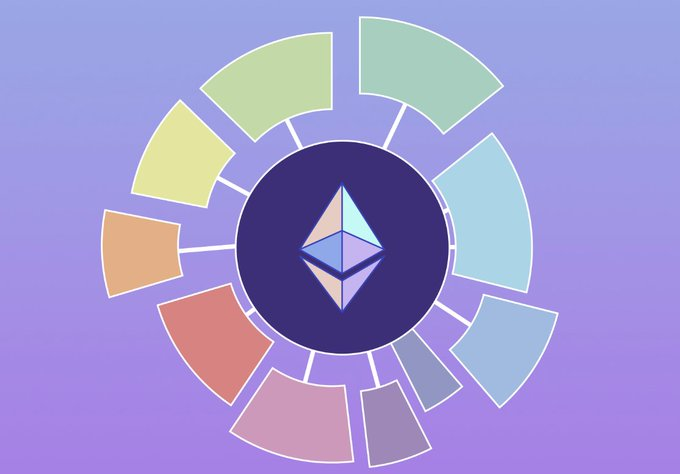
We typically refer to these as “stages,” and you can learn more about them at L2Beat. Each L2 is progressing toward Stage 2. There’s plenty to celebrate—so far, two full EVM L2s, Arbitrum and Optimism, have reached Stage 1, and many more will surely follow soon. Finally, thanks to L2 Beat for tracking, evaluating, and publishing progress updates for each L2’s journey to Stage 2. You help the Ethereum ecosystem better understand itself and hold our community accountable to our ambitious goals.
The second task is interoperability and user experience. Using L2s today isn’t as easy as it should be. Moving from one L2 to another, or sending assets to someone across the ecosystem, is far from ideal. Instead, it should feel like a simple, interoperable network—an experience that reflects the reality: it *is* one ecosystem.
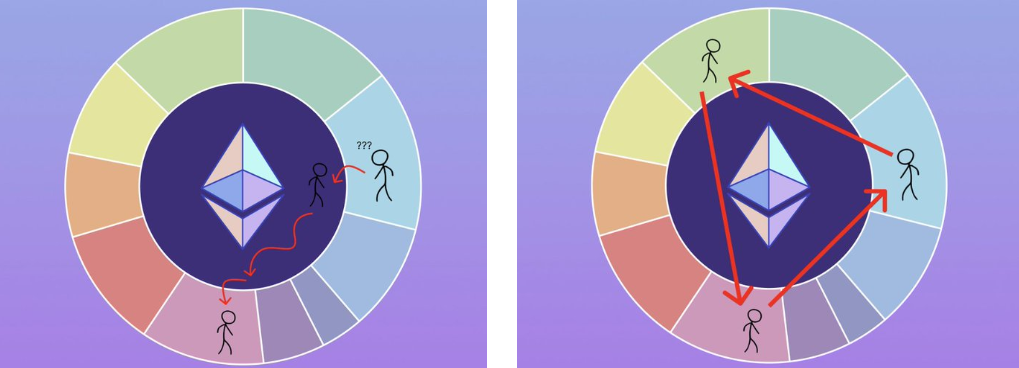
Luckily, hundreds in the ecosystem are actively working on this. Soon, we’ll have addresses that work everywhere, enabling seamless transfers between any L2s, and we’ll be able to easily verify L2s using light clients.
Community
To understand Ethereum today, we must talk about ourselves! The Ethereum community has grown so large and diverse that it’s hard to fully grasp. We can be users of Ethereum applications, ETH holders, app developers, protocol researchers, client developers, L2 builders and commentators, stakers and restakers, degens and regens, cypherpunks, activists and radicals, artists, musicians, and writers, educators, translators, students, complete newcomers, and long-time veterans.
One incredible aspect of the Ethereum community is its true internationalism. In every region of the world, there are multiple user and enthusiast communities, as well as developers contributing to applications, L2s, and R&D. Nothing beats that. But our community has another quality that’s less obvious. I don’t have fancy charts to prove this, but perhaps you’ve noticed it. Over the past few years, our community hasn’t just grown larger—it’s grown deeper. It has matured.
By 2024, many of us understand this isn’t a sprint, but a marathon. We’re putting down roots and preparing for the long term. We’re building lasting organizations and companies, nurturing the next generation, and gaining the confidence to plan for success.
So—what’s the story of Ethereum in 2024? I see the beginning of a virtuous cycle. We’re growing, and this growth tests us, pushing Ethereum’s infrastructure to its limits—and then we build. Better infrastructure enables bigger things, unlocking new phases of growth. The interplay between adoption, growth, infrastructure, and renewed growth attracts a community of people who need what Ethereum offers, who want to plant their own seeds, and who aim to build entire communities for the next generation.

We must not grow complacent. Many hard problems remain to be solved. But remember: Ethereum faces challenges first because it has come the furthest.
Join TechFlow official community to stay tuned
Telegram:https://t.me/TechFlowDaily
X (Twitter):https://x.com/TechFlowPost
X (Twitter) EN:https://x.com/BlockFlow_News
 @ethereum


