The next big trend in the Bitcoin ecosystem—don't miss it
TechFlow Selected TechFlow Selected
The next big trend in the Bitcoin ecosystem—don't miss it
This article will provide an in-depth introduction to Fractal Bitcoin, including its technical background and the latest developments in its ecosystem.
 Navigating Web3 tides with focused insights
Author: Louis Wang, Core Contributor of Biteye
Editor: Crush, Core Contributor of Biteye
Community: @BiteyeCN
* Approximately 5,200 words, estimated reading time: 10 minutes
Are there overlooked limitations hidden beneath Bitcoin?
Why do transaction fees spike to prohibitive levels?
In the face of these challenges, are there any new solutions emerging?
In recent months, Fractal Bitcoin has captured significant attention by leveraging a “Bitcoin-native” scaling approach, aiming to dramatically increase the transaction capacity of the Bitcoin network. But how exactly does it work?
This article provides an in-depth exploration of Fractal Bitcoin, covering its technical background and the latest ecosystem developments—don’t miss it!
01 Limitations of the Bitcoin Network
While the Bitcoin network boasts the strongest decentralization and security characteristics, its inherent limitations constrain the diversity of its development:
1. Slow transaction speeds: The average block time of 10 minutes results in low network throughput, making it difficult to meet the demands of complex applications and severely impacting user experience;
2. Soaring transaction costs during network congestion, deterring ordinary users;
3. Bitcoin’s simple scripting language restricts its smart contract capabilities. Even innovative protocols like Ordinals must rely on off-chain indexing, let alone achieve Ethereum-like DeFi composability.
Facing these challenges, various scaling solutions have emerged in the market, most of which use sidechains to independently execute EVM or BitVM, effectively downgrading Bitcoin into a data availability layer.
Against this backdrop, Fractal Bitcoin, introduced by the UniSat team, presents an alternative possibility and has attracted widespread attention with its unique “Bitcoin-style” scaling approach.
02 Bitcoin-Style Scaling
Traditional Bitcoin scaling solutions such as Lightning Network, SegWit, increasing block size, and sidechains can be likened to adding lanes or optimizing traffic rules on an existing highway.
In contrast, Fractal Bitcoin adopts a multi-layered, recursive architecture, akin to upgrading a single flat highway into a multidimensional,立体 transportation network.
Most importantly, Fractal Bitcoin maintains compatibility with Bitcoin’s core protocol, much like equipping a car with an advanced rocket propulsion system without altering its fundamental nature.

https://x.com/fractal_bitcoin/status/1812849645267415050
Name Origin
The name "Fractal Bitcoin" draws from the mathematical concept of "fractals," emphasizing self-similarity and recursive structure.
At its core, it is a sidechain that runs parallel to the Bitcoin mainnet, tightly connected to the main chain via a node called Fractal.
Key Innovations
The core innovation of Fractal lies in its tree-shaped recursive extension layer architecture (BCSP). This design enables increased transaction processing capacity through additional layers, all without modifying Bitcoin’s core protocol.
This architecture not only significantly enhances network parallelism but also opens the door for complex applications requiring high-frequency, high-volume transactions.
In terms of performance, Fractal reduces block time to 30 seconds, greatly improving transaction confirmation speed and network throughput.
The base layer already offers 20 times the capacity of the Bitcoin mainnet, with each added layer multiplying this capacity exponentially—a scalable model that unlocks new possibilities for high-performance applications.
On security, Fractal Bitcoin employs a hybrid mining mechanism that skillfully balances decentralization and security.
For every three blocks, two are mined by permissionless miners, while one undergoes joint mining with Bitcoin. This not only strengthens decentralization but also leverages Bitcoin’s immense hash power for enhanced security.
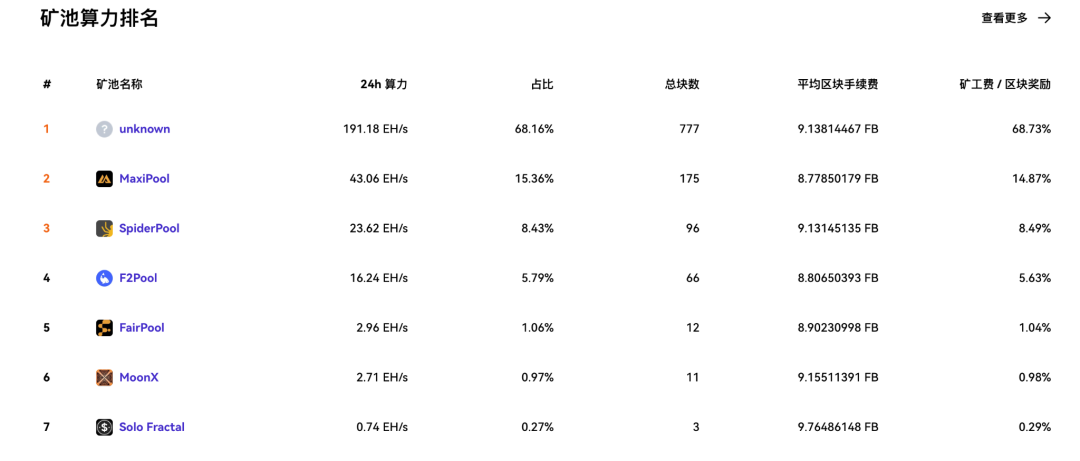
Notably, within three weeks of launch, Fractal’s joint mining hash rate has consistently accounted for over 40% of Bitcoin’s total, attracting major mining pools such as MaxiPool, SpiderPool, and f2pool.
https://www.okx.com/zh-hans/web3/explorer/fractal-bitcoin?channelId=x001en
Regarding functionality expansion, Fractal implements the OP_CAT opcode, enabling Turing-complete smart contracts on a Bitcoin-based platform.
OP_CAT is a simple concatenation operation; when combined with other opcodes, it enables complex smart contract logic.
High compatibility with the Bitcoin ecosystem is another key feature of Fractal.
It fully supports protocol standards like BRC-20 and Ordinals, and allows users to use the same address across both Bitcoin mainnet and Fractal, operating through familiar Bitcoin infrastructure.
This design simplifies user experience—similar to switching EVM networks in MetaMask—reducing operational risks and enabling seamless migration of existing Bitcoin assets and infrastructure.
03 The Significance of the Fractal Network
The emergence of Fractal Bitcoin not only introduces an innovative scaling solution for Bitcoin but also opens new avenues for the future development of the Bitcoin ecosystem.
It addresses long-standing issues through technological innovation while preserving Bitcoin’s core values.
Rapid Implementation of Controversial Proposals
Unlike Ethereum, which has leaders like Vitalik and the Ethereum Foundation to drive network upgrades, the Bitcoin ecosystem lacks centralized leadership. Opinions on proposals like OP_CAT remain divided, and their implementation timeline remains uncertain.
Fractal, however, can swiftly implement controversial opcodes such as OP_CAT and ZK-native verified opcodes, enabling inscription-based native smart contracts on Bitcoin and serving as a practical testbed for the mainnet.
Low-Risk, High-Efficiency, and User-Friendly
Fractal’s 100% compatibility with the Bitcoin mainnet allows seamless migration of existing RC20 assets and infrastructure without code modifications. This creates a low-risk, high-efficiency innovation platform for developers and users alike.
Its 1/3 joint mining mechanism with the mainnet (where mainnet miners can mine a Fractal block every 90 seconds) ensures security while offering miners additional revenue streams.
Guiding the Direction of Bitcoin’s Ecosystem
From a broader perspective, Fractal has the potential to become an innovation engine for the Bitcoin ecosystem. It offers developers an incentivized, user-rich, real-market testing ground.
Success on Fractal may foreshadow the future direction of the Bitcoin mainnet. Once new features are supported on the main chain, assets from Fractal could potentially migrate back—creating a positive feedback loop that attracts more developers, innovation, and users, amplifying Fractal’s influence on the mainnet.
https://www.fractalbitcoin.io/
Mutual Empowerment with UniSat
Within this grand vision, the UniSat team is undoubtedly the ideal force to drive Fractal’s development.
Recall the previous inscription boom: UniSat stood out in fierce competition with its open-source Bitcoin wallet and tools for minting and trading.
The team’s core strength lies in extensive experience in Bitcoin big-block development. As supporters of larger blocks, team members previously participated in Bitcoin forks and long-term BSV development.
This background enables rapid product iteration and agile response to market needs.
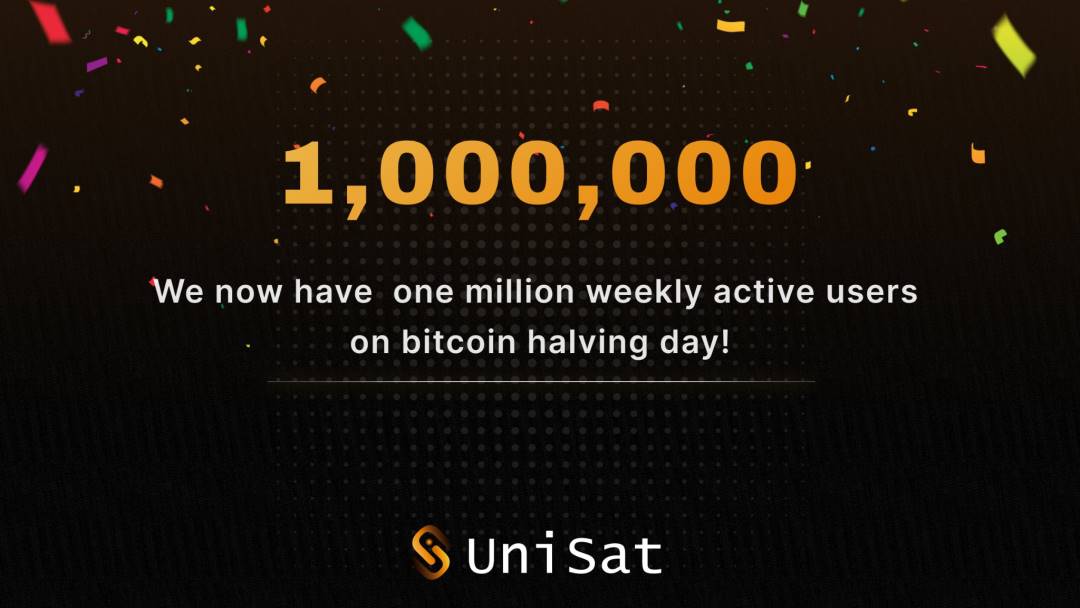
Fractal represents a continuation of UniSat’s broader vision, providing the infrastructure and highways for further innovations. With access to UniSat’s 1 million weekly active users, Fractal enjoys a strong potential user base from day one.
https://x.com/unisat_wallet/status/1781543425755803987
Market Recognition
The market response to Fractal Bitcoin has been notably positive.
Within just three weeks of its mainnet launch on September 9, on-chain users surpassed 3.8 million, and its native token $FB achieved a circulating market cap exceeding $30 million.
Even more strikingly, a new fungible token standard based on OP_CAT has sparked heated discussion on the Fractal network, with the first such token, $CAT, reaching a market cap of over $40 million—clear evidence of market recognition of Fractal Bitcoin’s potential.

https://fractal.unisat.io/explorer
04 Ecosystem Progress
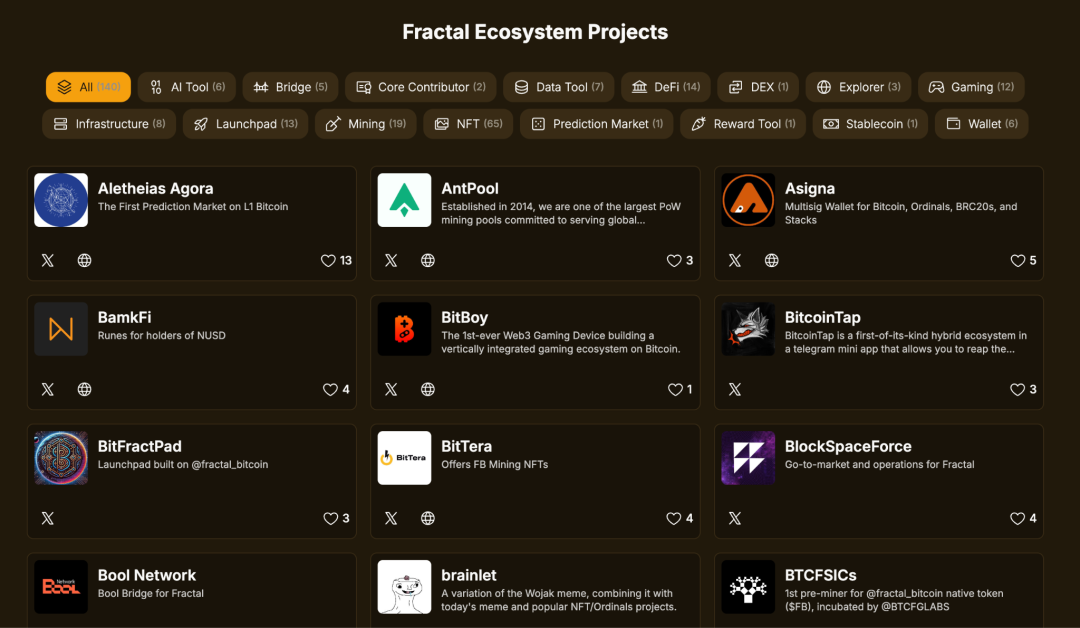
According to Fractal Ecosystem data, 140 projects have been cataloged so far, primarily NFTs and infrastructure.
Bitcoin Smart Contracts Still Under Development
This distribution reflects the current stage of ecosystem development: although OP_CAT enables smart contracts, building complex applications based on it will take time.
Therefore, short-term projects mainly fall into two categories:
-
Operation-focused NFT projects
-
Critical infrastructure development
https://fractalecosystem.io/projects
Fractal Applications
In interviews, UniSat founder Lorenzo outlined the types of projects users might care about:
1. Cross-chain bridges: Facilitating asset transfers between Bitcoin mainnet and Fractal.
2. Trading-related apps: Including native swaps, DEXs, and NFT markets.
3. Mass-user interactive applications: Such as DID, credential issuance, and voting governance.
In terms of asset classes, Fractal supports not only Ordinals NFTs, BRC-20 tokens, and Runes, but has also given rise to CAT20 assets based on the CAT Protocol.
CAT Protocol (Covenant Attested Token) is an innovative UTXO-based Bitcoin token protocol where miners validate and smart contracts manage token circulation.
Its foundation is the OP_CAT opcode, which enables more complex transactions.
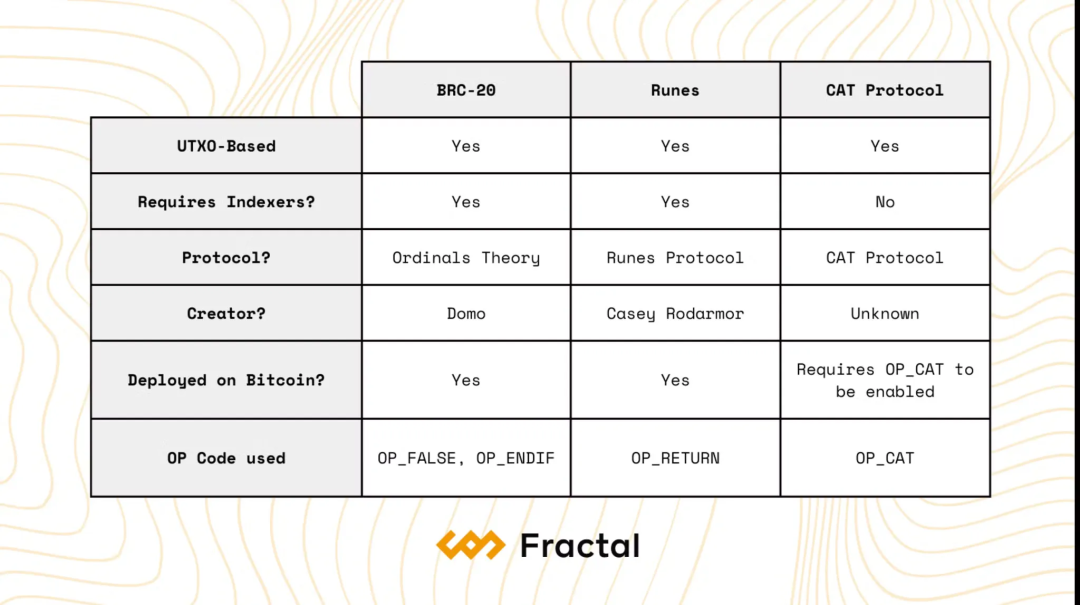
CAT20 has triggered a craze on Fractal reminiscent of the early inscription days, with related tooling projects flourishing and daily trading volumes substantial.
The UniSat team is providing comprehensive support for CAT20, including wallet integration, explorer display, and API access. Official announcements confirm CAT20 transfers and wallet display will launch on October 21, with the CAT20 marketplace going live on October 22.
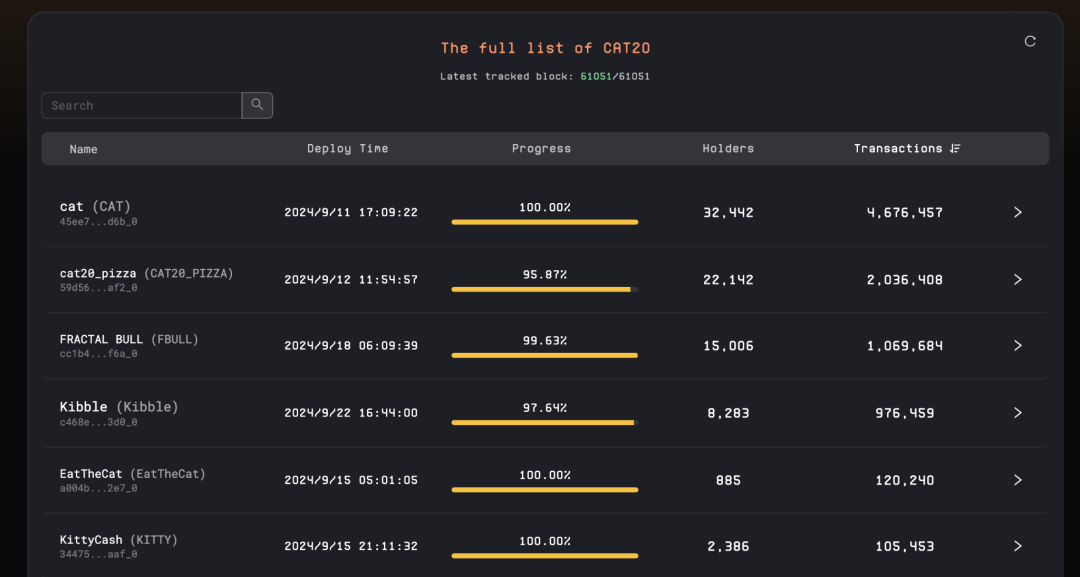
https://explorer.unisat.io/fractal-mainnet/
DeFi development is primarily focused on cross-chain bridges and DEXs.
The UniSat team is developing multiple cross-chain solutions, with PizzaSwap set to launch first, supporting various bridged assets. On the DEX front, projects like MotoSwap are exploring inscription-based smart contracts to deliver AMM trading experiences, despite notable technical hurdles.
User adoption projects span gaming, AI, prediction markets, and more.
Notably, considering Fractal founder Lorenzo’s gaming background and Fractal’s parallel processing capabilities, Bitcoin-based online games could emerge as a promising sector. Uni Worlds, one of Fractal’s首批 funded projects, aims to become gaming infrastructure within the Bitcoin ecosystem.
05 Challenges Facing the Fractal Network
The Fractal ecosystem is rapidly evolving, spanning infrastructure to cutting-edge applications. Yet, the challenges it faces are equally apparent:
High Technical Complexity
Implementing smart contracts and games on Bitcoin is appealing but technically challenging, requiring extensive research and experimentation.
Bitcoin’s scripting language, compared to mainstream languages like Rust or Solidity, is less known and harder to use. This high barrier to entry may limit developer participation, slowing ecosystem growth. Significant efforts are still needed in ecosystem building and developer outreach.
Significant Miner Selling Pressure
Miners, as potential sources of selling pressure for PoW tokens, receive dual rewards (BTC and FB) through joint mining. Which token are they more likely to sell to cover costs?
Fractal attracted many large mining pools early on, with joint mining hash power exceeding 40% of Bitcoin’s total. This suggests consensus with major pools has been reached. However, behaviors of unknown and individual miners remain unpredictable. Whether $FB can withstand prolonged selling pressure remains uncertain.
In summary, Fractal may face significant technical hurdles in the short term and user adoption challenges in the medium term. In the long run, however, it could positively influence the evolution of the Bitcoin mainnet.
We look forward to greater developer participation, fostering more Bitcoin-native projects and driving innovation forward.
06 Conclusion
Fractal Bitcoin, as a unique Bitcoin scaling solution, injects vitality and new possibilities into the Bitcoin ecosystem.
It addresses scalability through a tree-shaped recursive extension layer architecture, significantly boosting Bitcoin’s transaction throughput.
Its distinctive joint mining mechanism enhances both security and decentralization, making it a true proving ground for the Bitcoin network—one that generates valuable user data and feedback, and may well serve as a compass guiding Bitcoin’s future development.
Join TechFlow official community to stay tuned
Telegram:https://t.me/TechFlowDaily
X (Twitter):https://x.com/TechFlowPost
X (Twitter) EN:https://x.com/BlockFlow_News
 @BiteyeCN