








Tiger Research: Is South Korea Still a Strategic Location for Blockchain Mainnets?
TechFlow Selected TechFlow Selected
Tiger Research: Is South Korea Still a Strategic Location for Blockchain Mainnets?
Early collaboration with local partners is key to successfully entering and adapting to the market.
 Navigating Web3 tides with focused insights
Translation: TechFlow
Key Takeaways:
-
Global mainnets that entered the Korean market early remain highly active, particularly in gaming, demonstrating strong competitiveness around entertainment IPs.
-
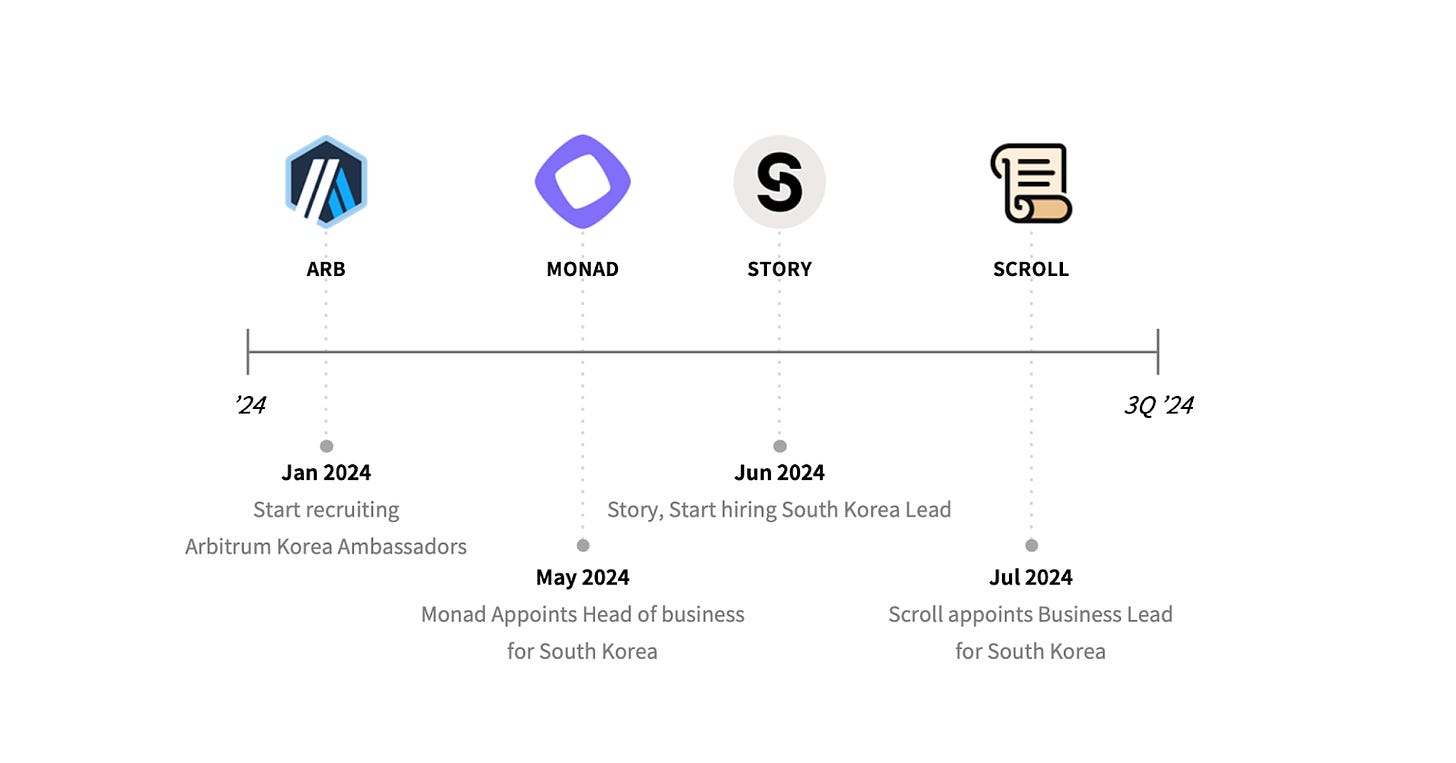
In 2024, mainnet projects such as Arbitrum, Monad, Story, and Scroll have rapidly expanded their presence in Korea. Each has adopted unique strategies focused on community building, education, and strategic partnerships to grow their ecosystems.
-
While the Korean market is attractive, a deep understanding of its language, culture, and regulatory environment is essential. Early collaboration with local partners is key to successfully entering and adapting to the market.
1. Introduction
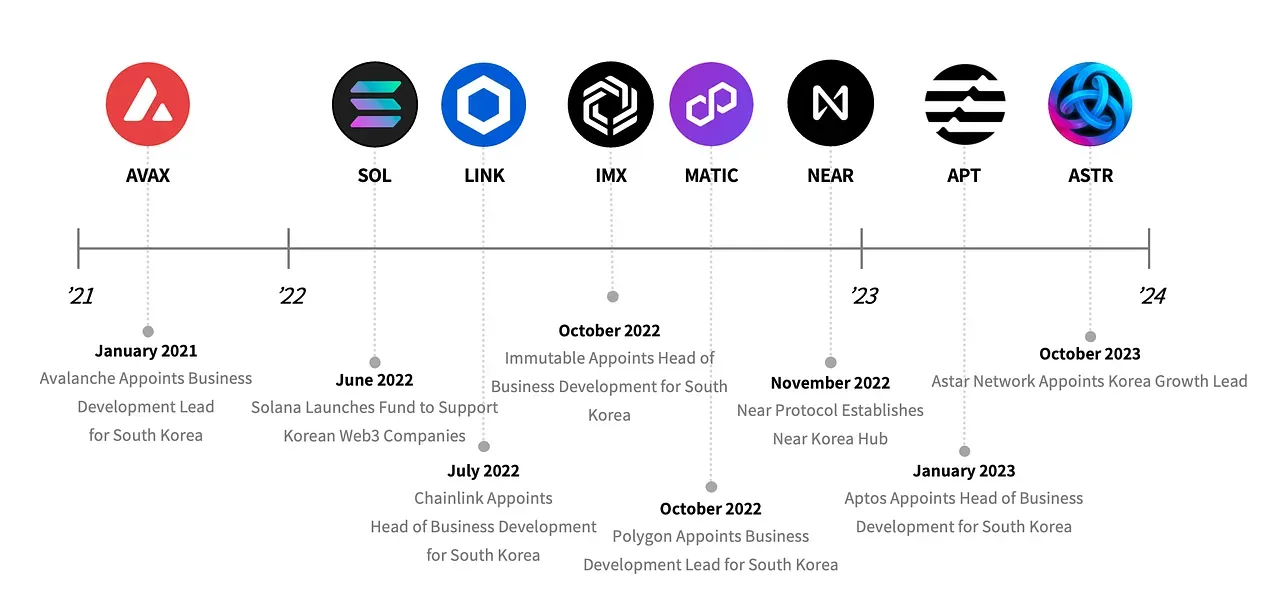
Source: Tiger Research
Since 2022, global blockchain mainnets have actively expanded into South Korea by appointing local representatives and collaborating with Korean companies. Notably, several networks—including Avalanche—have made significant progress. Avalanche formally entered the Korean market in 2021 by appointing a business development lead, while Solana, Polygon, Aptos, and Astar have also achieved notable breakthroughs in Korea.
However, as the Web3 industry evolves rapidly, some of these strategies have shifted. This report explores whether these mainnets still prioritize Korea and identifies any emerging players. Through this analysis, we aim to uncover how these networks are seizing opportunities and shaping their strategies in the Korean market.
2. Current State of Mainnet Expansion in Korea
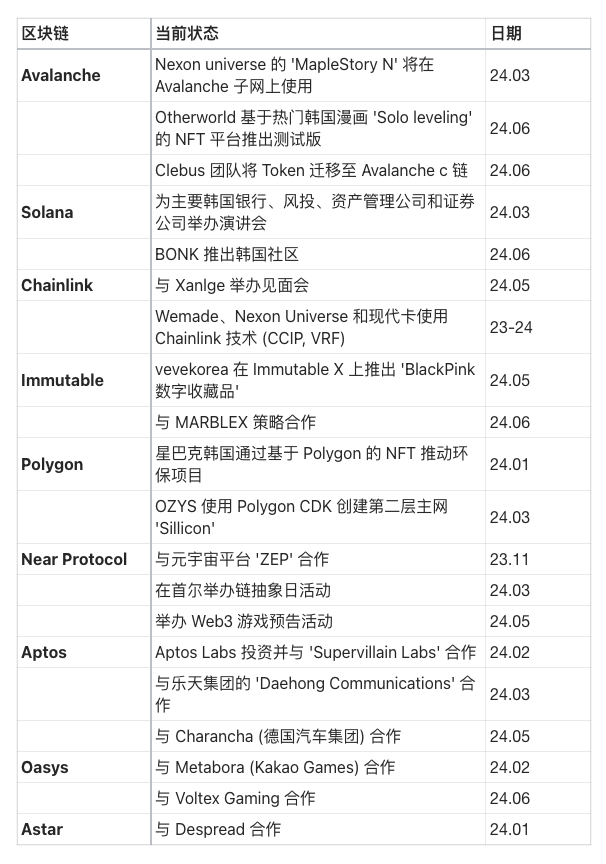
[Current trends of mainnets entering the Korean market, Tiger Research]
The table contains 3 columns and 20 rows, sorted in ascending order by the "Current Status" column.
2.1. Shifting Focus Toward Project Onboarding
Global blockchain mainnets that entered Korea early are now delivering tangible results. These networks go beyond simple collaborations with Korean firms, focusing instead on business development and onboarding high-quality projects.
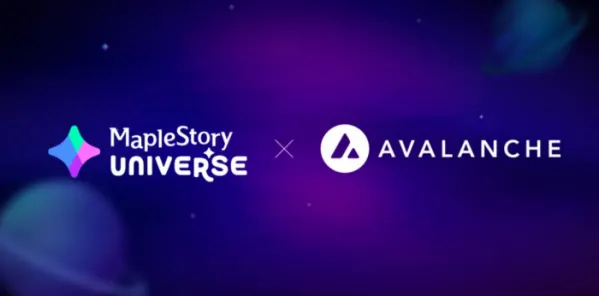
Source: Nexpace
For example, Avalanche successfully integrated Nexpace’s "MapleStory N" onto its subnet—an impressive case of integration. Additionally, by incorporating SK Planet’s NFT membership platform "Road to Rich," Avalanche has further strengthened its ecosystem and expanded its footprint in Korea.
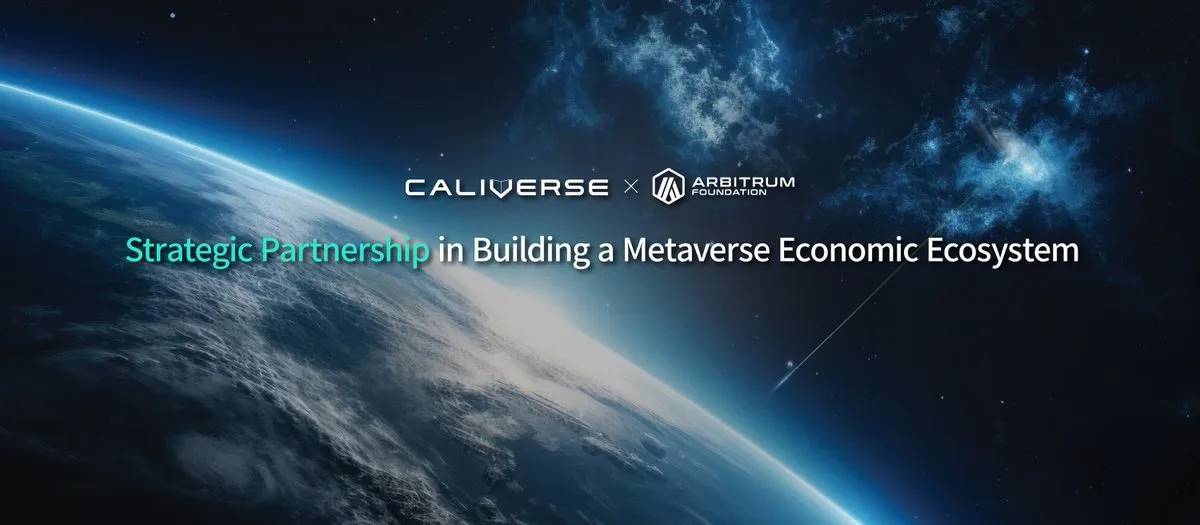
Source: Arbitrum
Arbitrum appointed a Korea lead in 2023 and established the Arbitrum Korea community to solidify its ecosystem foundation. The network partnered with Delabs to bring their Web3 games to Arbitrum and integrated Lotte Group’s metaverse platform Caliverse, demonstrating a firm commitment to revitalizing Korea’s ecosystem.
Source: Marblex
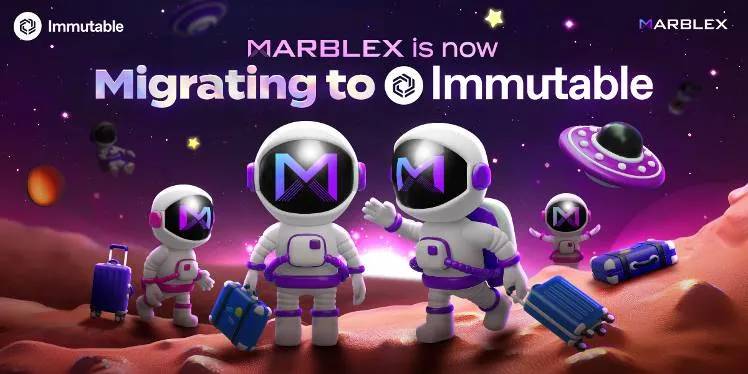
Immutable is deepening its collaboration with Web3 gaming company Marblex, Aptos is bringing in Supervillain Labs, and Polygon successfully completed an NFT-based environmental initiative with Starbucks Korea. These cases show that blockchain mainnets are not only forming partnerships but also achieving real-world applications in Korea.
2.2. Waiting for the Right Moment or Falling Behind?
While some mainnets are steadily onboarding projects in their domains, others appear more passive. For instance, since the launch of Near Korea Center, Near Protocol has seen little advancement beyond establishing partnerships and hosting events. Similarly, many other mainnets remain stuck at superficial collaborations without deeper engagement. Moreover, networks like Oasys have seen reduced activity in Korea, partly due to the departure of key business development personnel.
3. Global Blockchain Mainnets Entering Korea in 2024
Source: Tiger Research
In 2024, global mainnets continue to expand in Korea, each employing distinct approaches. Their efforts include building robust communities, conducting training programs, organizing events, increasing visibility, and seeking ecosystem partners to strengthen their market positions. In this chapter, we examine the mainnets recently expanding their ecosystems in Korea and explore their ongoing activities in depth.
3.1. After All, Web3 Begins with Community
Community lies at the heart of every Web3 project—and this holds true for mainnets entering Korea.
Source: Arbitrum Korea X
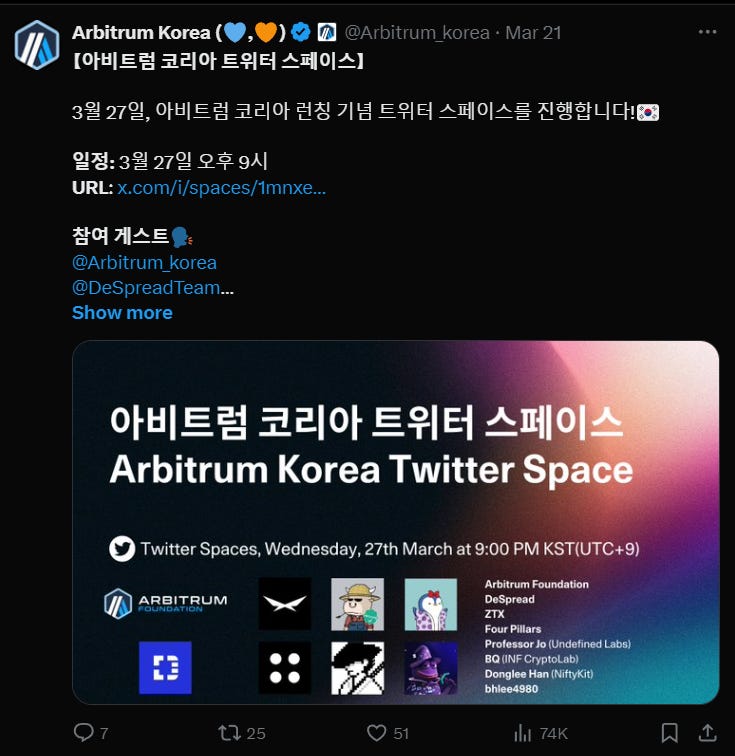
For example, Arbitrum has established a local community called Arbitrum Korea to support its expansion. Arbitrum Korea actively collaborates with ambassadors and local partners to enhance its regional influence. These ambassadors play a crucial role by translating ecosystem updates into Korean and disseminating them across major channels. They also organize events such as Twitter Spaces discussions with prominent Korean figures to boost awareness and engagement in the local market.
Source: Monad Telegram
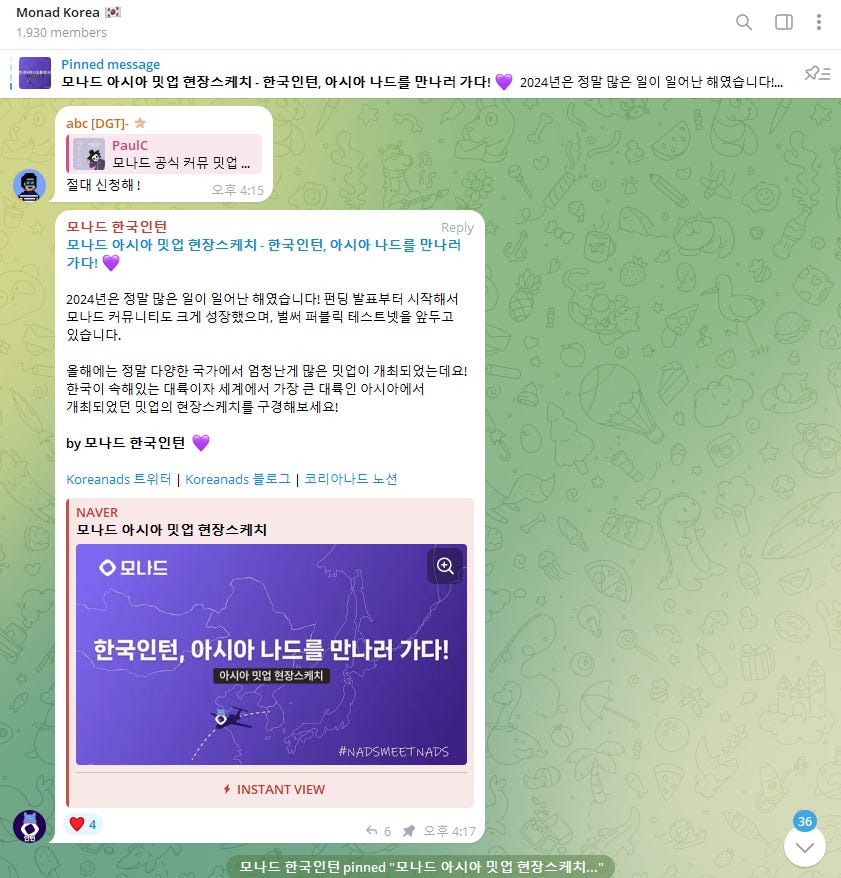
In addition, Arbitrum launched a dedicated Korean Telegram channel to share ecosystem news and interact with community members. This channel attracts not only blockchain developers but also investors interested in tracking mainnet developments. These initiatives aim to overcome barriers posed by language differences, cultural nuances, and varying search engine platforms, thereby fostering broader participation in the ecosystem.
3.2. Expanding Ecosystems Through Education and Events
The Web3 industry features diverse blockchain technologies with different structures. Although the degree varies, differences in infrastructure architecture or programming languages often result in fundamentally distinct operational models. This leads to fragmented developer ecosystems, making overall growth and onboarding companies and projects challenging.
Source: Near Korea Hub
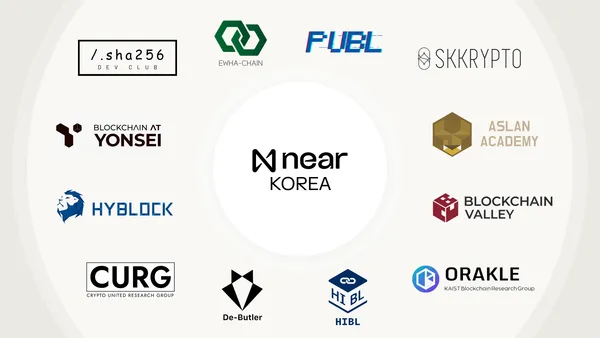
Global mainnets increasingly recognize the importance of education in building strong blockchain ecosystems. In this context, Near Protocol has formed strategic partnerships with 12 blockchain student groups in Korea to promote educational programs and hackathons. Similarly, Arbitrum Korea has collaborated with blockchain clubs at Korea University and Yonsei University to host workshops aimed at deepening students’ understanding of Arbitrum’s technology. These efforts reflect Korea’s strategic significance, extending beyond its potential as a retail investment market. The emphasis on cultivating and attracting top-tier talent underscores Korea’s central role in the broader blockchain ecosystem. By investing in education and community-building initiatives, these mainnets are effectively laying the groundwork for ecosystem growth and innovation.
3.3. Ecosystem Partnerships
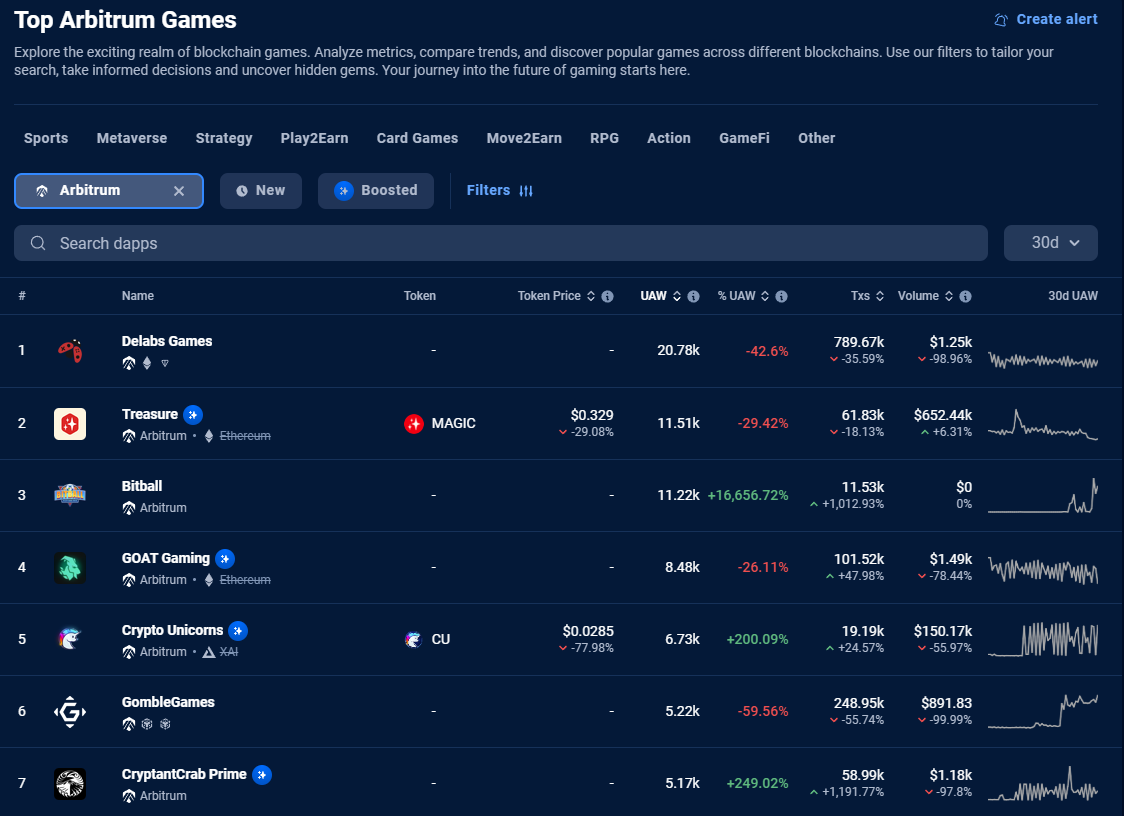
Global mainnets are not only focused on training their own developers but are also strategically expanding their ecosystems through collaborations with local companies. For example, Monad partnered with Neowiz’s Intellar X to strengthen its presence in Pacific markets including Korea. Likewise, Arbitrum teamed up with Korean Web3 gaming firm Delabs to facilitate game project onboarding and further enrich its ecosystem. These partnerships demonstrate a targeted approach to market expansion leveraging local expertise and industry-specific collaborations.
Source: DappRadar
As a result, mainnets are leveraging strong local partners to enter new markets. In Korea specifically, they focus on forming alliances with promising gaming companies. They also expand their ecosystems by partnering with local infrastructure providers such as wallets and validators. Such collaborations help overcome cultural and social barriers, enabling mainnets to enter the market more quickly and effectively.
4. Conclusion
As of 2024, Korea’s Web3 sector has slowed due to the implementation of the Virtual Asset User Protection Act and stalled regulation around Security Token Offerings (STOs). Despite these regulatory challenges, Korea remains an attractive market due to its substantial liquidity and highly skilled developer base. Major mainnets maintain a steady presence and are actively exploring various strategies to enter the market.
4.1. Steps to Successfully Enter the Market
Global mainnets typically begin by hiring Korean representatives and raising awareness through events and educational programs. Then, based on accumulated market influence, they create concrete success stories through collaborations with key local partners. Another critical aspect is their focus on content-driven projects and partnerships—a pattern that reflects Korea’s strengths in intellectual property sectors such as gaming, comics, novels, and idol culture.
4.2. Keys to Successful Market Penetration in Korea
To effectively expand in Korea, most global mainnets usually hire local representatives. However, challenges arise when these representatives oversee broader Asian regions or lack familiarity with the Korean language and culture. Korea’s fast-paced economic environment and unique market characteristics demand representatives who deeply understand local culture and can fluently speak Korean.
Additionally, it is crucial to navigate evolving cryptocurrency regulations and related political and social dynamics. To successfully enter and establish a foothold in the market, it is advisable to collaborate early with local partners who possess in-depth knowledge of Korea’s culture, industry landscape, and regulatory framework.
Join TechFlow official community to stay tuned
Telegram:https://t.me/TechFlowDaily
X (Twitter):https://x.com/TechFlowPost
X (Twitter) EN:https://x.com/BlockFlow_News
 @tiger_research


