Interview with a Former Managing Director at Redpoint Ventures: From Capital Expansion to Global Strategy – The Evolution and Outlook of Web3 Venture Capital
TechFlow Selected TechFlow Selected
Interview with a Former Managing Director at Redpoint Ventures: From Capital Expansion to Global Strategy – The Evolution and Outlook of Web3 Venture Capital
Tomasz believes that as the industry evolves, companies capable of delivering stable cash flows and sustainable businesses will stand out.
 Navigating Web3 tides with focused insights
Compiled & Translated: TechFlow
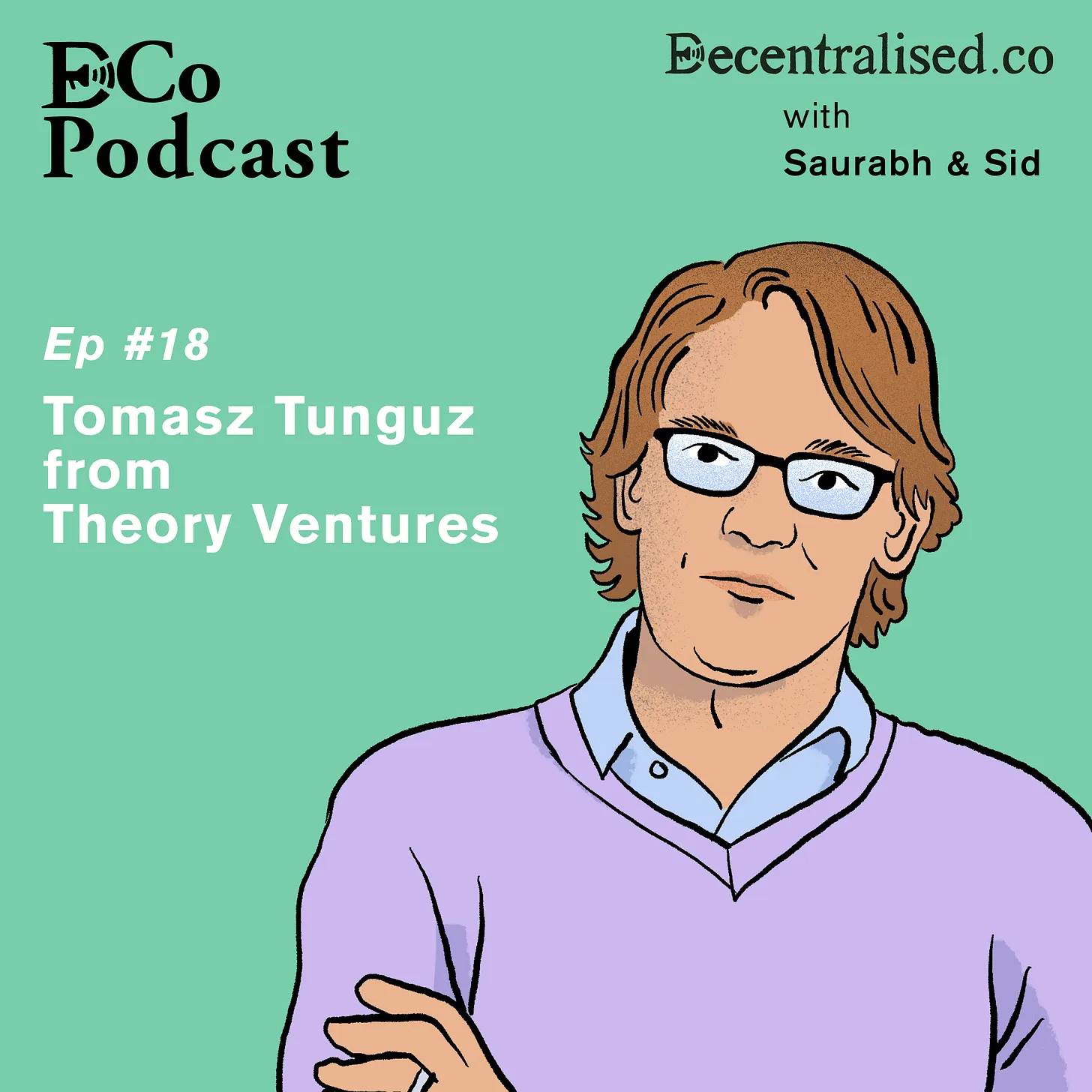
Guest: Tomasz Tunguz, General Partner at Theory Ventures and former Managing Director at Redpoint Ventures
Hosts: Saurabh Deshpande; Siddharth
Podcast Source: Decentralised.co
Original Title: On The Evolution of VC in Web3
Release Date: August 20, 2024
Background
In this latest episode, we dive deep into the thoughts of Tomasz Tunguz, a venture capitalist with over 15 years of experience. As a General Partner at Theory Ventures and former Managing Director at Redpoint Ventures, Tomasz has witnessed the evolution of venture capital firsthand. From his early days at Google exploring monetization through social media to his current focus on data-driven investing, Tomasz offers a nuanced perspective on the industry. (TechFlow note: Theory Ventures is an early-stage venture firm investing between $1 million and $25 million, focusing on software companies that leverage technological shifts to gain competitive advantages.)
Several insights from our conversation resonated strongly with me. His key idea? The only enduring moat is brand!
He draws parallels between private equity, venture capital, and the growth of Web3. Tomasz predicts Web3 will follow a similar trajectory. For example, during the 2021 frenzy, non-traditional capital sources such as private equity funds and hedge funds surged from 8% to 81%. In terms of deployed capital, traditional VCs played a small but crucial role.
A highlight of our discussion was Theory Ventures’ investment in Allium, a company providing Web3 data solutions for financial institutions. As the U.S. venture ecosystem has grown from deploying $8 billion annually to $175 billion, the demand for Web3-compatible financial infrastructure has never been greater. Allium fills this gap today.
This episode with Tomasz Tunguz offers a profound discussion on the evolution of venture capital and presents a compelling case for why the future of finance may be built on blockchains.
Tomasz’s Professional Background and Writing Habits
-
Tomasz shared his decade-long journey in writing. He started blogging initially to organize news and prepare agendas, publishing weekly roundups every Monday. Over time, he noticed entrepreneurs frequently asking similar questions, prompting him to write about topics like “What metrics do startups need to raise a Series A?” and “How do public market investors evaluate enterprises?” Although initial traction was slow, his blog gradually gained attention.
-
Tomasz recalled how he entered venture capital. In 2005, after moving to California, he met a VC at a party and was surprised to learn such a profession existed. He likened VC work to academic research—requiring constant learning across diverse domains.
-
Regarding VC work, Tomasz explained that while he initially thought it was about helping portfolio companies develop strategy, he later realized it also involves building connections within companies and with limited partners, offering expertise and resources to help founders secure funding.
-
Tomasz further discussed the importance of writing in his career. Initially uninterested—he considered himself more math-oriented—he eventually found writing helped clarify his thinking and facilitated knowledge exchange. He emphasized that writing is not just self-reflection but also builds trust with readers and documents one's learning journey. His dedication to writing has fueled his growth in venture capital and allowed him to contribute valuable insights to the ecosystem.
The Evolution of Venture Capital
-
Tomasz discussed the transformation of the venture capital industry. When he began, around $8 billion flowed into U.S. venture capital annually. This peaked at $300 billion in 2021 and now stands at approximately $175 billion. He attributes this growth largely to regulatory changes making IPOs more difficult, forcing companies to stay private longer. Today, the average time from founding to going public is about 12 years, compared to just 4 years in the 1990s.
Changing Sources of Capital
-
At its peak, 81% of venture capital came from non-traditional investors like hedge funds and corporate venture arms. With the rise of early-growth funds, many investors have focused on companies needing additional capital before IPO—a model that has proven highly successful over the past decade.
Breadth and Diversity of the Industry
-
Tomasz noted that venture investments have expanded beyond semiconductors and networking into consumer internet and B2B sectors, and now even include manufacturing and robotics. This mirrors the evolution of private equity, which began with leveraged buyouts and later diversified into large publicly traded asset management firms.
Feedback Loops and Decision-Making
-
On investor decision-making, Tomasz emphasized the long feedback cycles in venture capital. Success is primarily measured by distribution to paid-in capital (DPI). While investors may get some signals from subsequent financing rounds (Series B, C, D), overall patience is required, along with continuous refinement of investment processes.
Uniqueness of Web3 Investing – A Different Perspective
-
Tomasz stressed the need for a different lens when investing in Web3 companies. He highlighted that liquidity arrives earlier in Web3, making it essential to understand public market dynamics, valuation multiples, and capital flows. Web3 capital structures differ significantly from traditional software firms, especially at the Series A stage. Token-based companies often hold smaller equity stakes because large shareholders selling could impact the market.
Global Nature
-
He also pointed out that Web3 is inherently more global, with adoption in regions like Asia often exceeding that in the U.S. Thus, the investment environment for Web3 differs fundamentally from traditional VC.
Developer Acquisition and Retention
-
In Web3 projects, acquiring and retaining developers is critical. While customer acquisition strategies resemble those of companies like Stripe, Twilio, and Hashicorp, the use of tokens as financial instruments represents a novel approach.
Evolving Risk Curve
-
Tomasz observed that due to early liquidity and extreme valuation volatility, Web3 investors operate further down the risk curve. While early-stage uncertainty around code architecture and sales teams persists, software ecosystems eventually become institutionalized. In contrast, Web3 remains in its infancy, lacking mature models.
Capital Efficiency Challenges
-
He mentioned that an analysis conducted 18 months ago showed token-based developer acquisition was far less capital-efficient than traditional VC funding. This suggests current Web3 mechanisms are still relatively inefficient, and future success will depend on teams figuring out how to effectively use tokens and airdrops for user acquisition.
Current State and Future Outlook of Web3
Web3 Remains Early-Stage
-
Tomasz emphasized that Web3 is still in its early stages. Despite its potential, the number of Web3 developers remains small compared to traditional Web2 developers. According to Electric Capital’s report, there are currently between 15,000 and 25,000 active Web3 developers globally, versus around 27 million software engineers worldwide. Bridging this gap is crucial to attract more talent to Web3.
Balancing Infrastructure and Applications
-
Tomasz believes rapid advancements in Web3 infrastructure will make it more familiar to Web2 developers. He anticipates that next-generation virtual machines will support multiple programming languages—an important catalyst. He envisions a future where developers can write in any language and seamlessly connect to containerized or serverless infrastructure, with systems managing complexity automatically. This abstraction will lower entry barriers and enable easier development of blockchain-based applications.
Investment Strategy and Market Shifts
-
When discussing fundraising, Tomasz shared their experience successfully raising a $230 million fund during challenging times. They developed a business model using historical VC data and multivariate simulations to optimize portfolio construction—a strategy that set them apart in a competitive landscape.
-
He added that fundraising in venture capital has shifted from demand-driven to market-driven, resembling an auction process. This reflects intensifying competition, requiring deeper understanding of portfolio structure and potential returns.
Outlook for Web3’s Future
-
Tomasz remains optimistic about Web3’s future, viewing the space as young and full of potential. He expects blockchain technology to play a pivotal role in most software applications. Rising compliance costs are pushing more enterprises toward blockchain solutions for data storage and privacy regulation adherence. Additionally, innovations in stablecoins for capital movement will further drive Web3 adoption.
-
He noted that as costs decline, Web3 blockchains will become viable alternatives to high compliance expenses, while developer experience continues to improve significantly.
-
Tomasz revealed they’ve already invested in two companies—one publicly listed and another soon to be announced—focusing on integrating blockchain into Web2 and enhancing developer experience.
Dynamics Between Infrastructure and Applications
-
Tomasz described industry development as a pendulum swing—sometimes infrastructure-limited, sometimes application-limited. Currently, rapid infrastructure progress lays a strong foundation for Web3, but broader market adoption awaits more developers recognizing the advantages of Web3 protocols.
Structure and Strategy of Venture Funds
Fund Formation and Operations
-
Tomasz discussed the creation and strategy behind Theory Ventures. He referenced Carlota Perez’s theory of technological revolutions, which divides innovation waves into installation and deployment phases. During the installation phase, massive capital is needed to build internet infrastructure—similar to how Web3 investments today lay the groundwork for sustainable future applications.
Differentiation Through Research and Relationships
-
In venture capital, Tomasz emphasized differentiation via deep research and client relationships. While many infrastructure projects may appear similar, investor expectations about future potential heavily influence valuations. Using Twilio as an example, he illustrated how infrastructure companies can achieve massive market value by identifying key applications.
-
He also noted that in capital-rich environments, investors prefer the “error of omission” over the “error of commission”—that is, they’d rather invest in potentially great companies than miss out on breakout opportunities.
Current State of Web3 Investing
-
Tomasz mentioned that a quarter of their current portfolio consists of Web3 companies. He observed that much of the innovation over the past 12 months has centered on stablecoins, and they’re actively researching ways to capture more opportunities in this area. High valuations have made seed-stage investing more challenging, particularly amid weak public markets.
Research and Resources
-
Tomasz highlighted Theory Ventures’ strong emphasis on research and encouraged listeners to learn more via LinkedIn and their official website. They regularly publish insights on market trends and research findings to help investors and founders better understand Web3 and its potential applications.
The Intersection of Cryptocurrency and AI
Potential of Decentralized Compute Resources
-
Tomasz identified the data ecosystem as a promising investment area, given the immense compute power required for data analysis. Data volume will only grow, and creating data products and insights depends fundamentally on data quality and context. The key lies in intelligently combining Web2 and Web3 data for greater advantage.
-
Tomasz acknowledged various attempts to build decentralized GPU clouds—primarily for model training rather than inference—but noted challenges around security and trust. Current GPUs have vulnerabilities that could lead to sensitive data leaks, making decentralized networks unsafe for sensitive training tasks.
Data Privacy and Compliance
-
On data management, Tomasz believes Web3 can contribute to computational guarantees and usage licensing for training data. Drawing a parallel with the music industry, he cited organizations like ASCAP (American Society of Composers, Authors, and Publishers)—a nonprofit founded in 1914 to protect creators' rights—as a model that could apply to managing training data licenses in Web3.
Combining AI and Cryptocurrency
-
Tomasz stated he hasn’t seen any decentralized GPU project capable of breakthroughs in AI. While innovations exist, most enterprises still prefer Web2 cloud resources, as tech giants like Google, Microsoft, and Amazon are heavily investing in data centers offering more stable and secure services.
-
On latency, Tomasz noted that efficiency in data transfer is crucial for companies training large models. Spending excessive time transferring data during training leads to inefficiency. Therefore, despite arbitrage opportunities in decentralized solutions, enterprises favor traditional cloud services for superior security and data control.
Investment Strategies and Market Observations
Web3 Investment Strategy
-
Tomasz mentioned specific projects of interest, such as Helium. While consumer-facing network projects show promise, their primary focus remains on data and stablecoins. When evaluating crypto companies, he suggests treating them either as marketplace businesses—valued based on Gross Merchandise Value (GMV)—or as classic software companies—valued on revenue or EBITDA. (TechFlow note: EBITDA, or Earnings Before Interest, Taxes, Depreciation, and Amortization, is a financial metric used to assess a company’s operating performance, reflecting profitability before interest, taxes, depreciation, and amortization, commonly used to evaluate core earnings and operational efficiency.)
-
Tomasz added that Ethereum’s cash flow performance is exceptional—even outperforming many publicly traded software companies. He expects more Web3 companies to demonstrate similar potential in the future.
Market Trends and Impact of Technical Upgrades
-
On the impact of technical upgrades (e.g., Ethereum upgrades) on cost, Tomasz referenced AWS, which reduced prices up to 111 times in its first five years—setting a strong precedent for future cost declines and usage growth. While crypto costs remain higher than alternatives today, he believes significant market share shifts will occur once price advantages emerge.
Resource Allocation and Geographic Diversity
-
Tomasz said Theory Ventures dedicates roughly one-third to two-fifths of its time to Web3, a consistent allocation since the fund’s inception. He emphasized that as regulations evolve, Web3 portfolios may become more geographically diverse than Web2 ones. They closely monitor regulatory constraints across countries to avoid legal risks.
Central Bank Digital Currencies (CBDCs) and Global Financial Hubs
-
Tomasz expressed interest in whether the U.S. will adopt a Central Bank Digital Currency (CBDC). He believes U.S. adoption could re-establish it as a center for blockchain innovation. He also highlighted Singapore and Dubai’s potential in CBDC adoption, noting their regulatory frameworks might attract more innovation and investment.
Conclusion and Future Outlook
Outstanding Crypto Content Creators
-
On notable crypto content, Tomasz praised the *Electric Capital Developer Report* as a comprehensive overview of ecosystem activity. He underscored the importance of platforms like Crypto Twitter and Telegram, which play vital roles in shaping project visibility and capital flows.
The Double-Edged Sword for Investors
-
Tomasz discussed the pros and cons of tokens as investment vehicles, acknowledging the real risk of “sell-off” behavior in crypto markets. However, he believes that if the industry focuses on building lasting value and real-world applications, it can transform how financial markets and startup ecosystems operate. He hopes to see more companies with long-term value emerge, delivering better returns for investors and employees alike.
Advice for Founders
-
To Web3 founders seeking funding, Tomasz advised focusing on long-term value creation and building businesses with a 5–10 year horizon. Patience and focus are key, especially in volatile asset classes. He cited Linear as an example, praising its disciplined approach to company-building and commitment to value creation.
Final Outlook
-
Tomasz remains optimistic about Web3’s future, stressing the importance of creating enduring value. As the industry matures, companies generating stable cash flows and sustainable businesses will stand out. He hopes the Web3 ecosystem reduces volatility, fosters longer-lasting projects, and incentivizes teams to keep innovating even after token launches.
Join TechFlow official community to stay tuned
Telegram:https://t.me/TechFlowDaily
X (Twitter):https://x.com/TechFlowPost
X (Twitter) EN:https://x.com/BlockFlow_News
 深潮TechFlow