BACKED VC: We need more applications
TechFlow Selected TechFlow Selected
BACKED VC: We need more applications
We are in a situation where we've built a bunch of highways without any cars.
 Navigating Web3 tides with focused insights
Author: Henry Ang
Translation: TechFlow
This year has been a significant milestone for cryptocurrency: the launch of Bitcoin and Ethereum ETFs, bipartisan support for crypto in the U.S., and Circle's expansion into new currencies—starting with EURC. While these developments are encouraging, uncertainty remains about where the next major inflection point will come from and how we (as capital allocators) should position ourselves accordingly.

Image: Henry Ang, blockchain investor at BACKED VC
At various events during EthCC, we observed many teams working on infrastructure with minimal differentiation between them. Occasionally, application developers wandered between booths, speaking with these teams and considering where best to build. Our view is that this fragmentation leads to diluted focus, forcing app builders to navigate a complex array of choices. Despite abundant infrastructure, there’s a lack of cohesive and impactful application development. To borrow a phrase we’ve heard, we’re in a situation of “building highways without cars.”
This is where capital allocators—including us—bear great responsibility in shaping the industry. While funding infrastructure isn’t inherently bad, the potential returns from late-stage, low-differentiation projects are distorting the market and creating a dilemma for builders: Should you attempt to build an application with harder product-market fit, risking failure to raise funds in poor market conditions? Or is it easier—and more likely to secure financing—to build yet another slightly differentiated infrastructure project, ensuring several years of runway? This trend of over-investing in infrastructure suppresses innovation in application development, which is precisely where the next breakthrough is most likely to occur. So how do we reverse this trend?
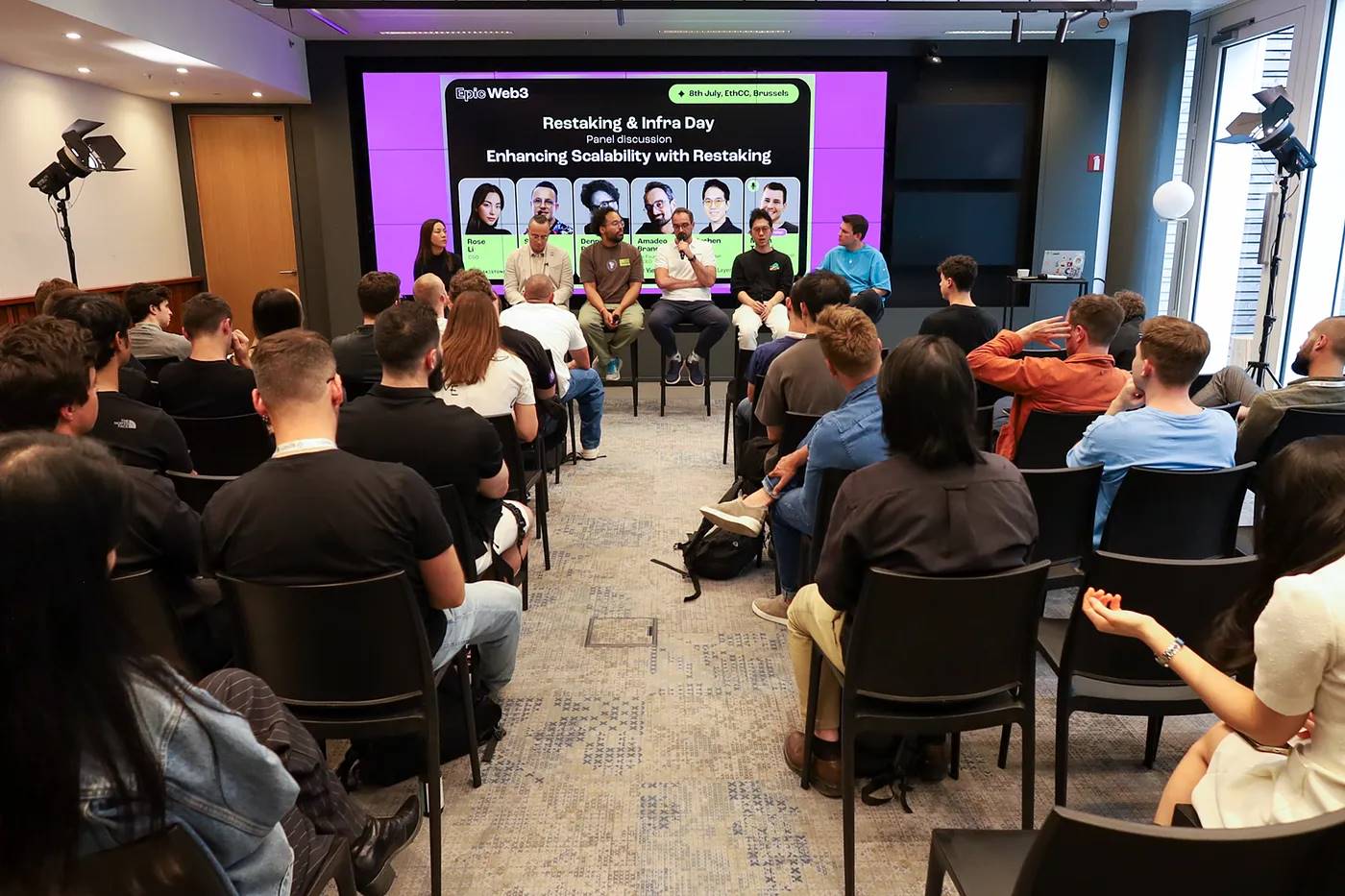
Image: Henry attending an insightful talk on restaking and infrastructure at EthCC Brussels this year, presented by Amadeo Brands, one of our portfolio founders from YieldNest (pictured)
Shifting the Tide: From Infrastructure to Applications
The good news is that markets tend to self-correct, albeit over time. We believe funds that continue blindly replicating last cycle’s infrastructure playbook will begin underperforming, limiting their ability to raise new funds. If extended across the industry, this should lead to a healthy reset in the funding landscape. Ahead of this shift, we’d like to share some internal insights that shape our own investment thesis.
First, it's not clear whether private infrastructure investments represent better opportunities than public ones. A common investment heuristic is that infrastructure offers a larger total addressable market (TAM) and can take longer to achieve product-market fit, so capital is willing to price it based on existing benchmarks. For example, Monad (a parallelized EVM Layer 1 blockchain) recently valued at $3 billion could be considered "reasonable," given Sei, a parallelized EVM competitor, trades at $2.6 billion, while Aptos and Sui, alternative L1 competitors, trade at $6.8 billion and $8.6 billion respectively. If you believe Monad has a "better" community and technology aligned with ETH—thus capturing greater liquidity—you might underwrite a base-case valuation of $10–20 billion, implying 3–6x returns. However, such opportunities don’t align well with early-stage venture economics: if you invest $3 million in this round, a 3–6x return translates to only 6–15% portfolio impact, assuming a $100 million fund size.
Second, the risk/return profile of investing in such private venture deals is less attractive compared to liquid market opportunities. Instead of underwriting 3–6x returns on Monad, you could have achieved similar returns by allocating to Solana at around $80—with liquidity preference—when it broke out of a one-year resistance level and had clearer metrics (users, total value locked, trading volume, etc.). You’d also enjoy greater flexibility in position sizing and a shorter return horizon, translating into stronger internal rates of return (IRR). Taken together, how then should we approach early-stage venture investing in crypto?
Focus on the Application Layer
At BACKED, our strategy is to selectively invest in infrastructure while dedicating most of our time to evaluating application-layer projects.
This decision stems from our belief that the application layer is severely undervalued and underfunded. For instance, Aave has over $11.5 billion in total value locked (TVL) and generates $302.5 million in annualized fees, yet its fully diluted valuation (FDV) stands at $2.1 billion. In contrast, Aptos has an FDV of $6.8 billion but only $378 million in TVL and $8.5 million in annualized fees. Is Aave undervalued, or is Aptos overvalued? Regardless, we believe the market will eventually reflect true value more accurately, and applications serving the most users with strong financial metrics will ultimately prevail.
Encouragingly, we’re already seeing early signs of this shift. For example, applications on Solana—such as Jito, Raydium, and pump.fun—are now generating fees (and revenue) that exceed those of the underlying blockchain infrastructure they rely on. Next, we expect valuations to more accurately reflect these fundamentals.
Therefore, our investment thesis is to back founders who deeply understand and actively leverage blockchain and cryptoeconomics to deliver superior applications.
We see applications falling broadly into two categories—crypto-native and crypto-enabled—each serving distinct user bases. Most current applications are crypto-native: for example, decentralized finance (DeFi) or Web3 gaming, where users primarily operate on-chain. These apps drive permissionless, fully on-chain economies. Areas we’re particularly interested in include:
-
Perpetual exchanges (Perp Dexes)—drive most trading volume on centralized exchanges (CEX), yet on-chain volume remains small
-
Decentralized social—enable new modes of content consumption
-
Insurance—critical infrastructure, but faces many challenges in risk assessment
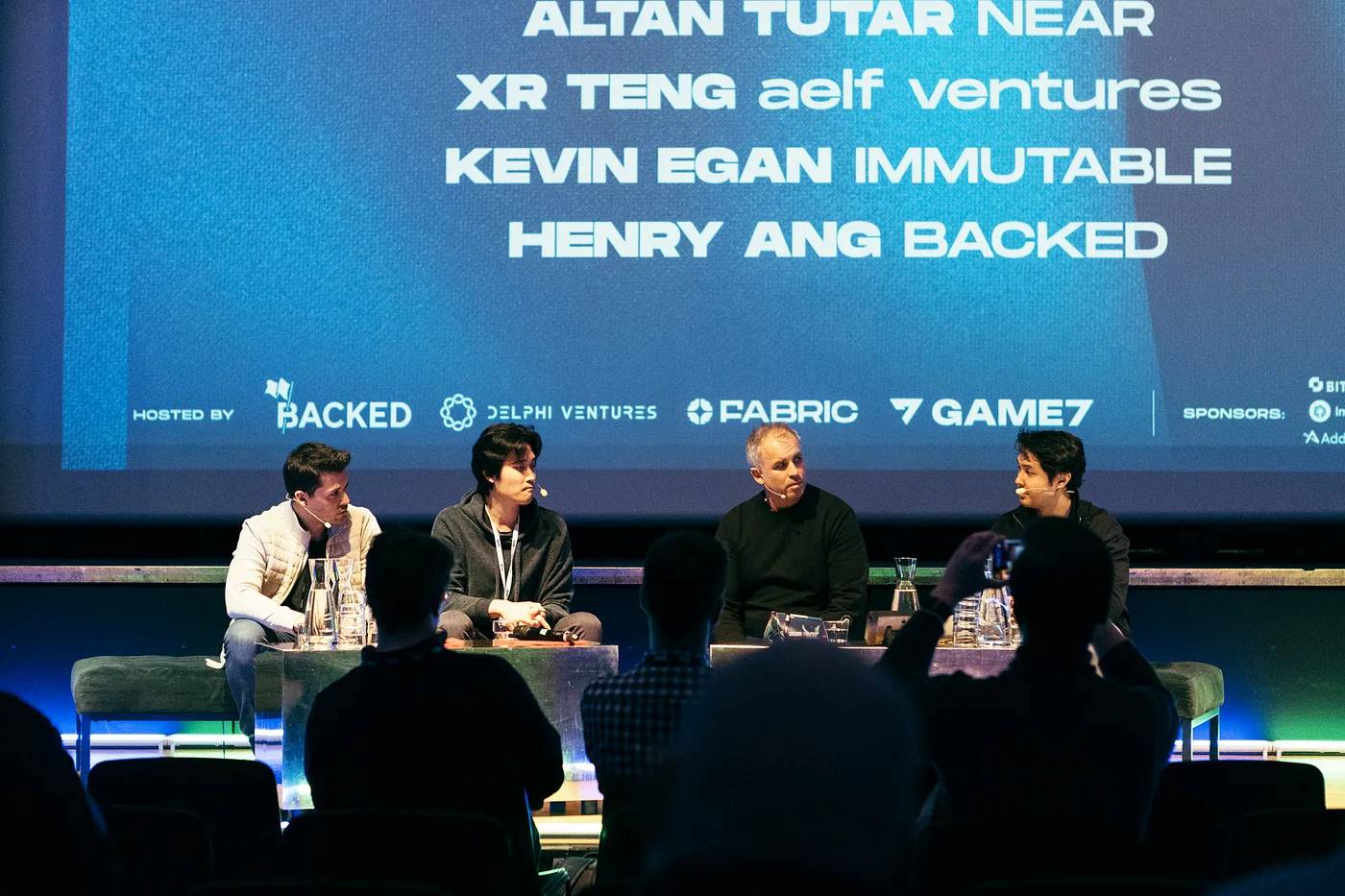
Image: Henry (right) speaking at Slush 2023 on the Future of Gaming panel
However, there’s also a growing set of crypto-enabled applications where users don’t need to be on-chain. Some areas we find immediately compelling include:
-
Payments—enabling faster settlement and global reach via blockchain infrastructure
-
DePIN—using tokens and NFTs for ownership tracking
-
Advertising & Attribution Markets—powered by on-chain social graphs
-
Asset Tokenization—enabled by on-chain transparency and smart contract automation
Capital Allocators Play a Key Role in Guiding the Blockchain Industry
Looking ahead, we must play a pivotal role in steering the blockchain industry toward sustainable growth and genuine innovation. By refocusing our efforts on supporting developers who deliver real value and utility, we can catalyze the next wave of breakthroughs in this space.
Join TechFlow official community to stay tuned
Telegram:https://t.me/TechFlowDaily
X (Twitter):https://x.com/TechFlowPost
X (Twitter) EN:https://x.com/BlockFlow_News
 @BackedVC