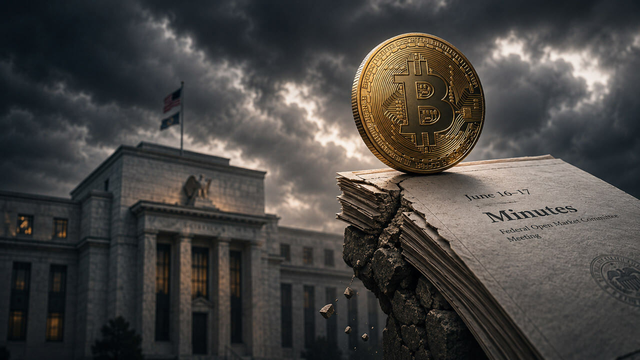
Is Bitcoin still a store of value?
TechFlow Selected TechFlow Selected
Is Bitcoin still a store of value?
People who use Bitcoin as a store of value are not unaware of its volatility.
 Navigating Web3 tides with focused insights
By Marc Hochstein, CoinDesk
Translated by Deng Tong, Jinse Finance
On days like this, it's easy to mock Bitcoin (BTC)—specifically, the idea that this original cryptocurrency is a store of value, a digital equivalent of gold.
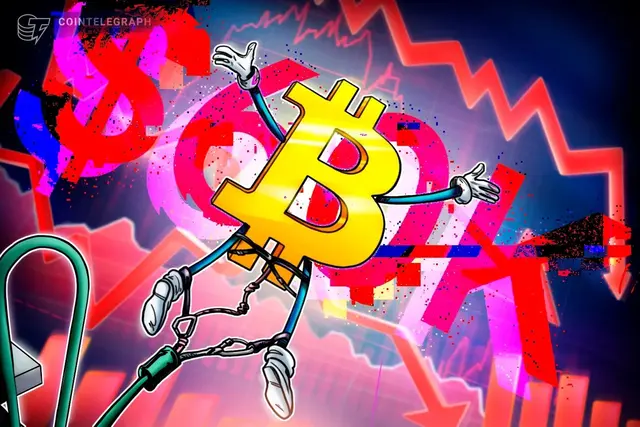
BTC tumbled Monday along with broader financial markets, briefly dipping below $50,000—the lowest since February—before recovering some ground. In early afternoon New York time, the asset was down 9% over 24 hours to $53,387.67.
For skeptics, Bitcoin’s volatility feels like Billy Crystal’s old comedy bit: “Where’s your savior now?”
“The bitcoin ‘store of value’ narrative is getting crushed right now,” Bloomberg columnist Joe Weisenthal crowed on X (formerly Twitter). “Bitcoin doesn’t look like new gold. It looks like three tech stocks in a trench coat.”
But there’s another, more nuanced take on the issue—one that requires looking at things from a perceptual standpoint.
“We shouldn’t conflate store-of-value assets with safe-haven assets,” said my colleague Andy Baehr, product lead at CoinDesk Indices. “The former are long-term expected assets, while the latter are liquid and fast-moving market assets.”
The “long-term” part is key.
On a day like Monday, when Japan’s Nikkei index dropped 12%, evoking memories of 1987’s “Black Monday,” U.S. Treasuries “tend to become the safe-haven asset everyone flocks to,” Baehr said. Treasury yields, which move inversely to prices, were at their lowest levels since January.
Bitcoin clearly does not enjoy safe-haven status.
“There’s no doubt Bitcoin remains a volatile asset—speculative in many cases, leveraged in many cases, traded in many cases,” Baehr said. “But its characteristics are promising: over time, its scarcity, portability, and independence from any government or corporate policy make it a genuinely interesting asset as a store of value.”
Investors who view Bitcoin this way don’t see it as a shelter from daily market gyrations, but rather as an insurance policy against the steady erosion of the dollar’s purchasing power. Bitcoin’s supply is predictable and capped at 21 million, immune to policymakers’ whims.
“People holding Bitcoin for the long term, especially those worried about…national debt, central bank policies, all these things…feel it’s not about Bitcoin going up, but about the denominator losing value,” Baehr said.
He added that while it may seem counterintuitive, something can be both a risk asset and a store of value. “People using Bitcoin as a store of value aren’t oblivious to its volatility.”
Arthur Breitman, co-founder of the Tezos blockchain protocol and a cryptocurrency expert, pointed out that Bitcoin’s resistance to confiscation makes it a store of value in another sense.
In a reply to Weisenthal on X, he wrote: “If…your bank account gets frozen, Bitcoin is a great store of value. It’s contextual.”
In another response to Weisenthal, Dan McArdle, co-founder of crypto data firm Messari, referenced an old post where he outlined his expectations for how Bitcoin would perform in different types of disasters.
Writing in 2018, McArdle said Bitcoin should “sell off during liquidity crises, rise during sovereign debt/fiat confidence crises.” Monday was an example of the former.
As for more battle-tested stores of value, gold prices fell about 1% on Monday afternoon.
“It’s unfair to compare Bitcoin, still in its infancy, with a store of value with millennia of history,” Alex Thorn, head of firmwide research at crypto investment bank Galaxy Digital, said regarding comparisons with gold.
Buying Bitcoin, he said, is “a venture-capital-like bet on its future as a store of value.” “Bitcoin is still being adopted. That’s why it’s both volatile and full of growth potential.”
Join TechFlow official community to stay tuned
Telegram:https://t.me/TechFlowDaily
X (Twitter):https://x.com/TechFlowPost
X (Twitter) EN:https://x.com/BlockFlow_News
 CoinDesk