Interview with CoreDAO Core Builder: What Bitcoin's Super Cycle Means for Your Portfolio?
TechFlow Selected TechFlow Selected
Interview with CoreDAO Core Builder: What Bitcoin's Super Cycle Means for Your Portfolio?
Over the next decade, Bitcoin will continue to serve as a store of value, and its adoption rate will increase.
 Navigating Web3 tides with focused insights
Compiled & Translated by: TechFlow
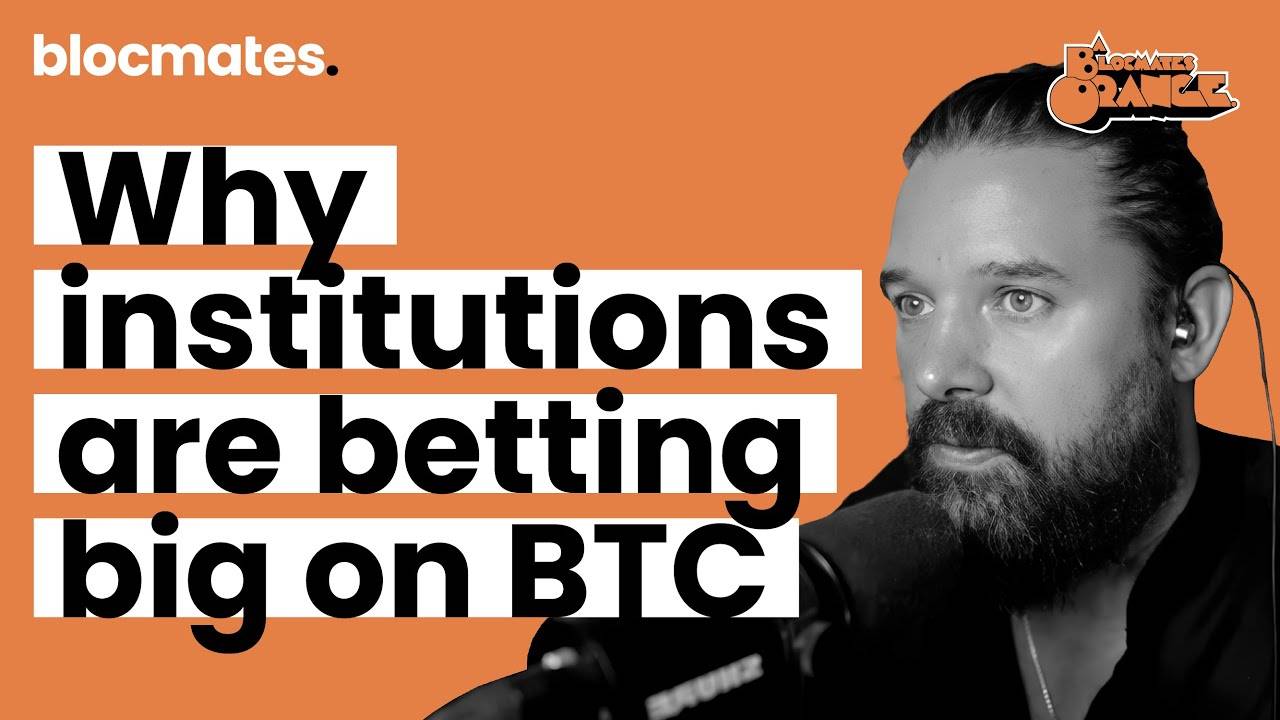
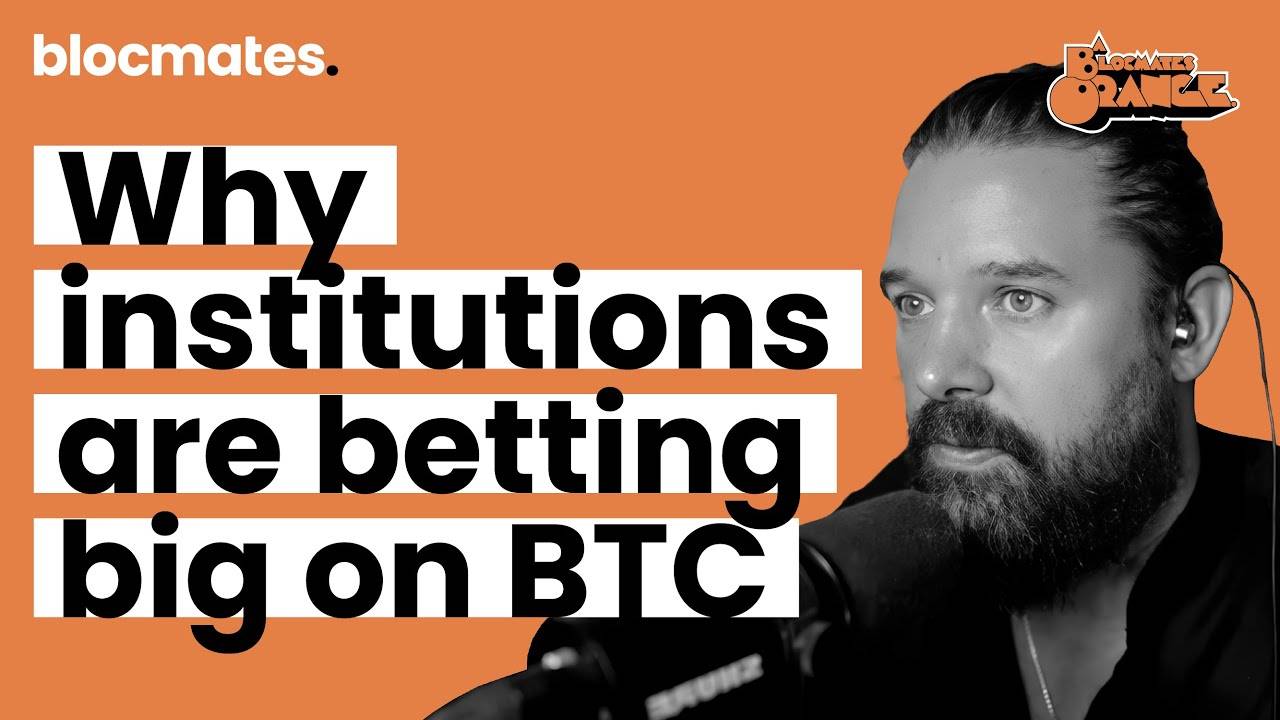
Guests: Alex Kruger, Founder of Asgard and economist; Rich Rines, Founder and CEO of @AutoReachHQ
Host: Jedi Blockmates
Podcast Source: A blocmates Orange
Original Title: Alex Kruger | The Bitcoin Supercycle & What It Means for Your Crypto Portfolio
Release Date: July 23, 2024
Background Information
In this podcast episode, the host and guests delve into the Bitcoin supercycle and its implications for cryptocurrency investment portfolios. Key guests include economist and portfolio manager Alex Kruger, who has 25 years of experience in commodity markets and nearly 11 years in the crypto space. Also present are Rich, a founding member of Core, and another guest, Jedi.
Alex explains the concept of supercycles in the crypto market and how institutional participation is reshaping market dynamics. Rich highlights Bitcoin's potential to attract massive institutional investments and emphasizes the importance of creating symbiotic solutions within the ecosystem. They explore community reactions, the idea of Bitcoin as a "risk-free rate," and potential new DeFi products leveraging Core technology.
The conversation transitions to Bitcoin’s role in real-world assets (RWA), the distinction between L2 solutions and sidechains, an evaluation of the Lightning Network, and potential improvements to its shortcomings.
Industry Overview – BTC Fi, Bitcoin’s Journey, etc.
-
Alex discusses the overall state of cryptocurrencies and Bitcoin. He believes we are currently in a supercycle, and despite Bitcoin’s 86% drop from 2021 to 2022, future corrections will be shallower—likely no more than 20% to 60%. He stresses that Wall Street’s involvement and the introduction of ETFs are transforming market structure, compelling more asset management firms to include Bitcoin in their portfolios.
Bitcoin Supply-Demand Dynamics and Market Potential
-
Rich agrees with Alex, asserting that the supercycle has arrived and that Bitcoin’s volatility may structurally decline due to ETFs. He notes rising investor demand for Bitcoin, particularly as awareness grows around its scarcity (capped at 21 million coins). Rich adds that demand could bring hundreds of billions in capital inflows, fueling the growth of Bitcoin-based decentralized finance (DeFi).
Bitcoin’s Multidimensionality and Market Opportunities
-
Jedi further explores Bitcoin’s multidimensionality, emphasizing that Bitcoin is not just a single asset but can generate multiple forms of value.
-
Alex highlights evolving market understanding and demand for Bitcoin, suggesting its value may be redefined—not merely as digital gold, but as foundational to other value systems. He notes that market demand and perception will shape Bitcoin’s future trajectory.
Market Psychology and Opportunity
-
Alex emphasizes the importance of understanding market psychology. While some remain skeptical of Bitcoin, he argues that overall market demand and trends cannot be ignored. As investors, one should focus on what the market cares about, rather than relying solely on personal emotions or opinions.
Bitcoin’s Collateral Mechanism
Importance of Bitcoin in Decentralized Finance (DeFi)
-
Alex discusses Bitcoin’s potential value within decentralized finance (DeFi). While some may resist building complex applications on Bitcoin, he observes clear market demand for Bitcoin DeFi. DeFi offers higher risk-reward exposure, which many investors seek. In contrast, simply holding Bitcoin may offer more limited returns.
High-Risk, High-Reward Assets
-
Alex stresses that while high-risk assets carry greater complexity and risk, they are also where value creation occurs. Innovations around Bitcoin—such as core technologies, Ordinals, Runes, BRC-20, and L2s and sidechains—are injecting new vitality into the Bitcoin ecosystem. These innovations provide miners with additional revenue streams and indirectly support Bitcoin’s network health through increased transaction fees and traffic.
Long-Term Incentives and Transaction Fees
-
Alex notes that as Bitcoin undergoes halving every four years, block rewards will gradually diminish. Therefore, maintaining stable transaction fees will become crucial to incentivize miners to continue providing computational power, thereby enhancing Bitcoin’s security. He views sustained transaction fees as one of the key factors for Bitcoin’s long-term development.
Practicality of Bitcoin Halving and Its Impact on L2s / Sidechains
Bitcoin’s Limited Supply and Network Security
-
Jedi points out that Bitcoin’s total supply is capped at 21 million, and the halving schedule is finite. As block rewards decrease over time, new solutions will be needed to maintain network security. Creating L2 sidechains is one important method to attract miners to participate in securing the network.
Miners’ Role and Incentive Structures
-
Rich explains the role of miners in the Bitcoin network. Miners can freely join or leave and contribute to network security by earning core block rewards. However, upcoming halvings—especially the next major one in about eight years—may pose significant challenges. While historically rising Bitcoin prices have offset these impacts, market uncertainty remains.
Multiple Solutions for Network Security
-
Rich mentions potential solutions such as changing Bitcoin’s total supply or transitioning to a proof-of-stake (PoS) mechanism, both of which would likely provoke controversy. He believes Bitcoin needs sufficient transaction fees to sustain operations, but currently lacks consistently high fees to support miners’ economic viability.
Potential Impact of ETFs
-
Rich presents a more extreme view: with the rise of ETFs, large capital players might enter Bitcoin mining. If ETF issuers become among the largest miners, market competitiveness could weaken, potentially leading them to operate at a loss to protect massive investments.
Demand and Participation in the Bitcoin Ecosystem
-
Rich emphasizes the importance of symbiosis between L2s/sidechains and Bitcoin. If emerging technologies merely parasitize Bitcoin without adding value, they won’t benefit Bitcoin holders. Alex adds that demand for Bitcoin is diverse—some holders prefer viewing it as digital gold rather than engaging in DeFi or staking.
Future Capital Flows and Market Narratives
-
Rich believes that as people explore Bitcoin’s complexities, more capital will flow into its ecosystem. Over 3 billion satoshis are already staked across various ecosystems, which will become a key narrative in the next cycle.
From Store of Value to Utility and Wealth Creation
Human Nature and Maximizing Asset Value
-
Alex emphasizes the fundamental human desire to extract maximum value from assets. He mentions that Bitcoin holders can earn yield via “time-locking,” allowing returns without relinquishing control of their Bitcoin. This method enables holders to maintain asset security while generating additional income.
Other Ways to Earn Yield on Bitcoin
-
Alex discusses alternative yield-generating methods, such as wrapping Bitcoin and transferring it to Ethereum for DeFi participation. However, this introduces counterparty risk since holders must entrust their Bitcoin to custodians. While custodial failures aren’t expected now, unforeseen events (like pandemics) could trigger risks.
Yield Mechanism on Stacks Network
-
He also notes that the Stacks network allows users to earn yield by sending Bitcoin to specific addresses, though this too requires surrendering control. In contrast, Core is the only project enabling yield generation without giving up Bitcoin custody—an important advantage.
Impact on the Bitcoin Community
-
Jedi agrees, noting this is a major barrier to entry, especially for conservative “maximalist” Bitcoin holders. This emphasis on control makes many wary of alternative yield mechanisms.
Core’s Time-Locking Mechanism
Importance of Bitcoin Custody
-
Jedi expresses concern about relinquishing Bitcoin control, especially for those storing Bitcoin long-term in hardware wallets like Ledger. He states that if yield requires losing control, his answer would be “no.” This reflects a widespread mindset among Bitcoin holders.
Innovation Behind Core Products
-
Rich explains how Core products work, highlighting their design to balance security and yield appeal. Since first encountering Bitcoin in 2013, he has avoided centralized solutions like BlockFi and Celsius due to credit risk, which could result in irreversible Bitcoin loss.
Implementation of Time-Locking
-
Rich explains that Core leverages Bitcoin’s time-locking functionality to ensure fund safety while integrating it into Core’s consensus mechanism. This innovation allows Bitcoin holders to earn yield without surrendering custody.
Transparency in Bitcoin Yield
-
He notes that past Bitcoin yield structures were often opaque, whereas Core offers unprecedented transparency. With over 3 billion satoshis locked in Core, a concept of a “risk-free rate” begins to emerge.
New Financial Products and Market Dynamics
-
Rich predicts that as new financial products emerge, markets will grow more complex, enabling users to choose strategies based on their risk tolerance. He anticipates innovative products built on Core yields, driving the evolution of Bitcoin’s financial ecosystem.
Causal Relationships of Core Products
Jedi brings up institutional participation ("whales"), asking how these entities view Core and its yield products, and Bitcoin’s role in real-world assets (RWA). He expresses curiosity about Bitcoin’s prospects in this "supercycle."
RWA Narrative and Infrastructure
-
Alex explains the RWA (real-world assets) narrative in crypto, primarily focused on infrastructure enabling individuals or entities to earn yield on stablecoins. He notes that “RWA” carries different meanings in traditional banking, potentially causing confusion when used in crypto contexts.
Bitcoin’s Relationship with RWA
-
He says it’s premature to consider Bitcoin part of the RWA narrative, as they are fundamentally different. He advises investors interested in RWA to focus on specific assets rather than conflating Bitcoin with RWA.
Lack of Awareness Around Time-Locking
-
Alex emphasizes that although time-locking has existed in Bitcoin since 2015, many long-term holders remain unaware of it. He describes time-locking as a unique mechanism offering relatively “risk-free” yield, though it does introduce liquidity risk—locked assets cannot be sold during the lock-up period.
Classification of Risk Types
-
He categorizes risks into credit risk, price risk, and liquidity risk, noting that in crypto, time-locking is the only method offering relatively secure yield.
Possibility of Yield on Bitcoin
-
Jedi notes that theoretically, investors don’t intend to sell their Bitcoin, making liquidity risk the primary concern. He stresses that relinquishing control of Bitcoin is a major issue, but proper mechanisms can enable yield without sacrificing custody.
Controversy Around Bitcoin as a Yield-Bearing Asset
-
He mentions that many Bitcoin holders are skeptical—or even hostile—toward the idea of Bitcoin generating yield, sometimes viewing it as a scam. Speaker 1 adds that many react angrily to the notion, seeing it as a violation of Bitcoin’s essence.
Evolution of Perspectives
-
Rich notes that until early 2023, this negative view was widespread. He credits pioneers like Casey Rodarmor for innovating on Bitcoin and helping people reconsider its potential. Over time, even staunch Bitcoin maximalists have begun accepting Bitcoin as a yield-bearing asset.
Bitcoin’s Massive Market Potential
-
Rich emphasizes that Bitcoin, as an asset, has enormous total addressable market (TAM) potential and could see tenfold growth in the next five years. He believes growing market appeal will draw more attention, especially from those open-minded within social circles.
Importance of Education
-
He concludes that a primary goal of projects like Core and other scaling solutions is education—showing people the range of opportunities Bitcoin offers. This process may be slow, but as more people learn, acceptance will gradually increase.
Degens’ (Speculators’) Solution for Time-Lock Mechanisms
Jedi explores time-locking from a degen (speculator) perspective, asking whether current business models allow higher-risk strategies—such as liquidation during lock-up periods—and whether such possibilities exist.
Market Formation
-
Rich says that while Bitcoin itself doesn’t support such mechanisms, markets around these new products will form. Different lock-up durations will carry varying values, attracting risk-tolerant investors.
Design of Bitcoin Yield Mechanisms
-
He emphasizes that Bitcoin staking is designed to be low-risk, targeting committed supporters. Still, future products will cater to liquidity needs, albeit with added risk.
Potential of Bitcoin LSTs
-
Rich notes that Bitcoin LSTs (liquid staking tokens) represent a critical missing piece in Bitcoin DeFi. He believes that investors willing to take on some risk can unlock more opportunities by combining yield with DeFi products.
Impact of Taproot and Ordinals
-
Alex discusses changes brought by the Taproot upgrade, highlighting its ability to support more complex scripts and features like Ordinals (NFTs on Bitcoin). While some in the Bitcoin community oppose this, market adoption of Ordinals has been strong, creating new opportunities and fee revenues.
Bitcoin’s Long-Term Outlook
-
He notes that as the Bitcoin ecosystem expands, investors can view Bitcoin’s long-term value from multiple angles—not just as a store of value.
Innovation and Market Opportunities
-
Jedi agrees, noting Bitcoin now holds more opportunities and potential. He references innovative proposals—though unspecified—that could change how Bitcoin transactions are conducted in the future.
Are Runes and Ordinals Just Speculation?
Jedi asks whether runes and ordinals represent mere creative opportunities or hold deeper future significance.
Bitcoin vs. NFTs
-
Rich suggests Bitcoin may implement NFTs better than Ethereum. Bitcoin’s scarcity and uniqueness make rune theory highly appealing, attracting hardcore supporters by showcasing Bitcoin’s advantages in certain areas.
Potential of Open Minting Platforms
-
Rich also notes that Bitcoin, as an open minting platform, encourages global participation. This equal access excites people and could sustain momentum going forward.
Definition and Function of Runes
-
Alex clarifies the meaning of runes, explaining they are a protocol enabling the creation and transfer of NFTs (unique digital assets) on Bitcoin. This is achieved by assigning unique identifiers to each satoshi (the smallest unit of Bitcoin), allowing tracking of these satoshis on-chain with distinct serial numbers.
Cyclicality of NFTs and Market Recovery
-
Alex believes that although the NFT market is currently depressed, it will rebound. He underscores market cyclicality—retail investors will return as liquidity improves and wealth increases.
Impact of Runes on Bitcoin
-
Rich adds that he recently learned of Unbroken, the first hedge fund focused exclusively on runes, noting that Bitcoin and its NFT layer may exhibit higher volatility. He believes more capital will flow into the NFT space as the market recovers.
Sentiment, Market Perspective, and Retail Investor Influx
Jedi notes that the current market cycle differs significantly from previous ones—while Bitcoin liquidity has risen, retail participation has sharply declined. He asks Alex about current market sentiment and conditions post-halving.
Performance of Crypto Assets
-
Alex observes that most crypto assets are underperforming, with many having erased all 2024 gains and regressed to summer 2023 levels. He describes current market sentiment as quite bearish, especially among active crypto participants who hold little Bitcoin and were affected by last year’s turmoil.
Retail Investors’ Reaction
-
Alex further analyzes that many retail investors missed the initial Bitcoin rally, leaving them frustrated. This sentiment spreads throughout the market, contributing to a more pessimistic atmosphere. Yet, he believes this very pessimism could signal a bullish turn—when everyone is bearish, a reversal may be near.
Outlook for the Future
-
Jedi expresses optimism and asks Rich for his outlook over the next year. Rich emphasizes the importance of macroeconomic context, noting today’s environment differs greatly from 2021, especially regarding post-pandemic stimulus and market mania.
Macroeconomics and Market Structure
-
Rich believes the market is anticipating potential interest rate cuts, which could create new opportunities for crypto. Though the market underwent a severe shakeout, he views this adjustment as beneficial for long-term health. He expects a new cycle as fresh capital flows in.
Future Potential
-
Rich adds that current market structure suggests we may be moving beyond the traditional four-year cycle, with ETF-driven structural inflows altering the landscape. He finds the coming years promising, as continuous capital inflows reshape crypto market dynamics.
Solana and ETFs
Bullish View on Solana
-
Alex expresses strong bullishness on Solana, seeing it as strategically positioned within the Bitcoin ecosystem. He notes Solana’s strong market recognition and trading volume, though it faces fragmentation issues as various Layer 2 solutions compete. He sees parallels with Ethereum, but notes Solana’s simpler, clearer messaging benefits its development.
Potential NFT Opportunities
-
Alex mentions that Trump recently launched his fourth NFT collection and speculates he might release more series on Ordinals. He sees this as an interesting opportunity, especially given Ordinals’ simplicity and functionality.
Perspective on Ordinals
-
Jedi suggests Rich contact Trump to explain Ordinals’ capabilities, believing it could meet his needs without complex setups. Rich says he’d prefer to see Trump launch NFTs on Ordinals rather than other platforms.
Will Bitcoin and Solana Team Up?
Jedi poses a challenging question: Could there be collaboration between Bitcoin and Solana, similar to Ethereum-Bitcoin combinations?
Discussion of Possibility
-
Rich says such collaboration is indeed possible. He notes Solana represents a unique ecosystem, standing out due to fast block times and efficient execution. As Bitcoin derivatives and Layer 3 solutions emerge, Solana could develop a complementary relationship with Bitcoin.
Competition and Cooperation
-
Rich further analyzes competition among ecosystems, suggesting it can create “1+1=3” opportunities—cooperation benefiting both sides. He notes Solana’s strong retail performance, where many users don’t even realize they’re using Solana—they just know they need a Phantom wallet—a level of abstraction previously unseen.
Ecosystem Diversification
-
Rich adds that future ecosystems will be more diversified, supporting multiple use cases while excelling in specific domains. Rather than fearing fragmentation, he advocates seeking cooperation to leverage respective strengths.
Core vs. Stacks
Stacks’ Strengths and Challenges
-
Rich says Stacks is a friendly project with longevity, demonstrating enduring interest in building on Bitcoin. As one of the earliest Bitcoin ecosystems, its upcoming Nakamoto upgrade is expected to bring performance close to optimal. He appreciates Stacks’ transparency, especially in openly addressing past issues like censorship and unstable block times.
Stacks’ Ecosystem
-
Rich notes Stacks’ clear language has admirable traits, possibly offering superior security. However, attracting developers remains difficult due to lack of Ethereum Virtual Machine (EVM) compatibility, complicating partnerships. Still, Stacks is working to open its ecosystem via technologies like WebAssembly (Wasm).
Core’s Vision
-
Rich believes Core has a broader vision, encompassing Bitcoin DeFi and yield management tools akin to Bitcoin Lido. He emphasizes that while competition exists, opportunities for collaboration between Stacks and Core remain, especially in Bitcoin derivatives and yield generation.
Jointly Advancing the Bitcoin Ecosystem
-
Rich concludes that Core and Stacks do not aim to undermine each other but to jointly advance the Bitcoin ecosystem. Only by expanding the narrative around Bitcoin can greater success be achieved, benefiting the entire industry.
L2s vs. Sidechains
Rich’s Perspective
-
Rich believes many current solutions are effectively sidechains. Many options in Bitcoin space reflect aspirations for future L2s rather than present reality. Bitcoin has limitations—there’s no unilateral exit mechanism yet. Future tech like BitVM may solve this, but most current solutions rely on centralized sequencers, posing risks to Bitcoin holders.
Centralization Risks
-
Rich emphasizes that many teams are developing advanced trustless and cross-chain solutions. He admires their efforts but urges honesty about current realities. Compared to Ethereum’s L2s, Bitcoin’s L2s are still nascent—lacking fraud proofs, with all computation off-chain, which may contradict crypto principles.
Core’s Positioning
-
Rich clarifies that Core positions itself as a sidechain focused on Bitcoin scalability and economic growth. Core aims to reward Bitcoin holders and miners while expanding the ecosystem. He believes new technologies will eventually enable bridge functionalities meeting user needs.
Value of Sidechains
-
Rich acknowledges that “sidechain” once carried negative connotations, but these chains exist to enable functions currently impossible on Bitcoin. All such efforts enhance Bitcoin’s capabilities and utility—critical for its growth.
Changing Perceptions of Sidechains
-
Rich notes perceptions of sidechains have evolved positively over time. He commends the Bitcoin Layers team for shifting this narrative.
Core’s Contribution to the Bitcoin Network
Jedi asks how Core’s operation contributes to the broader Bitcoin network, particularly in terms of security.
Core’s Consensus Mechanism
-
Rich explains that Core uses the Snotion Plus consensus mechanism, which rewards Bitcoin miners. Miners secure the Core chain and receive capital (via issuance) from the Core network in return. This two-way flow works well—miners provide security and receive compensation.
Bitcoin’s Transaction Throughput Challenge
-
Rich adds that Bitcoin currently struggles with throughput when handling large volumes of L2 transactions. While some teams are improving Bitcoin’s transaction capacity, it remains a challenge. Projects like New Bit are building native dApp layers on Bitcoin, attempting to solve this similarly to Celestia’s approach.
Symbiotic Ecosystem Relationships
-
Rich stresses that expansion solutions should form symbiotic, not parasitic, relationships with Bitcoin. Only when they effectively enhance Bitcoin’s functionality can sustainable development occur.
Has the Lightning Network Succeeded?
Jedi asks participants whether the Lightning Network has succeeded and if there are signs of failure.
Complexity Hinders Adoption
-
Rich says the Lightning Network failed to gain broad traction mainly due to complexity. For average users, setting up Lightning is difficult—requiring node configuration, channel management, and liquidity understanding—making it unfriendly. This explains its limited adoption. He admits that niche voices in the Bitcoin community have long championed Lightning, but real-world results fall short.
Dual Nature of Lightning Network
-
Rich believes Lightning has succeeded in some ways—it established a trust model worth pursuing for all Bitcoin scaling solutions. But after five years of investment, it hasn’t delivered practical utility. To function, many implementations resort to custodial models, raising capital efficiency concerns.
Reflections on Future Solutions
-
Rich notes that all Bitcoin scaling solutions aim to create cheaper, faster environments for Bitcoin use, suitable for high-throughput, low-cost scenarios. While approaches differ, their ultimate goal is enhancing Bitcoin’s liquidity and usability.
Bitcoin in the Next Ten Years
Bitcoin as Digital Gold
-
Rich says Bitcoin is increasingly seen as digital gold, undergoing broad adoption and accumulation. He believes Bitcoin should not be viewed as a payment tool, but as a store of value—and possibly a reserve asset in the future. He notes ongoing discussions about dollar depreciation could influence Bitcoin adoption.
Join TechFlow official community to stay tuned
Telegram:https://t.me/TechFlowDaily
X (Twitter):https://x.com/TechFlowPost
X (Twitter) EN:https://x.com/BlockFlow_News
 深潮TechFlow