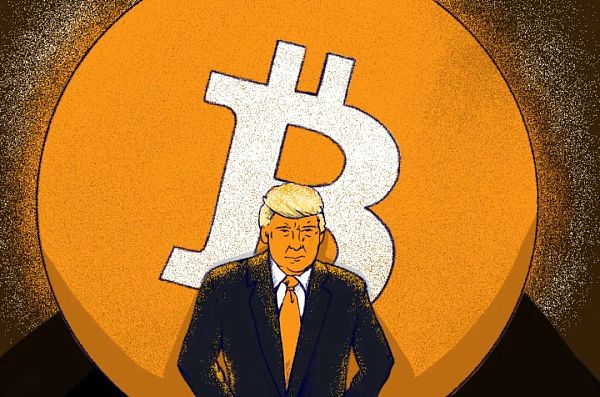
Trump's Term and Its Impact on Bitcoin: From Emergency Currency to Part of a Global Fiat Standard
TechFlow Selected TechFlow Selected
Trump's Term and Its Impact on Bitcoin: From Emergency Currency to Part of a Global Fiat Standard
The end always comes earlier than anyone expects.
 Navigating Web3 tides with focused insights
Author: MARK E. JEFTOVIC
Translation: TechFlow

From "Notgeld" to Bitcoinization in Less Than Two Decades
“Just because something is inevitable doesn’t mean it will happen immediately.” ——Douglas Casey
For a long time, anyone paying attention has known that central banks printing fiat money out of thin air, lending it at interest to nations, and injecting it into the economy would inevitably lead to such extreme wealth inequality that society would collapse.
This situation would escalate to mass uprisings threatening the elite class—the “Cantillonaires” at the top of society who benefit from this artificial system by capturing most of the value created through inflation.
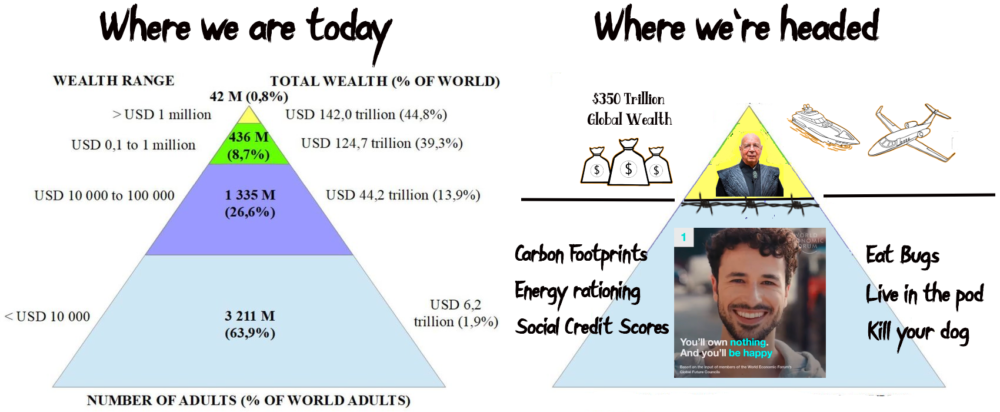
Class structure, now and future
One of my favorite quips is:
The end always comes sooner than everyone expects.
It’s been over three years since I released the Manifesto for Cryptocapitalism, where I laid out my core investment thesis—that the “Great Reset” has nothing to do with climate change or any UN Sustainable Development Goals; it's actually about debt:
"You will own nothing and be happy."
This message, echoed by global elites—from the World Economic Forum and the Davos crowd to institutions like the IMF, even extending to places as diverse as the Vatican and Hollywood—is consistent: you, the middle class, the working class, the masses—you will have to get used to a lower standard of living.
The real reason isn't climate change, nor even COVID—it’s debt.
The world has finally run out of money when facing recession threats or after previous monetary bubbles burst. For decades we’ve lived beyond our means, and now that era has come to an end. We’re here. We’ve arrived.
Governments have been overspending for decades, and now the bill has come due. The only ways to repay will involve inflation and austerity measures. This will resemble a planned dismantling of the entire middle class. The easiest method? Turn them into a fully dependent welfare class via endless lockdowns, universal basic income schemes, and mandatory health passports.
Yet at its core, the “Great Reset” is really a monetary reset—a way to restructure the global debt burden, transforming “money” into a technical lubricant for grand social engineering projects: most aimed at lowering living standards in developed nations while suppressing those in so-called third-world countries.
“Great Reset” and “Build Back Better” are attempts to lay the groundwork for the final and nearly inevitable transition from fiat currencies to central bank digital currencies (CBDCs). These digital currencies will almost certainly be integrated with social credit systems priced in carbon footprint quotas, serving as mechanisms to enforce compulsory austerity across heavily indebted global economies, resulting in a state of “monetary apartheid”.
My Mistake in the Manifesto
Aside from assuming events requiring decades would take only 18 months, there was one fundamental flaw in my analysis:
I first discovered Bitcoin during the 2013 Cyprus banking crisis, when people began realizing that “money in the bank” was no longer as safe as it once seemed.
Cypriots suffered a 10% “bail-in,” but worse, the bail-in clauses started appearing worldwide (to quote the manifesto again):
When the Eurogroup chairman Jeroen Dijsselbloem planned and executed the bail-in in March 2013, he told interviewers that Cyprus would serve as a template for future eurozone bank restructurings.
In April 2013, the idea of codifying bail-in frameworks into law emerged in my home country Canada, under Conservative Prime Minister Stephen Harper’s budget.
Even after Justin Trudeau’s Liberals took power in 2015, Canada retained the bail-in provisions in its budgets. By 2018, they formally became the Bank Recapitalization (Bail-In Conversion) Regulations.
In Australia, the 2017 Financial Sector Legislation Amendment (Crisis Resolution Powers and Other Measures) Act granted the Australian government authority to implement bail-ins.
The U.S. was among the early adopters of codified bail-ins: the 2010 Dodd-Frank Act, ostensibly passed to reform banking after the global financial crisis, included “statutory bail-in” clauses to restructure any troubled “systemically important” bank.
Indeed, new supranational bail-in laws came into effect in 2014, covering the entire G20.
During the Cyprus bail-in, Bitcoin last surged above $100. It hasn’t traded below triple digits since.
Nonetheless, I never imagined Bitcoin would become the world reserve currency, or even part of the post-post-Bretton Woods order we now inhabit.
Until 2022, I viewed Bitcoin merely as a global “Notgeld”—a German term from the hyperinflation era of the 1920s Weimar Republic meaning “emergency money.”
In Germany, individual towns began printing their own scrip; during Zimbabwe’s hyperinflation, people resorted to using prepaid phone and gas cards. Every hyperinflation event has its emergency currency—and until early 2022, that was also my global assumption about Bitcoin.
Two Events Changed My Mind:
1. The United States seized foreign asset reserves from two nations—regardless of who they were or what they had “done” to deserve such treatment.
2. During the Freedom Convoy, the Canadian government declared martial law and froze the bank accounts of truckers and any citizen supporting them.
The first permanently altered national strategies regarding how sovereign wealth should be allocated and held.
The second profoundly impacted individual citizens. It changed Robert F. Kennedy Jr.’s perspective. A year later, he opened his historic keynote at Bitcoin 2023 in Miami saying:
“When I saw what the Canadian government did to the truckers, I became a Bitcoin supporter.”

From that moment on, Bitcoin ceased being just “emergency money”—a temporary workaround during slow-motion global hyperinflation—and became an unavoidable component of the future monetary system.
The Next U.S. President Is Already Red-Pilled
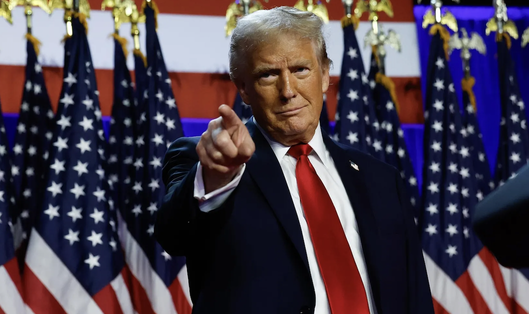
Regardless of your opinion on Donald Trump—whether you suffer from some form of Trump Derangement Syndrome (TDS), Type 1 = “Trump Derangement Syndrome,” Type 2 = “Trump Divinity Syndrome,” or whether you remain calm and objective—the fact is, a Trump-led Republican victory in the November 5 election is nearly certain.
Like RFK Jr., Trump is firmly pro-Bitcoin. He’s already been red-pilled (thanks to David Bailey and Bitcoin Magazine).
David Bailey: Organizing a Bitcoin mining roundtable with President Trump. It’s critically important that Trump understands this topic. If you’re a major miner and want to participate, contact me. Seating will be limited to around 20, and I expect meaningful contributions to the campaign.

Trump announced he “wants all future Bitcoin mined in America.” Of course, things aren’t quite that simple, but he reiterated this point at the Republican National Convention and affirmed the right to self-custody:
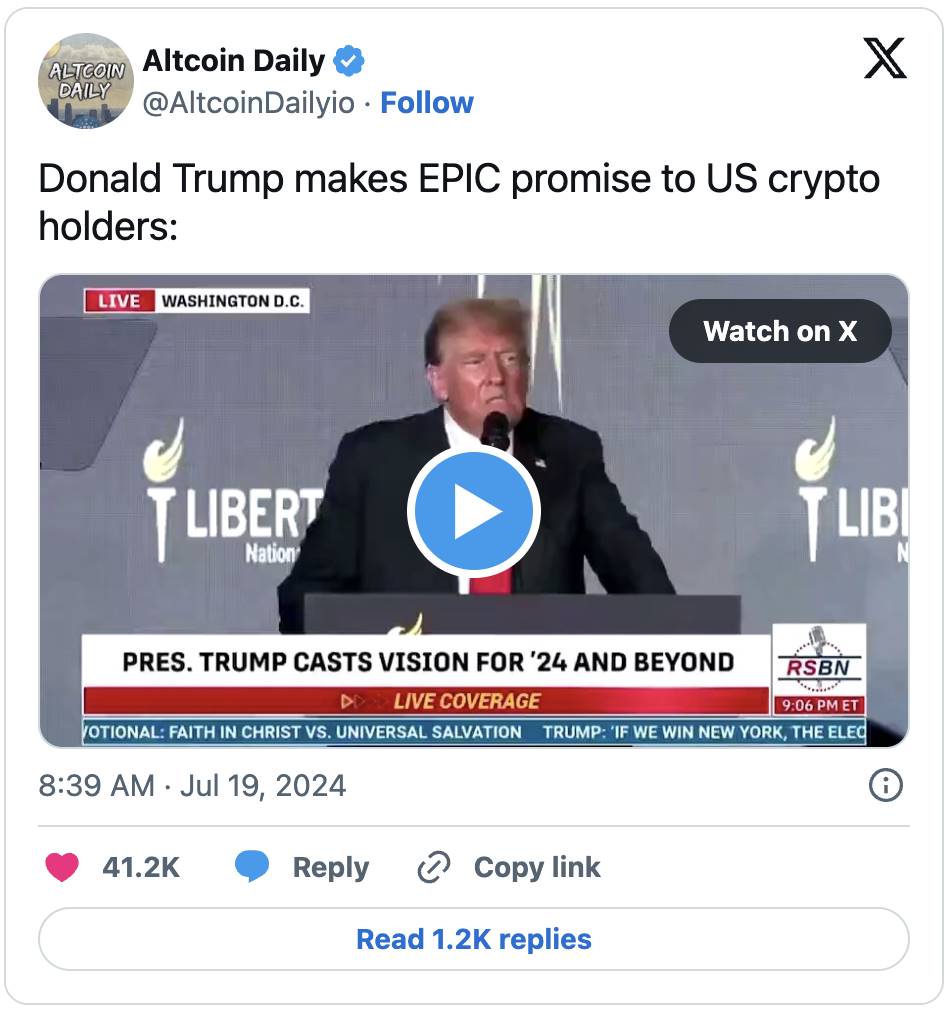
Major Announcement Expected July 27
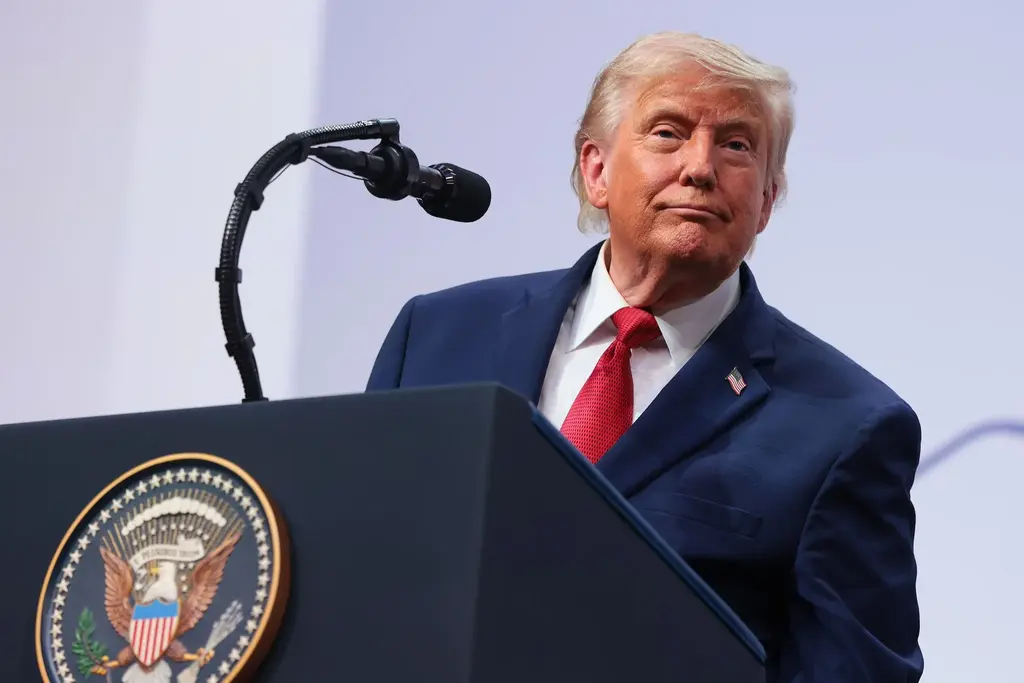
This year, Trump will deliver a keynote address at Bitcoin 2024 in Nashville, Tennessee. RFK Jr. will also attend. Both candidates are solidly pro-Bitcoin, though one is destined to become president (I expect RFK will take a position within the Trump administration in January 2025).
Insider information suggests that during that keynote, Trump is expected to announce his intention to create a strategic Bitcoin reserve for the U.S. Treasury.
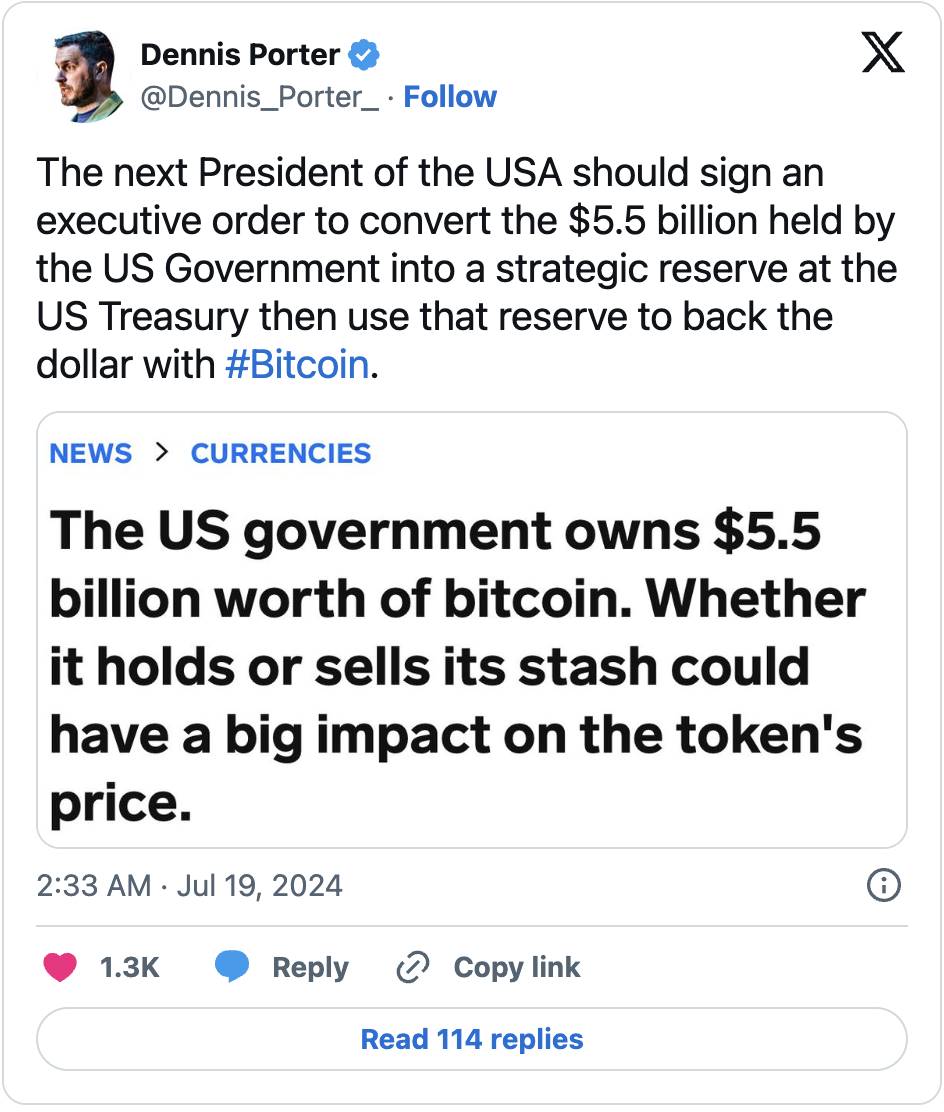
This could be accomplished with a simple signature on inauguration day, as the U.S. already holds approximately $5 billion in Bitcoin:
The next U.S. president should sign an executive order converting the $5.5 billion in Bitcoin held by the U.S. government into a strategic reserve for the U.S. Treasury, then use that reserve to back the dollar #Bitcoin.
The U.S. government holds $5.5 billion worth of Bitcoin. Whether it continues holding or sells these holdings could significantly impact Bitcoin’s price.
Once this happens, we enter a completely new phase. Bitcoin’s game theory will irreversibly shift on a global scale, incentivizing nations to follow suit.
Whatever the outcome, Bitcoin has crossed the Rubicon. It will endure—not as some temporary “emergency currency” to sidestep the collapse of global fiat standards, but now as part of the system itself.
Join TechFlow official community to stay tuned
Telegram:https://t.me/TechFlowDaily
X (Twitter):https://x.com/TechFlowPost
X (Twitter) EN:https://x.com/BlockFlow_News
 @StuntPope