Interview with Bitget CEO Gracy Chen: Team Management, Globalization Challenges, and Personal Life Insights
TechFlow Selected TechFlow Selected
Interview with Bitget CEO Gracy Chen: Team Management, Globalization Challenges, and Personal Life Insights
Gracy Chen's first open community AMA.
 Navigating Web3 tides with focused insights
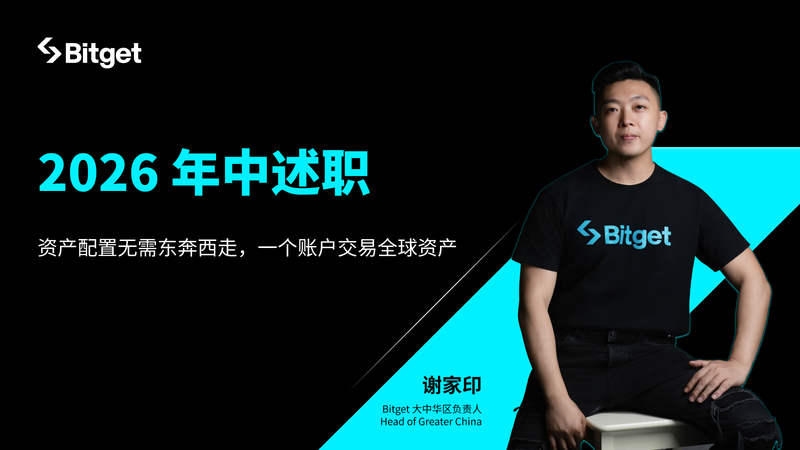
On the afternoon of July 17, Bitget CEO Gracy Chen hosted a fast-paced Q&A AMA session with community users. Gracy shared her work experience at Bitget, team management insights, personal life, and answered user questions regarding development plans, token listing reviews, BGB burns, and more. Below is the transcribed text of the AMA:
Q1: Since joining Bitget in 2022 and later being appointed CEO, have you encountered any particularly challenging or memorable issues during this period?
Gracy: I joined the company in April 2022 and was officially announced externally in June. Shortly after, we faced a series of events including the Luna/Terra collapse, Celsius bankruptcy, and the downfall of Three Arrows Capital. You could say my market entry timing was far from ideal. The most memorable experience was navigating the bear market, when the entire market declined and many well-known crypto institutions—including those mentioned—faced financial crises, massive layoffs, or even shut down entirely. This, to some extent, challenged my own beliefs.
However, going through these challenges together with the Bitget team during the bear market tested and strengthened us. Looking back at the past two years, this journey significantly enhanced our team’s cohesion.
Over the past two years, we’ve achieved solid results, which the market has clearly seen. We’ve attracted significant talent, growing our team from fewer than 500 people when I joined to 1,500 today. Meanwhile, during the bear market, we acquired high-quality assets at relatively low prices, expanding our business from CEX and decentralized wallets into investment media, incubators, and other upstream and downstream sectors of the industry chain—achieving substantial growth.
As for the trickiest issue, it would be our global expansion. We evolved from a small team based in East Asia into a global company serving over 100 countries and regions and 25 million users. These users have vastly different needs across regions—not just involving multilingual communication, but also differing product feature expectations and token preferences shaped by diverse cultural backgrounds. A vivid example: just recently, I held a meeting with regional leaders. Over two hours, more than ten regional managers presented, each with distinct English accents—from the Middle East, Southeast Asia, and various European countries. It struck me as fascinating. Two years ago, almost all attendees were Chinese-speaking; now, our meetings bring together diverse English accents from around the world—reflecting our progress and achievements in globalization.
Q2: Recently, multiple media reports highlighted Bitget’s strong performance in fund inflows and website traffic. Can you share how you manage and motivate your team, as well as your management philosophy?
Gracy: Yes, I’ve shared this on Twitter too, and multiple data sources confirm our strong growth.
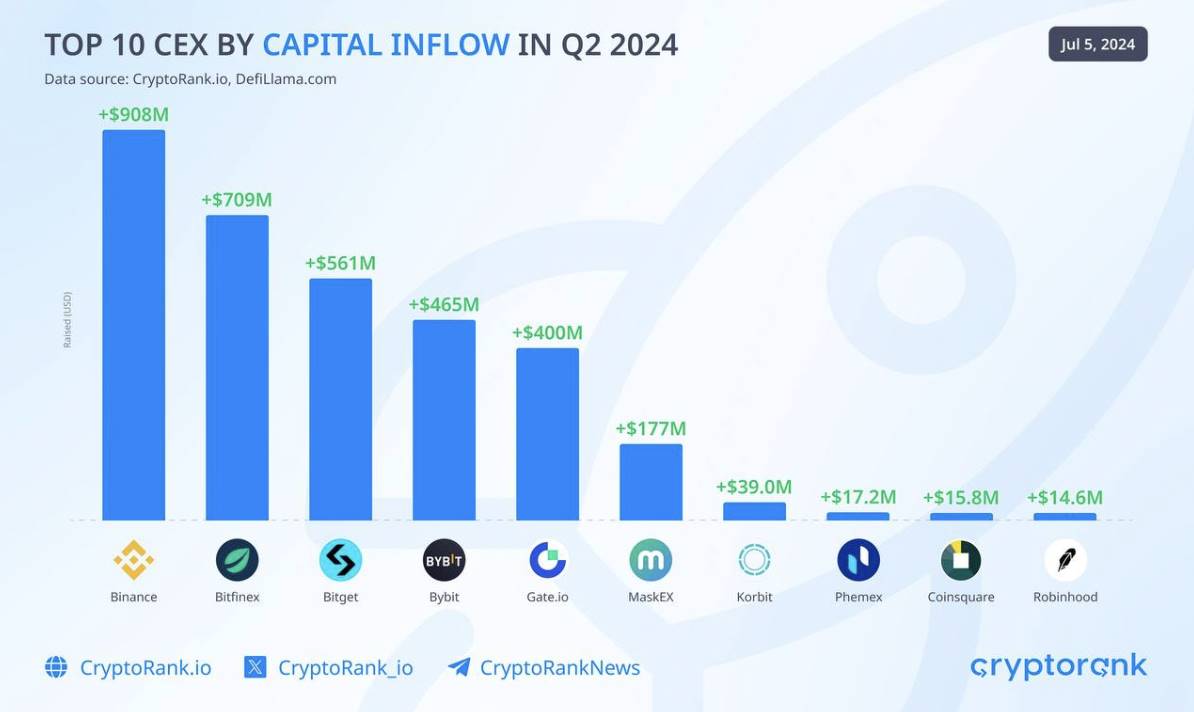
In terms of team management and motivation, we adopt an efficient, results-driven approach.
We’ve adopted best practices from large companies like Huawei and ByteDance, implementing their OKR system to strengthen management and rolling it out globally. Our systems also support cross-time-zone collaboration. We don’t encourage upward management or formalism—for example, presentations don’t require elaborate PowerPoint decks; if one page can explain it clearly, that’s sufficient.
Performance-wise, we’re results-oriented and provide high-level incentives based on achievements. Equally important is trust. Much of our success stems from deep trust in our regional teams. Despite diverse linguistic and cultural backgrounds, these colleagues are deeply embedded in their markets, understand local demands, and have built strong relationships with local influencers and project teams. Therefore, we delegate decision-making authority to local teams on many regional matters, including marketing strategies. At the same time, they must take responsibility for their decisions. For example, they can decide whether to sponsor a project, but must also evaluate its return on investment.
In short, we track real outcomes using data and OKRs, while simultaneously empowering and trusting our teams. This culture helps attract and retain talent aligned with our values, enabling faster and more effective decision-making and management.
Another key factor was making correct strategic decisions during the bear market: while others downsized, we hired aggressively and acquired assets. We believed this was a marathon, not a sprint. In a marathon, maintaining the right pace is crucial—not just focusing on short-term gains.
Those who stayed in the industry during the bear market are true believers and genuine builders—aligning perfectly with our culture. During downturns, we were able to acquire top-tier talent, premium assets, and advanced technology at lower costs, widening our lead over competitors.
Now that the bull market has arrived, we’re seeing the fruits of our labor—and we’re very proud. This validates our belief: the bear market is the golden period for growth and building.
Q3: What kind of person are you in your daily life? What do you enjoy doing?
Gracy: I’d love to show everyone my authentic self. This is exactly how I look right now—and I think this bunny is super cute. It’s part of our summer merchandise, and five lucky viewers will receive one. Let me also share some casual photos—more of my everyday side.

I probably use all my brainpower at work—I’m actually quite careless in daily life. Most of my free time is spent with my son, though my “clumsiness” often gets him into trouble. For instance, on a recent picnic, I bought a cake from a gas station that wasn’t very hygienic—we both had stomach issues for days afterward.

I also enjoy small gatherings with friends. I’m quite extroverted and love interacting with people. I have many friends working in other fields, and talking with them broadens my perspective and worldview. But when I hang out with friends, they often call me the “funny girl.” Recently, during a get-together, they kept pushing me to date again and asked what I’m looking for. I said my standards aren’t high—just someone handsome, financially stable, and treats me well. Then they asked if I’ve met anyone matching that description lately. The intersection of those three traits might only be my gay bestie 😂
Everyone knows the crypto industry is intense, but I believe the busier we are, the more important it is to truly live—to draw energy from life and feed it back into our work.

I also love traveling—I average over ten countries a year for business trips. While on the road, I try to squeeze in a little city walk beyond work. I really look forward to having a trip that isn’t for business—a pure vacation—but such opportunities have been rare lately.
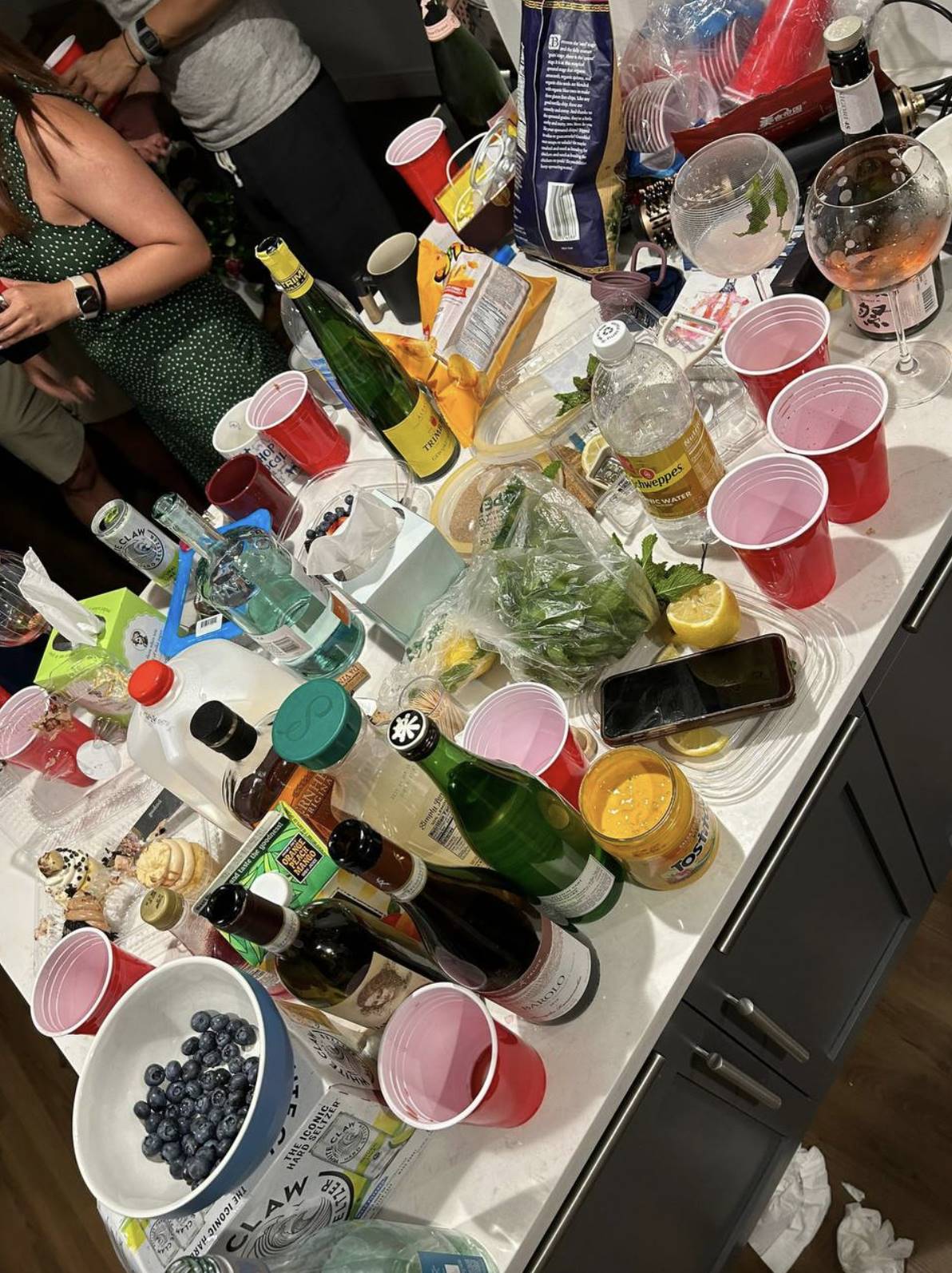

I also enjoy drinking and socializing with friends—please don’t spread this photo too far. This was a farewell party I hosted at home when I moved from one city to another, saying goodbye to friends from my previous city. We had such a great time. I’ve never shared this photo before, not even on Twitter—only people in this group know about it. So please keep it within the group.
Q4: How do you view the low proportion of female leaders in the crypto space?
Gracy: Whether in Web3 founding teams or general Web3 companies, women remain underrepresented in executive leadership. This is even more pronounced in venture capital. I recently saw a comment stating I’m the only female CEO among the top ten global exchanges—that made me realize how rare female leaders are across nearly all industries.
I’m deeply concerned about women’s career development, especially the disadvantages women face in male-dominated fields. We need more female leaders. Society often holds biases—for example, frequently asking female leaders how they balance work and family, implying they should prioritize family. These biases come not only from society but can become internalized constraints. Especially in fintech, women are not only few in number but often lack confidence. Therefore, we must first break these internal barriers and build self-confidence. As the saying goes: an egg broken from the outside is food; broken from the inside, it’s life. I hope to help advocate so women can break their own chains and grow more confident—starting with believing we can absolutely do it.
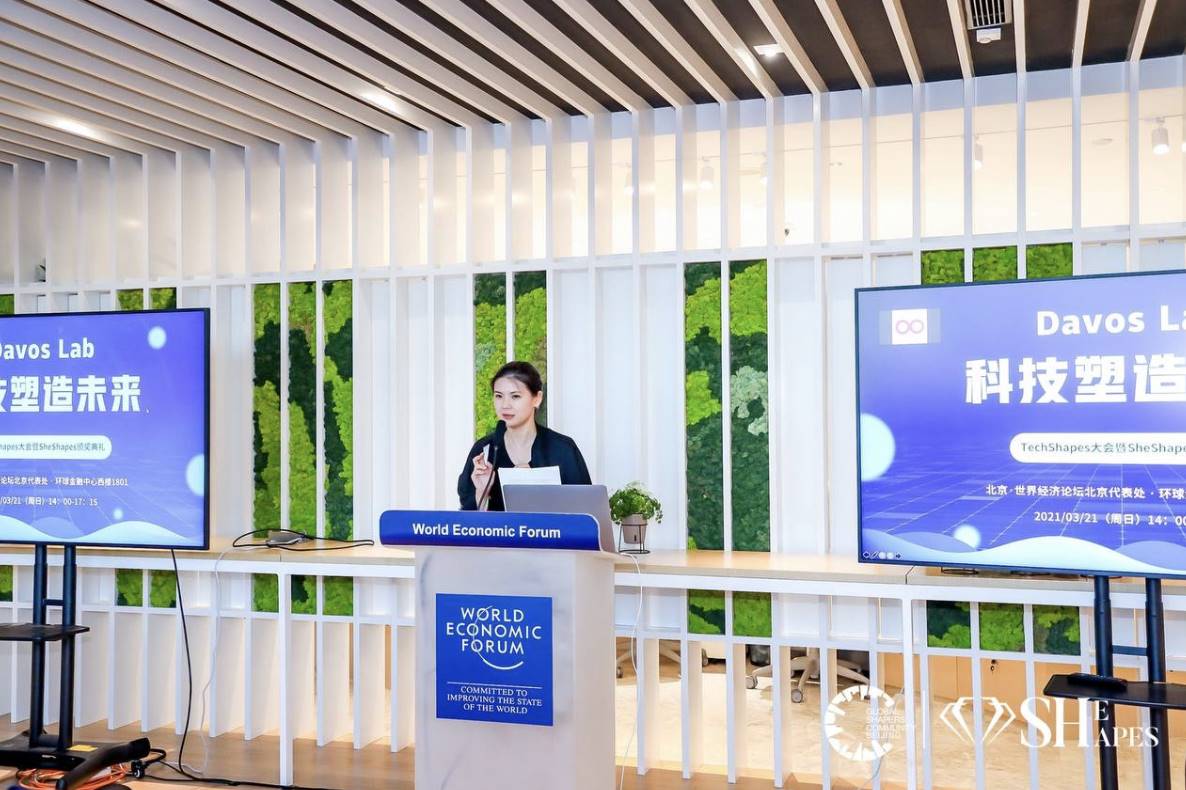
That’s why I’ve consistently worked to drive change—through initiatives like founding nonprofit organizations. Our Bitget project “Blockchain for Her” supports women’s development in crypto. We established a small fund to back female founders and teams, and selected top global female leaders as mentors to offer collaborative support. Additionally, in 2020, I founded “SheShapes” under the World Economic Forum—an ongoing nonprofit providing career counseling, community support, and mentorship planning for women.
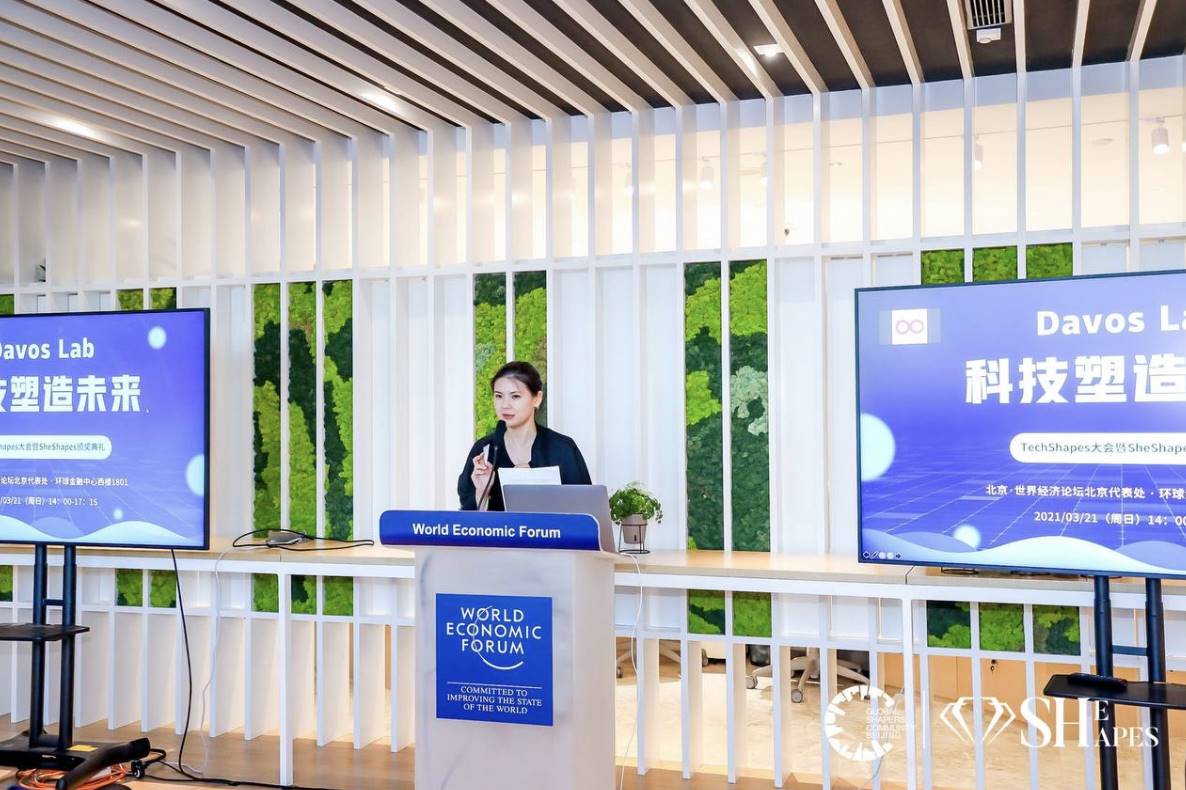
This was my speech when I launched the SheShapes nonprofit in 2020. I’ve long cared about gender inequality in the workplace.
Of course, these views stem partly from personal experience. Early in my entrepreneurial journey, a male investor explicitly said he wouldn’t invest in female founders—especially married women without children—and I was in that situation then. That experience deeply revealed societal bias against female executives and founders.
Today, I’m in a position to take real action and create positive impact—which makes me happy. I also hope our industry welcomes more outstanding women who will contribute to its sustainable growth.
Q5: Recently, many viral “meme coins” have gained huge traction. Will Bitget consider listing these tokens?
Gracy: Yes, we’re closely monitoring them. In last week’s team meeting, I mentioned adding clauses to contracts specifying evaluation periods and delisting criteria, and establishing transfer rules to make delisting more standardized, systematic, and transparent.
Q6: For future project listings, will the platform prioritize project popularity or project quality?
Gracy: We care about both—it’s hard to choose just one, as they’re interconnected.
I recorded a video in late June in Hollywood for the Killer Whales show—the industry’s most influential reality series, Season 1 of which aired on Apple TV and Amazon Prime. For Season 2, we created a vlog documenting behind-the-scenes moments, and in the final two-and-a-half minutes, I detailed the metrics we evaluate when listing tokens (that’s the highlight).
Let me find and share the video in the group—it’s in English, but there’s a Chinese version on our official WeChat channel.
English: https://youtu.be/dIZlleTOkB8?si=VCKKeo2wWlochgom
Chinese: Search “Bitget Mandarin” on WeChat Video Channel
Q7: Bitget is celebrating its sixth anniversary this year. Will there be a major celebration event?
Gracy: Last year, we held a grand conference to celebrate our fifth anniversary—Bitget EmpowerX Summit 2023.
But honestly, hosting such a large-scale event this year feels difficult. Instead, we’re leaning toward smaller activities—like offline meetups in Mandarin-speaking regions. Just now, the event team briefed me: we’ll likely host at least five or six side events, and I plan to attend some. During Singapore’s Token2049, I’ll deliver a keynote speech at the main venue—last year, I shared the stage with other exchange leaders, which was quite fun.
Q8: What are Bitget’s key focuses and strategic goals for the second half of the year?
Gracy: In my public letter at the start of 2024, I outlined Bitget’s three key priorities for the year: 1) Compliance, 2) Emerging Markets, 3) Web3.
Six months in, we’ve made solid progress in all three areas. Take Web3, for example: our non-custodial Web3 wallet, Bitget Wallet, recently completed the BWB launchpad and token listing, and user growth has been rapid.
Beyond these three strategic pillars, we have bigger dreams and expectations for Bitget’s role in bringing crypto into the mainstream. Over the longer term, we’ll focus on:
1. Strengthening the Bitget ecosystem: Beyond the centralized exchange, Bitget is enriching its ecosystem through investments. After launching the Bitget Web3 Fund and EmpowerX Fund last year, ecosystem investment will remain a long-term strategy.
2. Bridging traditional finance and crypto: With spot crypto ETFs approved in major markets like the U.S. and Hong Kong, more institutional and retail investors are expected to include crypto in their portfolios. We’re committed to collaborating with industry partners to advance this trend and lower the barrier to entry into crypto.
3. Bringing crypto assets into daily life: At the end of 2023, we launched the Bitget Card—a crypto-backed credit card usable anywhere Visa is accepted. This innovation helps integrate crypto into everyday life, beyond just investment. We’ll develop more services to support this integration. (Currently available via limited invitation.)
One additional point—listing strategy. Listing is something every exchange should excel at, so it wasn’t included in our official strategy. But reflecting personally, I feel we previously underinvested in spot trading. Since strengthening efforts last year, we expect significant breakthroughs this year in listing strategy, spot growth, and MM/liquidity.
Q9: Does BGB have a burn mechanism? When will it be activated?
Gracy: This is still under discussion. Currently, BGB moves with the market and serves as a key medium in processes like Launchpad and Launchpool. (Let me secretly tell you—we’ll soon launch another Launchpool.) As Bitget’s business continues to thrive, I believe BGB will grow alongside it.
User Interactions:
How do you plan to further diversify Bitget’s services and products to meet the evolving needs of the crypto community?
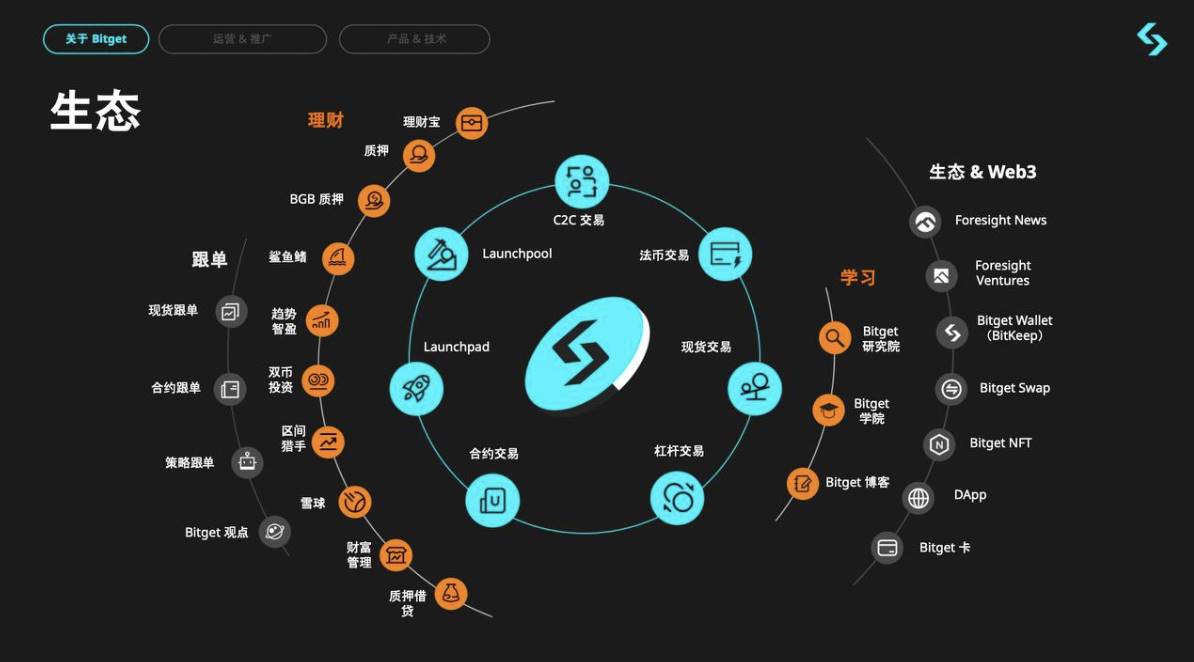
Gracy: Our product lineup is already quite rich—from earn products to learn platforms, our ecosystem is fairly comprehensive.
I think the real challenge lies in perfecting each individual product—such as identifying the most promising and interesting spot assets, or finding reliable, high-yield partners for our wealth management offerings.
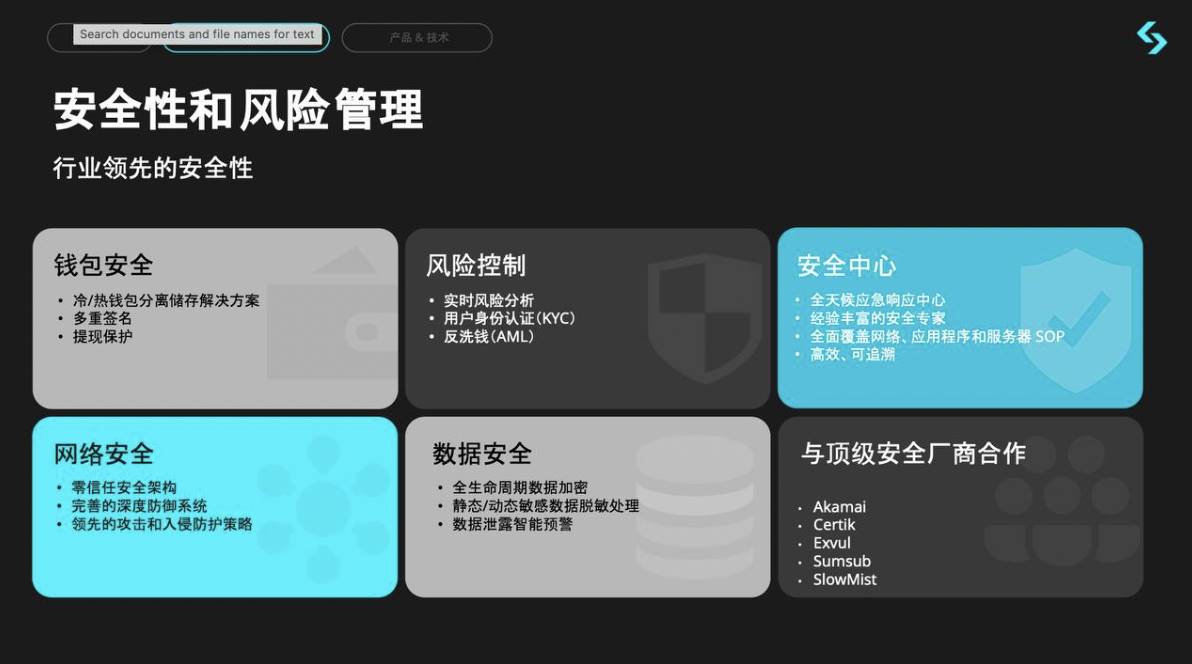
What is your security strategy? How do you ensure the safety and protection of user assets on the Bitget platform?
Gracy: I happen to have a slide that explains our security strategy quite thoroughly—please take a close look. Also, following recent incidents at peer exchanges, we’ve conducted extensive security audits and added new procedures to safeguard funds.
What is Bitget’s view on the TON ecosystem?
Gracy: The TON ecosystem is indeed a key partner for us. I’ve communicated directly with the CEO and COO of the TON Foundation.
We continue to monitor TON closely: TON’s TVL has grown rapidly, rising from $100 million in April to $600 million today—an increase of five times in just two months. This growth is largely driven by liquid staking projects like Tonstaker, new assets such as NOT listed on StonFi and DeDust, and especially the launch of TON-USDT following Tether’s partnership, all positively impacting TVL. According to Tether’s transparency dashboard, USDT issuance on the TON blockchain has reached approximately $580 million, making TON the sixth-largest issuer of USDT, behind Tron, Ethereum, Solana, Avalanche, and Omni.
The total number of TON addresses is also growing rapidly, increasing from 21,464,799 to 34,466,137 in just one month, with sustained growth in activity. Delphi Digital noted that fueled by Telegram’s 900 million user base, the TON ecosystem has quietly expanded, now surpassing Ethereum in daily active addresses. Popular projects like NOT and CATIZEN have drawn massive participation. Notably, CATIZEN has attracted 17 million players in just two months since launch. Today, the TON ecosystem benefits from a virtuous cycle: user growth drives higher TVL, which boosts the token price—all reinforcing each other positively.
Which is the priority—BGB or BWB?
Gracy: Both are important. My primary focus remains on Bitget, which empowers BGB. Bitget Wallet has its own independent CEO and COO. Though we frequently collaborate, you can think of them as separate teams—after all, operating a centralized exchange and a decentralized wallet are fundamentally different.
In the past one to two years, Bitget has continuously faced FUD yet remained standing, responding with actions. Is this resilience and demeanor inherent to the company, or cultivated over time?
Gracy: Every exchange faces FUD. I believe as long as we stay focused on doing our job well, FUD will naturally dissolve.
Will Bitget and Bitget Wallet co-develop projects in the future? Do you have plans to build a public chain?
Gracy: We have invested in and partnered on public chains together.
Join TechFlow official community to stay tuned
Telegram:https://t.me/TechFlowDaily
X (Twitter):https://x.com/TechFlowPost
X (Twitter) EN:https://x.com/BlockFlow_News