TON Developer Conference Recap: Exploring the Innovation Journey from Web2 to Web3
TechFlow Selected TechFlow Selected
TON Developer Conference Recap: Exploring the Innovation Journey from Web2 to Web3
Attendees delved into the innovative technologies and product forms within the Telegram TON ecosystem, collectively outlining an exciting vision for the future.
 Navigating Web3 tides with focused insights
Dear members of the TON community, we have just successfully concluded the spectacular 2024 TON Shenzhen Developer Conference. This landmark event was meticulously organized by the TON Foundation and proudly supported by leading institutions and communities including TownSquare Labs, TON xFans, OpenBuild, Techub News, MetaEra, Kenetic Capital, Shenda Blockchain Association, and the Shenzhen Blockchain Technology Application Association. At this exhilarating gathering, participants delved into innovative technologies and product paradigms within the Telegram & TON ecosystem, collectively envisioning an inspiring future.
We were honored to host distinguished experts from across the TON ecosystem who delivered insightful presentations.
TON Foundation — Vivi
First, Vivi opened the keynote session. Vivi highlighted that the TON ecosystem is experiencing robust growth, attracting a diverse range of projects in gaming, e-commerce, and lifestyle services. These applications span different stages—from Web2 to Web2.5 and fully on-chain Web3 experiences. Recently, several games with user bases reaching hundreds of millions or tens of millions have emerged, demonstrating strong user engagement and retention.
These applications not only establish sustainable business models centered around user needs and monetization but are also actively exploring advertising-based revenue streams. Notably, they primarily attract non-Web3 users, underscoring how the “fat app + thin protocol” model—placing users at its core—is becoming a market focal point.
By delivering familiar gaming experiences and seamless interfaces, Telegram and TON are lowering the barrier for mainstream users to transition into blockchain projects, thereby accelerating crypto mass adoption. This strategy not only speeds up traditional Web2 users’ acceptance of blockchain technology but also injects fresh vitality into the TON ecosystem, signaling deeper integration and broader application of blockchain across the internet industry.
TON is also steadily expanding its influence in the crypto space, particularly in the stablecoin market. Recent data shows that the authorized issuance of USDT on the TON chain has increased to approximately $580 million, marking a significant milestone that positions TON as the sixth-largest blockchain platform globally by USDT issuance volume. Among all networks supporting USDT, TON is currently the fastest-growing—a trend reflecting both market trust and demand for the platform, as well as the maturity of its infrastructure and growing user base.
TownSquare Labs: "Universal Account: Achieving Chain Abstraction in the TON Ecosystem"
Next, Maxwell from TownSquare Labs presented a solution for achieving chain abstraction within the TON ecosystem. As an official partner of the TON Foundation, TownSquare Labs is dedicated to advancing TON’s technical ecosystem across the Asia-Pacific region.
Chain abstraction fundamentally addresses fragmentation and deteriorating user experience caused by the current multi-chain and modular landscape in Web3.
Looking back at IT history, major technological adoptions have often been driven by innovations in user interface. In 1973, Xerox PARC introduced the graphical user interface (GUI), enabling WYSIWYG ("What You See Is What You Get") interactions in operating systems and bringing personal computers into homes worldwide. In 1993, the release of the first web browser, Mosaic, allowed ordinary computer users to access the World Wide Web, catalyzing the internet revolution. In 2007, Apple launched the iPhone, whose intuitive touch interface ushered in the mobile internet era. Each breakthrough succeeded by abstracting away complex underlying technologies behind friendly interfaces, enabling widespread adoption of new technologies.
Maxwell believes the Web3 ecosystem is undergoing a narrative shift—from “Fat Protocol” to “Fat Account.” The traditional Fat Protocol narrative emphasizes value capture at the base layer, incentivizing VCs and builders to invest heavily in redundant infrastructure development, which leads to fragmented liquidity and poor user experience. In contrast, the Fat Account narrative centers on users, offering solutions such as customizable fees, social recovery, permission management, liquidity aggregation, fast confirmation, and enhanced privacy protection.
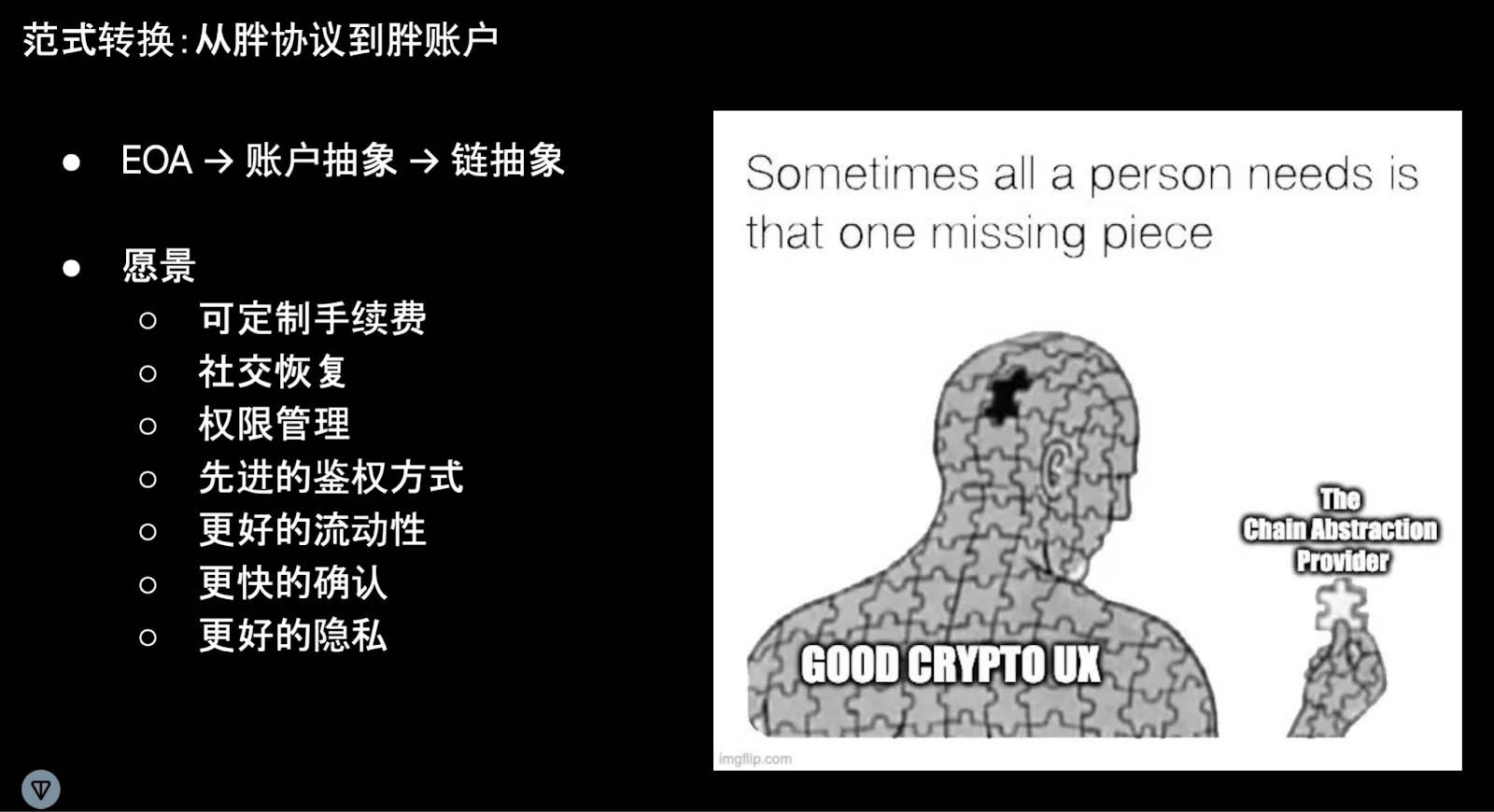
The convergence of Telegram and TON represents Web3’s “iPhone moment.” With Telegram’s nine-hundred-million-strong user base, TON was designed from inception for mass adoption. Telegram natively integrates custodial wallets (@Wallet) and self-custodial wallets (TON Space), allowing users to seamlessly access DeFi, GameFi, and SocialFi. Ecosystem participants can earn revenue shares through incentive programs via ads, content creation, and physical goods transactions. Due to its privacy-first design and open platform architecture, Telegram also serves as a gateway for many public chains beyond TON, making it ideally suited to bridge the UX gap between Web2 and Web3.
Currently, TON natively supports account abstraction features like feeless transactions and custom fee tokens—significantly enhancing user experience. However, these capabilities alone are insufficient to resolve existing fragmentation and usability challenges. TownSquare Labs has therefore introduced Universal Account, a chain abstraction solution for the TON ecosystem that brings major upgrades including cross-chain accounts, universal gas abstraction, and unified liquidity aggregation.
Imagine users being able to control accounts on other blockchains simply by holding their private key from Telegram's native self-custodial wallet—paying transaction fees in stablecoins or custom tokens, having third parties cover fees, and accessing liquidity across all chains.
The future of mass Web3 adoption lies in users being completely unaware of complex underlying infrastructures—just as today’s Web2 users don’t need to know which cloud provider hosts the apps they use or what tech stack powers them. To deliver superior user experiences, we must build and integrate a suite of infrastructure layers including application, authorization, matching, and settlement layers. This future is precisely the direction TownSquare Labs and many Web3 pioneers are striving toward.
Kenetic Capital: "Thoughts on TON Cross-Chain Bridge Architecture"
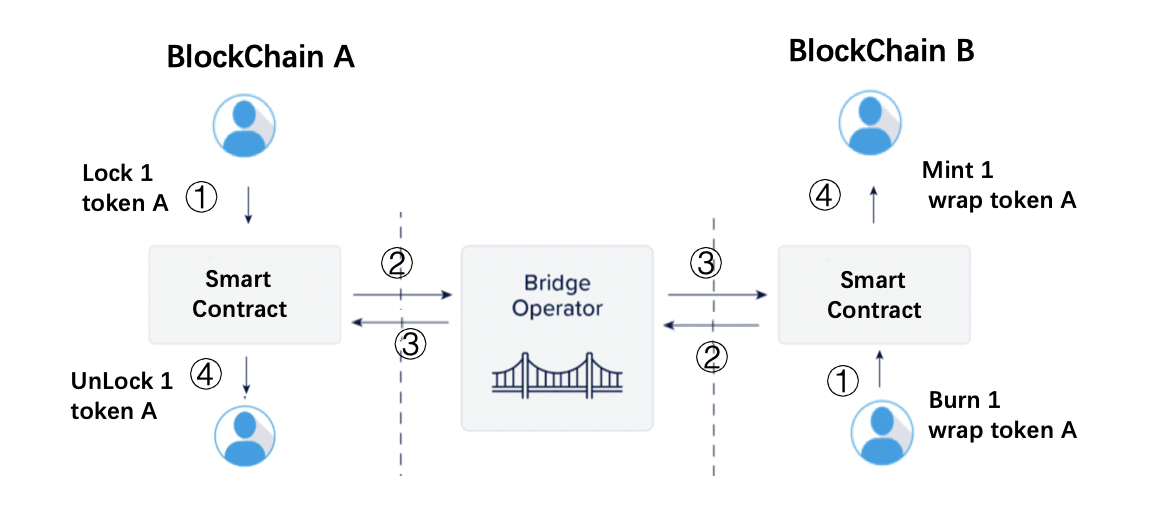
Then, Liang, co-founder of TON xFans and Chief Researcher at Kenetic Capital, summarized three approaches to implementing cross-chain bridges: atomic swaps, lock-and-mint/unlock-and-burn, and liquidity swapping. Among these, lock-and-mint is the most commonly adopted method among Layer2 projects.
Liang further outlined the core architecture and relevant smart contract code for bridging TON with EVM-compatible chains. Key components include bridge contracts on both the EVM and TVM sides, along with bridge services connecting them.
Liang also introduced Atlas Protocol—an L2 scaling solution for TON backed by Kenetic Capital. Its testnet and cross-chain bridge service are now live, with mainnet launch expected in the second half of the year, enabling developers to seamlessly migrate Ethereum dApps to the TON ecosystem.
Junlv: "Reflections on Delegated Investment in the TON Ecosystem"
Following that, speaker Jun introduced and explored the concept of “Delegated Investment in the TON Ecosystem.” During his talk, Jun conducted an in-depth comparison between traditional funds and crypto-based delegated investment funds, analyzed user characteristics across different ecosystems, and proposed an innovative idea of creating ETF-like mini-funds within the TON ecosystem.
Jun detailed the significant differences between traditional funds and crypto delegated funds in terms of management models, transparency, liquidity, and risk controls. He pointed out that traditional funds typically involve high management fees and low transparency, whereas crypto delegated funds leverage blockchain technology to achieve greater transparency, lower operational costs, and higher liquidity.
Jun analyzed distinct user profiles across Telegram, Solana, and Ethereum ecosystems. Telegram users lean toward social interaction and instant messaging, prioritizing privacy and security; Solana users emphasize high performance and low transaction fees; Ethereum users focus primarily on decentralized applications (DApps) and smart contracts. These distinctions offer valuable insights for designing investment products tailored to the TON ecosystem.
Building on this analysis, Jun referenced BlackRock’s approach to BTC spot ETFs, highlighting two key strategies: strict regulatory compliance ensuring fund safety and legitimacy, and flexible investment and risk management practices delivering stable returns with low volatility. These proven strategies provide meaningful lessons for fund design in the TON ecosystem.
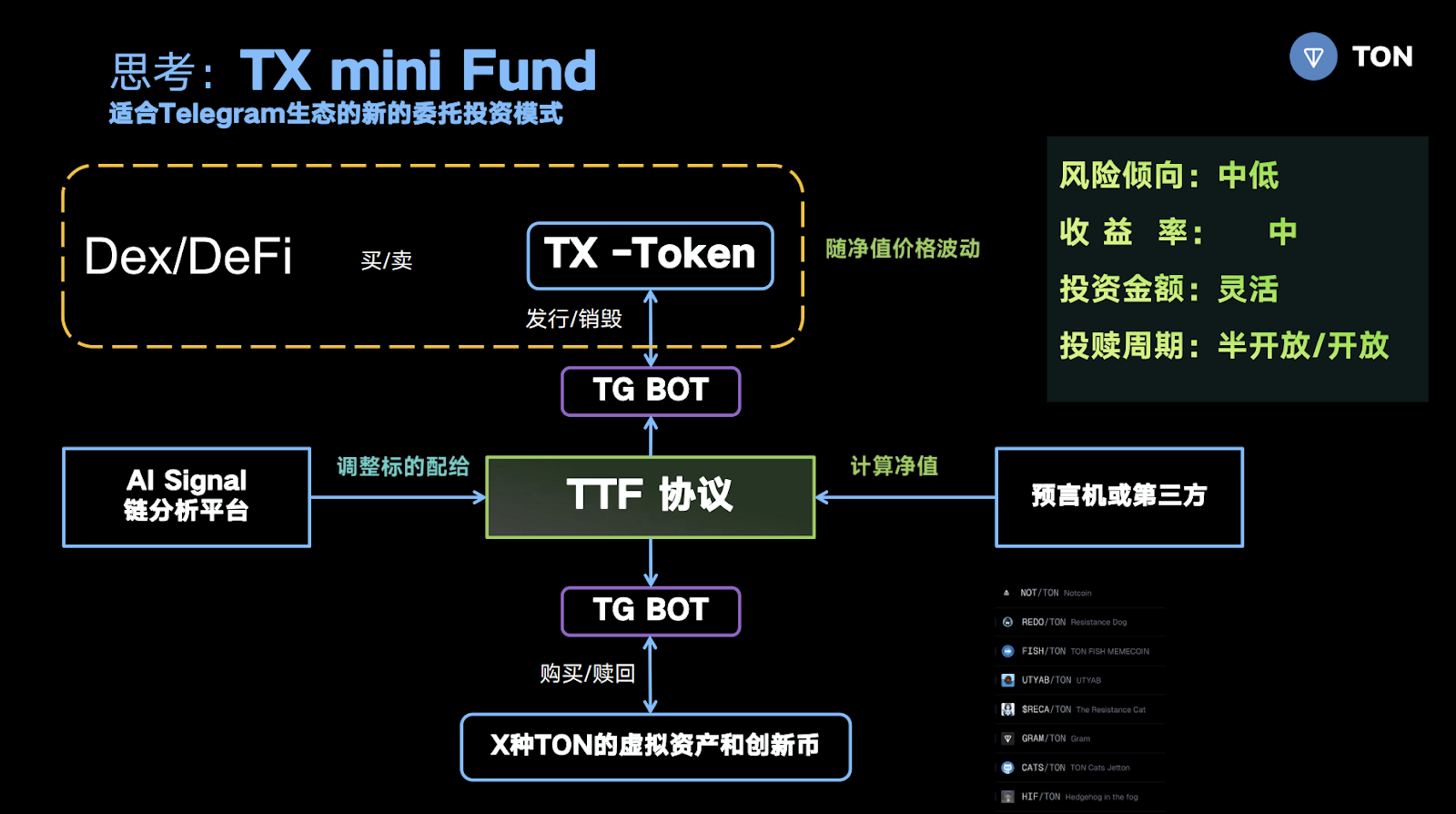
Finally, Jun proposed a product concept: multi-asset spot ETF mini-funds within the TON ecosystem. By diversifying investments and aligning with TON’s low-risk, medium-return profile and flexible entry-exit mechanisms, these funds would offer investors more accessible and secure options. This innovative idea received significant attention, and Jun expressed eagerness to collaborate with stakeholders to realize this model and bring renewed momentum to the TON ecosystem.
TONARK: "Technical Pathways and Use Cases for ZK Oracles on TON"
Lastly, Chris, co-founder of TONark, discussed their technical pathway for implementing ZK Oracles on TON. Chris explained that ZK Oracles can not only replace traditional oracles in price feeding but, thanks to zero-knowledge proofs, ensure data accuracy and prevent malicious attacks that could trigger erroneous liquidations.
ZK Oracles also effectively mitigate KYC information leakage risks. Through zk-computation, sensitive data remains hidden while still enabling decentralized verification—all performed locally without uploading any data to servers. This drastically reduces the risk of KYC data exposure, encouraging more users to undergo KYC procedures.
Additionally, the TONark team has developed specific designs for the rapidly growing TON gaming sector. Given the tamper-proof nature of zk-tech, cheating via hacks becomes impossible. ZK Oracles can verify the authenticity of in-game events and social interactions without revealing sensitive data, helping project teams analyze user behavior. In compute-intensive scenarios, off-chain computation ensures speed while reducing costs.
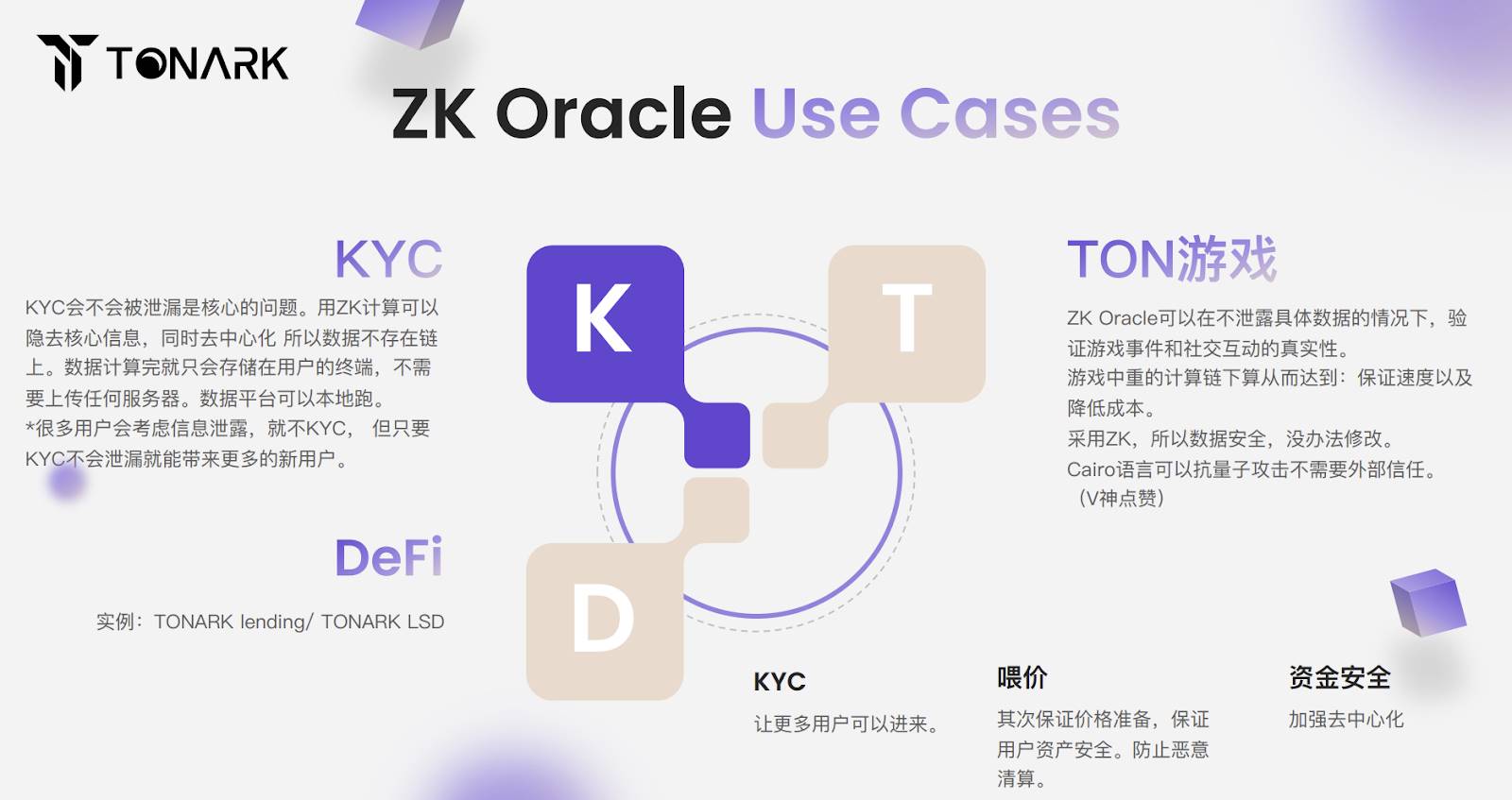
Chris added that the ZK Oracle will be first deployed in TONark’s upcoming decentralized lending protocol on TON, set to launch publicly in the near future.
This summit attracted numerous developers, entrepreneurs, and investors from the Web3 space, with enthusiasm far exceeding expectations. TON has carved out a unique path, emerging as a shining new star in the Web3 world. The packed auditorium vividly reflected the vibrant energy TON is injecting into the blockchain industry. TON’s vision is no longer a distant dream—it is a rapidly maturing ecosystem and an ever-expanding technological frontier.
Our heartfelt thanks go to every participant for your active engagement. Let us move forward together, fueled by passion and shared ideals, to co-create a brilliant future for Telegram & TON!
Join TechFlow official community to stay tuned
Telegram:https://t.me/TechFlowDaily
X (Twitter):https://x.com/TechFlowPost
X (Twitter) EN:https://x.com/BlockFlow_News
 @0x1331