








BTC has been consolidating between $60K and $70K for four months, but why isn't this the top of the cycle?
TechFlow Selected TechFlow Selected
BTC has been consolidating between $60K and $70K for four months, but why isn't this the top of the cycle?
Although it's hard to pinpoint exactly when it will rise again, this is unlikely to be the top of the cycle.
 Navigating Web3 tides with focused insights
Author: JAY
Translation: TechFlow

Bitcoin has been hovering in the $60,000–$70,000 range for nearly four months.
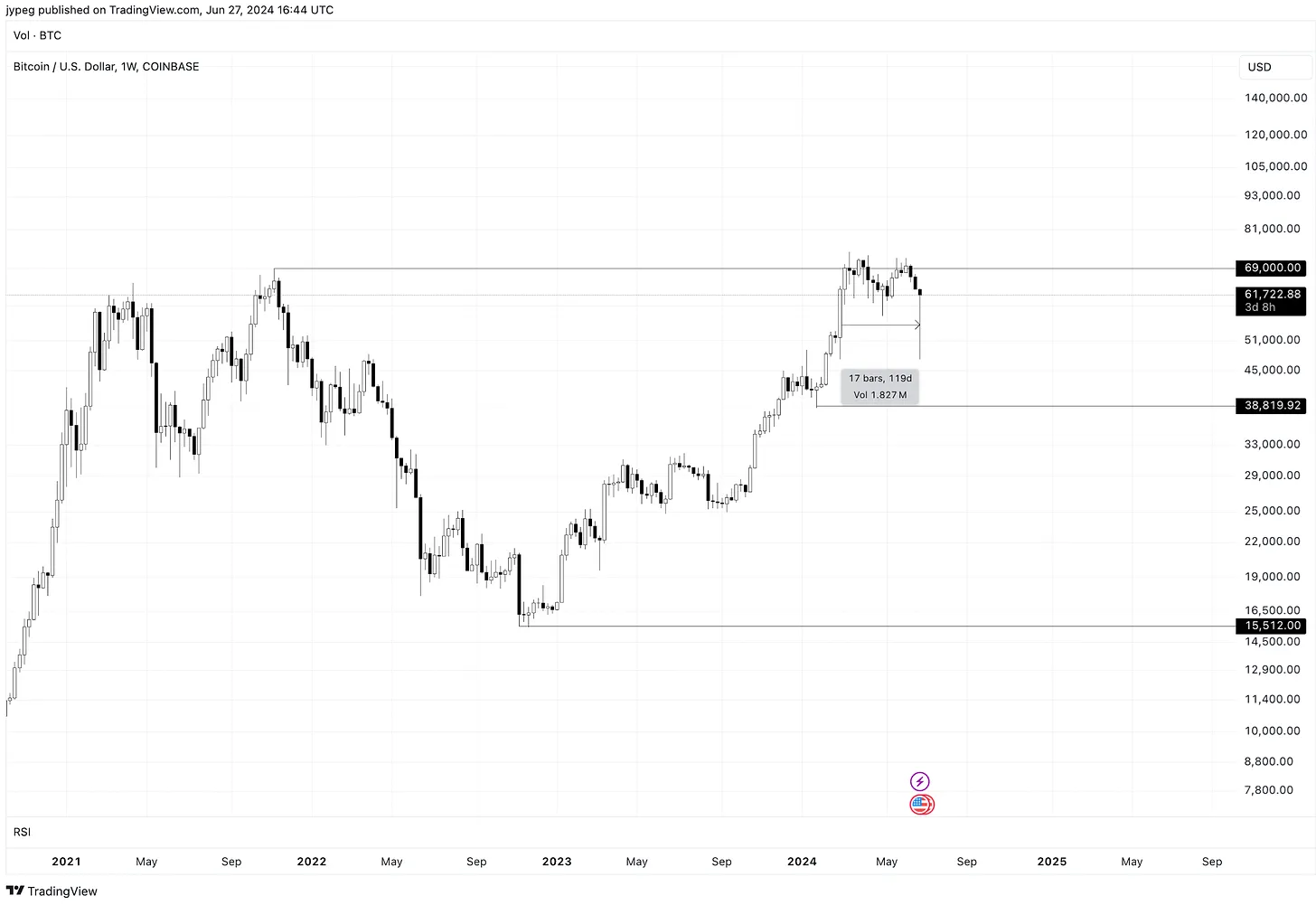
While this is frustrating, it's actually not uncommon. Typically after a halving event, we see the market enter a period of stagnation. If you look back at the 2016 and 2020 halving cycles, similar consolidation phases occurred before entering what’s known as the “banana zone”—the final parabolic surge phase.
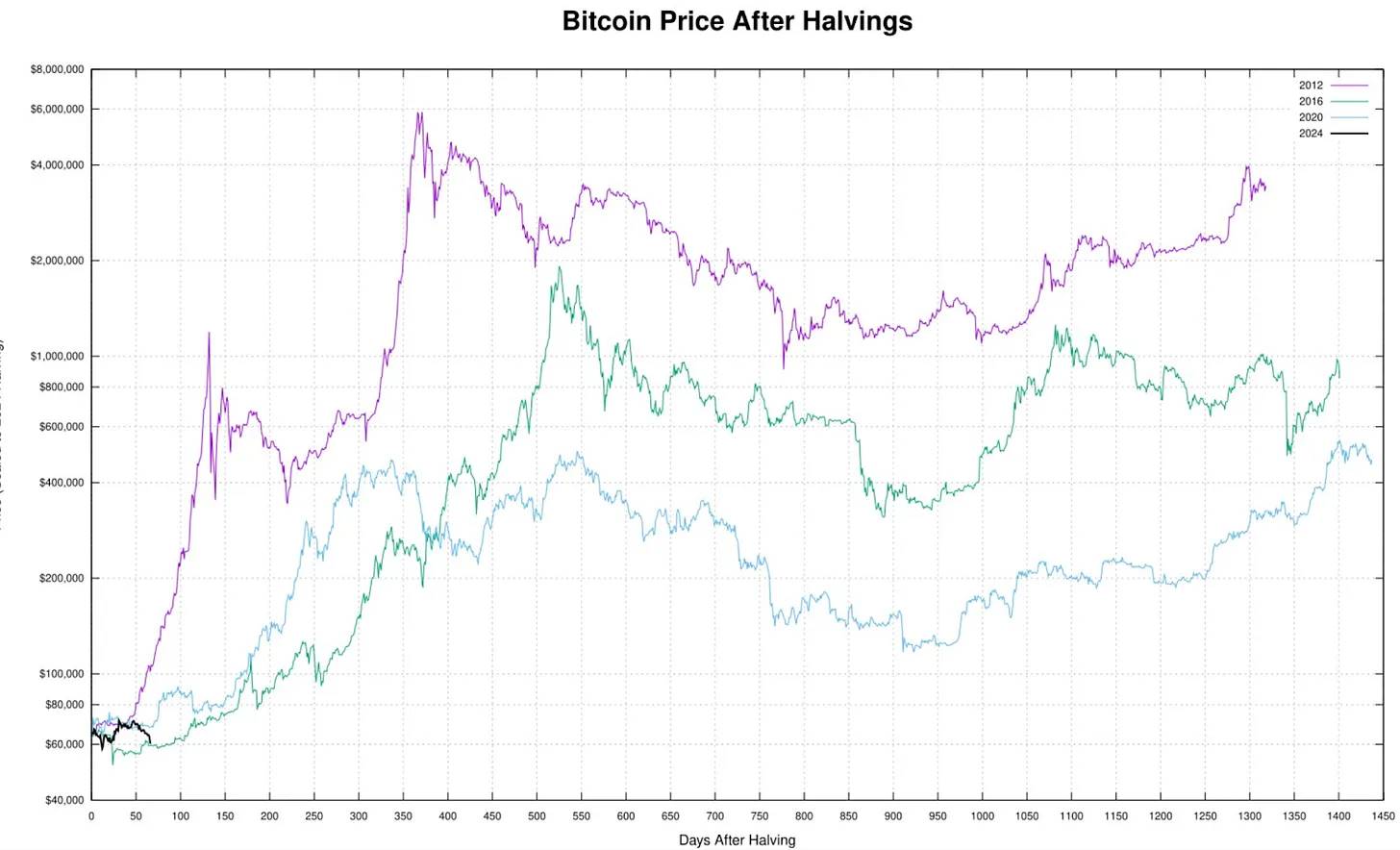
However, we shouldn't just settle for “this is how things were in the past.” Instead, we should try to analyze the current market conditions to learn from them—and even profit.
"What about other cryptocurrencies? What about airdrops? And ETH ETFs?"
These questions will be discussed in future articles. This piece focuses primarily on Bitcoin.
On the surface, if we try to answer why there’s so much supply pressure around $70,000, the simplest and most obvious answers might be:
-
A large amount of capital entered the market ahead of the halving;
-
Miners’ income was halved, forcing them to sell;
-
(Possible) U.S. tax-related factors;
We could list countless reasons, but more meaningful is to examine some objective metrics.
Market Value to Realized Value (MVRV)
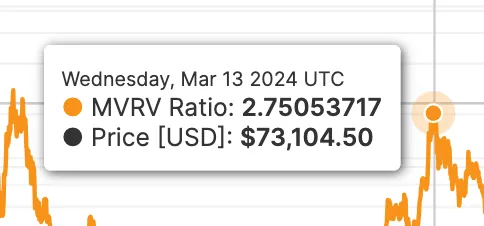
This is the ratio between Bitcoin’s weighted average purchase price (i.e., the price when each coin was last moved) and its current market price. In short, this reflects Bitcoin’s unrealized profit.
The MVRV peaked in March at 2.75, meaning that when Bitcoin reached $73,100, the average acquisition cost was $26,580. While this metric isn’t perfectly accurate (for example, centralized exchanges may not move tokens but simply update database entries), it generally trends upward as the market approaches its peak. At some point, people need to take profits, right?
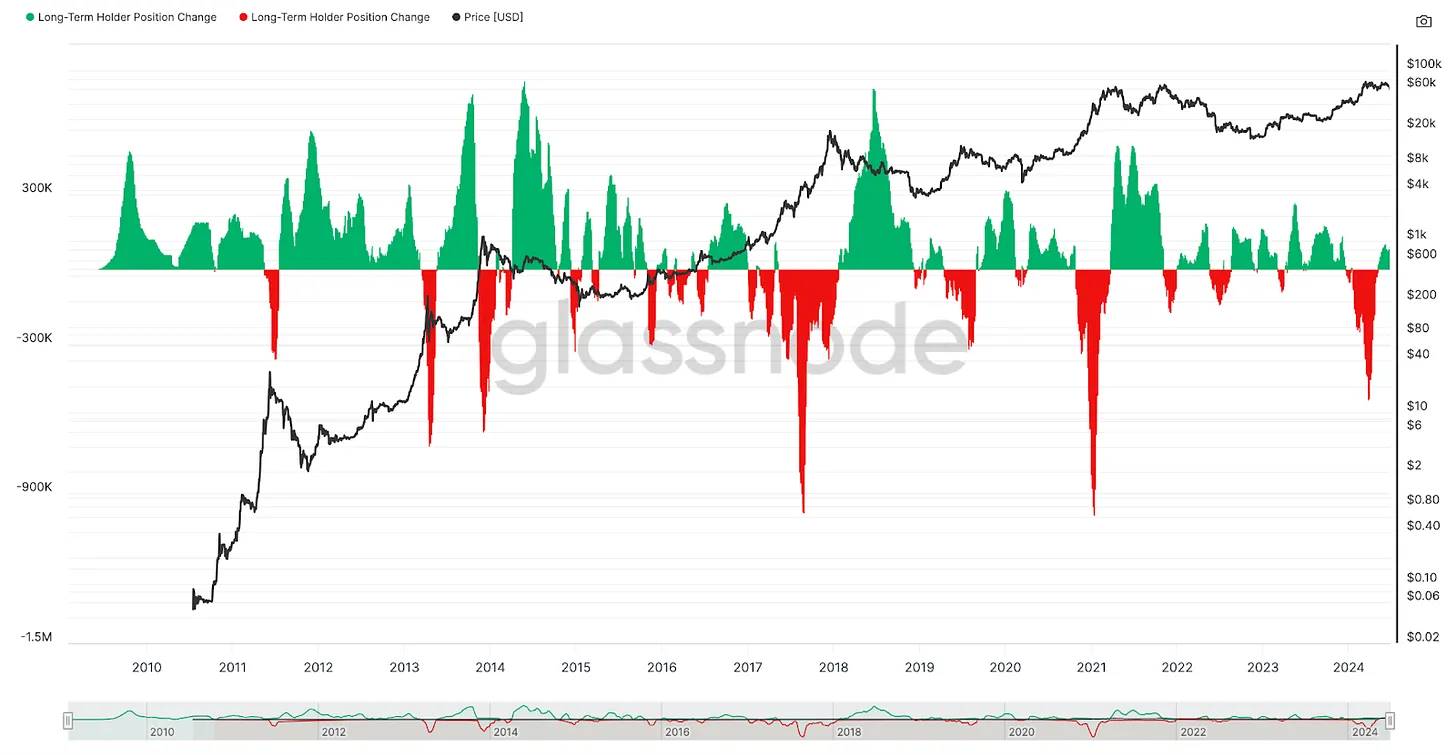
Another interesting indicator is the change in long-term holder positions, defined as wallets holding Bitcoin for over 155 days. Peaks typically form when these holders finish selling, while bottoms form when they start buying again. From late January to late March, a sharp increase in selling is clearly visible. More importantly, they’ve now started buying again.
Finally, considering Bitcoin is priced in USD, monitoring the supply of dollars is also crucial. How much "capital" is flowing in the market? More importantly, is that amount increasing or decreasing? At what pace? Is it accelerating or decelerating?
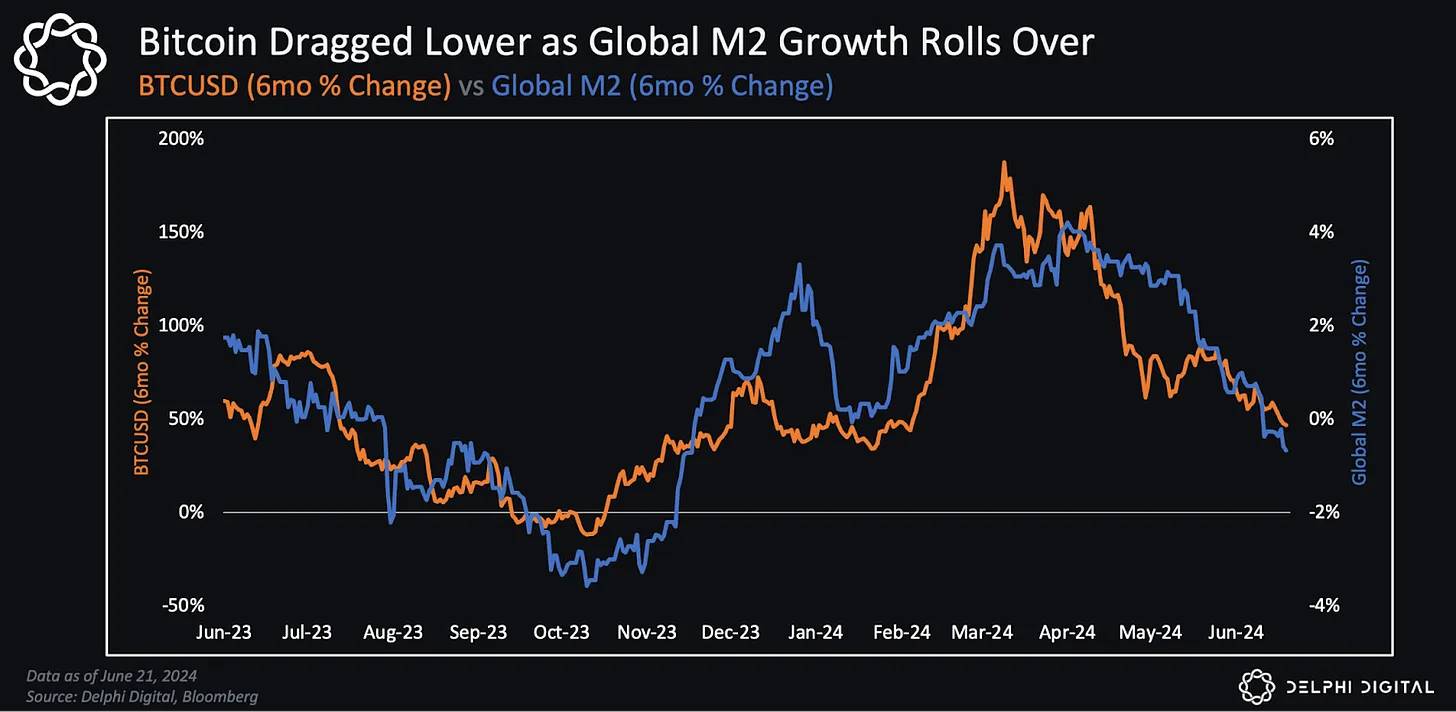
I believe this chart says it all—growth in global M2 (a key component of global liquidity) has noticeably slowed since late March/early April. Markets are forward-looking; if the outlook for M2 growth weakens, markets will anticipate a stronger dollar relative to crypto (all else being equal).
Beyond that, there are many other signals:

-
Coinbase jumped up 106 spots in one day (they received a surge in app downloads).
-
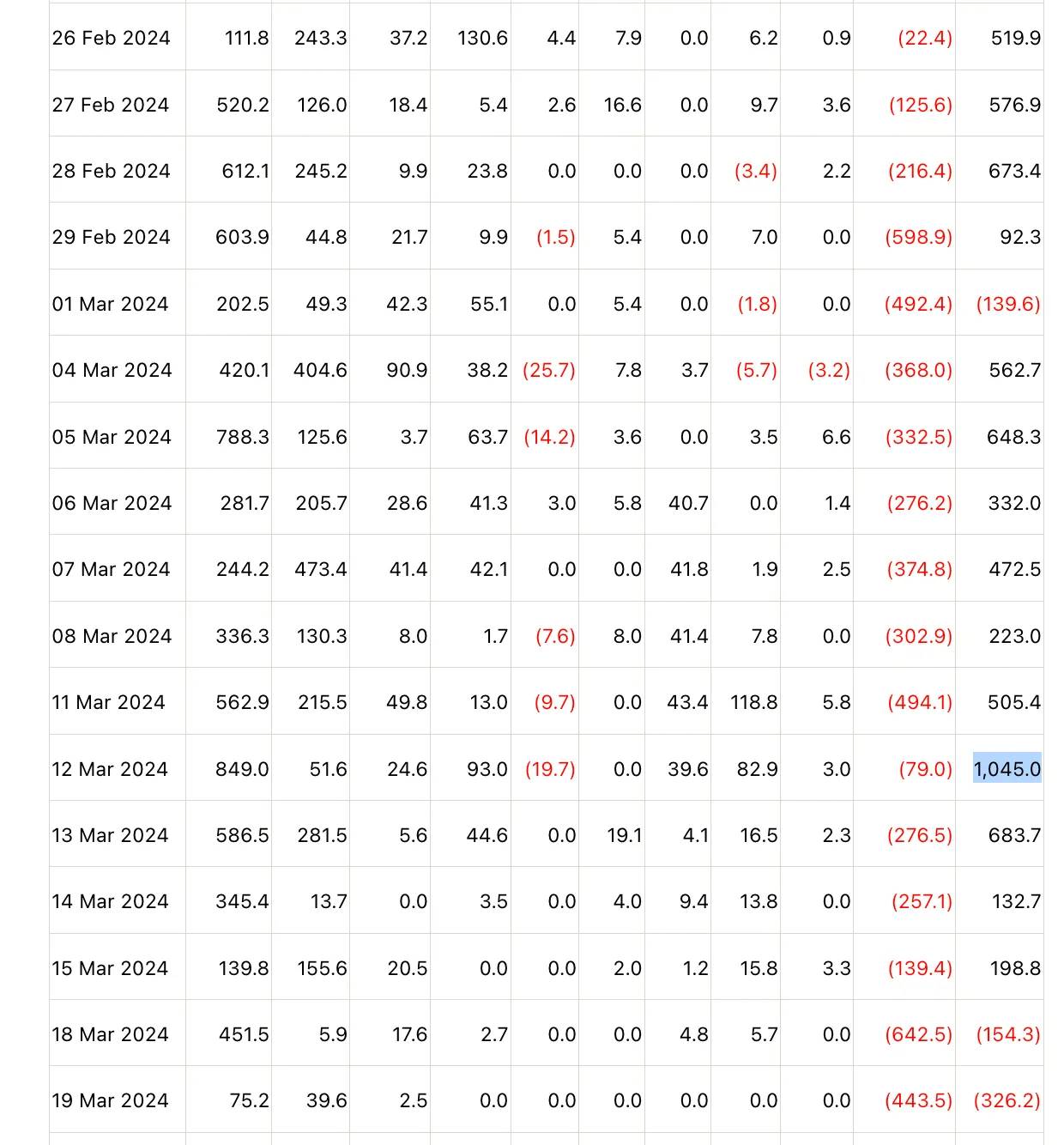
Bitcoin ETF inflows peaked at $1.045 billion, then sharply slowed down.

-
A flood of very positive regulatory news, yet price reactions have grown weaker.
-
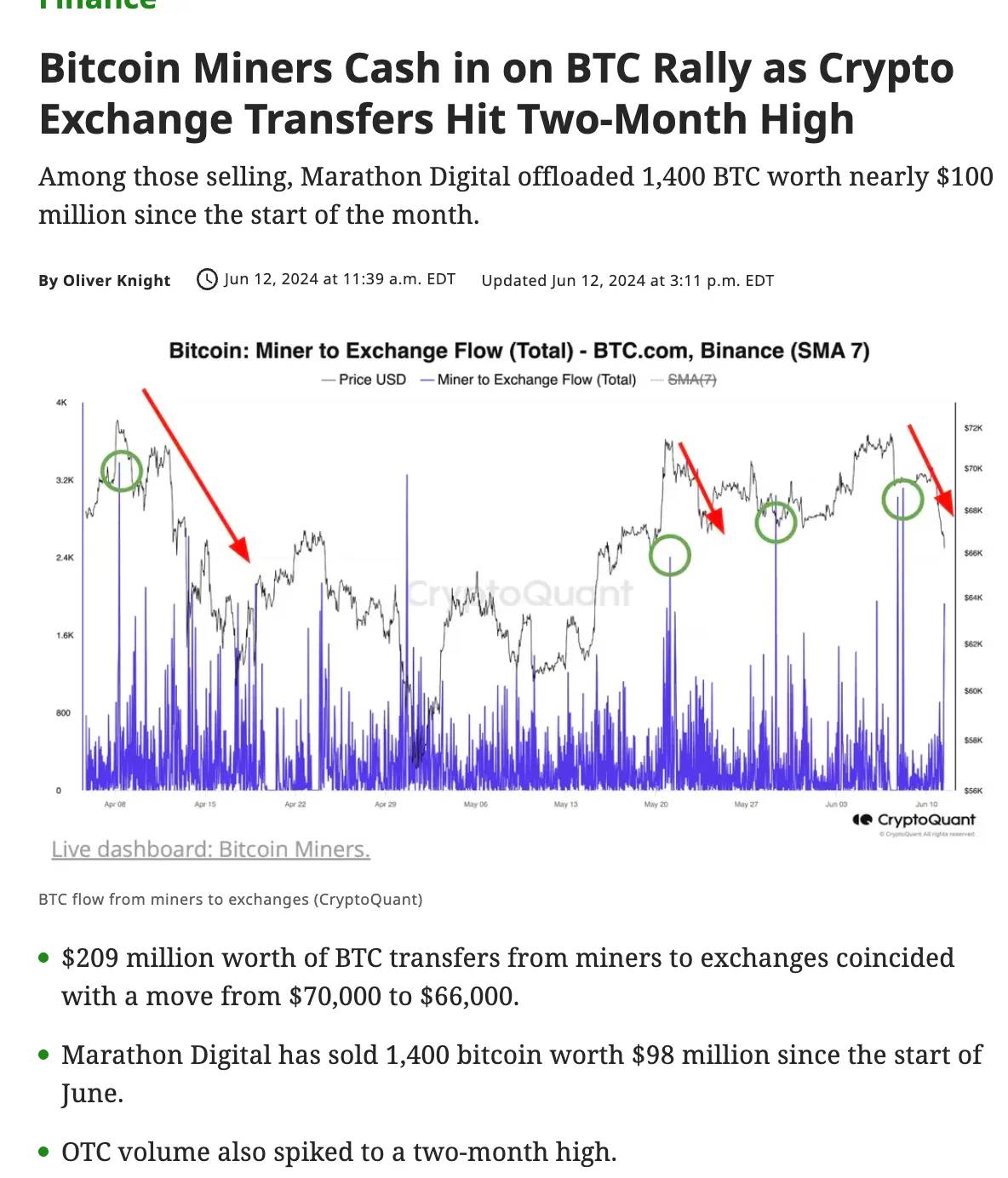
Miners aggressively selling during the post-halving downturn.
Selling at tops (including local highs) is always difficult because they tend to last longer (or shorter) than we expect, and emotions make it hard to stay objective. Moreover, the market plays with us—we’re cautious at the initial breakout, then envious of those making more (buying memes, increasing leverage), and finally attempt to copy and “chase” until the end.
The good news is, I don’t think this is the cycle top (assuming the concept of a “cycle top” still applies under current circumstances like ETFs). As I mentioned at the beginning, I believe this kind of behavior is quite typical in the weeks and months following a halving. Each cycle is obviously different, but I think the fundamental principles remain largely the same:
-
There can only be so much unrealized profit in the system;
-
Top formations occur when long-term holders finish selling (bottoms form when they start buying);
-
Changes in the pace of dollar supply expansion or contraction;
These factors will manifest differently depending on participants' positioning.
I don’t believe this is likely to be the cycle top. While it’s hard to pinpoint exactly when we’ll see another upward move, I think we’re closer to breaking out of this range than we were at the beginning—hopefully to the upside.
Join the official TechFlow community
Telegram subscription group:
Official Twitter account:
English Twitter account:
Join TechFlow official community to stay tuned
Telegram:https://t.me/TechFlowDaily
X (Twitter):https://x.com/TechFlowPost
X (Twitter) EN:https://x.com/BlockFlow_News
 @0xjaypeg


