








The Business Mindset of Post-95s: Not Trading Coins, Just Building Businesses in the Crypto Space
TechFlow Selected TechFlow Selected
The Business Mindset of Post-95s: Not Trading Coins, Just Building Businesses in the Crypto Space
Four years of wilderness, experiencing the ups and downs of life—some earned millions annually, while others quietly exited.
 Navigating Web3 tides with focused insights
Author: Jaleel, BlockBeats
Editor: Zhang Wen, BlockBeats
The four-year history of the "airdrop farming" industry in crypto mirrors the most wild and untamed growth period of cryptocurrency.
In 2020, due to the profit potential from new stock listings of high-profile companies like Nongfu Spring, Smoore, and Kuaishou, Hong Kong IPO subscriptions became wildly popular, attracting significant investor interest. Although the Hong Kong Stock Exchange required KYC (Know Your Customer), its lax regulatory enforcement allowed investors to exploit loopholes.
During that time, many investors in the Hong Kong IPO market earned the nickname “Hundred Household Lords.” They increased their odds of winning allocations by opening multiple brokerage accounts—some even operated over a hundred. Entire families, including relatives and friends, would open up to a thousand accounts collectively, significantly boosting their chances of successful subscription.
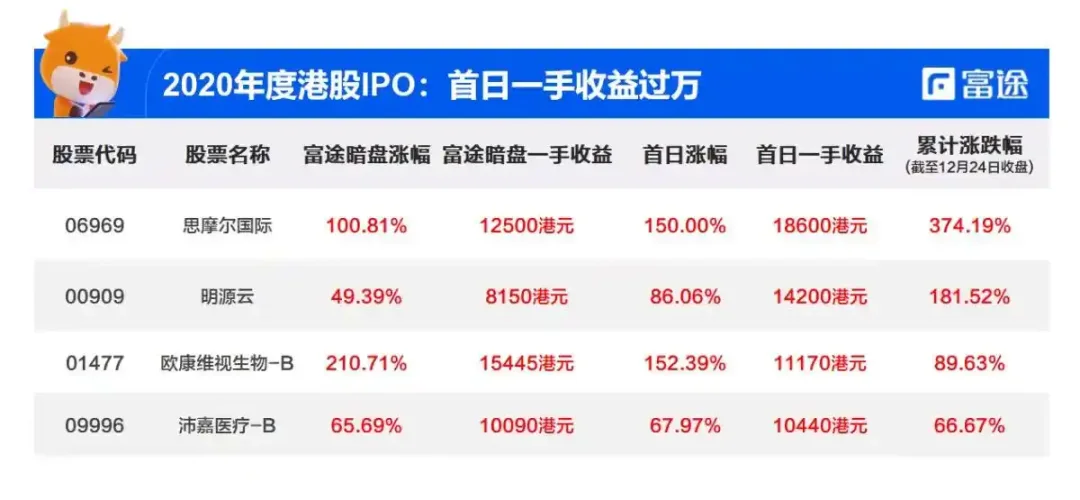
Hong Kong IPO returns in 2020, image source: Futu
Behind this Hong Kong IPO frenzy was essentially an art of account management. By operating numerous accounts, participants improved their allocation rates and thus achieved higher investment returns. This strategy offered many ordinary investors a seemingly simple and effective arbitrage opportunity. As the saying goes: “Learn a few tricks, and you turn from grass to sickle.” During that wave of Hong Kong IPOs, account management and arbitrage were among those essential tricks.
The same playbook was replicated—and refined to an extreme—in the crypto world. Here, it’s known as “airdrop farming” or simply “farming.”
Unlike stock IPOs with fixed platforms, in crypto, obtaining new cryptocurrencies requires interacting directly with each project's product. The sole goal is securing token airdrops from project teams. To draw a crude and impractical analogy: it’s like buying and selling on Pinduoduo from day one just to get shares if Pinduoduo ever issued them. Since these airdropped tokens can be traded for real money, farmers generate tangible profits.
This isn’t a native sector of cryptocurrency. Compared to investment firms and retail traders, airdrop farmers only emerged around 2020—just four years ago. Unlike investing or speculation, farming resembles running a business. It generally requires no deep understanding of crypto concepts—only attention to cost and return.
Over four years, this farming business has grown increasingly influential, evolving from individuals into studios and even full-fledged companies, becoming a crucial part of the crypto ecosystem. Naturally, such a crowded space signals attractive profits—stories of getting rich overnight through farming are common, often yielding returns more impressive than trading.
But with crypto’s roughly four-year cycles, the farming industry—having already completed one cycle—is now facing its own challenges. Rewards from projects have long ceased being as generous as in the early days. Conditions are stricter, and costs no longer scale proportionally with returns.
Recently, several highly anticipated “blue-chip” projects delivered minimal rewards to farmers—so little that time and financial investments are now completely disproportionate to returns. It remains unclear whether this four-year farming boom will decline this year. BlockBeats aims to document the evolution of farming—a story perhaps representing crypto’s most unregulated and dynamic four years.
Uniswap Airdrop: Where Farming Began
The origin of the farming industry traces back to Uniswap’s 2020 airdrop.
As the world’s largest decentralized exchange, Uniswap airdropped its UNI token on September 1, 2020, to any address that had interacted with the platform before that date. Each qualifying address received at least 400 UNI tokens. By early 2021, those 400 tokens were worth around $12,000.
“Money isn’t earned—it’s blown in by the wind.” After the UNI airdrop, such sentiments grew widespread.
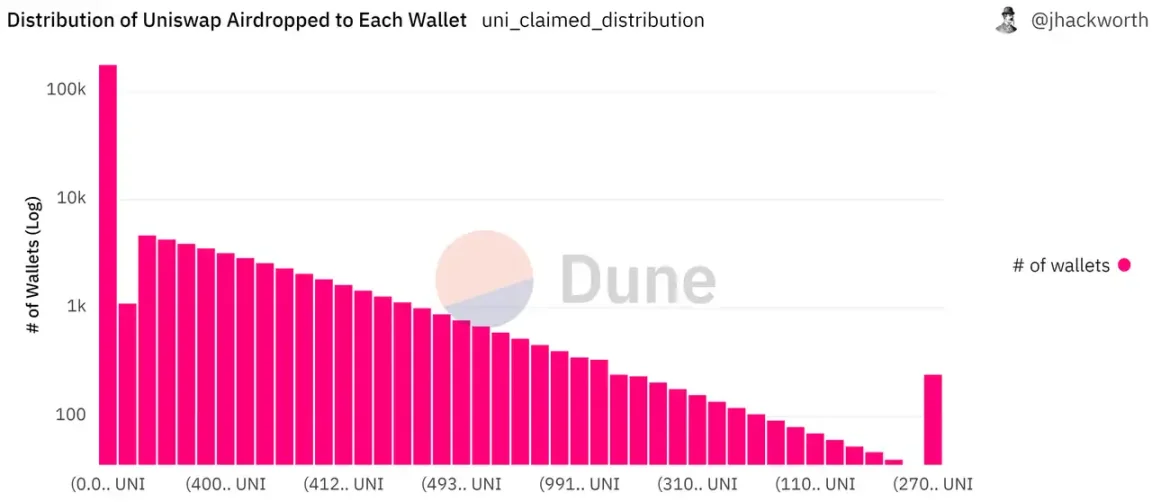
Most addresses from the original airdrop received 400 UNI tokens. Data source: DUNE
The Uniswap airdrop highlighted the importance of multiple accounts and bulk addresses—the essence of farming. In crypto’s on-chain world, there’s no KYC; one person can control countless addresses to maximize earnings. This made farming a relatively stable and high-return activity—more predictable than trading.
From Uniswap onward, farming culture exploded. For a while, everyone was a “farmer,” each managing dozens or even hundreds of wallet addresses, hoping to replicate another UNI-style “get-rich-quick” windfall.
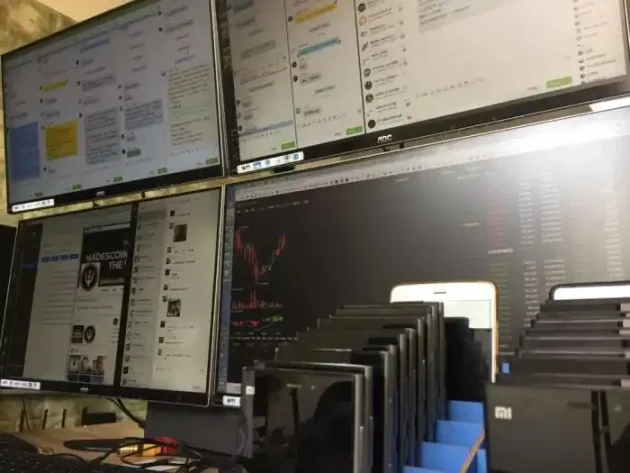
Studio equipment, image source: internet
2021 and 2022 marked the golden era for farmers, as a wave of crypto airdrops minted new millionaires. dYdX and the Ethereum Name Service (ENS) conducted major airdrops in September and November 2021, respectively. These successes spawned numerous rags-to-riches stories. For instance, one college student received 46,000 ENS tokens for contributions—worth over $620,000 at the time (around $13.63 per token).
Many of today’s independent farming studios trace their roots back to Uniswap, dYdX, and ENS.
However, with the arrival of the crypto bear market, both the frequency and scale of airdrops declined. During the downturn, many farming studios survived only on monthly token unlocks, while others weren’t so lucky and eventually vanished from the scene.
It wasn’t until 2023, thanks to token launches from major projects like Arbitrum (ARB), Celestia (TIA), and Blur, that some studios weathered the “winter” and experienced a brief revival.
Through years of trials and natural selection, surviving farming studios have been rigorously tested and matured to an unprecedented degree.
And this year may mark the most glorious year for farming studios since 2020.
With the approval of Bitcoin ETFs and Bitcoin breaking past $72,000 to hit new highs, the bull market has returned. This resurgence has spurred more projects to launch tokens, reinvigorating farming studios. Over recent months, well-known projects like Merlin, Unisat, ionet, and ZKsync have launched tokens. While their valuations fall short of previous airdrop booms, they’ve still drawn significant attention.
Yet, unlike in the past, the farming industry has evolved and faces new challenges. Today’s farming landscape is more competitive, professional, and commercialized than ever. Entry barriers are rising, and competition is fiercer. Once a free-for-all frontier where every underdog could thrive, farming has transformed into a high-barrier commercial game.
Grassroots Heroes Mastering a Commercial Game
A typical farming studio incurs regular operational costs—electricity, rent, and employee salaries. “These need to be settled monthly, totaling tens of thousands of yuan. That’s why most studios are based in tier-two or tier-three cities to minimize personnel and rental expenses,” said Xiao Zhi (@shut_nice1), a member of a farming team, in an interview with BlockBeats.
To secure better resource and liquidity support, some studios even register business licenses and apply for government subsidies.
As the crypto industry evolves, farming—once a loose grassroots activity—has become industrialized, networked, and corporatized. Today, studios operate much like small startups, far removed from the days when a few individuals teamed up as rogue operators. Now, it’s a professional system with clear organizational structures and divisions, leveraging精细化 management to maximize resource efficiency and steadily grow returns.
Startup-Like Structure
“Team configurations vary, but the two core pillars are always research/investment analysis and execution,” said Damon (@Damon_btc), founder of SohaDao Studio, whose farming focus lies primarily in the Bitcoin ecosystem.
The research team acts as the studio’s think tank, analyzing market trends and project data to identify high-potential opportunities and design optimal farming strategies. They also handle cost control and strategy optimization.
When formulating strategies, Damon’s team works backward from desired outcomes. “Suppose we aim for 1% to 10% of a project’s allocation. We’d first study the token model, estimate the total number of addresses, then reverse-calculate how much capital and resources we need to invest,” Damon explained. This approach helps determine initial costs and allows monthly adjustments to maintain a balance between input and output.
“But I believe research will gradually lose influence. Information asymmetry is shrinking—content from KOLs and paid groups is increasingly homogenized. Execution is what creates differentiation. Previously, it was 70% research and 30% execution, but going forward, execution will surpass research, approaching a 50-50 split,” Damon predicted.
On the execution side, teams are typically divided into programming development and manual operations.
The programming team provides technical backbone—akin to developers in a startup—responsible for building and maintaining farming tools like automation scripts and data scrapers. Their work ensures system stability and enhances farming efficiency. Programmers must not only master coding but also understand blockchain and crypto technologies to rapidly develop market-responsive tools and boost competitiveness.
Manual operators act as frontline soldiers, executing farming strategies precisely to ensure timely participation and maximum returns from each airdrop. They manage daily tasks like account maintenance, transactions, and transfers. This team demands strong execution skills and responsibility—every action must be accurate to maximize yield. Qi Fetei, currently a solo operator but familiar with many studio members, shared his insight: “When hiring manual executors, don’t pick someone too clever, nor someone completely clueless.”
Like startups, mature studios sometimes accept external investments. “Revenue sharing is common—studios execute, investors provide capital, and post-airdrop profits are split accordingly,” noted Qi Fetei. Exact ratios depend on negotiation, increasing with difficulty or funding scarcity. Risk tolerance also influences splits—higher-risk parties usually claim larger shares.
Beyond research and execution, the studio’s CEO—often called the “lead operator”—oversees everything: strategic planning, decision-making, and long-term vision to ensure goals are met.
According to BlockBeats’ observations, modern farming studios also rely on KOLs as public faces. Through social media and community engagement, KOLs expand studio influence, build relationships with projects, investors, and media, amplify voices, and gain access to insider information.
In crypto, KOLs function like influencers or reviewers in traditional industries—using their reach to promote projects.
“I want influence to grow, but not the team size—that’s my priority,” Damon stated, emphasizing efficiency and specialization. His studio is still early-stage, with social media presence just launching and influence yet to expand.
“A solid execution team of about 10 people is sufficient. Bigger doesn’t mean more profitable,” Damon explained. Drawing from corporate experience, he observed that oversized teams lead to internal competition and inefficiency. Yet he stressed the value of influence: expanding reach yields more resources and information, enhancing competitiveness far more than team expansion.
Side Businesses: The Industrialization of Farming Studios
Farming studios have moved beyond pure airdrop farming. To cut costs and boost profits, they’ve explored and integrated multiple channels, creating diversified revenue streams.
“Having worked in Web2 internet, ‘cost reduction and efficiency improvement’ is ingrained in me,” Damon said. Those with financial or actuarial backgrounds can calculate and control costs more accurately.
The “farming trifecta”—crypto slang—refers to three foundational tools: virtual private networks (VPNs), multi-account management tools, and virtual machines/fingerprint browsers (alternatively, Twitter, Discord, and Gmail accounts).
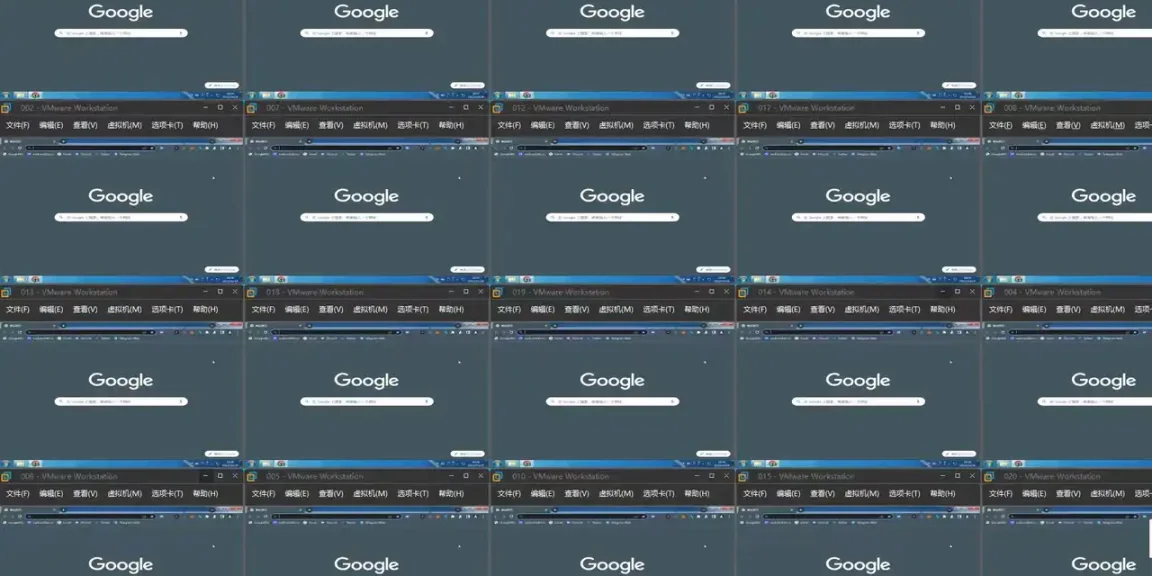
Multi-account tool, image source: Farming Diary
Multi-account tools help farmers manage numerous accounts—batch registration, login, automated operations—reducing manual labor and errors. Fingerprint browsers simulate different browser environments to avoid detection of multi-account usage from a single device. Virtual machines create isolated OS environments, further separating account activities.
When selecting these tools, studios carefully compare price and functionality. “More spending can bring returns, but precise calculations drastically reduce costs,” Damon noted. Saving half on expenses through careful budgeting fundamentally improves profit margins.
To minimize costs at every stage, some studios seek direct “source suppliers.” “For example, while others might pay two yuan per Twitter account, we get them for two mao. These small savings add up significantly over time,” said Xiao Zhi.
After identifying the cheapest sources, studios unlock another revenue stream: reselling supplies. This spawns secondary markets—selling Google accounts, hardware, cloud servers—forming a complete supply chain.
In terms of income, studios also earn “referral bonuses,” where KOLs play a key role. Influencers with greater reach receive more points and cashbacks from referral tasks.
Additionally, some studios venture into OTC (over-the-counter) trading. Xiao Zhi exemplifies this—he focuses on off-exchange deals within his team.
Due to reliance on these channels, scalpers enjoy inherent advantages in studio operations—like being “born in Rome.” “My boss started as a scalper. Applying scalper logic to Web3? He’s got it mastered,” Xiao Zhi told BlockBeats.
Capital Preservation and Payback Period
Like any traditional business, “capital preservation” is critical for studios.
For studios, protecting capital and minimizing losses is paramount. “Every step our studio takes is hard-earned. One wrong decision could wipe out everything,” Xiao Zhi explained. “In crypto, preserving principal is key. We just need to act as reliable conduits—ensuring basic project integration, without chasing extra profits. Avoiding drawdowns or losses is already a great outcome.”

Crypto payback meme, image source: internet
In conversations with crypto farming studios, BlockBeats found “payback period” is a frequently mentioned term.
Whale (@yuanch0914), who left a big tech firm, runs his own studio. After sustained farming efforts on ionet using 273 Mac mini M2 devices, he earned hundreds of thousands despite many others losing money. His recap post garnered nearly 300,000 views.
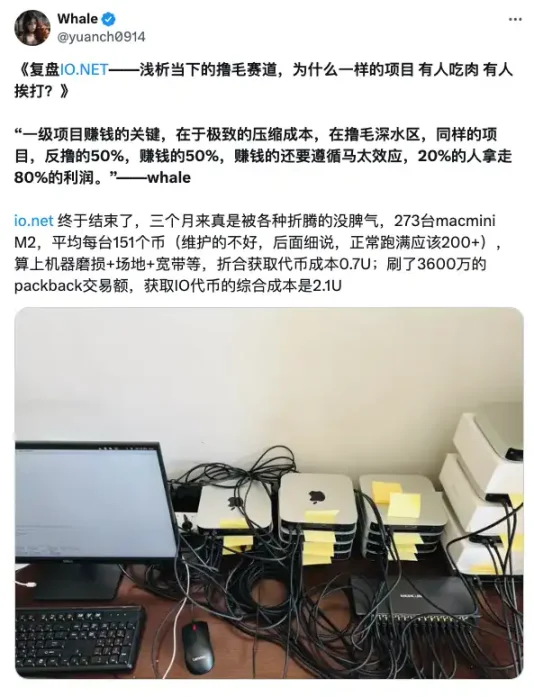
In his review, Whale noted long-cycle projects like ZKsync hold potential but lack clear timelines—possibly taking years to materialize. Short-cycle projects like ionet and Merlin last just one or two months, enabling fast capital recovery and quick profit realization. “I prefer short, fast projects—where expected returns, token launch dates, and exit timing are clear. Fast payback lets me reinvest quickly. This stabilizes returns and keeps mindset balanced,” he said.
It’s like flipping a coin: one or two flips may not balance, but after 1,000 flips, you’ll likely see 500 heads and 500 tails. “So with high win rates, the more projects you do, the more stable your returns become,” Whale elaborated.
Damon echoed similar preferences: “We don’t prioritize longevity. We go for projects that deliver results fastest.”
For a studio, win rate is vital for sustainable growth. Many studios from two years ago failed because they focused solely on long-term plays like ZKsync, dedicating all resources to one project—an unsustainable model. Instead, studios should accumulate short-term gains before gradually tackling longer initiatives.
Behind the 95s Making Millions: The Secrets of Farming Studios
In crypto, farming offers low entry barriers and high returns, attracting many young people. BlockBeats found most farming studio members are post-95s, with many post-00s—all achieving annual incomes in the millions this year.
While top-tier players earning tens of millions (known in crypto slang as A8) exist, they’re rare. Often, they exit farming, sell their studios, and transition into shareholders or advisory investors for steadier returns.
With agile strategies and strong execution, young people have rapidly risen in this emerging market, achieving income levels unattainable for white-collar workers in traditional sectors. What secrets do these successful young farmers hold?
“If I Were the Project Team”
“Think from the project team’s perspective”—a mantra many know, but few truly practice.
When setting rules, project teams must appear fair while ensuring more tokens end up in their own hands—what’s known as “insider allocations.” But they must make these rules seem reasonable and avoid obvious flaws that the community can easily spot. “Project teams won’t hand out money randomly—they design rules to filter high-quality users,” Whale said.
“Take ZKsync recently—why was it so heavily criticized? Because certain addresses showed clear Sybil patterns—identical balances—yet still received airdrops. That’s poor rule design. It undermines fairness, damages token consensus, and discourages future buyers,” Whale cited as an example.
Most project teams want profits without backlash. Achieving this requires extremely careful and sophisticated design of airdrop rules and anti-Sybil measures. Like selecting top students for elite universities, they must pick 100,000 quality addresses from a million. Thus, rules must be meticulously crafted to reward genuinely valuable users while preventing large-scale farming exploitation.
“This ties into information asymmetry, which exists everywhere in Web3,” Xiao Zhi explained. “Such gaps allow some to access first-hand intelligence, giving them a decisive edge.”
Just as knowing alternative paths into Peking or Tsinghua University beats the gaokao rat race, the challenge lies in accessing such information. In crypto, personal connections often matter more than in traditional industries.
Xiao Zhi added that in projects like ZKsync, account balance and staking requirements have become new screening criteria: “ZKsync’s rumored minimum balance is $50. For bulk accounts, holding $10 per account is already substantial. If each needs $100, 10,000 accounts require $1 million—a huge risk.”
The farming industry is shifting from POW (Proof of Work) to POS (Proof of Stake). These capital retention requirements make bulk operations harder and raise entry barriers. While bulk accounts are numerous, they can’t sustain large capital exposure—especially in hacker-prone environments. High-stakes staking and fund retention now serve as a “barrier” for studios.
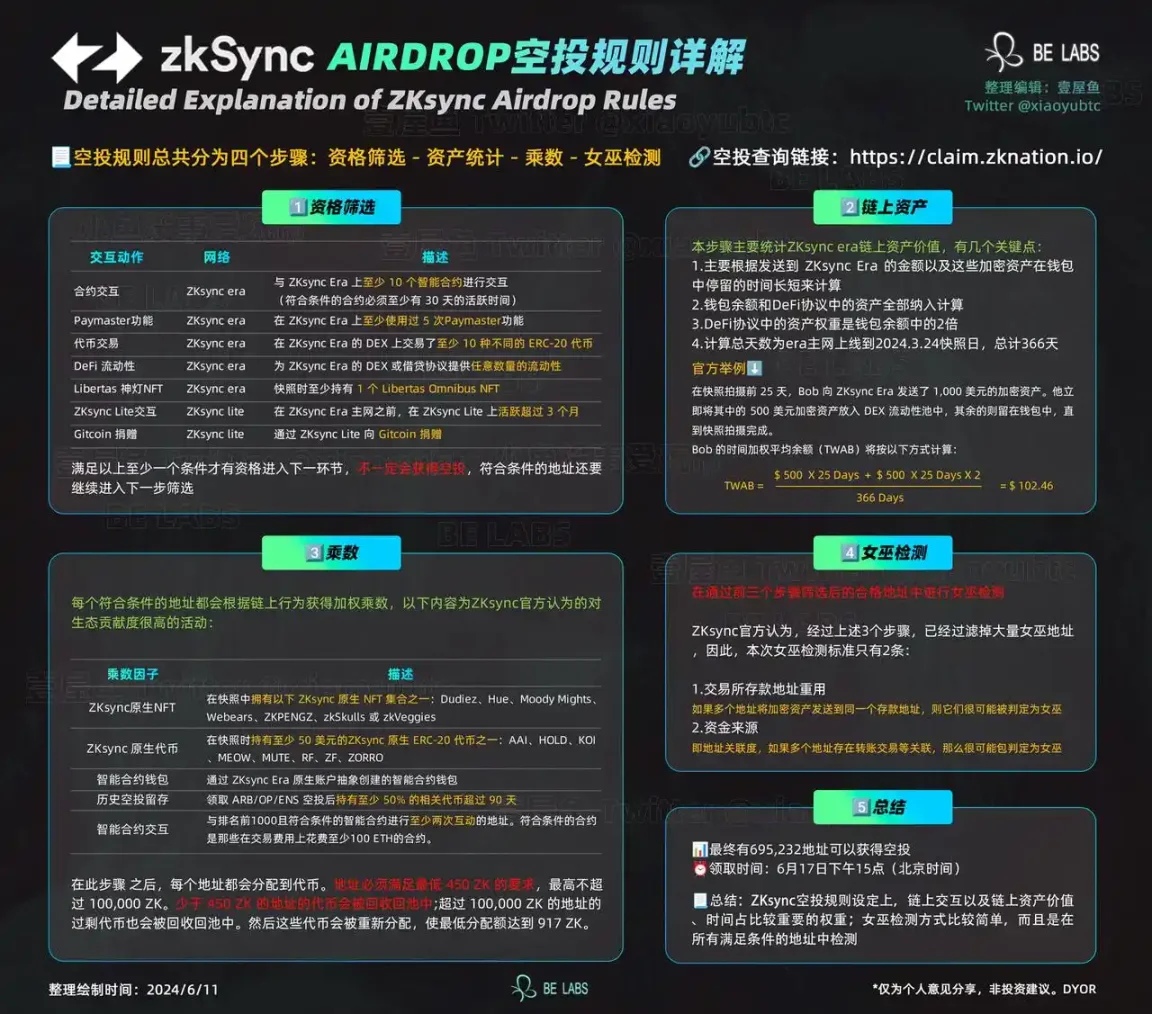
Rumored ZKsync airdrop rules, source: Yi Wu Yu
Many despise insider allocations, believing good projects should reward only real users. But Whale argues farming’s excess profits stem precisely from these insider allocations. Without them, neither projects nor their backers would distribute such generous rewards via airdrops. “Objectively, institutions and teams eat the meat; farmers just sip the soup—with occasional meat bits falling in,” Whale observed with unusual clarity. To counter project filtering, users must think inversely.
As farming grows more professional, studios must find their niche. Most tutorials teach TX volume and large interactions—either out-grind others or differentiate. Leveraging unique strengths increases airdrop chances.
Qi Fetei said: “Airdrops are like dividing a cake—how to get a bigger slice? Keep adding accounts and expanding address counts. But standards must align with project rules. When rules are unclear, anticipate where the line might be drawn. If there are insider allocations, figure out how your addresses can ‘blend in.’”
Craftsmanship Enters the Farming World
Farming is like fishing—the waiting is always the longest part. Success requires not just skill, but patience and determination. “The best farmers are those who stay calm. Only such people can go the distance,” Damon said.
When Qi Fetei quit her Web2 job last year, she felt anxious—her schedule became erratic, sleeping and waking late. Luckily, she farmed Sui successfully, with monthly unlocked sales acting like a “monthly salary,” greatly easing her stress. “But I can’t live off this forever—the token unlocks monthly for only a year. I need other income,” she realized.
So that year, while continuing to farm, she stayed patient and studied—learning options trading and diving deep into the Bitcoin ecosystem, seizing opportunities in the second half.
Three years, then three more—farmers have slowly developed a “craftsman’s spirit,” refining their strategies. From early days of random interactions for airdrops to today’s code-running studios, the industry now values efficiency alongside finer, more deliberate techniques—emphasizing that “premium accounts are best.” Premium addresses are now seen as “gold mines” and “mining fields.”
Qi Fetei told BlockBeats: “I don’t recommend using synchronizers with fingerprint browsers. Though convenient for simultaneous multi-account control and doubled efficiency, they make behavioral patterns identical, increasing Sybil detection risk.”
Damon also emphasized manual operations: “Many studios take shortcuts, arrogantly relying on scripts or automation—a path ‘killed’ by ZKsync. Leave room for error—say, 20% via code/sync, 80% pure manual.”
Whale agrees: On ZKsync and Starknet, bot farms mostly failed. Starknet used AI to detect Sybil clusters with similar behaviors (withdrawal times, amounts, interaction paths). ZKsync enforced balance retention. Script-based bots, optimized for efficiency, naturally neglect these—while human randomness (less efficient) and cost-awareness (infrequent LP fund movement) ironically avoided Sybil flags on both projects.
Alongside the resurgence of manual work, fine-grained data analysis has become a core competency for top studios. Whale stresses estimating each project’s market cap and token distribution. Though seemingly simple, this is complex and time-consuming. “There are too many projects—calculating cost, return, and ROI for each is exhausting. But I stick to it, ensuring rough estimates for every project,” he said.
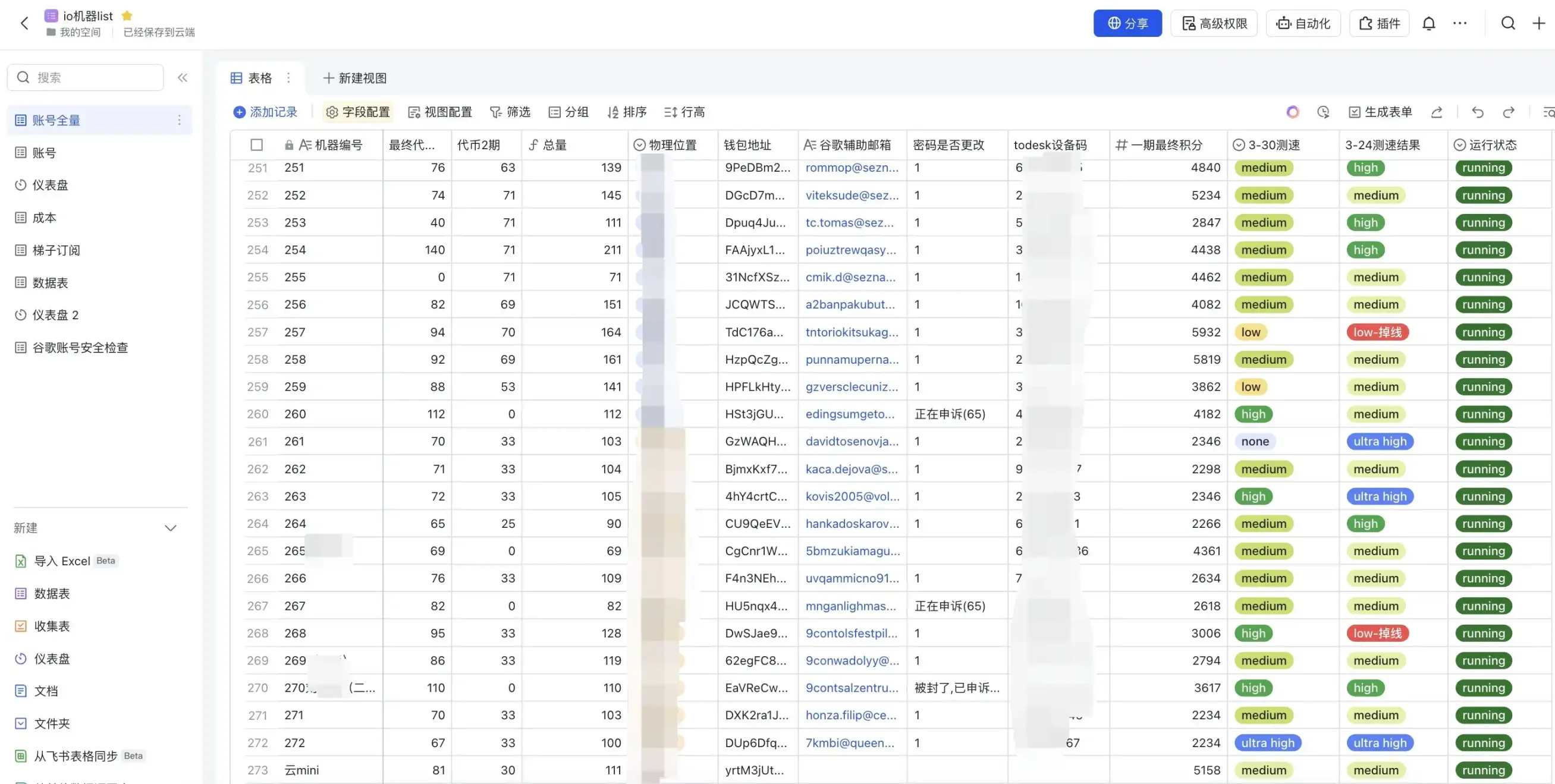
Example of Whale’s multidimensional spreadsheet
To ensure accuracy, Whale uses not just public data but digs into non-public metrics—protocol TVL, interaction counts, unique addresses. “Many rely on public info—I go deeper, like checking contract data via block explorers to estimate potential returns.”
For example, a project backed by Binance likely won’t have a sub-$1B valuation. “If Binance invested significantly, listing probability is high,” Whale explained. Then he analyzes activity—token distribution ratio, participant count—to estimate per-user gains.
The Philosophy of Farming: Art of Survival and Prosperity in Crypto
Through farming, Whale has developed his own “subtraction” philosophy: “Choosing what not to do” matters more than “choosing what to do”—this ensures his win rate.
Whale’s Twitter bio reads: “Learning increases daily, mastery decreases daily.” He explains: knowledge accumulation should grow, but desires should shrink. Reducing noise and unnecessary pursuits is key to success. For him, a project must have a clear reason to join—not merely because he can’t find a reason not to.
Farming is an industry where experience pays off. “Everything is reusable”—this is Xiao Zhi’s belief. Reusing proven strategies across projects reduces trial-and-error costs and boosts efficiency.
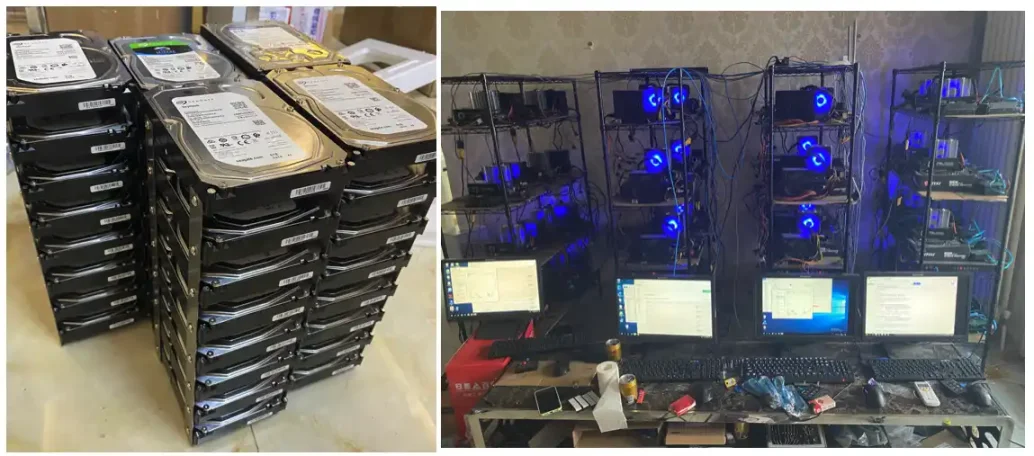
Hardware used by Xiao Zhi’s team for CHIA mining three years ago
“Back in 2021, we did CHIA—building machines and configuring networks. All that trial-and-error helped us quickly adapt to ionet,” he said.
CHIA’s surge prompted many “miners” and studios to buy high-capacity hard drives for rewards, causing SSDs and HDDs to sell out and spike in price.
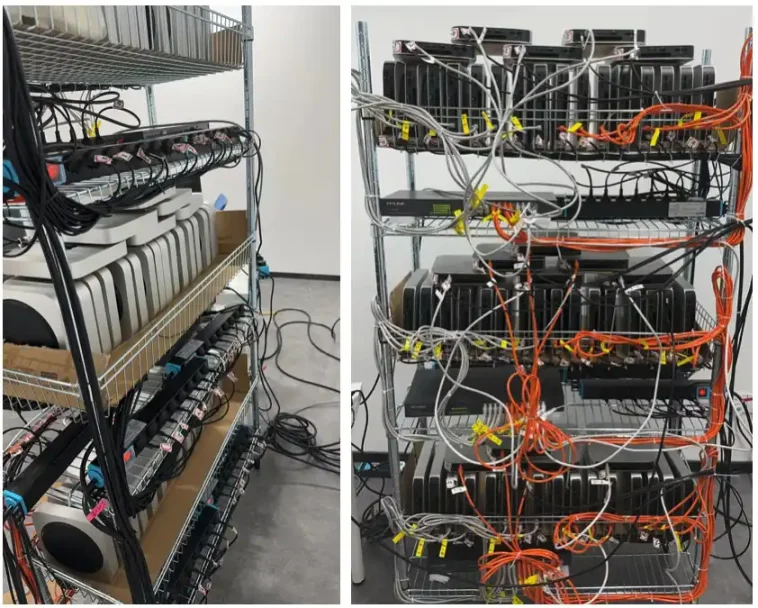
Xiao Zhi’s team’s ionet machine setup
Xiao Zhi also noted that before entering Web3, his team participated in Hong Kong IPOs. Like the “Hundred Household Lords” mentioned earlier, his team was among them. “Our decision to subscribe depended on institutional backing and win probability—logic we now reuse in Web3.”
“Back then, each HK IPO subscription cost HK$10,000–20,000—kind of like gas fees on-chain today,” Xiao Zhi recalled. At their peak, weekly IPO profits reached HK$700,000–800,000.
Strategies vary per individual. Xiao Zhi explained: “Each project has different strategy dimensions—what protocols you interact with, your monthly/weekly/daily activity, account and on-chain funds, collateral and loan amounts. These are all uncertain factors.”
Strategy formulation relies on experience, ultimately boiling down to multi-account management. “If one account sends to 100 others, it’s easily flagged and banned,” Xiao Zhi warned.
While perfection isn’t possible, having a sound strategy is crucial—and most importantly, strict adherence. Strategies remain constant. Like playing poker, following a plan consistently—even if a hand loses—leads to optimal long-term outcomes.
In engaging with studios, we noticed an interesting divide—crypto has always been highly polarized. Project founders are often elite graduates from top global universities, while most traders and farmers resemble street-smart entrepreneurs. English proficiency highlights this divide.
Self-made talents, once wealthy, crave respect—not labels like “nouveau riche.” Learning English becomes a form of “dignity,” symbolic rather than practical. Like small-town entrepreneurs in 2000 wearing suits to go global, they use language and behavior to craft new identities, seeking higher social recognition.
Today, farming studios, like KOLs, undergo generational turnover. After a big win, some leave; new studios replace old ones, chasing wealth in the market.
“A friend just cashed out and plans to shut down his studio. I’m negotiating to take it over—we’ll both get the best price,” he said. Such wealth-driven succession adds unique continuity to the farming industry.
Over time, studios form “brotherhoods,” creating farming alliances and matrices.
This organization and alliance-building continuously elevate studios’ influence. Initially scorned by projects and communities—sometimes self-deprecatingly called “slave peasants”—farmers now see projects actively collaborating with them, even taking their advice.
These changes run deep. Farmers’ voices now significantly impact the entire industry—their opinions shift VC sentiment, affect token prices, and even influence exchange
Join TechFlow official community to stay tuned
Telegram:https://t.me/TechFlowDaily
X (Twitter):https://x.com/TechFlowPost
X (Twitter) EN:https://x.com/BlockFlow_News
 BlockBeats











