








Cryptocurrency, Manipulated by U.S. Political Parties: Consensus or Political Game?
TechFlow Selected TechFlow Selected
Cryptocurrency, Manipulated by U.S. Political Parties: Consensus or Political Game?
"Whether it's Trump, Biden, or Michelle Obama becoming president, you'll see progress in cryptocurrency in 2024 and 2025."
 Navigating Web3 tides with focused insights
Author: LBank
With the recent approval of Bitcoin ETFs at the beginning of this year and the upcoming U.S. presidential election, cryptocurrencies are becoming increasingly intertwined with American political volatility. Recently, a series of moves by Donald Trump have highlighted how crypto—once a controversial and emerging sector—is now a crucial tool for gaining voter support and campaign funding in U.S. elections.
Today, LBank will review the stance of U.S. politicians toward cryptocurrency and further analyze future trends in the crypto market.
The Wild Candidates: Crypto and Votes
2024 is shaping up to be a pivotal year for the U.S. presidential election.
While eager not to miss out on the new momentum brought by cryptocurrency, the U.S. government continues to maintain a cautious distance through regulatory bodies like the SEC—acting tough while still deeply engaged. Compared to Singapore’s early adoption, the U.S. political landscape's relationship with crypto resembles an intense but uncommitted romantic affair—neither officially acknowledged nor hidden, thriving instead in ambiguity.
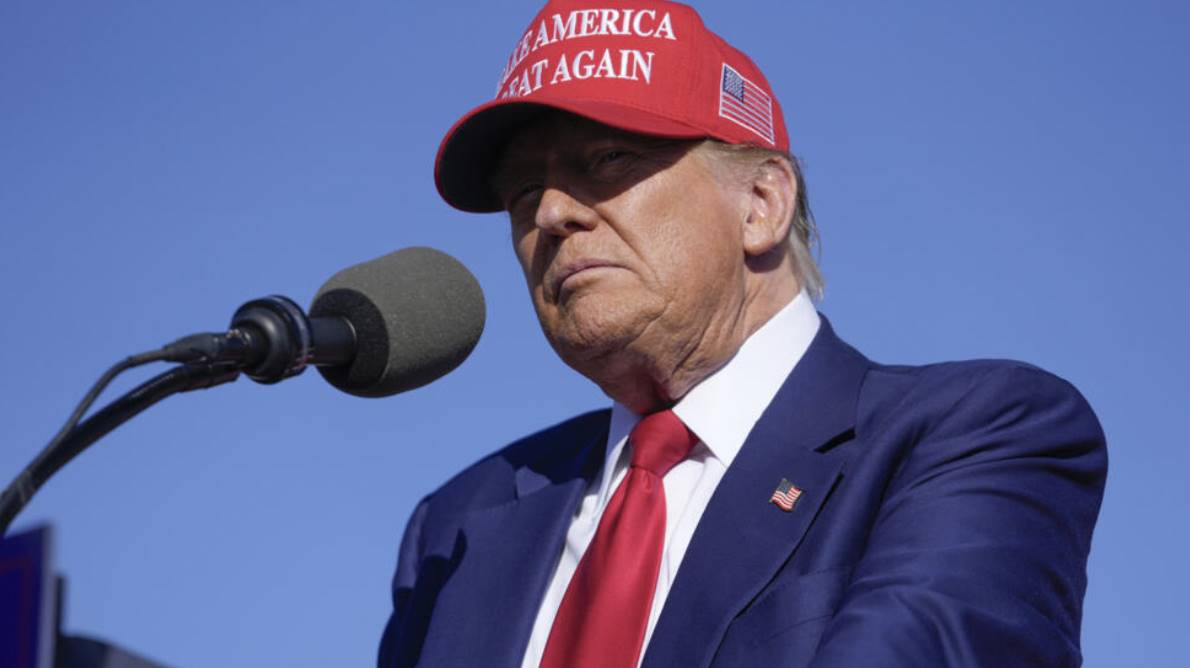
First is Donald Trump, a figure riding both extreme controversy and peak public attention, who has rapidly opened the floodgates to the crypto market through rhetoric and meme culture.
-
On May 22, he launched a cryptocurrency donation website, officially accepting crypto contributions;
-
On May 26, he publicly declared, “I will ensure that the future of cryptocurrency and Bitcoin is made in the USA… I will support self-custody rights for all 50 million crypto holders across America,” promising to pardon Silk Road founder Ross Ulbricht if elected, strongly backing crypto and criticizing Biden’s suppression of the industry.
-
On May 30, according to The Wall Street Journal, Donald Trump is considering appointing Elon Musk as a policy advisor to advance pro-crypto initiatives.
As a result of his statements, tokens such as $MAGA and $TRUMP surged dramatically, outperforming 99% of assets in the crypto market and becoming breakout meme stars on the LBank platform over the past two weeks.
According to blockchain data tracker Arkham, Trump’s crypto holdings have significantly increased, now exceeding $12 million. This includes 579,290 TRUMP tokens worth $8.08 million, 464.706 ETH valued at $1.76 million, 374.889 WETH worth $1.42 million, and other meme coins including MVP, CONANA, and BABYTRUMP.
From dismissing Bitcoin and other cryptocurrencies as "fraud" five years ago—a sentiment he once openly expressed—to now advocating for their development and declaring, “crypto must happen in America,” there’s no denying his shift reflects keen awareness of current trends. Unsurprisingly, following his pro-crypto stance, polling platforms like Polymarket showed a rise in Trump’s approval ratings on May 28.
Then comes President Biden, who, influenced by Trump’s momentum, has taken steps to appeal to younger, Z-generation voters.
-
On May 22, Biden’s team began hiring a “meme manager” to oversee internet content and memes (including MEMEs);
-
On May 23, the Biden administration issued a statement calling for congressional cooperation on a “comprehensive and balanced regulatory framework for digital assets”;
-
On May 29, Biden sent a presidential delegation to attend the inauguration ceremony of El Salvador’s president.
Meanwhile, insiders reveal that Biden’s re-election campaign has started engaging key figures in the crypto industry to seek guidance on “how to move forward with the crypto community and policy.” This marks a significant shift from the government’s previously lukewarm attitude toward the sector.
Crypto Game Theory: Market Signals from Consensus 2024
At the Consensus 2024 conference, ARK Invest CEO and Chief Investment Officer Cathie Wood stated: “Because cryptocurrency has become an election issue, spot Ethereum ETF applications are finally being approved.”
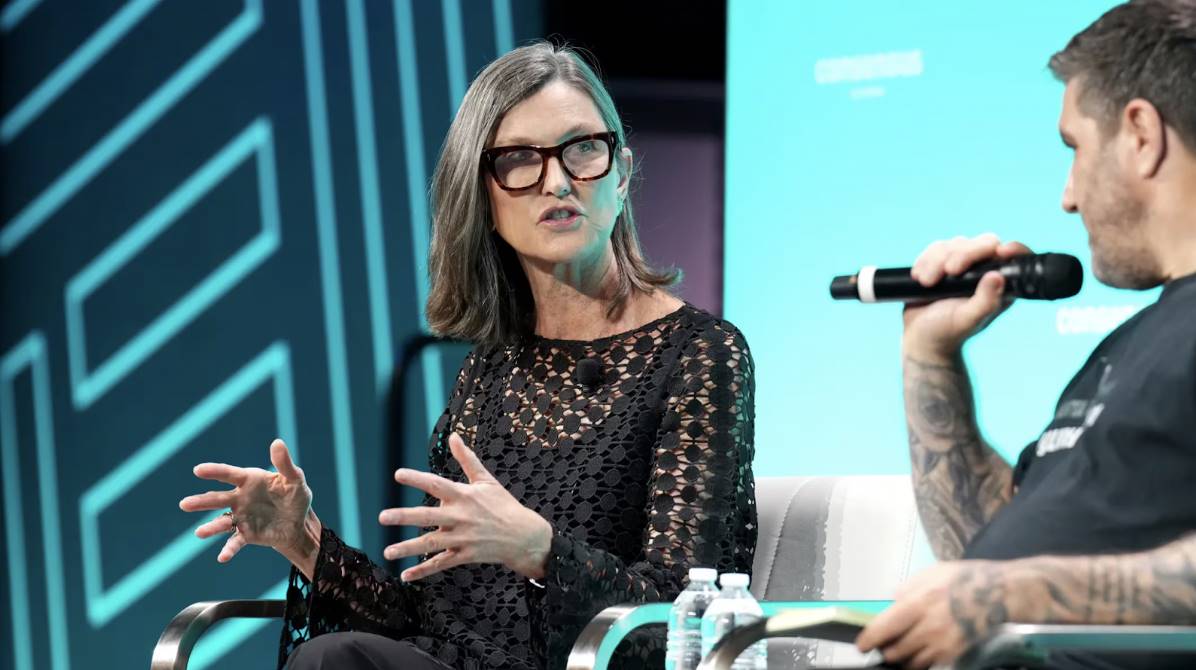
In an interview, she said: “The initial interpretation was that it wouldn’t be approved—absolutely not. If it had been approved under normal circumstances, we would’ve faced inquiries from the U.S. SEC. But before this, none of us received such scrutiny.” Wood also noted shifting sentiments in Congress around the FIT21 Act (Financial Innovation and Technology for the 21st Century), which recently passed with bipartisan support, suggesting this could indeed be an election-year issue.
During the event, Brian Nelson, Deputy Treasury Secretary and Under Secretary for Terrorism and Financial Intelligence, clarified that FinCEN’s 2023 proposal requiring crypto firms to report transactions involving mixers aimed to enhance transparency—not to ban mixers outright.
Nelson expressed sympathy for crypto users’ desire for financial privacy but urged collaboration between the industry and Treasury to develop privacy-enhancing solutions without enabling terrorist financing.
Additionally, Lynn Martin, President of the New York Stock Exchange, and Tom Farley, CEO of Bullish, discussed crypto regulation, its influence on U.S. politics, and the opportunities and limitations of blockchain technology in transforming traditional markets. Farley emphasized the sudden shift in U.S. political attitudes toward crypto—including the removal of the FDIC chair known for anti-crypto views, the passage of the FIT21 Act in the House, and Republican presidential candidate Donald Trump doubling down on pro-crypto actions amid rapid developments.
“Whether it’s Trump, Biden, or even Michelle Obama becoming president, you’ll see progress in 2024 and 2025,” he added.
Earlier on May 28, former CFTC Chairman Christopher Giancarlo told Forbes in an exclusive interview: “The dam holding back crypto innovation in the U.S. is about to break. Cryptocurrency will ultimately make a triumphant return in America.”
Capital Flows and Politics: BTC ETF Data and Voters
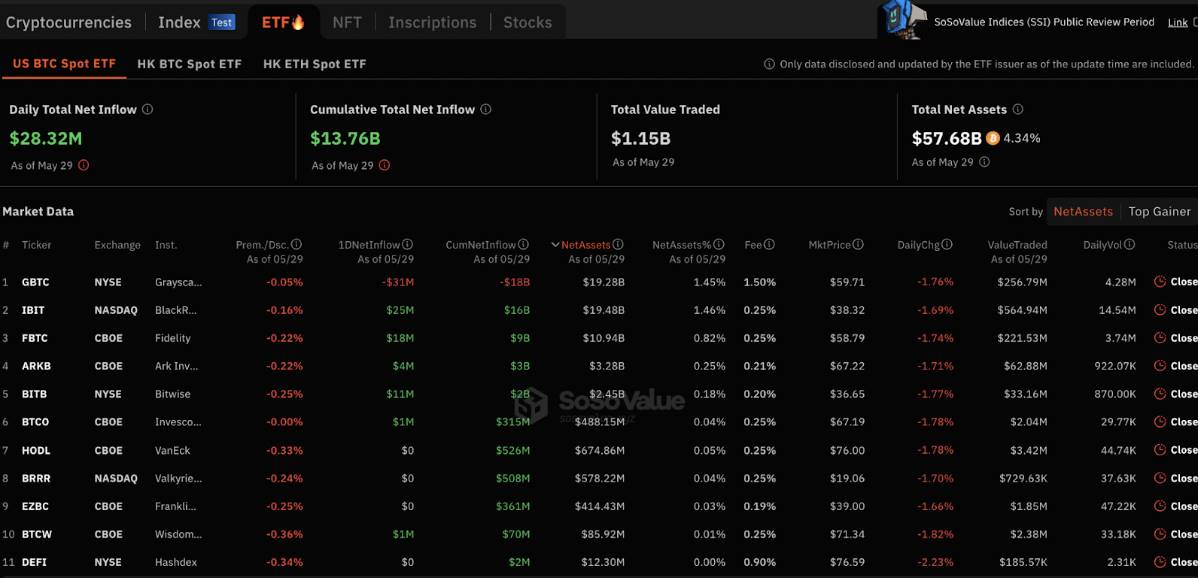
According to sosovalue data, as of May 29, the total net asset value of spot Bitcoin ETFs reached $57.683 billion, representing 4.34% of Bitcoin’s total market cap—the ETF-to-market ratio—and cumulative net inflows have hit $13.76 billion, with 12 consecutive days of positive flows.
On May 28, Grayscale Investments®, the world’s largest crypto asset management firm, released Phase Two of its national survey titled “2024 Election: The Role of Crypto,” revealing that amid geopolitical tensions, inflation, and a weakening dollar, 41% of potential voters are now paying attention to Bitcoin and other crypto assets—an increase from 34% in the first phase of the Harris Poll conducted since November 2023.
Similarly, more voters now expect part of their investment portfolios to include cryptocurrency (up to 47% in 2024 from 40% in 2023). Grayscale’s research head Pandl commented: “Aligned with recent voting outcomes in both the House and Senate, this data further confirms that cryptocurrency has become a bipartisan concern—one that neither party can afford to ignore.”
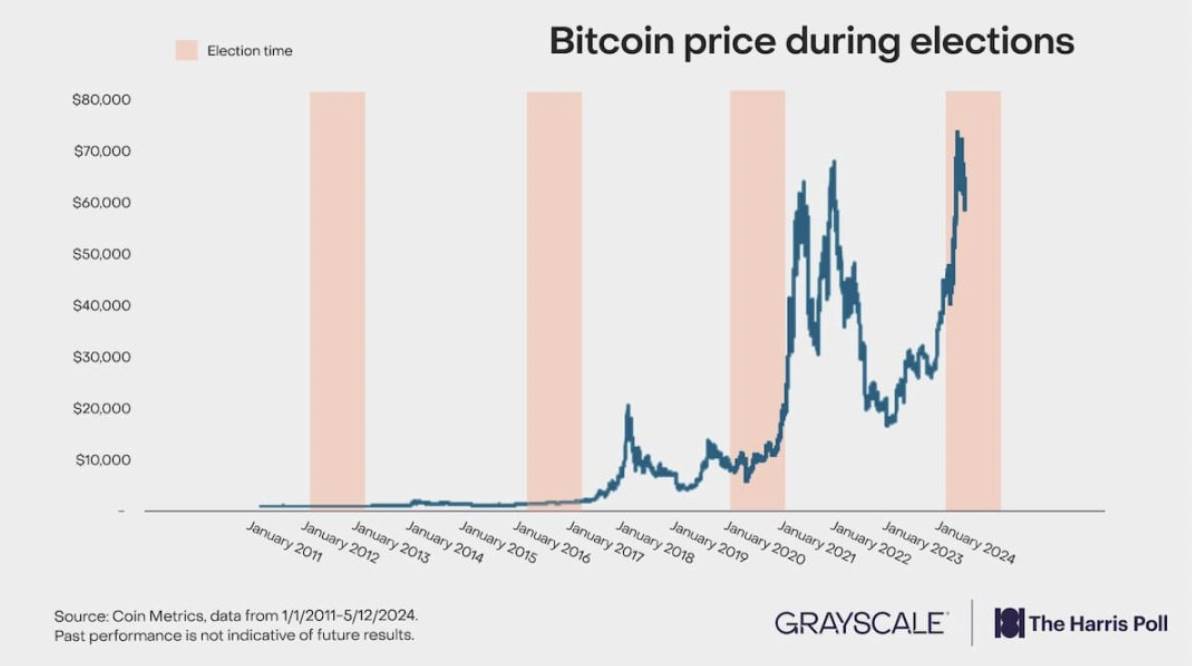
This rising interest is largely attributed to the successful launch of spot Bitcoin ETFs in January, which have absorbed $13.7 billion in net inflows since inception. Grayscale noted that nearly one-third of voters reported increased interest in crypto as an asset class after regulators approved ETFs.
Outlook and Risk Warning
The United States currently stands at a critical juncture, facing major decisions on macroeconomic policies such as interest rate hikes, inflation control, and its global positioning. As public interest in cryptocurrency grows, the government’s evolving stance on this emerging digital asset class remains a focal point.
With the election approaching, both Trump and Biden are intensifying their debate on crypto—a highly contentious topic—to secure voter and financial support. These moves not only reflect the ambiguous embrace of crypto by both parties but also signal potential shifts in future regulation and a more rational approach to risk management.
Meanwhile, frequent enforcement actions near the election have fueled conspiracy theories, with the SEC appearing to take political sides. LBank reminds users to recognize the inherent volatility of the crypto market and to invest cautiously and knowledgeably, avoiding blind speculation driven by hype or social media trends.
Join TechFlow official community to stay tuned
Telegram:https://t.me/TechFlowDaily
X (Twitter):https://x.com/TechFlowPost
X (Twitter) EN:https://x.com/BlockFlow_News










