








Ethereum Ecosystem Rekindled: A Deep Dive into ERC-7683 Led by Uniswap
TechFlow Selected TechFlow Selected
Ethereum Ecosystem Rekindled: A Deep Dive into ERC-7683 Led by Uniswap
The world has long suffered from cross-chain issues.
 Navigating Web3 tides with focused insights
By TechFlow
Anticipation around the approval of Ethereum ETFs has reignited the gold rush for ETH Beta.
The resurgence of mainnet trading activity is inevitably radiating across Ethereum's L2 ecosystems—Farcaster’s announcement of major funding brought DEGEN back into the spotlight, and during this wave of ETH Beta, OP has once again become a key focus.

Total transaction volume on L2s within the Uniswap protocol is approaching $300 billion
But in practical terms, as hotspots emerge randomly across chains, users chasing trends quickly may face uneven fund distribution across chains, requiring cross-chain transfers—an experience that is far from smooth both in usability and operation.
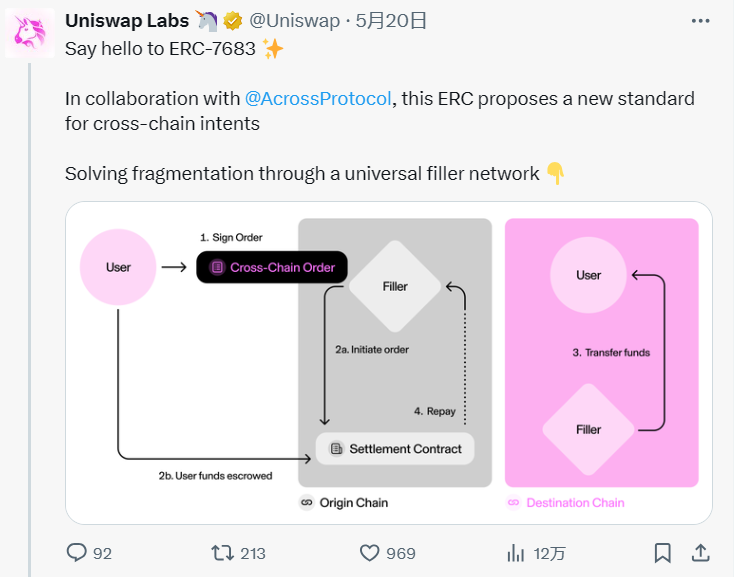
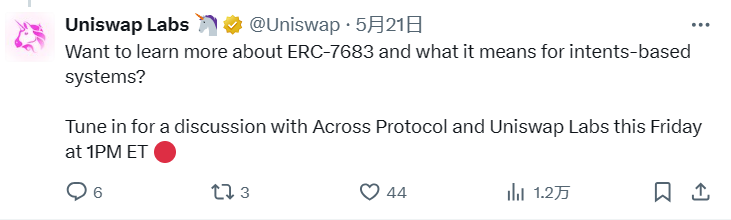
Recently, Uniswap—the veteran DEX leader on the Ethereum mainnet—responded swiftly to current needs by promoting, via its official Twitter, a new cross-chain intent standard jointly developed with Across: ERC-7683.
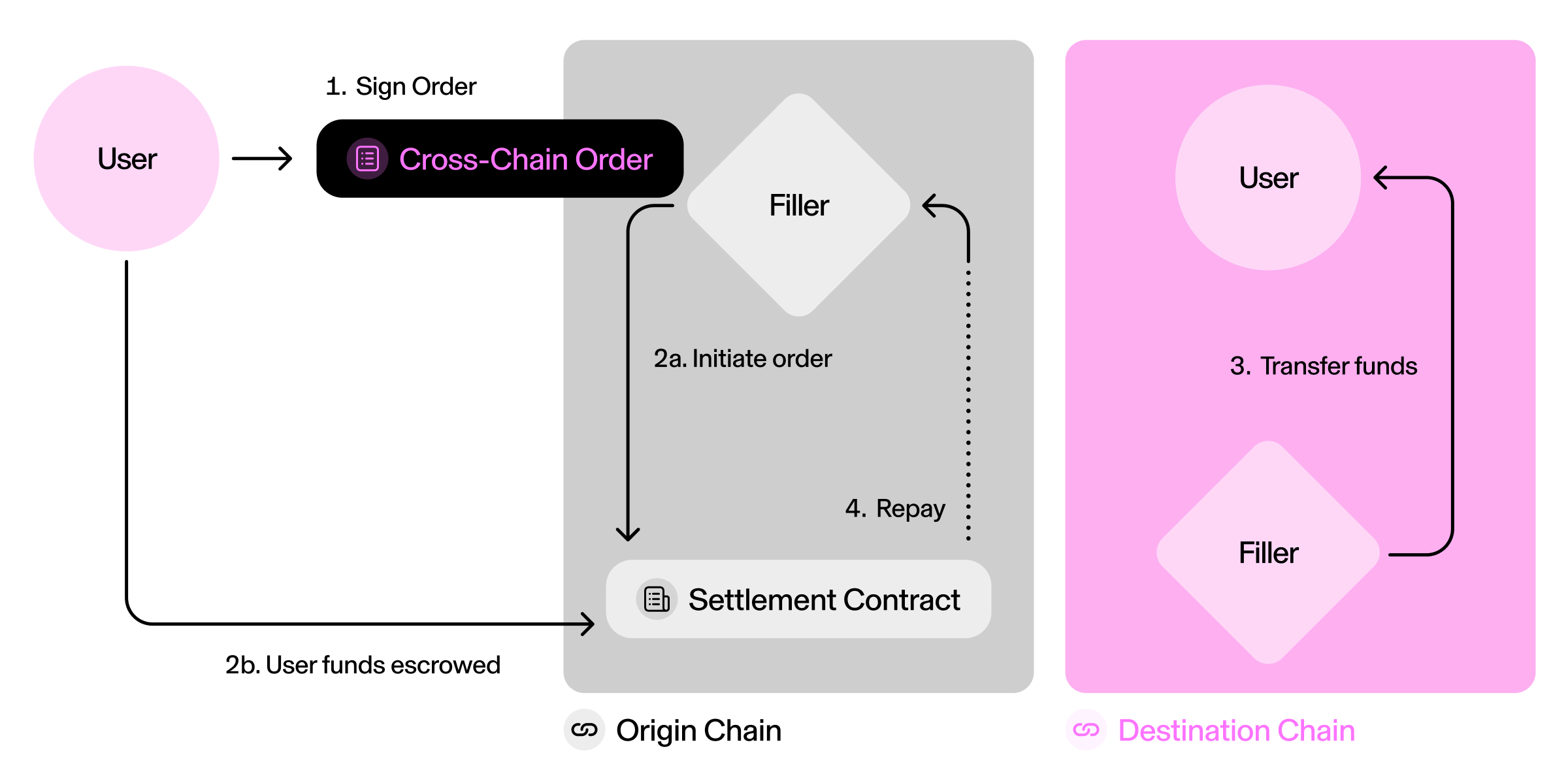
Execution process of cross-chain transactions under the ERC-7683 standard
Could this inject renewed vitality and catalytic momentum into existing ETH DeFi 1.0 projects?
Cross-chain is easy to understand—but what exactly is “cross-chain intent”?
Before explaining cross-chain intent, let’s first introduce the concept of “intent architecture”:
Intent architecture is a design approach where users only need to specify their desired end state (i.e., the intent), without having to worry about execution details. The system automatically finds and executes the optimal path to achieve that goal based on the user's intent.
With an understanding of intent architecture, the idea of “cross-chain intent” becomes much less abstract:
Cross-chain intent refers to executing user-specified transactions across different blockchains. For example, you hold USDC on Ethereum and want to exchange it for MATIC on Polygon. In a cross-chain intent system, you simply tell the system, “Swap my USDC on Ethereum for MATIC on Polygon,” and the system automatically identifies and executes the optimal path—including bridge and swap operations—to complete the transaction.
ERC-7683: The First Cross-Chain Intent Standard
In theory, cross-chain intent systems simplify the complexity of traditional bridging, positioning themselves as the primary solution for user cross-chain interactions. However, the key challenge these systems currently face lies in securing sufficient liquidity and building an active network of fillers to execute cross-chain trades.
As the number of chains and cross-chain demands grow, insufficient liquidity and disorganized filler network coordination can lead to higher user costs, longer wait times, and increased failure rates.
ERC-7683 standardizes cross-chain intent to optimize the cross-chain transaction process, innovatively addressing current challenges:
-
Standardized transaction interface: ERC-7683 defines standard structures—CrossChainOrder and ResolvedCrossChainOrder—parsing orders into executable standardized formats that are easier for fillers to interpret and process, enabling interoperability between different blockchain systems. By proposing that all cross-chain intents follow the same structural format, ERC-7683 allows for a universal, shared filler network to handle transactions.
-
Shared filler network: After users sign orders through the standardized interface, those orders are broadcast across the network to multiple fillers. Fillers compete via a bidding mechanism, offering the best quotes and most efficient execution paths.
-
Automated processing: Users only input their transaction intent; the system automatically handles complex cross-chain operations, reducing both cost and time. This delivers lower fees and a better user experience.
-
Secure fund custody: User funds are held in settlement contracts using standardized verification mechanisms, only released to fillers upon successful transaction completion.
Imagine manually bridging assets via cross-chain bridges as an outdated logistics chain: if a user wants to send a package from A to B, they must personally pack and weigh it, plan the route, contact carriers, and track the shipment throughout. Carriers vary in capacity and pricing, and there's even risk of lost packages. The process is cumbersome, requiring extensive user knowledge and decision-making.
ERC-7683, by contrast, functions like a mature courier service—with unified, comprehensive standards covering pricing, route planning, and capacity allocation. For users, this “one-click cross-chain” experience is both hassle-free and cost-effective.
Expectations from Project Teams
The pain of cross-chain has persisted for far too long.
From a theoretical standpoint, Uniswap’s introduction of the ERC-7683 standard does offer a more convenient cross-chain workflow.
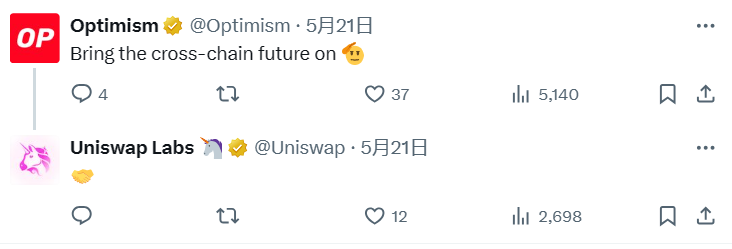
It’s not just users—projects such as Optimism and Krystal have also expressed strong support for ERC-7683, all hoping for a fast, reliable cross-chain protocol that liberates liquidity and breathes new life into on-chain activity.
Currently, ERC-7683 is still under review and discussion and has not yet officially launched. It is expected to be formally implemented after further refinement and approval.
Uniswap and AcrossProtocol will host a session on ERC-7683 this Friday at 1 PM ET. More details about the standard’s practical applications and technical specifics will be shared during the event.
Join TechFlow official community to stay tuned
Telegram:https://t.me/TechFlowDaily
X (Twitter):https://x.com/TechFlowPost
X (Twitter) EN:https://x.com/BlockFlow_News
 深潮TechFlow


