$PYTH迎来了首次解锁,PYTH生态迈入新阶段
TechFlow Selected TechFlow Selected
$PYTH迎来了首次解锁,PYTH生态迈入新阶段
This unlock will not only give more people the opportunity to participate in future Pyth staking, but may also allow more users to meet the full staking requirements at a lower cost.
 Navigating Web3 tides with focused insights
By DiamondHands
May is a month of major token unlocks. In addition to the recent $SUI one-year anniversary unlock, the $PYTH unlock has also drawn significant attention.
The impact of token unlocks on price remains ambiguous—some believe prices may rise ahead of an unlock, while others think it will be priced in early.
Unfortunately, this article will not speculate on how the $PYTH unlock might affect its token price. Instead, it aims to highlight key insights behind the unlock and its potential long-term implications for the PYTH project itself.
Unlocking 21.25%: Where Do These Tokens Come From?
First, let's review $PYTH’s token distribution:
Total Supply: 10,000,000,000
Initial Circulating Supply: 1,500,000,000 (15%)
Lock-up Period: 85% of PYTH tokens were initially locked and are being gradually unlocked at 6, 18, 30, and 42 months after the initial listing.
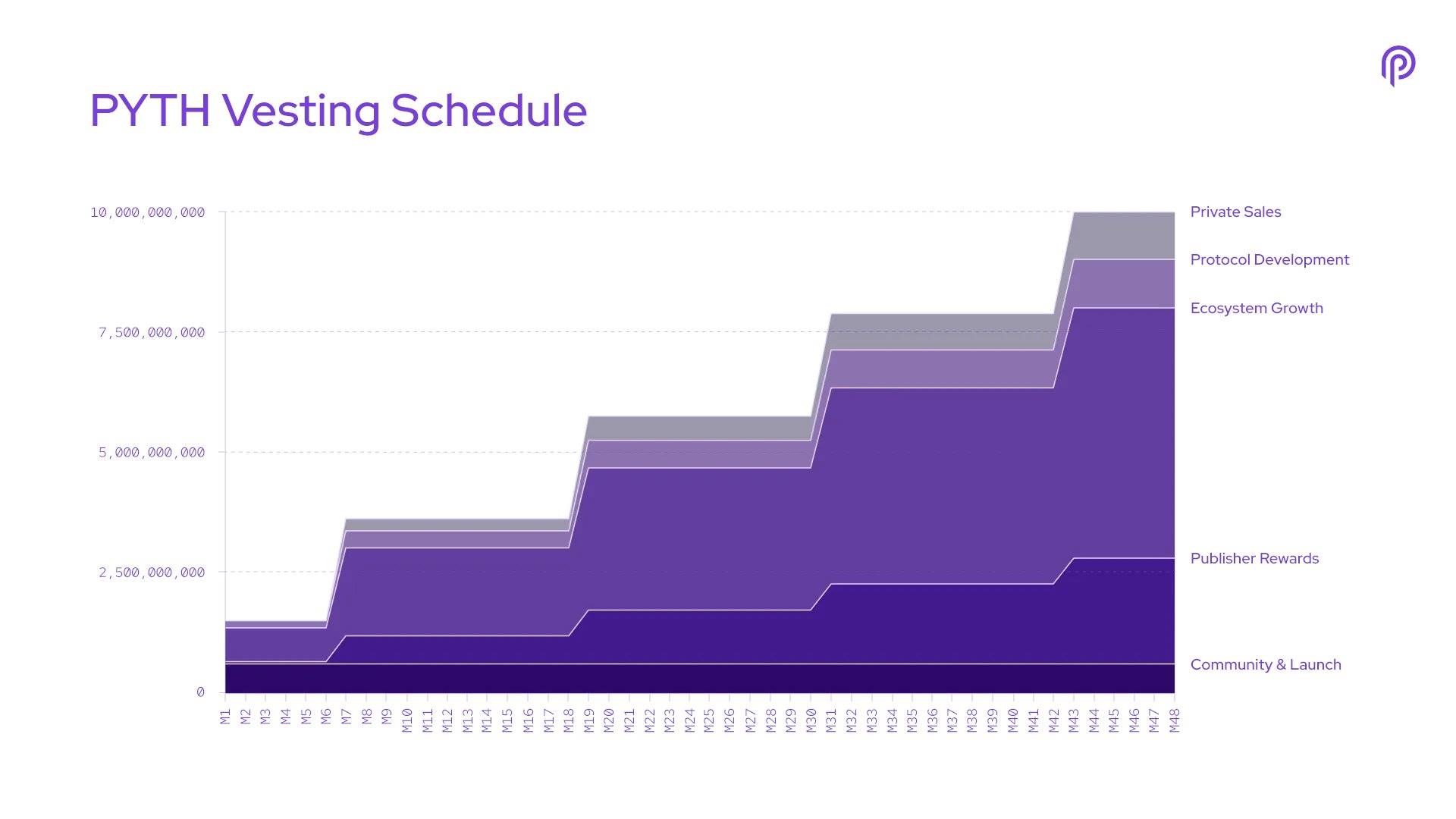
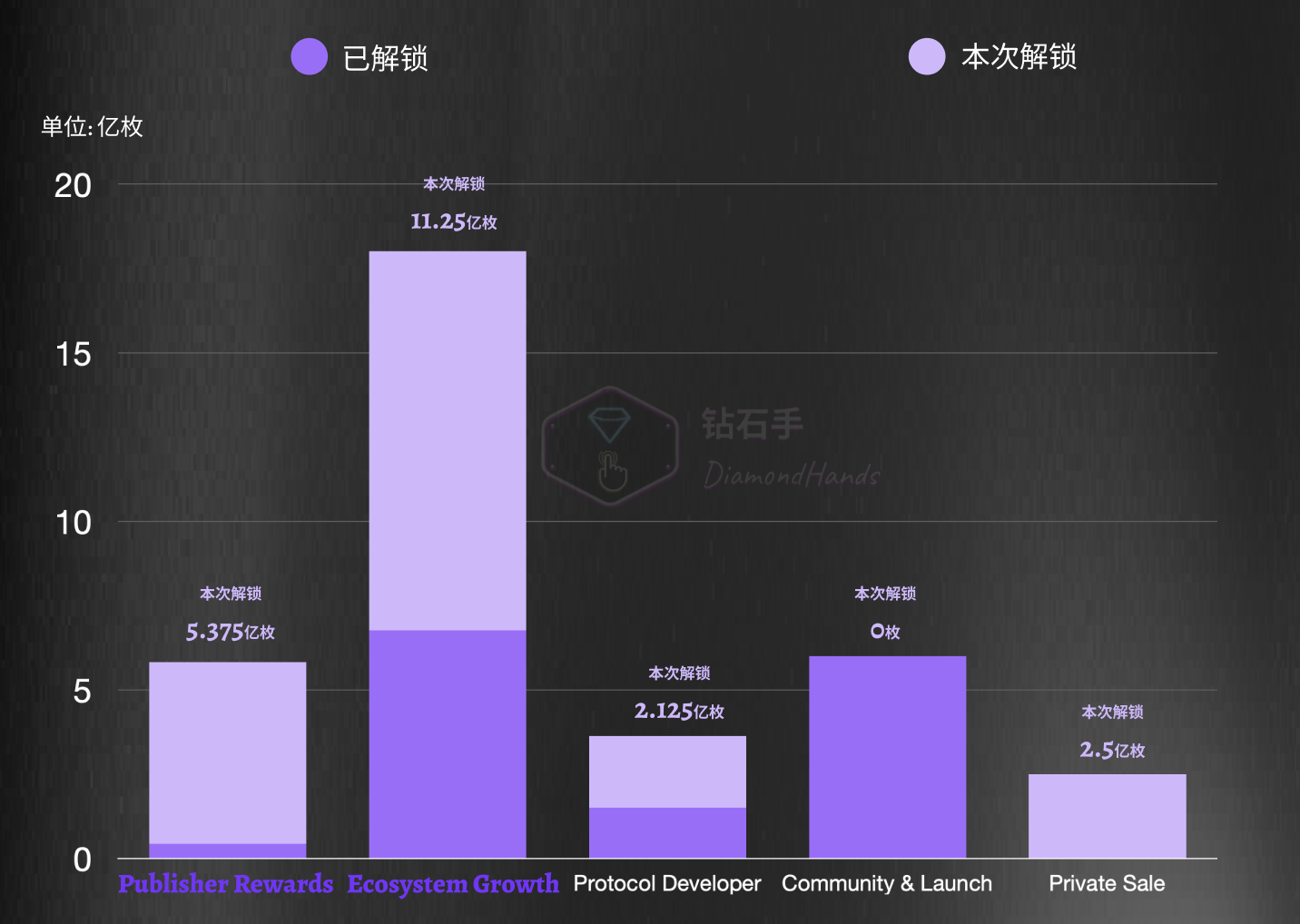
Out of the total 10 billion tokens, this unlock will release an additional 21.25%, or 2.125 billion tokens. Our main focus should therefore be on how these 2.125 billion tokens are allocated.
Publisher Rewards – 22% total allocation, ~537.5 million newly unlocked
This portion is reserved for data providers, or "publishers," who submit price data to the Pyth Network protocol (data publishers). The Publisher Rewards allocation consists of tokens set aside through various incentive and bonus programs designed to encourage accurate and timely data publishing.
Ecosystem Growth – 52% total allocation, ~1.125 billion newly unlocked
This strategic reserve is designated for contributors to the Pyth ecosystem, including community members, developers, educators, researchers, strategic partners, and early data publishers. Its purpose is to recognize and reward individuals and organizations that have played a key role in expanding and energizing the Pyth Network.
Protocol Developer – 10% total allocation, ~212.5 million newly unlocked
These tokens are allocated to core contributors such as Douro Labs, who focus on building oracle tools, products, and infrastructure to enhance the decentralization and capabilities of Pyth’s data services.
Community & Launch – 6% total allocation, 0 newly unlocked
This allocation was used for initial launch activities and community programs. All 600 million PYTH tokens in this category were fully unlocked on day one.
Private Sale (VCs) – 10% total allocation, 250 million newly unlocked
These tokens go to Pyth Network’s venture capital investors. All 1 billion PYTH tokens in this category are subject to lock-up schedules and are being released incrementally according to the timeline above.
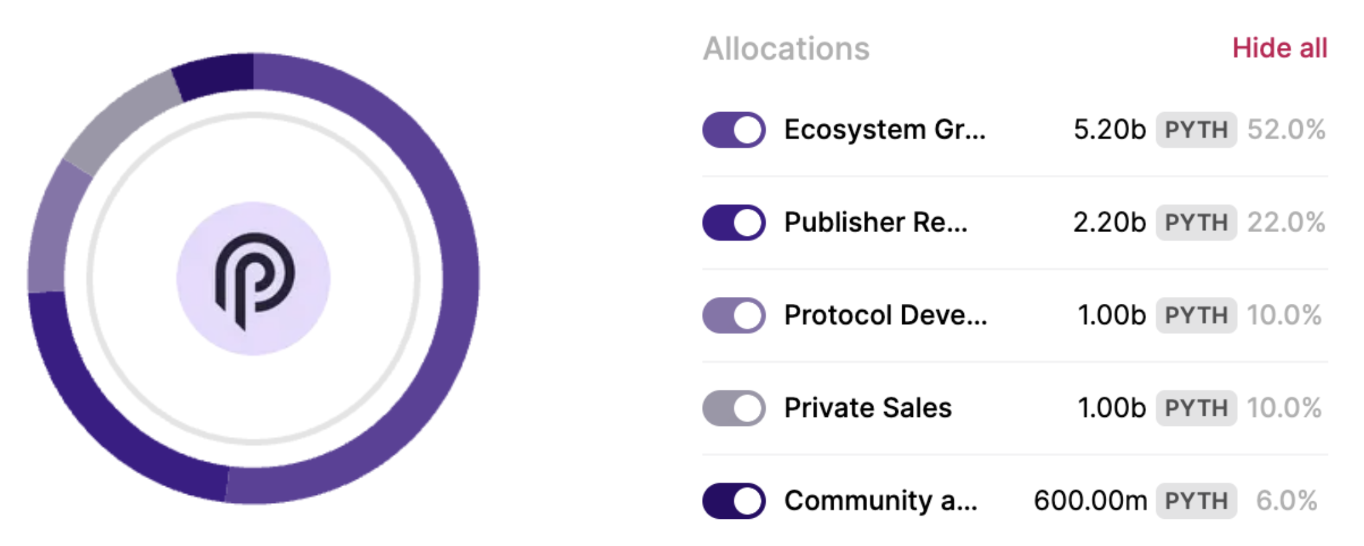
Therefore, we can see that the two largest sources of this unlock are Publisher Rewards and Ecosystem Growth.
Pyth Ecosystem Grants: PYTH Moving Toward a New Ecosystem Era
It's clear that the Pyth team has recently intensified efforts around ecosystem development. Overall, they're sending a strong signal: while the largest portion of the unlock comes from Ecosystem Growth, these tokens are held in the Pyth DAO treasury and will not immediately create sell pressure ("NOT 'sell pressure'").
On May 16, the team officially launched the Pyth Ecosystem Grants Program, offering 50 million PYTH in grants to qualified community members to encourage sharing ideas and insights about the Pyth Network within the broader Web3 community.
The grant program includes three categories: Community Grants, Research Grants, and Developer Grants. While the initial funding amount is small compared to the unlock size, over a longer horizon (six months or more), the Ecosystem Growth allocation functions more like a strategic reserve for future growth. These tokens are technically released, but actual circulation depends entirely on future ecosystem needs.
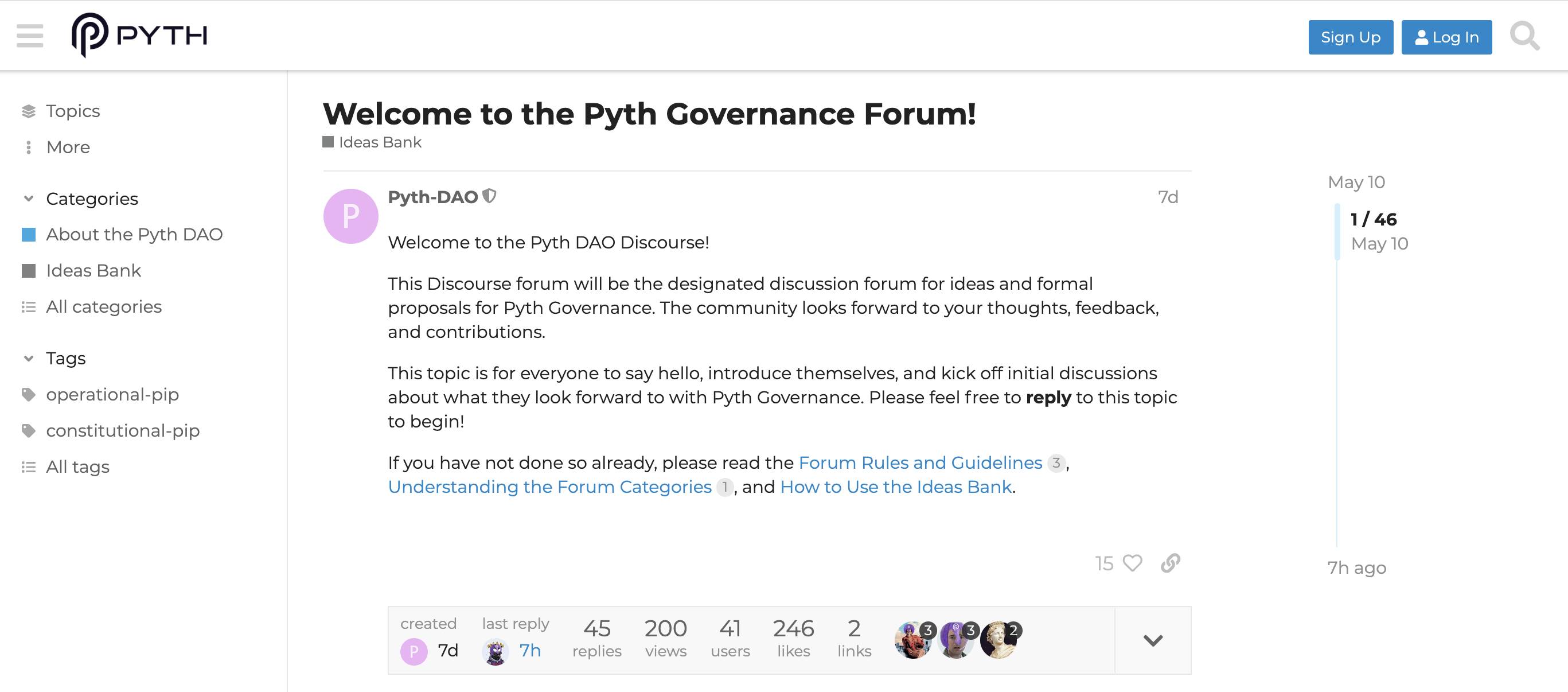
This reflects Pyth’s commitment to expanding its community and ecosystem. Additionally, the launch of the Pyth Forum marks a crucial step toward establishing Pyth DAO.
As for the Publisher Rewards portion, Pyth currently has around 100 publishers submitting price feeds and earning rewards—they are vital participants in the ecosystem. According to the whitepaper, publishers must stake their own $PYTH tokens to participate, meaning these unlocked tokens may not all enter circulation immediately. However, the actual behavior remains to be seen.
Overall, more than 60% of the newly released 2.125 billion tokens are theoretically unlikely to enter immediate circulation. Their usage will depend on decisions made by the treasury and ecosystem participants.
$PYTH Utility and Future Ecosystem Development
From early "Stake for Airdrop" models to today’s requirements of staking 1,000, 2,000, or even more tokens to qualify, reduced circulation often leads to higher staking costs.
Thus, this unlock may give more people the opportunity to participate in future Pyth staking—and potentially meet high staking thresholds at lower cost.
But beyond staking, what else can $PYTH be used for?
This is precisely where the Pyth Forum becomes critical. Based on community feedback, the team does not want to centrally dictate use cases but instead encourages users to propose better ideas collectively.
The most discussed possibility now is moving beyond “Staking for Airdrop” to “Staking for Yield.”
Based on current discussions, there could be three potential sources of yield:
1 – APY Returns
Similar to Chainlink’s staking model, which offers over 4% APY, $PYTH could adopt a similar mechanism.
2 – Staking with Publishers to Share Revenue
For example, if Pyth publishers earn $PYTH rewards, could users stake tokens with them to receive a share of those rewards?
For details on Pyth’s mechanisms, refer to: Pyth Network: Setting the Benchmark for Permissionless, Low-Latency, High-Fidelity DeFi Oracles
3 – Sharing Protocol-Level Revenue
Many say oracles are a promising sector—projects can issue tokens and generate protocol revenue. So when Pyth starts earning profits, can stakers also receive a portion? These are exactly the types of topics that will be debated on the Forum.
In just six months since launch, Pyth has already integrated with over 350 applications, deployed more than 500 price feeds, and expanded across 55 blockchains.
Admittedly, this unlock will bring some sell-side pressure. Whether that pressure is manageable largely depends on the developments in the three areas mentioned above. In the long term, increased token circulation could enable more users to become Pyth stakers, strengthening the community.
Pyth Network will continue progressing toward full decentralization via Pyth DAO.
Join TechFlow official community to stay tuned
Telegram:https://t.me/TechFlowDaily
X (Twitter):https://x.com/TechFlowPost
X (Twitter) EN:https://x.com/BlockFlow_News
 @zolo_hands