Roaring Kitty, the legendary GME trader, reveals: If you hold, promote relentlessly and leverage media influence
TechFlow Selected TechFlow Selected
Roaring Kitty, the legendary GME trader, reveals: If you hold, promote relentlessly and leverage media influence
Maybe this meme season will cycle on endlessly.
 Navigating Web3 tides with focused insights
Author: cyclop
Translation: TechFlow
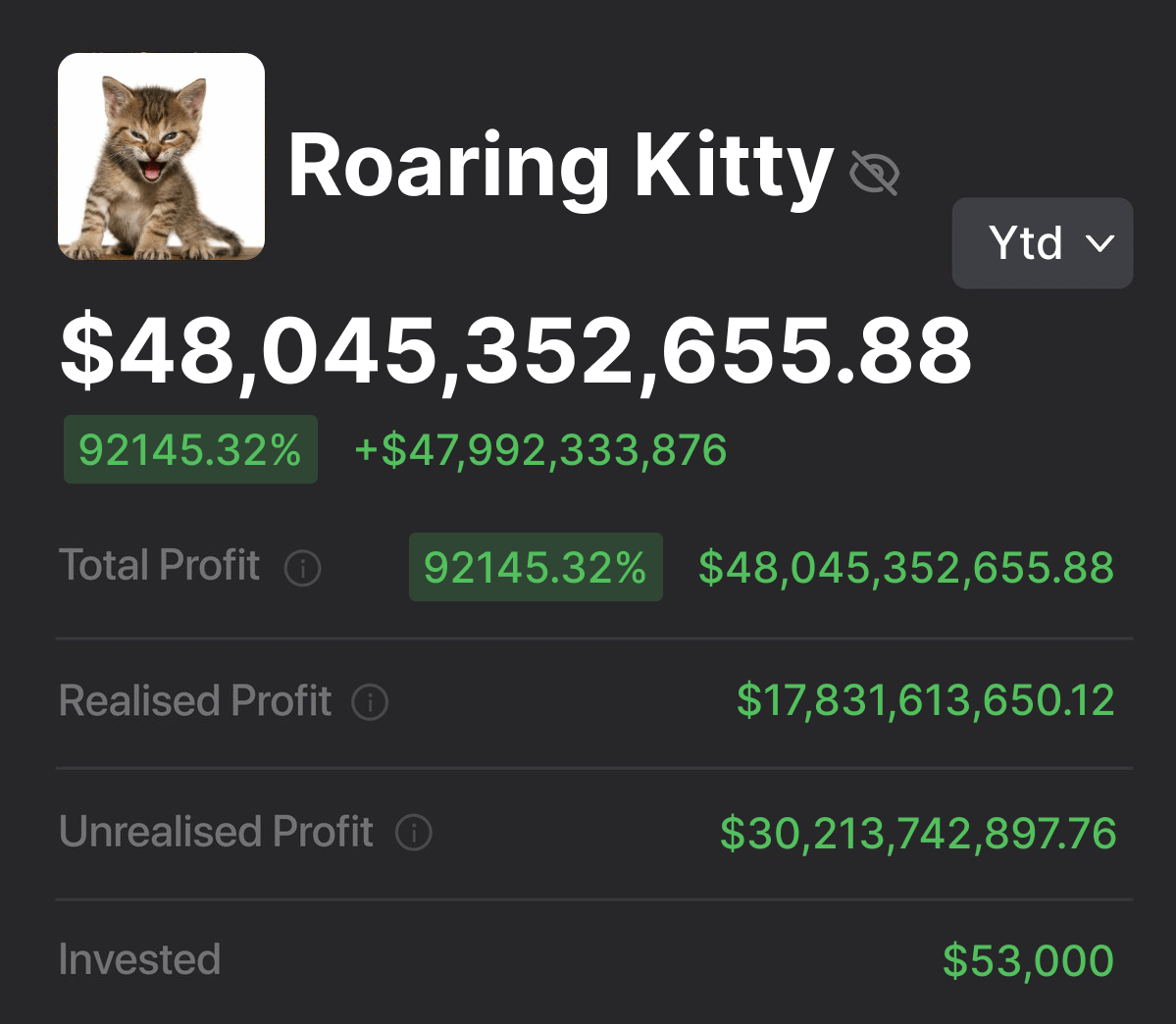
This is Roaring Kitty, one of the greatest retail traders in history. He turned $53,000 into $48 million on $GME. After being offline for three years, he’s back today. Here’s his entire story—the key to achieving 10,000x returns this cycle.
Overview
-
Keith Gill, widely known as @TheRoaringKitty, shared insights about the undervalued GameStop stock on his Twitter.
-
In 2019, he bought it for $53,000.
-
His portfolio peaked at $48 million during GameStop's surge.
-
Gill hasn’t posted anything in three years—but today, he’s back.
Who is @TheRoaringKitty?
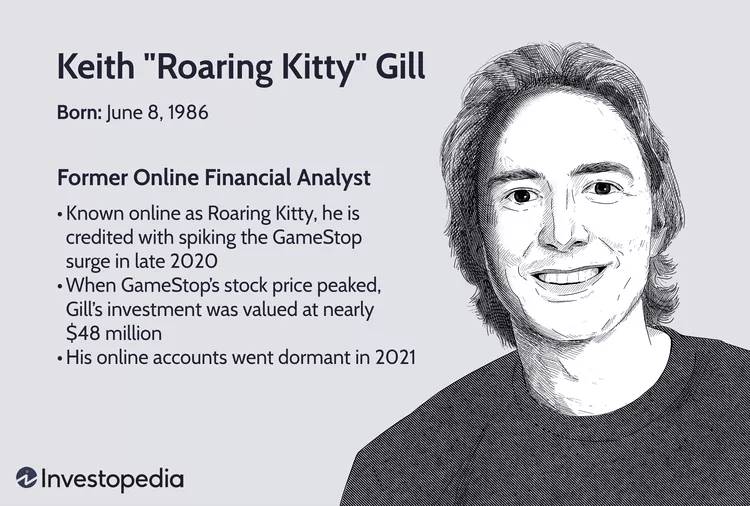
Born in 1986 in Brockton, Keith Gill was a college track star. After earning All-American honors, he moved into stock analysis. In 2019, he became an investing icon and a celebrity in crypto Twitter circles by betting on $GME, later founding memeszn in 2021. How did he do it?
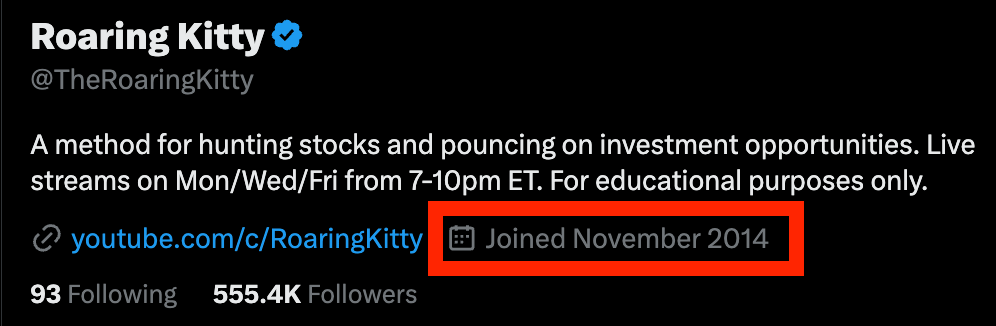
As early as 2014, he created his own Twitter account with the goal of “finding stocks and seizing investment opportunities.” In 2015, he joined YouTube, regularly streaming his trades and market research. He also joined Reddit in 2019 under the username DFV (DeepFuckingValue).
In 2019, he used all these social media platforms to buy @GameStop / $GME for $53,000. He heavily promoted it across Reddit, YouTube, and Twitter. Other community members supported his thesis, driving the stock price sharply higher. By 2021, $GME peaked at $483.
In February 2021, Gill testified before Congress, arguing that GameStop was “severely undervalued.” Despite class-action lawsuits accusing him of causing “massive losses” to small investors and violating securities laws, the cases were dismissed.
Ultimately, Gill made around $48 million, becoming a gigachad who enabled his followers to profit while challenging traditional venture capital firms. His story highlights the power of media influence in financial markets.

Law professor Joshua Mitts highlighted the unique drivers behind meme stock rallies, identifying a combination of factors:
-
A flood of new retail traders entering the market
-
Abundant liquidity fueled by pandemic stimulus and historically low interest rates
-
Allegedly, Gill’s substantial and sustained profits
This is especially relevant to cryptocurrency. From this story, we can learn the following:
-
Powerful KOLs now have the ability to move markets. Consider Ansem, the embodiment of $SOL and $WIF—his contribution to pumping $SOL and $WIF is priceless.
-
Following many KOLs often leads to losses, but picking the right figure is the easiest path to profit. If he and his arguments are influential, the crowd will follow, forming a community that drives pumps.
-
This is why memecoins have become so popular. In this space, all participants are on equal footing—after each private sale unlock, VCs won’t dump tokens on you at valuations 1000x higher.
Perhaps this meme cycle will go on endlessly. Let’s wait and see.
Join TechFlow official community to stay tuned
Telegram:https://t.me/TechFlowDaily
X (Twitter):https://x.com/TechFlowPost
X (Twitter) EN:https://x.com/BlockFlow_News
 @nobrainflip