








How can World Chain achieve a win-win with the Optimism Superchain by clustering into the L2赛道?
TechFlow Selected TechFlow Selected
How can World Chain achieve a win-win with the Optimism Superchain by clustering into the L2赛道?
Choosing the OP Stack is actually a "shortcut" for Worldcoin.
 Navigating Web3 tides with focused insights
Translation: Jordan, PANews
After multiple migrations within the Ethereum ecosystem, on the evening of April 17, Worldcoin—a cryptocurrency project co-founded by Sam Altman—announced the launch of its own Layer 2 network: World Chain. This marks the moment when Worldcoin finally finds a scalable home for itself.
So why has Worldcoin chosen to build its own blockchain and enter the already crowded L2 space?
The Difficult Road to Scaling for Worldcoin
The Worldcoin protocol has always aimed to become the largest global financial and identity network—the most inclusive project possible. But enabling everyone in the world to easily join means its system must support a scale of billions of users. From a technical standpoint, no existing blockchain currently meets the demands of the Worldcoin protocol.
At the end of 2020, the Worldcoin team discovered the Hubble project and began implementing a higher-performance sequencer. Hubble’s original hybrid zk/optimistic design used BLS signature aggregation, custom transaction compression formats, and fraud proofs, successfully supporting early applications developed under the Worldcoin protocol such as the World App, which expanded to around 700,000 users during its Alpha phase.
However, Hubble's design proved limiting in terms of user and developer experience, as it only allowed simple transfers and required protocol upgrades to add new transaction types. By this time, Worldcoin user needs had evolved beyond simply holding or sending WLD tokens. The World App began deploying secure accounts for users, offering token swaps, access to other tokens, and gasless meta-transactions. As a result, core contributors to Worldcoin decided to migrate to the Polygon PoS network, which at that time was the only high-performance, low-cost network within the Ethereum ecosystem.
Fast forward to July 2023, shortly before the public testnet launch of Worldcoin, the team determined that Ethereum rollups were mature enough and migrated to the OP mainnet. At that point, Worldcoin’s user base had grown to approximately two million. However, with the project's official launch, it quickly became apparent that the entire L2 ecosystem was still in its early stages relative to Worldcoin’s ambitions, with many areas of the infrastructure stack needing improvement—including the OP mainnet itself, relay infrastructure, RPC providers, and more.
The migration to L2 also exposed inefficiencies related to on-chain activity. Additionally, recent spikes in overall L2 activity caused L1 gas prices to rise over 20 times higher than usual for extended periods. Fortunately, Ethereum’s “Dencun” upgrade including EIP-4844 was launched in February 2024, alleviating concerns about gas costs for Worldcoin users. However, EIP-4844 does not solve Ethereum’s long-term scalability challenges—further improvements like Danksharding are still required on the mainnet.
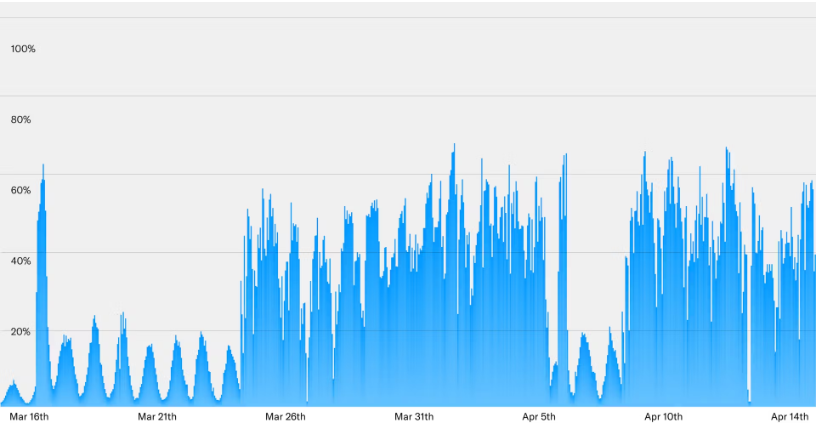
Top image: Percentage of total gas usage on OP mainnet attributed to Worldcoin over the past 30 days
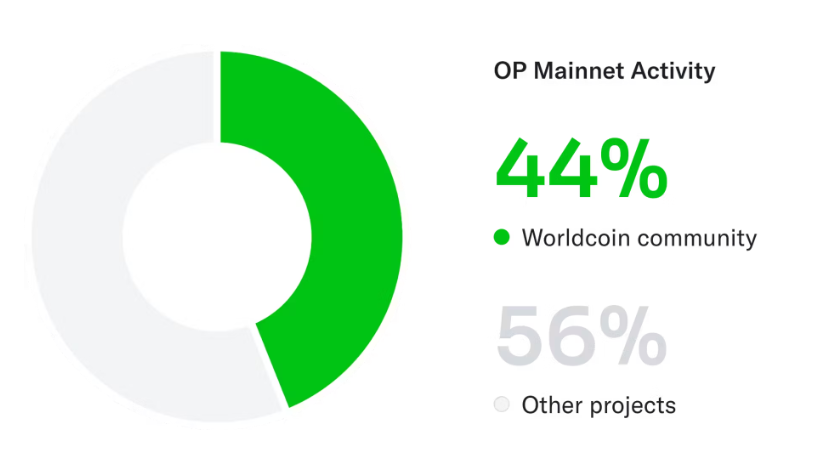
Currently, Worldcoin transactions account for about 44% of monthly activity on the OP mainnet, rising above 80% during peak periods—and sometimes exceeding capacity limits. Given the size and growth rate of the community, it is now time for Worldcoin to transition to a dedicated network—giving birth to World Chain.
World Chain: Scaling Worldcoin and the L2 Ecosystem
At present, both L1 and L2 would require years of significant upgrades to meet Worldcoin’s on-chain demands. For the Worldcoin Foundation, L2s serve as spaces for experimentation and innovation. Meanwhile, bringing every person on Earth onto the blockchain is an immense task—one beyond the capability of any single entity. Therefore, Worldcoin has chosen to collaborate with Optimism, Coinbase, and the broader Ethereum ecosystem to become part of the Superchain, jointly launching a dedicated L2 network: World Chain.
World Chain is a new type of blockchain designed specifically for humans—open to all. Compared to bots, verified humans will be prioritized for blockspace and receive temporary gas subsidies for transactions. Anyone can submit transactions to World Chain, but those created by humans will be prioritized for faster confirmation. Developers building applications on World Chain will gain access to millions of real users worldwide.
Moreover, World Chain will be deeply integrated with the Worldcoin Protocol and leverage World ID’s proof-of-personhood to achieve permissionless, open-source goals. The blockchain will eventually be independently governed by the community. According to Worldcoin, a developer preview of World Chain will be released soon, with full launch expected later this summer.
Notably, World Chain does not aim to support every possible blockchain use case. Leveraging World ID’s Sybil-resistance capabilities, its goal is to build a decentralized finance and identity application ecosystem focused on practical everyday utility—centered around Worldcoin, stablecoins, payments, rewards, lending, and exchanges.
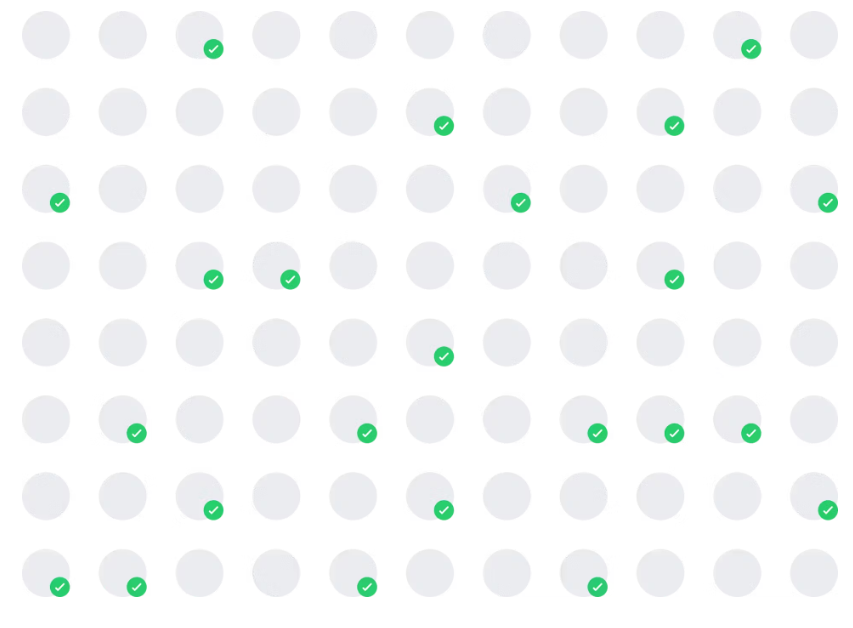
Top image: World Chain users can choose to anonymously verify their address as belonging to a real human using World ID, thereby gaining priority access to blockspace and gas quotas
World Chain is an OP Stack chain focused on scaling. Its near-term goal is to significantly increase the gas limit of the L2 blockchain—but caution is needed, as this comes with risks. Thus, Worldcoin has opted for a safer approach, carefully studying worst-case performance scenarios to meet application requirements.
In addition to execution-layer improvements, World Chain will explore alternative data availability (DA) layers, including DA solutions similar to Plasma. While EIP-4844 has alleviated current throughput bottlenecks on Ethereum, data availability constraints may reappear soon. If future growth continues to expand Worldcoin’s user base, World Chain may need to switch to an alternative DA layer at some point to enable further expansion without burdening users with high fees.
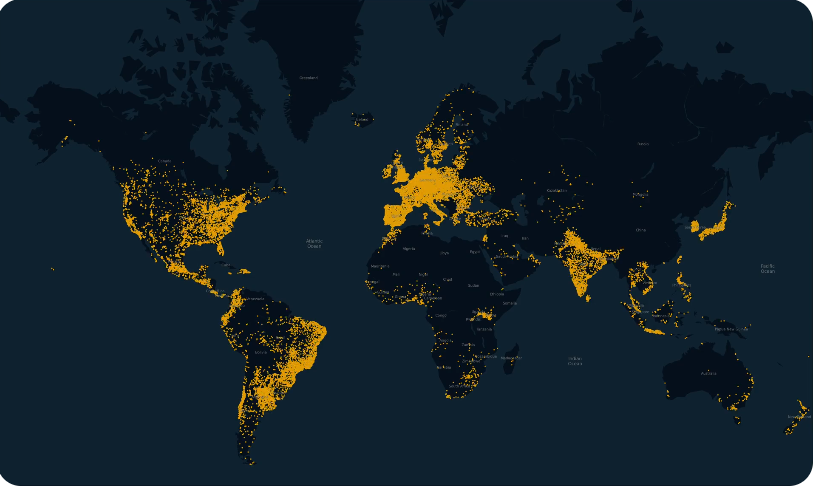
How Can World Chain and the Superchain Achieve Mutual Success?
Choosing OP Stack is essentially a “shortcut” for Worldcoin.
By leveraging OP Stack to build standardized blockchain software, Worldcoin gains advantages in scalability and low fees. In return, the Optimism ecosystem benefits from a share of the on-chain revenue generated by World Chain. This revenue will fund ongoing open-source development and network improvements, benefiting both builders and users. This economic model enables the Superchain to sustainably grow its network value.
By joining the Superchain, World Chain will interoperate with other blockchains such as Base, Mode, OP Mainnet, and Zora. Developers supporting Worldcoin can continue contributing directly to the Ethereum network while collaborating with the wider Superchain ecosystem on shared infrastructure. Furthermore, following earlier OP Chains, World Chain plans to actively participate in Optimism’s governance.
Overall, the core vision of Worldcoin is to bring people worldwide onto the blockchain, expanding continuously based on the digital identity ecosystem powered by World ID, enabling more individuals to contribute across governance, DeFi, social media, gaming, and beyond. The goal of World Chain is equally straightforward: to create a scalable, inclusive blockchain future—unlocking on-chain identity and building a fairer digital economy for everyone.
Join TechFlow official community to stay tuned
Telegram:https://t.me/TechFlowDaily
X (Twitter):https://x.com/TechFlowPost
X (Twitter) EN:https://x.com/BlockFlow_News
 PANews











