








IOSG Research | Unveiling a New Infrastructure Narrative through the AI x Web3 Tech Stack
TechFlow Selected TechFlow Selected
IOSG Research | Unveiling a New Infrastructure Narrative through the AI x Web3 Tech Stack
We are at the dawn of AI and Web3.
 Navigating Web3 tides with focused insights
Author: IOSG Ventures
Introduction
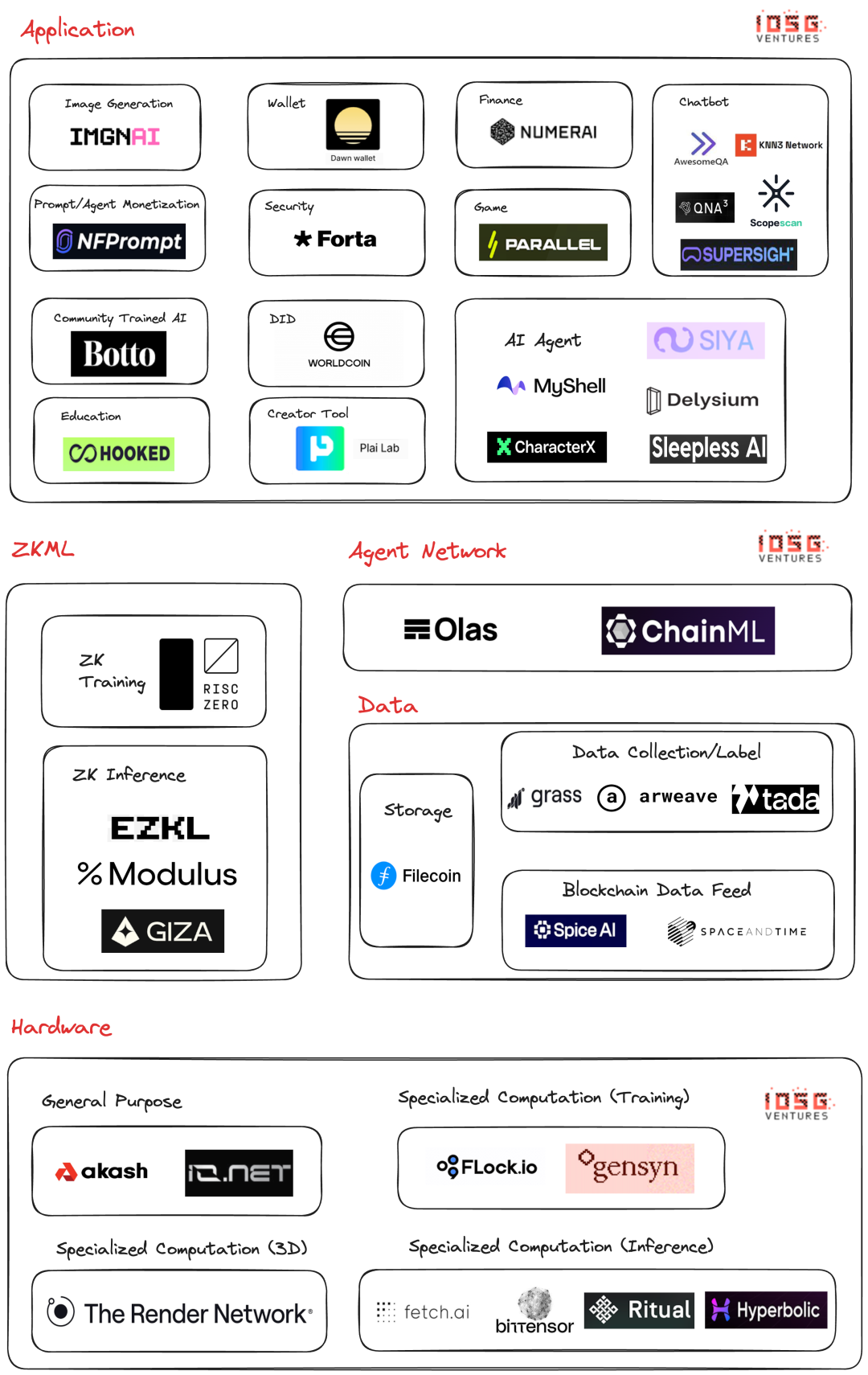
The rapid advancement of large language models (LLMs) has sparked widespread interest in leveraging artificial intelligence (AI) to transform various industries. The blockchain sector is no exception, gaining significant attention due to the emergence of the AI x Crypto narrative. This article explores three primary approaches to integrating AI and crypto, and examines the unique opportunities blockchain technology offers in addressing challenges within the AI industry.
The three pathways for AIxCrypto are:
-
1. Integrating AI into existing products: Companies like Dune are enhancing their offerings with AI—for example, introducing a SQL copilot to help users write complex queries.
-
2. Building AI infrastructure for the crypto ecosystem: Startups such as Ritual and Autonolas focus on developing AI-driven infrastructure tailored specifically to the needs of the crypto ecosystem.
-
3. Leveraging blockchain to solve problems in the AI industry: Projects like Gensyn, EZKL, and io.net are exploring how blockchain technology can address key challenges in AI, including data privacy, security, and transparency.
What makes AI x Crypto unique is that blockchain technology holds promise in solving inherent issues within the AI industry. This distinctive intersection opens up new possibilities for innovative solutions that benefit both the AI and blockchain communities.
As we delve deeper into the AI x Crypto space, our goal is to identify and highlight the most promising applications of blockchain technology in addressing AI industry challenges. By collaborating with AI experts and crypto builders, we aim to foster the development of cutting-edge solutions that fully leverage the strengths of both technologies.
1. Industry Overview
The AI x Crypto landscape can be broadly categorized into two main areas: infrastructure and applications. While some existing infrastructure continues to support AI use cases, new players are introducing entirely AI-native architectures to the market.
1.1 Compute Networks
In the AIxCrypto domain, compute networks play a crucial role in providing the infrastructure needed for AI applications. These networks can be divided into two types based on the tasks they support: general-purpose compute networks and specialized compute networks.
1.1.1 General-Purpose Compute Networks
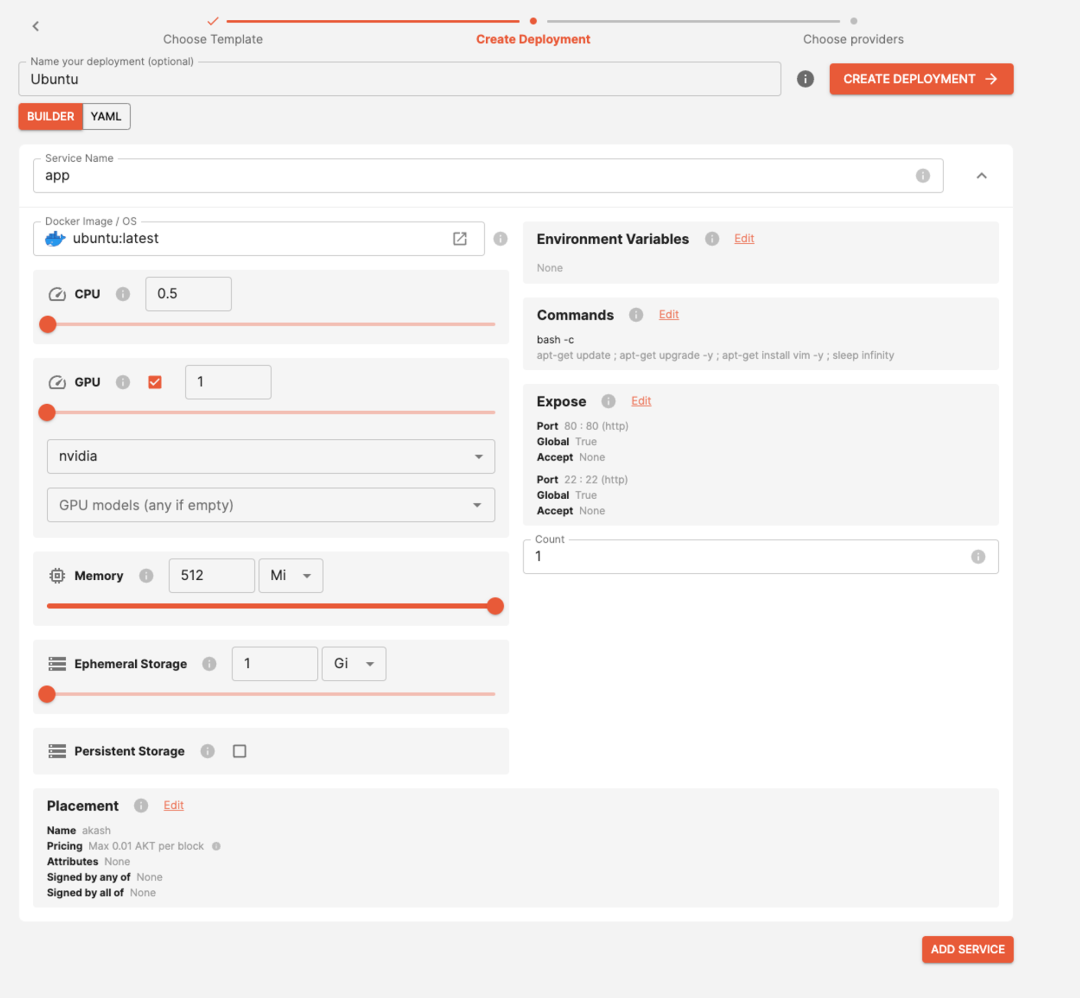
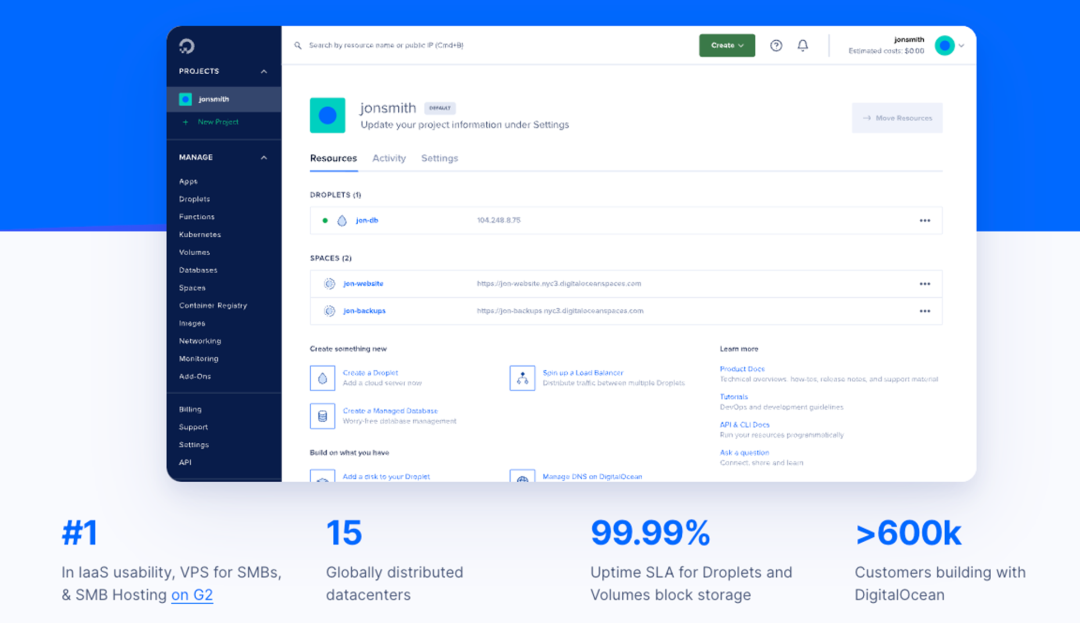
General-purpose compute networks (e.g., IO.net and Akash) allow users to access machines via SSH and provide command-line interfaces (CLI), enabling users to build their own applications. These networks resemble virtual private servers (VPS), offering personal computing environments in the cloud.
IO.net, built on the Solana ecosystem, focuses on GPU leasing and computing clusters, while Akash, based on the Cosmos ecosystem, primarily provides CPU cloud servers and various application templates.
IOSG Ventures’ Perspective:
Compared to mature Web2 cloud markets, compute networks are still in their early stages. Web3 compute networks lack the “Lego-like” modularity of Web2—such as serverless functions, VPS, and database cloud services offered by major providers like AWS, Azure, and Google Cloud.
Advantages of compute networks include:
-
Blockchain technology can harness underutilized computing resources and personal computers, making the network more sustainable.
-
Peer-to-peer (P2P) design enables individuals to monetize unused computing power and offer lower-cost computation, potentially reducing costs by 75%-90%.
However, compute networks face several challenges that make it difficult to move into production and replace Web2 cloud services:
-
While pricing is a key advantage of general-purpose compute networks, competing with established Web2 cloud companies on functionality, security, and stability remains challenging.
-
The P2P model may limit these networks’ ability to rapidly deliver mature and robust products. Decentralization adds extra development and maintenance costs.
1.1.2 Specialized Compute Networks
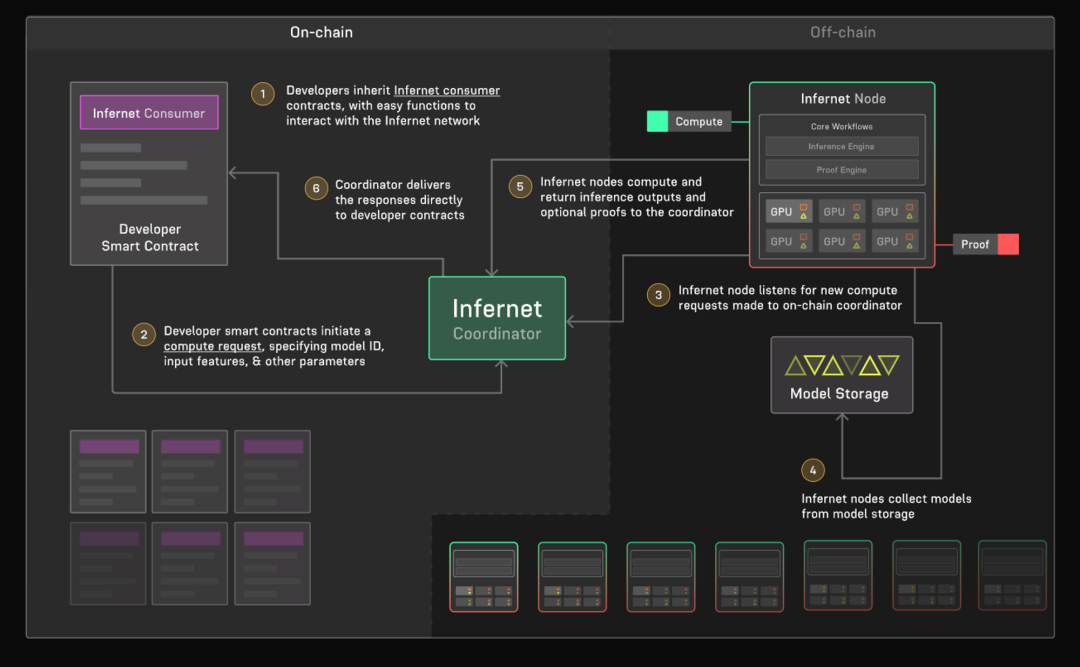
Specialized compute networks add an additional layer on top of general-purpose networks, allowing users to deploy specific applications through configuration files. These networks are designed for specific use cases, such as 3D rendering or AI inference and training.
Render is a specialized compute network focused on 3D rendering. In the AI space, new entrants like Bittensor, Hyperbolic, Ritual, and fetch.ai focus on AI inference, while Flock and Gensyn primarily target AI training.
IOSG Ventures’ Perspective:
Advantages of specialized compute networks:
-
Decentralization and crypto-native features address the centralization and transparency issues prevalent in the AI industry.
-
Permissionless compute networks and verification schemes ensure the validity of inference and training processes.
-
Privacy-preserving technologies, such as federated learning used by Flock, allow individuals to contribute data for model training while keeping their data local and private.
-
Integration with downstream blockchain applications via smart contracts enables direct use of AI inference on blockchains.
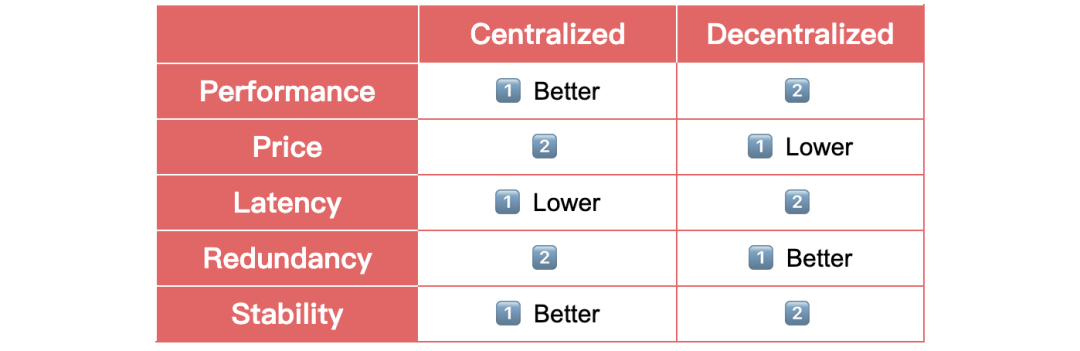
Source: IOSG Ventures
Although specialized AI inference and training compute networks are still in early stages, we expect Web3 AI applications to prioritize Web3 AI infrastructure. This trend is already evident in collaborations such as Story Protocol and Ritual partnering with MyShell to introduce AI models as intellectual property.
While killer applications built on these emerging AI x Web3 infrastructures have yet to emerge, the growth potential is substantial. As the ecosystem matures, we anticipate seeing more innovative applications that leverage the unique capabilities of decentralized AI compute networks.
2. Data
Data plays a critical role in AI models, with every stage of AI model development involving data—including data collection, storage of training datasets, and model storage.
2.1 Data Storage
Decentralized storage of AI models is essential for providing inference APIs in a decentralized manner. Inference nodes must be able to retrieve these models anytime from anywhere. As AI models can reach hundreds of GB in size, a robust decentralized storage network is required. Leading players in decentralized storage, such as Filecoin and Arweave, may fulfill this need.
IOSG Ventures’ Perspective:
This area presents massive opportunities:
-
Decentralized data storage networks optimized for AI models, offering version control, storage of different low-precision quantized models, and fast downloads for large models.
-
Decentralized vector databases, since they are often bundled with models to provide more accurate answers by plugging in relevant knowledge. Existing SQL databases could also add vector search support.
2.2 Data Collection and Labeling
Collecting high-quality data is crucial for AI training. Blockchain-based projects like Grass crowdsource data for AI training using individuals' internet connections. With proper incentives and mechanisms, AI trainers can obtain high-quality data at lower costs. Projects like Tai-da and Saipen focus on data labeling.
IOSG Ventures’ Perspective:
Our observations on this market:
-
Most data labeling projects are inspired by GameFi, attracting users with the "label-to-earn" concept and developers with promises of reduced costs for high-quality labeled data.
-
There is currently no clear leader in this space, while Scale AI dominates the Web2 data labeling market.
2.3 Blockchain Data
When training AI models specialized for blockchain, developers require high-quality blockchain data that can be directly used in their training pipelines. Spice AI and Space and Time provide high-quality blockchain data with SDKs, enabling developers to easily integrate data into their training workflows.
IOSG Ventures’ Perspective:
As demand grows for blockchain-specific AI models, the need for high-quality blockchain data will surge. However, most analytics tools currently only offer data export in CSV format, which is suboptimal for AI training.
To promote the development of blockchain-specific AI models, it is crucial to enhance developer experience by offering more blockchain-focused machine learning operations (MLOps) features. These should enable developers to seamlessly integrate blockchain data directly into their Python-based AI training pipelines.
3. ZKML
Centralized AI providers face trust issues due to incentives to use less complex models to reduce computational costs. For instance, last year users sometimes perceived ChatGPT as underperforming. This was later attributed to OpenAI's updates aimed at improving model efficiency.
Additionally, content creators have raised copyright concerns against AI companies. These companies struggle to prove that specific data was not included in their training processes.
Zero-Knowledge Machine Learning (ZKML) is an innovative approach that addresses trust issues associated with centralized AI providers. By leveraging zero-knowledge proofs, ZKML allows developers to prove the correctness of their AI training and inference processes without revealing sensitive data or model details.
3.1 Training
Developers can execute training tasks within a zero-knowledge virtual machine (ZKVM), such as those provided by Risc Zero. This process generates a proof verifying that training was conducted correctly and used only authorized data. This proof serves as evidence that developers adhered to proper training protocols and data usage permissions.
IOSG Ventures’ Perspective:
-
ZKML provides a unique solution for proving authorized data usage in model training—a task typically difficult given the black-box nature of AI models.
-
The technology is still in its early stages. Computational overhead is significant. The community is actively exploring more use cases for ZK training.
3.2 Inference
ZKML for inference takes much longer than its training counterpart. Several notable companies have emerged in this space, each adopting unique approaches to make machine learning inference trustless and transparent.
Giza focuses on building a comprehensive machine learning operations (MLOps) platform and cultivating a vibrant community around it. Their goal is to equip developers with tools and resources to integrate ZKML into inference workflows.
EZKL, on the other hand, prioritizes developer experience by creating a user-friendly ZKML framework with strong performance. Their solution aims to simplify the implementation of ZKML inference, making it accessible to a broader range of developers.
Modulus Labs takes a different approach, developing their own proof system. Their primary goal is to significantly reduce the computational overhead associated with ZKML inference. By cutting overhead by 10x, Modulus Labs seeks to make ZKML inference more practical and efficient for real-world applications.
IOSG Ventures’ Perspective:
-
ZKML is particularly suitable for GameFi and DeFi scenarios where trustlessness is paramount.
-
The computational overhead introduced by ZKML makes it difficult to run large AI models efficiently.
-
The industry is still seeking DeFi and GameFi pioneers who extensively use ZKML in their products to demonstrate practical use cases.
4. Agent Networks + Other Applications
4.1 Agent Networks
Agent networks consist of numerous AI agents equipped with tools and knowledge to perform specific tasks, such as assisting with on-chain transactions. These agents can collaborate with one another to achieve more complex objectives. Several well-known companies are actively developing chatbot-like agents and agent networks.
Sleepless, Siya, Myshell, characterX, and Delysium are key players building chatbot agents. Autonolas and ChainML are constructing agent networks for more powerful use cases.
IOSG Ventures’ Perspective:
Agents are crucial for real-world applications. They can outperform general AI in executing specific tasks. Blockchain offers several unique opportunities for AI agents.
-
Built-in incentive mechanisms: Blockchain provides incentives through technologies like non-fungible tokens (NFTs). With clear ownership and incentive structures, creators are motivated to develop more engaging and innovative agents on-chain.
-
Composability of smart contracts: Smart contracts on blockchain are highly composable, functioning like Lego blocks. Open APIs provided by smart contracts enable agents to perform complex tasks difficult to achieve in traditional financial systems. This composability allows agents to interact with various decentralized applications (dApps) and leverage their functionalities.
-
Inherent openness: By building agents on blockchain, they inherit the intrinsic openness and transparency of these networks. This creates significant opportunities for composability among different agents, enabling them to collaborate and combine capabilities to solve more complex tasks.
4.2 Other Applications
Beyond the major categories discussed above, several interesting AI applications in the Web3 space are gaining traction, even if they aren't yet large enough to form independent categories. These applications span diverse domains, showcasing the versatility and potential of AI within the blockchain ecosystem.
-
Image generation: ImgnAI
-
Prompt monetization: NFPrompt
-
Community-trained AI image generation: Botto
-
Chatbots: Kaito, Supersight, Galaxy, Knn3, Awesome QA, Qna3
-
Finance: Numer AI
-
Wallets: Dawn_wallet
-
Gaming: Parallel TCG
-
Education: Hooked
-
Security: Forta
-
DID: Worldcoin
-
Creator tools: Plai Lab
5. Driving Mass Adoption by Bringing AIxCrypto to Web2 Users
What makes AI x Crypto unique is its ability to solve the toughest problems in the AI field. Although there is currently a gap between AIxCrypto products and Web2 AI products—and limited appeal to Web2 users—AIxCrypto possesses unique features that only it can offer.
5.1 Cost-Effective Computing Resources:
A major advantage of AIxCrypto lies in providing cost-effective computing resources. As demand for LLMs increases and more developers enter the market, GPU availability and pricing become increasingly challenging. GPU prices have surged significantly, leading to shortages.
Decentralized computing networks, such as DePIN projects, can help alleviate this issue by leveraging idle computing power, GPUs from small data centers, and personal computing devices. While decentralized computing power may lack the stability of centralized cloud services, these networks offer cost-effective computing hardware across diverse geographic locations. This decentralized approach minimizes edge latency and ensures a more distributed and resilient infrastructure.
By harnessing the power of decentralized computing networks, AIxCrypto can offer Web2 users affordable and accessible computing resources. This cost advantage is attractive for drawing Web2 users toward AIxCrypto solutions, especially as demand for AI computing continues to grow.
5.2 Empowering Creator Ownership:
Another significant advantage of AI x Crypto is protecting creators’ ownership rights. In today’s AI landscape, certain agents are easily copied. Simply writing similar prompts allows easy duplication. Moreover, agents in the GPT Store are typically owned by centralized companies rather than creators, limiting creators’ control over their work and their ability to monetize effectively.
AI x Crypto leverages the mature NFT technology prevalent in the crypto space to address this issue. By representing agents as NFTs, creators gain true ownership of their creations and derive tangible benefits. Each time a user interacts with an agent, the creator receives incentives, ensuring fair compensation for their efforts. The concept of NFT ownership extends beyond agents—it can also protect other valuable assets in AI, such as knowledge bases and prompts.
5.3 Privacy Protection and Trust Rebuilding:
Users and creators have privacy concerns regarding centralized AI companies. Users worry about their data being misused for training future models, while creators fear their works are used without proper attribution or compensation. Additionally, centralized AI companies may compromise service quality to cut infrastructure costs.
These issues are difficult to resolve with Web2 technologies, but AIxCrypto leverages advanced Web3 solutions. Zero-knowledge training and inference provide transparency by proving what data was used and ensuring correct models were applied. Technologies such as Trusted Execution Environments (TEE), federated learning, and Fully Homomorphic Encryption (FHE) enable secure, privacy-preserving AI training and inference.
By prioritizing privacy and transparency, AIxCrypto enables AI companies to regain public trust and deliver AI services that respect user rights—setting them apart from traditional Web2 solutions.
5.3 Privacy Protection and Trust Rebuilding:
Users and creators have privacy concerns regarding centralized AI companies. Users worry about their data being misused for training future models, while creators fear their works are used without proper attribution or compensation. Additionally, centralized AI companies may compromise service quality to cut infrastructure costs.
These issues are difficult to resolve with Web2 technologies, but AIxCrypto leverages advanced Web3 solutions. Zero-knowledge training and inference provide transparency by proving what data was used and ensuring correct models were applied. Technologies such as Trusted Execution Environments (TEE), federated learning, and Fully Homomorphic Encryption (FHE) enable secure, privacy-preserving AI training and inference.
By prioritizing privacy and transparency, AIxCrypto enables AI companies to regain public trust and deliver AI services that respect user rights—setting them apart from traditional Web2 solutions.
5.4 Tracking Content Provenance
As AI-generated content becomes increasingly sophisticated, distinguishing between human-created and AI-generated text, images, or videos becomes harder. To prevent misuse of AI-generated content, a reliable way to determine content origin is needed.
Blockchain excels at tracking provenance, just as it has succeeded in supply chain management and NFTs. In supply chains, blockchain tracks a product’s entire lifecycle, allowing users to identify producers and key milestones. Similarly, blockchain tracks creators and prevents piracy in NFTs—areas particularly vulnerable due to their public nature. Despite this vulnerability, blockchain minimizes losses from counterfeit NFTs, as users can easily distinguish genuine from fake tokens.
By applying blockchain technology to track the provenance of AI-generated content, AIxCrypto empowers users to verify whether content was created by AI or humans, reducing abuse potential and increasing trust in content authenticity.
5.5 Developing Models Using Cryptocurrency
Designing and training models, especially large ones, is an expensive and time-consuming process. New models also carry uncertainty—developers cannot predict their performance.
Cryptocurrency offers a developer-friendly way to collect pre-training data, gather reinforcement learning feedback, and raise funds from interested parties. This process mirrors the typical lifecycle of a crypto project: fundraising through private investment or launchpads, then distributing tokens to active contributors at launch.
Models can adopt a similar approach—raising funds via token sales for training, and airdropping tokens to data and feedback contributors. Through carefully designed tokenomics, this workflow can make it easier than ever for individual developers to train new models.
6. Challenges in Tokenomics
AI x Crypto projects are beginning to target Web2 developers as potential customers, drawn by crypto’s unique value proposition and the sizable market of Web2 AI. However, for developers unfamiliar with tokens and reluctant to engage with token-based systems, tokens may pose a barrier.
To accommodate Web2 developers, reducing or removing token utility might trouble Web3 enthusiasts, as it could shift the fundamental stance of AI x Crypto projects. Balancing the integration of valuable tokens into AI SaaS platforms while appealing to Web2 developers is a challenging endeavor.
To bridge the gap between Web2 and Web3 business models while preserving token value, several potential approaches can be considered:
-
Utilize tokens within the project’s decentralized infrastructure network. Implement staking, reward, and penalty mechanisms to secure the base network.
-
Use tokens as a payment method while providing entry points for Web2 users
-
Implement token-based governance
-
Share revenue with token holders
-
Use revenue to buy back or burn tokens
-
Offer discounts and premium features to token holders for services provided by the project
By thoughtfully designing tokenomic models that align with both Web2 and Web3 interests, AI x Crypto projects can successfully attract Web2 developers while maintaining token value and utility.
7. Our Favorite AI x Crypto Scenarios
Our favorite AI x Crypto scenarios leverage the power of user collaboration, using blockchain technology to accomplish tasks within the AI domain. Some specific examples include:
1. Collective contributions to AI training, alignment, and benchmarking data (e.g., Chatbot Arena)
2. Collaboratively building a large shared knowledge base usable by various agents (e.g., Sahara)
3. Utilizing personal resources for web data scraping (e.g., Grass)
By leveraging collective user efforts coordinated through blockchain-based incentives, these models showcase the potential of decentralized, community-driven approaches to AI development and deployment.
Conclusion
We are at the dawn of AI and Web3; compared to other industries, the integration of AI and blockchain remains in its early stages. Among the top 50 Gen AI products, none are related to Web3. Leading LLM tools are tied to content creation and editing, primarily targeting sales, meetings, and notes/knowledge bases. Given the vast amount of research, documentation, sales, and community activity in the Web3 ecosystem, there is enormous potential for developing customized LLM tools.
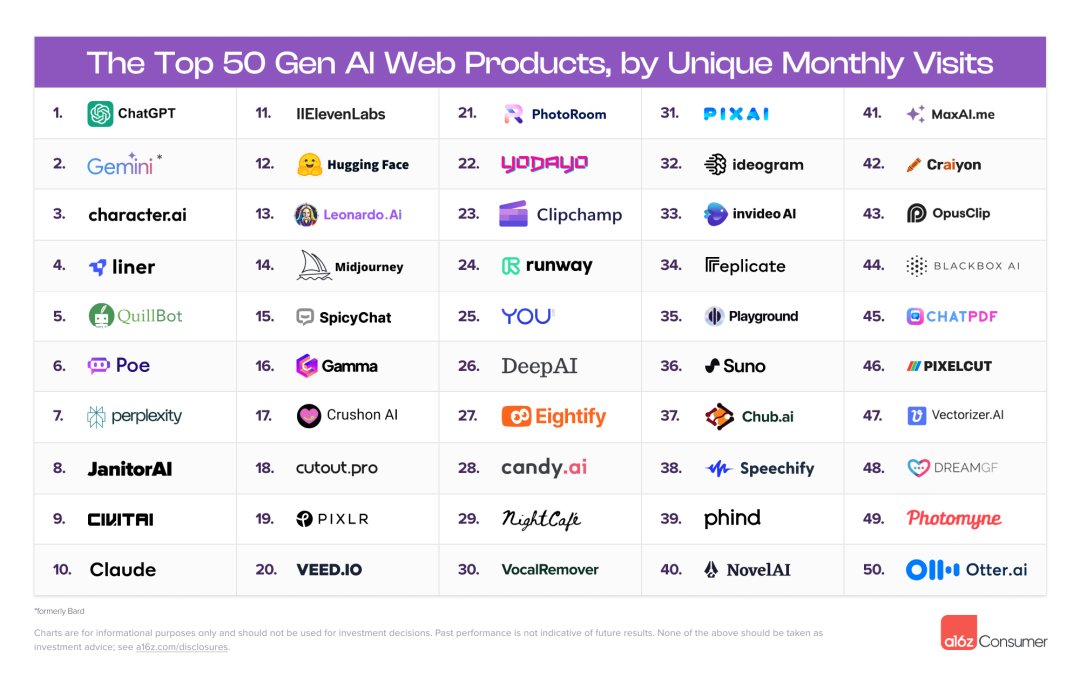
Currently, developers are focused on building infrastructure to bring advanced AI models on-chain, although we have not yet reached that goal. As we continue developing this infrastructure, we are also exploring optimal user scenarios for conducting AI inference on-chain in secure and trustless ways—offering unique opportunities for the blockchain space. Other industries can directly use existing LLM infrastructure for inference and fine-tuning. Only the blockchain industry requires its own native AI infrastructure.
In the near future, we expect blockchain technology to leverage its peer-to-peer advantages to solve the most challenging problems in the AI industry, making AI models more affordable, accessible, and profitable for everyone. We also anticipate that the crypto space will follow AI industry narratives, albeit with slight delays. Over the past year, we’ve seen developers combining crypto, agents, and LLM models. In the coming months, we may see more multimodal models, text-to-video generation, and 3D generation influencing the crypto space.
The entire AI and Web3 industry is currently underappreciated. We eagerly await the breakout moment for AI in Web3—the emergence of a killer CryptoxAI application.
Join TechFlow official community to stay tuned
Telegram:https://t.me/TechFlowDaily
X (Twitter):https://x.com/TechFlowPost
X (Twitter) EN:https://x.com/BlockFlow_News
 IOSG Ventures











