
AI + Web3 Future Development Roadmap (II): Infrastructure
TechFlow Selected TechFlow Selected
AI + Web3 Future Development Roadmap (II): Infrastructure
The main projects in the infrastructure layer of the AI+Web3 industry are primarily centered around decentralized computing networks, emphasizing low costs as their key advantage, leveraging token incentives to scale the network, and targeting AI+Web3 customers as their primary user base.
 Navigating Web3 tides with focused insights
Author: Future3 Campus
This article is the second installment of the Future3 Campus AI+Web3 Industry Research Report, providing a detailed analysis of the development potential, narrative logic, and representative leading projects within the infrastructure layer. Part one: The Future Development Path of AI+Web3 (I): Industry Landscape and Narrative Logic.
Infrastructure Represents a Deterministic Growth Direction for AI Development
Explosive Growth in AI Computing Demand
In recent years, demand for computing power has grown rapidly, especially after the emergence of large language models (LLMs), which has ignited the high-performance computing market. According to OpenAI data, since 2012, computational usage for training the largest AI models has grown exponentially, doubling approximately every 3–4 months—a pace far exceeding Moore's Law. The increasing demand for AI applications has led to a surge in demand for computing hardware, with expectations that by 2025, AI applications will drive about a 10% to 15% increase in demand for computing hardware.
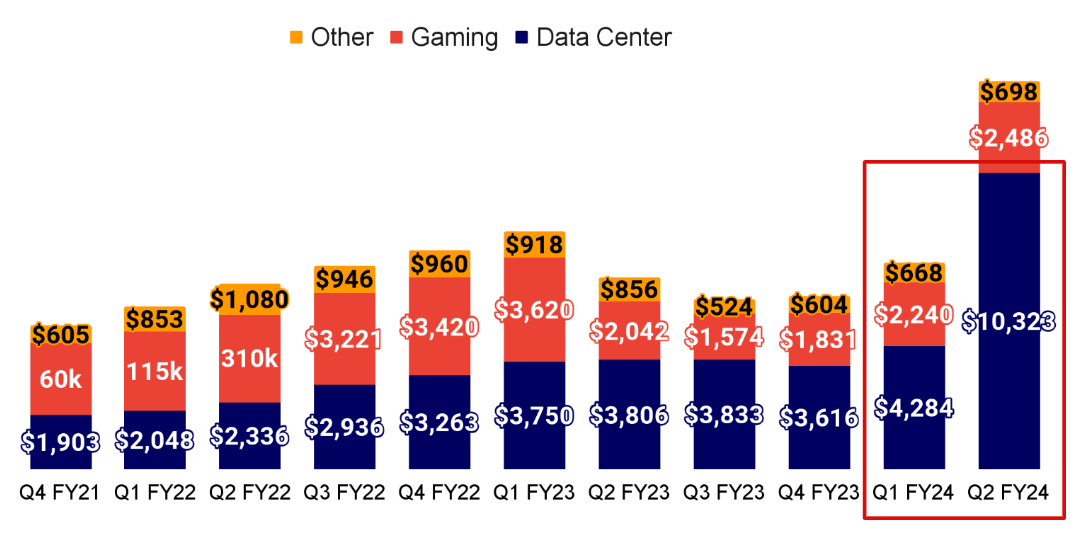
Driven by rising AI computing demand, NVIDIA’s data center revenue continues to climb. In Q2 2023, its data center revenue reached $10.32 billion, up 141% from Q1 2023 and 171% year-on-year. In the fourth quarter of fiscal 2024, data center operations accounted for over 83% of total revenue, growing 409% year-on-year, with 40% dedicated to large model inference scenarios—highlighting strong demand for high-performance computing.
The need for massive data also places new demands on storage and memory hardware, particularly during model training when vast amounts of parameters must be stored. Key memory chips used in AI servers include High Bandwidth Memory (HBM), DRAM, and SSDs, requiring greater capacity, higher performance, lower latency, and faster response speeds tailored to AI server workloads. Micron estimates that AI servers require 8 times more DRAM and 3 times more NAND than traditional servers.
Supply-Demand Imbalance Drives High Computing Costs
Typically, computing power is primarily used in AI model training, fine-tuning, and inference stages. During training and fine-tuning, larger data inputs and computational loads, along with higher requirements for parallel computation interconnectivity, necessitate more powerful GPUs—often deployed as high-performance GPU clusters. As large models evolve, computational complexity rises sharply, requiring increasingly advanced hardware to meet training demands.
For example, under a scenario with 13 million independent users accessing GPT-3, the corresponding chip requirement would be over 30,000 A100 GPUs. This implies an initial investment cost of nearly $800 million, with daily model inference costs estimated at $700,000.
Additionally, industry reports indicate that in Q4 2023, NVIDIA GPU supply was severely constrained globally, resulting in widespread shortages. NVIDIA’s production capacity is limited by TSMC, HBM, and CoWoS packaging constraints, and the H100’s "severe shortage" is expected to persist until at least the end of 2024.
Thus, rising demand for high-end GPUs combined with constrained supply has driven up prices for GPUs and related hardware, particularly benefiting dominant players like NVIDIA who occupy foundational positions in the supply chain and can further capture value through market leadership. For instance, the material cost of NVIDIA’s H100 AI accelerator card is around $3,000, yet it sold for approximately $35,000 in mid-2023—and even exceeded $40,000 on eBay.
AI Infrastructure Captures Core Value Growth Across the Supply Chain
According to Grand View Research, the global cloud AI market was valued at $62.63 billion in 2023 and is projected to reach $647.6 billion by 2030, representing a CAGR of 39.6%. This reflects both the growth potential of cloud AI services and their significant share within the broader AI industry ecosystem.
Based on estimates from a16z, a substantial portion of funding in the AIGC market ultimately flows to infrastructure companies. On average, application-layer companies spend about 20–40% of their revenue on inference and customer-specific fine-tuning, typically paid directly to cloud providers or third-party model vendors. In turn, these third-party model providers spend roughly half of their revenue on cloud infrastructure. Therefore, it is reasonable to estimate that 10–20% of today’s total AIGC revenue goes to cloud providers.
Moreover, a much larger portion of computing demand comes from training large-scale AI models such as various LLMs. For startup companies developing such models, 80–90% of costs are attributed to AI computing usage. In aggregate, AI computing infrastructure—including cloud computing and hardware—is expected to account for more than 50% of the market’s initial value distribution.
Decentralized AI Computing
As discussed above, current centralized AI computing remains expensive largely due to surging demand for high-performance infrastructure. However, there remains a significant amount of underutilized computing power across the market, indicating a mismatch between supply and demand. Key reasons include:
-
Memory limitations mean model complexity does not scale linearly with required GPU count: While modern GPUs offer strong computational capabilities, model training requires storing massive parameter sets in memory. For example, training GPT-3’s 175-billion-parameter model requires holding over 1TB of data in memory—exceeding the capacity of any single existing GPU. This forces reliance on multiple GPUs for parallel computation and storage, often leading to idle GPU capacity. From GPT-3 to GPT-4, model parameter size increased about tenfold, but the number of required GPUs rose 24-fold (excluding increases in training time). Analysis suggests OpenAI used approximately 2.15e25 FLOPS across roughly 25,000 A100 GPUs trained over 90–100 days, achieving only 32% to 36% compute utilization.
To address this issue, designing high-performance chips or specialized ASICs optimized for AI workloads is one direction being explored by developers and major enterprises. Another approach involves integrating existing computing resources into distributed computing networks, leveraging leasing, sharing, and scheduling mechanisms to reduce overall computing costs. Additionally, many consumer-grade GPUs and CPUs remain underused; while individually less powerful, they can still meet certain computational needs either independently or in hybrid configurations with high-end chips. Most importantly, their abundant supply enables cost reduction via distributed network coordination.
Hence, distributed computing has emerged as a viable path forward for AI infrastructure. Given Web3’s inherent alignment with decentralization, decentralized computing networks represent a primary application area for Web3+AI infrastructure. Current Web3-based decentralized computing platforms generally offer pricing 80–90% lower than centralized cloud alternatives.
While storage is also critical for AI, centralized solutions currently hold advantages due to requirements for scalability, usability, low latency, and reliability. In contrast, decentralized computing networks benefit from clear cost advantages, making them better positioned to capture value from the expanding AI market.
-
Model inference and small-model training are the core use cases for distributed computing today. Due to the dispersed nature of computing resources, distributed systems inevitably face communication overhead between GPUs, reducing effective performance. Thus, they are best suited for tasks requiring minimal inter-GPU communication and supporting parallel execution—such as AI model inference and smaller models with fewer parameters, where performance degradation is less pronounced. In fact, as AI applications evolve, inference will become the dominant application-level need. Most companies lack the resources to train large models, ensuring long-term market potential for distributed computing.
-
-
High-performance distributed training frameworks designed for large-scale parallel computing continue to emerge. Innovative open-source frameworks such as PyTorch, Ray, and DeepSpeed provide stronger foundational support for developers using distributed computing in model training, enhancing the applicability of distributed computing in future AI markets.
Narrative Framework of AI+Web3 Infrastructure Projects
We observe that demand for distributed AI infrastructure is strong and holds long-term growth potential, making it a compelling narrative favored by investors. Currently, most AI+Web3 infrastructure projects follow a common framework: decentralized computing networks as the core narrative, low cost as the primary advantage, token incentives to expand the network, and serving AI+Web3 clients as the ultimate goal. These efforts fall into two main categories:
1. Pure-play decentralized cloud computing resource sharing and rental platforms: Early-stage AI projects such as Render Network and Akash Network belong to this category;
-
Computing resources as the key competitive edge: The core competitive advantage lies in access to a broad base of computing providers, enabling rapid network formation and offering user-friendly products. Early entrants such as cloud computing firms and miners have natural advantages entering this space.
-
Low product barriers and fast time-to-market: Mature platforms like Render Network and Akash Network already show tangible growth metrics and possess first-mover advantages.
-
New entrants face product homogenization: Due to the current popularity of the sector and low entry barriers, numerous new projects have entered with similar narratives around shared or rented computing power. However, products remain largely undifferentiated, requiring clearer competitive distinctions.
-
Tend to serve clients with simpler computing needs: For example, Render Network primarily serves rendering workloads, while Akash Network offers more CPU-centric resources. Basic computing rentals mostly fulfill simple AI tasks, falling short of meeting full lifecycle needs such as complex AI training, fine-tuning, and inference.
2. Platforms offering decentralized computing + ML workflow services: Emerging well-funded startups such as Gensyn, io.net, and Ritual fall into this category;
-
Decentralized computing strengthens valuation foundations. Since computing power represents a deterministic narrative in AI development, projects built on real computing infrastructure typically enjoy more stable and scalable business models, commanding higher valuations compared to pure middleware plays.
-
Middle-layer services create differentiation. These infrastructure projects gain competitive advantage through value-added middleware services—such as oracles and validators synchronizing on-chain and off-chain AI computations, or deployment and management tools streamlining end-to-end AI workflows. Given the collaborative, iterative, and complex nature of AI workflows—where computing is needed across multiple stages—a usable, highly interoperable middle layer that meets sophisticated developer needs becomes highly competitive. Such services are especially valuable in the Web3 context, where they must cater to Web3-native AI development demands. These offerings are better positioned to capture emerging AI application markets rather than merely supporting basic computing tasks.
-
Typically require project teams with professional ML operational expertise. Teams capable of delivering such middleware services must deeply understand the entire ML workflow to effectively meet developers’ full lifecycle needs. Although these services may rely heavily on existing open-source frameworks and tools without necessarily introducing groundbreaking technical innovations, they still demand experienced, engineering-strong teams—which constitute a core competitive advantage.
By offering significantly lower prices than centralized cloud providers while maintaining comparable service quality and user experience, these projects have attracted recognition from top-tier investors. However, their technical complexity is higher, and most remain in the conceptual or development phase, lacking fully launched products.
Representative Projects
Render Network
Render Network is a blockchain-based global rendering platform that provides distributed GPU resources, offering creators faster and more affordable 3D rendering services. Once creators verify the rendered output, the blockchain network distributes token rewards to participating nodes. The platform operates a distributed GPU scheduling and allocation network, assigning jobs based on node usage and reputation to maximize efficiency, minimize idle resources, and reduce costs.
The RNDR token serves as the payment currency within the Render Network ecosystem. Creators pay for rendering services using RNDR, while service providers earn RNDR rewards by contributing computing power to complete rendering jobs. Pricing dynamically adjusts based on current network utilization.
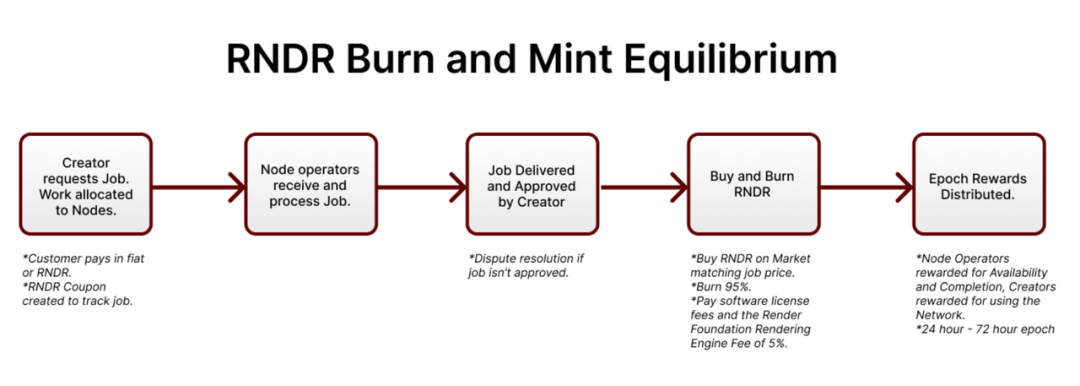
Rendering is a relatively suitable and mature use case for distributed computing architecture, as rendering tasks can be broken down into highly parallel subtasks requiring minimal inter-process communication, thus minimizing the drawbacks of distributed architectures while leveraging a wide network of GPU nodes to effectively reduce costs.
Consequently, demand for Render Network remains robust. Since its founding in 2017, users have rendered over 16 million frames and nearly 500,000 scenes on the network, with both frame counts and active node numbers showing consistent growth. Furthermore, in Q1 2023, Render Network launched native integration with Stability AI’s toolset, enabling users to run Stable Diffusion jobs—expanding its scope beyond rendering into broader AI applications.
Gensyn.ai
Gensyn is a global supercomputing cluster network for deep learning computation, built on a Polkadot-based Layer 1 protocol. In 2023, it secured $43 million in Series A funding led by a16z.
Gensyn’s narrative encompasses not only a decentralized computing infrastructure but also an upper-layer verification system that proves large-scale off-chain computations were executed according to on-chain specifications—using blockchain to validate results and thereby creating a trustless machine learning network.
On the computing side, Gensyn supports everything from spare data center capacity to personal laptops equipped with GPUs, connecting these devices into a unified virtual cluster that developers can access on-demand in a peer-to-peer manner. Gensyn aims to create an open, market-driven economy where ML computing unit costs reach fair equilibrium for all participants.
The verification layer is Gensyn’s more innovative component. It ensures that machine learning tasks are correctly completed as requested, introducing a more efficient verification method combining three core technologies: probabilistic proofs of learning, graph-based precise localization protocols, and Truebit-style incentive games—significantly outperforming traditional blockchain re-execution methods. Network participants include submitters, solvers, verifiers, and challengers, collectively completing the validation process.
According to comprehensive test data outlined in Gensyn’s whitepaper, its key advantages include:
-
Reduced AI model training costs: Estimated hourly cost of NVIDIA V100-equivalent computing on the Gensyn protocol is around $0.40, about 80% cheaper than AWS on-demand pricing.
-
More efficient trustless verification network: According to whitepaper benchmarks, Gensyn reduces model training time overhead by 1,350% compared to Truebit-style replication, and by 2,522,477% compared to Ethereum.
However, compared to local training, distributed computing inevitably incurs additional time due to communication and networking delays. Test data shows that the Gensyn protocol adds approximately 46% overhead to model training duration.
Akash Network
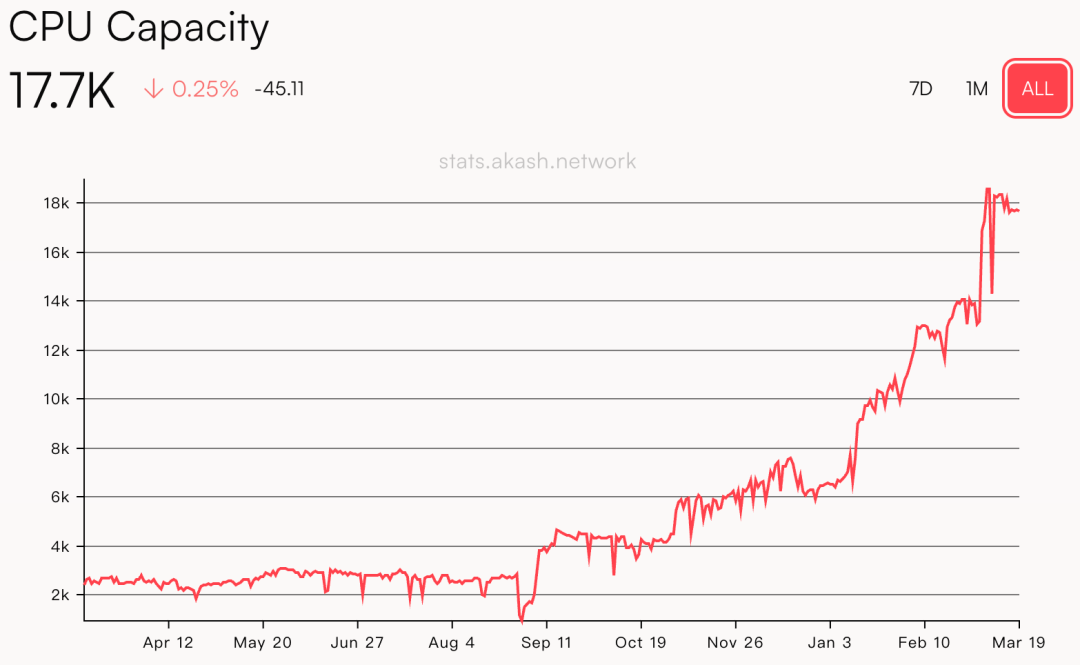
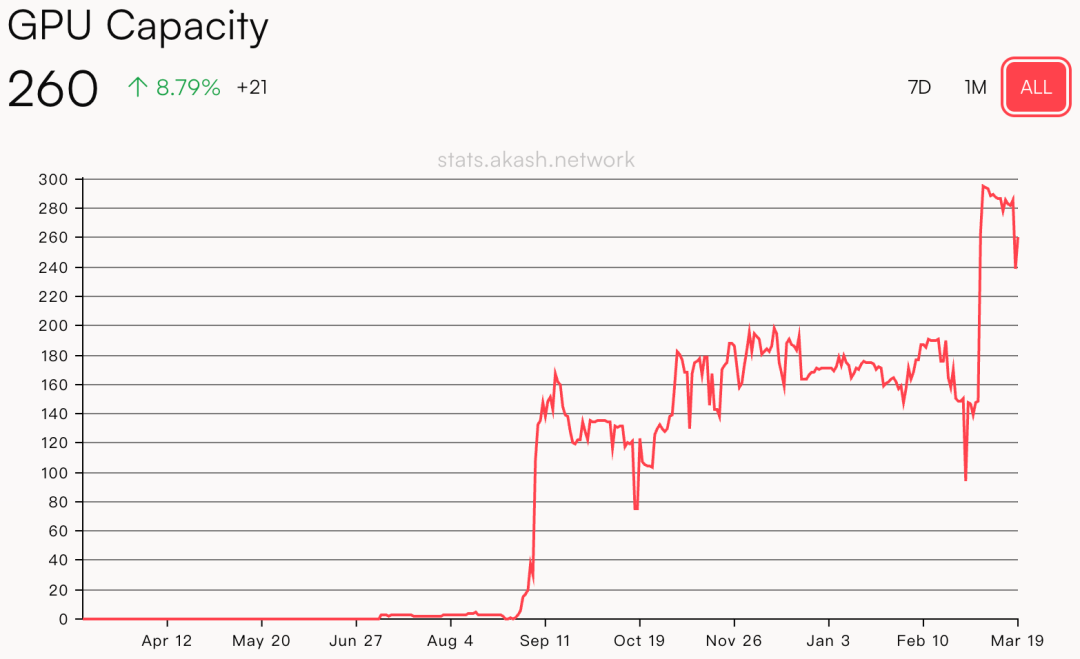
Akash Network is a decentralized cloud computing platform that integrates various technological components, enabling users to efficiently and flexibly deploy and manage applications in a decentralized cloud environment—in essence, renting distributed computing resources.
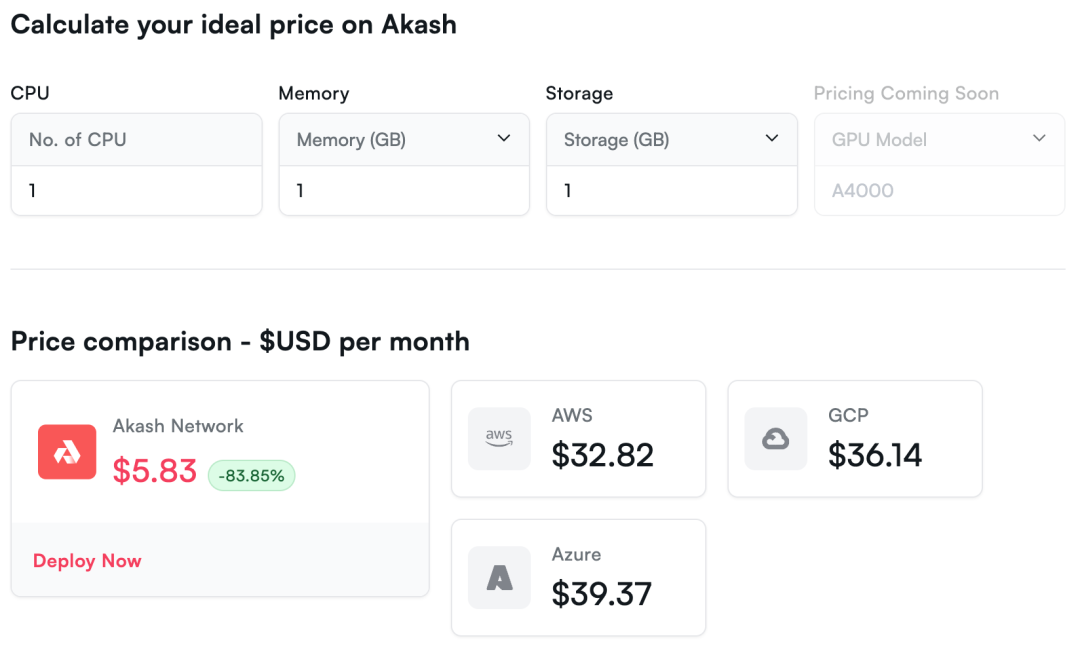
At its foundation, Akash connects multiple global infrastructure providers offering CPU, GPU, memory, and storage resources, exposing them to users via Kubernetes clusters. Users deploy applications as Docker containers to access lower-cost infrastructure. Additionally, Akash uses a “reverse auction” mechanism to further drive down resource prices. According to Akash’s official website, its services cost over 80% less than centralized alternatives.
io.net
io.net is a decentralized computing network connecting globally distributed GPUs to support AI model training, inference, and other compute-intensive tasks. io.net recently closed a $30 million Series A round at a $100 million valuation.
Compared to platforms like Render and Akash, io.net offers a more robust and scalable decentralized computing network with integrated developer tools across multiple layers. Its key features include:
-
Aggregates broader computing resources: Including independent data centers, crypto miners, and GPU resources from blockchain projects such as Filecoin and Render.
-
Focused on AI-specific needs: Core functionalities include batch inference and model serving, parallel training, hyperparameter tuning, and reinforcement learning.
-
Comprehensive tech stack supporting efficient cloud workflow operations: Includes orchestration tools, ML frameworks (for resource allocation, algorithm execution, training, and inference), data storage solutions, and GPU monitoring and management tools.
-
Parallel computing capability: Integrates Ray, an open-source distributed computing framework, embracing Ray’s native parallelism to easily parallelize Python functions for dynamic task execution. In-memory storage enables fast data sharing between tasks, eliminating serialization delays. Beyond Python, io.net also supports leading ML frameworks such as PyTorch and TensorFlow, enhancing extensibility.
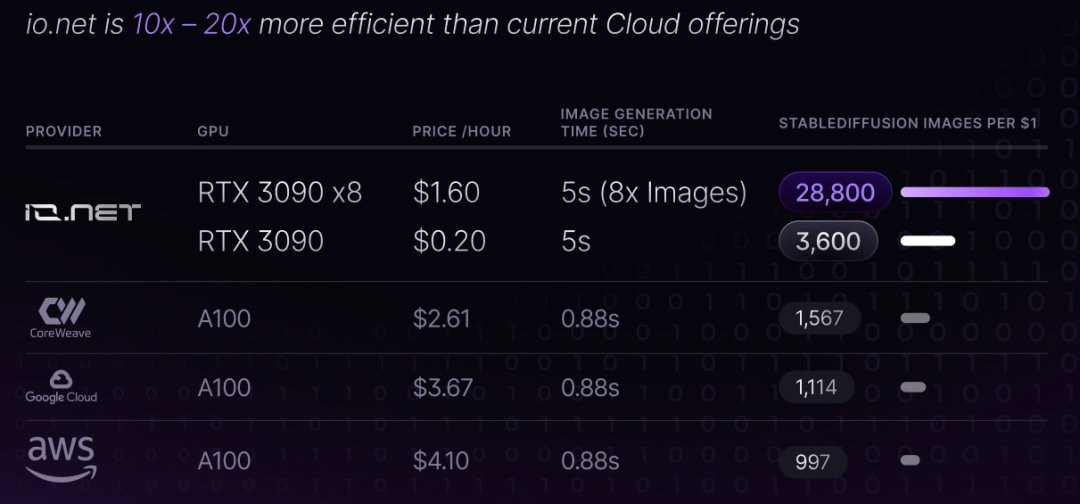
In terms of pricing, io.net expects its services to be approximately 90% cheaper than centralized cloud providers.
Additionally, io.net’s IO coin will eventually be used for payments and rewards within the ecosystem. Alternatively, demand-side users may burn IO coins into a stablecoin-denominated “IOSD credit” using a model similar to Helium for transaction settlements.
Join TechFlow official community to stay tuned
Telegram:https://t.me/TechFlowDaily
X (Twitter):https://x.com/TechFlowPost
X (Twitter) EN:https://x.com/BlockFlow_News