








Will Runestone spark a runes speculation frenzy? A look at 14 noteworthy runes
TechFlow Selected TechFlow Selected
Will Runestone spark a runes speculation frenzy? A look at 14 noteworthy runes
The Most Comprehensive Overview of "Runes" Concept Projects.
 Navigating Web3 tides with focused insights
Text by: Cookie
RSIC's performance during this Bitcoin NFT cycle has drawn massive attention to the concept of "Runes" on Bitcoin (Ordinals), sparking a wave of new "Rune"-themed Bitcoin NFT projects. With Runestone distribution approaching and the Rune protocol’s mainnet launch date—aligned with the Bitcoin halving—drawing closer, "Runes," the official fungible token (FT) protocol for Ordinals, is gaining increasing attention.
Unlike the previous inscription bull market, the current wave of Bitcoin NFT activity centers around "Rune"-themed projects in the form of small Bitcoin NFTs (images). This makes sense, as the Rune protocol itself hasn’t officially launched yet, meaning there are no true "Rune" tokens in existence. The current "Rune"-themed NFTs are essentially "air calculators"—despite differing mechanics, they all begin scoring from project inception and plan to issue corresponding tokens upon the official Rune protocol launch, distributing them via airdrop based on accumulated scores.
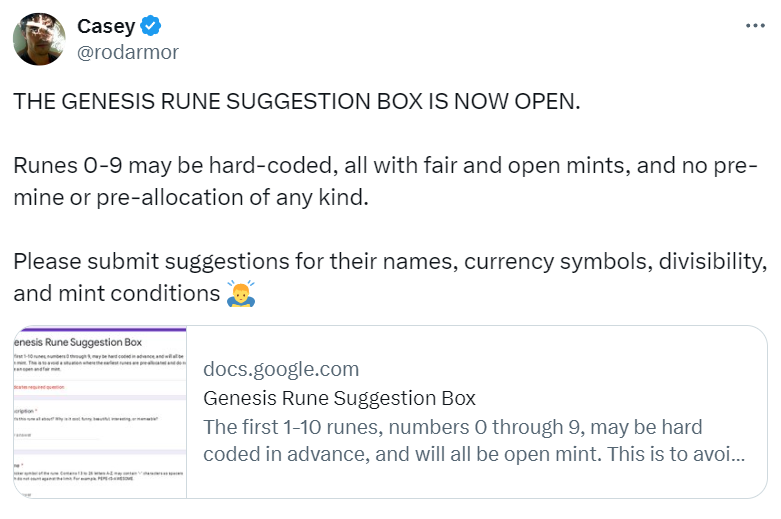
Understanding this reveals the risks involved with these "Rune"-themed NFTs. First, the final interpretation of the Rune protocol rests entirely with the official Ordinals team. Notably, Casey has previously tweeted that the first 10 Rune tokens may be "hard-coded"—meaning they won't be open for public deployment but instead pre-written into the code. These first 10 Rune tokens will undergo fair, open mints with no pre-mining or pre-allocation.
Additionally, project teams behind these "Rune"-themed NFTs may ultimately abandon their plans, failing to deploy or airdrop Rune tokens to holders. These are important risks to keep in mind.
Next, here’s our roundup of notable "Rune"-themed NFT projects.
RSIC
On January 22, the "Rune miner" RSIC quietly airdropped to a group of Bitcoin NFT enthusiasts. Among the biggest beneficiaries were holders of NodeMonkes—active addresses holding NodeMonkes received up to five RSIC airdrops.
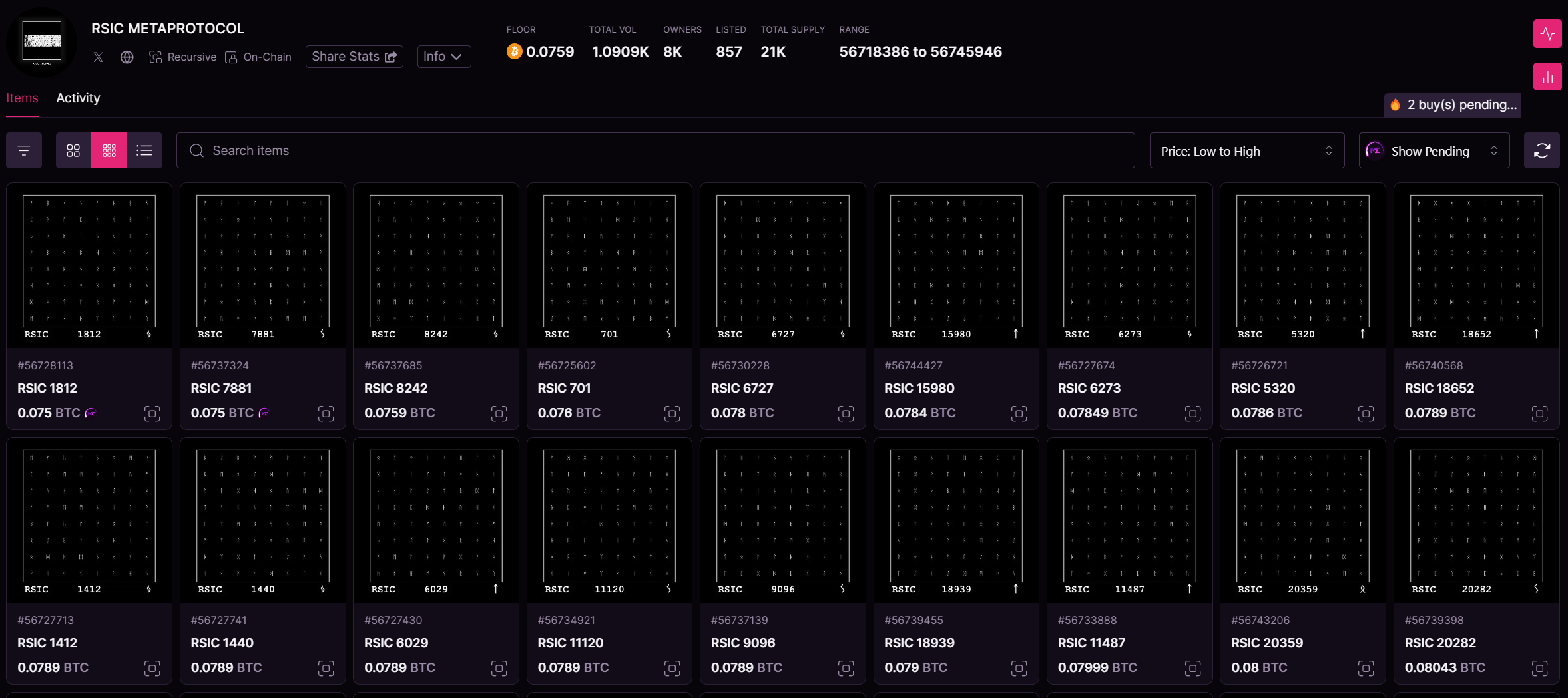
RSIC opened trading above 0.01 BTC, surged to 0.05 BTC within two days, then settled around 0.03 BTC. Throughout February, it climbed steadily, peaking above 0.1 BTC before gradually retracing. Its current floor price sits around 0.076 BTC.
RSIC not only ignited the trend of Rune-themed projects but also unlocked NodeMonkes’ potential, activating its “shovel” effect and quickly establishing it as one of the most powerful tools in the Bitcoin NFT ecosystem.
Who is behind RSIC? This leads us to the so-called "Rocktoshi ecosystem." Both Ord Rocks—an early Ordinals project similar to Ethereum’s Ether Rocks—and RSIC trace their funding origins to the same address: bc1pce53d78cuyw4fkuhh95ppc8h8v4wjc00nqulj2gff2474qg0xyns9krcq5. Given that NodeMonkes holders received the largest share of the RSIC airdrop, many in the Ordinals community believe Rocktoshi is the mastermind behind Ord Rocks, NodeMonkes, and RSIC.
Key notes about RSIC:
-
Shares already "activated" (transferred once) do not transfer to new buyers upon resale.
-
10% of future Rune token allocations will go to the project team.
-
Holding an RSIC BOOST alongside an activated RSIC doubles mining speed—from 21 per block to 42. RSIC BOOSTs are unlimited; they can be minted on Luminex or purchased directly on secondary markets.
Runestone
An interesting analogy compares Runestone to $SATS for Runes. The project has a large supply, with over 112,000 whitelist addresses qualifying for airdrops. The criteria are transparent: any address holding three inscriptions at block height 826,600 will receive an airdrop (text and JSON-type inscriptions excluded—you can check here if you qualify).
Runestone is led by prominent Ordinals influencer @LeonidasNFT, who is also the founder of ord.io. This Ordinals explorer has become a hub for “engagement farming,” where many new projects ask users to like their inscriptions on ord.io and comment with their wallet addresses to gain visibility.
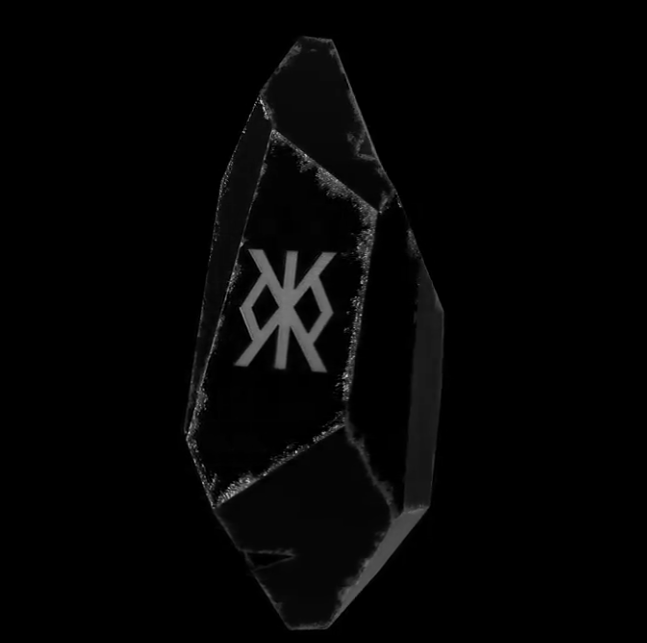
Airdropping to over 110,000 addresses requires significant funds—a real challenge. Runestone raised 2.25 BTC entirely through donations. On March 9, the black 3D "Rune Stone" pictured above sold at auction for 8 BTC, fully securing the airdrop budget and adding further credibility to the project’s fairness.
Despite the large number of Runestone NFTs, it functions just like RSIC—as an "airdrop voucher." Token distribution will occur after the Rune protocol officially launches.
The Rune Guardians
As the name suggests, the core mechanic revolves around “holding firm.” Unlike RSIC, mined Rune token shares are permanently tied to the NFT—if you sell your Rune Guardian, you forfeit all future token airdrops when the Rune protocol launches.
The 10,000 Rune Guardians will collectively share 100 billion Rune tokens. Different traits offer mining bonuses—use Magic Eden to filter traits and refer to the bonus table below:
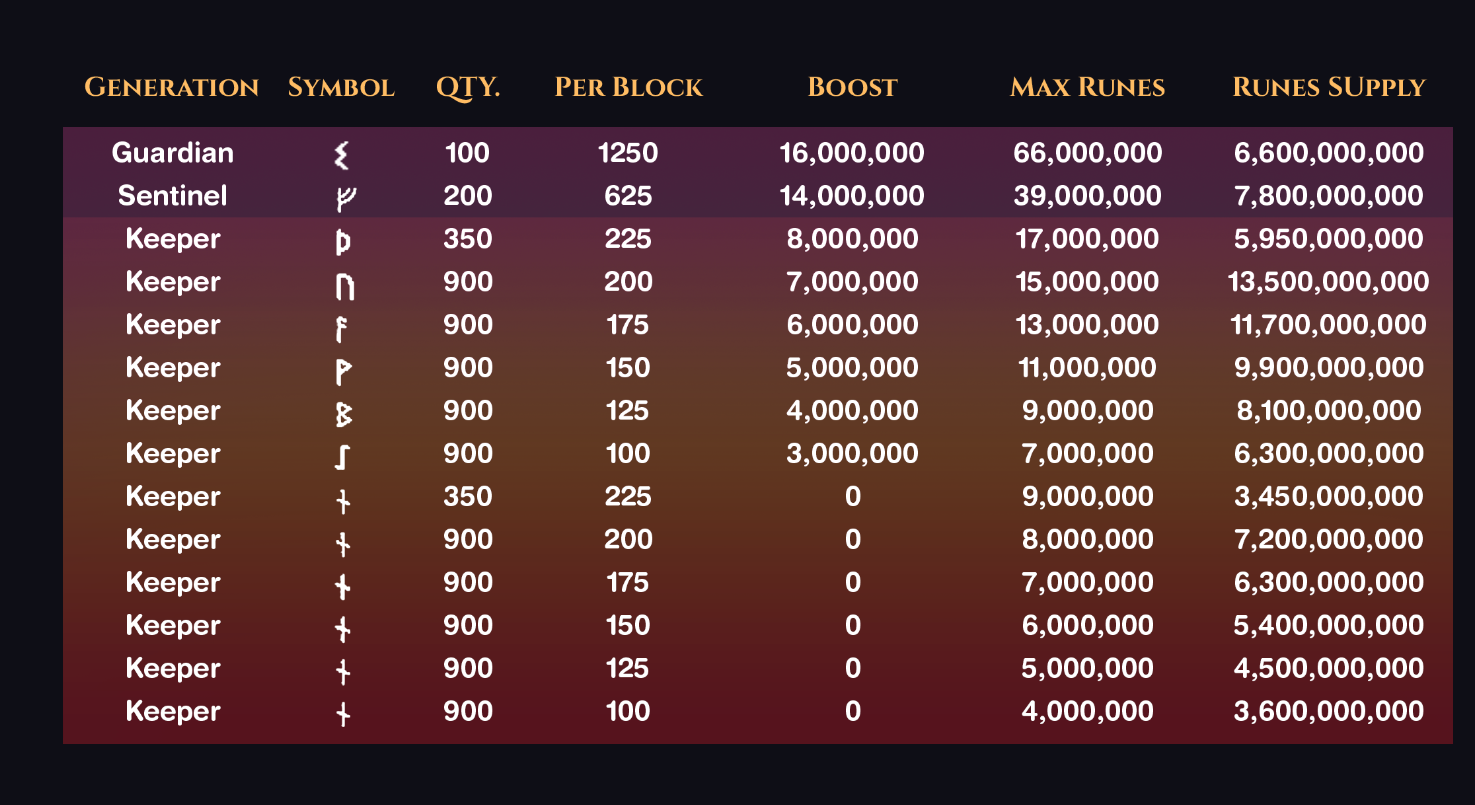
You can also view individual Rune Guardian inscriptions on an Ordinals explorer—clicking the image reveals how many Rune tokens that specific inscription has accumulated so far:

Another unique feature: these NFTs will “evolve” into a full PFP collection upon the Bitcoin halving.
Rune Mania Miner
This project airdropped exclusively to holders of RSIC BOOST. The airdrop is complete, with a fixed supply of 3,800 units—3,547 distributed to RSIC BOOST holders and 253 reserved by the team.
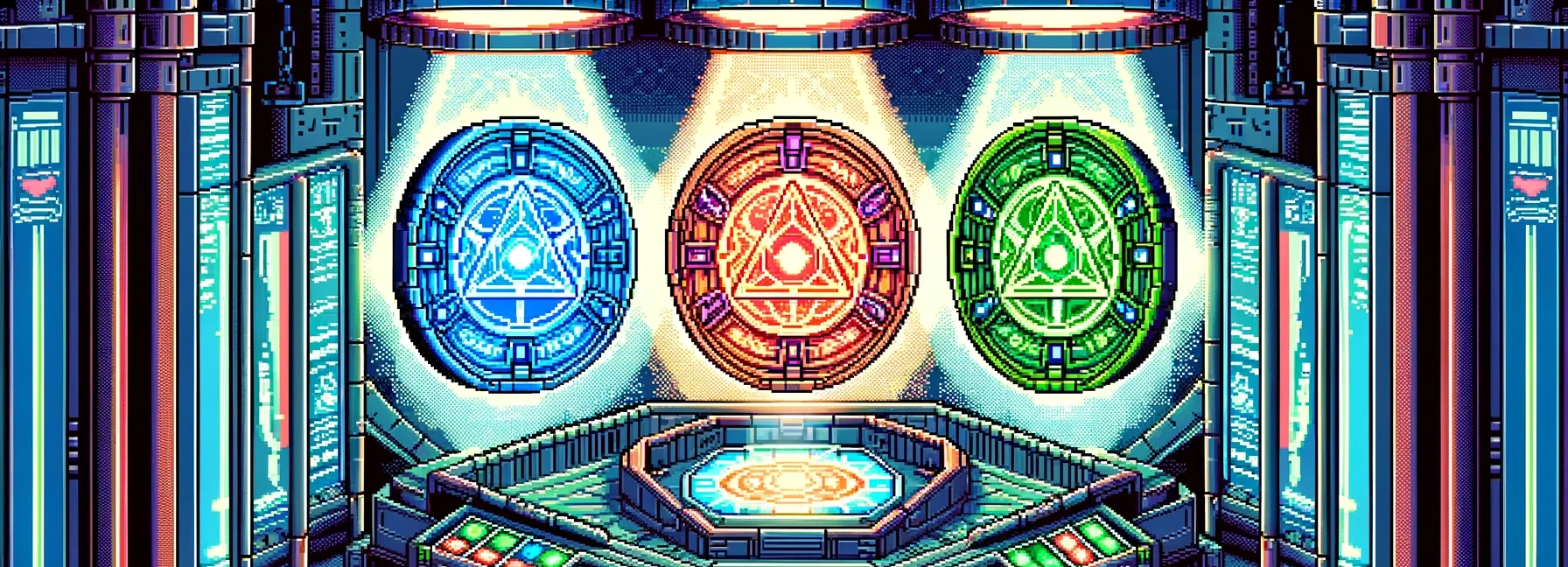
The mining bonus rules are complex—prospective buyers are advised to use the project’s dashboard, entering the inscription ID to check bonus status.
Notably, the team will reserve zero future Rune token allocations—all tokens will go to Rune Mania Miner holders. The total Rune token supply remains undisclosed and will be revealed after the halving.
Runic Miner
Created by a project called Node Apes, this is a 10K CBRC-20 collection where each Node Ape mint included 1,000 $CYBD CBRC-20 tokens and one Runic Miner. It’s impressive how thoroughly this clone has replicated trending mechanics—Node Apes has covered every hot angle...
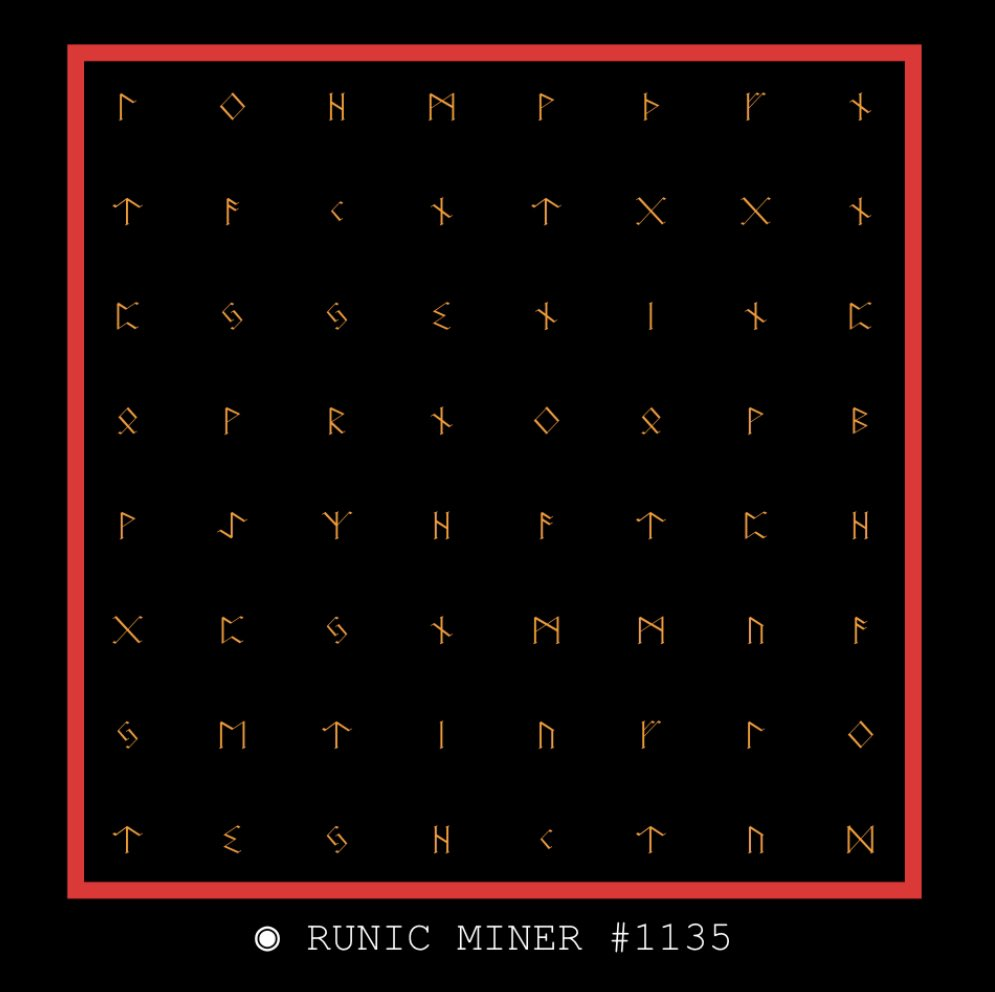
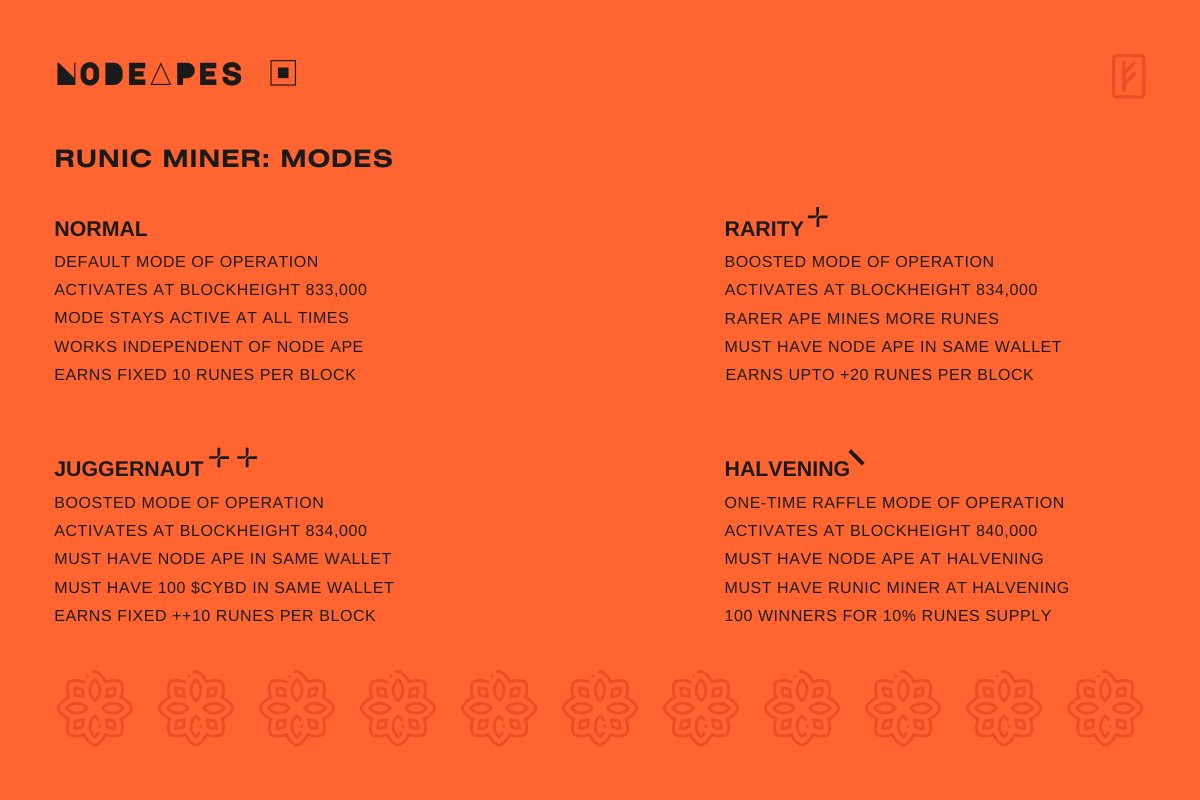
Since Runic Miner is tied to Node Apes, the incentive structure encourages holding the full bundle—Node Apes + $CYBD + Runic Miner—for maximum mining rewards. See the chart below for details:
ORANGE & ORANGE ROYAL TOMB
This project is arguably one of the most underrated Rune concepts, backed by OG Bitcoin artist @XCPinata, active since 2014.
First, the ORANGE series: simple rules. The image below shows five types of “items”—gems, swords, etc. Collecting any type earns future Rune tokens. Completing a full set of all five items unlocks an additional reward, though specifics remain unrevealed.
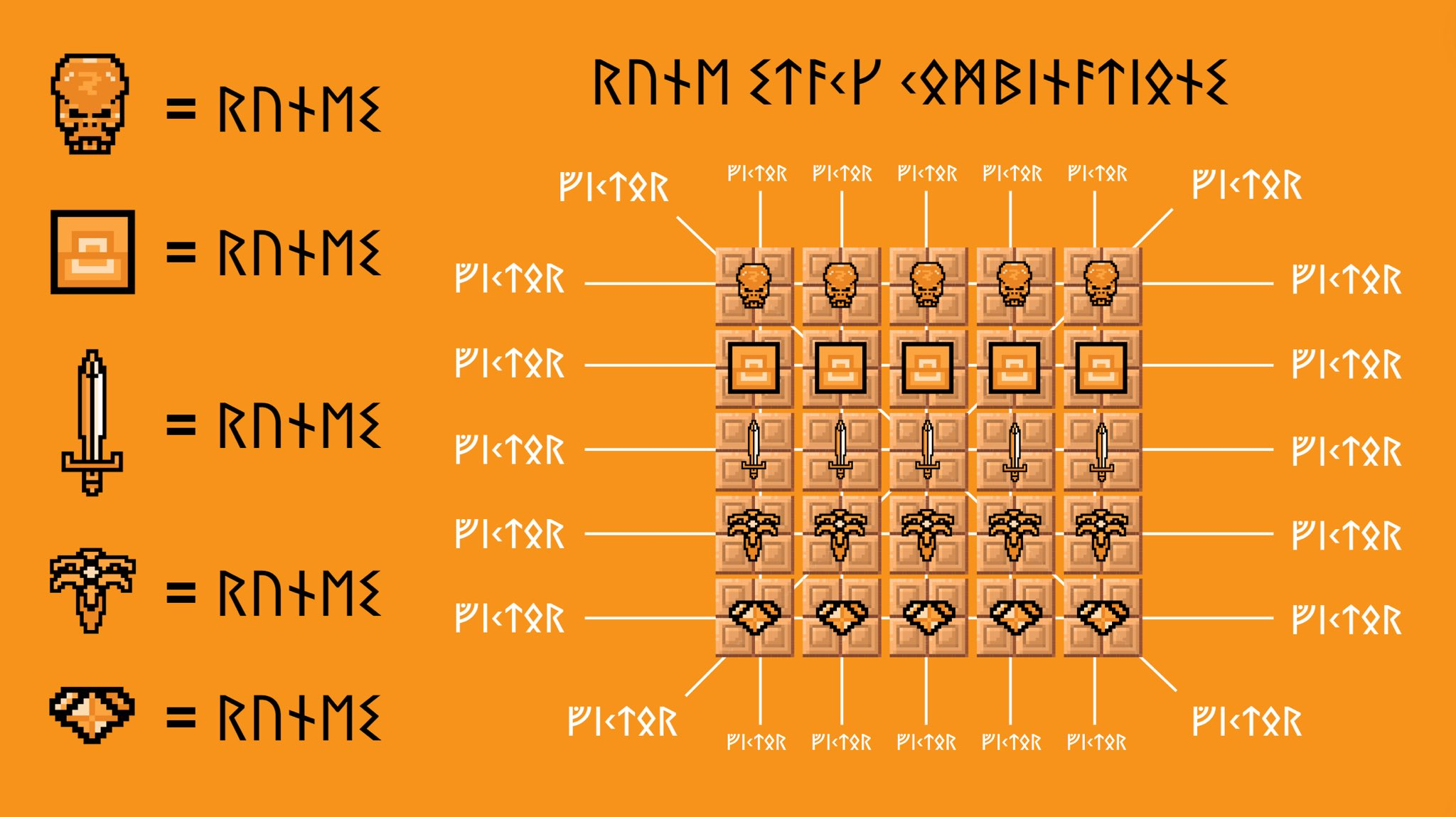
Unlike others, ORANGE introduced a monster named “Hemi,” which players must defeat by sending gems to Satoshi Nakamoto’s address. Participants in this burn event will receive extra Rune tokens in the future.
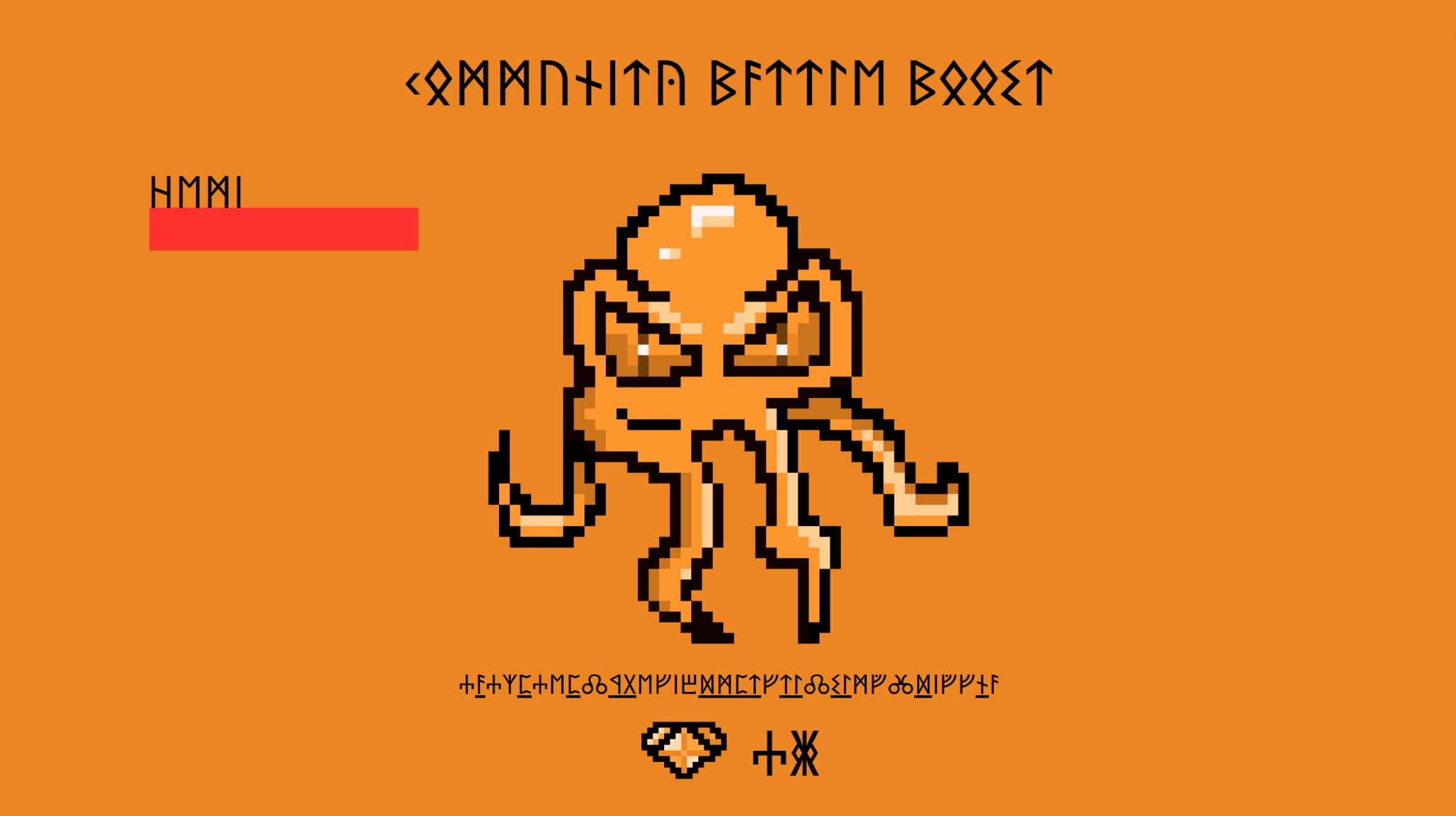
ORANGE ROYAL TOMB launched on March 6 at 0.001 BTC each, limited to 314 units. Holders will also receive future Rune tokens.
@XCPinata appears to be the first to merge art with Rune mechanics. Whether introducing burn-based incentives via “defeating Hemi” or building narrative momentum through pre-launch tweets, this project stands out as a rare example truly committed to storytelling and engagement.
Bitcarbon
Bitcarbon is even more unconventional than ORANGE. The project hasn’t launched yet, and explaining it concisely is quite a challenge...
Simply put, Bitcarbon is a 30-year bet. If, 30 years from now, Bitcoin’s carbon emissions per ton are less harmful than today, you can redeem this Rune-based “zero-coupon bond.” But if harm increases, the bond becomes worthless.
Is carbon emission truly harmful? We don’t know yet—and perceptions may shift dramatically over the next 30 years. These changing views will drive Bitcarbon’s price volatility, effectively turning Bitcoin and Runes into an automated prediction market.
These few lines barely scratch the surface—the project embodies deep philosophical and economic thinking. Interested readers should consult the full whitepaper.
Nothing Protocol
Launched by @DHeavens_TC, co-founder of Taproot Cows Universe, this project blends generative art with Rune mining mechanics—holders earn future Rune tokens while their NFT visuals evolve over time.
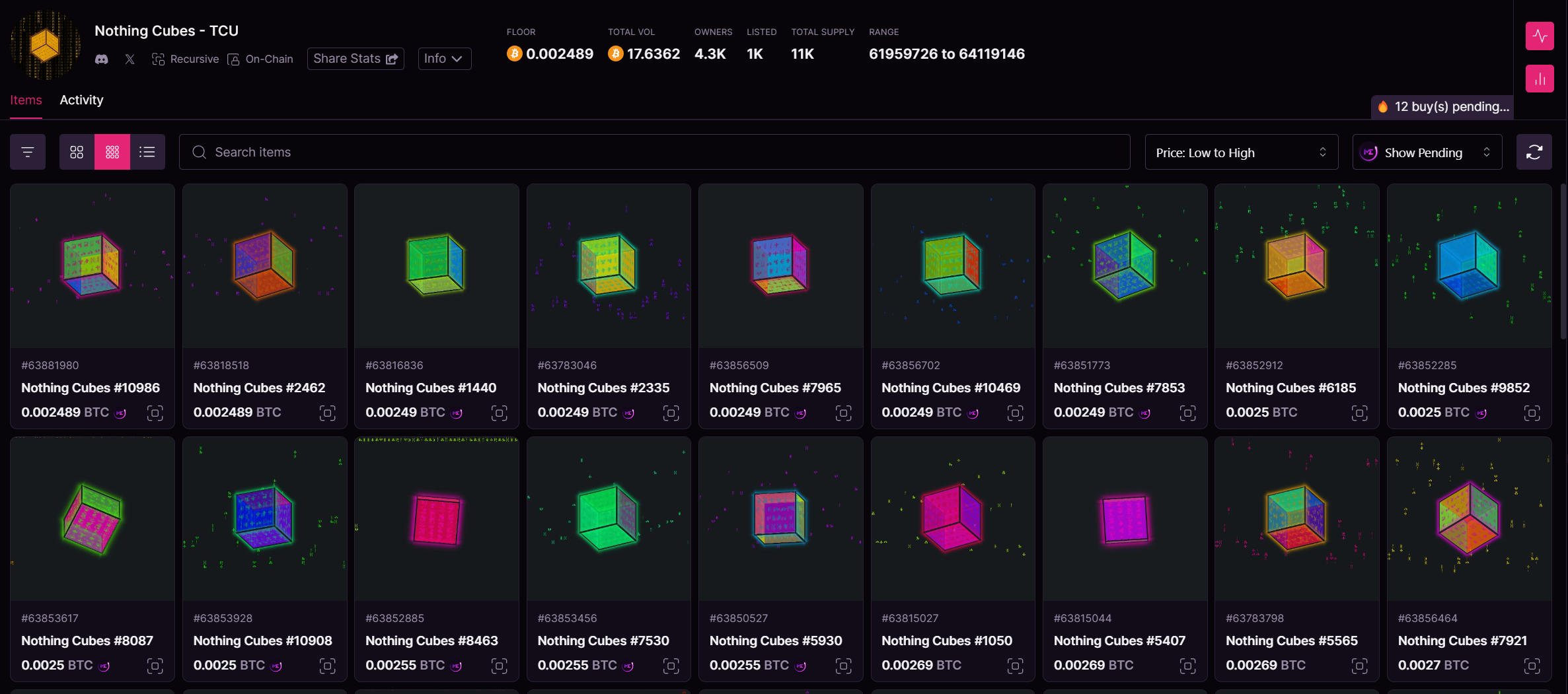
The team also created a custom language called Bitrunic, designed for seamless translation between Runes and Latin letters—each English letter maps directly to its Rune counterpart. The cryptic font used in the project’s official tweets is written in Bitrunic.
Mining hasn’t officially started yet—it begins at block height 835,000. The dashboard is embedded in the NFT image itself: on Magic Eden, click the image in an NFT listing to view current mining stats (currently all zeros).
Runes Terminal
This project hasn’t launched yet—5,000 units, free mint. It’s unclear whether the PFPs will double as miners, but likely yes.
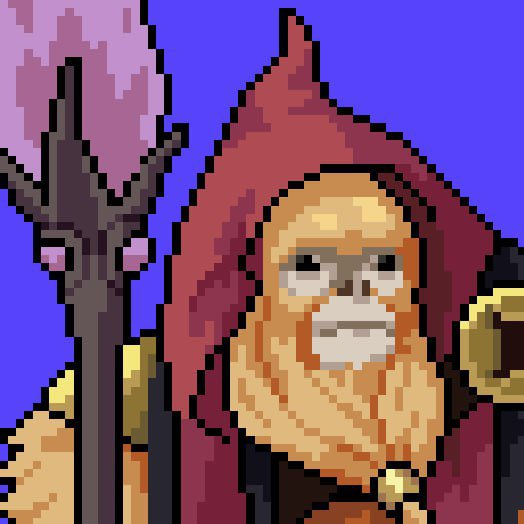
Behind it is @runespad, a project that announced in late January its intent to build a Rune launchpad. Runespad has already confirmed its native token, $RUNI, via official tweets.
RuneX
This project has been around for a while, planning to build a Rune trading platform. Currently, its website already supports trading for BRC-20, CBRC-20, Tap, and PIPE protocol tokens.
Their “Rune miner” is reportedly named “Secret Weapon,” expected to launch soon. Last year, they released a 51-unit PFP series called UNNAMED, initially planned for PIPE but last week inscribed as regular Ordinals and listed on Magic Eden. Previously traded OTC-only, UNNAMED hit a record high of 0.75 BTC on March 2, just before listing.
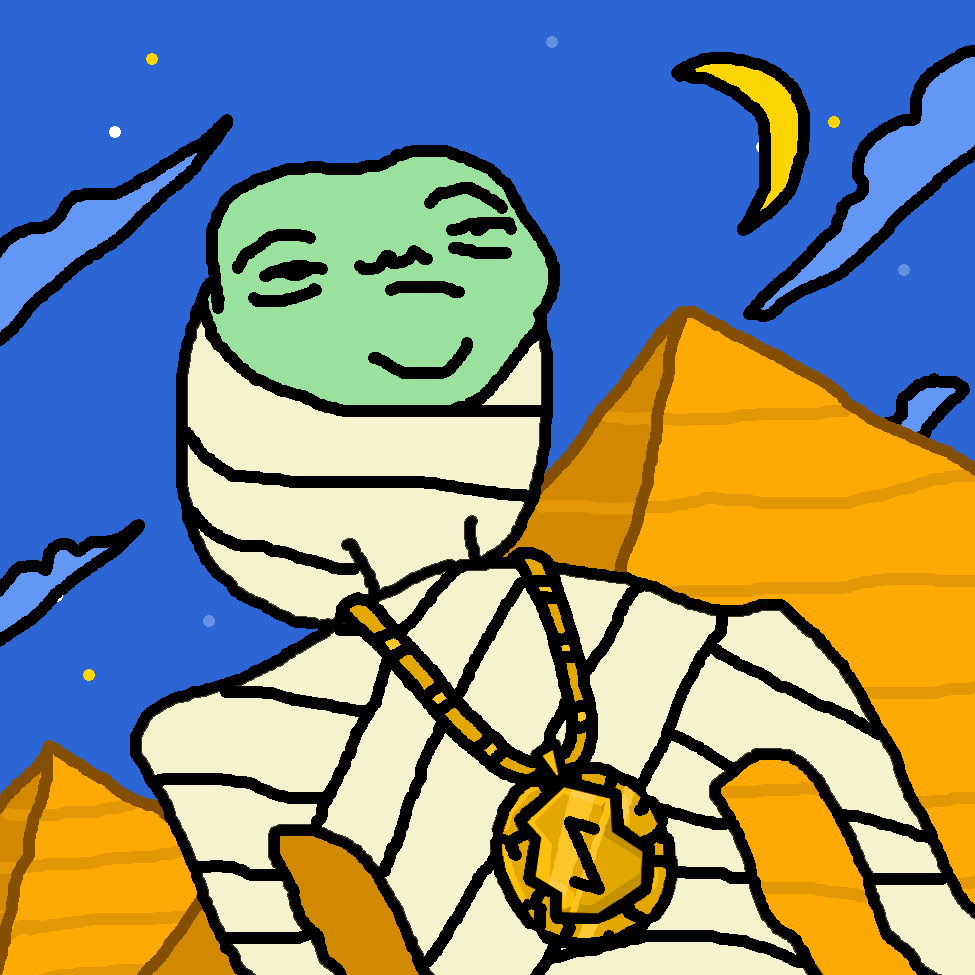
Each UNNAMED holder will receive 30,882 Rune tokens, with RuneX’s total Rune token supply capped at 21 million.
Worth noting: another project aiming to build a Rune exchange, @Rune_Pro, has not yet announced miner plans—but stay tuned, they might launch anytime.
BTC Slugs
This project amused me—I showed foreign friends its floor jumping to 0.02 BTC, and they were baffled (“wtf?”). Then I mentioned Runes, and suddenly it made sense—“good good,” they said.
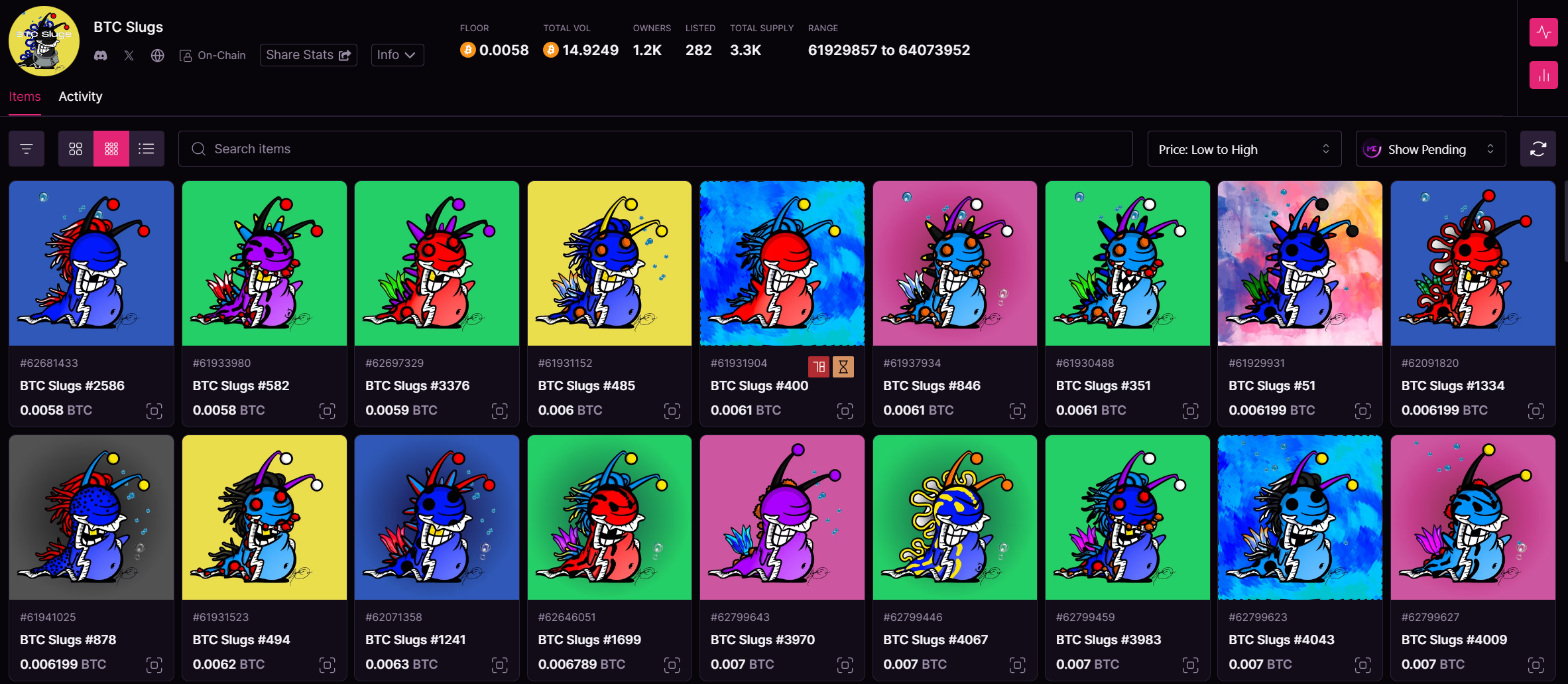
BTC Slugs splits its Rune token rules into two parts. First, certain slug traits grant different Rune token rewards. Trait bonuses don’t stack—only the highest applicable bonus counts. Excess rewards are evenly redistributed to slugs without bonus traits.
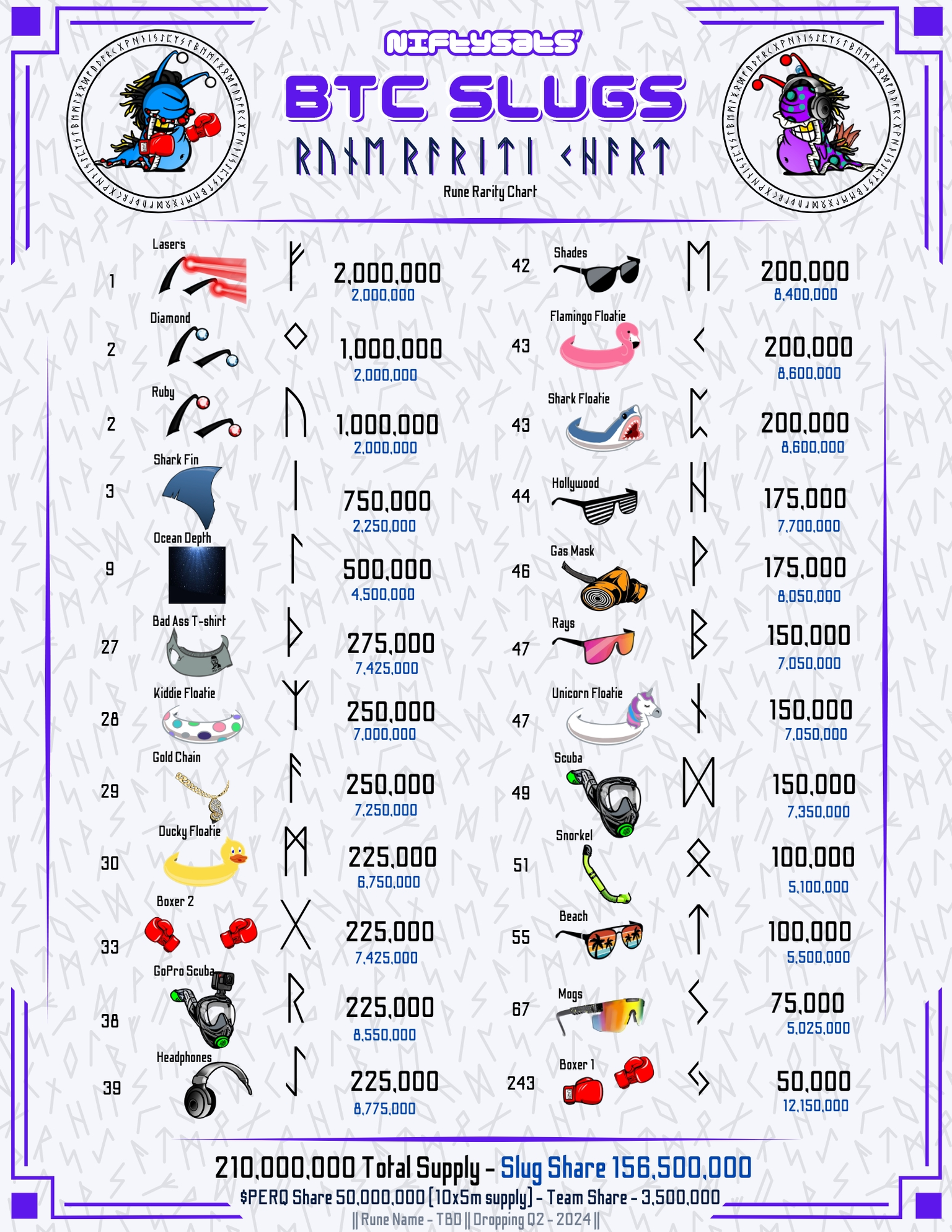
Second, they have a BRC-20 token $PERQ—each $PERQ entitles holders to 10 Rune tokens. With 5 million $PERQ minted, up to 50 million Rune tokens (23.8% of the planned 210 million total) will go to $PERQ holders.
Rune Kingdom
Possibly the first Rune project from a Chinese creator, led by Bitcoin Knight @CKN_BIT—a well-known figure among Chinese-speaking Ordinals enthusiasts.
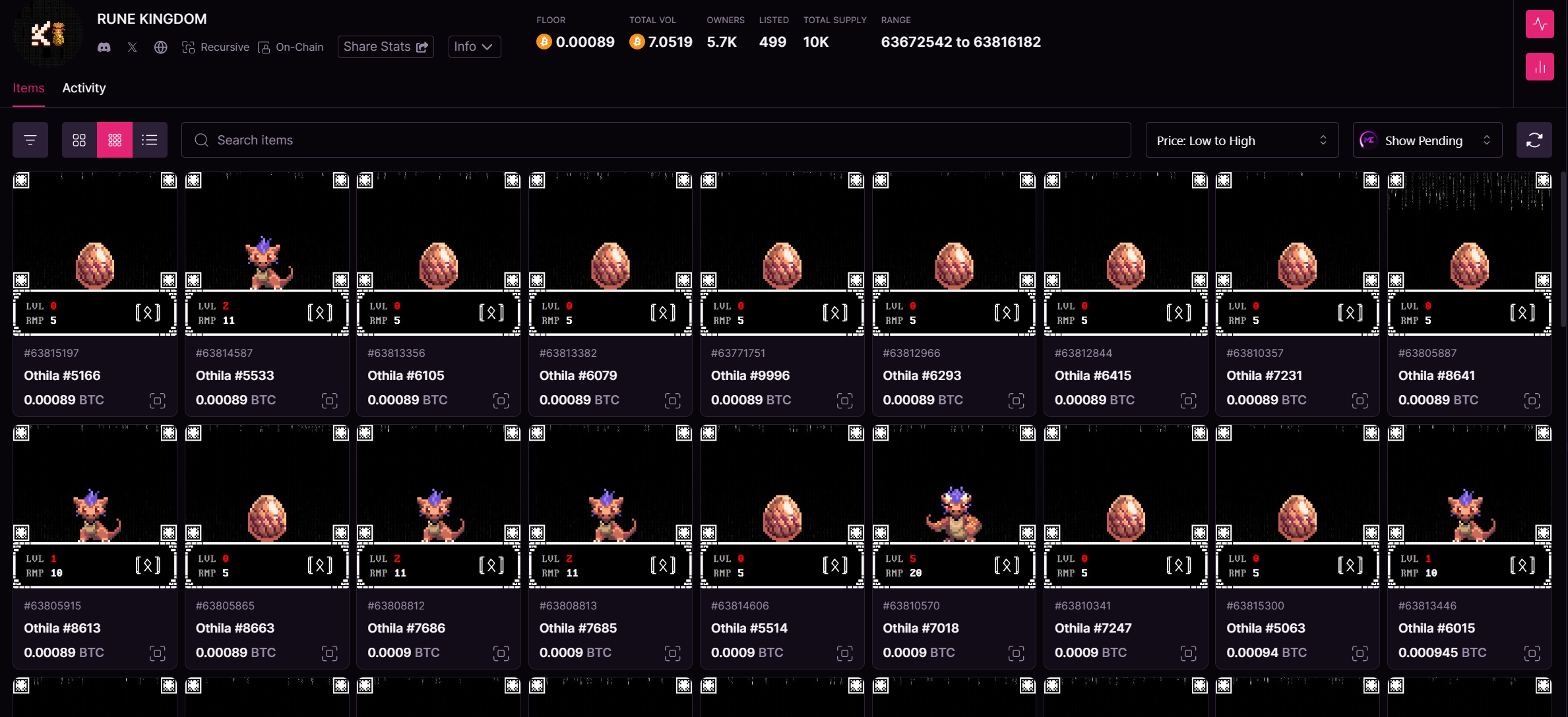
10,000 Rune Dragons were airdropped to Bitcoin Knight holders and select communities. The mining mechanism resembles Node Apes—maximizing rewards requires holding Bitcoin Knight for bonuses, with Rune Dragon rarity also influencing output.
RuinChainX
Another project aiming to build a Rune marketplace. Despite underwhelming results from its OG card sale on BRC-420, the team remains active and has published its future Rune tokenomics:
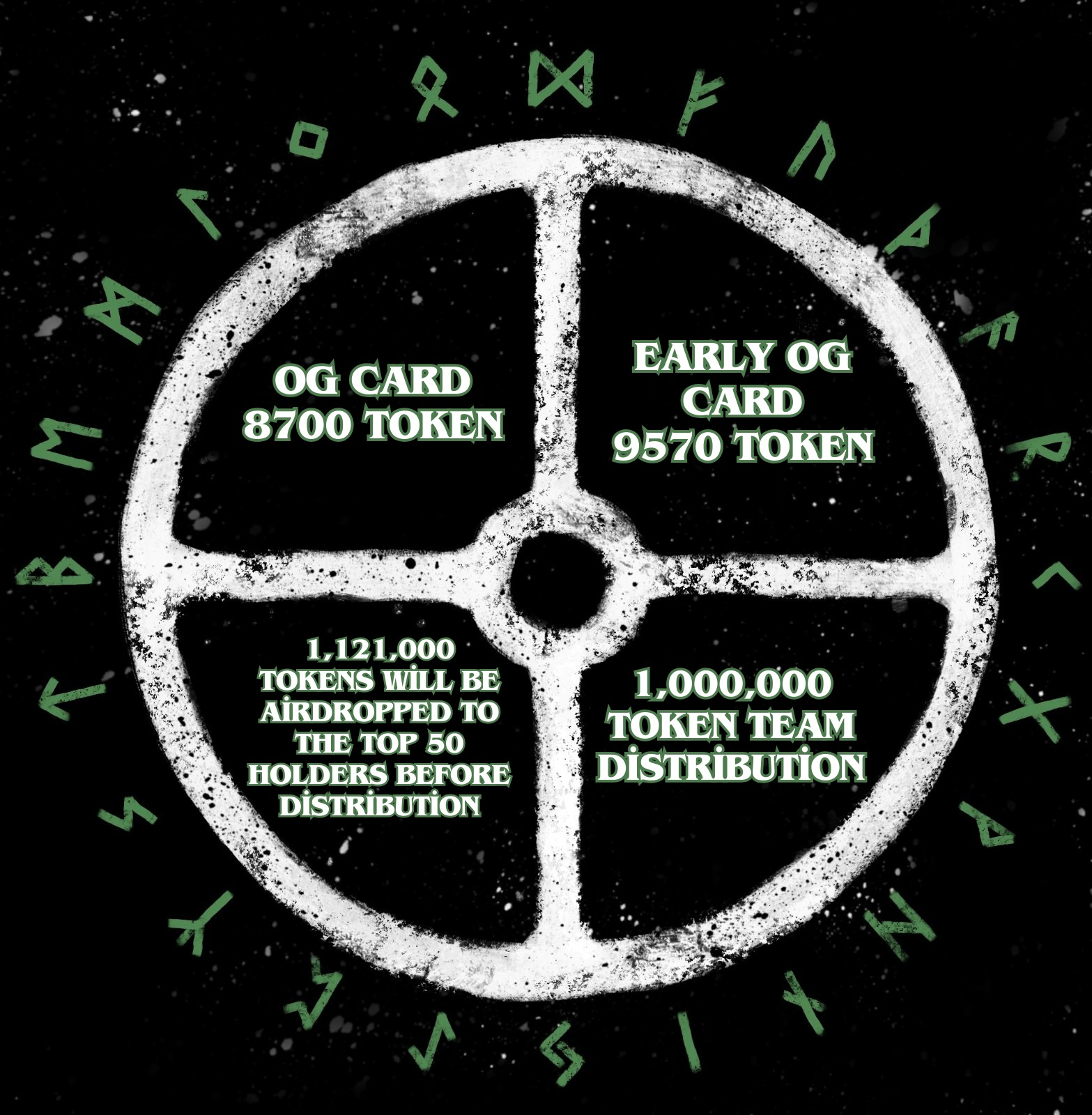
(Image source: @RuneChainX)
Rune Zone
It’s unclear whether this project will involve Rune token mining, as current gameplay descriptions suggest competition for a Rune prize pool containing the following:
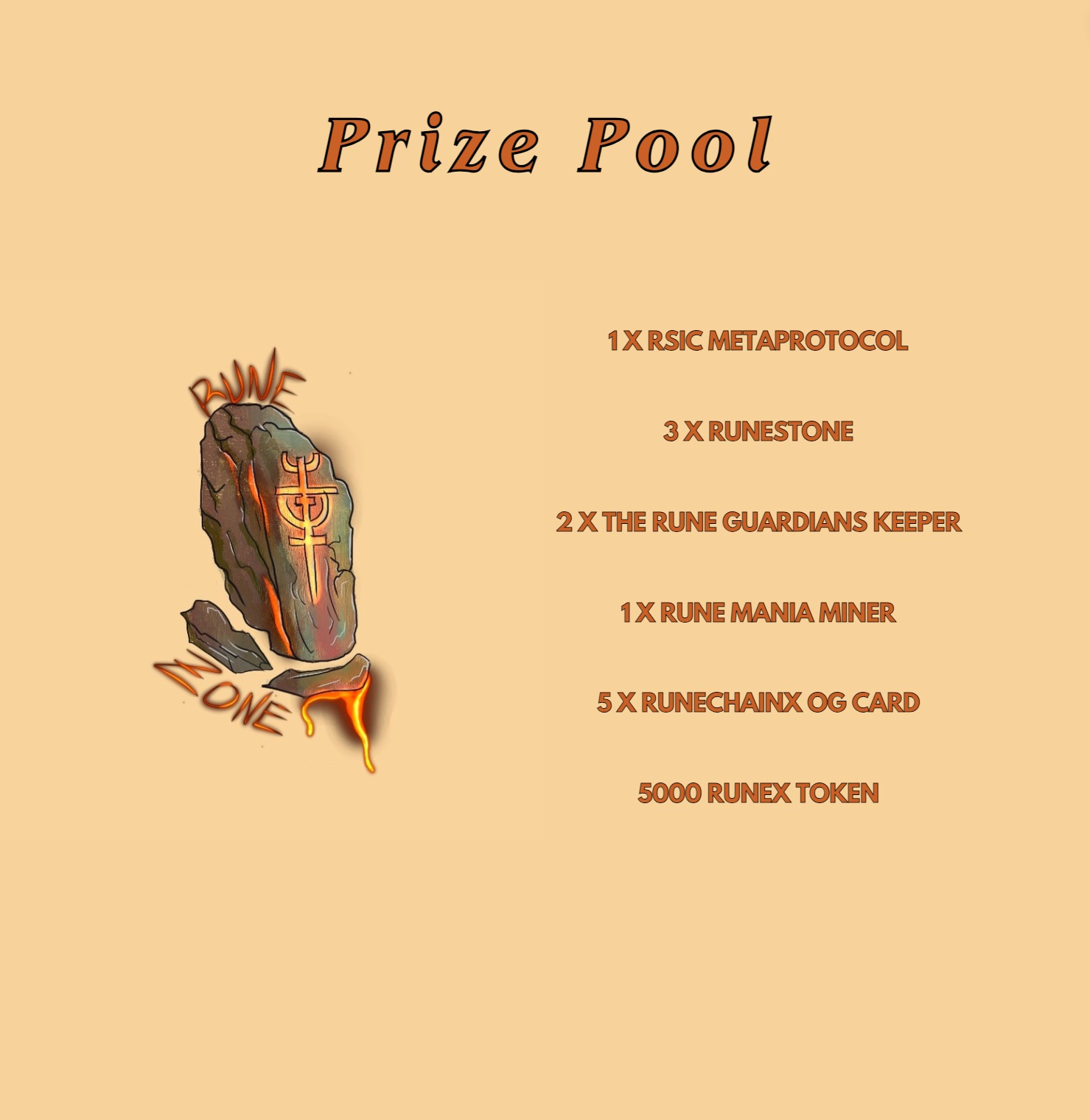
However, given the project’s Twitter is still relatively inactive, we’re including it for monitoring purposes—to avoid missing out prematurely.
Join TechFlow official community to stay tuned
Telegram:https://t.me/TechFlowDaily
X (Twitter):https://x.com/TechFlowPost
X (Twitter) EN:https://x.com/BlockFlow_News
 BlockBeats







