








Unveiling HACD: The Inscription and Meme Coin Pioneer Asset with a 25x Monthly Surge
TechFlow Selected TechFlow Selected
Unveiling HACD: The Inscription and Meme Coin Pioneer Asset with a 25x Monthly Surge
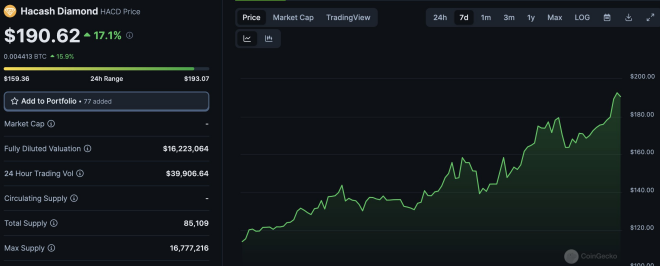
A comprehensive asset HACD, integrating PoW, inscriptions, image-based currency exchange, and generative art protocols, has quietly surged 25x on the new exchange Xeggex over the past month.
 Navigating Web3 tides with focused insights
Author: Hacash DAO
In November 2023, Binance's listing of ORDI ignited a sustained rally in inscription assets. In February 2024, the release of the ERC404 protocol sparked renewed thinking about NFT innovation. It could be said that this bull market in the Bitcoin ecosystem is driven by inscriptions, while the Ethereum ecosystem’s current bull run may hinge on tokenized NFTs (NFT-to-token swaps). However, what remains largely unknown to the public is that amidst this bustling market, an integrated asset combining PoW, inscriptions, NFT-to-token swaps, and generative art protocols—HACD—quietly surged 25x within a month on the new exchange Xeggex.
Yet HACD first emerged as early as 2019. What exactly is the origin of this nearly five-year-old pioneer of inscriptions and tokenized NFTs?
HACD, short for Hacash Diamond, originates from a section of the Hacash whitepaper proposed in 2018 by an anonymous Bitcoin scholar and Austrian economist. Later, community developers implemented the whitepaper, and on May 16, 2019, the first HACD was mined—named NHMYYM—marking the birth of the industry’s first cryptographic inscription.
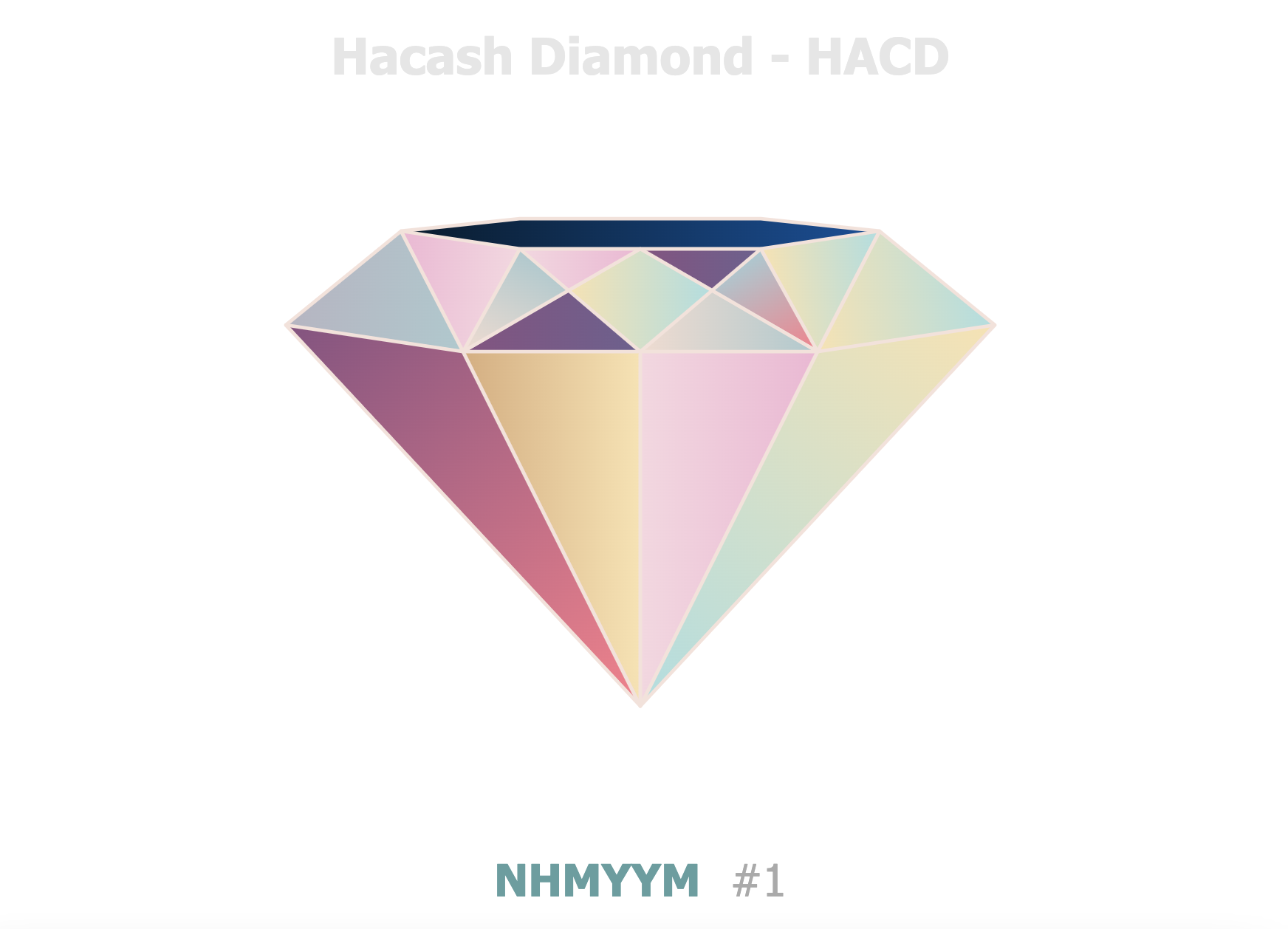
Looking back at the history of crypto assets, HACD’s emergence as the pioneer of inscriptions and tokenized NFTs was no accident.
Hal Finney, widely considered one of the most likely candidates to be Satoshi Nakamoto, proposed the concept of "cryptographic transaction cards" in 1993, emphasizing the collectible and tradable value of encrypted strings, while suggesting these strings must be generated via a certain Proof-of-Work (PoW) algorithm to ensure scarcity and value. Nick Szabo, the father of smart contracts, introduced Bit Gold in 1998, emphasizing the creation of value through computational power. However, its fixed difficulty led to inflation and lack of fungibility.
HACD creatively solved Bit Gold’s inflation problem by introducing a mining difficulty that only increases and never decreases, along with a bidding auction mechanism. This ensures a fixed number of units produced per time period, preserving the scarcity of this “cryptographic gold,” while adding uniqueness and collectible value through six-character inscriptions—effectively realizing the vision of cryptographic transaction cards.
It can be said that HACD’s various design mechanisms align with the visions and ideas of multiple veteran cypherpunks.
Understanding HACD from a BTC Perspective
Each HACD randomly computes six characters from a specific set of 16 English letters, with no repetition, resulting in 16^6 possible combinations—approximately 16.77 million total supply. The generation process, like Bitcoin, requires computational power, but differs significantly from Bitcoin mining.
HACD is a native asset on the Hacash chain but does not serve as block rewards—the role fulfilled instead by another currency, HAC.HAC is the first governance-free, oracle-free, fully decentralized purchasing-power-stable cryptocurrency.HACD production is based on the computational power contributed every five blocks on Hacash. When no computing power is invested, no HACD is produced. Each newly minted HACD increases the mining difficulty permanently—unlike Bitcoin, which adjusts difficulty biweekly with potential increases or decreases.
Additionally, a maximum of 58 HACDs are produced daily. Theoretically, it would take around 800 years to mine all HACDs, but due to ever-increasing difficulty—similar to gold—there is a hard cap, meaning they can never be fully exhausted. Mining difficulty will eventually surpass that of Bitcoin, reaching a point where even global computational power couldn’t mine a single unit. Bitcoin has a fixed supply of 21 million, with block rewards halving every four years, starting at 7,200 BTC per day until full issuance around 2140. Its emission curve is time-based and fixed, independent of mining difficulty.
Miners participating in HACD production compete over cycles of five blocks by investing computational power and bidding with HAC. The highest bidder in each cycle wins the HACD, and 90% of the HAC used in bidding is burned. As demand for HACD rises, so do HAC bidding fees, thereby increasing HACD’s production cost according to market demand. So far, HACD demand has already burned 52% of the total HAC supply.
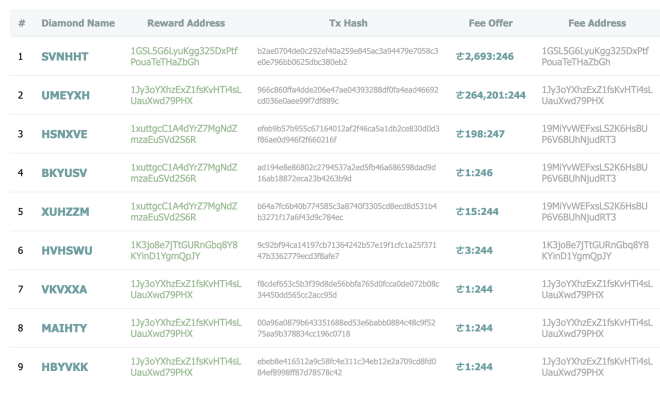
An interesting aspect of this auction process is that each HACD features distinct artistic forms. Only after the winning bid is confirmed in a cycle can the rarity of the HACD’s visual form be revealed—akin to unboxing a blind box.
In terms of market supply-demand regulation, HACD leverages continuously rising difficulty and real-time market demand to guide miners’ decisions on whether to invest computational power. Production costs are dynamically adjusted via bidding, making HACD’s supply mechanism more responsive and reflective of true market demand than Bitcoin’s.
The Four Programmable Protocols of HACD
Built upon a production mechanism superior to BTC, HACD possesses inherent programmability and already supports four programming protocols: the native Hacash protocol, the inscription protocol, the generative art protocol, and the engraving protocol. Exploration into each of these protocols is still in its infancy. Below is an example of each:
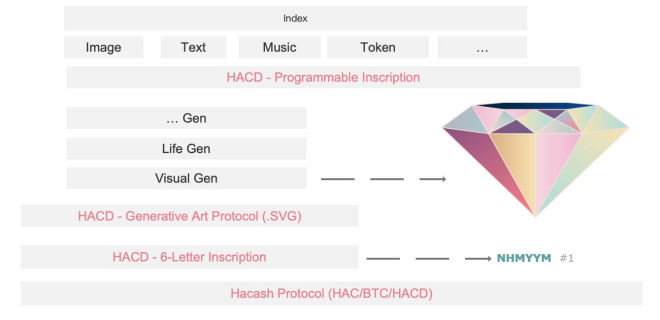
The native Hacash protocol supports Turing-complete programmability, meaning any functionality on Hacash L1 can be extended to HACD. For instance, atomic on-chain trades between HACD and HAC are enabled by Hacash’s readable financial contracts.
The inscription protocol defines HACD’s identity as an NFT and is key to enabling ERC404-style NFT-token swaps without requiring smart contracts. HACD can be listed on any centralized exchange, with divisibility determined by the exchange. When withdrawing HACD from an exchange to an on-chain wallet, it must be in whole units. After successful withdrawal, the unique six-character inscription of each HACD becomes visible—all without requiring contracts or incurring high gas fees.
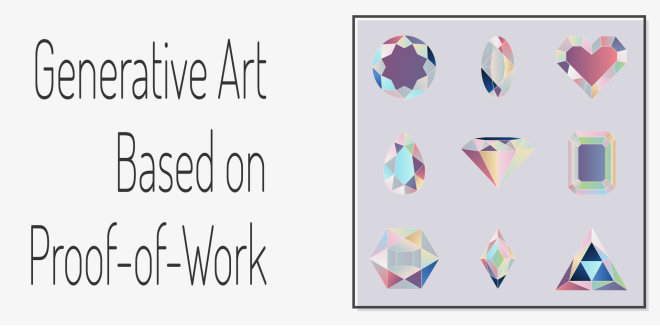
The generative art protocol is the visual hallmark of HACD. Due to its PoW-based production, HACD pioneers a unique art form in generative art history: energy-generated art. Each piece is random and unpredictable, created through computational effort, with over 16 million possible variations. The complete artistic creation will span centuries, involving participants from diverse global backgrounds. Currently, HACD features three types of generative art. The earliest, known as HIP-5 Diamond, includes 9 shapes and 16 colors, with 8 being irregular shapes and a 3% chance of appearing. Collectors aim to assemble the full "diamond set" of all 9 shapes and 16 colors. There is also strong interest in collecting purity of base color—single-color green HACDs, known as pure diamonds, have sold for up to 2 BTC.
HACD’s engraving protocol is similar to Bitcoin’s Ordinals protocol and enables various indexing protocols. The key difference lies in Ordinals being based on Bitcoin’s UTXO model, whereas HACD’s engraving protocol operates on Hacash’s account model. This gives HACD far greater flexibility—for example, issuing token standards akin to BRC20. HACD’s engraving protocol natively supports advanced features such as burning and layering, often referred to as “smart inscriptions.”
Although HACD’s four programmable protocols appear independent, they can be combined in innovative ways. In the tokenized NFT space, HACD is not only the pioneer but also enables NFT-token trading without relying on smart contracts. By integrating generative art and engraving protocols, HACD can produce different artwork variants, forming separate NFT markets. Since tokens can also be issued on HACD, secondary token markets emerge. Meanwhile, HACD itself, as a PoW-based NFT, maintains a floor price—giving rise to the novel concepts of “art within art” and “token within token.” This may offer a new direction for today’s rapidly growing NFT-token swap sector.
Why HACD Is a Superior Appreciating Asset
From both mechanistic and programmability perspectives, HACD offers stronger scarcity and is better suited as a store of value compared to BTC.
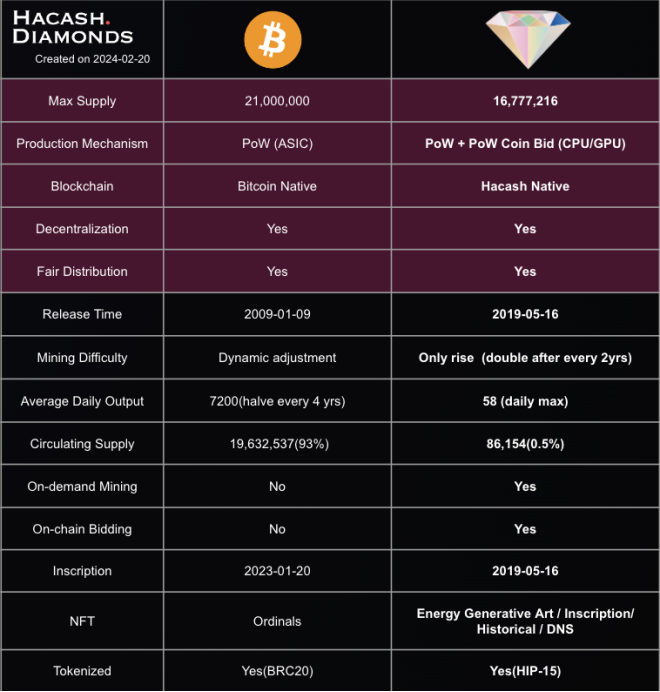
First, HACD’s design surpasses Bitcoin’s core mechanics by achieving price stability and value preservation through a unique economic model. Unlike Bitcoin’s simple capped supply, HACD uses a difficulty mechanism that only increases, allowing its per-unit-time supply to automatically adjust based on market demand. This flexible supply adjustment helps reduce price volatility, making HACD more conducive to stable long-term value storage.
Another standout feature of HACD is its dual-token model: each HACD is obtained through pure PoW mining and confirmed on-chain through competitive bidding using HAC, which is then largely burned. Meanwhile, HACD’s mining difficulty continuously rises and never resets, making new coin production increasingly difficult over time. This escalating difficulty raises mining costs steadily, further reinforcing HACD’s scarcity and value retention properties.
Furthermore, as the original inscription and tokenized NFT, each HACD carries a unique inscription and distinct, stackable art forms, enhancing its scarcity and value. By using combinations of 16 specific letters to create identifying inscriptions and enforcing a hard supply cap, every HACD in circulation holds unique worth. This personalized inscription design introduces a collectible dimension to the HACD market, giving certain HACDs higher numismatic value and strengthening their appeal as wealth-storage assets.
The Development Journey of HACD
Given its exceptional qualities, why has this crypto asset remained obscure for years, only recently gaining attention amid the boom in inscriptions and tokenized NFTs? The answer lies in the nature of the Hacash project itself. Its monetary theory is highly advanced and extremely difficult to understand, limiting comprehension to only a small minority. With no founder or central team, there was no centralized capital force to promote its development. In essence, its near-fundamentalist level of decentralization has caused overall progress to move excessively slowly.
After publishing the whitepaper in 2018, the author of Hacash disappeared. The first HACD wasn't mined until May 16, 2019. In 2020, during the DeFi Summer, the spotlight was overwhelmingly on Ethereum and the rise of PoS.
Even when NFTs exploded in 2021, HACD—as a classic inscription-based NFT—was incompatible with Ethereum technology. Trading HACD could only occur off-chain, and despite active OTC trading, volume failed to accumulate visibility on mainstream platforms. It wasn’t until January 2024, when the community crowdfunded HACD’s listing on Xeggex and CoinGecko, that a small group began recognizing this unique tokenized NFT asset. Coincidentally, the ERC404 tokenized NFT protocol started gaining traction in February.
Among HACD collectors, four sayings circulate: “The convergence of BTC and Ordinals is moving toward HACD’s value storage model,” “Everyone who believed in BTC but missed it should own at least one HACD,” “The price of every HACD will inevitably surpass BTC,” and “HACD is not only the pioneer of inscriptions and tokenized NFTs, but also the ultimate destination these two sectors strive for. With market recognition and momentum, it will become the unshakable leader across both fields.” These statements may sound bold, but they are not without foundation.
This innovative asset from 2018 is now drawing attention from a few teams and investors. Will it, like BTC, grow into something of unimaginable value over time? We look forward to more visionary individuals joining the development of HACD and building the next BTC-level success story.
Join TechFlow official community to stay tuned
Telegram:https://t.me/TechFlowDaily
X (Twitter):https://x.com/TechFlowPost
X (Twitter) EN:https://x.com/BlockFlow_News
 HacashㄜDAO


