








OpenStamp Launches First Launchpad to Build SRC-20 On-Chain Coinlist
TechFlow Selected TechFlow Selected
OpenStamp Launches First Launchpad to Build SRC-20 On-Chain Coinlist
If the inscription ecosystem doesn't want to fade into obscurity, uncovering truly high-quality, original projects has become imperative.
 Navigating Web3 tides with focused insights
In May 2023, BRC-20 launched, ushering in a land-grab boom for Bitcoin inscription ecosystems. Among various asset issuance protocols, apart from BRC-20 originating from the Ordinal protocol, the Stamps protocol and its SRC-20/SRC-721 ecosystem are the most mature.
Within the Stamp ecosystem, OpenStamp—an all-in-one trading and minting platform—not only enables deployment, minting, and transfer of Stamp and SRC-20 assets but also provides public goods such as a transaction accelerator.
The transaction accelerator is a groundbreaking product designed with user experience in mind. OpenStamp allows users to manually set transaction fees using CPFP (Child Pays for Parent) to gain priority, operating similarly to Ethereum's MEV tools where higher bids receive priority inclusion. In practice, both buyers and sellers can apply acceleration, opening up new avenues for improving transaction efficiency.
On February 7, OpenStamp further launched its Launchpad to help users discover high-quality projects, provide listing channels, enable two-way market making, and enhance overall liquidity within the Stamp protocol.
From Bitcoin’s inception to the launch of Counterparty, then to Stamp and SRC-20—this article will review the development and future of the Stamp ecosystem, which may mark a new phase for the inscription landscape this year.
A Brief History of Stamp: The Future of the SRC-20 Market
Since Bitcoin's creation, innovating on top of it has become an experimental playground for tech enthusiasts.
The earliest idea was "colored Bitcoin," a thought experiment proposing the use of blank spaces in Bitcoin scripts to label different “colors” of Bitcoin, thereby distinguishing them. This was one of the earliest attempts at NFT-like tokenization of Bitcoin.
In 2014, Robert Dermody and others put colored coins into practice by writing data into Bitcoin scripts and indexing them to reconstruct meaningful text, launching the Counterparty protocol for peer-to-peer transactions—an approach that later inspired the Ordinal protocol. However, it's important to note that Casey Rodarmor, founder of Ordinals, critiqued it as follows: “Counterparty requires certain operations to use new tokens rather than native Bitcoin and does not operate under the UTXO model.”
Later, Mike In Space and others initiated the Stamp protocol. Building upon lessons learned from Counterparty, the Stamp protocol implemented permanent inscription directly onto Bitcoin transaction data using the UTXO model.
This evolved further into the SRC-20 protocol, built on top of Stamp but with key differences. SRC-20 transactions are created directly on BTC, and minting, deployment, and transfers are service-fee-free, requiring only Bitcoin miner fees.
In terms of trading, Stamp/SRC-20 assets can be exchanged not only for Bitcoin but also traded directly on OpenStamp. Once listed on centralized exchanges (CEX), they could serve as intermediaries for broader asset interactions. OKX Wallet has already formed a deep partnership with OpenStamp to jointly promote the growth of SRC-20 assets.
Moreover, SRC-20 aligns perfectly with Bitcoin’s decentralized ethos through peer-to-peer trading—anyone can trade SRC-20 assets directly on the Bitcoin mainnet without censorship from any node. This unrestricted, free spirit continues to grow alongside Stamp.
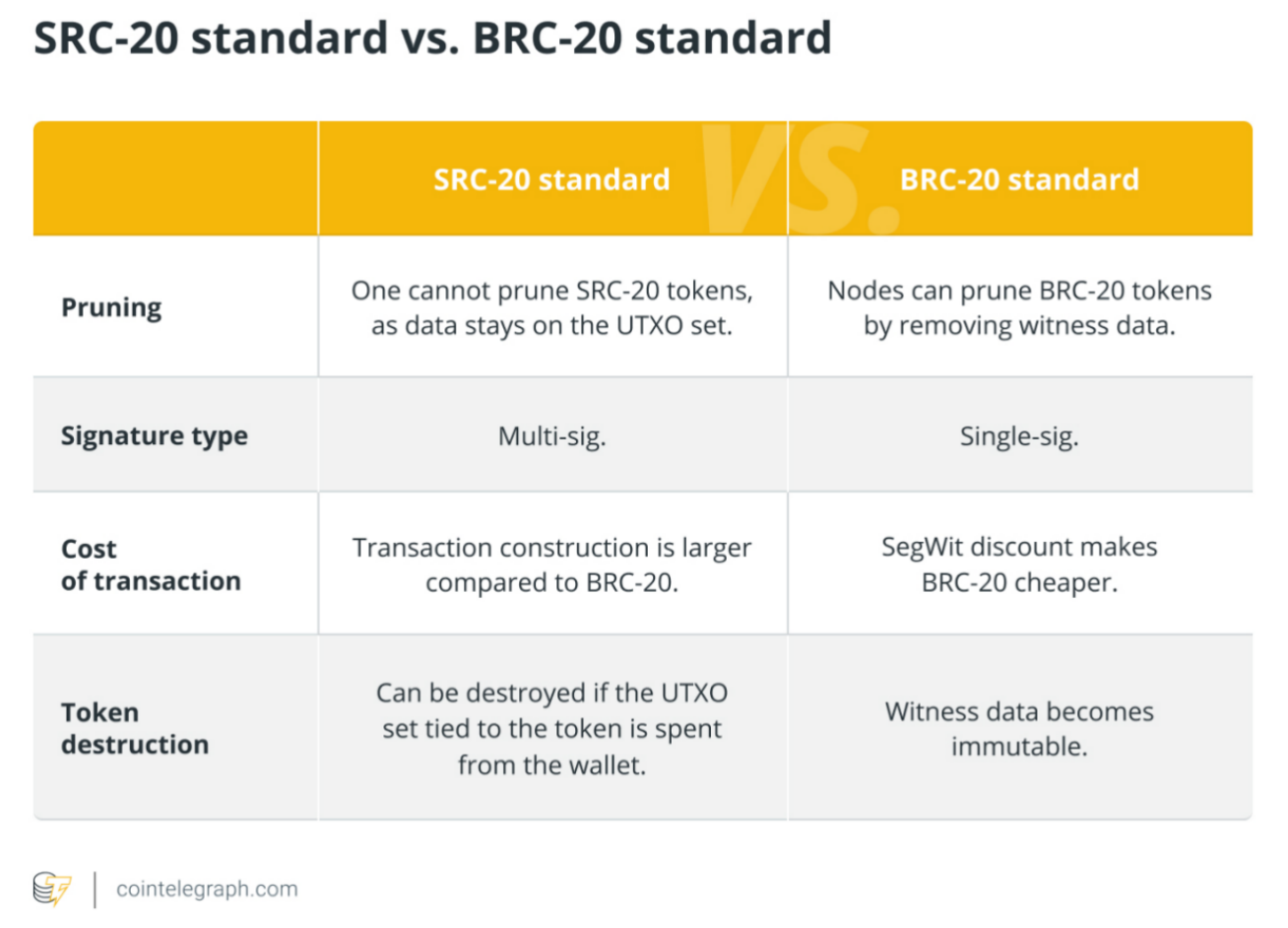
Unlike BRC-20, which stores data in the segregated witness area, SRC-20 writes directly into Bitcoin transactions. As a result, even Bitcoin nodes cannot eliminate SRC-20 assets by pruning segregated witness data, achieving true long-term security.
The anti-censorship mechanism is firmly embedded within Bitcoin’s core operation. A major criticism of BRC-20 is that nodes can censor storage records and addresses or even refuse to include transactions in blocks. In contrast, SRC-20 transactions can never be rejected by any node, giving it a leading edge in security among current XRC-20 assets.
User adoption is the driving force behind SRC-20’s growth. To date, over 300,000 Stamps have been minted and claimed, with more than 5,000 unique addresses holding them. Cumulative trading volume for Stamp has exceeded $100 million. Like ERC-20 tokens, SRC-20 holds potential as a universal token format within the Bitcoin ecosystem. Once BTC Layer 2 solutions are fully deployed, SRC-20 will seamlessly integrate across projects, functioning as cross-chain assets.
SRC-20 favors Base64 encoding, supporting the storage of images (PNG/SVG), text, and other data encoded in Base64. If a single block cannot hold the full data, multi-signature methods split and write the data across multiple blocks.
Therefore, SRC-20 is better suited than BRC-20 for storing high-value items such as legal documents and critical data, allowing users to choose inscriptions based on their specific needs.
In terms of transaction mechanics, SRC-20 supports flexible splitting and combining of assets, enabling trades at any scale. In the future development of BTC DeFi, this feature will play a crucial role in asset interoperability and composability, potentially becoming a mainstream standard for BTC DeFi asset trading.
After technical decisions are made, the tougher challenge lies in market competition.
This can broadly be divided into two phases: past community-driven growth and the upcoming era of project competition.
-
In 2023, the community-led phase: during the early emergence and wave-like development of inscriptions, Free Mint and community-driven inscription protocols and assets emerged en masse, educating users and building the initial base of inscription protocol adopters. However, as homogenization increased, the market entered a downturn.
-
In 2024, the project competition phase: OpenStamp has become the dominant marketplace protocol in the SRC-20 ecosystem, excelling in wallet integration, order matching, and transaction transparency.
In concrete market mechanisms, the OpenStamp SRC-20 marketplace continues to evolve, now supporting major Bitcoin inscription wallets like Unisat and OKX Wallet. It has also innovated a new process for placing orders, matching, and final settlement.
Based on market forecasts, 2024 will bring transformative changes to the SRC-20 ecosystem—and the broader inscription market—marking the end of the wild west era. Project quality will become the primary criterion for success. While community-led projects ensure fairness, they often lack sustainable team incentives, easily falling into a death spiral of “emergence → launch → peak → decline,” resulting in extremely short project lifespans. Users who buy in are left with no long-term value, effectively holding worthless assets.
To address this, OpenStamp launched the first Launchpad platform in the SRC-20 ecosystem, aiming to help users identify high-quality projects. At the same time, staying true to Bitcoin’s original vision of decentralization and permissionless access, the Launchpad inherits these principles to prevent project teams from retaining excessive control.
Wealth Creation Era: The SRC-20 On-Chain Coinlist
In reality, community participation and project fundraising are not mutually exclusive. Especially in blockchain, major CEXs and on-chain platforms all operate Launchpads, demonstrating strong capital-raising capabilities.
Coinlist, known for prioritizing individual participation, has always been popular among retail investors and remains the only Launchpad to raise over $1 billion to date.
Recognizing the momentum in the Bitcoin ecosystem, OpenStamp decided to launch a Launchpad for the SRC-20 space, combining strengths from both communities and projects to grow the Stamp and SRC-20 ecosystems and lead the evolution of Bitcoin inscriptions.
The first project selected for OpenStamp Launchpad is BitDragon, a blockchain game backed by veteran gaming platform The Sandbox and KuCoin exchange.
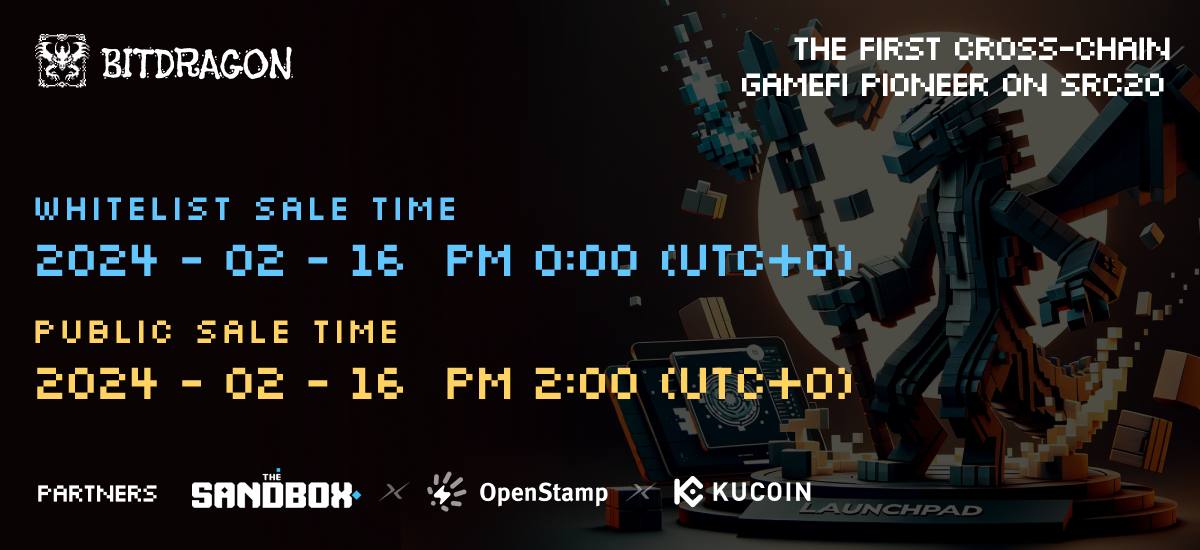
BitDragon is the first cross-chain game to integrate Bitcoin inscriptions into its core mechanics, creatively allowing user Avatars and credentials to be minted as inscription assets and bridged to The Sandbox and BTC L2 networks, ensuring smooth gameplay while permanently inscribing assets onto Bitcoin.
Furthermore, according to OpenStamp’s Launchpad design, any listed project must have a sufficiently low FDV (Fully Diluted Valuation), with at least 80% of tokens immediately available for circulation. For BitDragon’s token BitDN, 90% will enter circulation directly—70% through whitelist sales and 20% via public sale.
It is evident that in this OpenStamp-led Launchpad era, although projects transition into VC- and team-driven models, community accessibility is still preserved. Moreover, the collaboration between SRC-20 and blockchain games opens new market opportunities for Bitcoin asset circulation.
One direction is cooperation among BTC L2s. Just as fragmented L2s on Ethereum have led to non-interoperable assets, similar issues are beginning to emerge on Bitcoin. While SRC-20’s mechanism of writing directly into Bitcoin transactions ensures permanent storage, it may also drive up storage costs. Speeding up transactions, reducing fees, and breaking down barriers between inscriptions and L2s have become industry focal points.
The SRC-20 Launchpad aims to nurture ecosystem-wide Bitcoin-native projects, bridging gaps to create a seamless, one-stop navigation path. With the introduction of the Launchpad, OpenStamp’s strategic layout becomes more complete—forming a synergistic structure where Launchpad incubates and discovers new projects, while Stamps and SRC-20 assets find their rightful places.
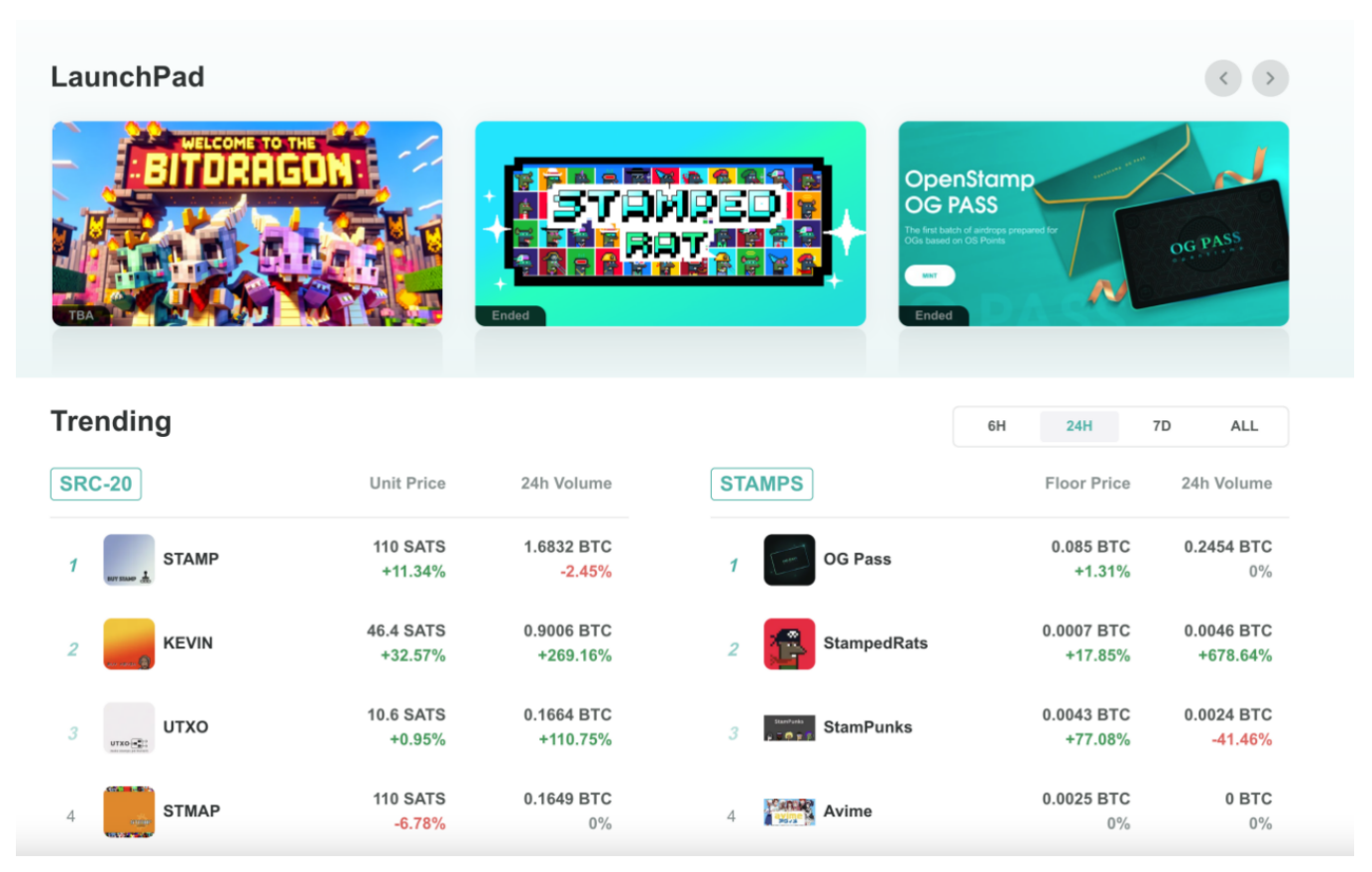
The first Launchpad cohort is just the beginning. SRC-20 aims to build a more differentiated and diverse ecosystem. In an era where various XRC-20 protocols compete fiercely, liquidity within the ecosystem becomes paramount. Assets like STAMP and KEVIN, which approach nearly 1 BTC in 24-hour trading volume, highlight the need to rapidly incubate more Launchpad projects to fuel ecosystem growth and build robust liquidity.
Conclusion
The wild west era of Bitcoin entrepreneurship is ending. Various XRC-20 protocols are rapidly becoming homogeneous. If the inscription ecosystem wishes to avoid stagnation, identifying truly innovative and high-quality projects has become imperative. In this sense, OpenStamp is emerging as a pioneering explorer.
The Launchpad is merely the first step. For SRC-20 to establish lasting advantages over competing protocols, sustained internal strength must be cultivated. We look forward to a more vibrant and thriving Bitcoin inscription market ahead.
Join TechFlow official community to stay tuned
Telegram:https://t.me/TechFlowDaily
X (Twitter):https://x.com/TechFlowPost
X (Twitter) EN:https://x.com/BlockFlow_News
 深潮TechFlow


