Analyzing DLMM: How to Enable Liquidity Providers to Earn More Fees?
TechFlow Selected TechFlow Selected
Analyzing DLMM: How to Enable Liquidity Providers to Earn More Fees?
At Meteora, we absolutely love liquidity providers (LPs)!
 Navigating Web3 tides with focused insights
Author: AdamZ
After covering quite a bit of Solana's hardcore infrastructure, I'm now diving into DeFi and sharing some practical insights—how to make money~
At Meteora, we absolutely love liquidity providers (LPs)! LPs are huge contributors to the Solana ecosystem, helping enable seamless on-chain trading experiences by increasing liquidity and reducing slippage.
We’re constantly building products that solve LP pain points and support what we believe is their primary motivation—earning more internet money with their capital😉
We believe we’ve found the perfect tool to achieve this through our Dynamic Liquidity Market Maker (DLMM)!
DLMM: Key Features and Benefits
1. Zero-Slippage, Precision Liquidity Concentration
-
Improves capital efficiency and fee earnings for LPs
-
Higher trading volume and fees due to zero slippage within bins, significantly reducing price impact
2. Flexible Selection of Your Preferred Volatility Strategy
-
Offers greater flexibility and control over effective liquidity distribution for LPs
-
Unlocks additional opportunities to earn higher fees based on market conditions and LP goals/risk profiles
3. Dynamic Fees That Leverage Volatility
-
Fees increase or decrease based on market volatility, helping offset potential losses LPs may face during volatile periods and enhancing LP profitability
Since the DLMM beta launch in December 2023, the protocol has generated nearly $1 billion in trading volume from approximately $12 million in TVL, demonstrating its exceptional capital efficiency and fee-earning potential.
Why LPs Should Care About DLMM
There are many reasons to become an LP, but we believe most would agree that earning fees is top priority. Therefore, when building DLMM, our team focused on designing robust features enabling LPs to maximize fee earnings using their capital.
What Prevents LPs From Earning More Fees?
Whenever a swap occurs, LPs earn fees proportionally from traders based on their share in the liquidity pool. Generally, the higher the trading volume in a pool, the more fees LPs earn.
However, liquidity deposited in automated market makers (AMMs) and liquidity protocols is often underutilized because it’s spread across all prices from 0 to infinity, resulting in large amounts of idle capital that cannot be accessed at the current price and thus cannot capture fees. Additionally, most liquidity pools have fixed fee tiers, which can lead to opportunity costs for LPs when trading demand is high, as traders would be willing to pay higher fees during those times.
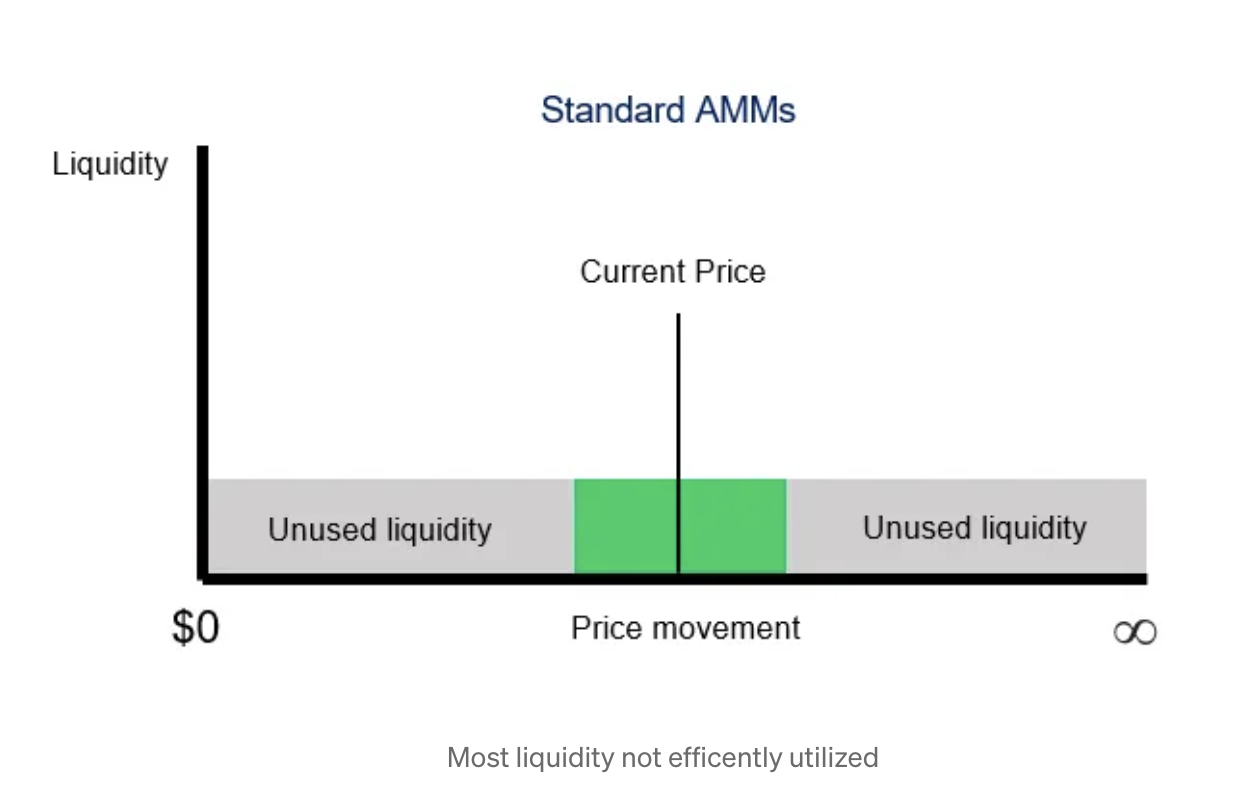
Most liquidity is not effectively utilized
All LPs need a smarter way to provide liquidity!
DLMM is designed to address these existing issues and deliver a powerful fee-generating machine for LPs on Solana.
1. Higher Fees Through Precise Liquidity Concentration and Zero-Slippage Bins
Similar to how concentrated liquidity market makers (CLMMs) work, DLMM supports high-volume trading with relatively low capital by allowing LPs to specify price ranges and concentrate tokens near the current market price. But DLMM greatly improves upon CLMM functionality by introducing zero-slippage price bins.
Unlike CLMMs (which incur slippage), in DLMM, liquidity for a token pair is organized into discrete price bins, and reserves within a bin can be swapped at the fixed price defined for that specific bin.
As a result, trades within an active bin experience zero slippage or price impact, meaning LPs can expect higher trading volumes through DLMM.
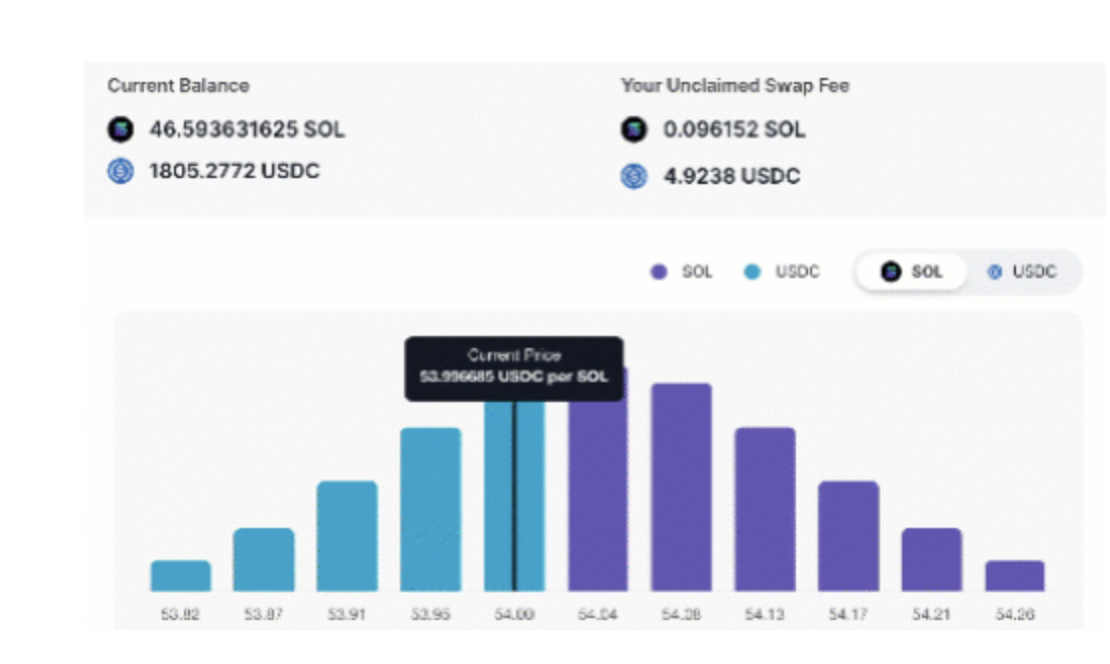
How Price Bins Work
-
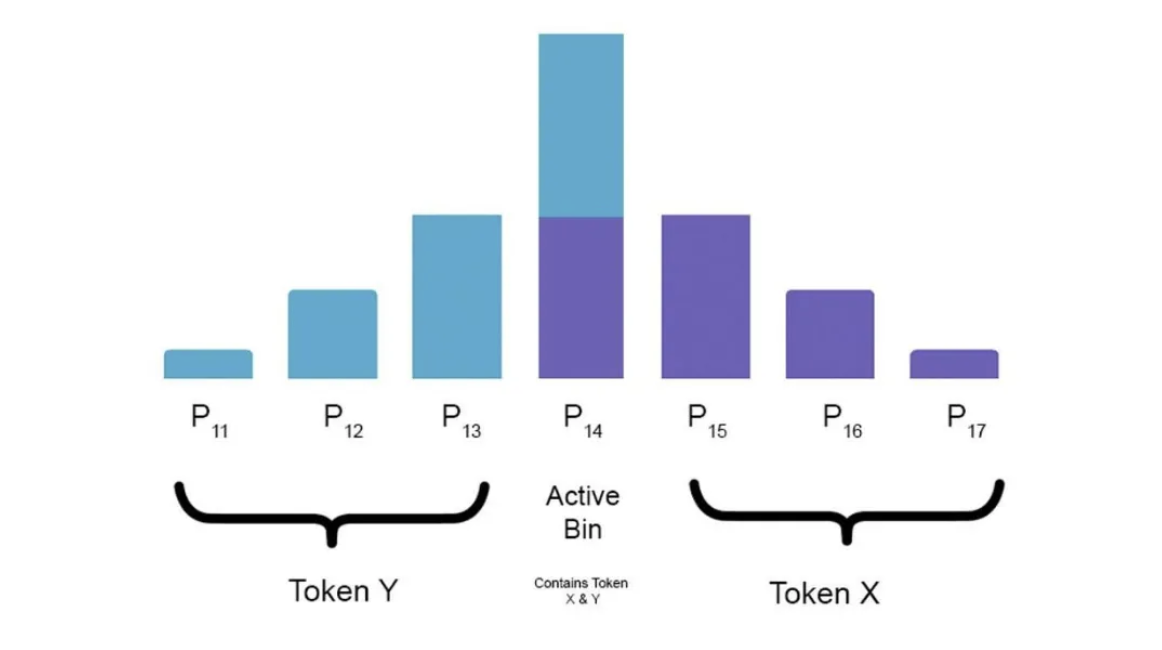
An active price bin contains reserves of both Token X and Token Y. All bins to the left of the active bin contain only Token Y, while all bins to the right contain only Token X. Only one bin can be active at any time, and only the active bin earns trading fees.
-
Liquidity within each bin can be exchanged at a fixed price—ensuring zero-slippage swaps within the bin.
-
Trades add Token X and remove Token Y (or vice versa) until only one type of token remains in the bin, causing the active bin to shift left or right.
-
All bins except the active one contain only one type of token (X or Y), as one token in the bin has been depleted or is waiting to be used.
-
The market for a token pair is formed by aggregating all discrete liquidity bins.
What This Means for LP Fees
This could mean earning more fees with the same or even less capital, especially for more stable pairs with lower volatility.
LPs can view all available price bins and see where the current active bin is located before choosing the exact price point and depth of liquidity they want to provide. Combined with zero-slippage bins, this makes it easier for LPs to further concentrate their liquidity for higher capital efficiency, leading to greater trading volume and fees compared to CLMMs.
This is particularly useful for more stable token pairs where trading occurs within a narrow range. For example, USDC/USDT trades typically happen between $0.99 and $1.01, so liquidity outside this range usually goes unused, and LPs don’t earn fees. As an LP, you can precisely concentrate most of your liquidity within the $1 active bin, optimizing your trade volume capture and, consequently, your fee earnings.
In the future, DLMM could integrate our dynamic vaults so LPs can earn lending yields from capital in unused bins, further boosting capital efficiency.
2. More Opportunities to Earn Higher Fees Through Different Volatility Strategies
Another reason we believe (with our bias) DLMM is the smartest way to provide liquidity on Solana is that LPs have the flexibility to choose their volatility strategy. For more active LPs, this flexibility offers greater control when optimizing for higher returns.
LPs can choose the exact price points where they want to provide liquidity and allocate token amounts across different price points to build an ideal liquidity profile—essentially determining how deep or concentrated their liquidity should be at various price levels.
What This Means for LP Fees
For well-informed LPs who deploy the right strategies aligned with a pair’s volatility, they can achieve extremely high capital efficiency and earn higher fees.
Which volatility strategy should you use as an LP?
1. Spot
Spot provides uniform liquidity distribution, flexible and suitable for any market type and condition. It’s relatively the most straightforward strategy for new LPs who don’t want to rebalance positions daily. This is similar to setting a CLMM price range.
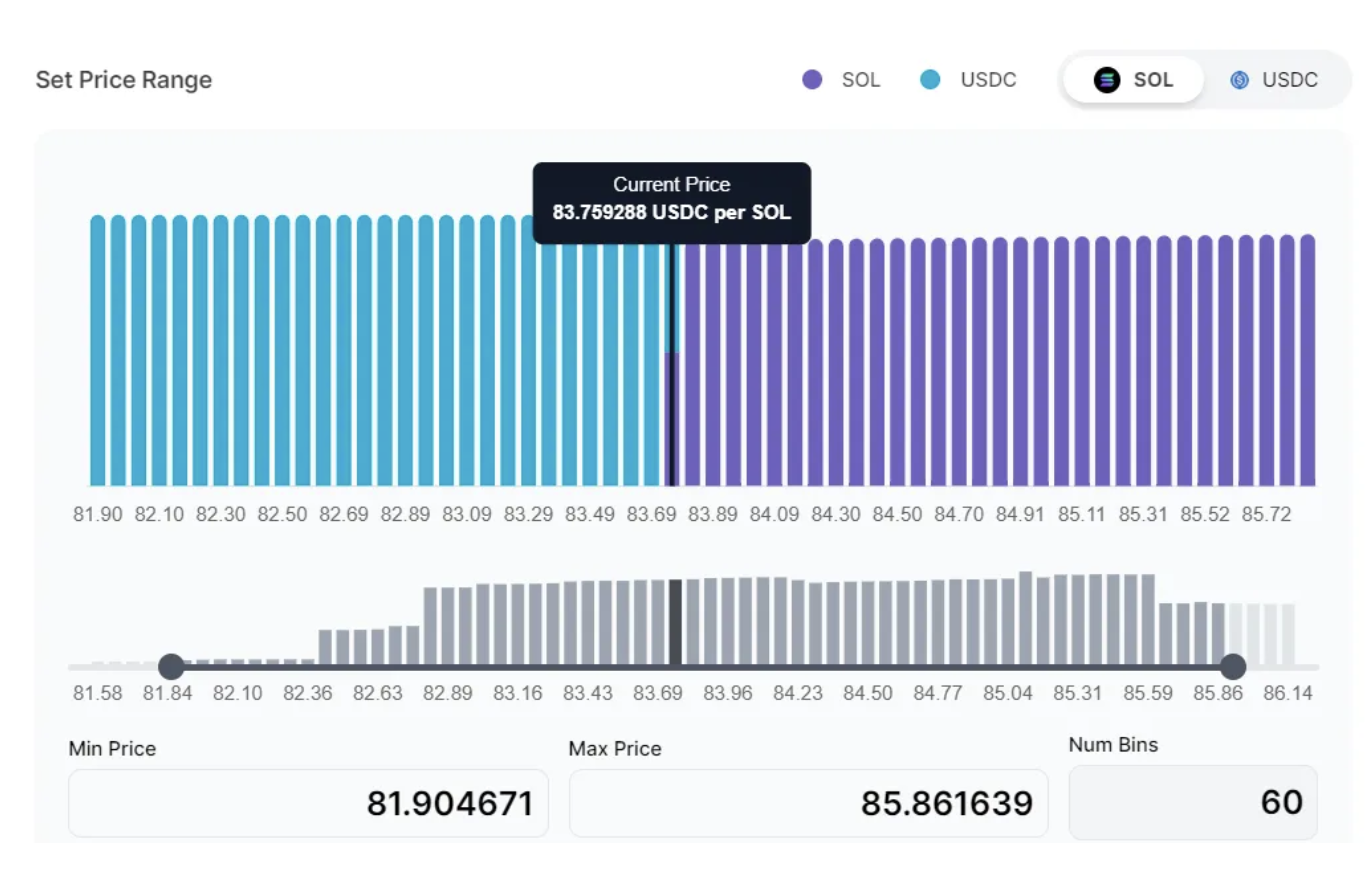
Example: If you believe SOL’s price will steadily fluctuate between $82 and $85 over the next 5 days, you can use the spot strategy to add liquidity to the SOL/USDC pool, setting the range (with some buffer) from 81.90 to 85.86 USDC per SOL. Across 60 bins, this gives you broader coverage to earn steady fees, and you might only need to rebalance every 5 days.
2. Curve
Ideal for a concentrated approach, aiming to maximize capital efficiency by primarily allocating capital toward the middle of the price range. This is very useful for stable pairs or stables with little price movement.
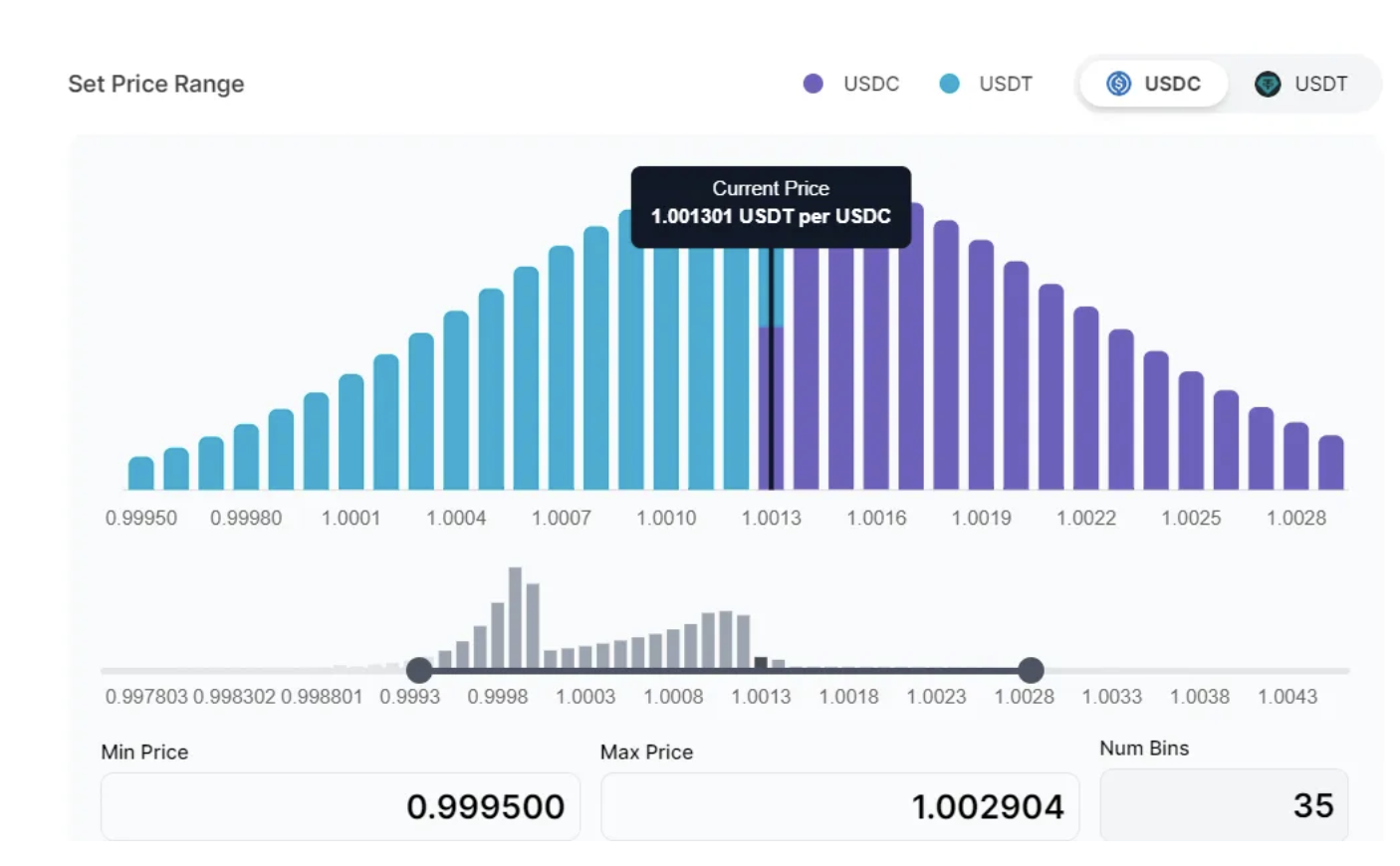
Example: You anticipate a crypto downturn over the next two weeks and prefer holding stablecoins, so you add liquidity to the USDC/USDT pool to earn fees in the meantime. Given the pool’s low volatility, consider the curve strategy. You could set a very narrow range (e.g., 35 bins) from 0.999500 to 1.002904 USDT per USDC, expecting the price to stay close to the midpoint—currently 1.001301 USDT per USDC. Liquidity deployed per bin decreases (bin size shrinks) as price moves away from the center.
3. Bid-Ask
Bid-ask is an inverse curve distribution where most of your capital is allocated to both ends of the range. This strategy can capture larger volatility movements away from the current price. More complex than spot, bid-ask may require more frequent rebalancing to remain effective, but offers significant fee-earning potential when prices swing widely around the current level. Bid-ask can also be deployed unilaterally for DCA in/out strategies.
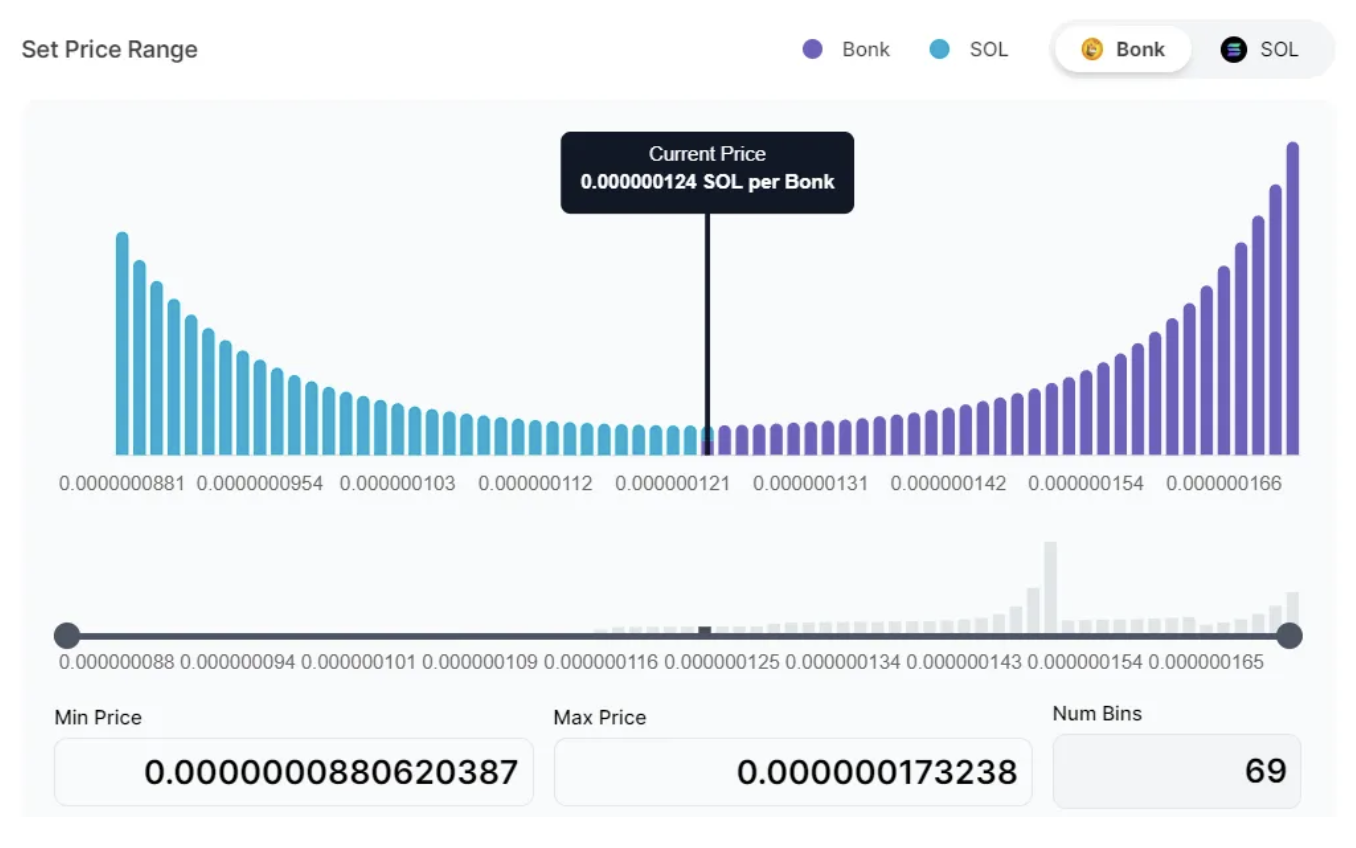
Example: If you’re bullish on both BONK and SOL, don’t mind holding either over time, and believe BONK/SOL will experience significant volatility within a given range, consider the bid-ask strategy. In this example, most of your funds are deployed at both ends of the range—at minimum prices of 0.0000000880620387 and 0.000000173238 SOL per BONK. As BONK’s price moves away from the midpoint, more liquidity is used, allowing you to buy or sell BONK or SOL faster (depending on price direction). Be prepared to rebalance more frequently—perhaps every 2–3 days.
3. Dynamic Fees That Leverage Volatility
One risk LPs face is impermanent loss (IL). IL occurs when the value of an LP’s initial token deposit in a pool becomes less than if they had simply held the tokens outside the pool.
Consider this scenario: You LP into a Token A/B pool, and Token A’s value increases relative to Token B; you end up with more Token B and less Token A. If the total value of your A and B tokens in the pool is now less than if you had just held your original tokens (without providing liquidity), you’ve incurred IL. This loss is “impermanent” because it’s only fully realized when you withdraw your liquidity. Since IL increases with price divergence, heightened market volatility worsens it.
To counter IL, DLMM implements dynamic fees designed to extract more value from market volatility. When markets are highly volatile, fees increase to offer LPs higher returns for a given trading volume; when volatility is low, fees decrease to encourage fee-generating trading activity.
Dynamic fees consist of two components—base fee and variable fee.
-
Base Fee: The base fee for a market is configured by the pool creator and determined by the bin step (basis point difference between two consecutive bins) and a base factor—an amplification multiplier added to the bin step to allow fine-tuning of the base fee.
-
Variable Fee: The variable fee depends on market volatility, which is influenced by swap frequency and swaps crossing multiple bins. Fees are calculated and distributed per bin, enabling fair allocation of fees to LPs across each crossed bin.
What This Means for LP Fees
By increasing or decreasing fees based on market volatility, dynamic fees help mitigate the impact of IL, thereby increasing the likelihood of LP profitability. This is especially useful for volatile pairs (where higher volatility leads to higher IL), a persistent challenge, particularly without farming incentives.
Time to Stack Fees and Points on DLMM!
We hope this article serves as a helpful guide for taking your first steps as a DLMM LP. You can also check out our DLMM documentation here.
For a more visual walkthrough, watch these video tutorials:
With a 10% LP incentive program launching soon, now is the perfect time to explore DLMM and benefit from its precise liquidity concentration, volatility strategies, and dynamic fees. Learning how to provide liquidity immediately will give you a decisive edge once the points system officially launches on January 31 alongside the JUP token (which also uses DLMM!)
Additionally, during the DLMM Beta period from December 1 to January 31, we’ll offer Beta Tester Reward Packs to LP contributors. These bonus packages will be finalized when our points system concludes. Once we hit key milestones following the MET liquidity event, all accumulated points will convert into MET token drops.
Looking ahead, LPs can look forward to even more reward opportunities—for instance, Kamino Finance integrating Meteora’s DLMM into their vaults and launching their own points system. This means as a DLMM LP, you can stack points from multiple sources.
Join TechFlow official community to stay tuned
Telegram:https://t.me/TechFlowDaily
X (Twitter):https://x.com/TechFlowPost
X (Twitter) EN:https://x.com/BlockFlow_News