Interpreting CoinList's New Project Meson: Another Rising Star in the DePIN Space
TechFlow Selected TechFlow Selected
Interpreting CoinList's New Project Meson: Another Rising Star in the DePIN Space
Gigabit bandwidth, rent for online earnings.
 Navigating Web3 tides with focused insights
Author: Loopy, Odaily Planet Daily
Today, CoinList announced the launch of DePIN project Meson Network.
Meson Network has positioned itself at the forefront of the booming DePIN trend and leads in the decentralized bandwidth trading market, boasting a large user base and extensive node resources. Originating from decentralized storage services, the project has gradually expanded its offerings into social networking, blockchain, and AI data collection domains.
Below, Odaily Planet Daily provides a quick overview of Meson's token details and project highlights.
Token Sale Information
The native token of Meson is called MSN. The token sale will begin at 18:00 UTC on February 8, 2024 (02:00 Beijing Time on February 9), with the following specifics:
-
Amount: 2,500,000 MSN tokens, representing 2.5% of the total supply.
-
Price: $1.75 per token
-
Lock-up period: Approximately 1/6 of tokens will unlock around March 15, 2024, with the remainder unlocking monthly over the next six months.
-
Initial purchase limits: Minimum $50, maximum $3,000; only USDT and USDC accepted.
Note: Meson reserves the right to optionally offer an additional 2,500,000 MSN tokens (2.5% of total supply) during this sale round.
-
Eligibility: Users must hold at least the minimum purchase amount (50 USDT or USDC) in their CoinList wallet before the registration deadline (12:00 UTC on February 5, 20:00 Beijing Time). This sale is not open to residents of the United States, China, Canada, South Korea, and certain other jurisdictions.
Token Utility
As the incentive and governance token for Meson Network, MSN has a total supply of 100,000,000 tokens, serving the following primary functions:
-
Rewarding miners;
-
Miner staking;
-
Payment method for users;
-
Protocol governance participation (voting on development or modification of protocol parameters);
-
Distributed to miners as rewards for providing server resources.
Currently, because transfer functionality of Meson test tokens on Ethereum is locked, there are no immediate benefits to staking. Service users will pay in MSN to access additional bandwidth, and these tokens will then be repurchased and redistributed as rewards to miners.
Token Economics
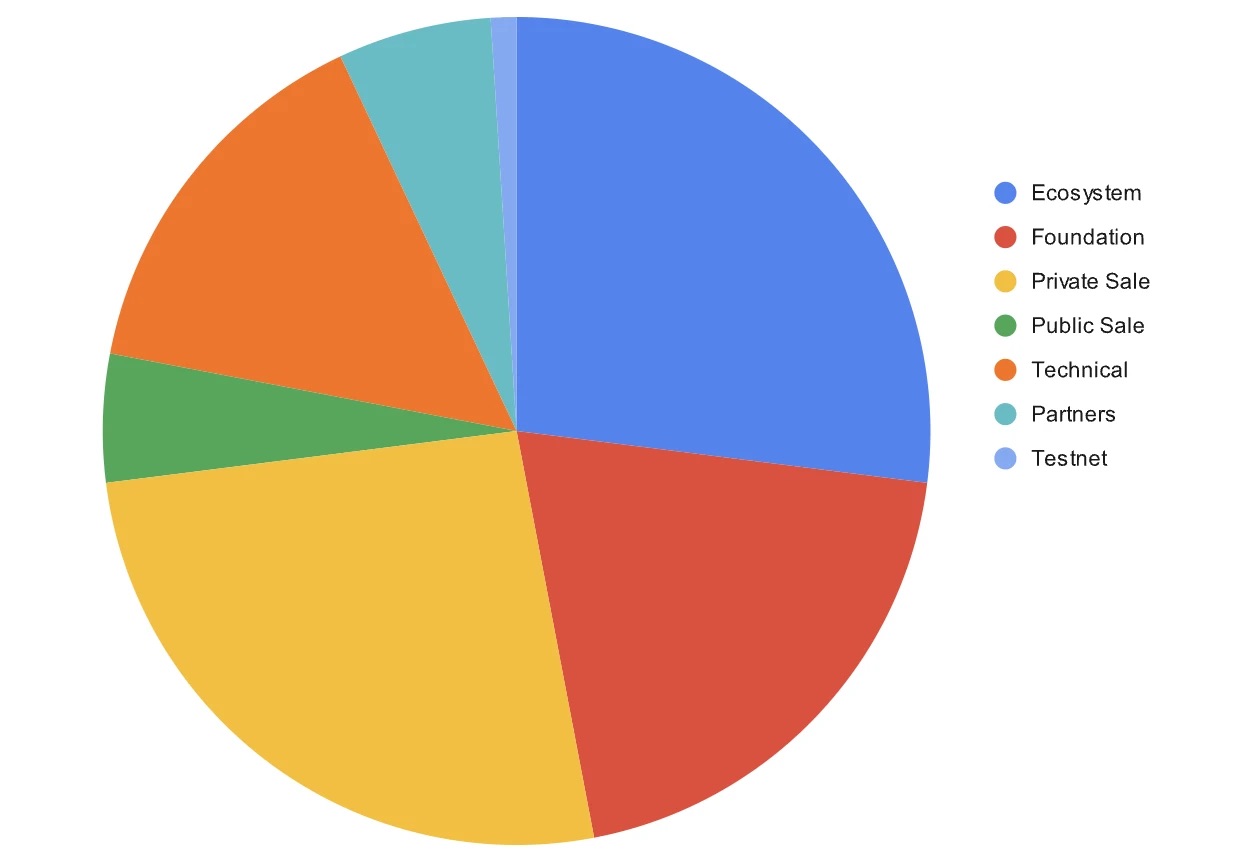
Token distribution breakdown:
-
Private token sale: 26,000,000 MSN (26%)
-
Public token sale: 5,000,000 MSN (5%)
-
Ecosystem: 27,000,000 MSN (27%)
-
Foundation reserve: 20,000,000 MSN (20%)
-
Technical team: 15,000,000 MSN (15%)
-
Partnerships: 6,000,000 MSN (6%)
-
Testnet mapping: 1,000,000 MSN (1%)
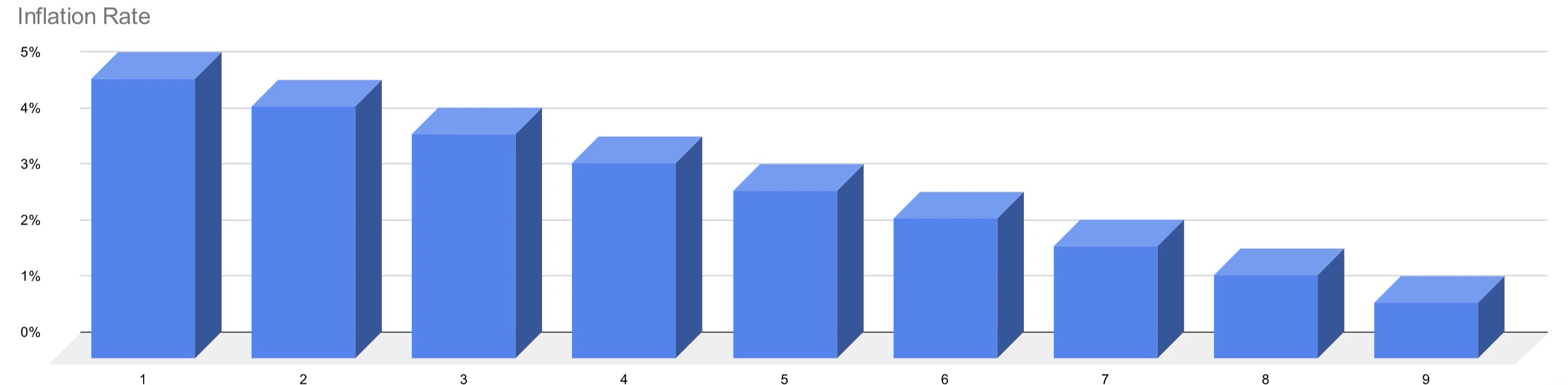
All future token inflation will come from mining rewards. The first-year mining inflation rate is 5%, decreasing by 0.5% annually thereafter.
Project Overview
Today, Meson Network announced on X that it has completed a new strategic funding round led by Presto Labs at a $1 billion valuation. The specific funding amount was not disclosed.
Meson Network focuses on DePIN+AI, aiming to build a human-authorized decentralized physical network. Meson’s “DePIN” nodes are developed using user-friendly technology compatible with various hardware types including personal laptops, servers, IoT devices, and more. By leveraging idle bandwidth from these network nodes, Meson establishes an economic loop connecting surplus resources with business demands. Its vision is to become a foundational pillar for decentralized storage, computing, and the rapidly growing Web3 Dapp ecosystem.
Simply put, the business logic is straightforward: rent out unused idle bandwidth resources to other users.
According to Meson’s official website, the total number of nodes exceeds one hundred thousand, currently standing at 115,194 nodes, with IDCs widely distributed worldwide. Its bandwidth capacity reaches approximately 20 Tb/s, with an average latency of 90 ms.
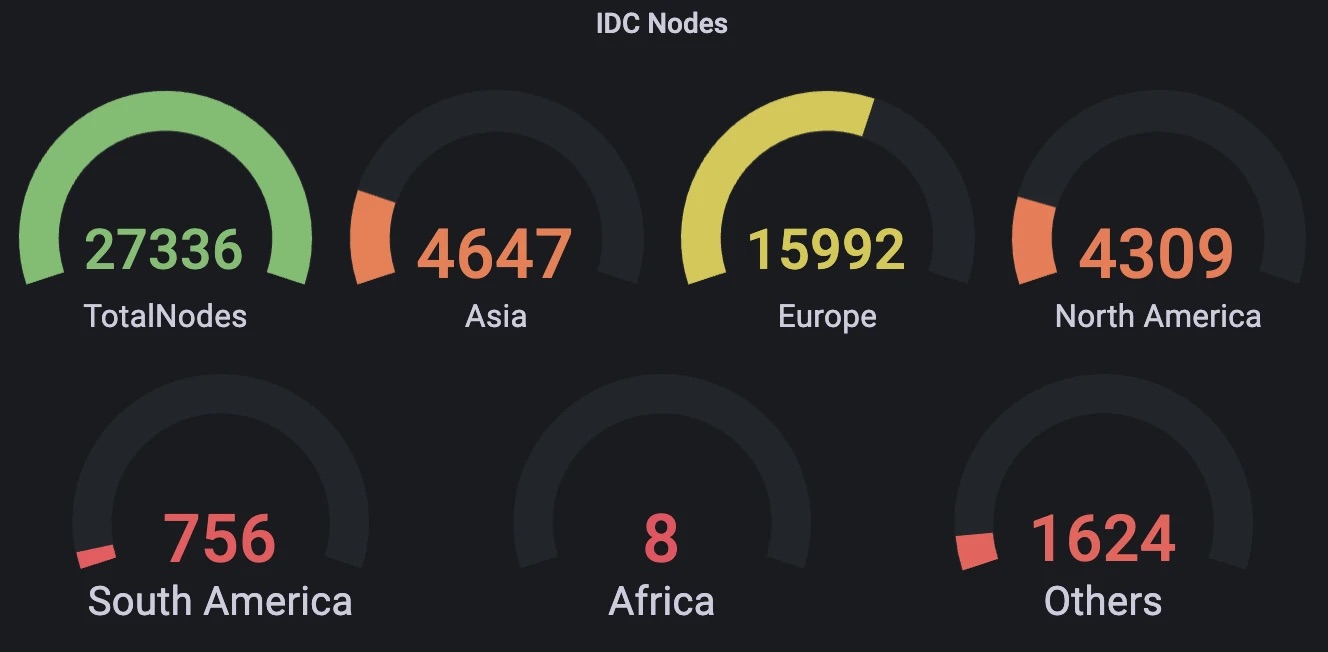
Meson’s protocol model offers flexibility and scalability, designed to create a decentralized bandwidth market. Under Meson’s model, users can convert surplus bandwidth into tokens, enabling easier access to global bandwidth resources for those in need. This represents an intriguing attempt to activate the long-tail market.
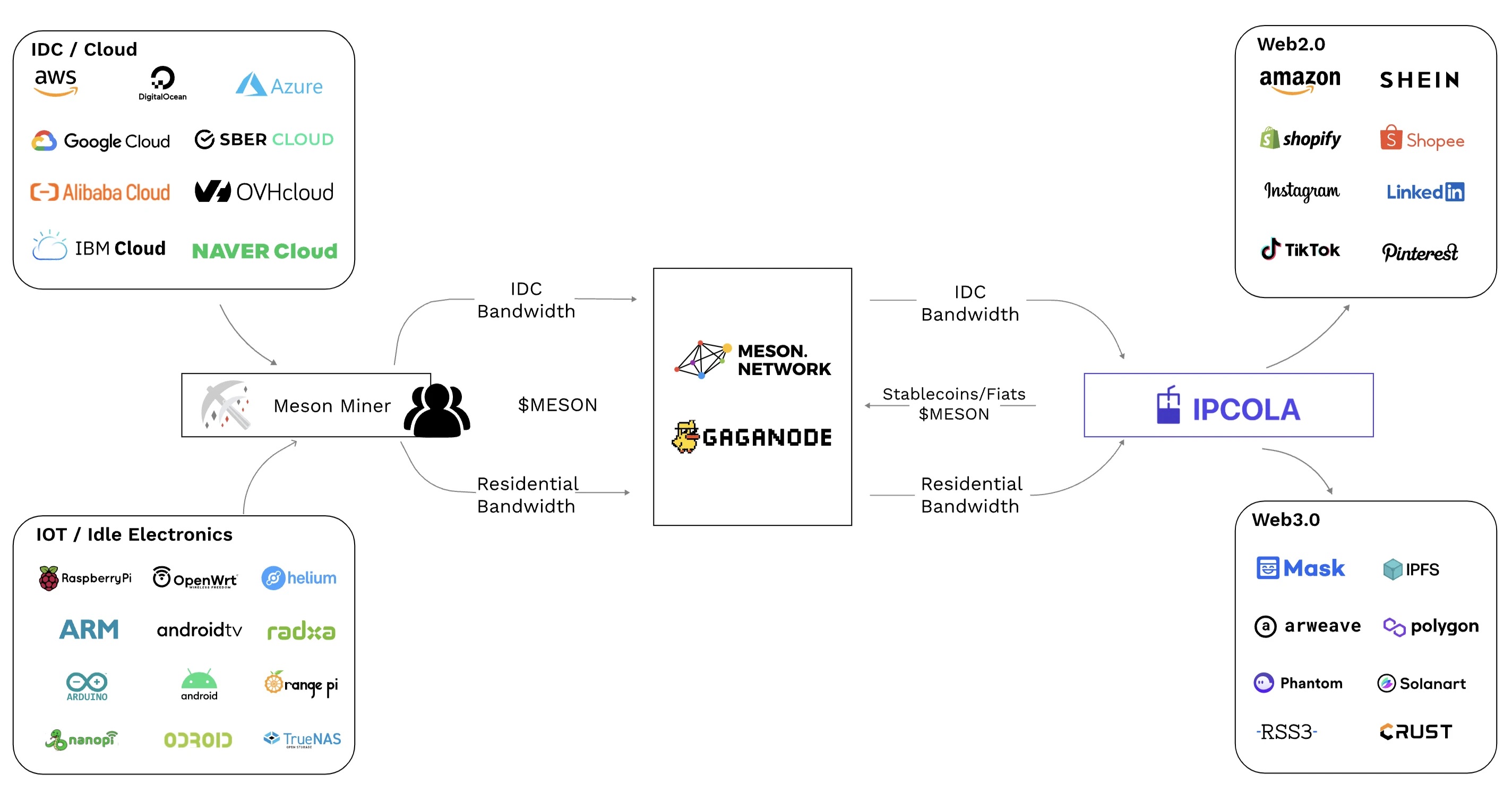
How Meson works
Another key use case for Meson involves handling the ever-growing ledger data of Web3 networks.
For example, BNB Chain leverages Meson Network’s globally distributed nodes to significantly reduce state snapshot synchronization time across the chain. With BNB Chain transaction data already exceeding 2.5 TB, synchronizing snapshot data between different nodes previously took about 20 hours. However, by utilizing Meson, the entire network’s snapshot synchronization time has been reduced to approximately one hour.
For developers, Meson also offers Meson Cloud, a developer platform comprising three products: Gateway X, mCloud, and mPad.
Gateway X is a gateway service provided by Meson, acting as a bridge between Web3 protocols like Arweave/IPFS and traditional Web2 systems. GatewayX offers developers unlimited caching storage capacity and charges based on bandwidth usage. It also provides dedicated gateway connections supporting multiple Web3 domain name resolution acceleration services for seamless interaction with Web2 networks. Additionally, it supports a "one-click import" feature, allowing easy migration/backup of files from Arweave and IPFS.
mCloud is a Web3 PaaS solution offering application hosting and deployment services for developers. It supports full-stack applications and Docker deployment technologies, ensuring reliability and high redundancy. Developers can deploy applications simultaneously across traditional data centers and various blockchain nodes, avoiding service outages caused by single-point dependencies.
mPad introduces a new way of content distribution. Its underlying protocol operates without platform dependency, enabling multi-protocol object storage that reduces file loss risks. It supports peer-to-peer transfer protocols such as Arweave, IPFS, and BitTorrent, while leveraging GatewayX to enhance retrieval speed. The service is censorship-resistant, utilizing distributed underlying protocols to break geographical limitations, enabling free transmission and sharing of content.
Join TechFlow official community to stay tuned
Telegram:https://t.me/TechFlowDaily
X (Twitter):https://x.com/TechFlowPost
X (Twitter) EN:https://x.com/BlockFlow_News
 Odaily