








Which projects benefited from the Cancun upgrade?
TechFlow Selected TechFlow Selected
Which projects benefited from the Cancun upgrade?
The primary goal of this upgrade is to scale the Ethereum mainnet, enhancing Ethereum's scalability, security, and usability, while increasing the main chain's TPS and reducing gas fees.
 Navigating Web3 tides with focused insights
Author: TrendX Research Institute
Why Should We Pay Attention to the Cancun Upgrade?
On January 12, amid widespread anticipation, the U.S. SEC announced approval of spot Bitcoin ETFs—an event widely regarded as a milestone with profound significance. However, the crypto market reacted indifferently. In fact, after this announcement, Bitcoin’s price began declining, falling from a high of $46,000 to below $40,000 over the following half month—a drop of -13%. The inflated expectations surrounding the ETF event have burst, and large amounts of capital have shifted toward other public chains and protocols offering new narratives.
The excitement around Bitcoin ETFs has temporarily subsided, and market attention has now turned to the potential approval of a spot Ethereum ETF. Current market analysis estimates about a 50% chance of approval by May this year. Given that Ethereum's price surged strongly during the pre-approval phase for Bitcoin ETFs, positioning early in Ethereum could mean not missing out on the next major rally among mainstream cryptocurrencies.
Moreover, Ethereum’s upcoming network upgrade—the Cancun upgrade—is approaching, expected to be completed as early as late February. This upgrade primarily aims to scale the Ethereum mainnet, enhancing its scalability, security, and usability by increasing mainchain TPS and reducing gas fees. This will significantly benefit Ethereum’s Layer 2 (L2) ecosystem, potentially triggering explosive growth across L2 networks.
Given these two key factors, this report provides an overview of the Cancun upgrade and analyzes projects likely to benefit from it.
What Is the Cancun Upgrade?
The Cancun upgrade is another major update to the Ethereum mainnet following the Shanghai upgrade. It is named after Cancun, a coastal city in Mexico and a world-famous resort destination, which also hosted one of the Ethereum Developer Conference (EthCC) venues.
The core issue the Cancun upgrade seeks to address is the high transaction cost on blockchain networks. In his December 2023 article “Make Ethereum Cypherpunk Again,” Vitalik Buterin pointed out that rising transaction fees are one of the main reasons blockchains remain limited to asset speculation. High network fees have transformed users from active participants into mere speculators. To realize blockchain's real-world application value, transaction costs must decrease by an order of magnitude. Although L2 solutions have already reduced costs compared to the Ethereum mainnet, this is still insufficient.
The upcoming Cancun upgrade is expected to introduce several enhancements to the Ethereum network:
-
Scalability Improvements: Introduction of Proto-Danksharding, aimed at boosting transaction throughput and volume—particularly beneficial for L2 solutions built on Ethereum.
-
Gas Fee Reduction: Integration of data blobs and activation of EIP-4844 will make transactions more cost-effective.
-
Security Enhancements: Implementation of EIP-6780 aims to strengthen network security measures, providing stronger protection for user data and investments.
-
Optimized Data Storage: EIP-1153 implementation will enable more efficient blockchain data storage, improving operations and lowering costs—benefiting L2 solutions reliant on streamlined data management.
-
Cross-chain Enhancement: EIP-4788 aims to improve ease and security of cross-blockchain interactions, enhancing interoperability with L2 solutions.
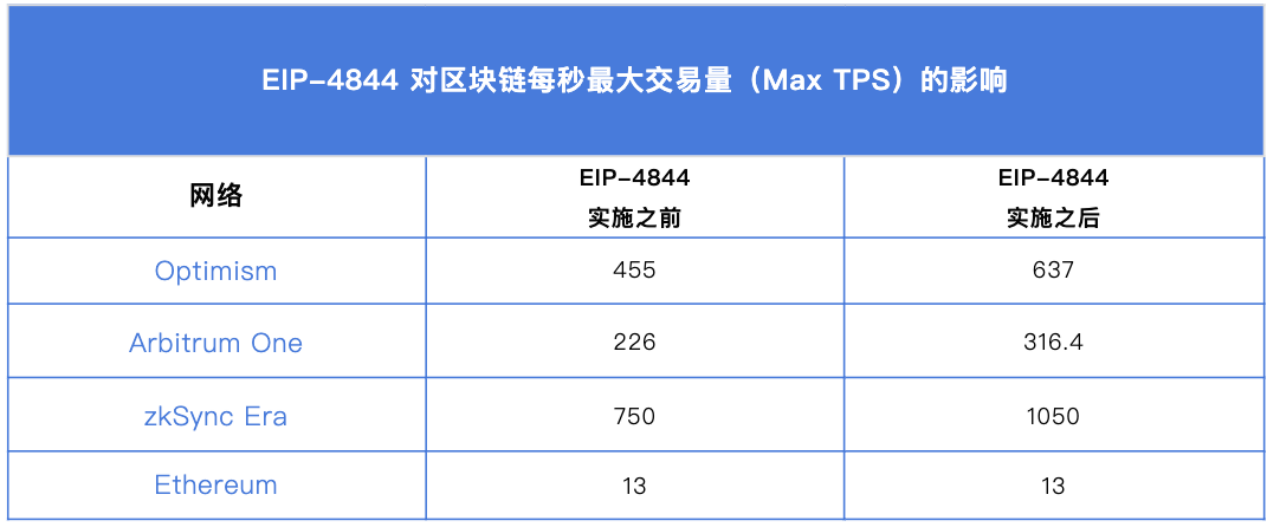
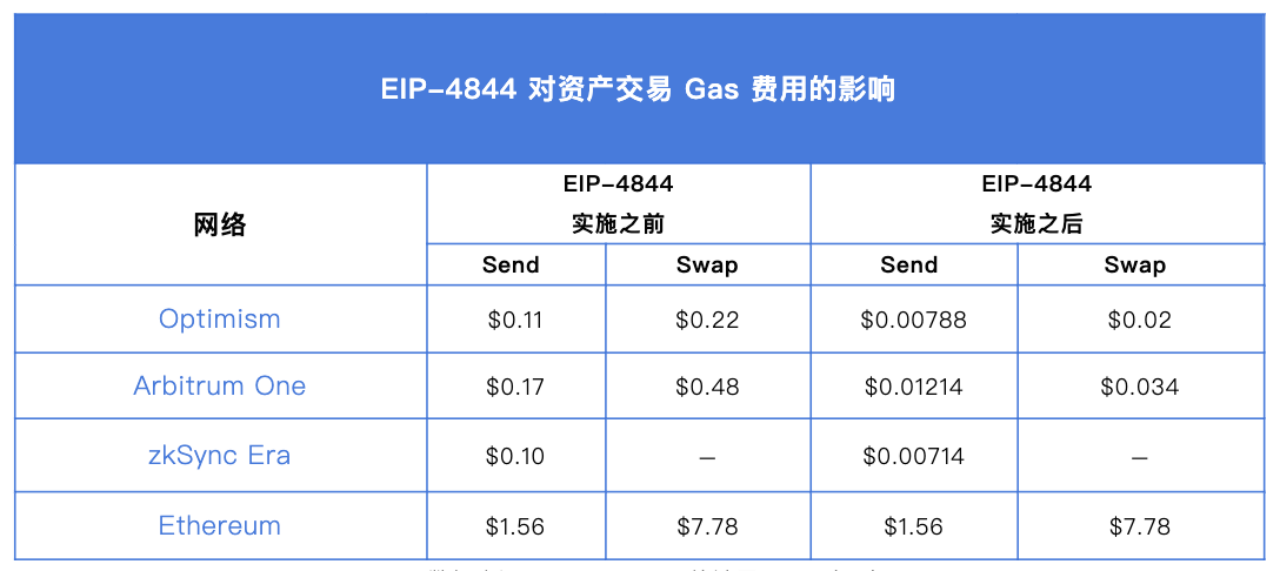
At the heart of the Cancun upgrade is EIP-4844—introducing Proto-Danksharding, a precursor to full Danksharding. This protocol could reduce L2 transaction fees by 10 to 100 times.
Danksharding is a proposed solution that introduces a new data type called "Blob" (specifically designed to store transaction data submitted from L2 to L1), separating it from Layer 1 calldata. Blob data only needs to be accessible and verifiable for a certain period, without requiring full execution by the L1 execution layer, thereby significantly reducing the burden on Layer 1.
Proto-Danksharding introduced in the Cancun upgrade marks the first step toward Ethereum’s full-scale scaling. Each blob introduced in this phase will be 128 KB in size, with each Ethereum block planned to include 3–6 blobs (0.375 MB – 0.75 MB). This number will gradually increase to 64 in the future. By comparison, current Ethereum blocks can hold less than 200 KB of data. With the introduction of blobs, the data capacity per block will significantly increase. Thus, Proto-Danksharding lays the groundwork for future full Danksharding implementation, separation of block proposers and builders, and data availability sampling.
Specific technical improvements included in the Cancun upgrade (already finalized):
-
Introduction of Blob transactions: Blob stands for Binary Large Object. Blob transactions are a new type of transaction designed for use in future sharding.
-
Implementation of all execution-layer logic required for future full sharding.
-
Implementation of all cross-validation logic between execution and consensus layers required for future full sharding.
-
Hierarchical separation between beacon block validation (i.e., Ethereum Layer 2 data) and blob data availability sampling.
-
Introduction of most of the logic within beacon blocks needed for future full sharding.
Projects Benefiting from the Cancun Upgrade
In reality, this upgrade benefits the entire L2 ecosystem directly. According to data from I2fees.info on December 11, 2023, the introduction of blobs has led to a significant reduction in L2 transaction fees and a moderate improvement in throughput. It has also further accelerated development in the restaking and data availability (DA) sectors.
1. Arbitrum
As the leading Ethereum L2, Arbitrum currently hosts the most diverse range of protocols among all L2s. We believe Arbitrum stands to gain substantially from this upgrade for the following reasons:
-
Large Number of Protocols: According to incomplete data from DeFiLlama, Arbitrum hosts approximately 520 protocols—far exceeding Optimism, ranked second, with 216.
-
High TVL: Data from L2beat shows Arbitrum’s total value locked (TVL) is around $10 billion, accounting for 49.26% of all Ethereum rollup TVL.
-
High Transaction Volume: According to L2beat, over the past 30 days, Arbitrum recorded about 28 million transactions—second only to zkSync, which remains unfunded and benefits from extensive incentive campaigns—and leads Optimism by nearly threefold in transaction volume.
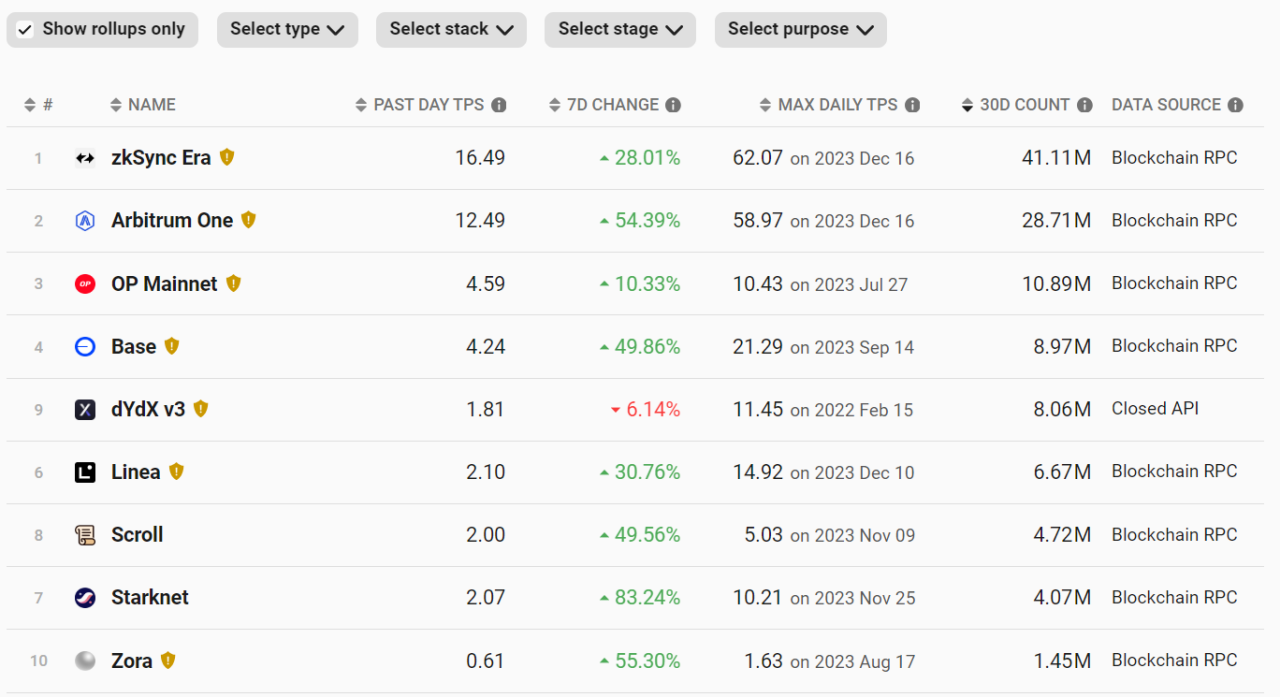
Considering these three aspects, Arbitrum—clearly dominant in scale—will capture greater benefits from lower transaction fees. Improved TPS will also support performance-sensitive protocols like GMX and GNS on Arbitrum. From a fundamental network perspective, Arbitrum is undoubtedly one of the biggest beneficiaries of the Cancun upgrade.
Related Link:
https://app.trendx.tech/project/9785883aeab585b9d12f9b24a06e1418ea0c08e0bf72582dbc2b598ddbe1f3aa
2. Optimism
Unlike Arbitrum, Optimism focuses on building the Optimism SuperChain network based on OP Stack. The value of Optimism increasingly depends on the overall value of the SuperChain network. Since the release of OP Stack, numerous projects—including Base, Lyra, opBNB, and DeBank—have built their own L2s using OP Stack. The recent Bedrock upgrade of OP Stack further optimized transaction costs, intra-block processing, and node performance, making it even more attractive to build L2s on OP Stack.
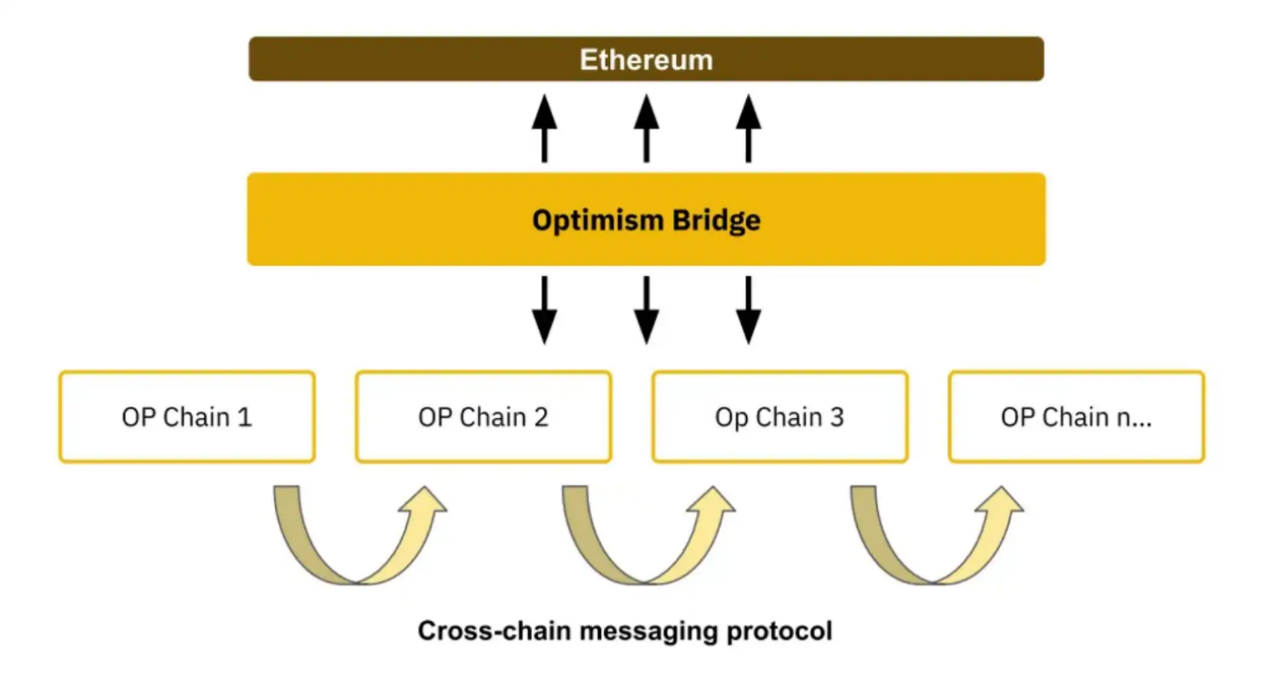
If the Cancun upgrade benefits all L2s equally, then Optimism gains additional upside through the combined network value of all chains in its ecosystem. If the upgrade catalyzes the emergence of new L2s, Optimism stands to benefit further if more chains adopt OP Stack—bringing it closer to realizing its vision of an interconnected Optimism SuperChain.
Related Link:
https://app.trendx.tech/project/7a3bf1c98845cab6ab81661ea028394676b3ea12519a0b6933d3f5f05ed67237
3. EthStorage
EthStorage is a Layer 2 solution focused on solving Ethereum’s dynamic storage challenges. Built upon Ethereum’s data availability (DA) layer, it offers programmable storage at significantly lower costs.
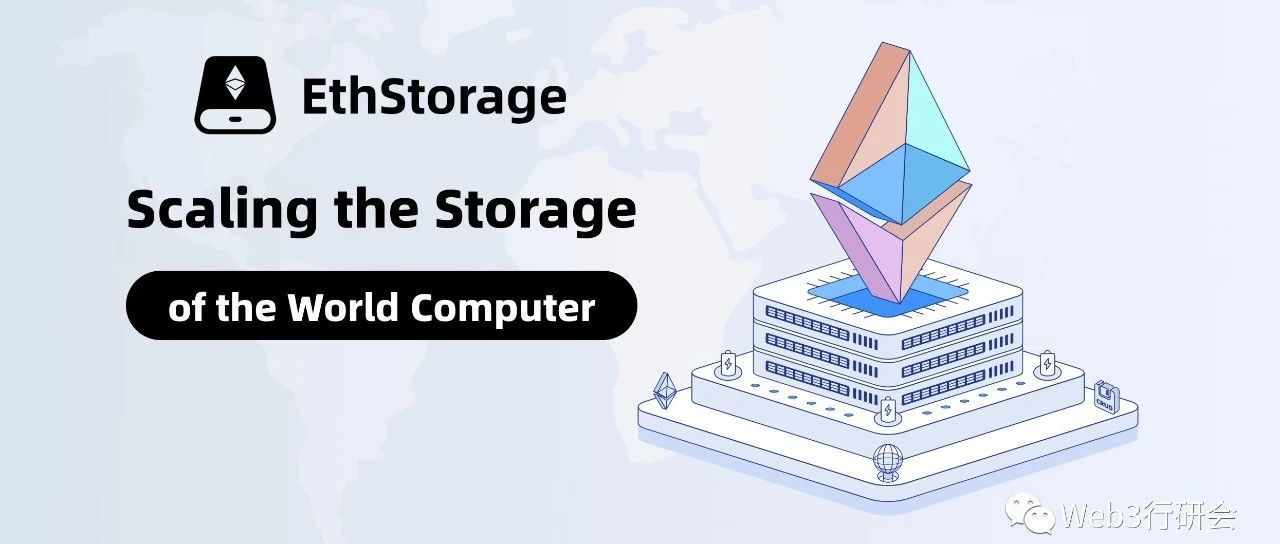
Since blob data is only stored temporarily, accessing historical data becomes challenging. This opens new opportunities for decentralized storage protocols. Additionally, L2 scaling solutions require robust data availability layers. EthStorage can drastically reduce data storage costs on Ethereum—by 100 to 1,000 times.
Related Link:
https://app.trendx.tech/project/cbfc7abc27a6874ad22635d668f33b2fe50784a1915d31ee3354a01fd85b9c3c
4. THORChain
THORChain is a decentralized cross-chain AMM trading protocol. It aims to decentralize cryptocurrency liquidity through a network of public nodes and ecosystem products, enabling individuals, applications, and institutions to access native and cross-chain liquidity.
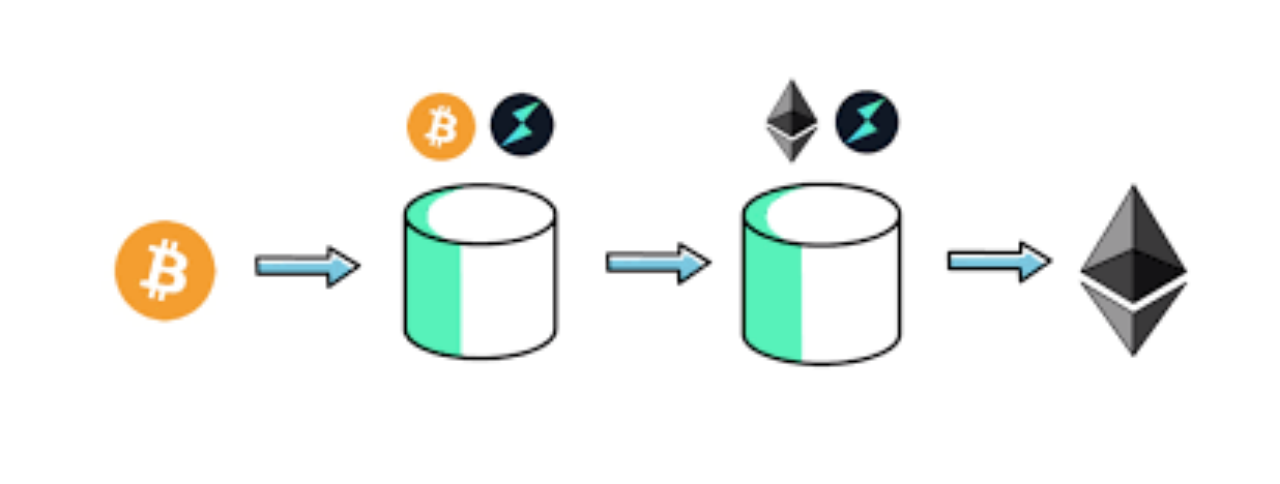
As a cross-chain bridge project, THORChain benefits from EIP-4788 and EIP-4844 in the Cancun upgrade, achieving better-than-expected reductions in gas fees and confirmation times. Given the influx of capital into the Bitcoin chain over the past six months—and the recent shift due to Bitcoin ETF enthusiasm—this sector may generate alpha returns.
Related Link:
https://app.trendx.tech/project/2d33768dfa868d7bf0436cd4e272f4e4d10f47ffb12ec24d4fd5dcbbe69ed52f
5. Metis
Metis is an Ethereum L2 platform based on Optimistic Rollup technology, evolved from Optimism. By introducing advanced L2 technologies, Metis delivers scalable and high-performance solutions, offering users and developers fast, efficient, and low-cost transaction experiences.
As the Cancun upgrade drives proliferation of L2s, issues arising from centralized sequencers—such as single points of failure, malicious arbitrage, MEV extraction, and transaction censorship—are likely to intensify. Decentralized sequencer competition is poised to become a central theme in post-upgrade L2 dynamics.
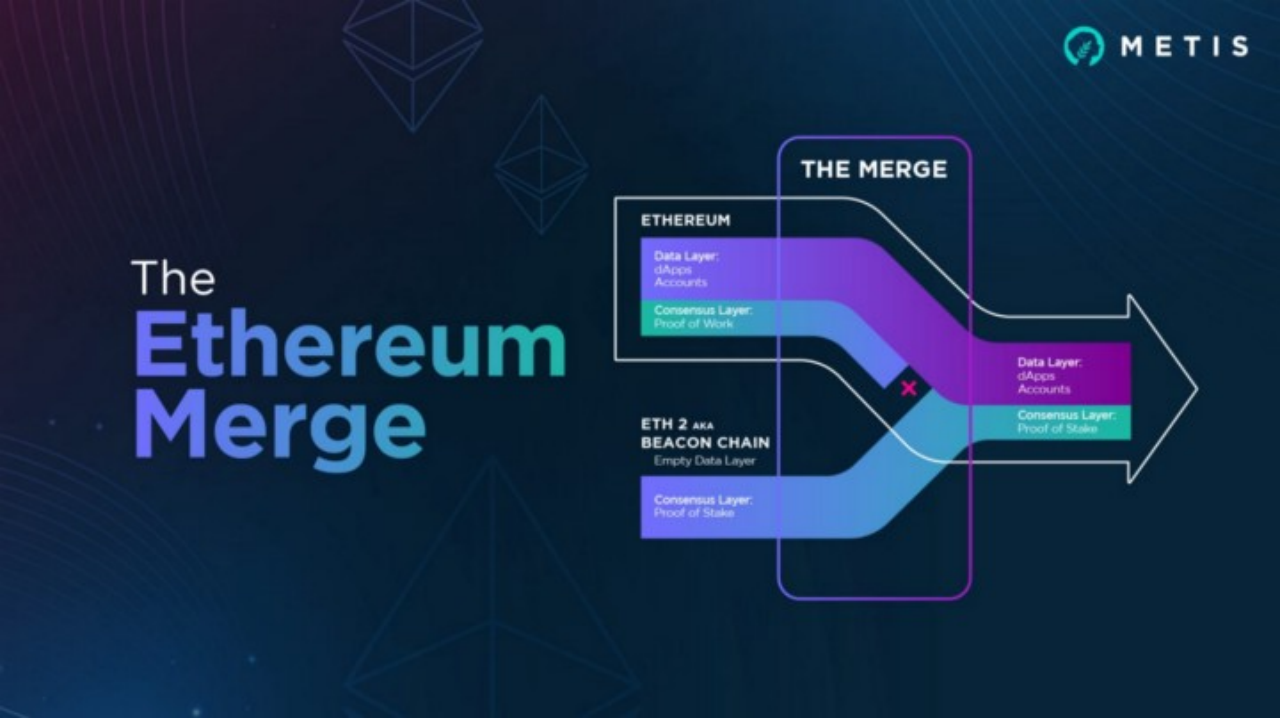
Metis may become the first Ethereum L2 to operate a decentralized PoS sequencer. It has broken the centralized sequencer model by allowing nodes that stake at least 20,000 METIS tokens to join the sequencer pool. These sequencers determine transaction ordering, and data can only be submitted to L1 when signed by at least 2/3 of the sequencers. Furthermore, to prevent malicious behavior, Metis introduces validators who perform random audits to ensure correct transaction sequencing.
Related Link:
https://app.trendx.tech/project/c8524ee946db8adc8d4ba6063d2368657850d4cbc6a374f0fa9f003fe1e90358
6. EigenLayer
With growing ETH staking volumes, the demand for restaking is becoming increasingly evident. EigenLayer allows users to re-stake ETH, lsETH (liquid staked ETH), and LP tokens on other sidechains, oracles, and middleware as validating nodes to earn rewards. This enables third-party projects to inherit Ethereum’s security while offering stakers additional yield.
Additionally, EigenLayer has announced restaking services for Cosmos, granting Cosmos access to Ethereum’s security while opening new revenue streams for Ethereum stakers.
Related Link:
https://app.trendx.tech/project/106f792d028941e7291b025da0d5b304ba5ed4256470a985bd438ad0aaf057c0
7. Kelp DAO
Kelp DAO is a restaking project developed by Stader Lab, a multi-chain LSD platform. It falls under the Liquid-LSD Restaking category mentioned earlier. Currently, it accepts deposits of Lido’s stETH and Stader’s ETHx—two LST tokens. However, due to EigenLayer’s LST quota being full, deposits are currently paused.
Although Stader Lab has launched its token, Kelp DAO has introduced a points system, and as a sub-project, it is expected to launch its own token. Synergy between SD (Stader’s token) and Kelp DAO can be anticipated.
Related Link:
https://app.trendx.tech/project/73360fcfbdd8e716ad66ffd01b1975ea9226f9855a17001dc3353aba0c4ae8d2
8. ether.fi
ether.fi belongs to the Liquid Native Restaking category. It raised $5.3 million in seed funding from investors including Arthur Hayes, founder of BitMEX. Unlike Lido, ether.fi uses a decentralized, non-custodial approach for ETH staking and offers restaking services. Because it supports native ETH restaking, it is unaffected by EigenLayer’s LST deposit limits and remains open for deposits. Its staking receipt token, eETH (wrapped as weETH), is one of the few liquid LRT tokens available today.
Related Link:
https://app.trendx.tech/project/d93118d151f72b2a729ec0c1d3ff8f7ee61d7c218754c2c5d709de19f2a50bba
9. Celestia
Celestia adopts a modular architecture, decomposing blockchains into data, consensus, and execution layers. Most blockchains today bundle consensus and execution in a single layer, where smart contracts are built. Users are confined to this execution environment, limiting optimization and specialization for specific use cases.
Celestia’s modular design places the execution layer on independent blockchains, enabling optimization and specialization for particular applications. Developers building decentralized apps on this architecture enjoy enhanced security and scalability beyond traditional monolithic chains. Moreover, in Celestia’s modular framework, data availability sampling is possible, allowing nodes to verify blocks with minimal data. This enables devices with lower hardware specs—such as home computers and smartphones—to function as network nodes.
Join TechFlow official community to stay tuned
Telegram:https://t.me/TechFlowDaily
X (Twitter):https://x.com/TechFlowPost
X (Twitter) EN:https://x.com/BlockFlow_News
 @TrendX_official











