Jupiter to Launch Token Soon: A Comprehensive Analysis of Its Products and Business Model
TechFlow Selected TechFlow Selected
Jupiter to Launch Token Soon: A Comprehensive Analysis of Its Products and Business Model
Jupiter is expected to capture significant liquidity through its established ecosystem presence, diverse product suite, and sustainable revenue model.
 Navigating Web3 tides with focused insights
Author: PAUL TIMOFEEV
Translation: TechFlow
Solana's Resurgence
Solana is a proof-of-stake (PoS) Layer 1 blockchain optimized for high performance and throughput, delivering fast execution speeds and low transaction costs. Its unique architecture significantly differs from EVM chains, enabling developers to focus on building plug-and-play applications using Rust. Solana currently supports 121 protocols within its ecosystem, maintained by 2,156 validator nodes (second only to Ethereum), and ranks fifth among blockchains in terms of total value locked (TVL) in DeFi at $1.38 billion.
Throughout its short but eventful history, Solana has faced and overcome numerous challenges, such as network instability and dangerous associations with SBF and Alameda, which led to massive losses of users, developers, and liquidity. Nevertheless, co-founder Anatoly Yakovenko remained closely connected with the user and developer communities, maintaining positivity and forward-thinking even during the lowest points, demonstrating Solana’s resilience and willingness to adapt and overcome adversity.
In 2023, as Bitcoin prices rose amid expectations of SEC approval for spot ETFs, the crypto market finally rebounded after a prolonged sideways period. The price of $SOL followed suit, increasing from $9.98 on January 1, 2023, to $101.51 on January 1, 2024—a return of 917.134%. As SOL continued gaining strong upward momentum in the market, the MadLads mint launch and team announcements of point programs and airdrops sparked an emerging narrative around “applications uniquely possible only on Solana,” attracting attention from users, investors, and developers alike.
Solana DeFi Performance in 2023
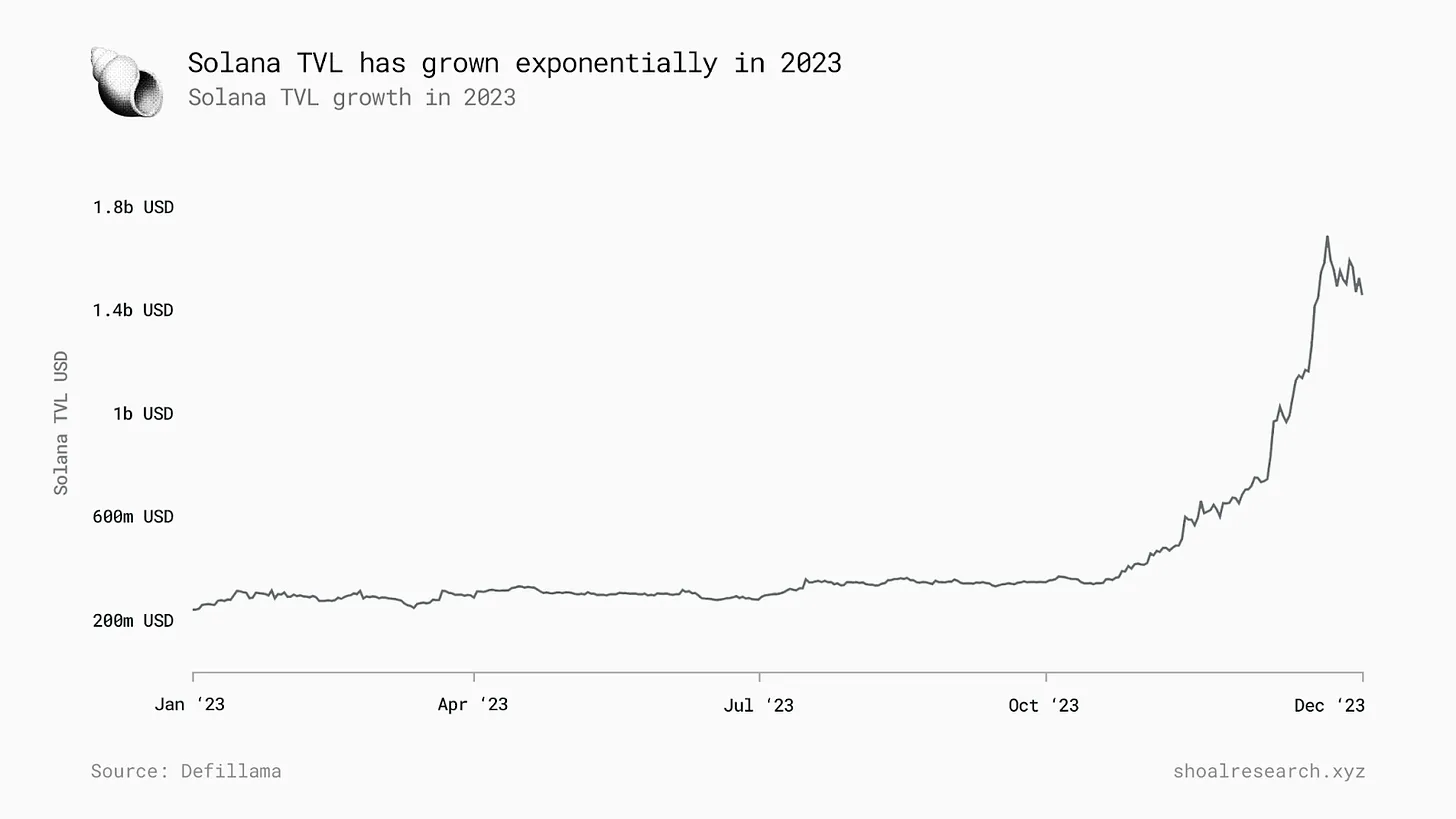
From January 1, 2023, to January 1, 2024, both Solana's TVL and on-chain transaction metrics saw significant growth. This period marked a crucial phase in Solana’s development; despite a dip in TVL following the FTX collapse, transaction value and volume still increased notably.
Key highlights:
-
TVL Growth: Solana’s TVL grew from $210.08 million to approximately $1.47 billion—an increase of 574%.
-
Total Swaps: 314,556,244 swaps executed across the network.
-
Total Transaction Volume: Platform-wide transaction volume reached $42.036 billion.
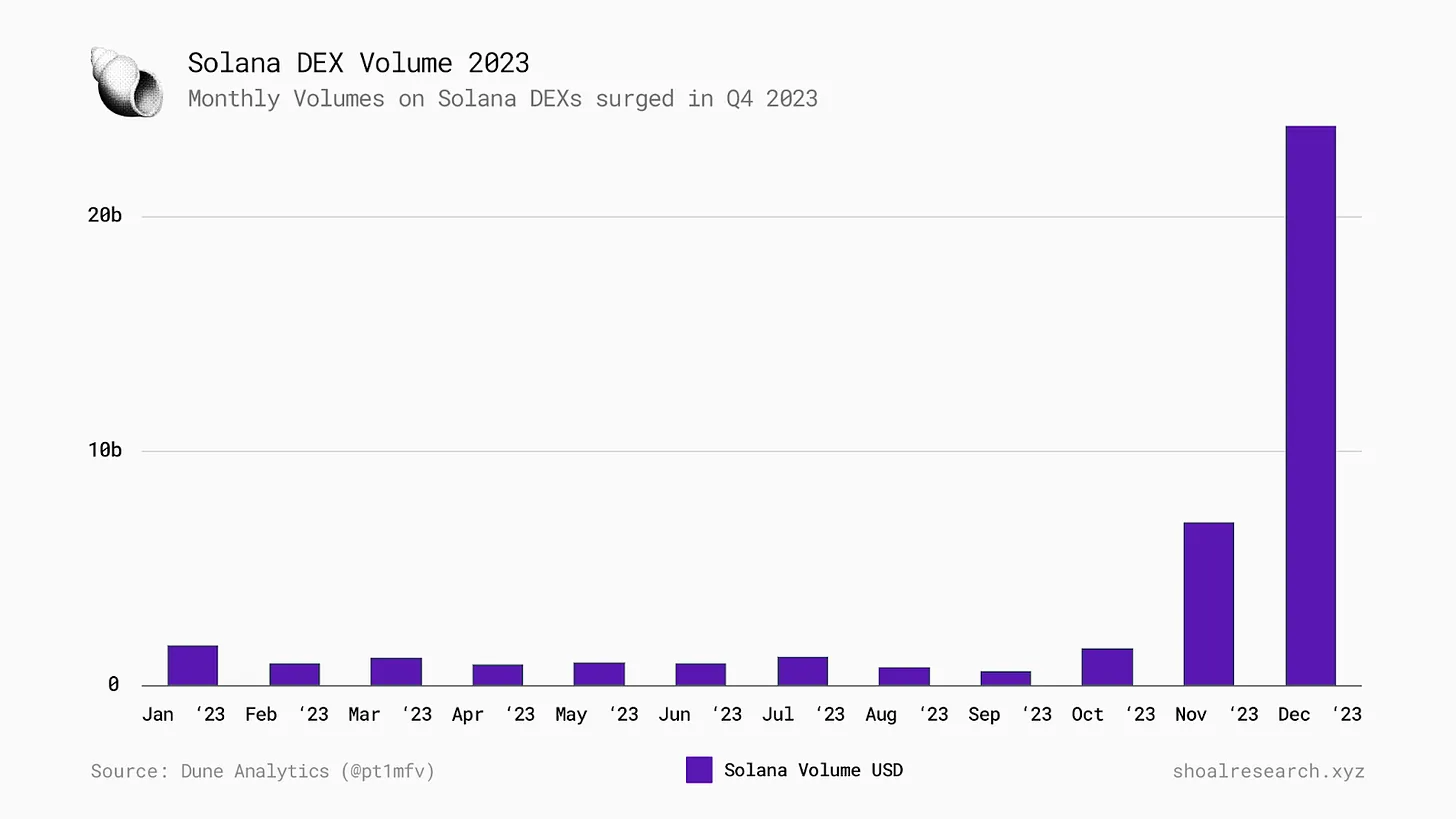
Solana’s DEX monthly trading volume reached $23.8 billion in December, setting a new annual high for 2023.
Introduction to Jupiter
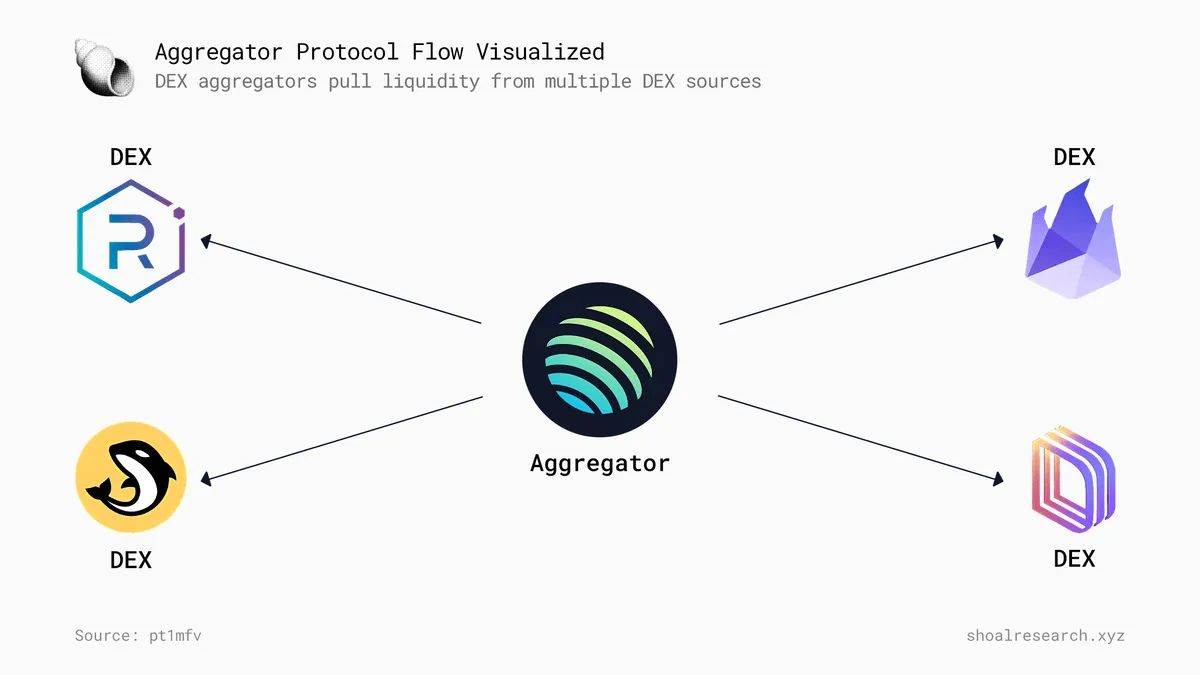
Jupiter launched in September 2021 as a DEX aggregator on Solana, aiming to provide better trading experiences for Solana users by routing liquidity from multiple sources rather than a single one. Although Jupiter initially started as just a swap engine, the protocol has evolved into a critical liquidity layer offering multiple products for different users and has become a key component of the Solana ecosystem.
Jupiter’s business model is driven by three core pillars:
-
Delivering the best user experience
-
Maximizing the potential of Solana’s technological capabilities
-
Improving Solana’s overall liquidity landscape
2023 was a busy year for the Jupiter team, launching several new core products including a new DCA feature, limit orders, and perpetuals trading. Multiple upgrades and optimizations were also made within the core protocol, including algorithmic improvements (Metis), bridge comparison tools, instant staking SOL > SOL swaps, along with additional developer tools such as the release of Jupiter Terminal and two major API upgrades.
Jupiter’s 2023 Trading Volume Recap
Jupiter’s total trading volume reached $62.816 billion, accounting for approximately 60% of all Solana DEX trading volume.
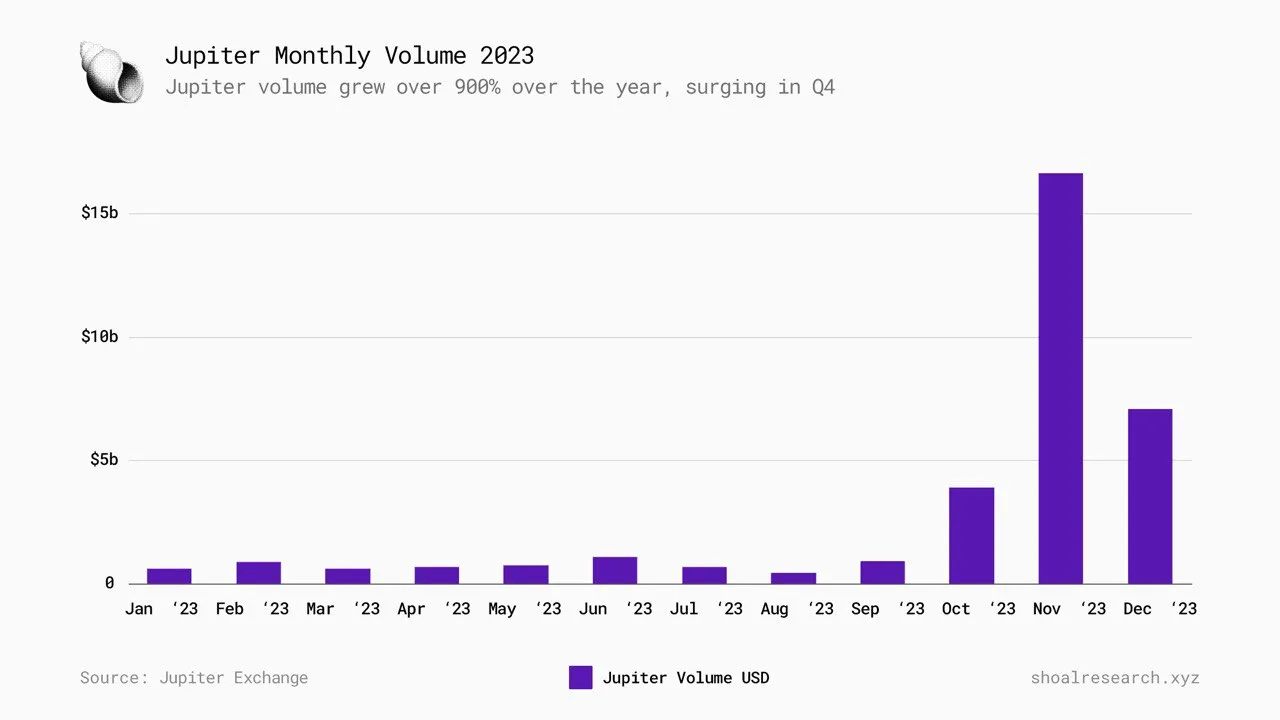
Jupiter’s monthly trading volume grew from $649.258 million in January 2023 to $7.106 billion in December 2023—an increase of 994.48%. In November, trading volume exceeded $16 billion—setting a new monthly record—after the announcement of $JUP at Breakpoint. More impressively, this volume growth (mainly in Q4) was primarily driven by organic trading activity.
In this report, we will analyze Jupiter’s product lineup and future plans, explaining the logic behind our investment approach.
AMMs and Aggregators
Automated Market Makers (AMMs) have been a novel innovation in the digital asset space over the past few years. On traditional exchanges (like Coinbase or Binance), third-party entities operate as liquidity providers, acting as counterparties so traders can execute trades—the other side of each trade. These counterparties are known as market makers because they “create” a market where traders can transact, earning the bid-ask spread (fees) on every trade to remain profitable.
With the advent of AMMs, traders can deploy code and math-based systems instead of relying on complex intermediaries to create markets for digital assets. Using AMMs, traders can enter and exit positions even under extremely low liquidity conditions. A downside of low liquidity is slippage—differences between expected and realized trade values. Traders may also lose value due to information asymmetry exploited via public mempools, such as being frontrun or sandwiched by sophisticated participants deploying MEV bots.
On-chain aggregators emerged to mitigate the impact of low-liquidity trading by allowing traders to place orders that route liquidity from multiple sources instead of just one. Liquidity can be sourced from various places, including AMMs; although some teams have built solutions enabling market makers to leverage off-chain liquidity (i.e., CEX positions) to help settle trades.
The main benefits include better pricing because:
-
Transfers within CEXs incur no gas costs, whereas on-chain transfers do
-
Trades are not subject to MEV extraction
Overall, aggregators aim to deliver superior user experiences. Just like large content platforms such as Meta or YouTube act as aggregators of content, allowing users to view videos and images from many different websites without leaving the interface, Google aggregates relevant information from many different websites across the internet to deliver the best matches ranked by relevance. Similarly, Jupiter and other DEX aggregators source liquidity across multiple venues to offer traders better prices.
Building on SVM
To better understand Jupiter as a protocol, it is important to understand the role of the Solana Virtual Machine (SVM) and how it influences the protocol design choices developers must make.
A virtual machine can best be described as a single entity maintained by thousands of networked computers running validation clients for a specific chain (e.g., Ethereum)—this is the environment where all smart contracts and accounts actually exist. To date, most DeFi and other on-chain activities have occurred through the Ethereum Virtual Machine (EVM). However, though no longer in the spotlight, we believe SVM also possesses strong architecture that will certainly continue attracting developers seeking to build consumer-facing, speed- and performance-optimized applications.
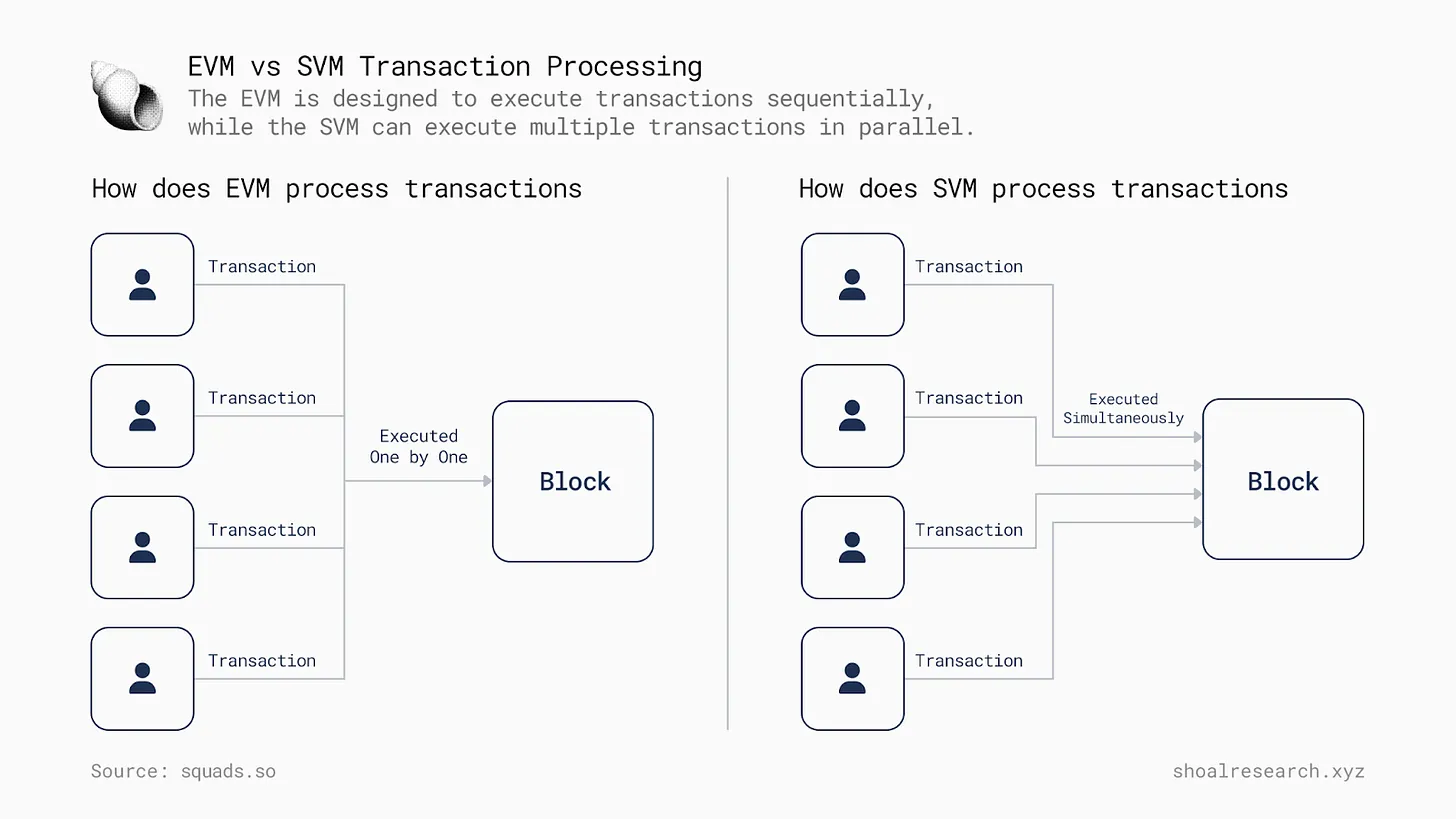
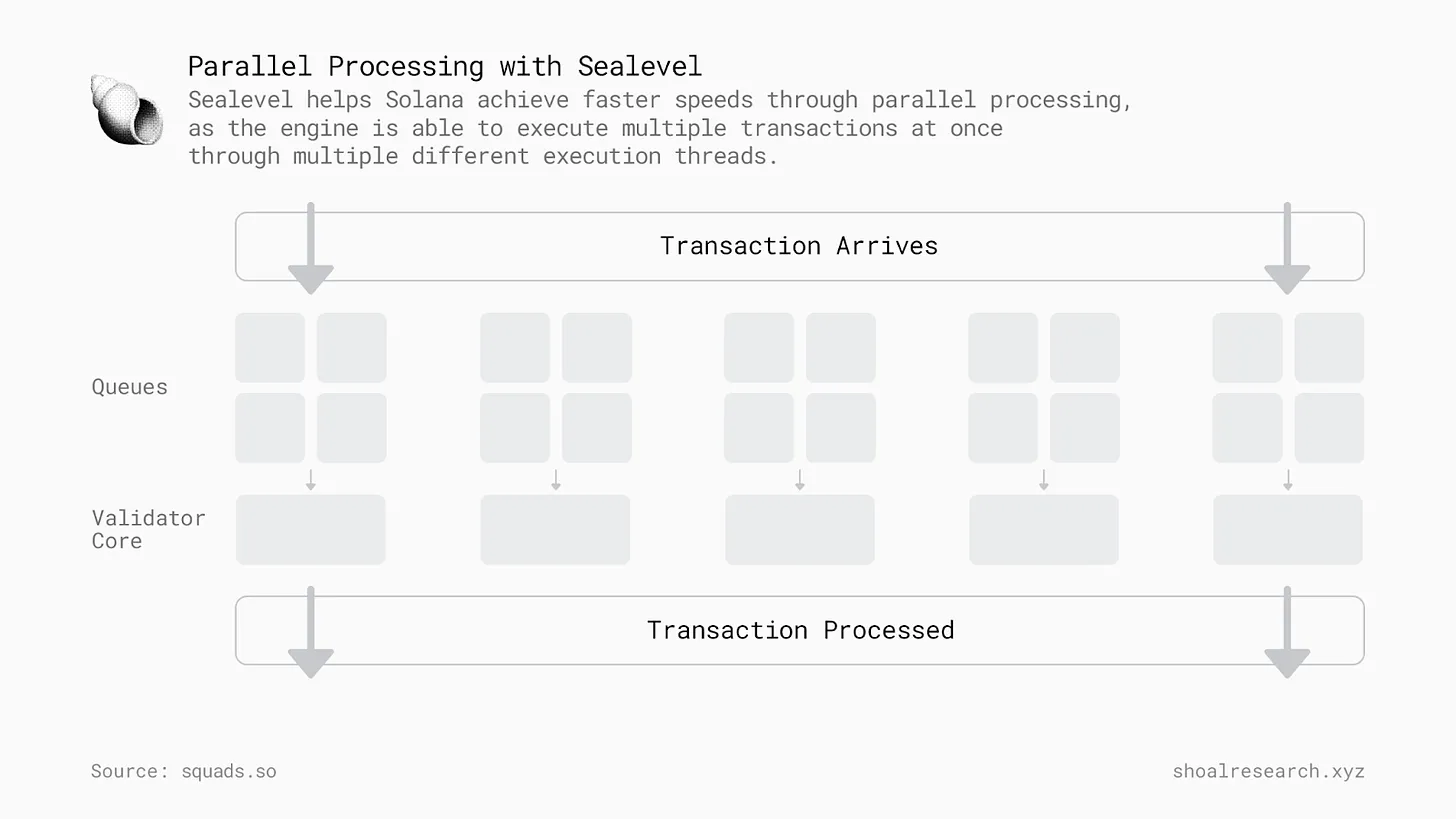
Smart contract code written in Rust, C, or C++ is compiled by SVM into BPF bytecode. The Sealevel engine is a key component enabling parallel processing on Solana; with state access lists integrated into Solana transactions (transactions contain details about specific states to be accessed), non-conflicting transactions can run simultaneously, achieving faster overall performance.
While the EVM is a "single-threaded" runtime environment meaning it can only process one contract at a time, SVM is multithreaded and capable of processing more transactions in less time. Each thread contains a queue of transactions waiting to be executed, with transactions randomly assigned to queues.
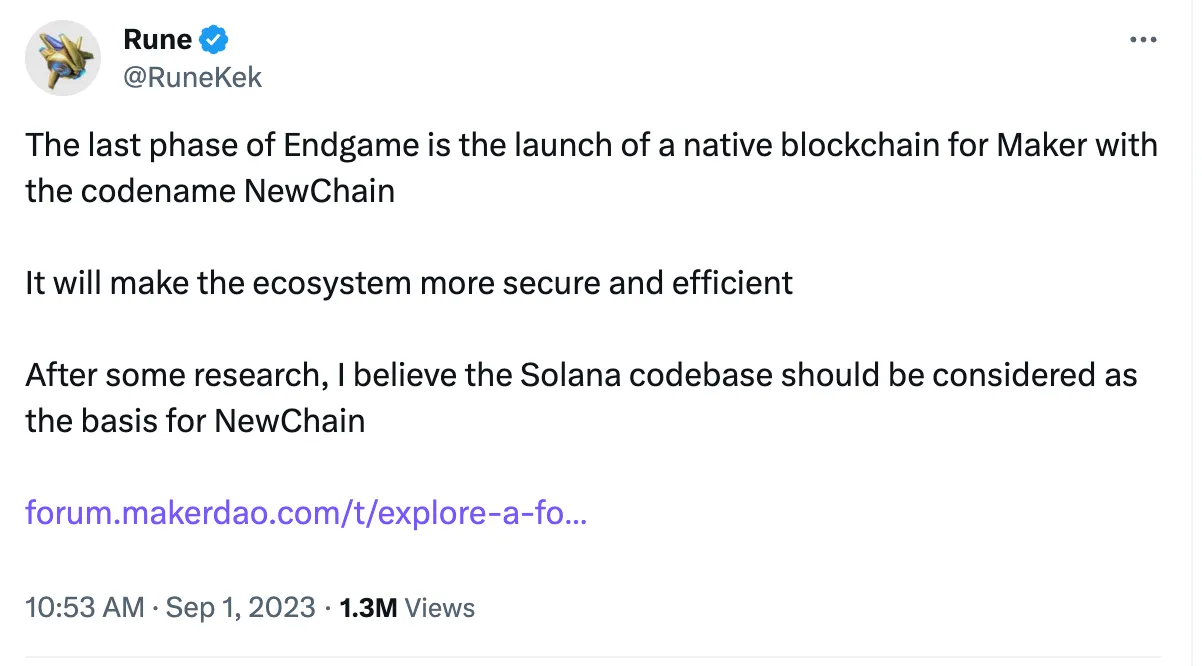
The emergence of L2s leveraging SVM execution, such as Eclipse and Nitro, demonstrates further potential adoption. Earlier this year, MakerDAO’s Rune Christensen proposed a vision of using Solana’s codebase to develop a MakerDAO appchain, sparking much debate on Twitter.
One of the most common complaints about Ethereum is that gas fees rise with increased user activity, often resulting in unpleasant user experiences—especially during bull markets. Regardless of gas costs, traders’ needs are simple: get the best quote possible. Aggregators like 1inch aim to provide better prices by sourcing liquidity from multiple sources rather than a single DEX. However, executing trades on Ethereum—such as pulling liquidity from multiple pools—is expensive and could actually worsen the problem it aims to solve; trading on Uniswap by sourcing liquidity from just one place might actually be more favorable.
Meanwhile, Solana is the opposite: default gas costs are less than a cent. The cost of sourcing liquidity from multiple sources is nearly identical to sourcing from just one, making DEX aggregators far more practical and beneficial on chains like Solana compared to EVM chains. As the leading aggregator on Solana, we believe Jupiter is better positioned for significant long-term growth and adoption, while aggregators on EVM chains face higher costs and greater competition.
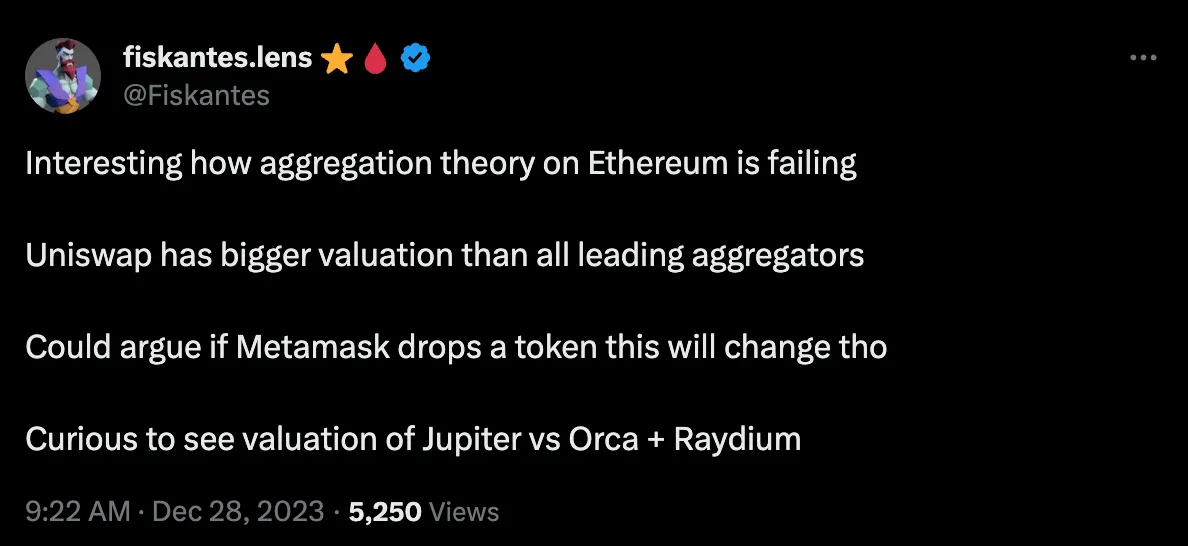
The same principle applies to use cases beyond simple A-for-B swaps, such as providing users with structured Dollar-Cost Averaging (DCA) or Time-Weighted Average Price (TWAP) products, discussed further below. The fundamental rationale remains: low gas costs give application developers on Solana immense flexibility, and Jupiter exemplifies this best practice.
Product Overview
Jupiter Swap
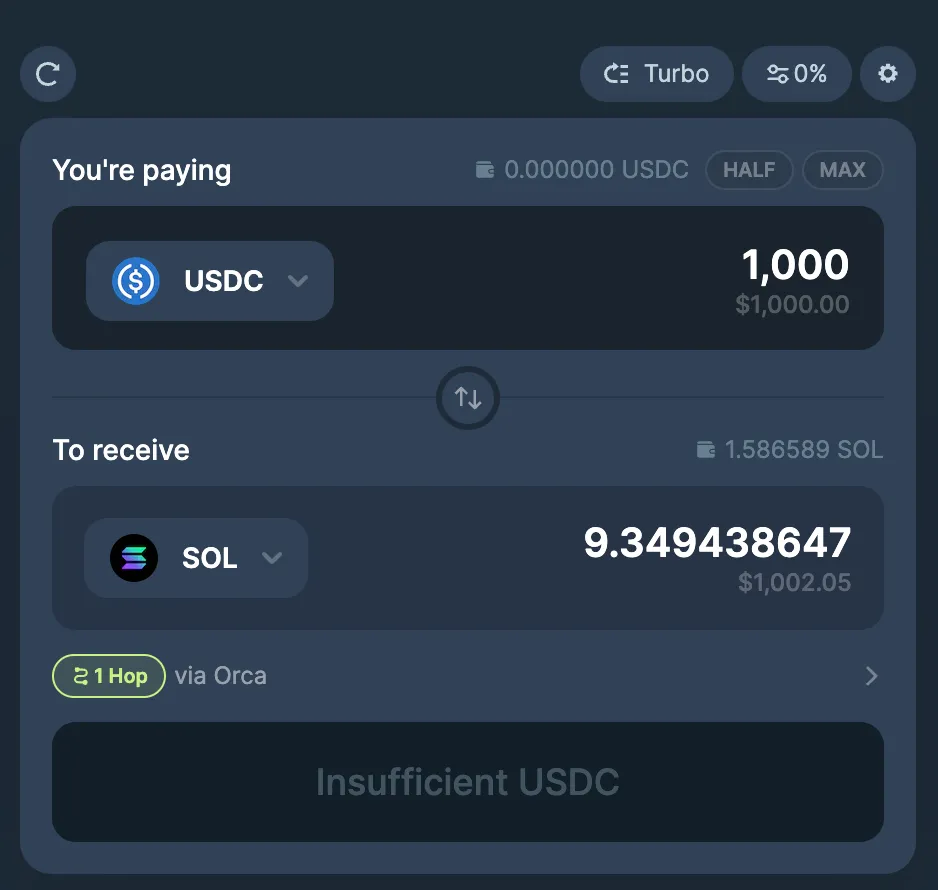
Like any other decentralized exchange, the most common use case on Jupiter is simply swapping token A for token B. Users can exchange their favorite assets at competitive prices. Slippage and priority fee settings are fully customizable, with general settings allowing users to choose direct liquidity routes, use wSOL instead of SOL, and utilize versioned transactions (using updated, better routing algorithms).
Developers can also leverage the Swap API to natively integrate Jupiter’s routing algorithms into their dApps. For example, Kamino Finance uses Jupiter’s Swap API to enable features like one-sided deposits into their CLMM vaults (Autoswap).
Although we believe Jupiter and sustainable adoption of Solana DeFi will eventually lead the JUP DAO to vote on implementing fees, currently Jupiter does not charge any additional swap protocol fees beyond basic gas and associated DEX fees. How this decision evolves will be interesting to watch, given rising network activity driving demand and cost for blockspace, along with potential restructuring of Solana’s fee market. Currently, 1inch on Ethereum charges no swap fees, while CowSwap recently proposed a fee switch that would introduce swap fees, aiming for financial self-sufficiency while maintaining user incentives.
Limit Orders

Instead of buying an asset at the current market price, traders can place limit orders if they believe the asset’s price will change in the near future. A limit order is a signed message containing explicit criteria or “intent” for trade execution, giving traders flexibility and additional benefits—for instance, better price settlement due to protection against MEV-induced slippage. This model benefits both retail and institutional traders, and Jupiter now provides a venue for placing limit orders on Solana.
When a user places an order to buy $WIF worth 1 SOL, the order is eventually matched by a keeper—a trusted protocol participant responsible for monitoring prices and executing orders. Keepers function similarly to solvers on CoWSwap or fillers on UniswapX. After execution, the designated asset appears in the user’s wallet.
Jupiter’s limit order functionality offers broader token selection—token pairs can be traded as long as sufficient market liquidity exists. Additionally, users can specify expiration times in their orders, after which any unfulfilled orders will be canceled and refunded to their wallets.
DCA

Dollar-Cost Averaging (DCA), also known as systematic investing, is a common investment strategy involving splitting capital allocation into multiple trades instead of one; this suits long-term investors unconcerned with short-term volatility (e.g., buying $500 worth of SOL daily for five days). DCA is particularly useful for accumulating assets during bear markets—the principle being to average entry prices, reducing volatility exposure and capturing greater returns over time and changing market conditions. Similarly, DCA can aid profit-taking during bull markets; instead of immediately selling an entire position, DCA allows spreading out sales to capture any additional upside during the exit window rather than dumping the full position at once.
Traders can also execute Time-Weighted Average Price (TWAP) strategies to buy or sell assets. Similar to DCA, TWAP is typically used for large orders that need to be split into smaller parts to prevent price impact (loss of funds) from a single large purchase. Since orders are executed over time, they resemble DCA strategies—buying “x” quantity over a set period.
Thanks to Solana’s high-throughput architecture, Jupiter is one of the few platforms enabling users to execute frequent time-bound strategies on-chain. DCA with low time intervals (e.g., daily) on Ethereum could result in hundreds of dollars in transaction fees, while on Solana it costs mere cents. Even on L2s, fees quickly add up if a trader executes 10 trades within an hour.
Perpetuals

To further expand its broad product suite, Jupiter launched an LP-Traders perpetuals exchange earlier this year. Though still in testing, traders can trade perpetual contracts on SOL, ETH, and wBTC with up to 100x leverage, while LPs can provide capital to earn fees.
Perpetual contracts are derivative instruments similar to traditional futures, allowing traders to take larger positions with less capital allocation (leverage) to capitalize on future price movements.
On Jupiter, traders can use almost any supported Solana token as collateral to open long or short positions on SOL, ETH, and wBTC. Long positions require corresponding underlying assets (e.g., a long SOL-USD position requires SOL as collateral), while short positions require stablecoins as collateral. Traders gain leverage by borrowing assets from liquidity pools—by borrowing 1x SOL from the JLP pool, a SOL-USD position can achieve 2x leverage.
Similar to the GLP pool on GMX, Jupiter Perps leverages the JLP pool, which includes SOL, ETH, WBTC, USDC, and USDT. Providing liquidity simply involves depositing any supported Solana token into the JLP pool in exchange for an equivalent amount of $JLP tokens. The JLP pool receives 70% of fees generated by Jupiter Perps, and the $JLP price grows in sync with the underlying pool value.
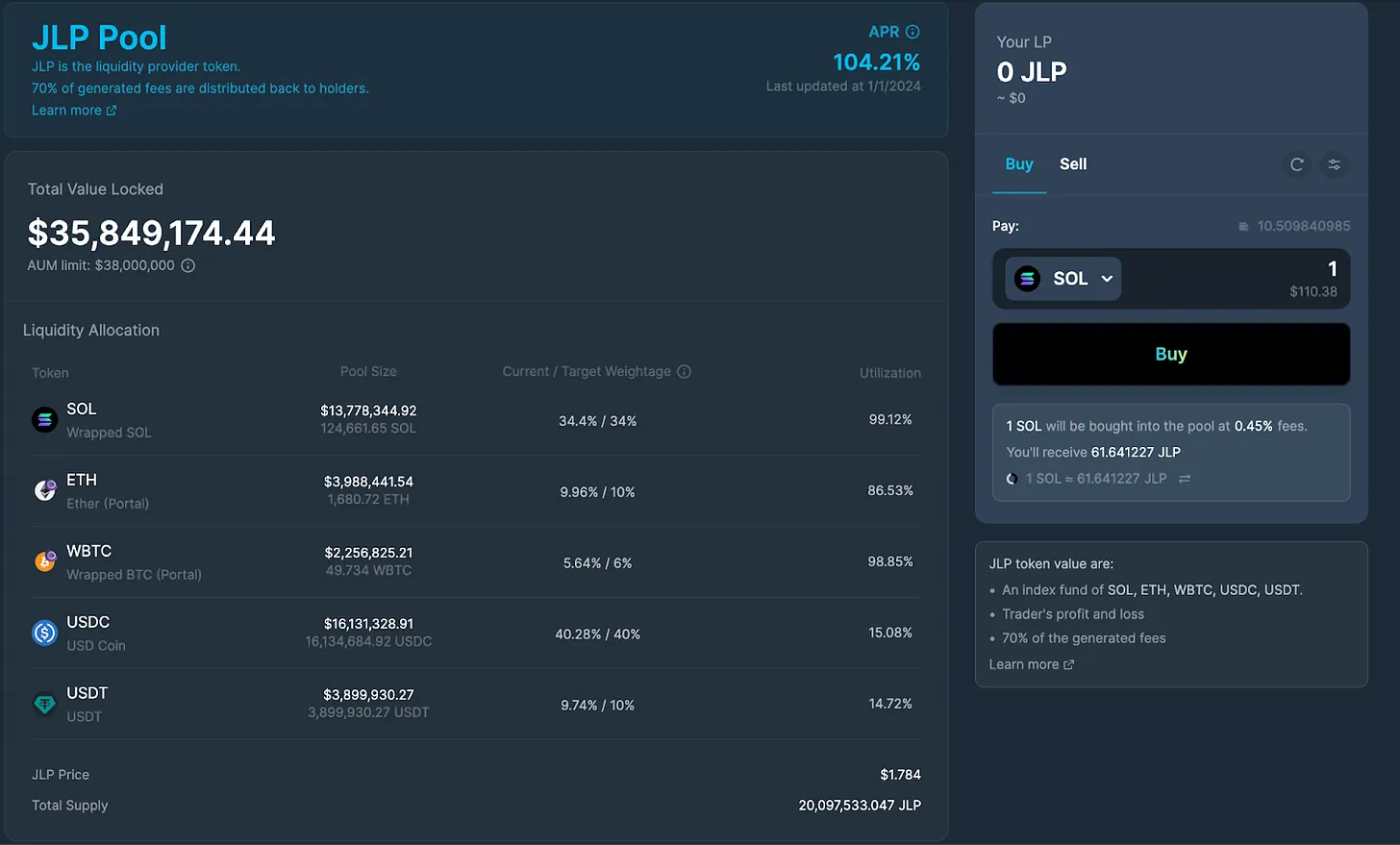
The JLP pool also benefits the broader Solana ecosystem, as Jupiter Swap is already natively integrated into the perpetuals exchange—meaning not only can any token be used as JLP collateral, but Solana traders benefit from increased liquidity in the JLP pool, receiving better trading prices.
Unlike the aforementioned features, Jupiter’s perpetuals exchange charges higher fees for both traders and LPs. Traders pay fees based on hourly borrowing rates or funding rates, calculated according to hourly borrow rate, position size, and token utilization:
Funding Rate = (Borrowed Token / Tokens in Pool) * 0.01% * Position Size
LPs also pay their own share of fees when opening/closing positions and swapping different assets within the JLP pool.
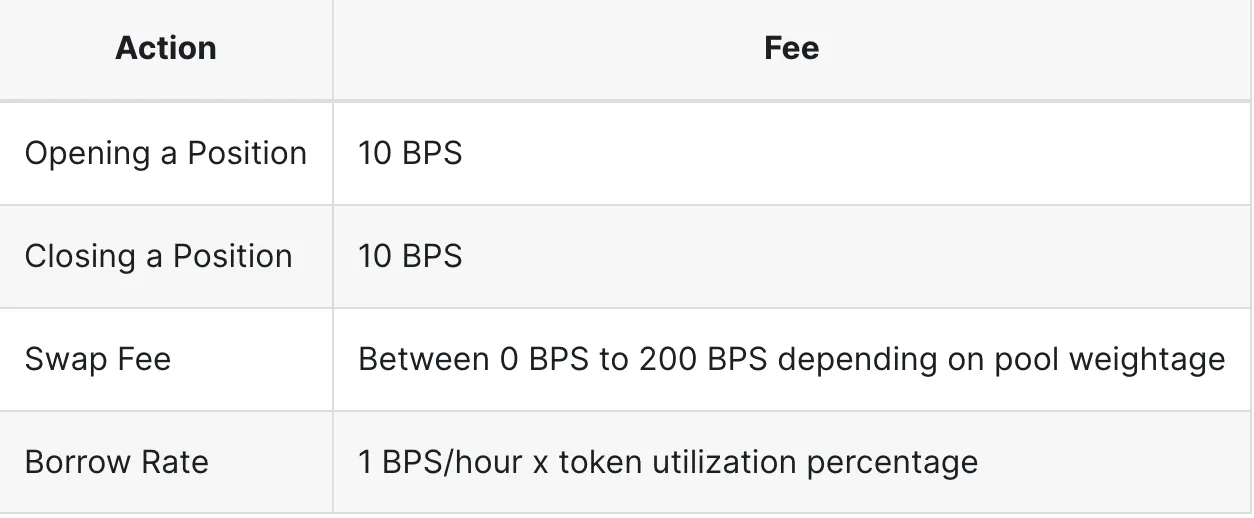
Regarding the JLP pool, it should also be noted that any action moving token ratios away from their target proportions incurs higher fees, while actions bringing ratios closer to targets receive fee discounts.
Decentralized perpetuals exchanges like GMX and dYdX remain relatively underdeveloped compared to their CEX counterparts and have significant room for growth and adoption. Another example of low-latency perpetuals applications benefiting from Solana’s fast execution and low transaction costs, although Jupiter will face competition from established players in the Solana Perps space such as Drift Protocol, 01 Exchange, Zeta Markets, Mango, etc.
Growing the Pie: Jupiter’s Vision
When the pie grows, everyone gets a bigger slice.
As a vital part of the Solana ecosystem, Jupiter benefits by helping as many new users and developers join the ecosystem as possible. Beyond delivering value through excellent products, Jupiter aims to empower its community and the broader Solana ecosystem through several new initiatives:
-
$JUP: Governance token for the new DAO (more below)
-
Jupiter Start: For a sustainable ecosystem, balancing openness to innovation with objective criticism of poor application designs is essential, while remaining vigilant against teams trying to exploit market narratives and biases.
Jupiter Start aims to serve as a platform between the Jupiter community and the broader Solana ecosystem to “help review, debate, understand, and highlight great new projects.” This includes a Jupiter launchpad to help bootstrap new projects, pre-market trading availability for new tokens, and Atlas—a new public seed funding program allowing the community to invest in early-stage projects—alongside various community-focused educational initiatives.
If you’re interested in learning more about Jupiter Start, we recommend reading this blog post.
-
Jupiter Labs: A collective effort among the Jupiter team, community, and DAO to develop innovative products and tools for Solana DeFi. While these initiatives will begin under Jupiter, they are ultimately designed to launch and operate independently on Solana. Jupiter users will receive early access to test new products and earn related incentives, with portions allocated to the JUP DAO.
The first product already live is the perpetuals exchange, which has launched in testing mode, along with a proposal for sUSD—a stablecoin backed by SOL (similar to LUSD:ETH) that generates yield using leveraged LSTs.
More on $JUP
Jupiter announced the $JUP token at Breakpoint, a strategic decision made after reaching many key milestones, including a broad and active user base, several major platform upgrades and new products, a series of ecosystem initiatives, and of course, confidence in the future rise of Solana activity.
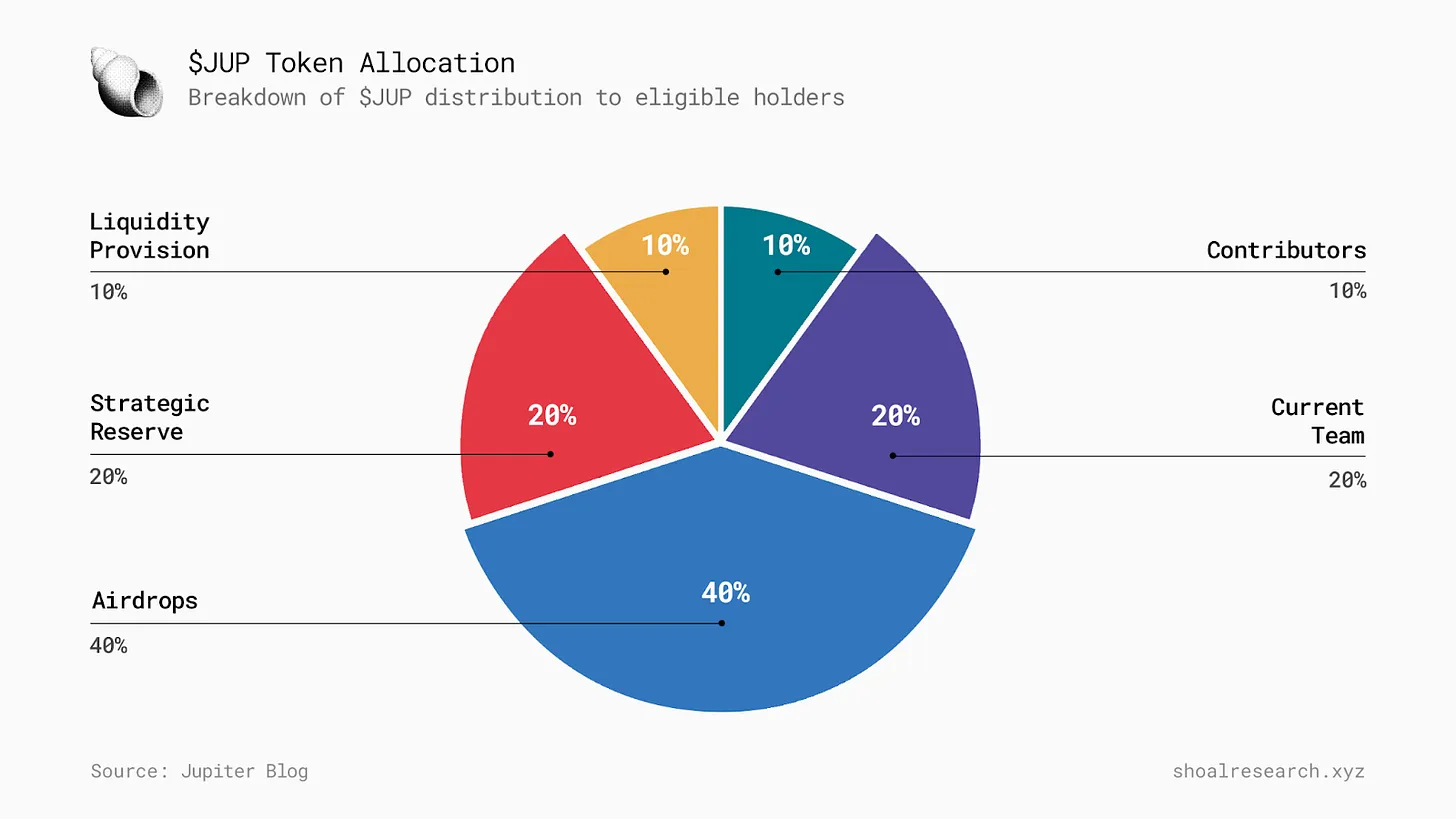
$JUP has a maximum supply of 10 billion tokens, with distribution evenly split between two cold wallets—the team wallet and the community wallet. The team wallet will allocate tokens to current team members, treasury, and liquidity provision, while the community wallet will support airdrops and various early contributors.
From day one, 15%-17.5% of tokens will be in circulation, 10%-7.5% in hot wallets, and 75% in cold wallets.
A retroactive airdrop will be conducted for Jupiter’s 955,000 early users (before November 2, 2023), alongside efforts to attract new users and liquidity. Then, the DAO will vote on token unlock schedules, with tokens initially locked and unlock dates set by the DAO. $JUP holders will be able to vote on key aspects of the Jupiter protocol and the token’s role, including timing of initial liquidity provision, future emission schedules, which projects appear on Jupiter Start, and more.
“The initial value of JUP will symbolize Jupiter and DeFi 2.0, just as UNI symbolized Uniswap and DeFi 1.0.”
Core Investment Catalysts
We’ve discussed the components of the Jupiter protocol; now we can explain the long-term investment opportunity we envision.
Betting on Solana
Solana’s roadmap is ambitious and exciting, and we expect ecosystem activity to continue growing in 2024 on top of the momentum seen in Q4 2023. Our conviction stems from several factors:
-
More airdrops: Point programs launched by Marginfi and other DeFi teams in early summer 2023 ignited excitement across the Solana ecosystem. The JTO airdrop amplified existing momentum, creating a wealth effect—pleasing many jitoSOL holders but leaving others dissatisfied and searching for the next big opportunity. Upcoming airdrops to watch include those from Jupiter ($JUP), Kamino, Marginfi, Drift, Tensor, and more.
-
Firedancer: Jump Crypto’s highly anticipated validator client, dubbed “Solana 2.0” by Toly himself. As the network scales and evolves, Firedancer is expected to be a long-term positive for Solana’s performance and throughput, marking a significant milestone by increasing client diversity and reducing single points of failure risk. Low-latency applications will become even faster—appealing to both users and developers. With Firedancer likely launching in 2024, we anticipate growing speculation and interest around this milestone.
-
DePin: An emerging area in crypto showing how tokenized assets can help decentralize real-world business models. Solana has successfully attracted many projects, including Helium and Hivemapper. Growing interest in DePin as a new sector brings more positive attention to Solana, showcasing its utility for serving specific use cases.
-
Payments: Solana Pay is now integrated with Shopify, enabling merchants to accept Solana payments—meaning the average JTO airdrop recipient can now buy over 2,000 cups of coffee with their payout. While barriers remain for shoppers to adopt Solana Pay, partnering with the largest e-commerce platform is a strong start. Earlier this year, Visa—one of the world’s largest payment networks—announced plans to pilot stablecoin settlements on Solana, an experiment testing blockchain settlement rails to build new products for commerce and money flows. Solana’s high throughput, fast finality, low transaction costs, and node availability are positives for Visa, just as Visa’s brand brings significant visibility to Solana. If successful, we believe the stablecoin settlement pilot will mark a major milestone in real-world crypto adoption, with Solana benefiting as the de facto network enabling it.
Lastly, mention should be made of the Saga phone. While Solana’s phone may not have been very successful in its first year, considering mobile integration’s impact on social media and payment apps, pushing for a mobile-friendly crypto environment and applications could be an exciting long-term development. Recently, Solana phones airdropped BONK tokens to buyers, and the team recently announced a 2.0 version featuring a lower price ($450) and a referral leaderboard to drive greater user participation.
Challenges Facing Solana
While we remain optimistic about Solana’s long-term growth, we expect Solana’s core team and developer community to address several key issues in the short and long term, which we will monitor closely:
-
Fee Market: Although Solana now has priority fees, there is no native mechanism to determine a “market” priority fee to effectively deter spammers (i.e., EIP-1559). With demand for blockspace on Solana now greatly increased, more users are encountering failed transactions, further indicating the need to upgrade the network’s current fee market structure. Proposed solutions involve dynamic account fees and multi-dimensional EIP-1559, where fees grow exponentially for accounts accessing the exact same hotspots.
-
EVM Competition: While we believe long-term SVM and EVM won’t be zero-sum and different networks will specialize in their niches, today Solana still competes with the EVM space for market share and users—a significant gap to close ($140M vs $3B).
-
EIP-4844 aims to significantly reduce L2 costs (80–90%) and improve usability/deployability, potentially solidifying leadership on Arbitrum, Optimism, and Base. Similarly, Celestia offers L2 developers greater flexibility and lower costs, possibly attracting talent and users away from Solana.
-
Restaking narratives could be one of Ethereum’s biggest catalysts, potentially bringing in massive capital inflows. Setting aside security risks, investors seeking native yield on native L1 assets will look for higher-return opportunities, giving Ethereum stakers chances to restake.
-
-
Parallelized L1s: The rising popularity of parallelized L1 chains (MoveVM, Sei, Monad) optimizing for Solana-like speed and performance, though still young and immature. Monad, built by a team with high-frequency trading backgrounds, aims to bring Solana-like performance to the EVM environment, theoretically combining “the best of both worlds” with transaction speeds up to 10,000 TPS. However, these chains face not only the challenge of surpassing Solana itself but also competing with Neon EVM, which achieves Solana compatibility within the Ethereum-native environment. Aave recently posted a governance forum proposal discussing whether to deploy its V3 protocol on Neon’s mainnet. Considering all this, we believe Solana’s resilience is its greatest strength and long-term catalyst—having demonstrated its ability to overcome macro challenges (like the FTX collapse) and technical shortcomings (like network outages).
Betting on Solana = Betting on Jupiter
Jupiter’s green paper states: “Our vision for the future is deeply intertwined with the growth and prosperity of the Solana ecosystem. Our belief drives us to think that a thriving Solana ecosystem will bring collective benefits to all stakeholders. Simply put, when the pie grows, everyone gets a bigger slice.”
We believe Jupiter’s pivotal role in Solana DeFi makes it a viable bet on the network’s near- and long-term adoption. The thesis is straightforward: more users on Solana = more users on Jupiter. Solana’s initial boom lasted about a year (2021), during which protocols like Saber and Serum dominated the DEX space. Jupiter gained traction soon after launch, aiming to leverage on-chain DEX liquidity rather than steal market share, offering better user experiences and pricing. However, it wasn’t until the decline of the once-dominant Solana DEX Serum that Jupiter became today’s market leader.
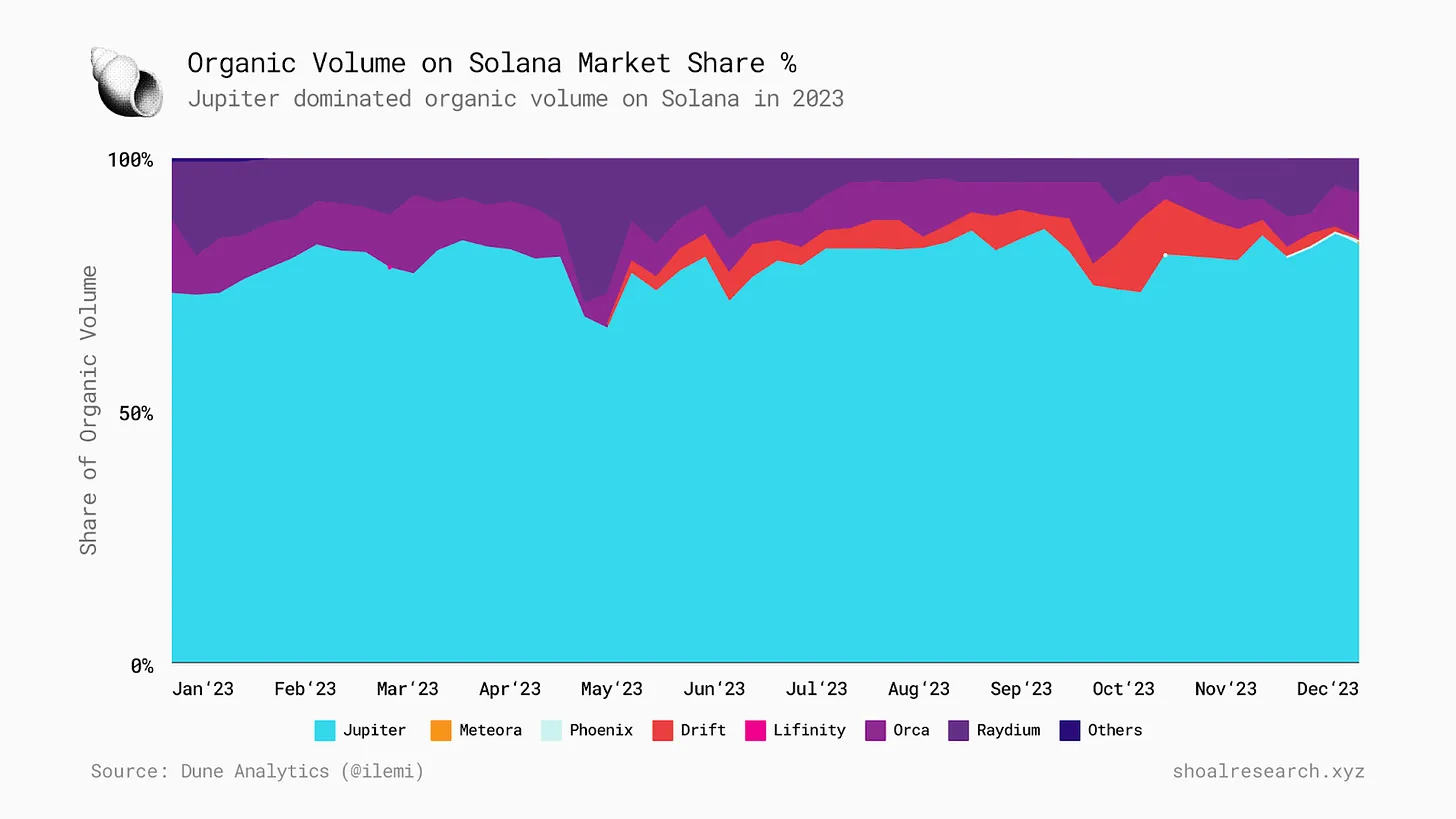
In 2023, Jupiter consistently accounted for over 60% of DEX trading volume on Solana.
Analyzing Jupiter’s Business Model
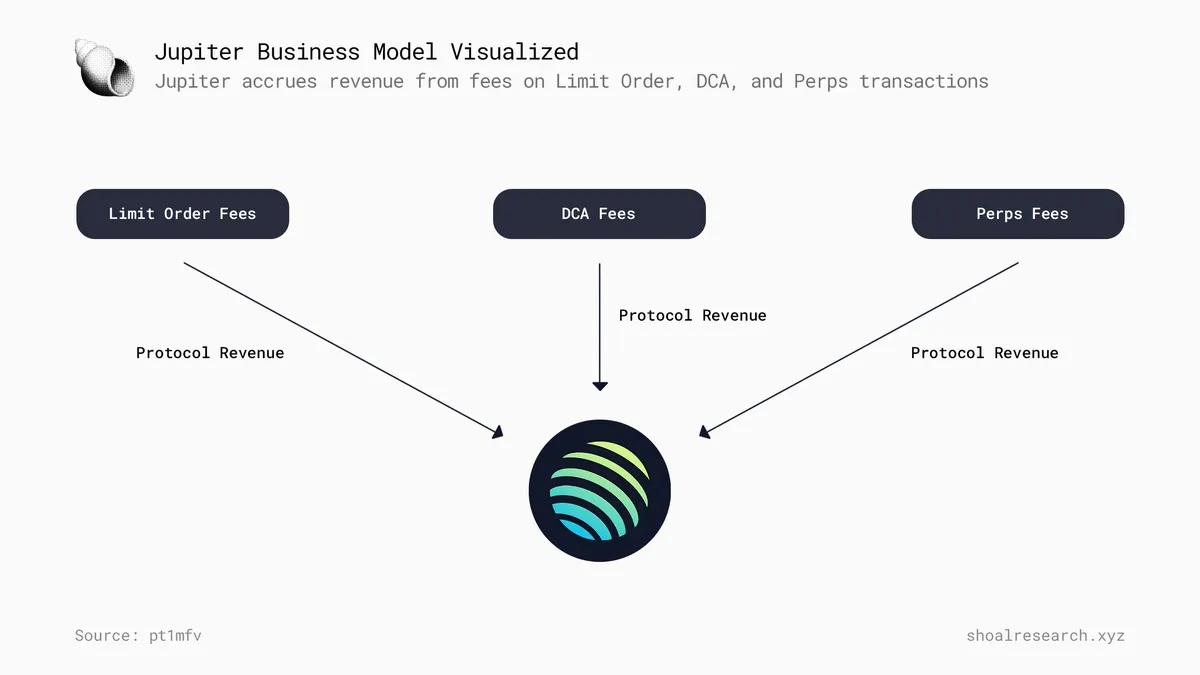
Initially, Jupiter’s core product was merely an optimized swap engine focused on better pricing, charging no extra fees to traders. As the project grew, with volume and traders continuously increasing, the team launched several new products that now serve as organic revenue streams for the protocol. We believe the JUP DAO will naturally ensure $JUP holders receive a portion of these fees, as well as future opportunities from Jupiter Start and Jupiter Labs.
-
Limit Orders: 30 BPS
-
DCA: 10 BPS
-
This is a unique product, and I believe Jupiter could further monetize it by increasing fees (around 20 BPS).
-
-
Perpetuals
-
Opening/Closing Positions: 10 BPS
-
Swap Fees: 0–200 BPS (varies by pool weight)
-
Borrow Rate = 1 BPS/hour * Token Utilization%
-
JLP Pool receives 70% of fees generated by Jupiter Perps
-
-
External Protocols
-
If a protocol integrates Jupiter’s architecture into its own software and charges its own fees, Jupiter ensures it receives a share of those fees.
-
Hypothetical Scenarios
-
Jupiter Start: We believe it would be wise to leverage the Jupiter Start program (i.e., Launchpad and Atlas) to create additional revenue streams for Jupiter and $JUP holders.
-
Launchpad: Establish trading flow from projects incubated or operated by Jupiter Launchpad, with a portion of project revenues directed to the JUP DAO.
-
Atlas: Create an effective model to collect revenue from realized gains of the public seed funding program and distribute it to participating holders and investors.
-
Join TechFlow official community to stay tuned
Telegram:https://t.me/TechFlowDaily
X (Twitter):https://x.com/TechFlowPost
X (Twitter) EN:https://x.com/BlockFlow_News
 @pt1mfv_