Decoding L2 MEV: Sequencer Workflows and MEV Data Analysis
TechFlow Selected TechFlow Selected
Decoding L2 MEV: Sequencer Workflows and MEV Data Analysis
In-depth analysis of the interaction between L2 sequencers and MEV, exploring their impact on the crypto ecosystem.
 Navigating Web3 tides with focused insights
Authors: Burce, Hildobby
Editor: Lisa
* Thanks to Hildobby, data analyst at Dragonfly, for supporting the L2 MEV data.
Core Role in L2 MEV: Sequencer
The L2 Sequencer, as a core component of Ethereum Layer 2 solutions, plays a critical role. Its primary function is processing transactions—packaging them and submitting them either to the ETH mainnet or off-chain networks—to enhance throughput and efficiency across the blockchain ecosystem. Specifically, the sequencer performs a role similar to Ethereum’s transaction pool (mempool), but with more specialized operation methods and scope. Additionally, the L2 sequencer grants greater operational flexibility to applications and smart contracts, enabling more complex logic and contract execution on the L2 layer without concern over high gas fees.
Transaction Processing Workflow of the Sequencer
1. Collection
The sequencer receives transaction requests from users. These are typically in Ethereum transaction format, but are sent to the Layer 2 network rather than the main chain.
2. Validation
The sequencer validates transactions to ensure senders have sufficient funds and that transactions comply with Layer 2 network rules. It also verifies transaction legitimacy to prevent fraud and double-spending.
3. Ordering
The sequencer orders transactions according to predefined rules to ensure correct execution sequence and avoid potential transaction conflicts.
4. Submission
Once validated and ordered, the sequencer submits transactions to the Layer 2 network for execution. This typically involves interacting with Layer 2 smart contracts, updating states, and ensuring ledger consistency between Layer 2 and the ETH mainnet.
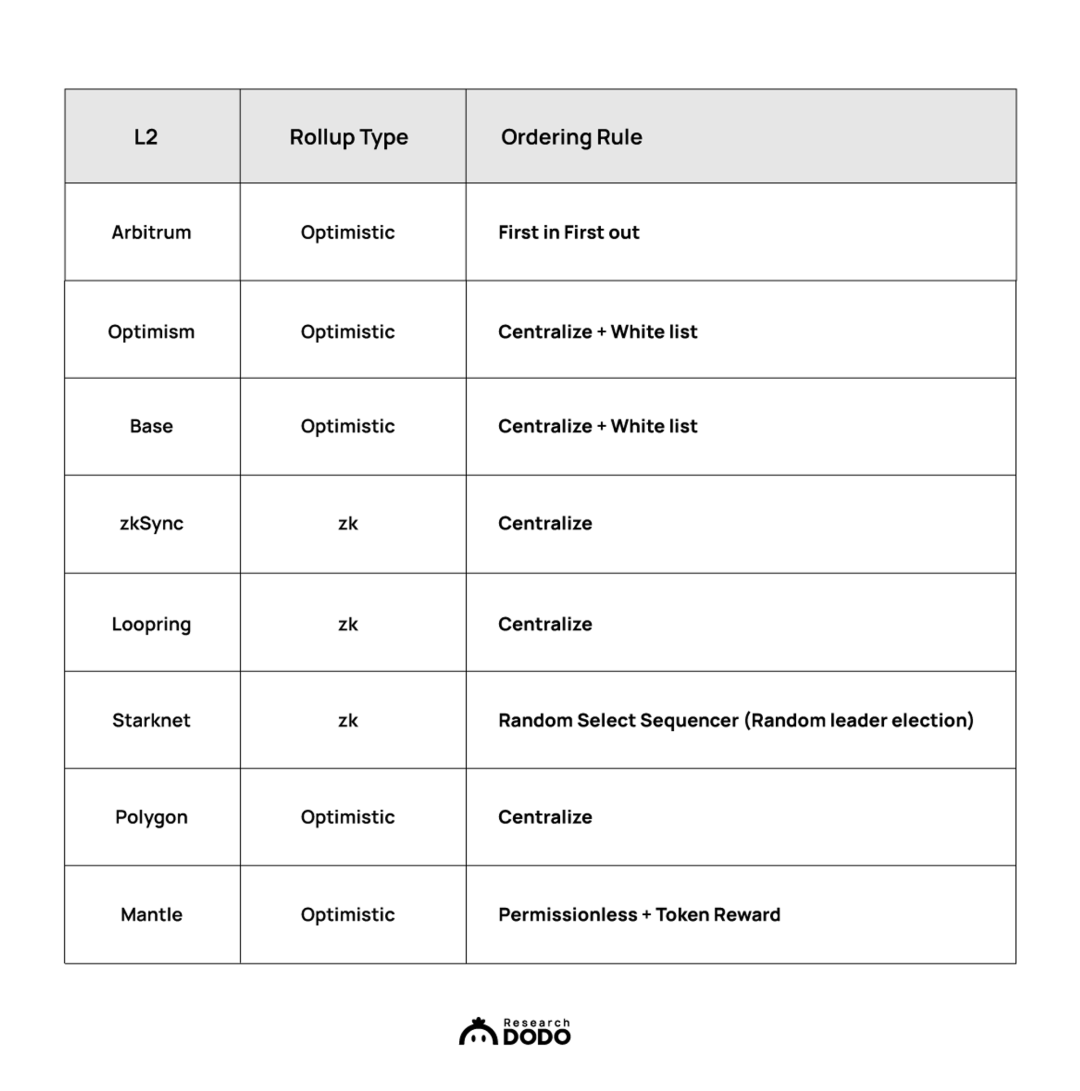
Ordering Rules Across Different L2 Sequencers
Arbitrum's Ordering Rule
To minimize MEV issues, Arbitrum does not have a public mempool and adopts a First-Come-First-Served (FCFS) ordering model, ensuring earlier-submitted transactions are processed sooner.
Optimism's Ordering Mechanism
Optimism introduces an auction-based ordering mechanism known as MEV Auction (MEVA), aiming to fairly distribute advantages and disadvantages of transaction processing. After the Bedrock upgrade, Optimism launched the Bedrock Sequencer, which works alongside MEVA for transaction ordering. Similar to Arbitrum, the Bedrock sequencer maintains its own private mempool. Although MEVA has not been fully implemented yet, under current plans, the MEVA winner will have the right to re-order submitted transactions and insert their own, but cannot delay any specific transaction by more than N blocks—thus limiting the MEV profits of the MEVA winner.
Ordering Rules of Other L2 Solutions
Beyond Arbitrum and Optimism, many other L2 solutions such as zkSync, Loopring, and Starknet employ different ordering rules tailored to meet diverse user and application needs.
MEV Extraction in L2
In the blockchain world, MEV (Maximal Extractable Value) arises from multiple interrelated factors. At its root lies the inevitable delay between when user transactions propagate through the network and when actual blocks are mined. This time gap creates room for manipulation by nodes. Due to the nature of decentralized systems, different nodes may receive transactions at different times and in varying orders, meaning the system cannot guarantee consistent state across all nodes simultaneously. This inconsistency creates the conditions for MEV generation.
On the Ethereum mainnet, MEV extraction has evolved into a significant source of profit. MEV extractors typically monitor the mempool for profitable opportunities and use Gas Auctions (bidding higher fees for priority inclusion) or off-chain bribes to ensure their transactions are prioritized. This allows them to profit from controlling transaction order.
The process of capturing MEV profit consists of two key steps. First, attackers must identify potentially profitable transactions and construct specially optimized bundles designed to extract MEV. Second, they must maximize the likelihood that these specially crafted transactions are accepted by the network and included in the blockchain.
However, with the rise of Layer 2 (L2) solutions, MEV extraction strategies have undergone significant changes. Because L2 sequencers are often centralized, MEV extraction faces new challenges and opportunities compared to traditional Layer 1 (L1) environments.
For L2 solutions without a mempool, monitoring transactions becomes significantly harder. In such cases, the sequencer holds greater power, as it directly controls transaction ordering. Without a public mempool, attackers cannot monitor pending transactions and adjust order like they can on L1, greatly increasing the difficulty of executing MEV attacks.
In centralized sequencer-controlled L2s with mempools, the influence of Gas Auctions on ordering is reduced. Some L2s eliminate Gas Auctions entirely, changing the game. While attackers cannot determine exact transaction order, they might still attempt to influence their position via gas fee adjustments. However, compared to L1, this strategy is far less reliable and predictable.
Additionally, some independent DApps on L2 may maintain their own local transaction mempools. These pools become potential targets for attackers who may exploit DApp-specific mempools to extract MEV.
For L2 chains running Gas Auctions, such as Polygon, validator participation is not fully permissionless. In such cases, when attackers detect MEV opportunities, they may resort to flooding the network with numerous transactions to increase the chance of inclusion. This strategy relies heavily on luck and low transaction costs, making it a less certain form of attack.
Finally, attackers may leverage interactions between L1 and L2 or among different L2 solutions to extract MEV. This requires deep understanding and analytical capability regarding cross-chain states and dynamics.
Differences in MEV Extraction Space Across L2s
There are significant differences in MEV extraction space across various L2 solutions. These differences are primarily determined by the L2’s sequencer rules, mempool design, transaction volume, and scale. Generally, the higher the degree of centralization of an L2 sequencer, the more concentrated MEV extraction becomes, resulting in fewer overall opportunities. Conversely, the more open the mempool design, the larger the space available for attackers to monitor transactions and manipulate order.
Moreover, transaction volume and scale on an L2 significantly impact MEV extraction space. High-volume, large-scale L2s offer more MEV extraction opportunities because a high-traffic environment presents more profitable transactions and thus more chances for profit extraction. In contrast, low-volume, small-scale L2s offer relatively limited MEV opportunities due to scarcity of such events.
Future Solutions for L2 MEV
One fundamental challenge in blockchain technology is achieving true decentralization. In the context of L2, this centers on implementing decentralized sequencers—the question of how transaction ordering authority should be distributed. This directly impacts fairness, security, and other key performance metrics of blockchain systems. The MEV issue in L2 is essentially a derivative problem of transaction ordering rights. Currently, most L2s rely on centralized sequencers, leading to opaque MEV extraction. Potential solutions fall into two categories: achieving sequencer decentralization through specific mechanisms, or outsourcing ordering rights to third parties who provide sequencing services.
Decentralized Sequencer
-
Blockspace Auction: Allocating sequencing rights through competitive bidding. Participants publicly bid for blockspace during specific periods, gaining sequencing rights for that block. Advantages include transparency and competitiveness, encouraging fair pricing. A drawback is the “winner’s curse,” where the winning bidder overpays and suffers losses.
-
Random Leader Election: Randomly selecting leaders from a qualified pool of participants to perform sequencing. For example, selecting from users who have staked 32 ETH, as in Starknet’s approach. Benefits include reduced unfair competition due to randomness; however, it may overlook participant capability and contribution, potentially lowering efficiency due to lack of competition.
-
Proof-of-Work: Allowing multiple potential sequencers to compete to build a block, with the fastest or most efficient one winning. Encourages innovation and efficiency, but risks substantial resource waste.
-
Economic Competition: Different participants compete to achieve optimal economic outcomes. For instance, determining inclusion order based on block fees. This method offers flexibility and design possibilities, such as MEV redistribution or MEV auctions, using open economic mechanisms to incentivize block construction. While promoting market vitality, it risks allowing dominant entities to monopolize sequencing rights.
-
Fair Sequencing: Directly ordering transactions via specific algorithms—a sort of language and network protocol. Chainlink has already implemented this solution. Fair sequencing limits MEV extraction by restricting order manipulation at the foundational level. However, DApp performance may degrade under fair sequencing, and the applicability of its rules is limited.
Implementing decentralized sequencers could promote fairness and transparency while enhancing system security. However, it also brings challenges such as resource waste and market barriers. Looking ahead, all L2s are expected to move toward decentralized sequencers, but currently, due to efficiency and cost considerations, most L2s will likely retain centralized sequencers.
Outsourcing Sequencing Rights to Third Parties
-
Shared Sequencers, such as Espresso and Astria. They specialize in providing sequencing services, organizing transaction order via specific methods, allowing connected chains to offload sequencing concerns. Benefits include standardization and professionalization of sequencing, but may introduce external dependencies, affecting decentralization.
-
From a personal perspective, shared sequencers reflect modular thinking. However, we should also consider that designing viable decentralized mechanisms for block building and transaction ordering is inherently part of building a public blockchain. With the rise of modularity, shared sequencers may see widespread adoption.
-
Organizing cross-chain MEV auctions to indirectly provide sequencing services, such as SUAVE. SUAVE is itself a chain; using SUAVE effectively outsources block building and mempool services to SUAVE.
-
Key features of SUAVE include: SUAVE itself does not capture MEV (except gas fees); searchers (expressing preferences on SUAVE) extract MEV by requiring executors to accept their transaction bundles (including cross-chain MEV); executors can capture part of the searcher’s MEV, ideally returning as much as possible to the searcher. This approach optimizes resource allocation through open markets, but may increase system complexity and somewhat reduce decentralization.
-
Outsourcing block construction to L1, i.e., Based Rollups (e.g., Taiko).
-
L1 already has a sufficiently decentralized infrastructure capable of providing decentralized sequencing services. MEV extraction in Based Rollups works as follows: part of MEV naturally flows to Ethereum, strengthening L1’s economic security; L2 searchers (creating L2 transaction bundles) and L2 builders (who may run mev-boost) can also capture a share of MEV; if L2 searchers monitor both Ethereum’s mempool and the rollup’s mempool along with the states of both chains, they can capture cross-chain MEV value. This approach is highly feasible, but its ceiling cannot exceed current solutions—given Ethereum’s existing architecture allows substantial MEV extraction, delegating sequencing to L1 does not improve the MEV ecosystem.
Outsourcing block proposal duties to third parties offers benefits in resource optimization and risk distribution, but also poses potential threats to decentralization.
L2 MEV Data
Dune dashboard created by Dragonfly data analyst @hildobby showcases MEV data from selected L2s.
Polygon
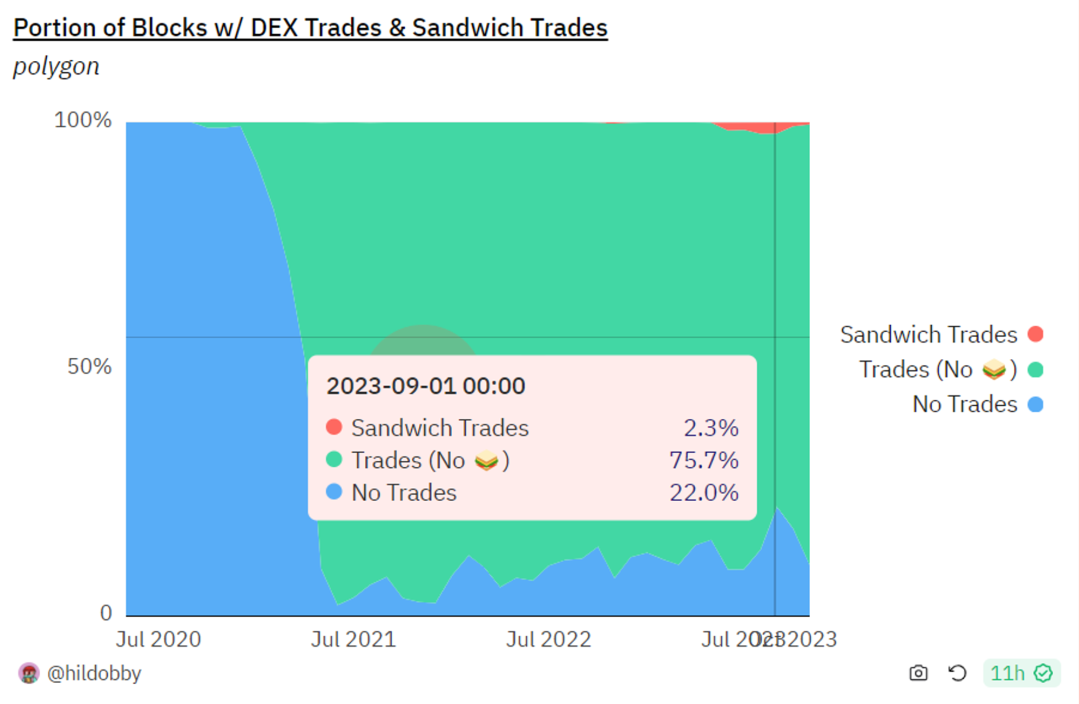
Sandwich attacks on Polygon are relatively rare, mostly below 1%. In September this year, it peaked at approximately 2.3%. In terms of transaction volume, the volume affected by sandwich attacks is very low.
Sandwich transaction ratio

Sandwich transaction volume
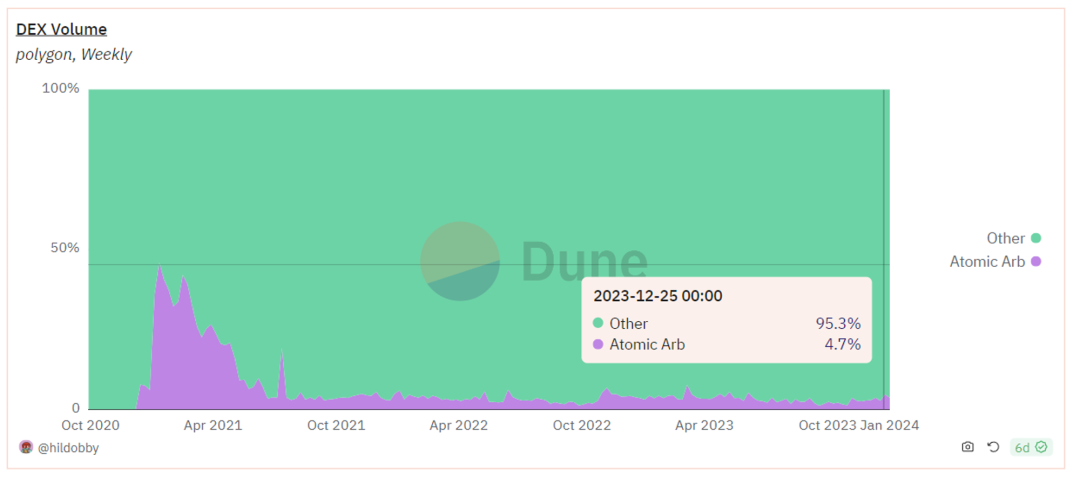
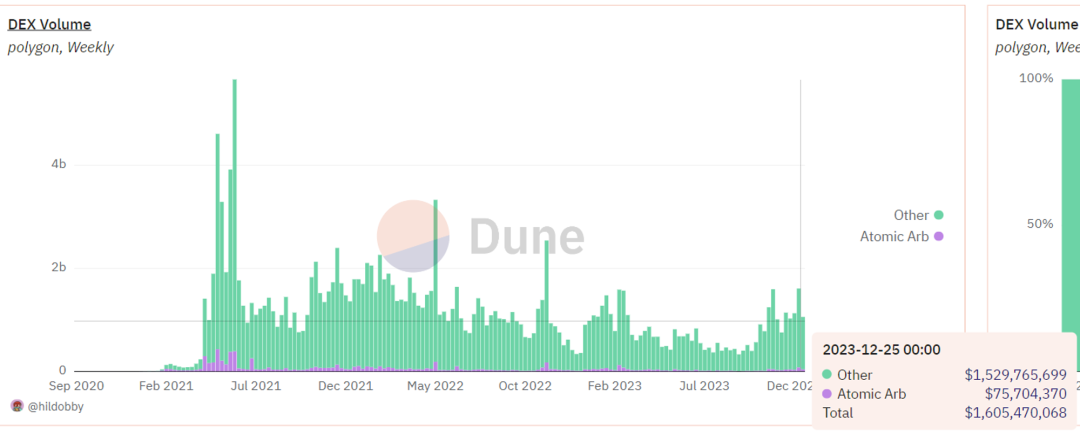
Arbitrage transactions on Polygon account for a higher proportion and significantly exceed sandwich attacks in volume.
Arbitrage transaction ratio
Arbitrage transaction volume
Arbitrum
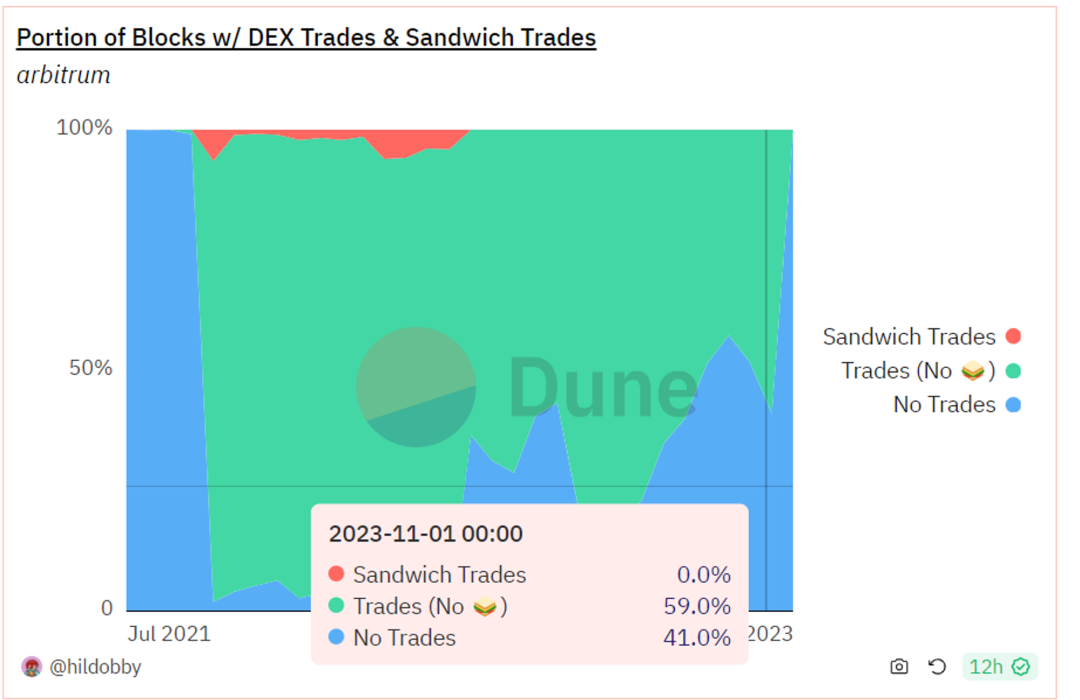
Since 2023, the proportion of sandwich attacks in Arbitrum block transactions has dropped to very low levels. In terms of transaction volume, total volume reaches billions of dollars, whereas sandwich attack volume amounts to only hundreds of thousands of dollars—also minimal. This may be related to Arbitrum’s FIFO transaction ordering rule.
Sandwich transaction ratio

Sandwich transaction ratio
Compared to other chains, arbitrage transaction ratios on Arbitrum are relatively small. However, compared to sandwich transactions on Arbitrum, arbitrage transaction volumes remain substantially higher.
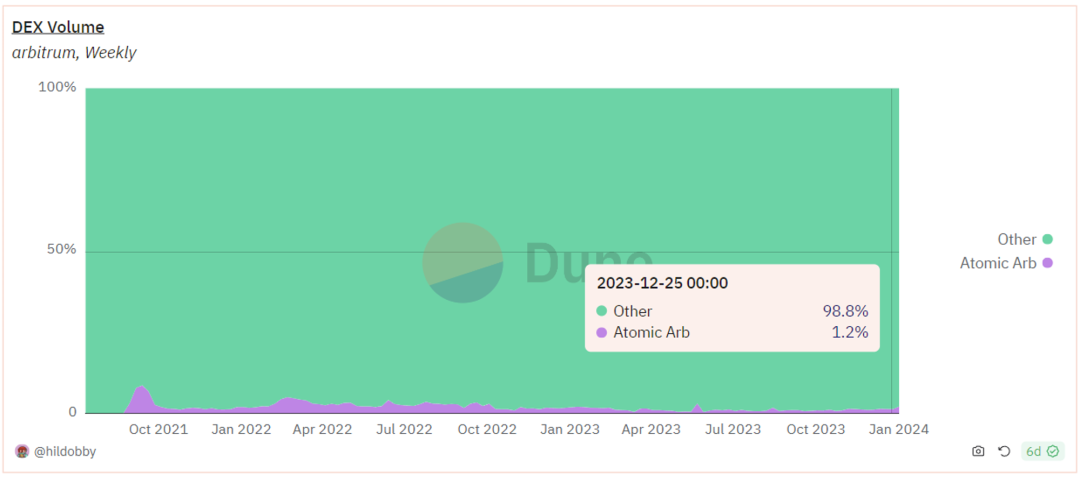
Arbitrage transaction ratio
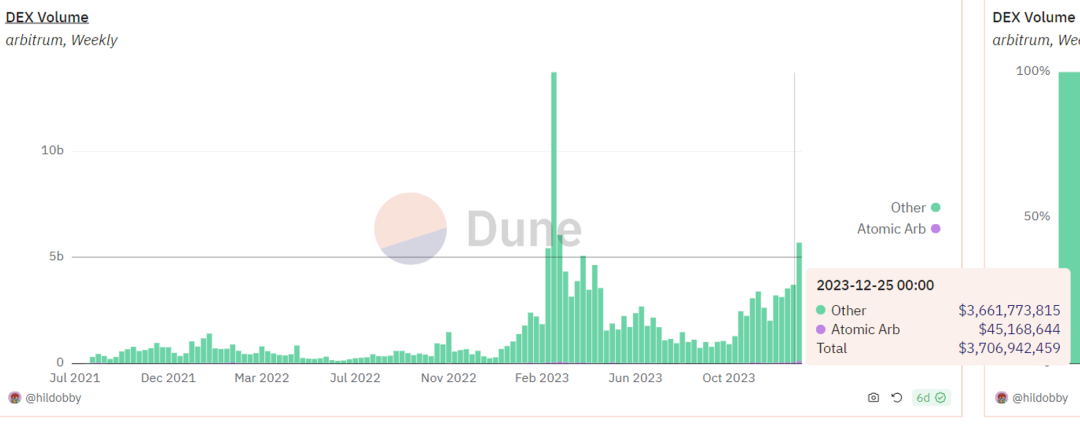
Arbitrage transaction volume
Optimism
On Optimism, the situation differs. The proportion of sandwich attacks in block transactions once reached as high as 62.7%, but has gradually declined over time, primarily due to the Bedrock upgrade introducing an EIP-1559-like gas mechanism. Recently, the sandwich attack ratio has dropped to very low levels. In terms of transaction volume, sandwich attack scale has decreased to just a few thousand dollars.
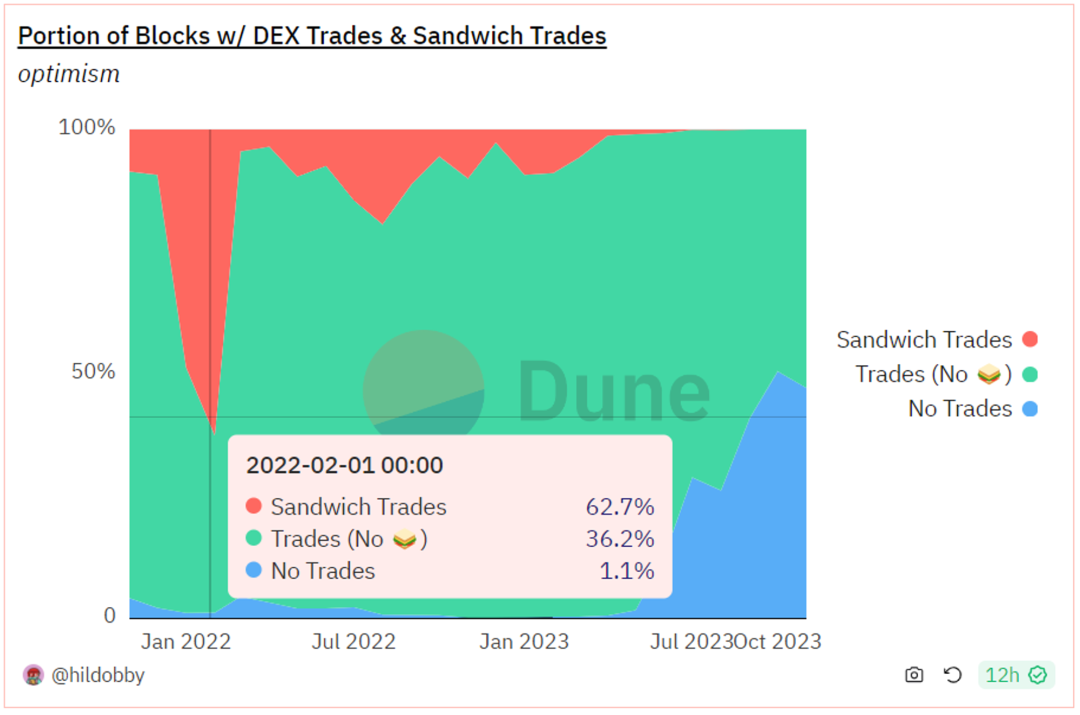
Sandwich transaction ratio
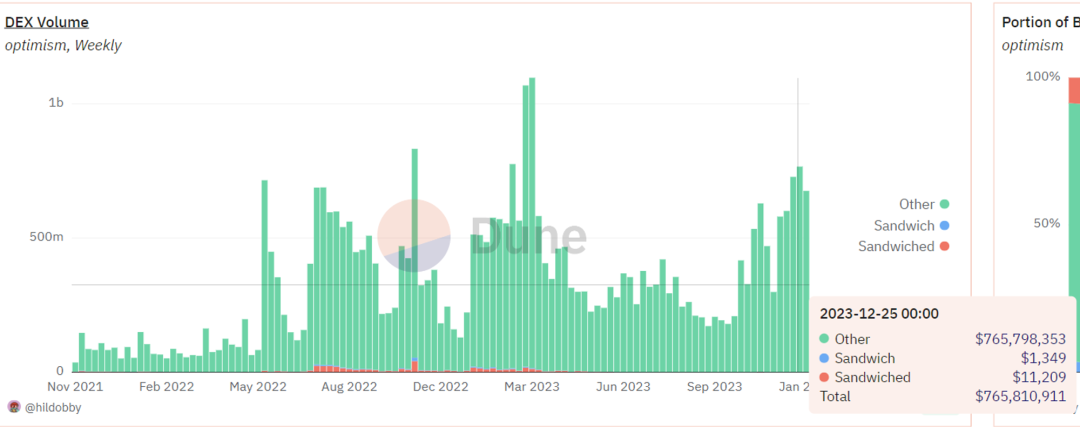
Sandwich transaction volume
On Optimism, arbitrage transaction ratios range between 2% and 4%, showing a declining trend compared to last year. Arbitrage transaction volume remains relatively low.
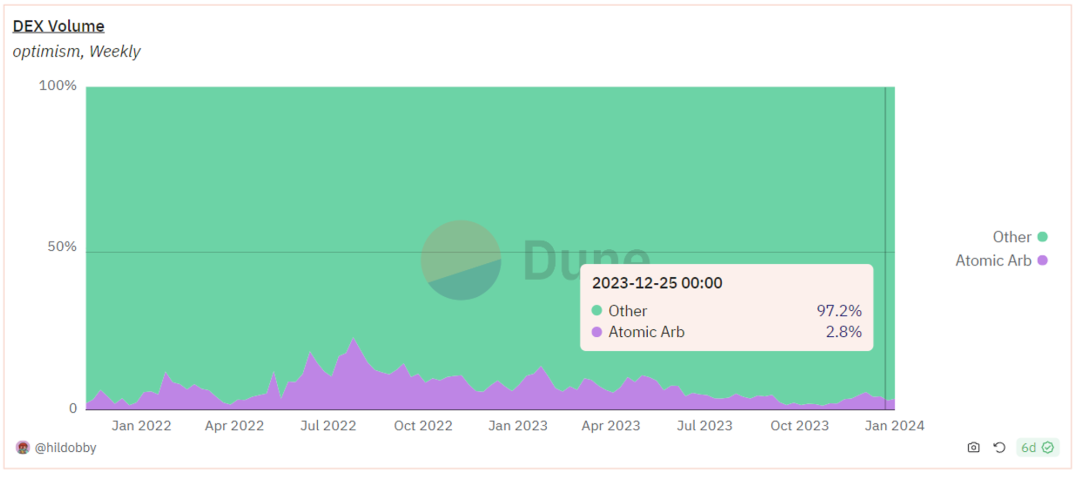
Arbitrage transaction ratio
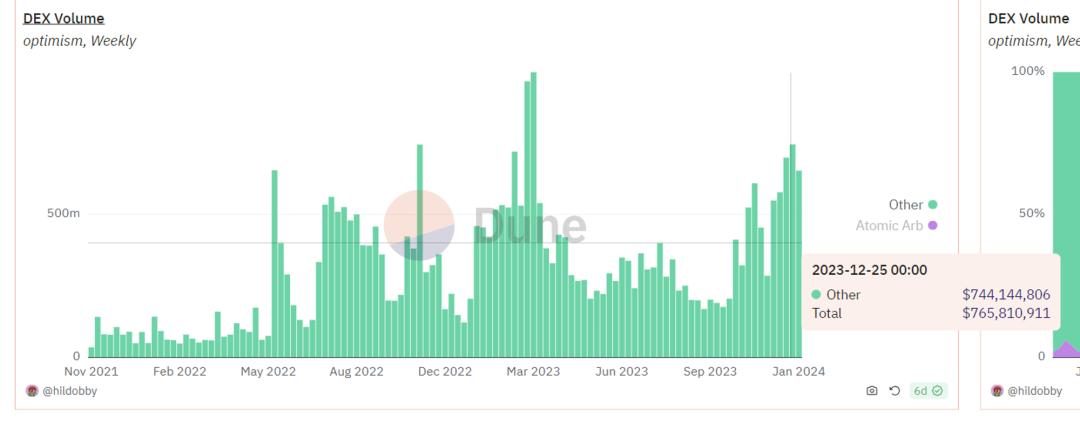
Arbitrage transaction volume
Conclusion
Overall, the relationship between L2 sequencers and MEV holds significant implications for the development of the ETH ecosystem. Currently, L2s face the challenge of ensuring fair and transparent ordering mechanisms to prevent MEV extraction. However, the complexity and diversity of L2 solutions present numerous hurdles, including resisting MEV and ensuring fair, transparent sequencing. At this stage, several viable solutions exist, such as Shared Sequencers and cryptographic methods protecting transaction ordering privacy.
Looking ahead, practical solutions may increasingly focus on sequencer decentralization to reduce potential MEV extraction space. Simultaneously, outsourcing block production to third parties could enhance network fairness and efficiency. On the other hand, the emergence of cross-chain MEV requires us to reconsider the definition and significance of MEV, exploring novel approaches like Slot Auctions and Interchain Schedulers. Additional research topics include quantifying MEV on L2 chains and understanding the impact of PGA (Priority Gas Auctions) on L2—resolving these issues will help further refine MEV resistance strategies in the L2 domain.
Join TechFlow official community to stay tuned
Telegram:https://t.me/TechFlowDaily
X (Twitter):https://x.com/TechFlowPost
X (Twitter) EN:https://x.com/BlockFlow_News
 Dr.DODO