Interpreting Asteroid: A New Open-Source Inscription Protocol for Cosmos Hub—Can It Unlock Liquidity Across the Entire Ecosystem?
TechFlow Selected TechFlow Selected
Interpreting Asteroid: A New Open-Source Inscription Protocol for Cosmos Hub—Can It Unlock Liquidity Across the Entire Ecosystem?
The protocol aims to enable anyone to directly and permanently publish content onto the Cosmos Hub blockchain, where it will remain forever.
 Navigating Web3 tides with focused insights
Written by TechFlow
The landscape of the inscription market continues to evolve.
On January 17, Dephi Labs, a division of Dephi Digital, announced on Twitter its collaborative project with the Astroport Foundation: Asteroid Protocol.
This protocol enables anyone to directly and permanently publish content onto the Cosmos Hub blockchain, where it will remain indefinitely.
Currently, the protocol fully includes an Asteroid indexer, block explorer, API, Cosmos Fungible Token (CFT-20) token standard, token deployer and minting tools, as well as front-end and back-end software.
Users can also directly perform inscription-related operations on its official website.
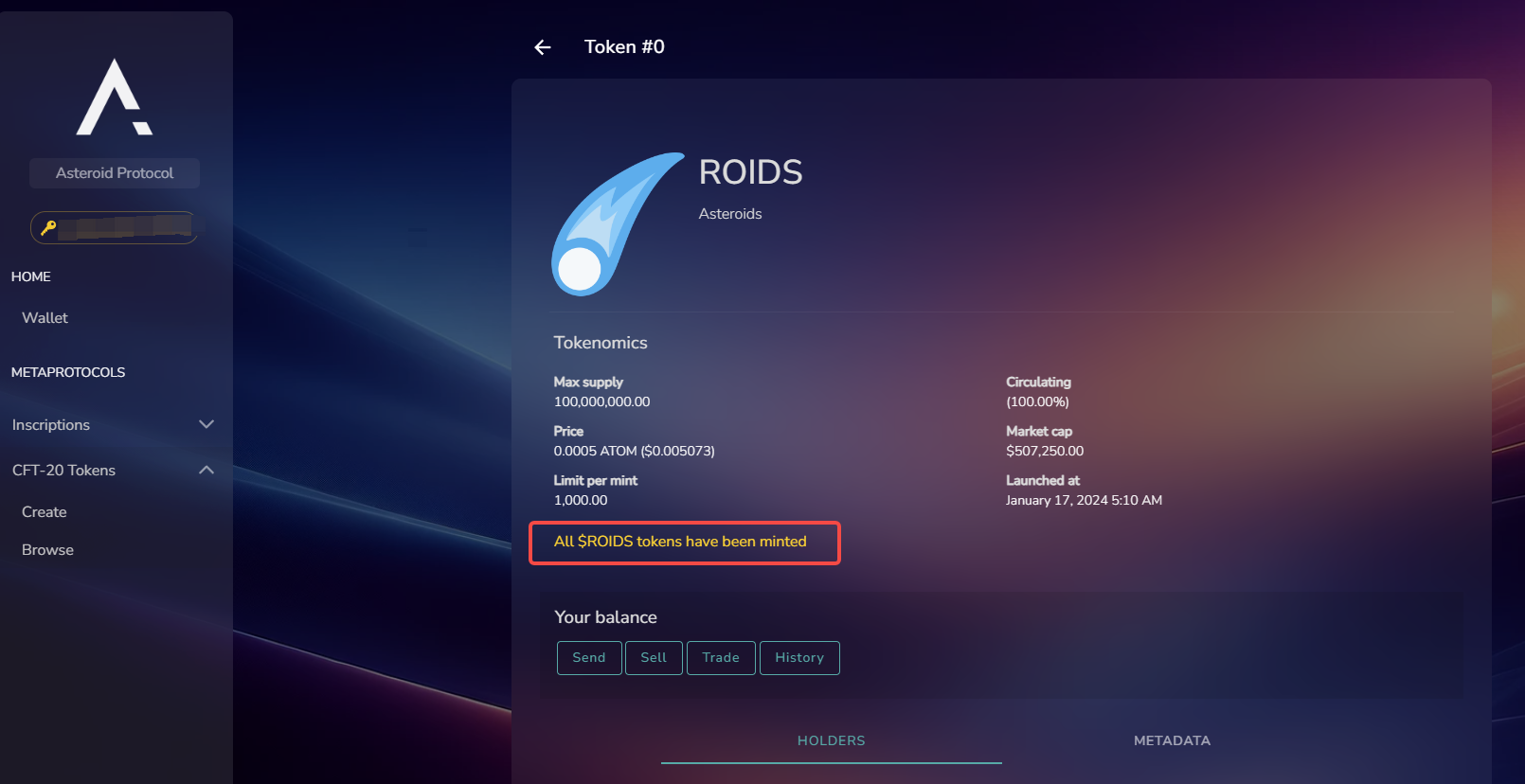
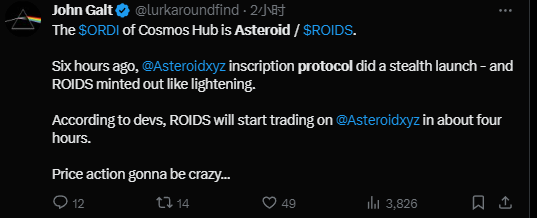
Notably, Asteroid did not launch with grand publicity but instead opted for a silent rollout. Nevertheless, alert market participants quickly seized the opportunity—the first official inscription on Asteroid, RODIS, was instantly minted shortly after the platform went live, prompting latecomers to start experimenting with other inscriptions on Asteroid.
Meanwhile, according to tweets from community members, the protocol’s developers indicated that trading for RODIS would begin within the platform in the next four hours, which is expected to spark a new wave of interest in inscriptions on Cosmos Hub.
In their blog post, Dephi Labs wrote:
“We believe Cosmos Hub is likely the second-best blockchain for crypto inscriptions—second only to Bitcoin.”
Why Cosmos Hub?
Dephi Labs points out that while Cosmos Hub is the highest-market-cap blockchain within the Cosmos ecosystem, it was not originally designed with native support for smart contracts, NFTs, or fungible tokens.
In reality, it functions as a powerful global computer capable of processing thousands of transactions per second—but largely remains idle.
Furthermore, Dephi Labs believes Cosmos Hub has the potential to become a permanent record database for any project across Cosmos and beyond. By permanently writing data there, it could not only compete with other Cosmos chains but also go head-to-head with Filecoin, IPFS, and Arweave—while simultaneously generating substantial rewards for validators.
Therefore, introducing a native inscription protocol is seen as an ideal way to activate Cosmos Hub.
The emergence of Asteroid offers enhanced utility for Cosmos Hub, including but not limited to:
-
Introducing new functionalities on Cosmos Hub without compromising the chain's core value proposition
-
Significantly expanding the scope of possibilities for Cosmos Hub, bringing more transactions, users, and visibility
-
Creating new revenue streams for Cosmos Hub validators and ATOM stakers
-
Revitalizing and re-engaging the Cosmos Hub community
-
Expanding the Cosmos Hub developer community by making it easier to integrate blockchain data into web2 applications
How to Use Asteroid
Asteroid Protocol provides a universal meta-protocol framework for Cosmos, allowing content to be recorded in structured formats for off-chain indexing and usage.
The current implementation involves inserting a URN (Uniform Resource Name) into the transaction memo field, while additional metadata required by the meta-protocol is stored in the non_critical_extension_options (NCXO) field of Cosmos SDK blockchains.
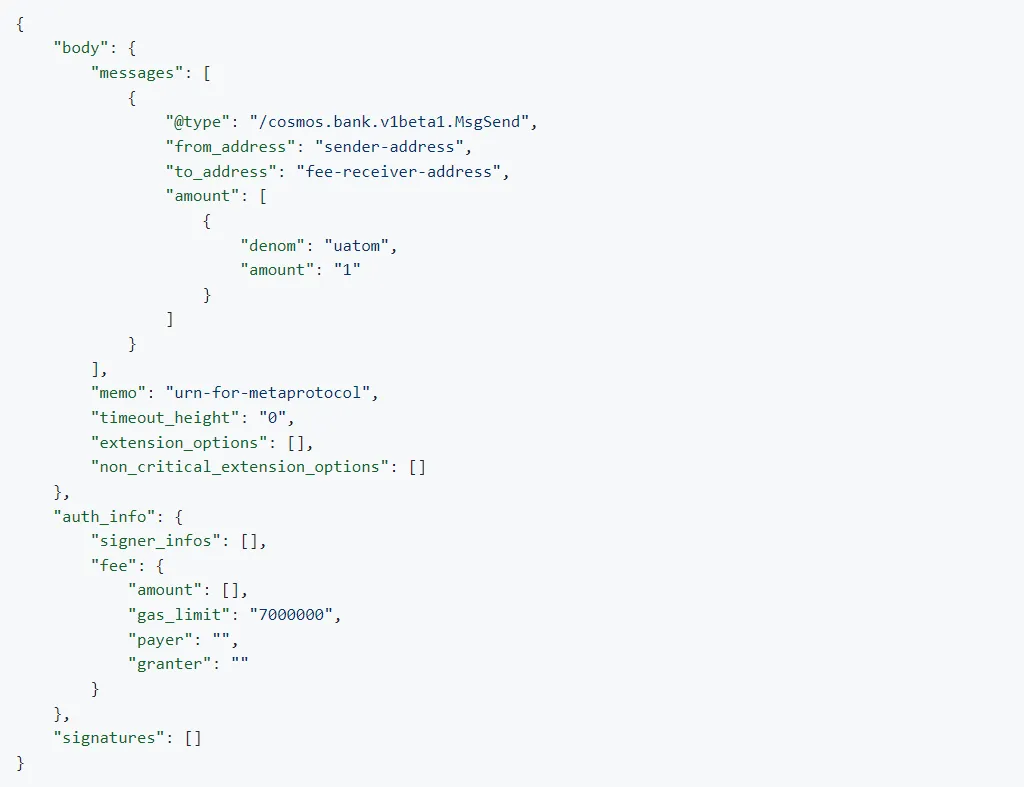
This method allows up to approximately 550KB (theoretically up to 800KB) of arbitrary data to be recorded on Cosmos Hub, with no restrictions on content type. In theory, anyone can use this capability to build various data types and on-chain protocols.
Potential applications include social networks, blogging platforms, forums, encrypted messaging, and more. Currently, two key types defined by the project under the Asteroid Protocol are:
-
Arbitrary Content Inscription Specification: This allows users to publish nearly any type of data directly on the Hub that browsers can display—ranging from JPGs and videos to text, JSON, HTML, or even games...
-
Cosmos Fungible Token (CFT-20) specification: A method for deploying, minting, and transferring fungible tokens on Cosmos Hub.
$ROIDS is the first CFT-20 token launched, with a total supply of 100 million. Each user can mint up to 1,000 tokens per transaction. Below are the official steps for minting:
-
Visit asteroidprotocol.io and connect your Keplr wallet,
-
Click “Browse” under “CFT-20 Tokens”,
-
Select ROIDS and begin minting.
However, as previously mentioned, all RODIS tokens have already been minted. Users now have two options: create their own new inscriptions or browse existing ones in the market to mint.
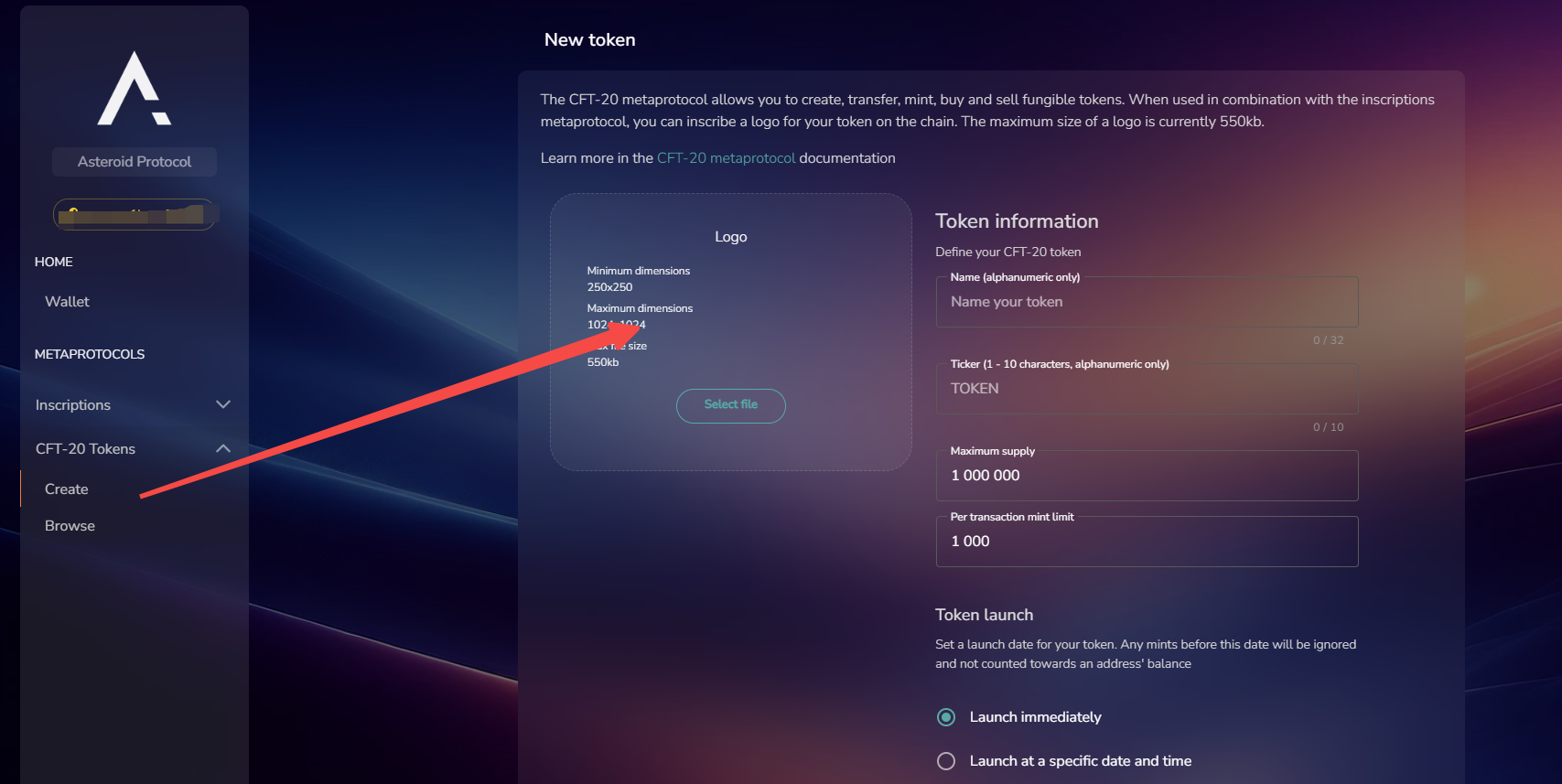
As shown above, Asteroid provides a very clean interface for users to mint their own inscriptions—simply upload an image and define the inscription, requiring minimal technical expertise.
However, when attempting to inscribe or mint, users often encounter issues such as the webpage failing to load. Therefore, after understanding the structure of URNs, another alternative minting method is available:
-
Send 0.000001 ATOM to your own address, since recording data on Cosmos Hub requires an on-chain transaction. To prevent minting failures, Asteroid has increased the minimum gas fee by 40%. These fees are directly rewarded to Cosmos Hub validators and ATOM stakers.
-
Fill in the memo field with: urn:cft20:cosmoshub-4@v1;mint$tic=ROIDS,amt=1000000000. (using $ROIDS as an example)
Regarding browsing functionality, numerous copycat inscriptions have begun a fresh land grab. Familiar names like BONK, DOGE, and LUNA have reappeared in this new ecosystem. Users can monitor the percentage metrics on the right side of the interface to see which inscriptions are currently gaining traction.
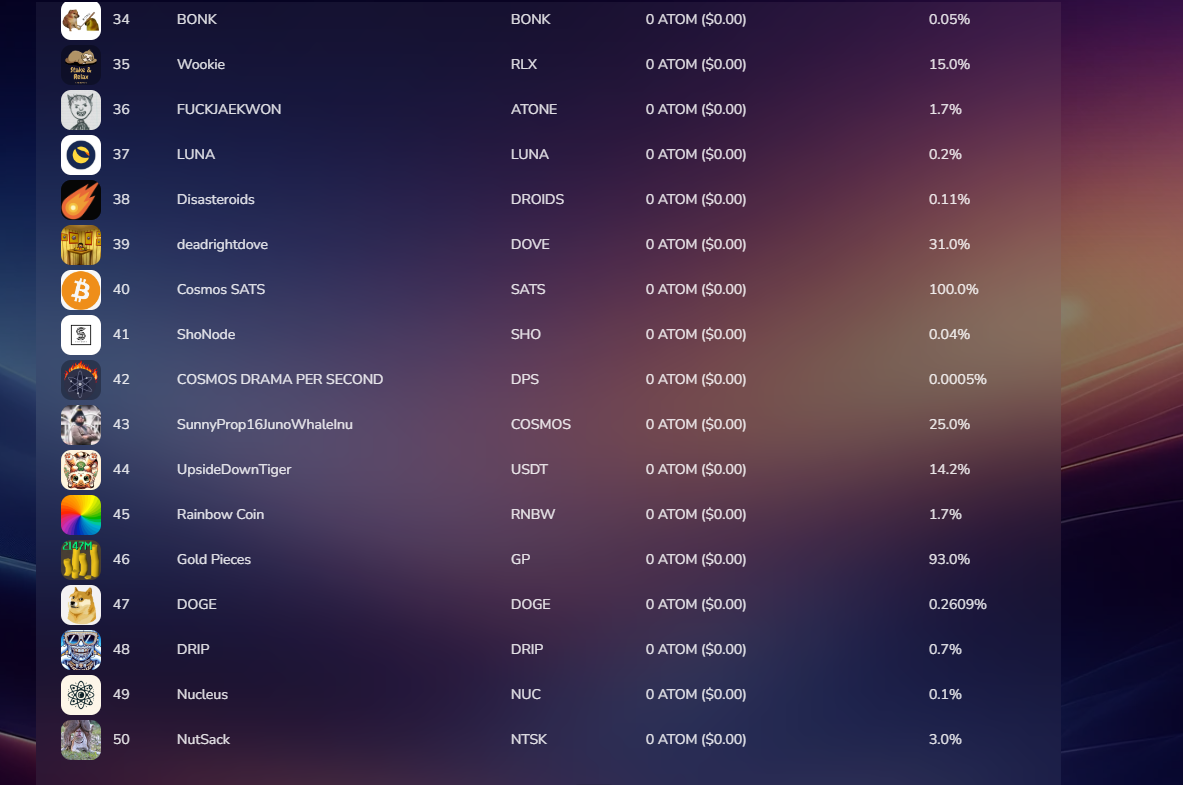
However, it should be noted that none of these inscriptions currently have established market prices.
As part of the experiment, Asteroid has also drafted a cross-chain bridge plan. This bridge would allow users to transfer CFT-20 tokens to IBC-compatible smart contract chains, enabling them to deploy liquidity pools on Astroport—an arrangement that undoubtedly creates conditions for expanded liquidity. It's possible that various chains connected to Cosmos may soon feel the impact of the Asteroid inscription market.
However, the team has not yet implemented this plan and does not guarantee it will be activated.
Additionally, what are the costs associated with using Asteroid?
Under the current design, listing and delisting fees are set at 0%. All market trades incur a 2% swap fee, which is transferred via IBC to Terra and deposited into Astroport’s $xASTRO staking pool with each transaction.
Since Asteroid is open-source, anyone can build their own OTC market using Asteroid and set custom fee structures.
Finally, it should be emphasized that the broad meta-protocol framework based on inscriptions deployed on Cosmos Hub can be extended to virtually any Cosmos SDK blockchain.
Inscriptions on Bitcoin lit the initial spark—the battle for inscriptions across other ecosystems is far from over.
How the market will ultimately respond remains to be seen. Let’s wait and see.
Join TechFlow official community to stay tuned
Telegram:https://t.me/TechFlowDaily
X (Twitter):https://x.com/TechFlowPost
X (Twitter) EN:https://x.com/BlockFlow_News
 深潮TechFlow