








Binance 2024 Outlook: Regulatory Implementation, Transition to Professional Management, and Web3 Expansion
TechFlow Selected TechFlow Selected
Binance 2024 Outlook: Regulatory Implementation, Transition to Professional Management, and Web3 Expansion
This article aims to review the significant events Binance experienced in 2023 and its corresponding response strategies.
 Navigating Web3 tides with focused insights
Author: TechFlow
Winston Churchill, former British Prime Minister, once said: "Never waste a good crisis."
Countless entrepreneurs have taken this quote as their guiding principle. Market downturns separate the strong from the weak. Every crisis presents an opportunity for market reshuffling—competitors who can seize these hidden opportunities may stage a comeback, close one era, and usher in a new chapter with renewed strength.
Looking back at the development of the crypto industry in 2023 from the vantage point of early 2024, Binance—a platform that has changed leadership, paid massive fines, and risen again—emerges as a powerful embodiment of this adage. Faced with harsh market conditions, aggressive regulatory scrutiny, and opportunistic competitors, Binance responded by staying true to its core while undergoing profound transformation:
-
What remained unchanged: commitment to users first, safeguarding fund transparency and security, and steadfast dedication to advancing "free flow of value";
-
What changed: moving further away from personal branding toward institutional maturity; embracing regulation and exploring compliance pathways; intensifying efforts in user education, product incubation, lowering entry barriers, and deepening Web3战略布局.
As 2024 unfolds under the dual influence of regulatory challenges and the dawn of a bull market, staying steady may matter more than moving fast. How will Binance navigate this new phase of growth?
This article aims to review key events and strategic responses from Binance in 2023, and combine them with Binance’s recent moves in 2024 to shed light on market trends, opportunities, and challenges ahead in the new bull cycle.
The $4.3 Billion Fine: A Bold Move Toward Regulatory Compliance Standards
Many still vividly remember their shock and concern upon hearing about Binance's "$4.3 billion fine" just two months ago.
On November 22, Binance officially announced it had reached settlements with the U.S. Department of Justice, the Commodity Futures Trading Commission (CFTC), the Office of Foreign Assets Control (OFAC), and the Financial Crimes Enforcement Network (FinCEN) over historical issues related to registration, compliance, and sanctions. As part of the agreement, Binance agreed to plead guilty and pay over $4.3 billion in penalties.
The shock stemmed from the unprecedented amount—the largest penalty ever levied against a Chinese entrepreneur. The concern arose from uncertainty about how long and difficult the path to compliance would be, and what the future held for an already anxious crypto industry.
Indeed, such concerns were not unfounded. Regulatory pressure loomed over the entire crypto sector throughout 2023: In February, Kraken paid a $30 million fine demanded by the SEC and shut down its staking services in the U.S.; in June, Coinbase faced SEC scrutiny; in September, the SEC filed charges for the first time against Impact Theory, an NFT company…
After the approval of Bitcoin ETFs, it became clear: this was “cleaning the house before inviting guests.” Traditional Wall Street institutions are flooding in, becoming new forces shaping the crypto market—and bringing fresh capital along the way.
Within the native crypto world, we need a player both influential enough to command regulators’ attention and capable enough to mediate between regulators and the regulated—helping establish standards and frameworks for crypto regulation.
Binance may well be the best candidate for this role.
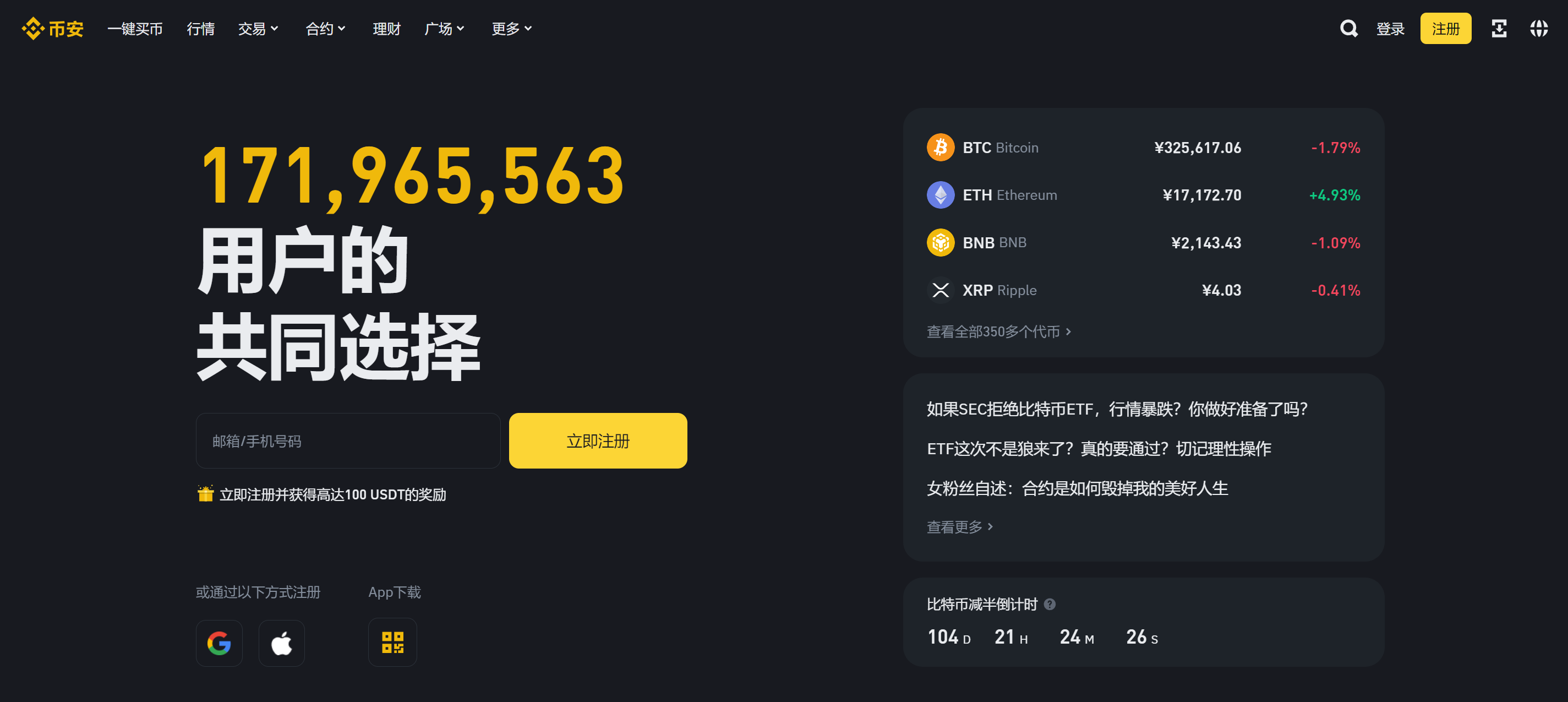
On one hand, Binance’s position in the crypto industry is unquestionable. A recent report by Bitfinex analysts highlighted that global cryptocurrency holders now number 575 million. According to official data, Binance had over 170 million registered users worldwide in 2023. As the undisputed leader among exchanges, Binance’s decision to pay $4.3 billion to maintain operations amounts to a form of protection for today’s crypto market. Its dominant market share makes its regulatory negotiations with the United States—the world’s largest sovereign nation—highly representative. This process is inevitably difficult, but each step forward contributes to pushing the broader industry toward compliance.
On the other hand, Binance has years of experience navigating compliance: embracing regulation is a long-term effort, and Binance already holds licenses, registrations, or authorizations in 18 jurisdictions globally through joint ventures and acquisitions, including Thailand and Japan. Additionally, Binance actively collaborates with law enforcement to combat illicit activities involving crypto assets. In 2023 alone, Binance responded to over 53,000 global law enforcement requests and assisted authorities in solving multiple cases involving hundreds of millions of dollars. Moreover, Binance has taken on the role of educator, hosting 120 training sessions in 2023 to help law enforcement understand crypto and its role in fighting financial crime. This solid foundation in compliance knowledge and extensive communication experience not only positions Binance as a regulatory benchmark in the industry but also enables it to make rational decisions when facing regulatory demands—an invaluable asset for the entire crypto ecosystem.
In response to the skepticism and concerns triggered by this regulatory storm, Binance has truly exemplified the spirit of “never waste a good crisis.”
Notably, U.S. agencies did not accuse Binance of misappropriating user funds or market manipulation in their settlement. This means that after five years of investigation, Binance passed rigorous tests on fund security and transparency—significantly boosting user trust: According to DeFillama data, Binance has seen consistent net inflows since November 22. At the time of writing, its reserve holdings reached $8.2018 billion, nearly 20% higher than at the time of the settlement.
Nonetheless, Binance has not relaxed its focus on fund safety and transparency. Its Proof-of-Reserves (PoR) system reflects its ongoing commitment to user fund security and transparency. By 2023, Binance’s PoR system supported 31 tokens and will continue expanding in 2024.
Concerns also centered on whether the $4.3 billion fine would jeopardize Binance’s financial health. During a December AMA session, co-founder He Yi calmly stated: Binance has no debt, maintains moderate expenses, and the fine will not impact its finances. Binance’s business model is simple—deliver excellent service. When network effects are strong and user numbers large, service fees are sufficient. There’s no need to trade against users.
Furthermore, Binance reported in its 2023 year-end summary: In 2023, Binance invested a total of $213 million in compliance-related technology, processes, and talent—up 35% from $158 million in the previous year.
Looking ahead to 2024, dozens of leading crypto institutions have highlighted “regulation” as a central theme in their forecasts. Firms including Coinbase, Gemini, and Spartan agree: Crypto regulation will gradually clarify in 2024, and accelerated compliance will attract larger institutional participation into the space.
During his first community AMA, Binance’s new CEO Richard Teng made three key promises—the second being “close collaboration with global regulators to uphold industry standards, embrace Web3, and drive crypto adoption.”
It’s foreseeable that “regulation” will be one of the major narratives of 2024. As a pioneer pushing for regulatory clarity, Binance stands at the forefront. On why embracing regulation matters, CEO Richard Teng explained: Compliance creates a safer environment for trading, attracts more institutional investors, and boosts global crypto adoption—all beneficial for the industry. As more countries regulate crypto, investor confidence rises. Meanwhile, institutional players are actively entering the space, bringing additional capital and investment opportunities.
CZ’s Departure: Shedding Personal Branding, Advancing Toward a Modern Corporate Structure
Another bombshell announcement alongside the $4.3 billion fine: Binance founder CZ stepped down as CEO, with Richard Teng, previously head of Binance’s global markets, taking over.

Some mourned the retreat of a hero, while others reflected on how projects can shed individual branding and mature into institutionalized organizations.
From 2015 to today, across two bull cycles, we’ve seen DeFi pioneer Andre Cronje’s exit cause dozens of tokens to crash, and Three Arrows Capital co-founder Su Zhu’s impending release trigger massive pumps in meme coins. We’ve grown accustomed to project founders becoming KOLs—commanding communities, building personal brands on Twitter, their every move tied closely to project performance. This trend is especially pronounced among exchanges, where figures like CZ, Brian Armstrong, and Justin Sun have all sparked social media frenzies single-handedly.
Such examples are common—but this operational logic may not be healthy.
While founder-as-KOL can bring visibility, build bridges with users, and strengthen community ties, overreliance on personal charisma poses risks—especially in crypto. Founder departures risk mass user exodus, and amid regulatory battles, they add layers of uncertainty.
In modern business logic, robust corporate systems enable efficient organizational structures, clear roles and responsibilities, seamless interdepartmental coordination, improved productivity and service quality, and long-term stability.
Reflecting on Binance’s leadership transition, we must acknowledge CZ’s monumental contributions to Binance and the wider crypto industry. Yet, even more noteworthy are Binance’s calm, structured responses post-transition: swiftly introducing the new CEO to the community, maintaining smooth progress across technical and market initiatives—from exchange operations and BNB Chain to wallet development—and clearly, confidently addressing community questions during AMAs.
Only now, beyond CZ’s towering personal influence, does Binance’s underlying institutional framework come into full view: a testament to team cohesion, problem-solving capability, and the foundation for long-term, stable, healthy operation. Some in the community likened this to Bitcoin itself: though Satoshi Nakamoto remains anonymous, the financial system he left behind continues operating reliably—seen as the ultimate expression of decentralization.
This leadership change serves as a wake-up call for the crypto community—urging a shift from “trusting individuals” to “trusting institutions.” Projects that reduce reliance on personal branding signal maturity. For Binance, it marks the evolution from a founder-led exchange to a professional brokerage—not based on faith in one person, but in enduring systems, which are ultimately more reliable than any individual.
Deepening Web3布局: Driving Mass Blockchain Adoption Through User-Centric Innovation
Of course, leading industry players don’t just follow trends—they create them. By understanding user needs and integrating upstream and downstream resources, top projects deliver lower barriers, higher efficiency, and richer Web3 experiences, driving innovation across the ecosystem.
In 2023, firmly seated atop the exchange rankings with vast user bases, capital, and business resources, Binance focused its “trend-making” efforts squarely on user needs—advancing the vision of widespread blockchain adoption and accelerating the arrival of Web3.
The first step toward mass adoption is lowering barriers. Understanding this, Binance advanced blockchain education and launched Binance Web3 Wallet.
In education, Binance Academy offered blockchain courses in 31 languages in 2023, helping 27 million learners deepen their understanding of digital finance. Offline, Binance Academy reached 45 countries, providing blockchain learning opportunities to 10,000 students worldwide.
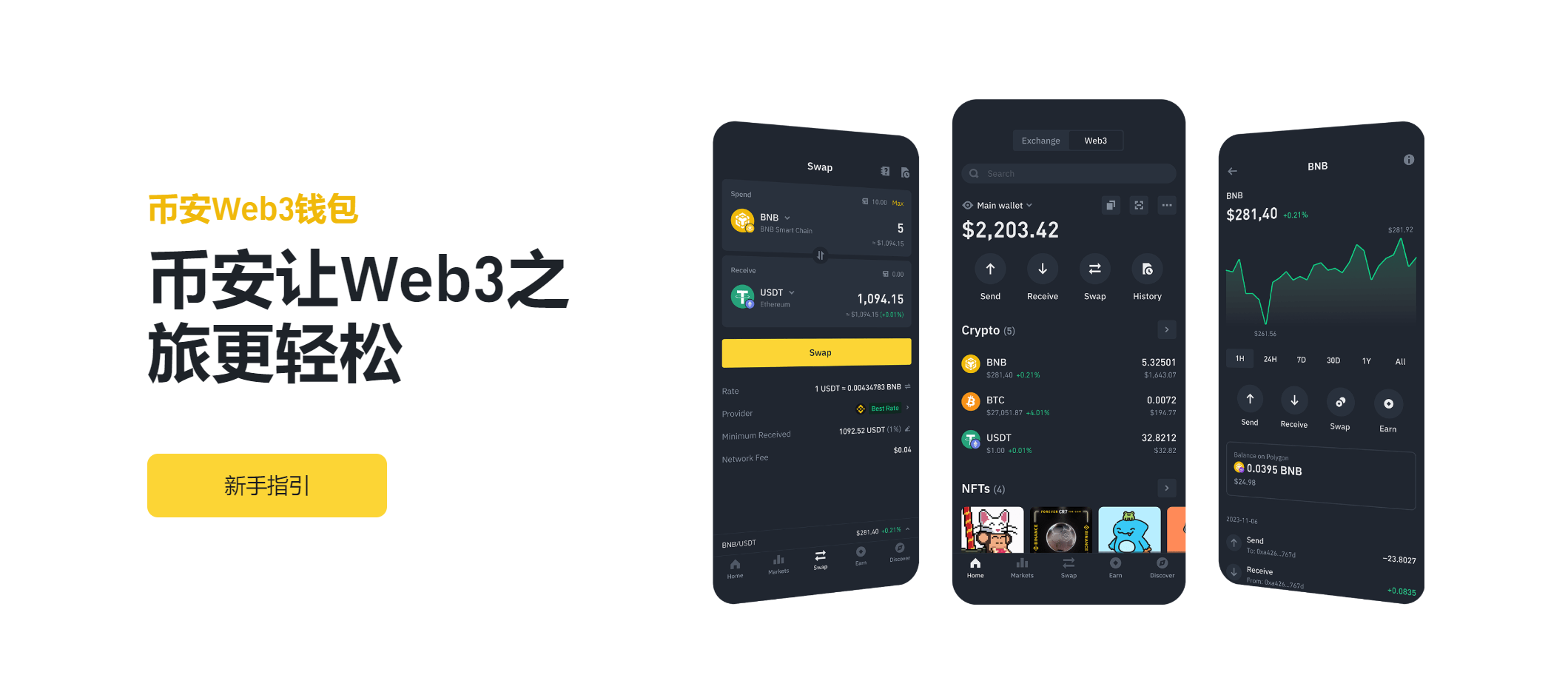
Regarding the Web3 wallet, as a decentralized solution, Binance leverages MPC technology to eliminate users’ worries about seed phrase storage and leakage, enhances security via key sharding, and preserves self-custody benefits. Currently, Binance Web3 Wallet supports major networks including Bitcoin, Bitcoin Cash, Litecoin, Dogecoin, and Sei, and integrates over 25+ dApps, enabling users to send/receive tokens and interact seamlessly with dApps—all within one interface.
A standout feature is its direct integration into the Binance App, allowing users to switch instantly between CeFi and DeFi and always trade at optimal prices across multiple chains. This further breaks down the barrier between Web2 and Web3, easing the onboarding of mainstream Web2 users into Web3 and accelerating its growth.
Once inside the Web3 ecosystem, Binance aims to retain users through a rich and evolving ecosystem.
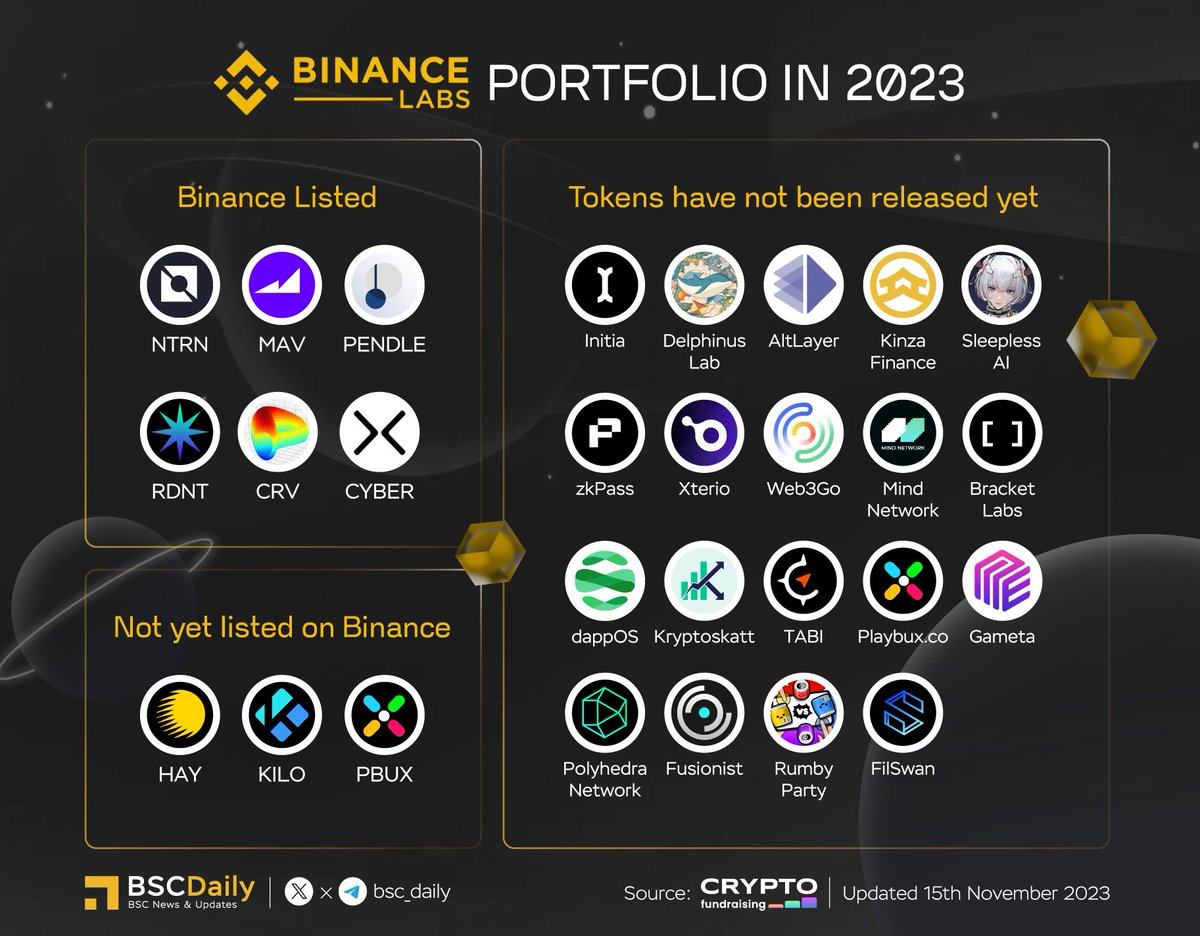
During the last bull run, Binance consolidated its ecosystem by launching its own chain, BNB Chain. Through multi-phase incubation programs led by Binance Labs, Binance identifies innovative projects and provides technical, financial, and operational support. Its massive user base and capital are no longer confined to trading—they now deeply engage with DeFi, social platforms, GameFi, NFTs, and beyond via BNB Chain.
Even amid a bear market in 2023, Binance Labs remained highly active, offering exposure to over 2,000 projects and directly investing in 36—with DeFi accounting for 36% of its investments, cementing Binance’s dominance in the space. Binance Labs now manages over $10 billion in assets and has over 250 portfolio companies across 25 countries, continuously fueling Binance’s Web3 ecosystem and injecting innovation into the broader industry.
Looking ahead to 2024, He Yi revealed: Binance Labs has adjusted its strategy, planning to massively scale up support for blockchain startups—potentially tenfold—backing Web3 entrepreneurs committed to long-term visions.
Additionally, ecosystem development anchored by the Binance Web3 Wallet is accelerating. Binance will prioritize wallet upgrades, refining features based on community feedback and expanding support for more networks and applications.
Driving real-world adoption of blockchain technology is another pillar of Binance’s strategy to achieve mass adoption.
Binance has explored deeply in art, charity, and tokenizing real-world assets. Its Binance Pay/Card payment solutions aim to integrate crypto into daily life—allowing users to spend digital currencies at partnered merchants across travel, gaming, and more. Over 100 merchants now accept Binance Pay. From 2022 to 2023, users making payments via Binance Pay/Card increased by 54%, and active users rose by over 20%.
Conclusion
Speaking of 2024, Richard Teng couldn’t hide his excitement:
“Despite challenges in 2023, our achievements were remarkable: user registrations grew by 30%, C2C platform users by 39%, Binance Square’s daily active users surged by 71%, and our newly launched Web3 Wallet surpassed one million users. Our community supports us, and that makes us strong. We will continue to be user-centric and evolve into a compliance-driven organization—ensuring sustainable growth and prosperity for the next 60 years.”
Looking back at the last bull market, Binance gained a competitive edge by pioneering its own blockchain—a testament to its sharp market insight, relentless innovation, and agile execution. As a new bull cycle emerges, Binance is once again leading the charge—embracing regulation and deepening its Web3布局. Will it once again capture the narrative, stay ahead of competitors, and maintain its throne as the top exchange?
With markets warming and competition intensifying, we wait and see.
Join TechFlow official community to stay tuned
Telegram:https://t.me/TechFlowDaily
X (Twitter):https://x.com/TechFlowPost
X (Twitter) EN:https://x.com/BlockFlow_News
 深潮TechFlow











