9 Years, $90 Billion: Printing Press Tether and the "Hardest-Working CEO in Crypto"
TechFlow Selected TechFlow Selected
9 Years, $90 Billion: Printing Press Tether and the "Hardest-Working CEO in Crypto"
Tether has nearly $90 billion in funds that can be deposited into high-yield bank accounts and prudently invested.
 Navigating Web3 tides with focused insights
By Daniel Kuhn@Consensus Magazine
Translated by Qin Jin, Carbon Value
After a year in which it stands to earn an estimated $4.5 billion in profit, the newly promoted CEO of Tether is seeking to diversify the company’s investments.
The "informed consensus" among educated or influential elites in the cryptocurrency industry is that Tether, the company behind the world's largest stablecoin USDT, has been unfairly maligned—but could ultimately fail. USDT is not only the most successful stablecoin (a blockchain-based asset designed to maintain a stable value), but arguably the most successful crypto product to date. While USDT’s market capitalization may not rival BTC or ETH—the two largest freely floating cryptocurrencies—its trading volume crushes them. So if USDT were to collapse as some predict, the fall would be spectacular.
People use Tether. It is used for trading, hedging, transferring funds, payments, bridging, swapping, valuation, and accounting. In other words, Tether functions like money. It is used just like the U.S. dollar. And therein lies the crux: Tether created USDT to bring the dollar on-chain, and now, because the dollar exists on a constantly running, globally accessible blockchain, it can be used anytime, anywhere around the world.
What’s all the fuss about? Ask those who believe in Tether’s innocence—that the company has been maliciously smeared—and they might point to other uses of Tether. Tether has sometimes been used for bribery, violating sanctions, and money laundering. Some say it has also been used to artificially inflate the valuations across the entire cryptocurrency market. Skeptics of Tether often simply repeat various claims made about the company since its founding in 2014 to highlight inconsistencies.
Tether’s explanation of how it backs its tokens has evolved over time—from being backed by dollars to being backed by dollar equivalents—raising questions about why, how, and what it means. In many ways, Tether’s business model is simple: take in money, issue USDT. Its operations resemble those of a bank or money market fund in traditional financial markets. The central concern about this largest stablecoin issuer remains equally straightforward: does it actually hold the reserves it claims to?
Paolo’s Promotion
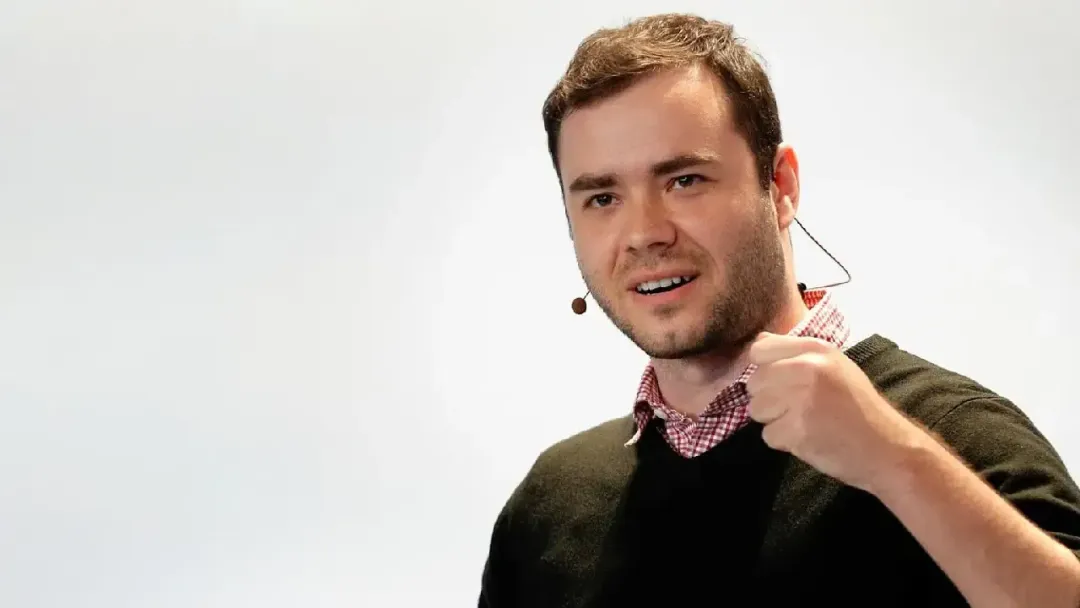
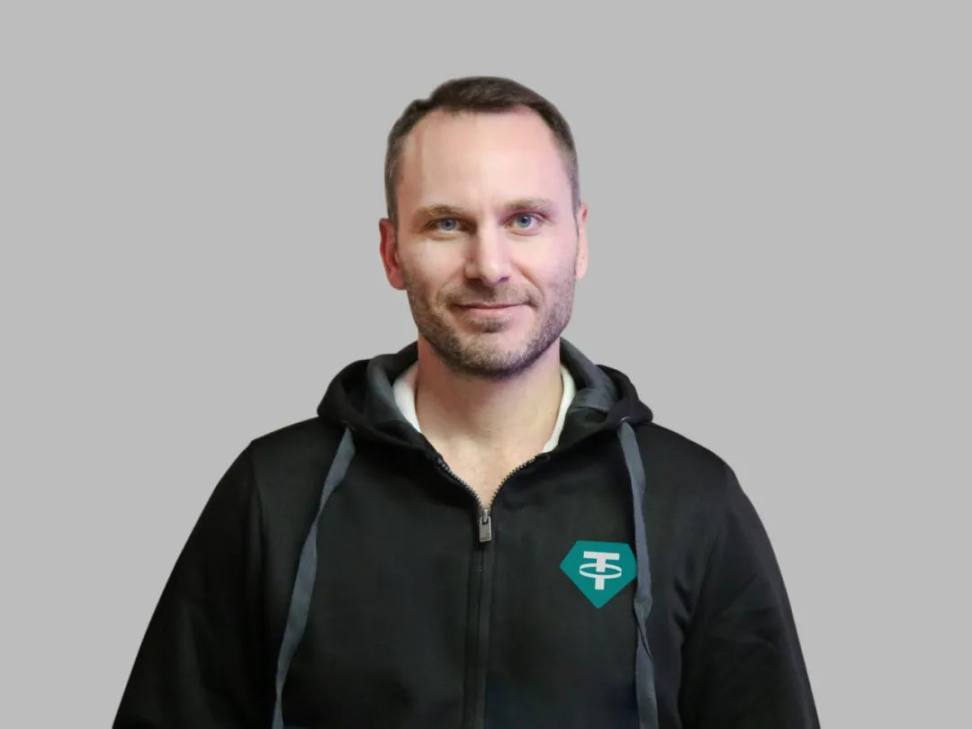
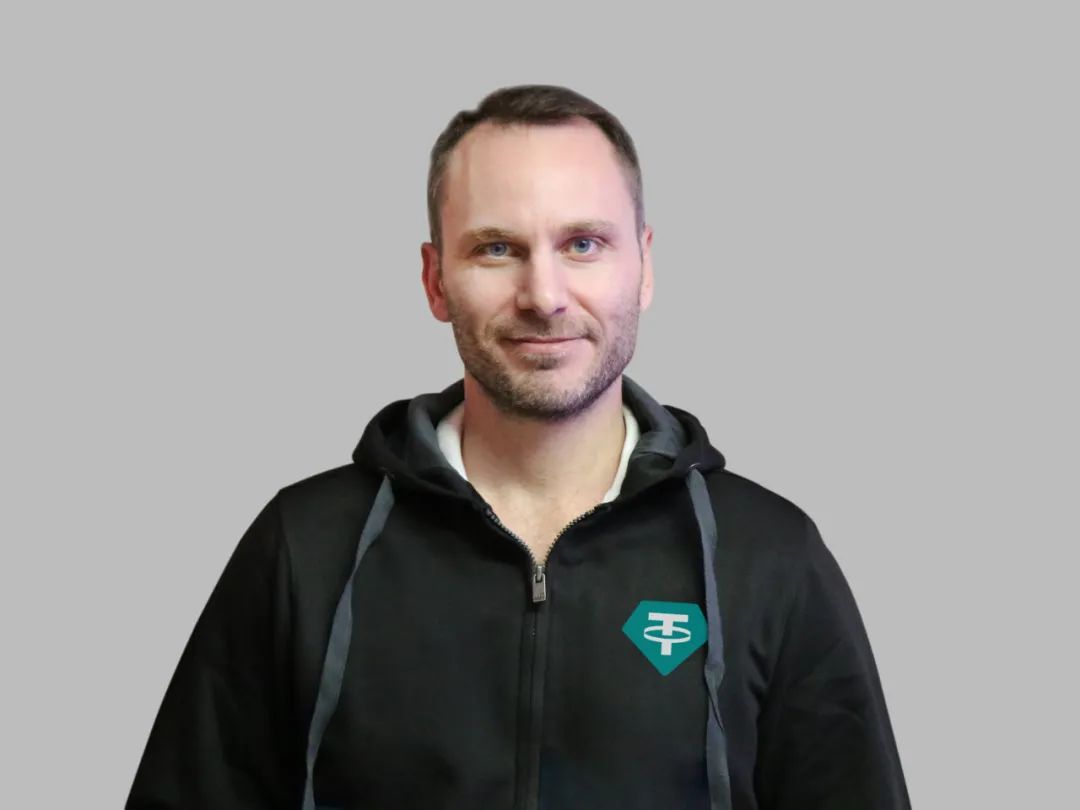
All these concerns, along with Tether’s immense influence, now rest on the shoulders of Paolo Ardoino, who was promoted to CEO of Tether this year. Ardoino is a company lifer. For years, he has served as the public face of the firm, which has at times drawn criticism from outsiders for lacking communication and clear leadership. Before his promotion, Ardoino was chief technology officer at both Tether and its subsidiary, the cryptocurrency exchange Bitfinex—a role he still holds at Bitfinex. He has worked at both companies since their inception, initially as a senior software developer.
There is compelling evidence that Ardoino is one of the hardest-working individuals in crypto. Look at his GitHub. This year alone, he made 3,275 code contributions (considered average for a full-time engineer at 2-3 per day), while in 2017, he submitted 37,720 times. Beyond running Tether and writing code for Bitfinex—once the largest exchange—Ardoino founded Holepunch and serves as its chief strategy officer, a peer-to-peer communications platform he conceived five years ago with friends.
In interviews, he said, “I don’t have any hobbies beyond what I’m doing right now.” He mentioned martial arts training, which allows him to stay off computers all day. “I really don’t have any other hobbies,” he added.
Some people work to live; others live to work. Ardoino belongs to the latter group. Since becoming CEO earlier this year, he has continued adhering to discipline, keeping both hands and mind active, and still writes code. Inside Tether, Ardoino leads a kind of “moonshot” division with about 25–30 engineers focused on developing tools he believes could one day improve banking and the world. One output from this team is Keet, a decentralized video calling app running on Holepunch.
“Becoming CEO of Tether was a process. We’ve been openly discussing this transition with the board and other executives for months. For a while now, I’ve seen myself as more than just a developer,” Ardoino said in an email statement. “I enjoy managing teams, planning strategic direction for the company and products, and executing on them.”
The unit has no formal name, but it can be compared to historic corporate research campuses such as Bell Labs—the telecom subsidiary formerly known for gathering top engineers and helping build the modern internet—or Google’s X innovation lab. But Ardoino envisions his department not only as a profit center but also as one that benefits broader business goals. The team focuses on Bitcoin node infrastructure and artificial intelligence, among other technologies with commercial potential.
“This is our deliberate approach,” he said, noting that the company allocates about 10% of its cash to R&D. While some of Ardoino’s other ventures are almost “charitable” in nature, Tether expects its Bitcoin mining operations “will make money.” “We’re trying to put ourselves in a position where we can’t do evil in the future because we’re building technology everyone can use,” he said, referencing Google’s now-famous motto, “Don’t Be Evil.”
Humble Beginnings
Ardoino hails from a rural town in northern Italy, with sharp blue eyes reminiscent of Frank Sinatra. Specifically, Genoa, he says, is “the home of pesto and focaccia bread.” He developed an early love for computers. He remembers his first computer: an Olivetti 386 from around 1991, with 4MB of memory and a 3.5-inch floppy disk drive, running MS-DOS. “I remember my father told me it cost him several months’ salary,” he recalled. “He told me to be very careful with it.”
“I was so excited, I told all my friends at school,” Ardoino said. “I remember my math teacher responded by saying computers were just a waste of money and time, and would never be useful to people.” Living far from friends, he enjoyed spending afternoons on the computer. He grew tired of existing applications like Microsoft Word and Paint. So he taught himself to code so he could create his own games.
“I don’t have any hobbies beyond what I’m doing right now”
He became an early Linux user. He drew inspiration from Linus Torvalds, founder of the open-source operating system, who released the software online for free and invited people to help improve it. The idea resonated with Ardoino—it felt like a game where everyone could win. He also read Richard Stallman’s GNU Manifesto (still a foundational document of the free software movement) and Eric Raymond’s *The Cathedral and the Bazaar*, which argues that code should be built bottom-up, openly and freely accessible (like a bazaar), rather than top-down and closed (like a cathedral). Asimov is his favorite author.
“From the outside, a bazaar may look chaotic, noisy—not poetic at all,” he said. “But if you step inside and look closely, it’s extremely efficient. You can take a piece out, but the bazaar remains the bazaar—it’s flexible and resilient—whereas the cathedral is ‘monolithic.’ Bitcoin, which emerged a decade after Raymond wrote, is bazaar-style software.”
Ardoino attended university close to home in Genoa, studying computer science and applied mathematics. He joined student groups interested in Linux and developed a strong interest in distributed computing, parallel computing, and peer-to-peer systems.
“BitTorrent was really precious to me,” he said. He remembers when the software launched, just as he recalls the release dates of many P2P applications. He can recite technical specs of file-sharing software—from Gnutella to Napster, then BitTorrent, Kazaa, and LimeWire—as easily as some recall British kings and queens.
Near the end of university, he participated in a three-person research project on “elastic networks”—ways people could communicate even under worst-case scenarios. He loved the work but disliked the pay. “As an Italian, your salary isn’t high,” he said. “So I started looking for other opportunities.”
He taught himself finance and economics. In 2011, he landed his first job at a hedge fund designing and calibrating trading systems. By 2013, he moved to London, a regional financial hub, to run his own startup developing trading software for hedge funds. According to LinkedIn, the company was called Fincluster. “It was a small startup, but we did very well,” he said.
His Team
Tether’s leadership is a tight-knit group. Ardoino met Giancarlo Devasini, a former plastic surgeon, in London in 2014. Devasini is now Tether’s CFO and was then running Bitfinex; he offered Ardoino a job. Stuart Hoegner, a Canadian known on Twitter as @bitcoinlawyer, has served as Bitfinex’s general counsel since 2014. Former CEO Jean-Louis van der Velde has also been with Bitfinex since the beginning and remains an advisor and CEO of Bitfinex.
This is the team that brought Tether to market, although the project was originally incubated under the name Realcoin by Brock Pierce’s Mastercoin team—an entrepreneur, aspiring politician, and former child actor. Pierce’s founding team included William Quigley, Reeve Collins, and Craig Sellars, all of whom exited early. In a sense, Tether’s original idea was a stopgap solution for many companies in “Bitcoin 2.0” (the industry’s term at the time) struggling to access banking services.
Tether would deposit money into banks and offer users a private dollar equivalent. It initially promised to hold fiat reserves matching the number of tokens in circulation. Many of its early banking relationships were reportedly with banks in Taiwan using Wells Fargo’s correspondent services (in 2017, Tether sued Wells Fargo after the bank cut off access). Tether has been accused of forging invoices and contracts to obtain and maintain banking relationships, and New York regulators found the company used accounts linked to its executives and “friends of Bitfinex.”
Bitfinex is owned by Ifinex, headquartered in Hong Kong, while Tether is owned by DigiFinex, based in Singapore. A Tether spokesperson clarified that these are distinct entities sharing some common shareholders but operating independently. “This distinction is crucial for transparently and accurately reflecting our corporate structure,” the spokesperson said in an email.
“For us, it’s true—we know it, and we feel lucky,” Ardoino said in an interview. “We’re all simple people, and we’ve made good money at the company. Though it hasn’t always been smooth sailing.”
Essentially, Tether has struggled with redemption issues since the project’s inception. On a 2021 episode of *Odd Lots*, convicted fraudster Sam Bankman-Fried (who ran Alameda Research, a hedge fund famously reliant on Tether at the time) described the redemption process as straightforward, though occasionally encountering minor hiccups.
The company has continuously worked to maintain banking channels—sometimes using Noble Bank (linked to Pierce), sometimes using the Bank of Montreal (reportedly Hoegner’s bank), and a “shadow bank” called Crypto Capital Corp—though its current relationship with Deltec in the Bahamas has lasted several years.
One of the most stressful moments of Ardoino’s career came shortly after Do Kwon’s Terra/LUNA algorithmic stablecoin collapsed. At the time, hedge fund Fir Tree Capital Management heavily shorted Tether, publicly betting the company would fail. The collapse of UST, Tether’s decentralized competitor, triggered contagion elsewhere, causing a surge in withdrawals.
“I think we were in a good situation,” Ardoino said. The company processed about $7 billion in redemptions within 48 hours and over $20 billion in the following 20 days—roughly 25% of its total holdings at the time. “It was a very interesting moment. In fact, I really enjoyed that moment,” he reflected. “It forced us to prove to the world that we were truly reliable.”
Money to Spend
Tether has money to spend—at least this year. With a market cap just under $90 billion, a record high, it holds nearly $90 billion in assets that can be deposited into high-yield bank accounts and prudently invested. Today, this primarily means U.S. Treasuries, widely considered risk-free. But it also includes slightly riskier asset classes such as repurchase agreements, money market funds, and corporate bonds offering higher expected yields. This year marked the first time the company directly invested over 1% of its holdings in Bitcoin.
Tether previously invested in commercial paper issued by Chinese companies but later stopped.
“We have some money to invest,” Ardoino said. In Q1, Tether reported $700 million in net profit in a voluntary attestation. Q2: $850 million. Q3: over $1 billion. “With rising interest rates, the stablecoin business has become extraordinarily profitable,” Ardoino said.
As the largest stablecoin, Tether’s dominance has never been challenged. Yet, around this time last year, it was losing market share to competitors like Circle’s USDC, Binance’s BUSD, and MakerDAO’s DAI—though tether never dominated the DeFi market, where DAI reigns supreme. Part of this was due to regulatory headwinds and its controversial reputation.
In 2021, the New York Attorney General found that Tether had not consistently disclosed its reserves “truthfully.” Tether paid an $18.5 million fine. That same year, the U.S. Commodity Futures Trading Commission leveled similar accusations and fined the company $41 million for making false statements about its backing and bank accounts.
In October this year, Tether claimed to hold $3.2 billion in excess reserves—enough to cover every dollar customers could theoretically withdraw from the platform.
Tether also charges fees—$1,000 per withdrawal (minimum $100,000). Ardoino said he is actively involved in decisions about how the company allocates its reserves and investment projects.
Investing in Infrastructure
Under Ardoino’s leadership, Tether is positioning itself as an infrastructure provider. The company has made significant investments in Bitcoin mining, hydroelectric facilities in Uruguay, and geothermal plants in El Salvador—all aimed at powering Bitcoin mining operations.
He said his “Skunkworks” team is developing a Bitcoin node communication channel using the P2P protocol Keet, which will help “coordinate and manage miners, containers, and energy production.” The system, named Moria (a reference to *The Lord of the Rings*—Ardoino is a fan), is positioned as a fusion of Bitcoin mining and the “Internet of Things.”
“If you think about mining, it’s an interesting space because you have tens of thousands of machines and hundreds of thousands of sensors—temperature, oil temperature, wind, light. Everything is a sensor. Then there are the containers. They all generate data and contribute to system stability,” he explained.
Although Ardoino doesn’t have time for micromanaging the team, he stays hands-on with R&D. He personally wrote the first version of Moria. “I think it’s important to show others what you want, not just tell them. I like being on the front lines. I like leading by example and sharing my experience,” he said.
Clearly, he has many ideas about how to apply this communication technology. Ardoino discussed the hypothetical creation of alternatives to chat apps like Telegram and WhatsApp. He said Keet could meet these companies’ infrastructure and scalability needs in a cost-effective way. “Each Telegram user costs about 90 cents per year,” he said, doing a rough calculation on server costs.
“Even if Keet had a billion users… BitTorrent proved that Keet, with hundreds of millions of users, wouldn’t incur any cost. It’s peer-to-peer. Keet currently generates no revenue. But Ardoino seems willing to absorb the cost for now—he noted that only 20 people are developing the software, meaning annual costs are around $4 million, a manageable sum for Tether.”
Tether AI
Indeed, servers are likely on Ardoino’s mind, as Tether recently invested in EU data firm Northern Data. Northern Data is a company with a questionable reputation in the Bitcoin mining world. When asked, Ardoino laughed: “We’re the most criticized company in the world—what right do I have to judge?”
The decision was also driven by genuine business considerations, including Northern’s deal with Nvidia, positioning it to become “the largest AI infrastructure provider in Europe, excluding Google, Amazon, and Microsoft.”
“Northern Data will serve every company in Europe,” he said. “Every European automaker is racing to compete with Tesla, every shipping company is trying to optimize routes, etc. Everyone is begging for AI infrastructure.”
Tether also has a small team of fewer than five employees researching AI to explore potentially useful applications for the company and whether it can build its own cost-effective large language model (LLM)—the technology behind modern AI. Ardoino noted that Bitfinex and Tether employ staff across 60 different countries, and he is particularly interested in whether AI can help meet the company’s translation needs.
“We’ve just begun this process… We want to truly understand it before scaling up. Of course, operating AI infrastructure is extremely expensive—even for a company like Tether, projected to earn over $4 billion this year, it could quickly find itself living beyond its means (or raising funds from Microsoft).”
An Asimov fan—known for utopian visions of AI—Ardoino said AI could trigger “the biggest societal upheaval humanity has faced since the Industrial Revolution.”
It could enrich a few firms at the expense of the majority, erode privacy as a human right, and lead to mass layoffs.
Though critical of aspects of Italian lifestyle, Ardoino retains certain European humanist values. “Tether won’t fire employees just because ‘AI increases efficiency,’” he said. “People have families. Financials aren’t the only thing that matters.”
Coming to a Halt?
Ardoino has led the company for only a few months and appears to have no intention of stopping soon. However, compared to most crypto companies, Tether faces greater regulatory resistance, which may not be entirely his choice. Several sitting U.S. senators have singled out the company, labeling it a potential national security threat. The U.S. Treasury has hinted it is also watching the business.
Of course, this isn’t new. Tether has weathered regulatory scrutiny before, receiving only light slaps. Back then, the company was smaller, but it also carried more baggage. When Tether claimed to hold all reserves in dollars, it did lie to the public—but it no longer makes that claim. And if it once operated with fractional reserves (holding less than deposits), it likely no longer does.
Ardoino declined to answer questions about potential regulatory actions or whether the company still intends to complete an audit.
“I don’t plan to stop what I’m doing today. Throughout my life, I’ve loved technology and science. I see work I can do alone, and incredible projects I can build with a team. Even during challenging times, I wake up happy. I feel fortunate to have this opportunity. It allows me to plan and build many ideas I’ve dreamed of. There’s still so much to do,” Ardoino wrote in an email.
Whether Tether halts due to market risks or global regulators, one thing is clear: after nearly a decade without a proper vacation, Ardoino will likely need a break.
“I’ve never been to Japan. Japan is the country that created the first gaming console and video games. They have an amazing culture. I think exploring and experiencing other cultures is one of life’s richest opportunities,” he said.
Join TechFlow official community to stay tuned
Telegram:https://t.me/TechFlowDaily
X (Twitter):https://x.com/TechFlowPost
X (Twitter) EN:https://x.com/BlockFlow_News