








Metis is gaining momentum—what projects will benefit from its $4.6 million ecosystem incentive fund?
TechFlow Selected TechFlow Selected
Metis is gaining momentum—what projects will benefit from its $4.6 million ecosystem incentive fund?
As part of its 2024 roadmap, Metis will become the first Optimistic Rollup to launch a decentralized sequencer starting January 3.
 Navigating Web3 tides with focused insights
Author: FRANCESCO
Translation: TechFlow
MetisDAO is undergoing a major evolution in its ecosystem. With the establishment of the Metis Ecosystem Development Fund (Metis EDF), 4.6 million METIS tokens will be allocated to support project deployment, product development, and builder incentives within the ecosystem. This article explores how this fund may impact the value of the $METIS token and analyzes the growth potential of several key protocols, signaling an active expansion of the Metis ecosystem at the beginning of 2024.
On December 18, MetisDAO announced the creation of the Metis Ecosystem Development Fund (Metis EDF).
The EDF is a fund holding 4.6 million METIS tokens, designed to promote development, attract liquidity, activity, and adoption within the Metis ecosystem.
The primary objectives of the EDF will be:
-
Funding new project deployments
-
Product development for existing dApps: supporting builders through funding
-
Builder mining rewards: up to $4,000 worth of METIS monthly per builder based on generated trading volume
-
Sequencer mining: locking tokens in Metis POS to assist block production and bootstrap sequencers
-
Liquidity for new products: bootstrapping liquidity and composability across the ecosystem
-
Supporting audits to maximize security
-
Liquidity mining: applicable to dApps preparing for launches or campaigns
As part of its 2024 roadmap, Metis will become the first Optimistic Rollup to launch a decentralized sequencer starting January 3.

The creation of the EDF also strengthens the value proposition of the $METIS token, as holders gain governance rights over fund management and the decentralized sequencer. The EDF aims to serve as a funding mechanism for public goods in the ecosystem, ensuring Metis’s long-term future. This approach is not unprecedented—many Layer 1 blockchains have used ecosystem funds to stimulate growth and capture market share. As expected, the fund has sparked renewed interest in Metis, with many investors shifting capital from saturated ecosystems like Solana toward new opportunities. Of the total fund allocation, 65% will go toward sequencer mining to incentivize deep liquidity and network participation, enabling sequencers to become self-sustaining through transaction fees. Only 35% of the EDF, or 1.6 million $METIS, will be allocated to ecosystem grants.
At the time of announcement, the 4.6 million $METIS EDF was valued at $125 million. Due to the "EDF effect," the fund is now worth over $420 million.

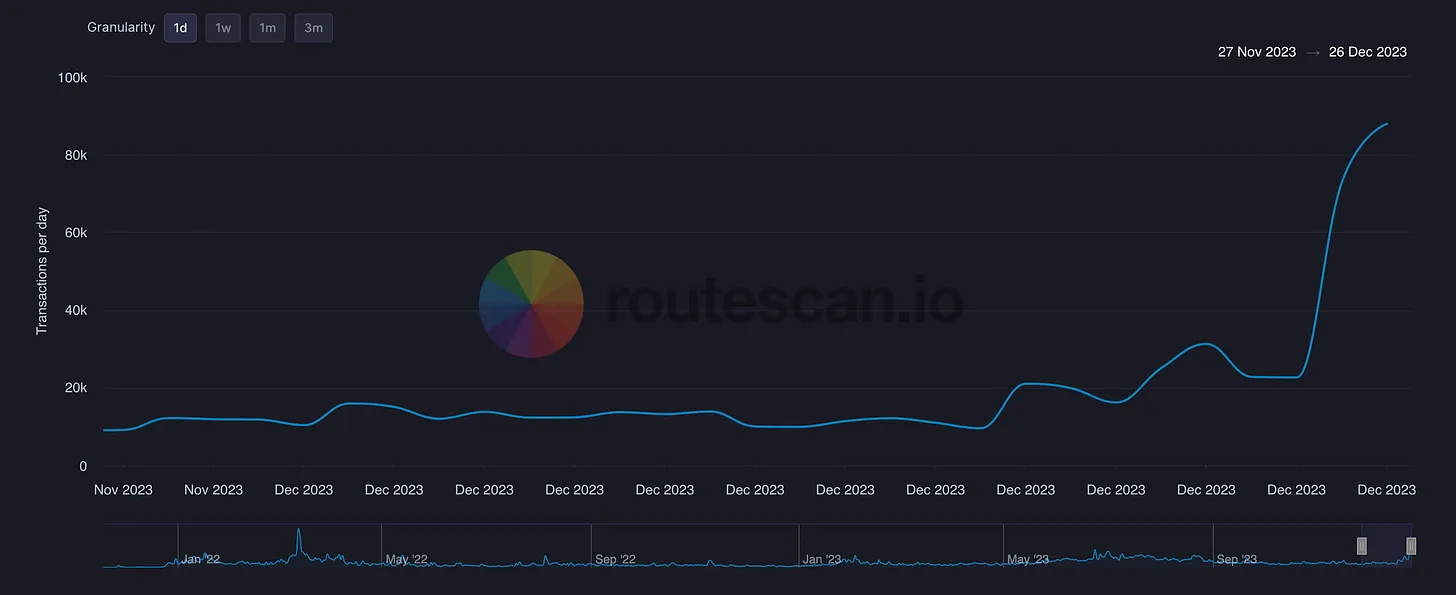
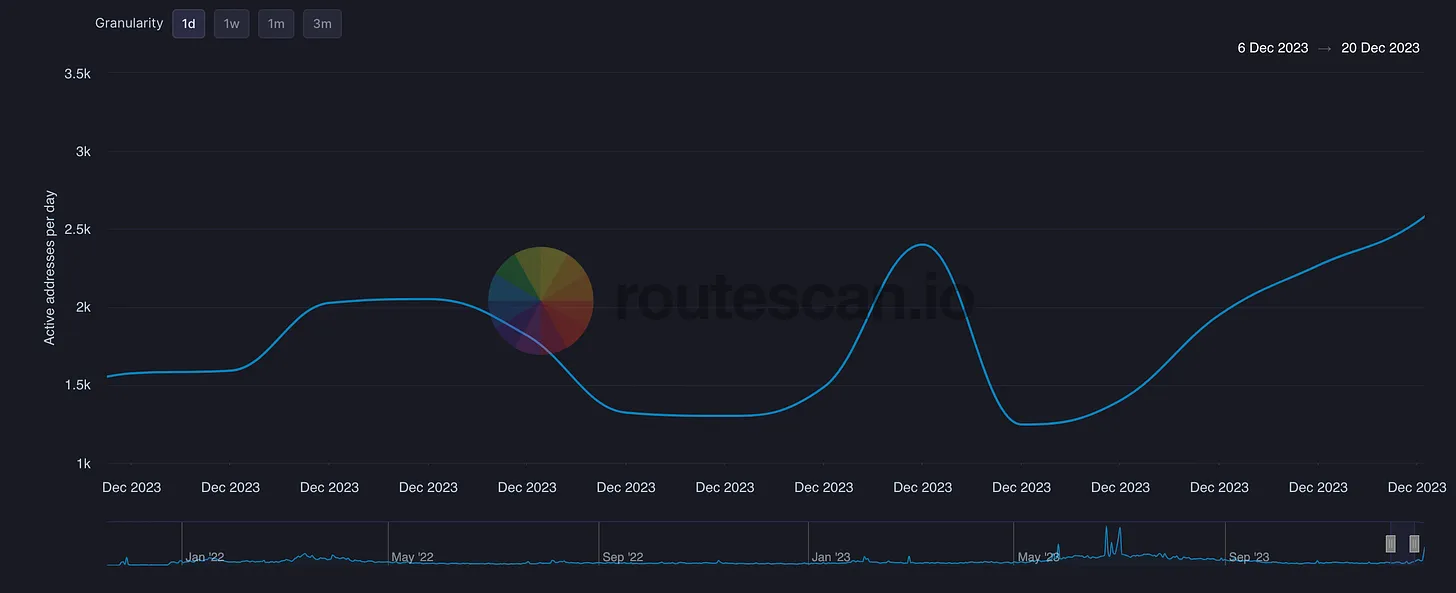
This price increase is reflected in several key on-chain metrics, indicating significantly growing interest in Metis:
1. Number of Transactions
2. Daily Active Addresses
With new Metis projects launching, let's examine the top five protocols likely to benefit from the EDF. But first, some additional context:

Hermes
Hermes is one of the most prominent protocols on Metis. I've previously covered Hermes in detail—refer to my article: Introducing Hermes Protocol: The Leading AMM DEX on Metis. The Hermes Protocol is Metis’ leading AMM DEX, built as a fork of Solidly. Launched in March 2022, it allows Metis users to provide liquidity, add new pools, boost pool yields, vote on token emissions, and earn bribes. Hermes operates on Andre Cronje’s “fee-for-votes” model: whenever a trade occurs, LPs receive HERMES tokens from emissions, while fees are distributed to stakers and lockers who voted for that pool—explaining the high APRs. The protocol stands to benefit from both the EDF fund and the upcoming V2 release, which introduces several improvements: cross-chain liquidity, leased liquidity, and yield markets. These expectations are already reflected in recent price appreciation. However, with a $10 million market cap, Hermes remains relatively small.

Hummus
Hummus is an efficient single-sided AMM that also features pools utilizing Balancer’s weighted pool mechanism.
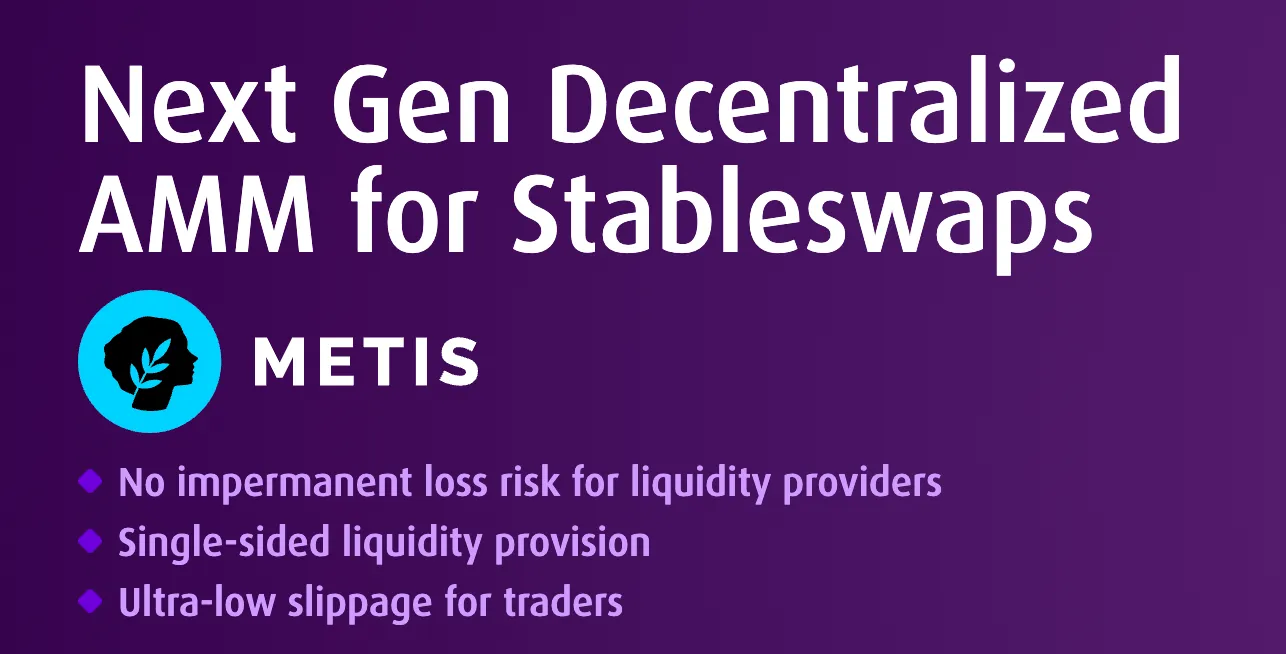
What makes Hummus special? Hummus offers a flexible single-sided staking mechanism that maximizes capital efficiency and minimizes slippage. Its novel approach to LP tokens follows a more flexible architecture: instead of representing a share of total liquidity, LP positions record exact token amounts, making withdrawals easier to manage. Like Hermes, Hummus has benefited from the EDF announcement. As the Metis ecosystem attracts a new wave of capital, the DEX is well-positioned to capture increased trading volume and benefit from rising activity and fee revenue.

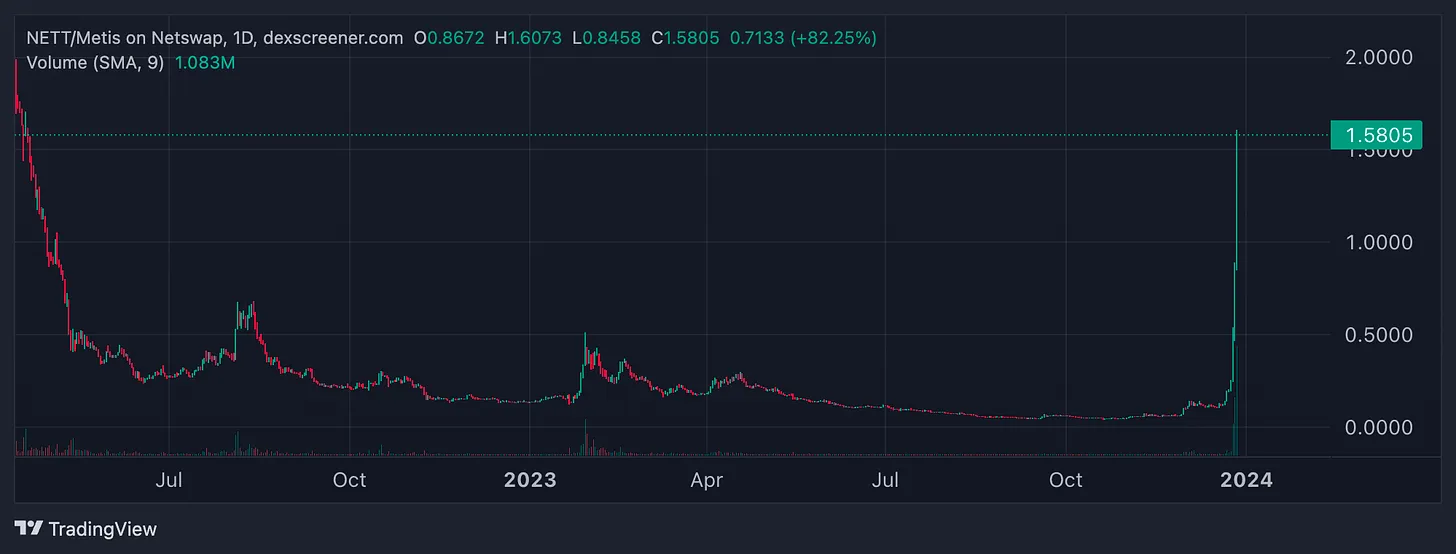
Netswap
Netswap is a DEX featuring constant-product liquidity pools, a launchpad, and an integrated staking mechanism for its governance token, $NETT.
Netswap supports:
-
Low trading fees
-
High-speed transactions for optimized trading
-
Scalability by design
-
Broad token support
-
Governance token $NETT
As the Metis narrative gains strength in 2024, Netswap is poised to be one of the main beneficiaries. While this has already been widely reflected in the token price, given that the Metis ecosystem is still in its early stages, further upside potential should not be ruled out.
Tethys Finance

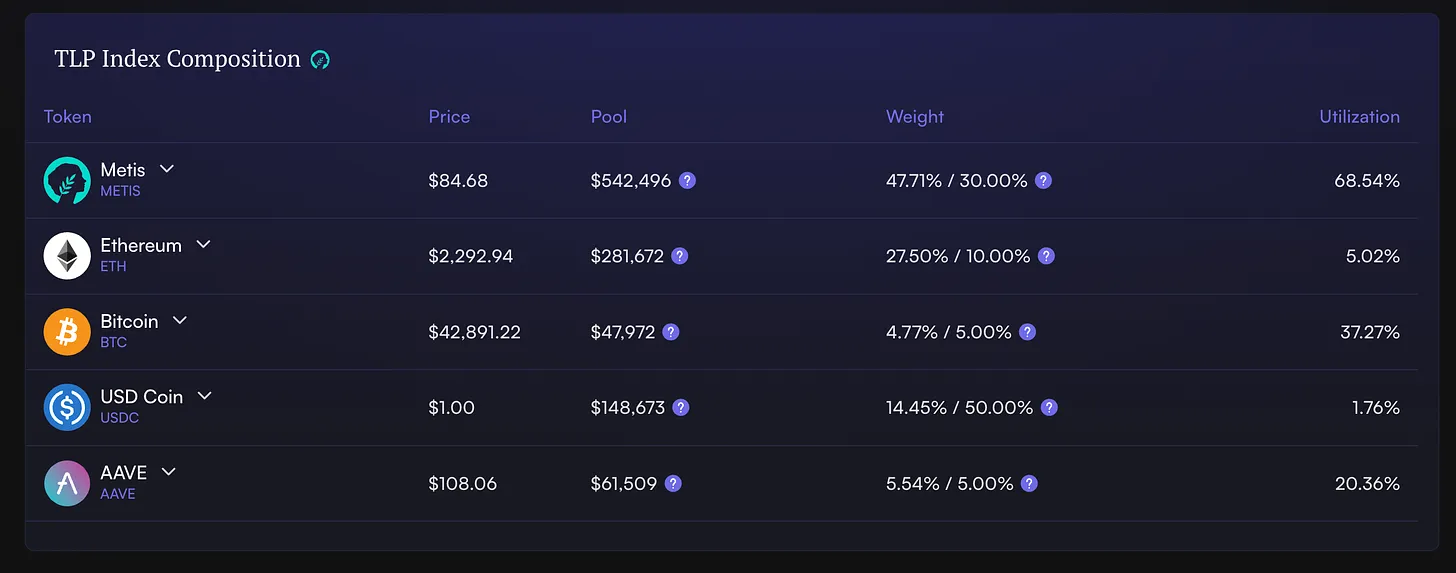
Tethys is a perpetual DEX on Metis allowing leveraged trading up to 50x. Based on the GMX model, Tethys employs a dual-token system where users take positions against other traders. The TLP index follows the GLP blueprint but includes fewer stablecoins in its basket:
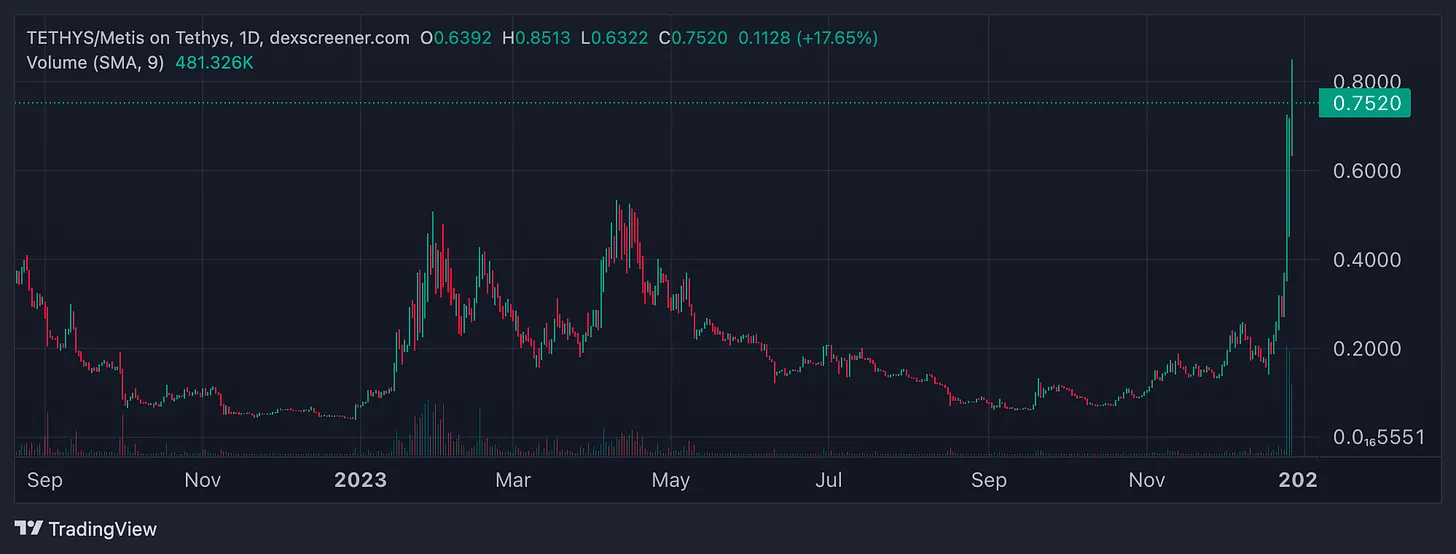
Driven by the EDF, Tethys has seen rapid growth in daily trading volume.

Tethys is positioned to become the leading perpetual protocol on Metis. This expectation is clearly reflected in its price surge; nonetheless, Tethys remains an intriguing protocol worth close attention.
Revenant
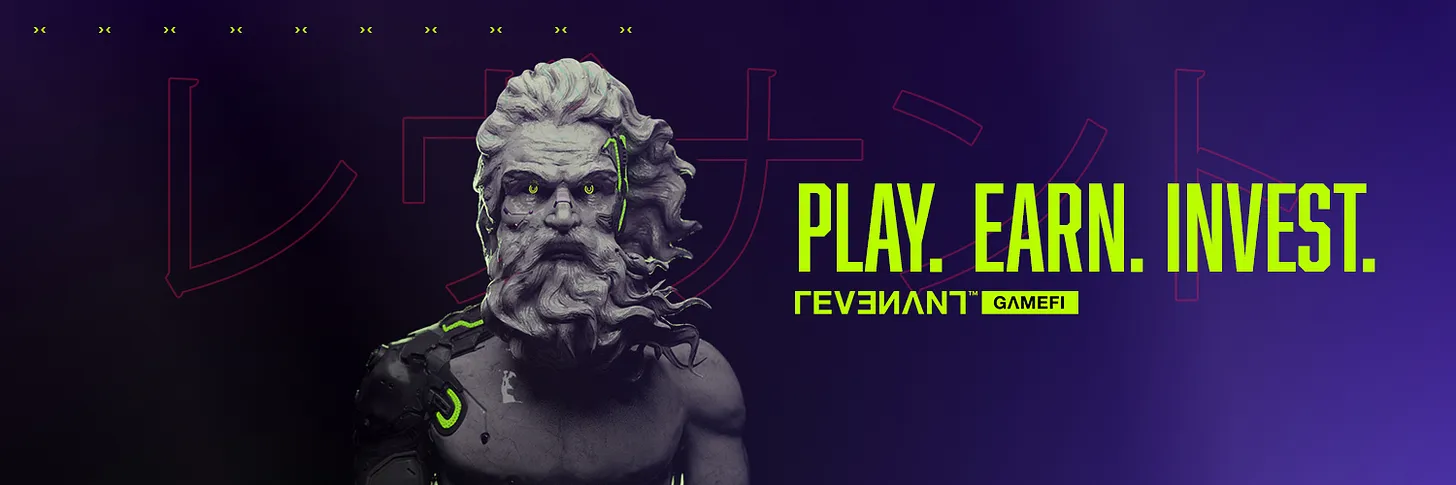
A notable mention is the GameFi project Revenant. Revenant is building a decentralized gaming ecosystem powered by $GAMEFI to launch a series of play-to-earn games.
The Revenant team is currently developing a blockchain-based fighting game with a player-driven economy, allowing users to buy and sell in-game items.
Below is a screenshot from their demo:

It appears the EDF effect has reached GAMEFI as well. This is not a DeFi project. As more gaming platforms launch products in 2024, Revenant is taking the lead in building on Metis.
What’s next?
What can we expect from Metis? What’s the conclusion?
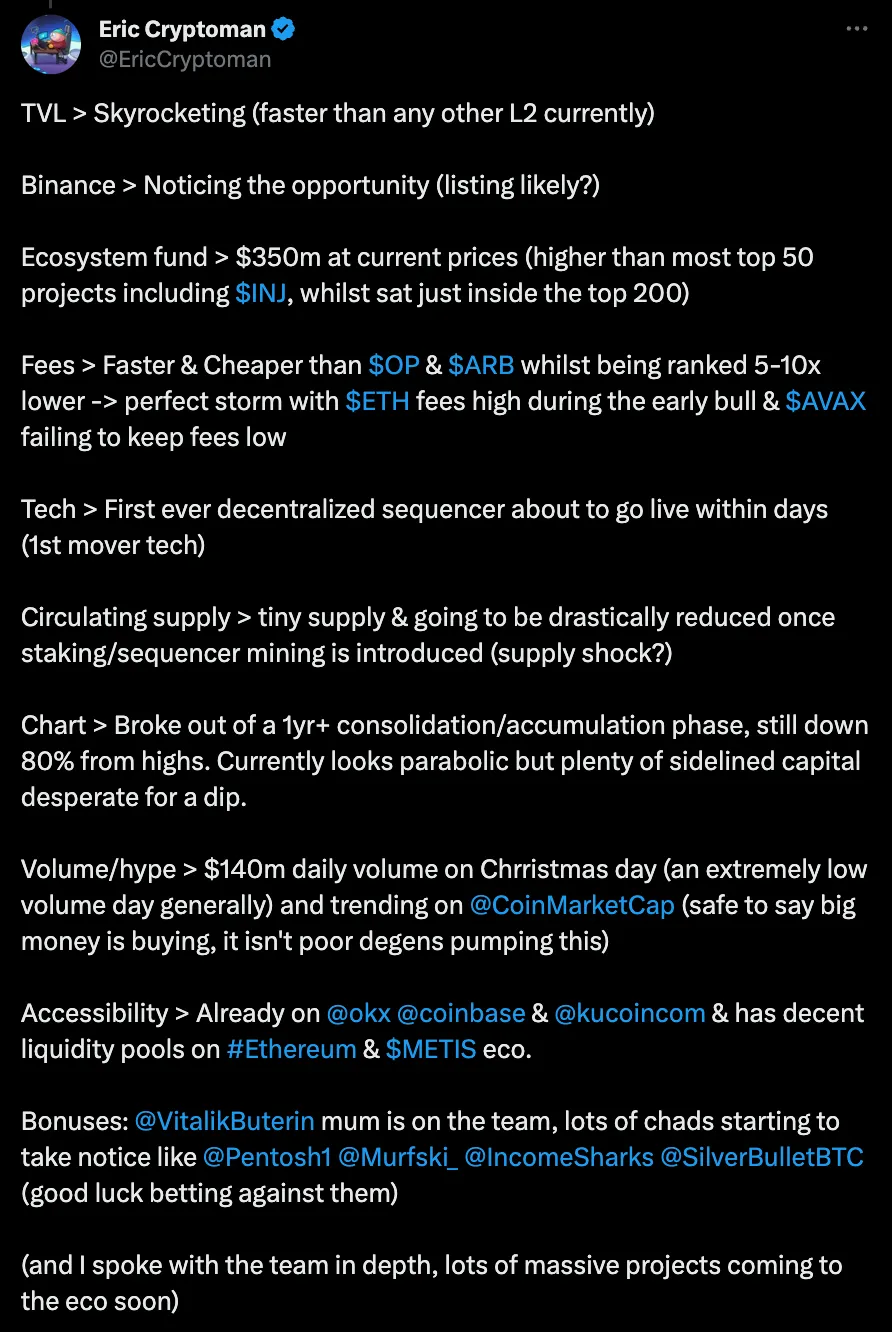
Certainly, growth may not be vertical, and after last week’s sharp rally, current prices might seem less attractive. However, past examples of Layer 1 chains deploying development funds have shown they are effective tools—at least in the short term—for boosting on-chain liquidity and activity.
Whether Metis can sustain this momentum is another matter.
Nevertheless, the narrative around the EDF (Ecosystem Development Fund), combined with Metis being one of the first L2s to feature a decentralized sequencer, suggests that attention will likely remain focused on Metis at least through the first few months of 2024.
Join TechFlow official community to stay tuned
Telegram:https://t.me/TechFlowDaily
X (Twitter):https://x.com/TechFlowPost
X (Twitter) EN:https://x.com/BlockFlow_News
 @francescoweb3






