
Bing Ventures: Exploring Data Availability in Decentralized Storage
TechFlow Selected TechFlow Selected
Bing Ventures: Exploring Data Availability in Decentralized Storage
In the future, more storage network projects may emerge, adopting advanced technologies and protocols to provide stronger data storage and access services.
 Navigating Web3 tides with focused insights
Author: Kyle Liu, Investment Manager at Bing Ventures
Data availability solutions in decentralized storage networks can be achieved through various methods, such as data sharding stored across different nodes or integrating more storage miners to enhance data security. These approaches all aim to ensure data availability within decentralized storage networks. Currently, Filecoin and Arweave have distinct data availability solutions, and more innovative approaches may emerge in the future.
Significance of Data Availability
Data availability is crucial for decentralized storage networks. In a decentralized network, data security and reliability depend on the stability of storage nodes. If data becomes unavailable, the entire network could be affected, potentially leading to permanent data loss. Therefore, data availability is one of the core elements ensuring the functionality of decentralized storage networks.
Filecoin and Arweave adopt different approaches to ensure data availability. Filecoin relies on incentive mechanisms and intermediary roles to achieve storage redundancy and data retrieval, while also providing an economic framework for storage financialization. Arweave, on the other hand, achieves storage redundancy naturally through protocol design and its SPoRA (Sparse Proofs of Random Access) consensus mechanism, improving data retrieval and access speed.

Evaluation Metrics for Data Availability
Filecoin’s data availability solution is primarily based on IPFS technology. This approach verifies that storage miners actually possess and store complete file data. Filecoin’s solution offers high reliability but may impact performance due to higher computational complexity. Arweave’s data availability solution is built upon its “Permaweb” (permanent web) protocol, storing files in a "blockchain-based permanent storage layer" to ensure data security. Arweave's solution delivers superior performance.
Data Storage Model:
-
Filecoin uses economic incentives to achieve storage redundancy. By introducing roles such as Replication Workers and Repair Workers, Filecoin has established a storage network driven by economic incentives. Storage users can generate storage orders via Replication Workers on the Filecoin network and use Repair Workers to monitor and maintain data integrity. This economic model incentivizes storage providers to preserve user data, thereby enhancing data availability.
-
Arweave achieves storage redundancy through protocol design. Its SPoRA consensus mechanism encourages miners to retain as much historical block and Blockweave data as possible, increasing data redundancy and reliability. This protocol design ensures user data is distributed across multiple nodes in the network, improving data availability.
Data Consistency:
-
Filecoin’s economic incentive mechanism helps maintain data consistency and integrity. Through the role of Repair Workers, the Filecoin network can promptly update expired or terminated storage orders, ensuring that stored data remains consistent with what users originally uploaded.
-
Arweave’s SPoRA consensus mechanism requires miners to store data from all recalled blocks, ensuring consistency of historical blocks and Blockweave data throughout the network. This consensus mechanism guarantees that stored data is complete and consistent.
-
Economic Model:
-
Filecoin’s economic model offers high flexibility and scalability. Storage providers must stake a certain amount of FIL tokens to offer storage services. Mechanisms such as staking protocols and storage derivatives allow FIL token holders to participate in storage services and earn corresponding returns.
-
Arweave’s economic model focuses on incentivizing storage miners to retain more historical blocks and Blockweave data. However, after Filecoin launched its EVM-compatible storage network, Arweave’s value network appears slightly slower in development pace.
The data availability of these two storage networks is influenced by their storage models, data consistency mechanisms, economic models, and ecosystem development. The key differences between Filecoin and Arweave lie in their data storage and economic models. Filecoin achieves storage redundancy and data consistency through economic incentives, whereas Arweave accomplishes this naturally via protocol design and the SPoRA consensus mechanism. They also differ in data retrieval: Filecoin introduces a separate economic incentive system, while Arweave improves retrieval and access speed by upgrading its SPoRA consensus mechanism. Both projects excel in economic modeling and ecosystem development, employing incentive mechanisms to encourage node participation and data storage, supported by active communities and developer ecosystems.
Trends in Decentralized Storage
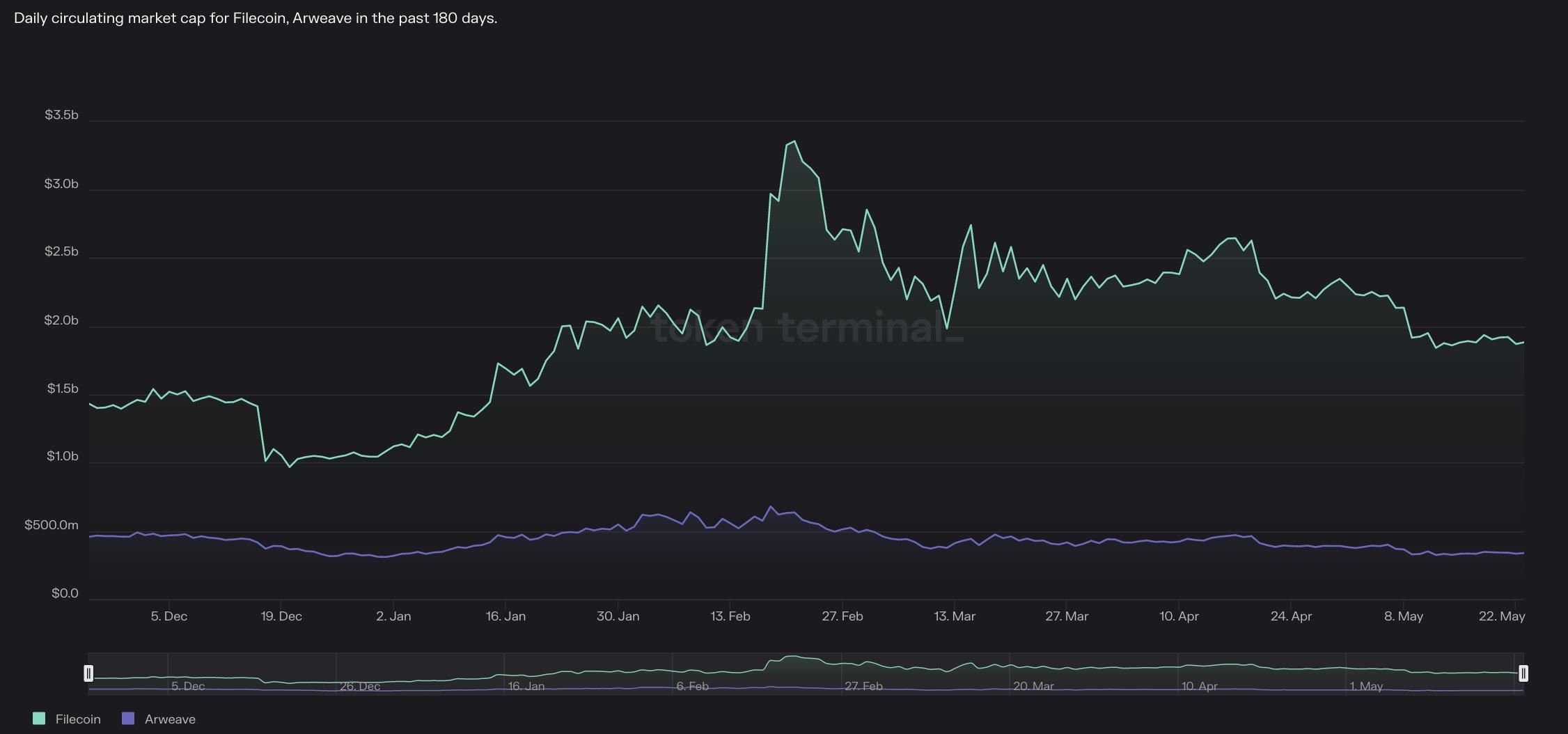
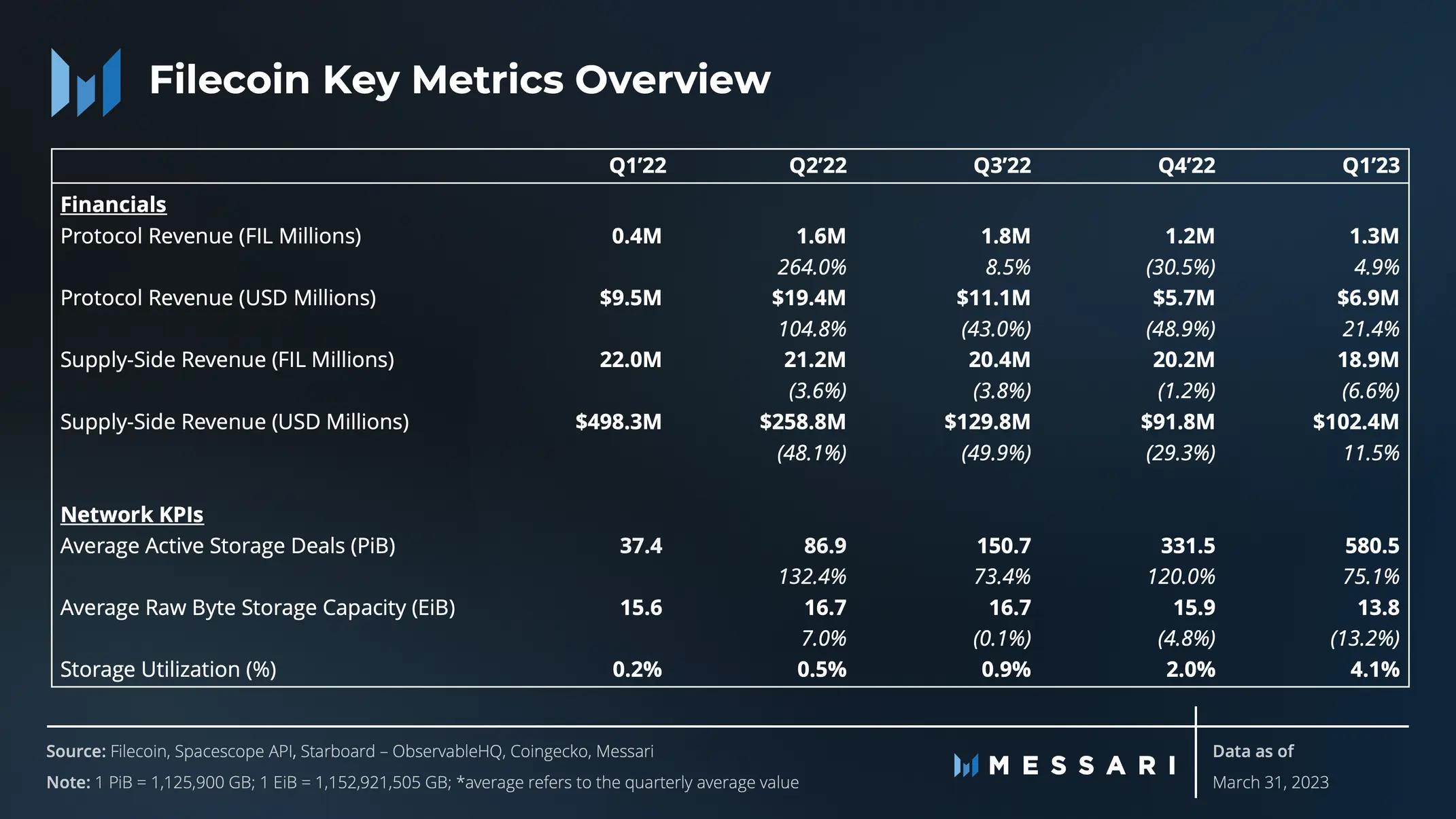
Arweave and Filecoin have evolved into two relatively independent leading ecosystems in decentralized storage. In terms of scale, Filecoin leads significantly in revenue, FDV, and market share. Analyzing the current state and trends of decentralized storage from a data availability perspective, we believe:
-
Scalability in the Scaling Era: The development of Layer 1 storage-scaling networks is a key direction for addressing data availability challenges in decentralized storage. Adding storage capabilities at the blockchain’s L1 layer enhances the performance and capacity of storage networks, further strengthening data availability and security. Expanding data storage layers on major blockchains like Ethereum will profoundly impact the entire decentralized storage ecosystem. Ethereum’s EthStorage project is one such example, aiming to improve storage network performance and scalability by adding storage functionality at Ethereum’s L1 layer. Such storage expansion better meets data storage demands and increases data availability.
-
Aggregation of Storage Networks: The emergence of DSN aggregators marks significant progress in improving data availability. Aggregating different storage networks enables efficient resource utilization and higher data availability. This aggregation model helps resolve fragmentation issues in storage networks and enhances user storage experience. Projects like 4EVERLAND exemplify this trend—its decentralized cloud computing platform integrates multiple storage networks, enabling cross-network data access and management. The project delivers improved data availability and storage efficiency, offering users more reliable data access from aggregated storage networks.
-
Integration of Computation and Storage: The advancement of off-chain computation will further promote data availability in decentralized storage networks. Combining computational power with storage capabilities enables more efficient data processing and storage services. This integration improves data processing speed and efficiency, offering users more flexible and reliable storage solutions. Moreover, future solutions may involve placing data in dedicated data availability layers, recording only the Merkle roots of computations on the consensus layer. This design ensures data security while boosting performance and effectively mitigates the growing centralization of consensus nodes.
Conclusion and Outlook
Future trends in enhancing data availability in decentralized storage networks are multifaceted, including increased network aggregation, integration of computation and storage, blockchain storage expansion, and strengthened data security. These developments will further improve data availability and drive broader adoption and growth of decentralized storage networks. Based on these insights, when evaluating projects, we should pay closer attention to the following aspects:
-
Challenges in Cross-Chain Data Availability: As cross-chain technologies advance, interoperability between different blockchains becomes feasible. However, ensuring cross-chain data availability presents numerous challenges, including data consistency, privacy protection, and scalability. Future research and innovation will focus on overcoming these hurdles to achieve more efficient and reliable cross-chain data availability.
-
Balancing Data Availability and Blockchain Performance: Blockchain performance limitations can affect data availability. High-throughput, low-latency storage networks may perform well in speed but face constraints in data availability. Future research should explore ways to enhance performance without compromising data availability, identifying optimal trade-offs between the two.
-
Impact of Community Governance on Data Availability: Community governance is a vital component of decentralized storage networks and influences data availability. Establishing robust governance mechanisms that encourage community participation and consensus-building can drive improvements in data availability. Future research should examine how governance affects data availability and explore ways to optimize it for stronger outcomes.
-
Integration of Data Availability with Emerging Technologies: With the rise of emerging technologies such as artificial intelligence, edge computing, and the Internet of Things, their convergence with decentralized storage opens new possibilities for data availability. Future efforts could explore leveraging AI and smart contracts to enhance data availability and investigate applications of data availability in edge computing and IoT domains.
Over time, the decentralized storage ecosystem will continue to grow, with increasing numbers of nodes and users and the emergence of more use cases, further enhancing data availability and benefiting more individuals and organizations. From the perspective of data availability, different decentralized storage projects can explore deeper collaborative ecosystem development. By establishing cross-project data sharing and exchange mechanisms, projects can complement each other, improving overall ecosystem data availability and synergistic effects. This cooperative model helps build stronger, more sustainable decentralized storage networks.
In conclusion, I believe future research and development will continue exploring innovations in technology, cross-chain data availability, balancing performance and availability, community governance, and applications of emerging technologies to further enhance data availability in decentralized storage networks. More storage network projects may emerge, adopting advanced technologies and protocols to deliver stronger data storage and access services.
Join TechFlow official community to stay tuned
Telegram:https://t.me/TechFlowDaily
X (Twitter):https://x.com/TechFlowPost
X (Twitter) EN:https://x.com/BlockFlow_News
 Bing Ventures