Bankless: Ethereum May Be Heading Toward a "Matryoshka" Endgame Transformation
TechFlow Selected TechFlow Selected
Bankless: Ethereum May Be Heading Toward a "Matryoshka" Endgame Transformation
The Ethereum community is undergoing a fascinating transition toward greater diversity.
 Navigating Web3 tides with focused insights
Author: Viktor Bunin, Guest Writer at Bankless
Translation: Sharon, BlockBeats
Editor's Note:
While the wave of Bitcoin inscriptions and broad token gains across the Solana ecosystem continue to generate excitement, Ethereum and its ecosystem have underperformed. In an article published by Bankless on December 22, guest author Viktor Bunin explores and forecasts the future of Ethereum and its Layer 2s.
He argues that, on one hand, the number of users directly interacting with the Ethereum blockchain will decline, and the relationship between Ethereum, its ecosystem, and end users may become increasingly nested—like a set of Russian dolls—leading to the fragmentation of a single overarching narrative for the Ethereum ecosystem. On the other hand, the entire Rollup ecosystem will uphold Ethereum’s most important social principles—decentralization, credible neutrality, and permissionless access and innovation—while the Ethereum blockchain itself becomes a mature, taken-for-granted foundational layer. BlockBeats translates the full article below:
Recently, Twitter feeds in the Bitcoin and Solana communities have been buzzing with excitement, driven by fundamental improvements, rising fees, and surging token metrics. But the Ethereum community—the historic epicenter of crypto adoption and innovation—sometimes appears more subdued. This makes me wonder: is it just that the numbers aren’t going up?
I believe there’s a deeper reason: the Ethereum blockchain is transitioning from B2C (execution) to B2B (settlement). This is a well-known technical outcome of Ethereum’s endgame, but what does it mean for Ethereum’s social layer and community? I haven’t seen much written about this, so I’ll try to unpack it here.
In the long run, will the number of users on the Ethereum blockchain increase or decrease from today’s levels? I believe it will decrease. Layer 2s already consume up to 20% of Ethereum’s gas, and I expect this share to keep growing over the coming years—even as advances like EIP-4844 and Full Danksharding drastically reduce the cost for Rollups to settle on Ethereum. Fewer end users on the Ethereum blockchain means relatively fewer people will be part of the Ethereum community.
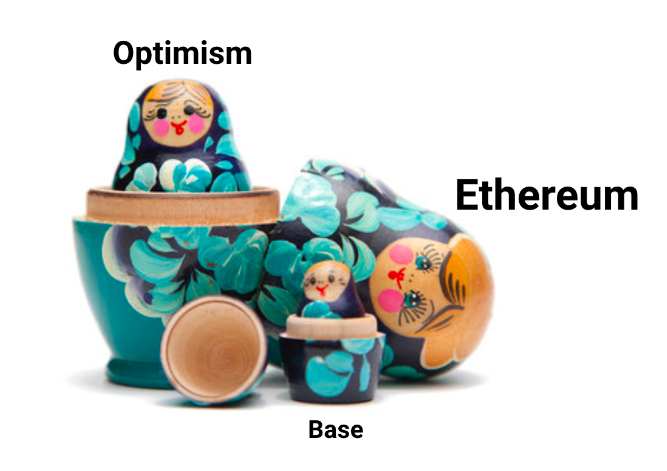
Instead, people’s identities will become increasingly nested, tied primarily to the user-facing components they interact with—networks like Base, Arbitrum One, or Polygon zkEVM. You can already see this on Twitter today: the communities around these L2s are growing rapidly, but they focus mainly on their respective chains rather than the broader Ethereum ecosystem.
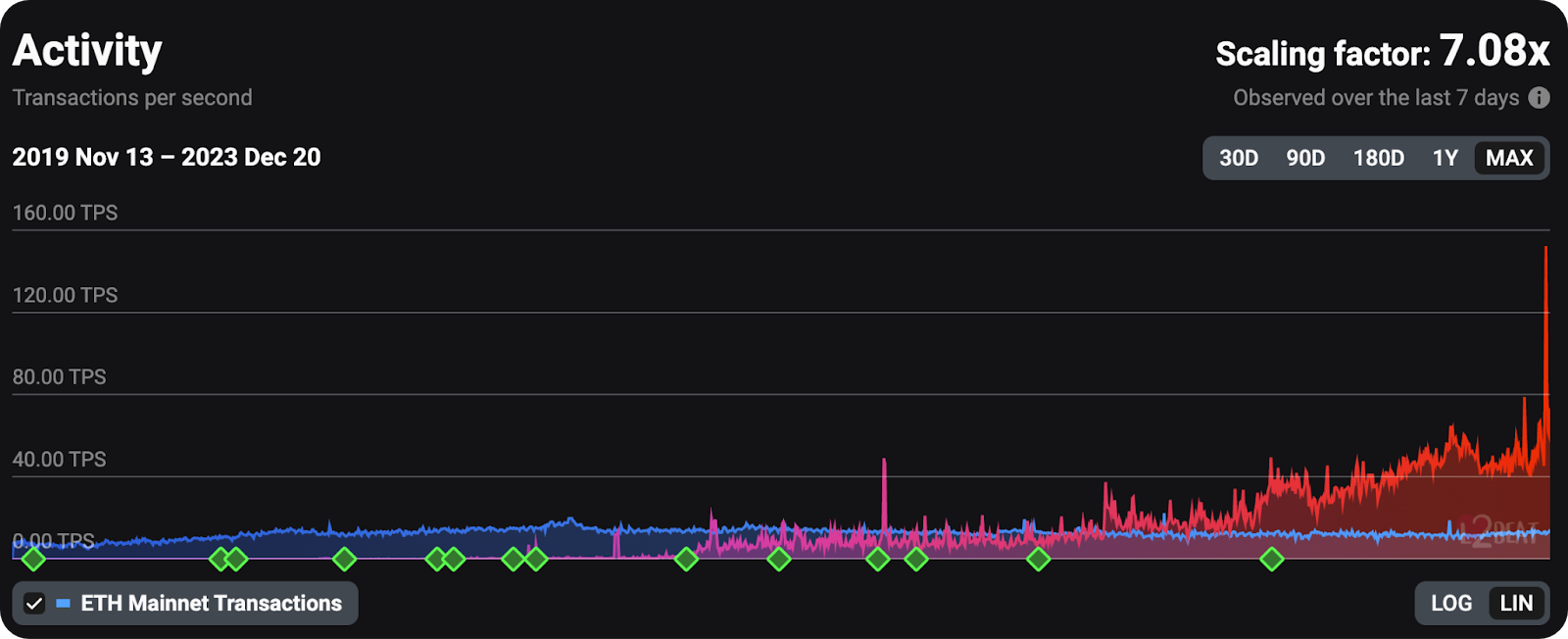
This reality makes it harder—especially for critics—to understand Ethereum, as it is no longer a single chain or community, but an ecosystem of chains and communities. Ironically, this has long made Cosmos similarly difficult to grasp.

This shift also means that, by definition, the Ethereum ecosystem no longer has a single, unified narrative. The diversity of communities and perspectives itself becomes the narrative—a departure from what we usually see in crypto ecosystems (e.g., Ethereum’s transition to PoS, Solana launching Firedancer, Bitcoin shifting toward Lightning Network usage).
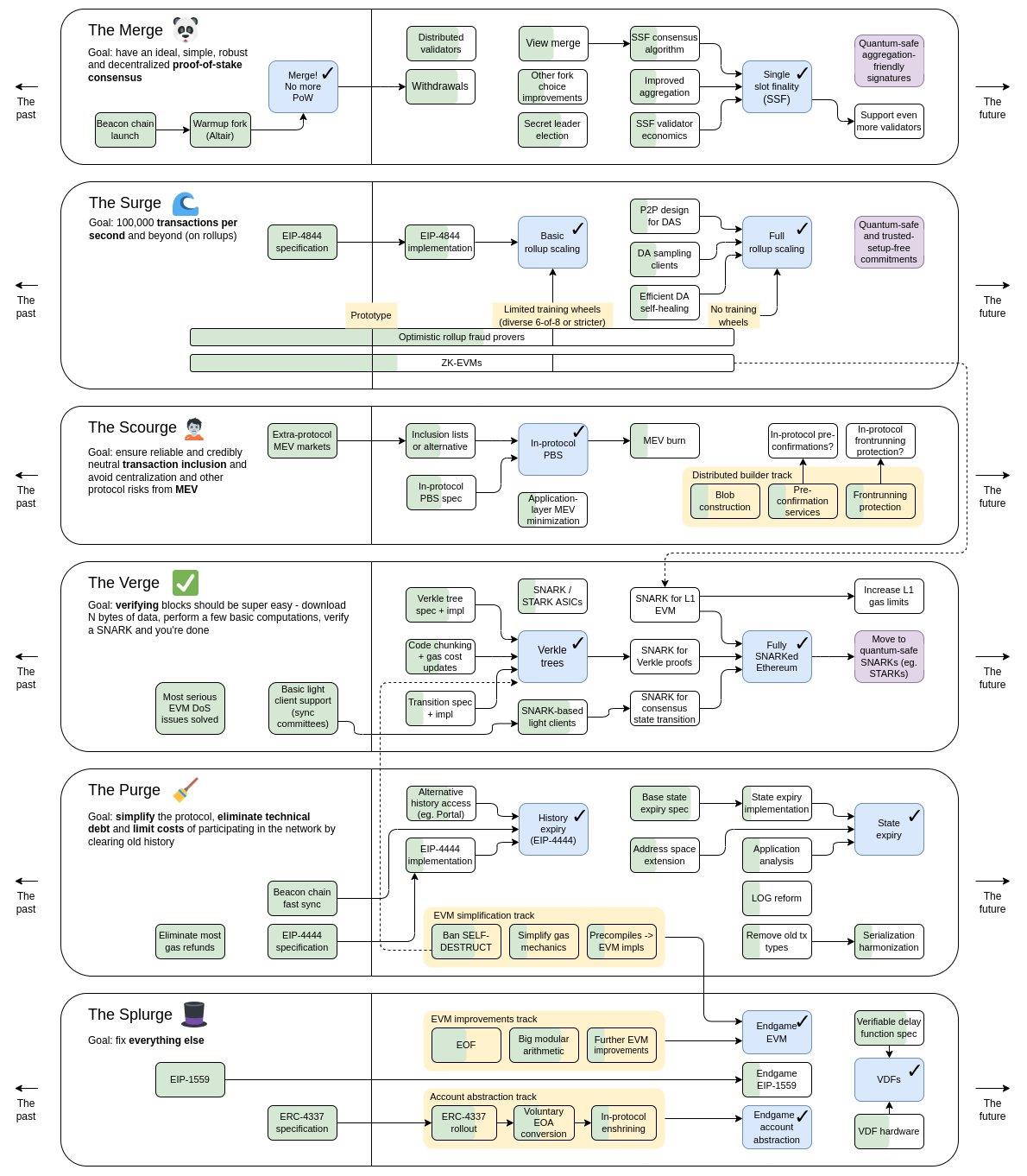
To be clear, the Ethereum blockchain itself continues to advance a vision through core developers and EIPs, as outlined in Vitalik’s updated roadmap. But this is now just one of many narratives within Ethereum—including Optimistic Rollups, zk-Rollups, shared sequencers, privacy Rollups, data availability, identity, NFTs, use-case-specific Rollups (e.g., gaming), and more.
This trend of community fragmentation won’t just accelerate on Ethereum—it will happen on every general-purpose smart contract chain. After all, the crypto ecosystem aims to onboard 8 billion people. Scale breaks intimacy, so it’s reasonable to assume that over time, there won’t be just one Ethereum community or one Solana community.
So what should we do now? What does a successful transition look like for the Ethereum community? Here, I identify three key indicators.
First, Ethereum’s most important social principles must be upheld across the Rollup ecosystem: decentralization, credible neutrality, and permissionless access and innovation. If end users face censorship or asset seizure within the Rollup ecosystem, then Ethereum’s own credible neutrality becomes irrelevant to those users.
Second, from the user’s perspective, using a Rollup should offer the same level of security as transacting directly on the Ethereum mainnet. Tactically, this means Rollups should inherit Ethereum’s security—so even if a Rollup’s sequencer is untrusted, it should never be able to steal user funds.
Third, and most importantly for Ethereum, the Rollup ecosystem should use ETH as its primary currency. Beyond tactical reasons (Rollups need ETH to settle on Ethereum, users already hold and prefer ETH, ETH already possesses strong monetary properties, etc.), there’s a deeper philosophical goal in crypto: creating the best form of money in the world.
The Ethereum community must not lose sight of this goal. Now is the time to build a currency that is owned by anyone but used by everyone. And we have a real chance to achieve this. This doesn’t mean every Rollup must perfectly execute on all three pillars—some may require KYC, others might use their own tokens for gas, etc. But these indicators provide direction: is the Rollup ecosystem advancing the abstract idea of “Ethereum”?
What does this mean for the Ethereum community?
It means that over time, you’ll hear less about the Ethereum blockchain itself and more about its sub-communities. The Ethereum blockchain will become a mature, taken-for-granted bedrock—assumed to exist and be supported through decades of crypto growth, trials, and turbulence.
This dynamic mirrors web2: while early focus was on the internet itself, today we focus on online communities while taking the underlying internet for granted. In many ways, Ethereum’s endgame is a world where everyone is part of the Ethereum community, yet no one primarily identifies as such.
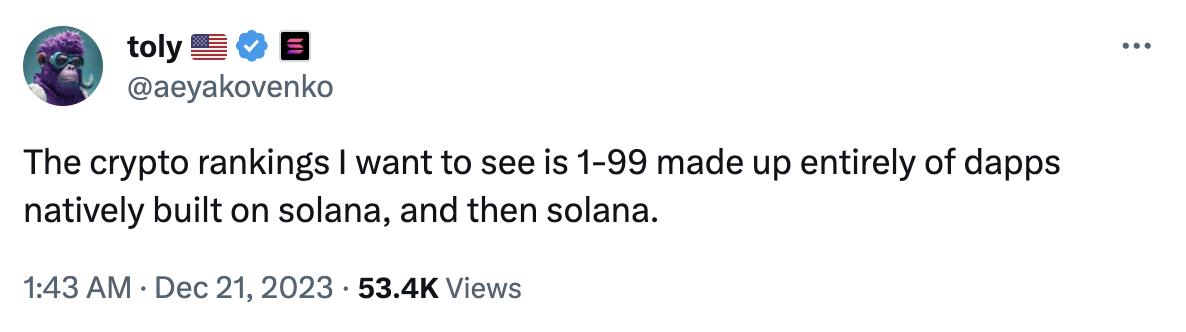
Of course, the idea of L1s fading into the background isn’t new. Solana’s founder Anatoly Yakovenko has long advocated focusing on what’s built atop blockchains rather than the chains themselves.
As Solana continues to grow and gain adoption, I’m curious how its community will evolve over time. Due to its monolithic design, its community may remain more tightly knit, evolving differently from what we’re seeing on Ethereum today. Meanwhile, all eyes are on the Ethereum community as it navigates this fascinating transition toward greater diversity.
Join TechFlow official community to stay tuned
Telegram:https://t.me/TechFlowDaily
X (Twitter):https://x.com/TechFlowPost
X (Twitter) EN:https://x.com/BlockFlow_News
 Bankless