How to reshape the AIGC creator economy using Web3 technology?
TechFlow Selected TechFlow Selected
How to reshape the AIGC creator economy using Web3 technology?
NFPrompt, as an emerging platform combining Web3 and AIGC, provides creators with an integrated environment for creation, trading, and social interaction.
 Navigating Web3 tides with focused insights
Author: @JellyZhouishere, Gryphsis Academy
TL; DR:
-
Driven by the internet and AIGC technology, the creator economy has seen significant growth, offering creators diverse revenue streams ranging from advertising income to direct sales.
-
Publicly available AIGC projects such as DALL-E 3, Midjourney, and Stable Diffusion have excelled in AI-powered image generation. For the creator economy, the integration of AIGC enhances content creation efficiency and creative freedom.
-
Despite challenges like copyright issues and unstable incomes, Web3 offers new solutions—especially in strengthening copyright management and monetization of creative works.
-
NFPrompt, an emerging platform integrating Web3 and AIGC, provides creators with an all-in-one environment for creation, trading, and social interaction. By participating in Binance LaunchPool for the initial public offering of its $NFP token, NFPrompt gains broader exposure and community engagement opportunities.
-
Looking ahead, with advancements in AIGC and blockchain technologies, the creator economy is expected to become more diverse and inclusive, offering greater opportunities and freedom to both creators and consumers.
I. The Evolution of the Creator Economy
1.1 The Internet Unveils a New Era
The creator economy refers to a new economic model enabled by internet platforms, allowing creators to earn income through digital content creation. Fueled by the rise of the internet, it has become a vital component of the global economy. Particularly with the emergence of artificial intelligence-generated content (AIGC) and Web3 technologies, this sector is undergoing unprecedented transformation. Today, the market size of the creator economy has reached historic highs. According to Goldman Sachs research, the compound annual growth rate for 50 million global creators over the next five years is projected to be between 10% and 20%, potentially surpassing $500 billion by 2027. Technological breakthroughs brought by AIGC are opening up new frontiers in content creation. This growth is driven by digitization and globalization, enabling creators to reach wider audiences and generate income through diversified channels—including ad revenue, sponsorships, merchandise sales, and subscription services.
The roots of the creator economy trace back to the early days of the internet, with the rise of blogs and social media sites, where content creators began using these emerging platforms to share their ideas, works, and life experiences. Over time, the creator economy has evolved significantly. Early blog and social media platforms such as MySpace and YouTube provided individuals with spaces for expression and sharing, while also creating income opportunities. YouTube’s Partner Program was a key milestone in the early implementation of the creator economy, incentivizing content creation by allowing video creators to earn ad revenue from their videos.
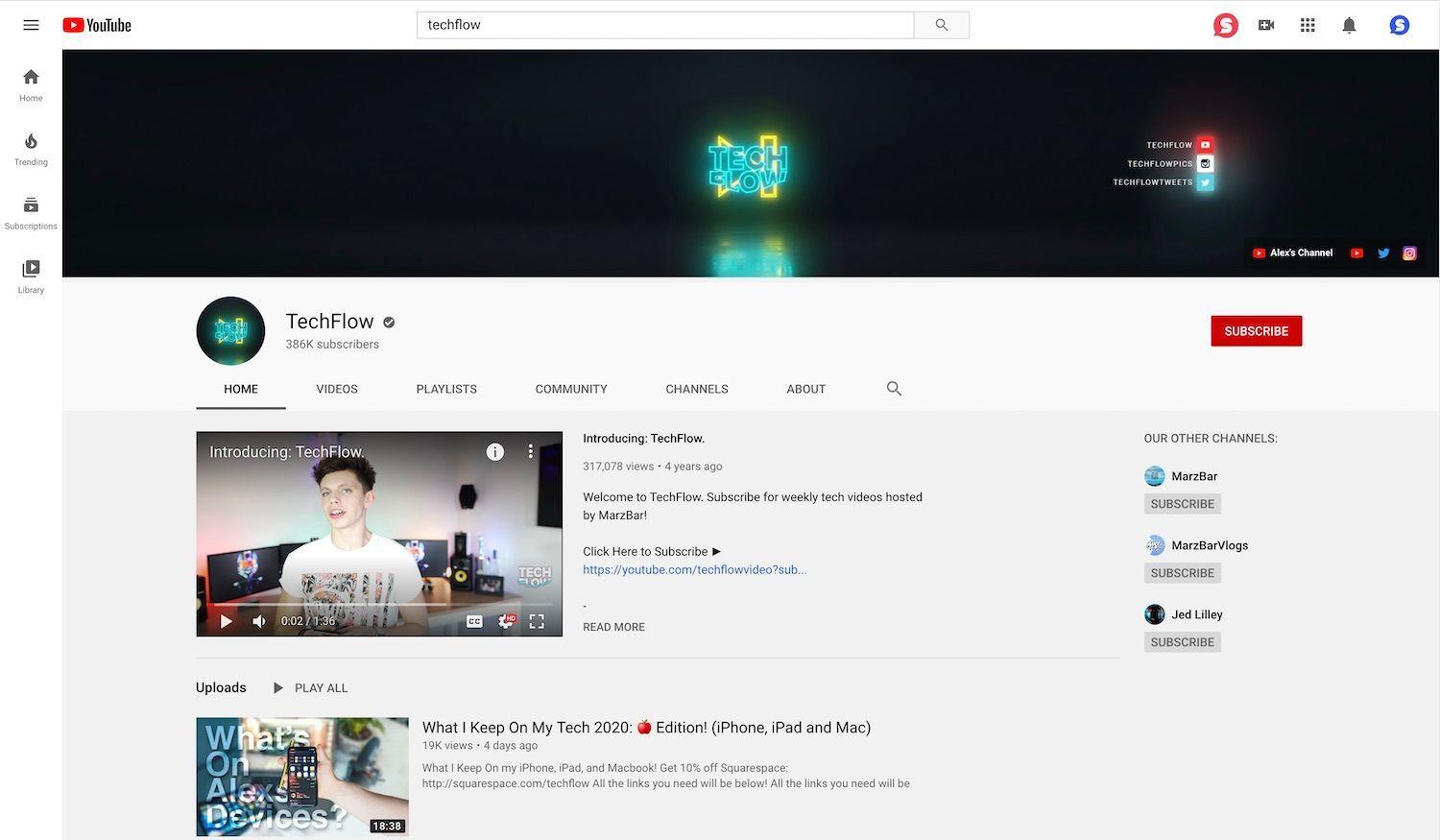
YouTube marks a new era of the internet-based creator economy
Entering the 21st century, the proliferation of social media and increased smartphone usage led to the emergence of mobile-first platforms such as Instagram, TikTok, and Snapchat—offering creators more diverse ways to express themselves and monetize their work. At the same time, crowdfunding platforms like Kickstarter and Patreon provided creators with diversified income streams, including direct product and service sales to fans, sponsorship models, membership subscriptions, and copyright licensing.
1.2 AI Enters the Stage: The Rise of AIGC Technology
In the 21st century, rapid advancements in AI technology have introduced innovative applications that profoundly impact the creator economy. These include intelligent content recognition systems capable of assessing content quality, and smart recommendation algorithms that optimize content production and demand alignment. In particular, 2022 marked the beginning of the AIGC era, with the release of several image-generating AIGC products such as DALL·E 2, Stable Diffusion, Imagen, and Midjourney, followed by the year-end launch of ChatGPT—an all-purpose AI assistant. The emergence of AIGC signals AI's progression toward more advanced forms. For the creator economy, AIGC's high efficiency and human-like logical and content generation capabilities have opened new pathways for creators.
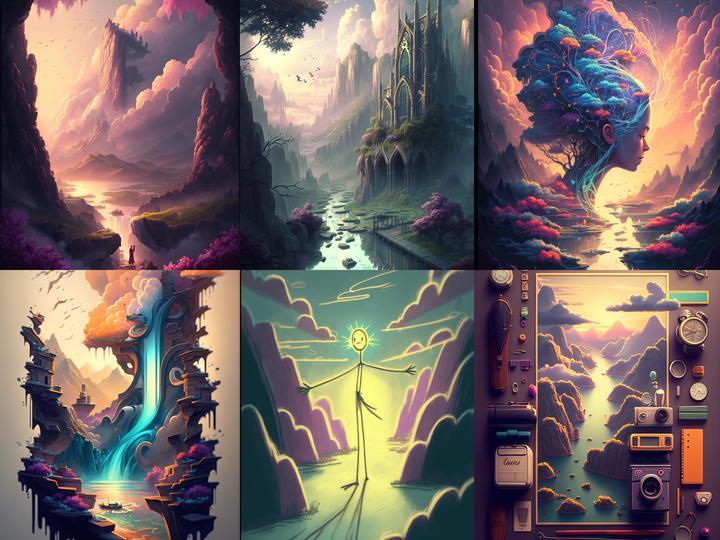
AIGC can efficiently generate design content in diverse styles
At its core, AIGC technology relies primarily on Transformer models—highly efficient algorithms pre-trained on massive datasets for understanding and processing language or images. The typical AIGC workflow begins with deep parsing of an input prompt (instruction or concept), usually performed by large language or image models (such as GPT, BERT, and CLIP series). Then, diffusion models apply reverse computation on Gaussian noise to generate high-quality final images. Amid the AIGC boom, numerous AIGC applications have flooded the market. However, in the domain of AI art generation, the most prominent performers remain the earliest-established veteran projects: DALL-E 3, Midjourney, and Stable Diffusion, which stand out due to their superior output quality. (There is also Google's proprietary product Imagen, but true to its tradition of closed-source development, external access is limited to insights from other Google products and academic publications—highlighting the negative impacts of centralized institutional monopolies, though that’s another topic.) Returning to the main point, the image below shows outputs from three different platforms given the same prompt. MidJourney 5.2 delivers the best result, perfectly matching the prompt description while adding rich details. DALL-E 3 performs second-best, still fully adhering to the prompt. Stable Diffusion produces the weakest result, failing to capture the “anime girl” aesthetic—likely due to its open-source nature leading to insufficient training data scale.
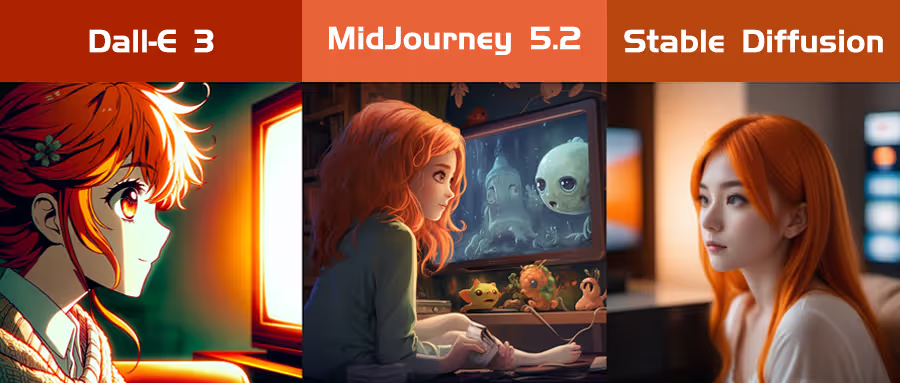
Prompt: Anime girl with orange hair looking at tv looking at her favorite show.
Same prompt, different results across platforms
Overall, AIGC technology remains at a stage of assisting human creators. The current hot topic centers around how to skillfully craft prompts to achieve optimal generation results. From another perspective, this also reflects the early developmental phase of AIGC. Future AIGC products are expected to gain greater creative autonomy—requiring only minimal prompt inputs to generate high-quality content tailored to various scenarios. As AIGC technology continues to advance, it will be increasingly integrated into creators’ daily workflows, playing a growing role in the creator economy. This technology not only improves content creation efficiency but also grants creators unprecedented freedom and novel creative formats.
1.3 Challenges and Opportunities in the Creator Economy
Indeed, the integration of AIGC brings tremendous opportunities to the creator economy. Yet, it must be acknowledged that the current stage still faces numerous old and new challenges—ranging from income instability due to centralized platforms, copyright disputes arising from generated content, difficulties in maintaining long-term influence of creative works, and potential risks stemming from AI’s lack of interpretability.
First, many creators—especially individuals or small studios—rely heavily on centralized platforms to publish and promote their work. Since many depend on project-based jobs or unstable ad revenues, their income is highly vulnerable to changes in platform policies. For example, video bloggers and influencers relying on ad revenue and sponsorships from traditional online platforms like YouTube or TikTok often see income closely tied to view counts. However, sudden changes in platform policies or algorithm updates may drastically reduce their content visibility, leading to sharp income declines. This dependency further restricts creators' creative freedom and ability to monetize their work.
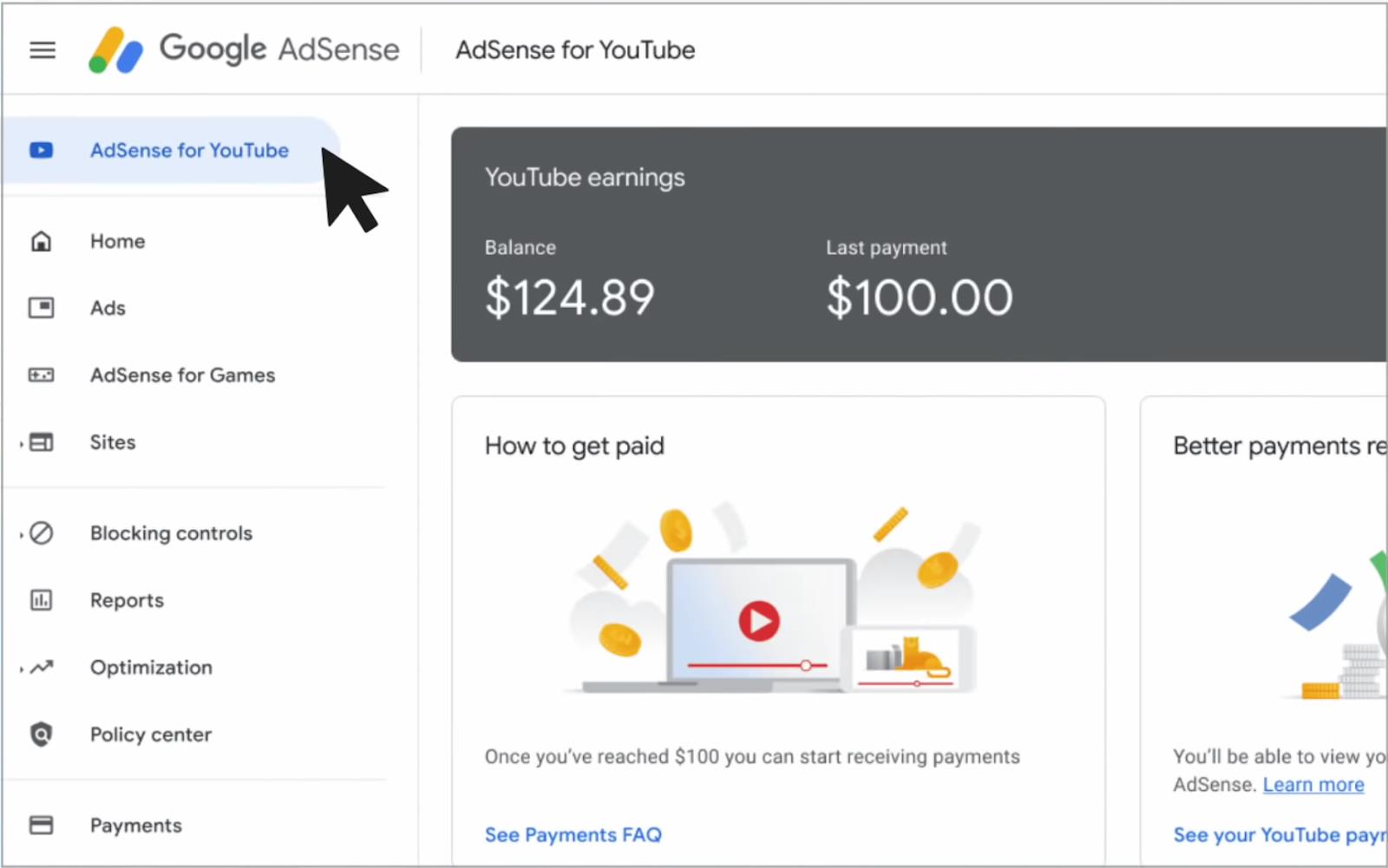
YouTube’s AdSense system enables creators to earn a share of ad revenue
Second, in the digital age, copying and distributing content is extremely easy, posing major challenges for copyright protection. Especially without clear disclaimers, creators’ works can easily be used or stolen without permission. Photographers, illustrators, and music producers may find their works commercially exploited without consent—and often lack the resources to defend their rights. This issue is particularly acute in the AIGC space, where determining originality and ownership of AI-generated content is complex and costly. Moreover, regulation in this emerging field remains immature, creating market uncertainty and risk. Nevertheless, these challenges have also sparked new business models and innovation opportunities—such as leveraging blockchain technology to track and manage copyrights.
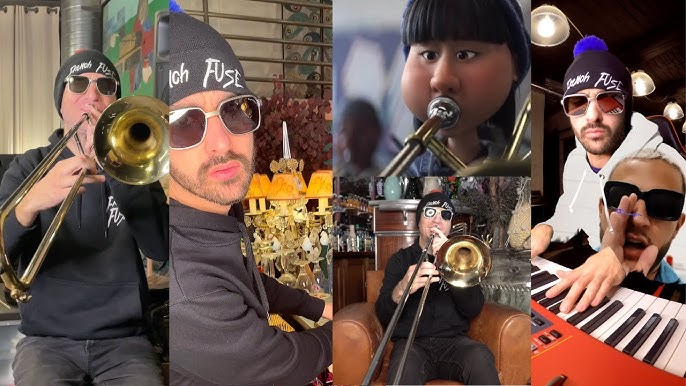
TikTok’s viral Fuse Remix Videos
Unleash limitless creativity—but also become "copyright lawyers’ nightmares"
Furthermore, in today’s creator economy, sustaining long-term influence requires building and retaining a large, loyal fan base—a critical yet challenging endeavor. Establishing and maintaining an active and engaged audience is a long and difficult process, influenced by content quality, market trends, and personal branding. Additionally, fan preferences may shift over time, introducing further uncertainty for creators.
II. Seeking a Breakthrough in Web3
Web3 is built upon blockchain technology and cryptocurrencies. After achieving notable success in finance, it has gradually attracted more developers who are now exploring how to apply Web3’s core technologies to other fields, bringing fresh perspectives to solve longstanding industry problems. The creator economy has actively embraced this trend. Especially under the impetus of AIGC (Artificial Intelligence Generated Content), the integration of Web3 with creator economy models introduces entirely new dimensions of thinking. The most direct transformation lies in the use of smart contracts and non-fungible tokens (NFTs), which now allow creators to more easily control copyright and monetize their works. NFTs play a crucial role in ensuring transparency and simplifying the process of copyright, ownership, and transfer of digital artworks—particularly important for AIGC-generated content. These technological applications not only provide creators with new revenue channels but also reduce reliance on traditional intermediary platforms.
2.1 Building an All-in-One Web3 Platform for Creators
Driven by the mission to advance the creator economy and integrate Web3 with AIGC, the NFPrompt project (hereinafter referred to as NFP) follows a community-led development approach, establishing a comprehensive Web3 platform that integrates creation, trading, and social interaction for amateur and professional creators alike. Leveraging cutting-edge blockchain and AI technologies, NFP focuses on lowering entry barriers and empowering users—enabling new users to quickly create high-quality content within 30 seconds and mint it as NFTs (non-fungible tokens), thereby establishing digital copyright and ownership. The NFP project pioneers the idea of transforming Prompt—the core of creation in today’s large-model landscape—into NFTs, creating a unique workflow, social ecosystem, and revenue model. As of writing, NFPrompt has attracted over 180,000 registered creators and minted over a million NFTs, rightfully claiming its status as a leading project in the Web3 x AIGC space.
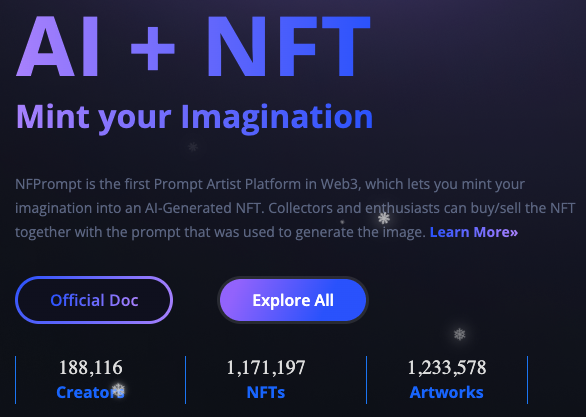
The NFPrompt project has attracted substantial user traffic
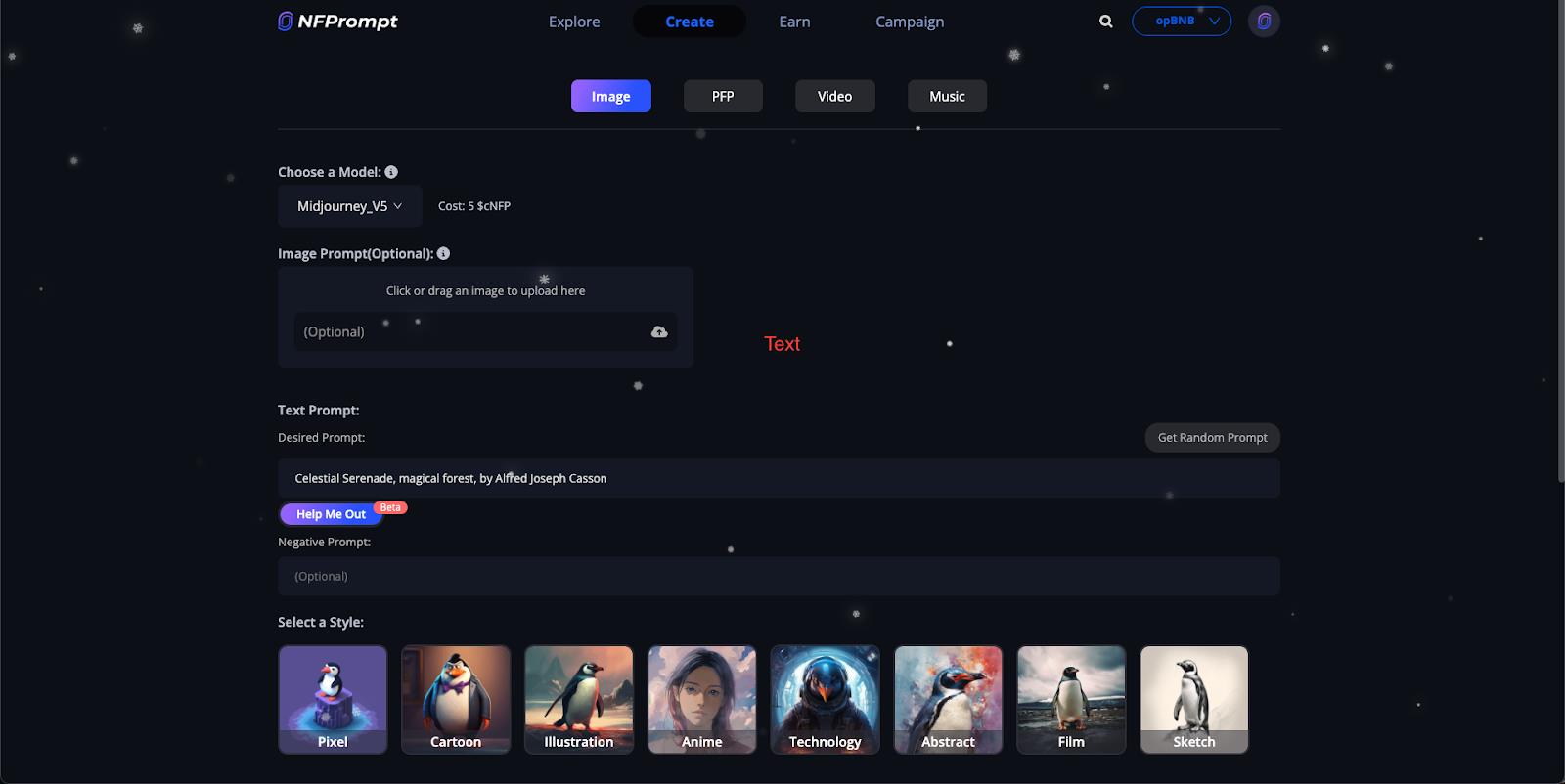
Simple and intuitive UI design for the creation interface
Core Platform Features
On NFP, the user experience centers on extreme simplicity and innovation. Users need only register via email or a Web3 wallet, then input a prompt (instruction or creative concept). The platform leverages state-of-the-art AI models—including DALL-E 3, Stable Diffusion, and Midjourney V5—to rapidly generate corresponding content in text, image, audio, and other formats. These outputs can be flexibly utilized based on user needs—as standalone artworks, commercial advertisements, or personalized social media posts. This feature greatly streamlines the creative process, especially beneficial for creators lacking specific skills or resources, lowering entry barriers and providing unprecedented convenience and efficiency.
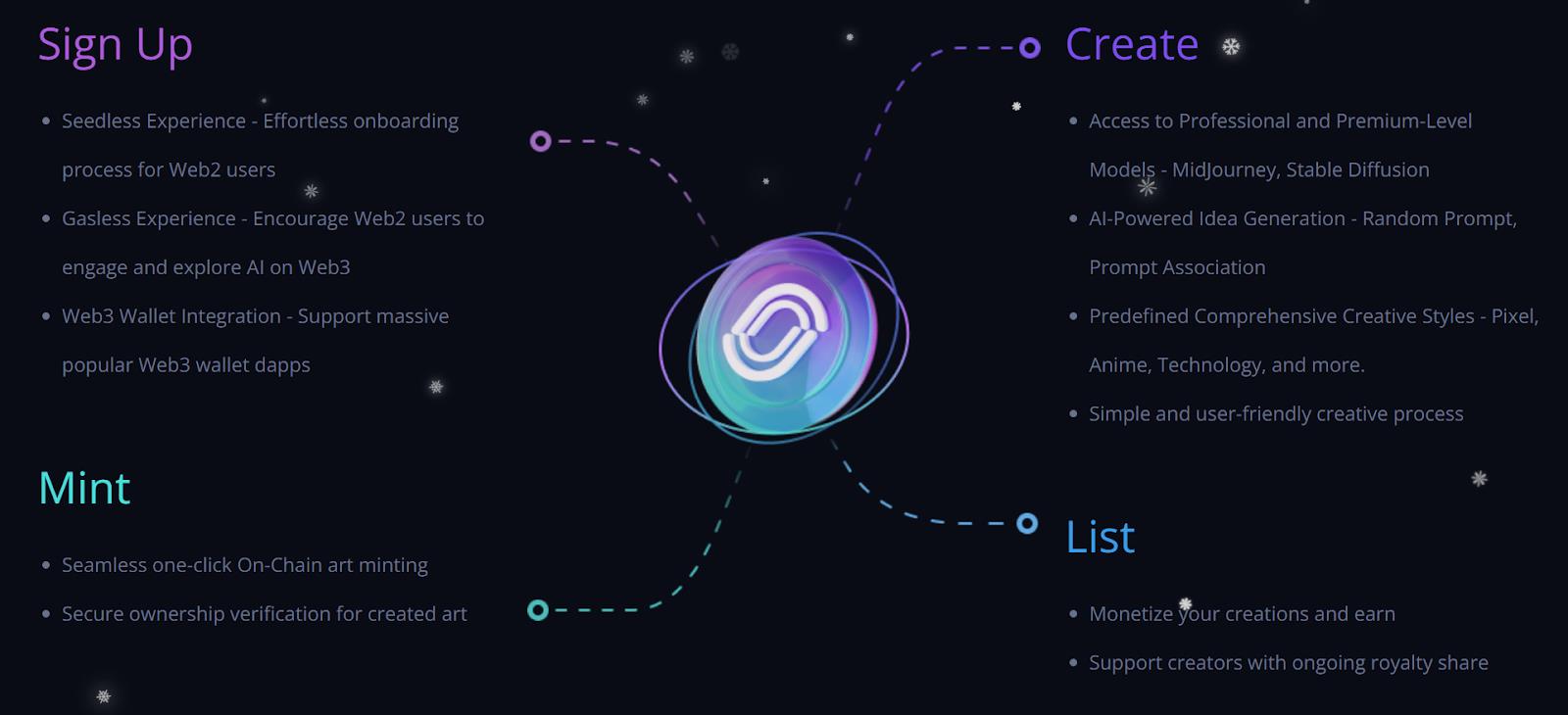
Four key interactions between users and NFP: Register, Create, Mint, Trade
NFP is more than just a content generation tool—it also provides users with a pathway to convert creations into economic value. Users can mint their generated content as NFTs and trade them on the platform’s built-in marketplace. This allows creators not only to produce unique and valuable works but also ensures their digital copyrights are protected via blockchain technology, enabling direct financial returns from their creative labor. Furthermore, thanks to NFP’s use of opBNB’s high-performance technical architecture, it offers creators a highly cost-efficient environment—minting each NFT for just a few cents. This is a highly attractive advantage for cost-sensitive individual creators or small teams.
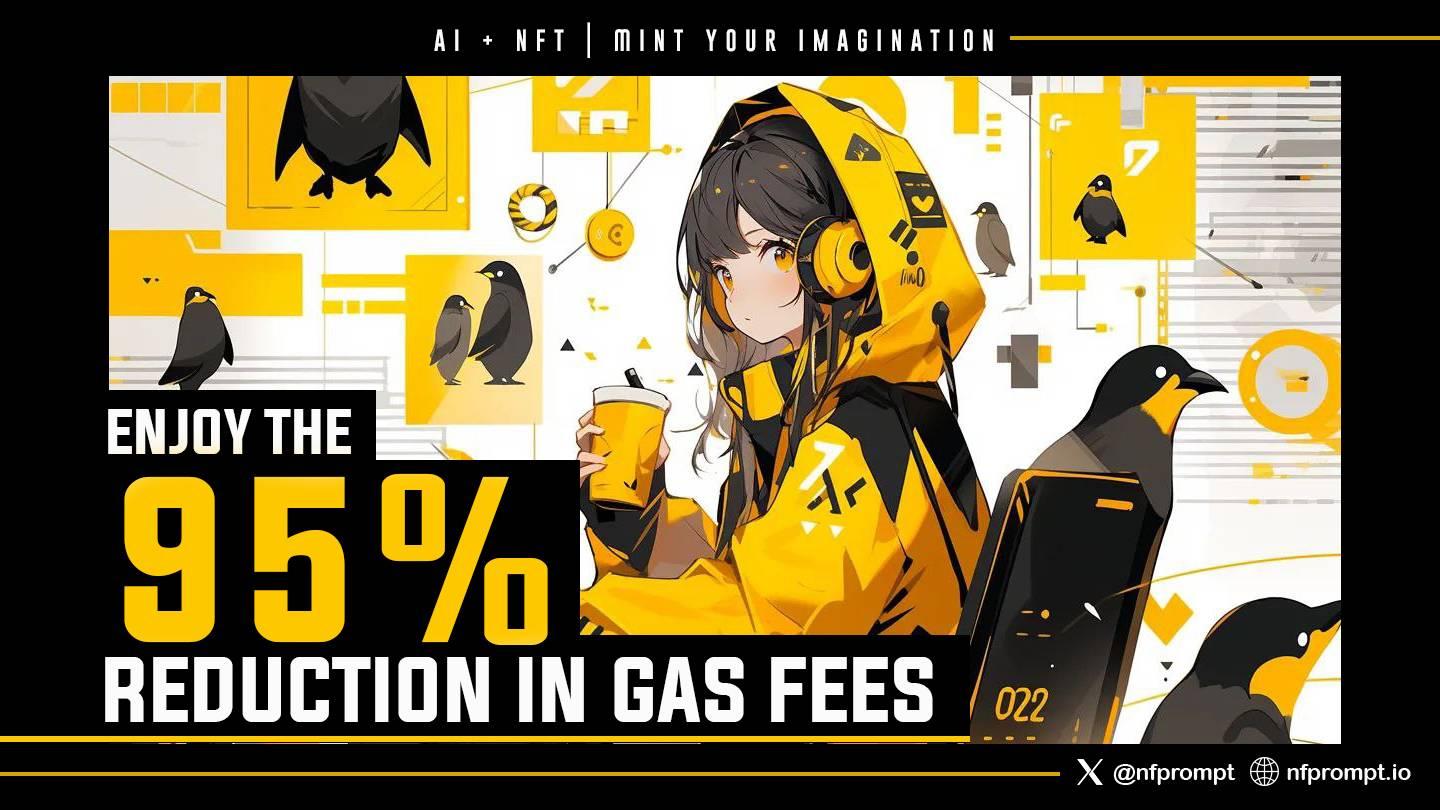
Thanks to opBNB, gas fees drop from $0.3 to $0.01 per transaction
Creator Community and Interaction
Moreover, NFP fosters a vibrant community that encourages communication and collaboration among NFT creators and between creators and audiences. Here, users can freely share their creations, receive valuable feedback, and even co-create new works with others, amplifying the impact of their content. Through regular themed events and creative contests, the community not only sparks inspiration but also provides a stage for talent showcase and recognition. Additionally, NFP has introduced a dedicated “Credit System” and voting mechanism, allowing users to earn points and tokens—redeemable for purchasing others’ works or boosting their own content visibility. These features transform NFP into a holistic creator economy ecosystem, supporting both artistic pursuits and new income opportunities.
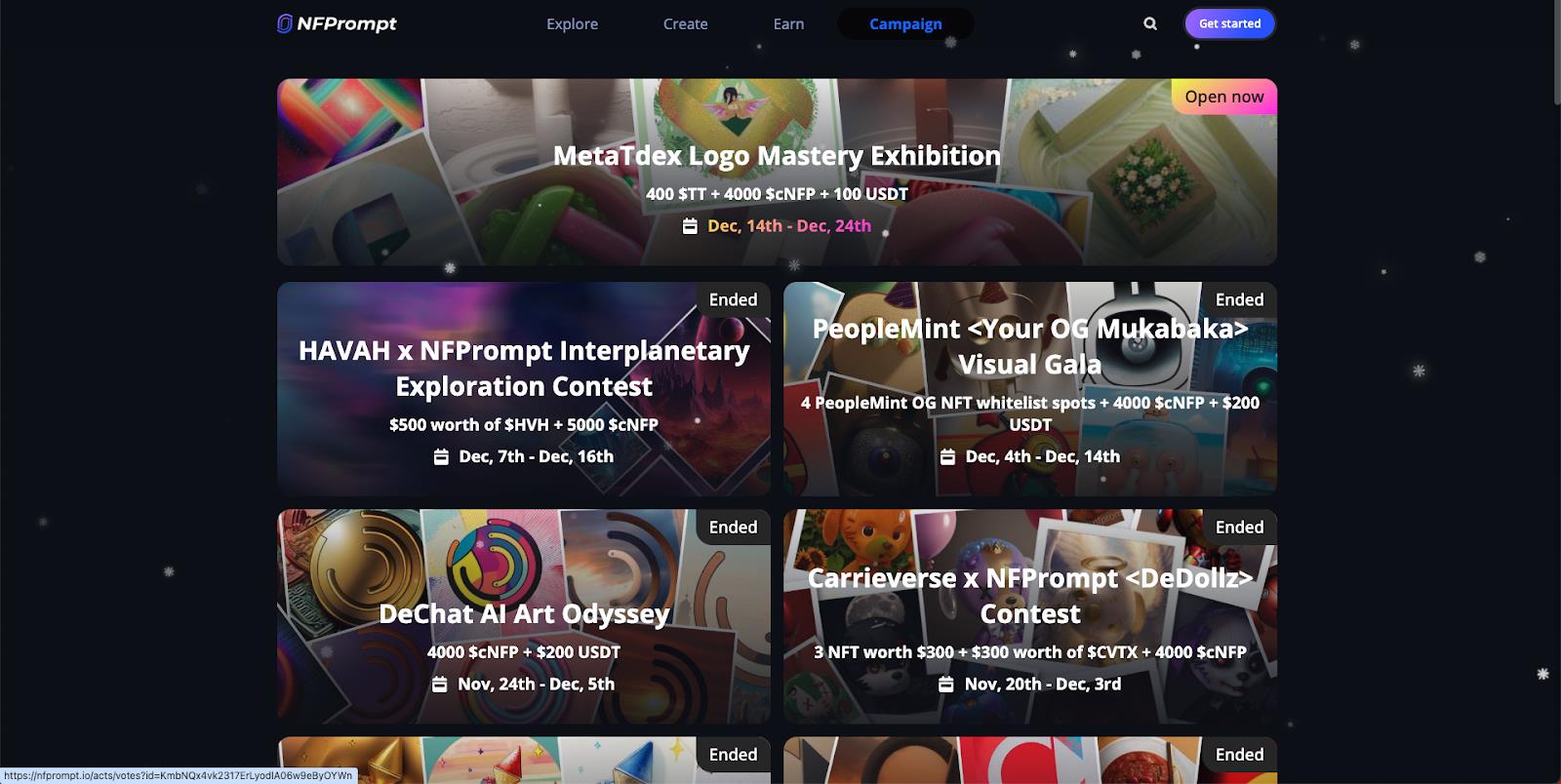
The team regularly hosts various creative content events
2.2 $NFP Launches on Binance via LaunchPool, Revealing Latest Tokenomics
On December 19, 2023, the $NFP project officially announced its initial token offering through Binance LaunchPool. According to the newly released tokenomics, the total supply of $NFP tokens will be 1 billion, with 11% distributed via Binance LaunchPool. Based on average market capitalizations of previous Binance LaunchPool projects (~$220 million) and the prior project Fusionist (ACE) at $350 million, $NFP can be roughly valued: estimated opening price between $1.3 and $1.7, annualized returns of 60%–160%, 7-day risk-free returns of 1%–3.42%, with the approximate cost of acquiring one NFP via BNB lending between $0.4 and $0.6.

Historical average market cap of Binance LaunchPool projects ~$220 million
Source: ChainBroker
With such valuation, $NFP is expected to deliver 20%–40% higher returns than the previous LaunchPool project Fusionist (ACE)—attributable partly to ACE’s smaller token allocation in LaunchPool and higher borrowing interest rates at the time.
Beyond the 11% allocated to Binance LaunchPool, other token allocations include initial airdrops, team, investors, short-term growth fund, and long-term treasury fund, as detailed in the table below. Notably:
-
The token distribution model follows the fair launch approach popularized by recent Bitcoin inscription projects, giving retail investors equal footing with institutional players—a nod to early crypto ideals.
-
Fairness extends beyond the initial launch, aiming to maintain equitable distribution throughout. It ensures tokens are fairly allocated to all contributors to the token economy, fostering healthy competition and sustainable ecosystem growth.
-
Early whales and investors hold a reduced share compared to earlier designs, with more tokens gradually flowing into the hands of community creators—“no passive investors.” The team is committed to long-term development, voluntarily extending token unlock periods: both team and investor tokens undergo 1-year lock-up followed by 5-year linear vesting.
-
The 27% allocated to the long-term treasury fund will be publicly supervised and voted on for usage—effectively reducing circulating supply and supporting long-term value accumulation.
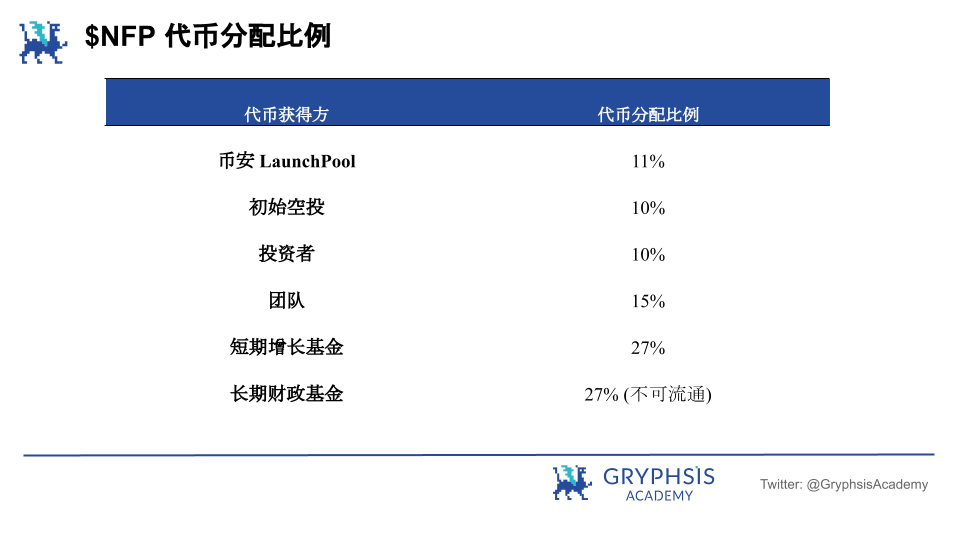
Distribution breakdown of $NFP tokens
The $NFP token unlock schedule is shown below: tokens from Binance LaunchPool and initial airdrops are fully unlocked immediately; team and investor allocations begin linear unlocking in Q4 2024 after a one-year lock-up; all other allocations begin linear unlocking in Q4 2023.
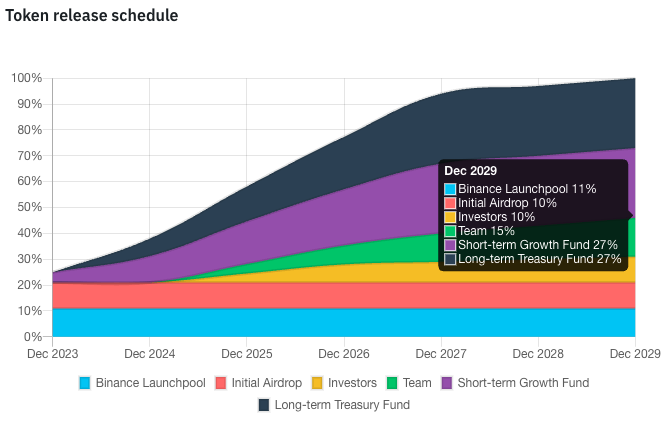
$NFP Token Unlock Schedule
Finally, as the native token of the NFP project, $NFP will serve multiple functions—including fee payments, community governance, staking rewards, airdrop eligibility, and community influence. These functionalities will be gradually rolled out with project updates, targeted for full deployment by Q4 2023.
2.3 Exciting New Features Ahead
Beyond frequent collaborative creative campaigns for promotion, the team is actively preparing product updates to further attract users. The upcoming roadmap focuses on enabling users to monetize their imagination and influence through creation. Key goals include:
Q4 2023:
-
SocialFi: Introduce gamified social mechanics and user tiering, enabling key opinion leaders (KOLs) to amplify their commercial influence through premium series.
-
Marketplace or community events on the opBNB platform.
-
Staking mechanism within tokenomics—earning rewards or participating in governance by staking tokens.
Q1 2024:
-
Establish the NFP Creator Foundation to drive NFT commercialization. The foundation will purchase popular NFT series selected by community voting.
-
Form partnerships with commercial clients—including collaborations with renowned AI companies and expanded cooperation with well-known Web2 retail and cultural brands.
-
Offer advanced users additional AI models and tools for custom art creation as a paid service.
-
Launch official NFT series tied to platform benefits.
Q2 2024:
-
NFP AI Foundation: Contribute to cutting-edge generative AI research in academia and science.
-
Expand into emerging markets, offering simpler onboarding and improved mobile UX for mass adoption.
Notably, the planned Q4 2023 launch of the new SocialFi feature includes:
1. Inspired by the success of the SocialFi paradigm Friend.tech, NFP plans to introduce a new feature linking user accounts with a pricing mechanism for their creative content. This mechanism uses predefined price curves based on content popularity and supply to determine pricing. Additionally, each NFP artwork will embed a chat channel, directly connecting creators and collectors. This strengthens content influence and provides creators with effective feedback loops to improve efficiency and quality.
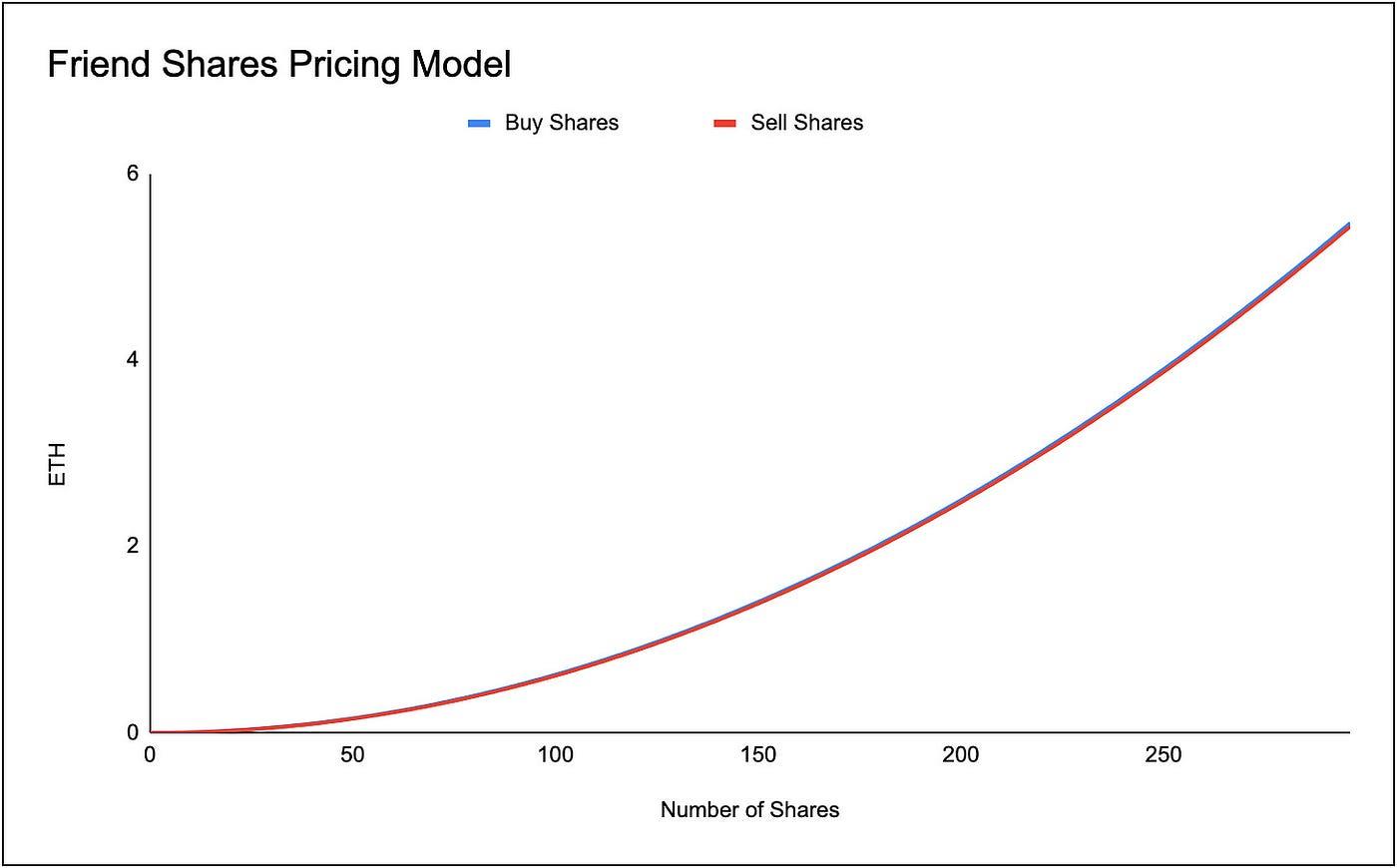
Friend.Tech: Keys tied to each account are priced along a curve (price increases with more buyers)
Purchasers gain access to an exclusive chat room with the account owner
2. A future update will tie content sharing volume directly to trend index and final pricing within the NFP community platform. Higher sharing rates increase visibility and popularity, potentially boosting market prices. This mechanism encourages creators not only to produce high-quality content but also to actively share it, increasing exposure and value.
III. A New Journey for the Creator Economy
As a pioneering application of Web3 and AIGC technologies, NFPrompt demonstrates how technological innovation empowers creators, opening new revenue channels and offering profound insights into the future evolution of the creator economy. The platform’s emergence signifies that the creator economy is no longer confined to traditional creation and trading environments. Its successful debut via Binance LaunchPool further reflects strong market confidence in the long-term potential of AIGC x Web3 within the creator economy.
Looking forward, Web3 and AIGC will continue to propel the development of the creator economy, attracting increasing investor attention to the AI赛道 within Web3. As these technologies mature and gain widespread adoption, we can expect to see more innovative use cases emerge. For instance, AI may evolve to produce even more complex and personalized content. Meanwhile, as blockchain becomes more prevalent, more creators will directly benefit from their works without relying on third-party platforms.
In summary, the AIGC-driven creator economy in the Web3 era is rapidly evolving, presenting unprecedented opportunities and challenges. With technological progress and market adaptation, the future creator economy will be more vibrant and diverse—offering creators greater freedom and opportunities, while delivering richer and more engaging digital content to consumers.
Join TechFlow official community to stay tuned
Telegram:https://t.me/TechFlowDaily
X (Twitter):https://x.com/TechFlowPost
X (Twitter) EN:https://x.com/BlockFlow_News
 @gryphsisacademy