Lightning Network Privacy Issues: Exploring Future Challenges
TechFlow Selected TechFlow Selected
Lightning Network Privacy Issues: Exploring Future Challenges
In the future, the development of Lightning Network privacy protection mechanisms will continue to focus on balancing user experience, security, and privacy protection.
 Navigating Web3 tides with focused insights
Author: Bing Ventures
Bitcoin's rise has triggered a global financial transformation, bringing critical attention to personal privacy and security. This research report by Bing Ventures offers an independent perspective on the protection and challenges of Bitcoin privacy, delivering in-depth insights for readers. We will examine current privacy challenges and related solutions, while also exploring future directions for Bitcoin privacy protection.
The Bitcoin Lightning Network is a Layer 2 solution built atop the Bitcoin blockchain, designed to enable faster and cheaper transactions through off-chain payment channels. While the Lightning Network excels in scalability and efficiency, it also introduces certain privacy concerns. We believe that future developments in Lightning Network privacy mechanisms will continue to focus on balancing user experience, security, and privacy protection. To enhance privacy further, integration with other Layer 2 networks and security-enhancing measures such as zero-knowledge proofs could be considered, thereby improving user anonymity and overall privacy.
Routing Privacy
First, routing privacy is a key issue within the Lightning Network. When using the network, users must establish payment channels to conduct transactions. The process of discovering and establishing these channels may leak information about participants and their connections, potentially compromising privacy. Routing privacy primarily involves the ability of routing nodes to observe transaction paths within the Lightning Network. When a participant initiates a payment request, routing nodes must select the optimal path based on channel availability and fees. However, these nodes can observe the identities of senders, receivers, and intermediate parties, which may expose transaction relationships.
For example, suppose Alice wants to send a Bitcoin payment to Bob, but they do not have a direct payment channel. To complete the transaction, Alice’s payment request might be routed through several intermediate nodes until it reaches Bob. During this process, intermediate nodes can observe the payment path and may infer the connection between Alice and Bob, thereby revealing their transaction relationship.
To address this issue, several solutions have been proposed to protect routing privacy on the Lightning Network. One approach involves using zero-knowledge proof (ZKP) technology to conceal transaction paths and participant identities. Zero-knowledge proofs allow one party to prove the validity of a statement without revealing any specific details about it. By applying ZKPs, participants can demonstrate possession of a valid payment route without disclosing its specifics, thus protecting routing privacy.
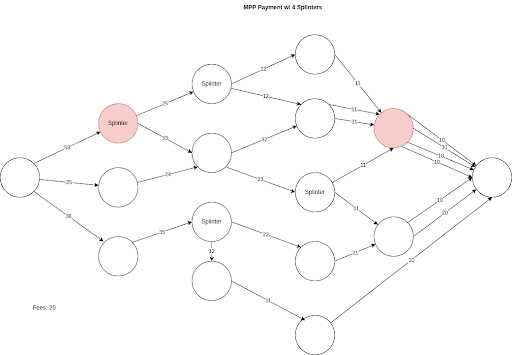
Additionally, the Lightning Network can adopt multi-path payments (MPP) to enhance routing privacy. MPP allows a single payment to be split and transmitted across multiple distinct channels, making participant relationships more ambiguous and harder to trace. By utilizing multiple channels, routing nodes cannot accurately determine which path carried a particular payment, thereby increasing privacy protection.
Transaction Privacy
Transaction privacy on the Lightning Network is another important concern. Although Lightning Network transactions are not explicitly recorded on the Bitcoin blockchain, the opening and closing of payment channels still leave traces on-chain. These blockchain records can reveal a certain level of information about participants and their activities. To address this, CoinJoin technology has emerged.
CoinJoin is an innovative solution designed to enhance Bitcoin transaction privacy. Its core principle involves combining multiple transactions into a single transaction, thereby obfuscating inputs and outputs and increasing complexity so that external observers cannot easily identify senders and receivers. Specifically, CoinJoin merges transactions from multiple Bitcoin users into a batched transaction, making it difficult to match which input corresponds to which output, thus protecting user transaction privacy.
Over time, CoinJoin technology has continued to evolve. Today, several Bitcoin wallets and exchanges implement CoinJoin, such as Wasabi Wallet and JoinMarket. These platforms allow users to participate in CoinJoin transactions, enhancing their transaction privacy. However, CoinJoin also faces certain challenges. One major drawback is increased transaction latency. Since sufficient participants are required before merging transactions, confirmation times may be relatively long. Additionally, the scale of CoinJoin transactions may be limited, as larger transactions are more likely to attract observer attention. While CoinJoin increases transaction complexity, sophisticated analysis methods may still uncover the true sender and receiver. Therefore, CoinJoin should be combined with other privacy-enhancing technologies to achieve higher levels of transaction privacy protection.
Network Analysis
Network analysis on the Lightning Network represents another potential privacy risk. Since Lightning transactions occur off-chain and are not directly recorded on the Bitcoin blockchain, conducting network analysis becomes more challenging. Nevertheless, with appropriate monitoring and analytical techniques, it remains possible to collect information about transactions and potentially link Lightning activity to specific users.
To understand this issue, we need to consider the fundamental principles of the Lightning Network. It enables fast, low-cost transactions via payment channels and hop-by-hop routing. Participants can establish multiple payment channels and transact through them. Because transactions are not directly recorded on the blockchain, network analysts cannot access complete transaction data directly. However, they may still gather partial information by monitoring network traffic and node behavior.
For instance, suppose Eve is a network analyst attempting to track Alice’s Lightning Network activity. While Eve cannot directly access detailed transaction records on the Lightning Network, she can monitor node behaviors. By analyzing communication patterns and frequencies among different nodes, Eve may infer certain transactional information. For example, if Eve observes a particular node frequently communicating with others linked to Alice’s payment channels, she might reasonably deduce that this node serves as an intermediary for Alice, thereby exposing part of Alice’s Lightning activity.
To counter this, the Lightning Network can employ randomized routing and payment path selection strategies to increase the difficulty of network analysis. By randomly selecting routes and relay nodes, it becomes significantly harder for analysts to trace individual user transactions, thereby strengthening privacy protection.
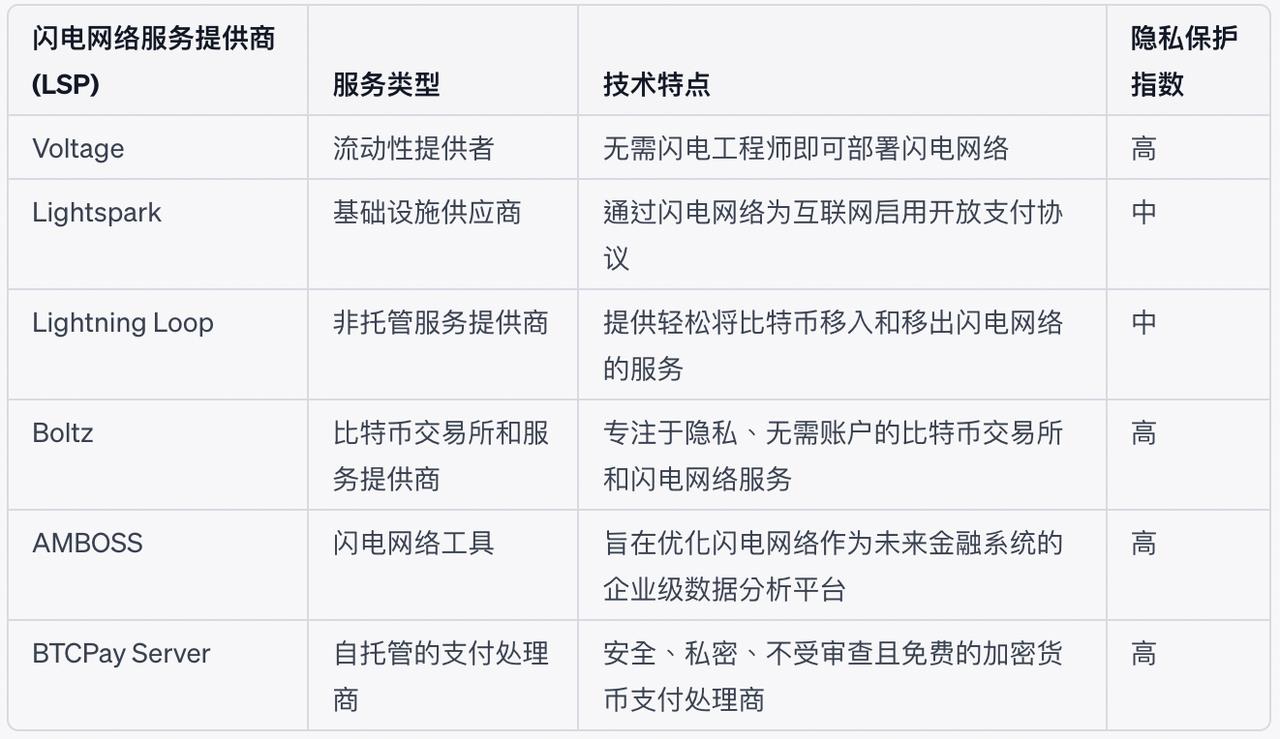
Privacy Potential and Challenges in the Lightning Network
The privacy potential and challenges of the Lightning Network remain focal points of interest. While the network holds significant promise for enhancing Bitcoin transaction privacy, technical hurdles and feasibility issues still need to be addressed. We believe projects focusing on the following areas have strong potential to improve privacy protection on the Lightning Network, offering users a safer and more private payment experience.
-
Improving Lightning Network routing algorithms is crucial for enhancing privacy. Current routing algorithms may leak participant information because the process of discovering and establishing payment channels exposes relationships between nodes. To reduce this risk, more privacy-preserving path selection strategies—such as obfuscation techniques or random routing—can be adopted.
-
Transaction obfuscation techniques are effective means of improving Lightning Network privacy. Integrating techniques like CoinJoin makes transactions within the network harder to trace and link. By mixing multiple transactions together, transactional associations are eliminated, thereby enhancing user privacy.
-
Designing privacy-enhanced payment channels is another important measure. By leveraging zero-knowledge proof technology, transaction amounts and participant identities can be hidden, providing stronger privacy protection. Such channel designs would give users better privacy options when conducting Lightning Network transactions.
-
Enhanced defenses against network analysis are essential. Research and development of more effective methods to protect the Lightning Network from network surveillance can be achieved through anonymization techniques or encryption protections. These safeguards can prevent malicious actors or attackers from extracting private transaction information via network analysis.
-
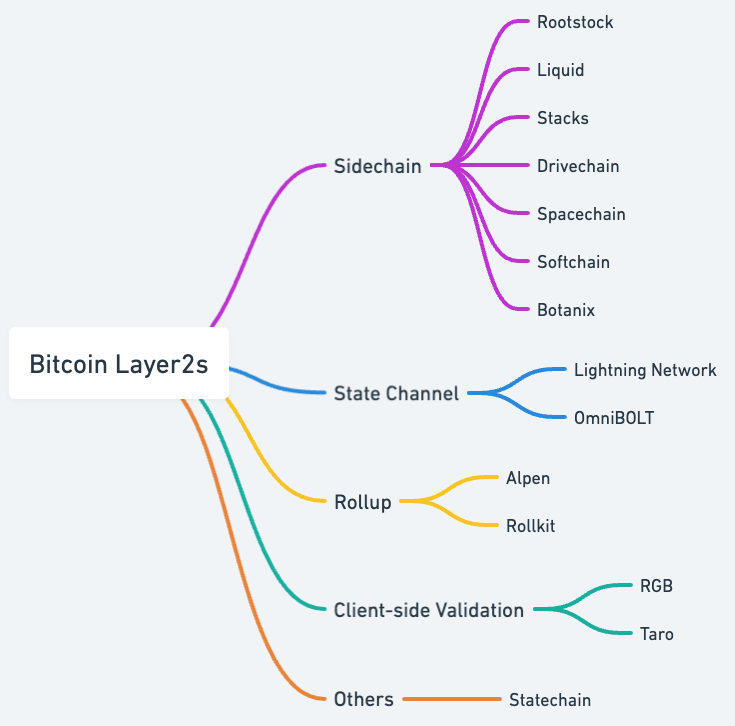
We can also explore alternative Layer 2 scaling solutions that enable low-cost, anonymous, and off-chain Bitcoin transactions. Ideally, such solutions should be compatible with the Lightning Network, have minimal on-chain footprint, and incorporate transaction obfuscation techniques like CoinJoin in every transaction to strengthen user privacy. These solutions could complement the Lightning Network by offering users even greater privacy protection.
The privacy potential and challenges of the Lightning Network represent a complex landscape. We believe that by improving routing privacy, adopting transaction obfuscation techniques, designing privacy-enhanced payment channels, and strengthening defenses against network analysis, many of the existing privacy issues can be addressed. As technology advances and innovations emerge, the Lightning Network is poised to significantly elevate its privacy protection capabilities, delivering a more secure and private payment experience. These efforts will drive continuous progress in Bitcoin payment privacy mechanisms, meeting growing user demands for confidentiality.
Join TechFlow official community to stay tuned
Telegram:https://t.me/TechFlowDaily
X (Twitter):https://x.com/TechFlowPost
X (Twitter) EN:https://x.com/BlockFlow_News
 Bing Ventures