Surf Protocol Approaches Its "Uniswap Moment" in the Derivatives Market
TechFlow Selected TechFlow Selected
Surf Protocol Approaches Its "Uniswap Moment" in the Derivatives Market
When will decentralized derivatives have their "Uniswap moment"?
 Navigating Web3 tides with focused insights
Author: Loki, Researcher at ABCDE
Overview
This article introduces Surf Protocol, which aims to provide an unlimited number of tradable assets, low fees, and transparent settlement, enabling permissionless derivatives trading for nearly any asset.
2. When Will Decentralized Derivatives Have Their "Uniswap Moment"?
2.1 The Problem
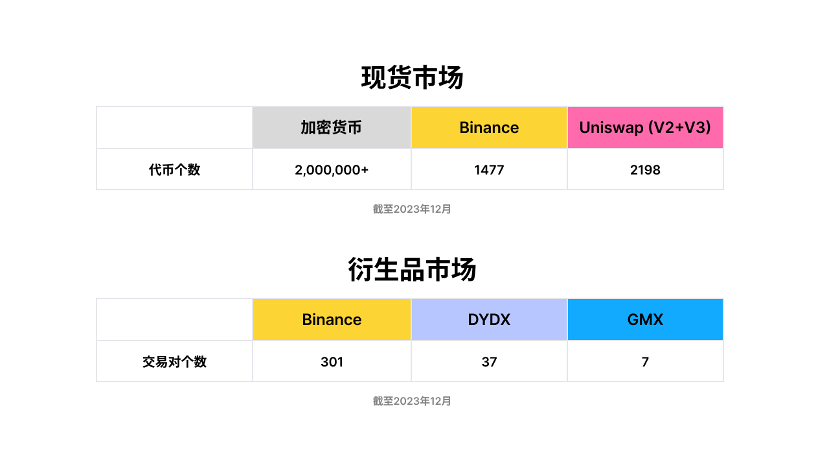
The potential of decentralized derivatives remains underdeveloped. According to CoinMarketCap, as of December 2023, over 2 million cryptocurrencies have been issued. Binance, the largest exchange, lists 394 tokens with 1,477 trading pairs, while Uniswap, the largest decentralized exchange, offers at least 2,198 active trading pairs (v2 + v3).
However, in the derivatives space, there is still a huge gap between centralized and decentralized markets in terms of available underlying assets. Currently, Binance provides 301 derivative trading pairs, whereas dYdX and GMX offer only 37 and 7 pairs respectively.
Since the FTX incident, the market has paid particular attention to decentralized custody solutions in derivatives trading. Both CEXs and DEXs are exploring various paths toward decentralization. Yet, just as people often associate Uniswap primarily with "decentralization" while overlooking "permissionless," the importance of permissionlessness is similarly underestimated in the derivatives space. The "Uniswap moment" for decentralized derivatives must be permissionless.
2.2 The Solution
The underdevelopment of certain derivative markets—especially for long-tail assets, NFTs, and emerging assets—is not due to insufficient demand or supply, but rather stems from a lack of liquidity providers and effective mechanisms for matching supply and demand.
Surf Protocol enables permissionless derivatives trading through voluntary liquidity provision and a risk-adjusted fee structure. In simple terms, liquidity providers (LPs) voluntarily supply liquidity and assume the counterparty position against traders’ positions on any specific asset, bearing their profits or losses. Contract prices are determined using a combination of Oracle and TWAP pricing. Different assets vary in liquidity, market cap, and volatility, leading to different risk profiles, allowing LPs to choose their own fee structures. With sufficient participation from LPs, market competition will eventually lead to optimal configurations.
3. Surf Protocol Design
3.1 Trading Structure
Let’s first revisit the design of spot DEXs. Whether it's Uni V2, V3, or Curve, they all rely on LPs. The essence of “providing liquidity” is placing multiple limit orders across different price ranges; the aggregation of these orders forms “liquidity” available for traders. LPs are passively filled—they offer the service of being an unconditional counterparty to trades and receive fees in return. From a risk perspective, providing liquidity is equivalent to shorting volatility, where impermanent loss represents the realization of volatility P&L. In perpetual contracts, however, LPs do not necessarily equate to shorting volatility. Due to leverage, users often get stopped out or liquidated more easily during high volatility, meaning LPs may gain additional profits. Put differently, instead of suffering impermanent loss, LPs might experience “impermanent profit”—the opposite of the common saying “price unchanged, position gone.” In this sense, leveraged behavior by LPs can actually benefit them, much like how a casino operator doesn’t bet capital one-to-one but runs a highly profitable business model.
Therefore, if we aim to build a trading market, the key is “paying a fair price to obtain an unconditional counterparty.” Surf Protocol builds its design around this principle. On Surf, liquidity providers (LPs) supply liquidity and take on the opposing side of trader positions for any given trading pair. This model rests on the following assumptions:
① Ignoring transaction frictions, when trading activity is sufficiently large, the overall expected profit of traders approaches zero—an idea consistent with consensus views in stock and forex markets.
② Considering transaction costs such as fees, slippage, and liquidations, the long-term expected profit of traders tends to be less than zero.
③ If the expected profit of traders approaches a negative limit, then the expected profit of their counterparties (i.e., LPs) approaches a positive limit.
In the long run, this gives LPs a positive expected value. Each asset has its own isolated pool because each carries unique risks that should not spill over to other pairs. This structure not only isolates cross-asset risk and ensures independence but also creates opportunities for new assets to bootstrap liquidity.
3.2 Effectiveness of Economic Incentives
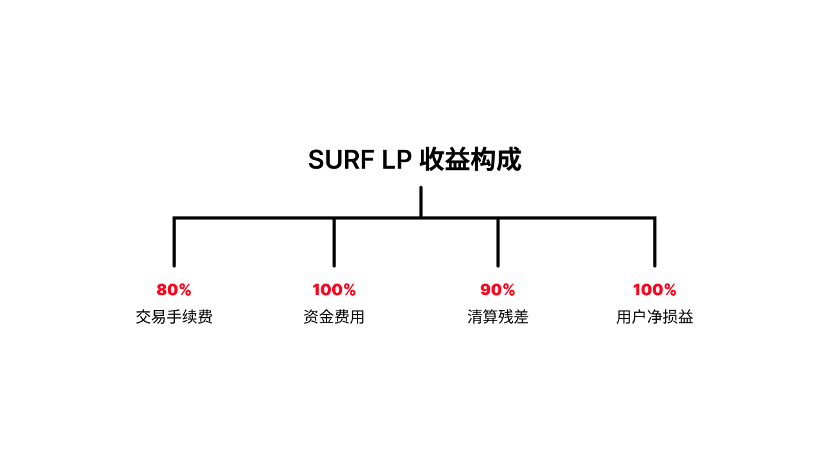
At its core, providing liquidity means becoming the counterparty to traders. Thus, the critical question is how to ensure economic incentives are effective. On Surf, LPs receive at least 80% of trading fees, 100% of funding fees, 90% of liquidation residuals, and 100% of net user losses—these revenue streams ensure that LPs maintain a positive mathematical expectation over time, compensating for their assumed risks. Moreover, since operating as an LP is highly profitable, creators of new asset pools have strong incentives to attract more users to trade within their pools to maximize returns.
Additionally, Surf implements two further designs:
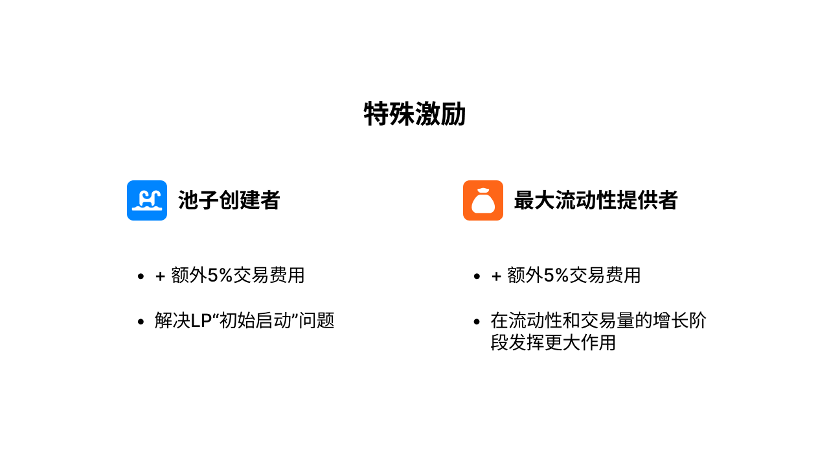
(1) Special Incentives: The creator of each pool on Surf receives an extra 5% of trading fees, and the largest LP in each pool also earns an additional 5%. A common challenge in DeFi is the chicken-and-egg problem of whether trading demand or liquidity comes first. The 5% startup reward effectively addresses the “initial bootstrapping” issue, while the 5% bonus for the top LP plays a greater role during the growth phase of liquidity and trading volume.
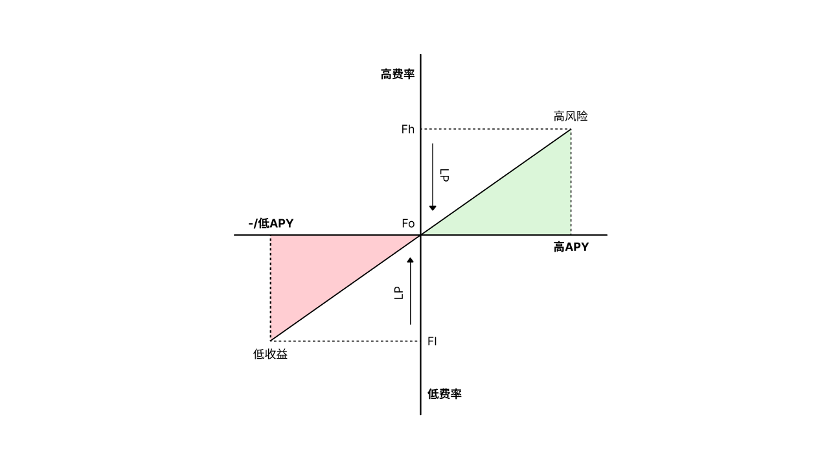
(2) Tiered Fee Structure: Surf currently offers five fee tiers: 0.05%, 0.1%, 0.3%, 1%, and 3%. Liquidity pools act as counterparties to all trader positions and execute orders sequentially from the lowest to highest fee tier. This design accommodates a wide range of asset classes and promotes efficient market resource allocation. If current LPs set fees too high, other LPs will have an incentive to offer lower rates, driving competitive pressure until market equilibrium is reached. Individual LPs can also allocate their capital across multiple fee levels.
3.3 Oracles and Liquidations
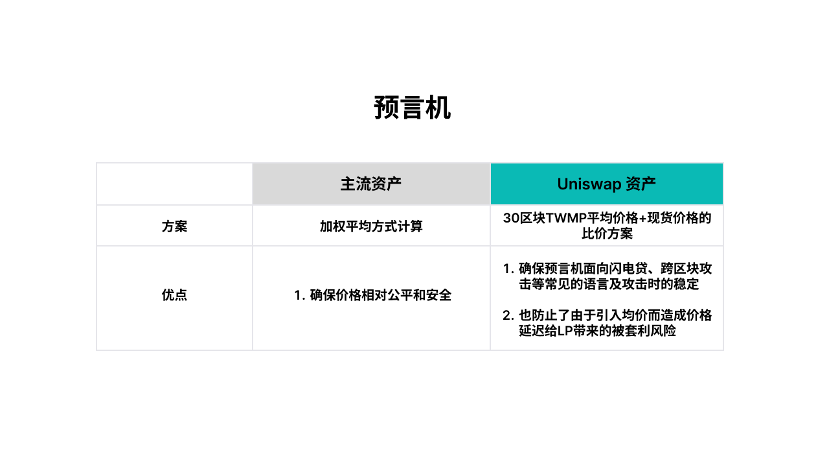
No derivatives solution can avoid oracle and liquidation challenges, and Surf Protocol is no exception. For mainstream assets, Surf uses a weighted average pricing method to ensure relative fairness and security. For assets listed on Uniswap, Surf innovatively proposes a dual-pricing mechanism combining the 30-block TWMP (Time-Weighted Median Price) average with the spot price. This enhances oracle resilience against flash loan attacks and cross-block manipulation, while avoiding arbitrage risks to LPs caused by price lag from averaging.
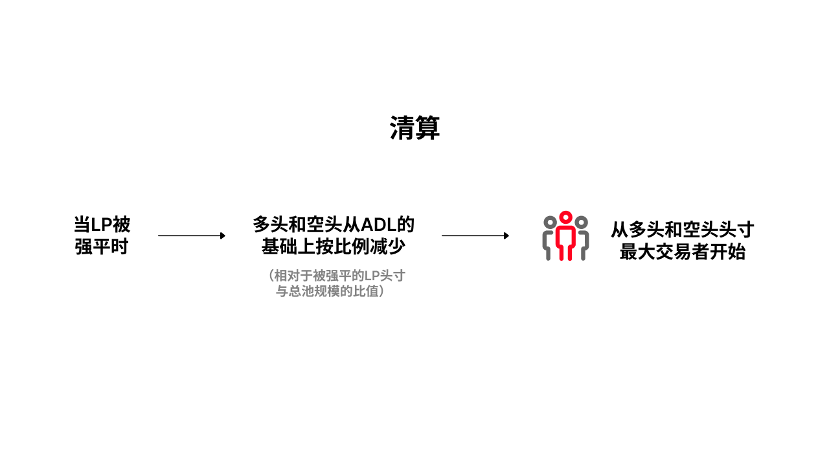
Furthermore, Surf Protocol introduces the concept of 【Leveraged LPs】, allowing LPs to achieve higher capital efficiency—but with correspondingly amplified risks. Viewing LPs and traders as two sides of a trade, whenever one side’s gains approach the other’s principal, there is a risk of insolvency. In such cases, long and short positions are reduced proportionally based on ADL (Auto-Deleveraging), starting with the traders holding the largest positions, relative to the size of the liquidated LP position versus the total pool.
4. Toward the Future of Decentralized Derivatives
Beyond the protocol itself, several promising directions emerge:
4.1 Non-Custodial and Permissionless
Looking back, even after the competitive landscape among major centralized exchanges was largely settled, many mid-sized exchanges flourished between 2018 and 2020. Subsequently, permissionless DEXs like Uniswap and Curve emerged. This pattern is likely to repeat in the derivatives space. Since 2023, NFTs, BRC-20, and SocialFi have introduced vast numbers of new assets, whose demands—especially for long-tail assets—are urgently unmet.
4.2 Netting and Tokenization of Traders and Counterparties
On Surf, the LP token for each specific pool starts at a value of 1. All subsequent activities and accrued value flow back into the pool and are reflected in the token’s price, including trading fees, P&L from traders, borrowing fees, and liquidation revenues. This feature opens up interesting possibilities—could both sides of the trading relationship be tokenized? One simple example is “signal tokenization,” where buying a “signal token” is akin to investing in a fund managed by a trader. Another example is an LP ETF, which diversifies funds across multiple LP pools to reduce single-point risk and enables more sophisticated liquidity management.
4.3 Competitive Markets Drive Optimal Allocation
The market may not need another Binance or GMX, but a “Perp version of Uniswap” that supports as many new assets as possible is essential. Providing derivatives liquidity for different assets involves varying degrees of risk, requiring different fee structures to compensate accordingly. Similar precedents include NFTs charging high trading fees and royalties, or some meme tokens imposing 5%-10% transaction taxes. While we cannot definitively identify the most efficient mechanism upfront, the market may gradually converge toward optimal efficiency through continuous experimentation and selection.
With the rise of new assets and paradigms, the "Uniswap moment" for permissionless derivatives trading is approaching.
Join TechFlow official community to stay tuned
Telegram:https://t.me/TechFlowDaily
X (Twitter):https://x.com/TechFlowPost
X (Twitter) EN:https://x.com/BlockFlow_News
 ABCDE
ABCDE