








Understanding Neon: Endorsed by Solana's Founder, Committed to Bringing EVM to the Solana Ecosystem
TechFlow Selected TechFlow Selected
Understanding Neon: Endorsed by Solana's Founder, Committed to Bringing EVM to the Solana Ecosystem
Neon is the Ethereum Virtual Machine on Solana, EVM-compatible and enables developers to build and deploy decentralized applications (dApps) on Solana using Ethereum tools.
 Navigating Web3 tides with focused insights
Written by: XU, TechFlow
Edited by: David
On December 12, Paradigm CTO posted on X stating, “2024 will be the year of parallel EVMs. I support everyone working on solving this problem, including Monad/Sei/Polygon and other teams I’ve forgotten.”
In response, Solana co-founder Anatoly Yakovenko immediately commented: @Neon_EVM is already a parallel EVM, and it's essentially the design you're looking for.

What kind of project is Neon, and why is Solana’s co-founder endorsing it?
Project Overview
(1) Basic Information
In one sentence: Neon is an Ethereum Virtual Machine (EVM) on Solana, compatible with the EVM, allowing developers to use Ethereum tools to build and deploy decentralized applications (dApps) on Solana.
This marks Solana’s first integration with the EVM ecosystem, enabling its users and developers to leverage Ethereum’s rich ecosystem while building on top of Solana’s high-performance infrastructure.
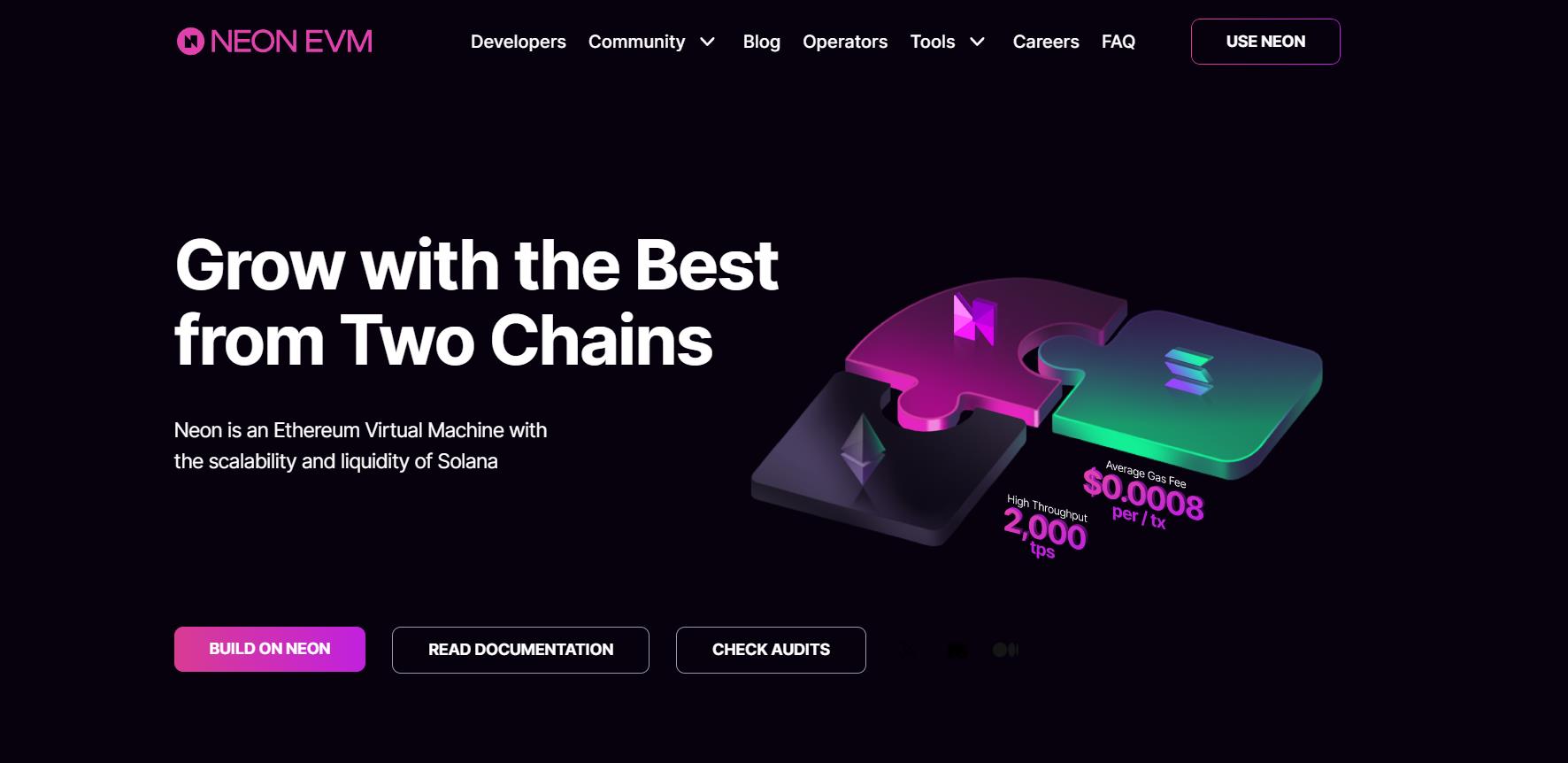
Official website screenshot
Official Website: https://neonevm.org/
Official Twitter: https://twitter.com/Neon_EVM
(2) Funding History
-
November 9, 2021: Neon announced a $40 million investment from institutions including Jump Capital and Three Arrows Capital at a $250 million valuation.
-
June 9, 2023: Neon conducted a public sale on Conlist, offering 50,000,000 NEON tokens (5% of total supply) at $0.10 per token, raising $5 million.
(3) Team
-
Marina Guryeva – CEO of Neon, previously served as a director at cyberFund.

-
Konstantin Goldstein – COO of Neon, formerly Chief Technology Evangelist at Microsoft.

-
Andrew Falaleev – CTO of Neon, former CTO of GolosChain Core.

EVM Is Great, But Not Compatible With Solana
The Ethereum Virtual Machine (EVM) is the core component of the Ethereum network, providing the execution environment for all smart contracts on Ethereum.
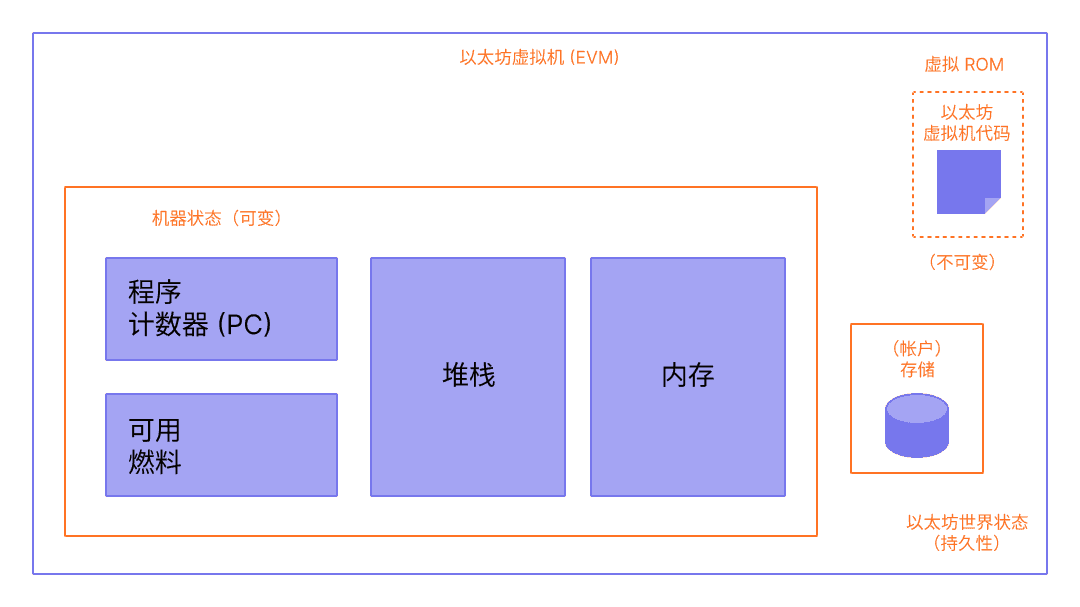
Diagram of the Ethereum Virtual Machine
Although the EVM is widely used in the blockchain world, it has limitations. Because its smart contracts must be executed sequentially, processing speed and efficiency are constrained. For example, Ethereum’s transaction throughput is typically limited to around 1,500 transactions per second, which can lead to network congestion and high gas fees during periods of high demand.
Compared to traditional blockchains like Ethereum, Solana achieves higher efficiency and throughput through its unique architectural design. Its Sealevel feature enables parallel processing of smart contracts, significantly boosting processing speeds—up to over 50,000 transactions per second under ideal conditions.
While Solana offers superior efficiency and throughput, it is not natively compatible with the Ethereum ecosystem, making it difficult for Solana to inherit EVM characteristics or attract Ethereum developers.
Neon bridges this gap by bringing the EVM to Solana, unlocking new possibilities for the Solana ecosystem.
Neon: Bringing the EVM to the Solana Ecosystem
Neon EVM is an innovative on-chain solution that brings native Ethereum Virtual Machine (EVM) functionality to the Solana network. By doing so, Neon EVM successfully combines Ethereum’s broad compatibility and widespread adoption with Solana’s high efficiency and low cost, offering greater flexibility for developers and users alike.

More specifically, Neon EVM makes it possible to run any native Ethereum application on Solana without modifying its codebase, while supporting all standard Ethereum development tools.
This means developers can seamlessly migrate Ethereum dApps to Solana via Neon EVM. The appeal lies in the ability to deploy popular applications such as Uniswap and Curve on Solana at a fraction of the cost. Developers thus gain opportunities to expand their user base, reach new audiences on Solana, and benefit from Solana’s robust liquidity.

Neon’s Advantages: Easy Integration, Seamless Experience
Neon’s key advantages can be summarized across several dimensions:
-
Effortless Smart Contract Adaptation: Solana’s Sealevel system enables parallel smart contract processing, improving efficiency and reducing adaptation overhead. On Solana, smart contracts can execute simultaneously without interference, simplifying migration of existing contracts to Neon.
-
Familiar Smart Contract Languages: Through Neon EVM, developers can write dApps using familiar programming languages such as Solidity or Vyper, deploying Ethereum dApps like Uniswap, SushiSwap, 0x, and MakerDAO without reconfiguring or modifying their codebases.
-
Solana’s First EVM: Neon is the first Ethereum Virtual Machine (EVM) compatibility layer on Solana. This is a significant milestone, marking the first time Solana connects directly with Ethereum’s EVM ecosystem. With Neon, Solana can now support Ethereum smart contracts and dApps while maintaining its hallmark high throughput and low transaction fees.
-
Scalability Benefits: Neon leverages Solana’s low gas fees and high transaction speeds. The Solana network is renowned for its high throughput, capable of handling over 50,000 transactions per second under optimal conditions—far exceeding traditional Ethereum performance. Additionally, Solana’s consistently low gas fees stand in contrast to Ethereum, where fees can spike due to congestion. Currently, Neon achieves approximately 4,500 TPS with gas fees as low as $0.000015 per transaction.
-
Access to Solana’s Evolving Ecosystem: Another major advantage of Neon is enabling direct access to Solana’s growing ecosystem, including SOL (Solana’s native token), SPL tokens, and other native assets. This highlights Neon’s role as a bridge between the Ethereum and Solana ecosystems.
-
Use Existing Tools: Users can utilize familiar Ethereum-based tools such as MetaMask and Truffle Suite, pre-built asset integrations like ERC-20 tokens, and infrastructure services such as Chainlink and The Graph. Any client can run a proxy to deploy contracts within Solana. The user interface for interacting with dApps remains identical to that on Ethereum, greatly enhancing developer convenience.

Neon’s Six Key Advantages
Additionally, Neon has established a secondary marketplace where operators can set their own terms and rates, allowing users to choose operators that best meet their needs—enhancing market transparency and choice.
Specifically, in the Neon EVM architecture, operators are special accounts on the Solana blockchain that provide essential services to support the execution of Neon EVM transactions. They are responsible for converting user Neon transactions into Solana-compatible transactions so they can be processed on the Solana blockchain. Operators participate in the market by setting their own service conditions and fee structures, and users can select operators based on these criteria. This creates a service-and-choice relationship: operators provide execution services, while users choose the most suitable ones based on cost and requirements.
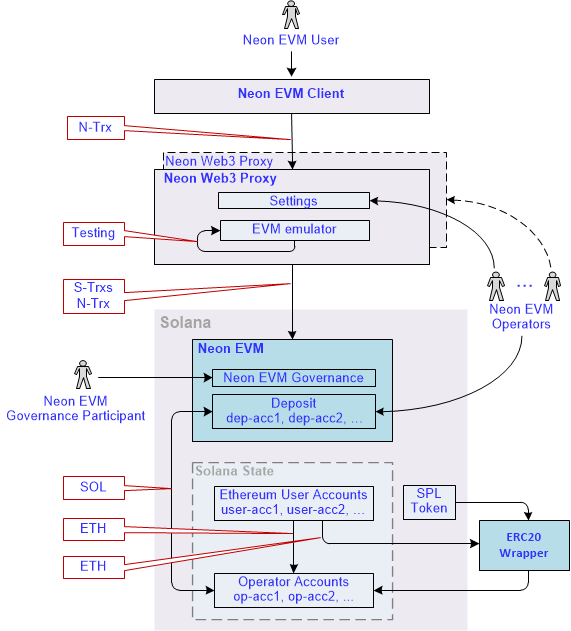
Complete Transaction Flow
For more details, please refer to the official documentation.
Overall, Neon combines Solana’s high efficiency and low costs with Ethereum compatibility, offering developers and users a flexible, cost-effective, and decentralized solution.
Neon’s Tokenomics
NEON is the native token of Neon EVM, with a total supply of 1,000,000,000 tokens. At the time of writing, the market price is $0.54.
(1) Token Utility
The NEON token serves two primary functions: utility and governance.
-
Utility Function: Used to pay for transactions on the Neon platform—including transfers, dApp deployments, and interactions with dApps—similar to how ETH is used on Ethereum.
-
Governance Function: Grants voting rights within the Neon DAO for community governance decisions.
(2) Token Distribution
Public sale: 5%, early buyers: 16.12%, early contributors: 1%, advisors and service providers: 1.07%, Solana Capital: 6%, founders: 15%, ecosystem development: 31.5%.

Recent Catalysts
In July of this year, Neon achieved a key milestone in its ecosystem roadmap: launching on the Solana mainnet. This provides the necessary tooling for Ethereum developers to transition their projects to Solana, enabling them to build Ethereum-style applications atop Solana—greatly benefiting developers in the Solana ecosystem.
Last month, Neon’s testnet began allowing users to pay transaction fees using tokens such as SOL, USDC, and USDT instead of the native $NEON token. This functionality is expected to go live on mainnet in Q1 2024, further increasing convenience for Neon users.
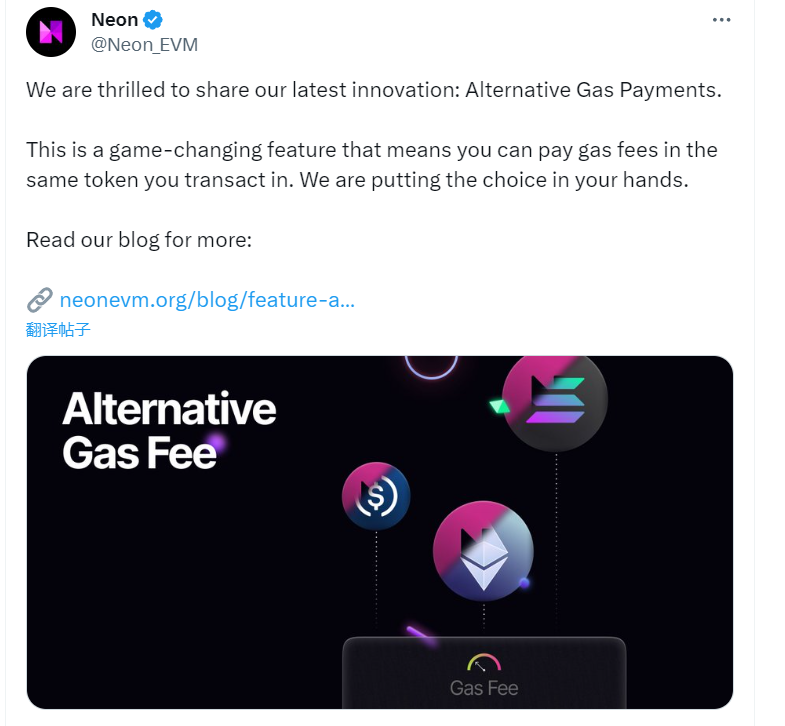
As market conditions improve and the Solana ecosystem continues to thrive, we believe more developers will adopt Neon to build diverse applications on Solana. In the coming days, Neon may continue to drive growth within the Solana ecosystem, turning the phrase “Solana is Ethereum’s killer” from mere rhetoric into reality.
Join TechFlow official community to stay tuned
Telegram:https://t.me/TechFlowDaily
X (Twitter):https://x.com/TechFlowPost
X (Twitter) EN:https://x.com/BlockFlow_News
 深潮TechFlow


